She Left Art School to Make Ice Cream and Built a $125M Empire | Jeni Britton Bauer
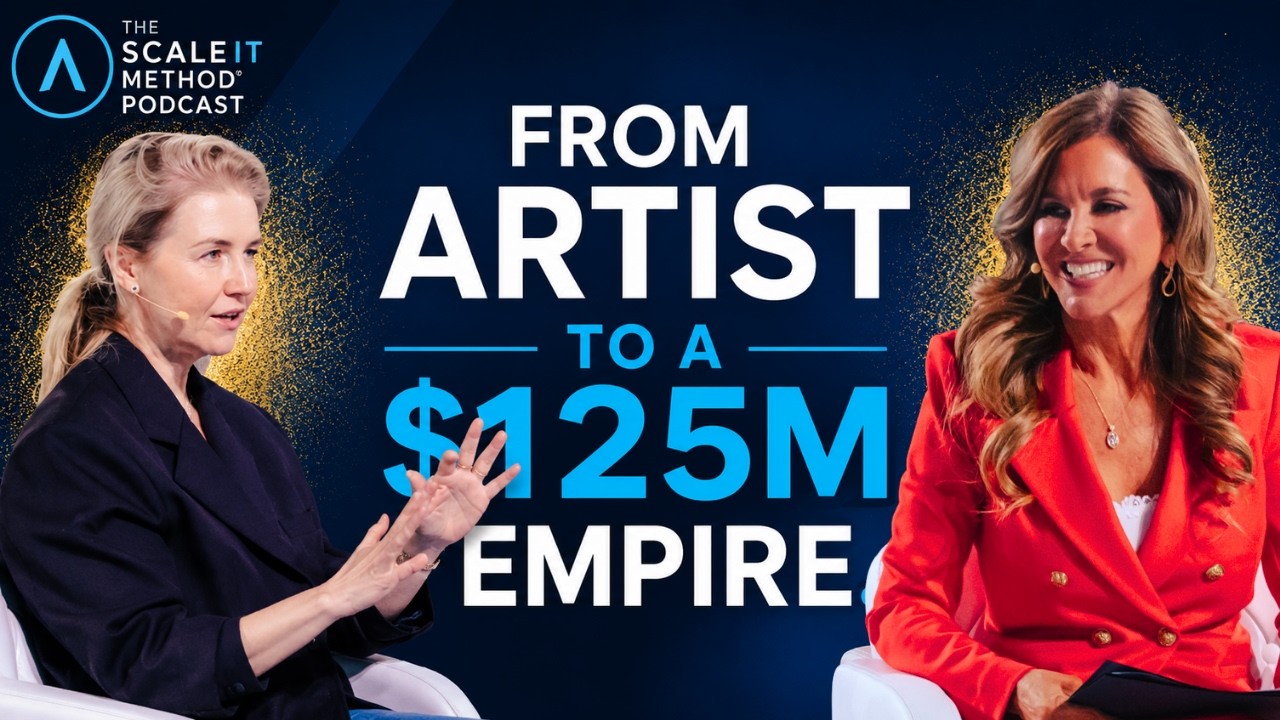
Jeni Britton Bauer left art school to start Jeni's Splendid Ice Creams, which grew to $175 million. A missing scone taught her to obsess over customers, and a 2015 Listeria recall forced her to rebuild with values at the center. Now she's making high-fiber bars from food waste under a new brand, Flora.
Chapters
So we close everything down. Okay, we survived that step, but now we have no ice cream. It's May. We just came out of winter. We also have no money and we can't open our kitchen because we have to figure out where this is coming from. And then that's the clock starts ticking.
What did that crisis force you to do that you may have never done otherwise?
When you're building your team for crisis, by the way, right? So you think you have all these values, you think you have all these things in place. You don't really know those are your values until you've been tested and you've walked through fire. And then you get to the other side and you can say, "We do have integrity. We are telling the truth." The other thing about when you're in the middle of crisis, deep crisis, is that it's actually like kind of cool because the only thing that matters is the most important things. The day before, everybody had their own idea of like what was important. And then the next day, None of it matters. The only thing that matters is survival. You know who you are. Who do we serve? What do we have to do? What is essential? What if we didn't do this, what would make us not Jenny's anymore?
Hi, it's Allison Maslan, and this is a very special episode of the Scale It Method podcast. So Jenny Britton, who is the founder of Jenny's Splendid Ice Cream, she actually flew out to our 3-day event. And I interviewed her and I have to say it was the most powerful interview I probably have done. It's that good. She went from someone running— selling ice cream at a farmer's market to building a company well over $100 million. And her journey is packed full of nuggets to help you scale your business. It's truly fascinating. So I hope you enjoy it as much as I did. Jeni Britton is a pioneering entrepreneur, New York Times bestselling author, and one of the most original voices in American food and brand culture. She's founded Jeni's Splendid Ice Creams in 2002 and in an Ohio farmer's market, transforming it into a national phenomenon with over 90 scoop shops and retail presence in thousands of grocery stores across the United States. Known for its inventive flavors, ingredient integrity, and joyful design, Jenny's helped define a new era of modern American food brands. A champion of sustainability and human-centered innovation, Jenny's latest venture, Flora and Company, reinvents fresh produce trimmings like watermelon rinds and apple cores into delicious fiber-rich snacks that help close the fiber gap and combat chronic illness in the United States. As with Jenny's, the mission is bigger than food. It's about well-being and reclaiming what nourishes us. Jenny is a 2017 Henry Crown Fellow of the Aspen Institute and a U.S. Culinary Diplomat. She has an incredible leadership style and artistry. She is a powerful entrepreneur. Wow, I want some ice cream now. I don't know about all of you, but help me welcome to the stage Jenny Britton. All right, come on. Hi. Hi.
Yeah, welcome.
Oh, I'm so, so excited to have you here.
Well, I couldn't be more excited to be here, and it's so much fun to see everybody also and to see everybody's faces. That is just like the best, the best little—
I know, it's quite the setup here, isn't it?
So cool.
Yeah. So, um, well, you know, congratulations for all the success that you've had in Jenny's and now your new venture. I love meeting real tried and true entrepreneurs.
And, you know, and it is, it's like a, it's like a calling. It comes from so deep within. I don't even know where it comes from, but it just does. It's like you just do it.
I know it like we can't not do it.
Exactly.
It's kind of how it is. Right. And so, well, let's dive in because I've got so much that I want to learn from you. And we have these amazing CEOs. That are here from all over the world that want to learn from you. So, you had zero— let's go back to back before 2002 where it all started. You had zero in savings. You had no investors. You had no industry connections. Didn't have a business degree. But you had a great idea and you had an SBA loan.
Eventually, yes.
Eventually, I know. I remember trying to get one of those back in the day, and they kind of turned me down. But looking back now, what was the single decision or move that you felt that separated you from the entrepreneurs that probably had a similar idea, but they didn't make it?
Well, this is so fun too. And I know so many of you, I've been listening to some of the talks too, just like, just that we have these very long careers. And so when I start to think there, it's like going through this wormhole all the way back to the beginning of my life, 30 years ago, and thinking about like, what was I thinking back then? What was I doing back then? And I didn't know very much. I certainly didn't know anything about business. I thought I knew more than I did. But one of the things that kind of made the biggest difference for me was I had a little shop called Scream Ice Cream in the farmer's market from 1996 1996 to 2000. I had left literally an art class in the middle of a figure drawing class. I just got up and left, never went back to college, never went back to university, Ohio State University, because I wanted to go home and make ice cream. I was bored in this class. It was a 3-hour class, and I left and rode my bike home, made ice cream, and then eventually just figured out how to get open in the North Market, this beautiful farmer's market that we have in Ohio in Columbus. But I was still thinking like an artist. I didn't know this for the entire 4 years that I was in business there, but I was still thinking like an artist. So what I was doing was I was inspired by the farms and the farmers. I was inspired by whatever the people were doing in the market. I was inspired by pop culture or whatever story I wanted to tell for my customers and for me and, you know, for whatever was going on at the time. Instead of thinking about what's selling, what do people want, I was just making whatever I was interested in. So, if you came into Scream Ice Cream and you got salty caramel for one day and you brought all your friends back the next day to have it, I might not have it. And back then, that was like our big flavor. It was the one that everybody loved. People would drive in, they'd fly in just to get salty caramel. We had Vogue magazine coming in because we were putting salt in sweets, which of course now we're all used to that, but that wasn't the case back then. But I might not have it that day. And when you came up to the counter, I would say, Well, you know, I don't have that today, but I have this. And I didn't realize that that was disappointing people. So eventually, there were many more mistakes, learnings, but eventually I closed Scream. And it wasn't until I was at this coffee shop, back long before cell phones and all of that, where we used to buy a magazine and go sit in a coffee shop for 4 hours. I was doing that, and I really was there because there was this beautiful orange scone that I'd fallen in love with and I was craving. And I went there, I waited in line.. And I got up to the front and the person was like, "We're out of the scone. We don't have it today." And I was like, "What do you mean?" And so I didn't know what to order. I didn't really want anything else and I left. And that moment changed everything because I realized what a disappointment I felt at that moment and that this is exactly what I was doing to all of my customers at Scream. So from that second on, everything, I had pink hair and I was this quirky artist. And I changed everything. My hair went to brown. I dyed it brown, even darker than my natural color. I cut it short. I put on a white shirt, black pants. I wrote a business plan. And I put all of the emphasis on our customers and the quality of what we were doing and the stories we were telling. And that made all of the difference. It was no longer about this ice cream artist, me thinking about me and my sort of thing that I wanted to tell the world. And the journey I wanted to take people on. But instead, it was more, "I have a perspective that we can make better ice creams, that we can make them with beautiful ingredients from beautiful, amazing farms and other people. And we're gonna tell those stories. We're gonna listen very closely to what works. And if it works, it's gonna stay. And if it doesn't, we're gonna let it go." And that literally is what we do to this day. We've never run out of salty caramel, ever. Yes. Like, it's always been there. You can rely on it.
All because the scone was not there.
You never know where this cosmic inspiration is going to come from.
You never know where it's going to come from. But I love that. I love that. It's such an incredible story. And so, although I would say your ice cream is an art, you still kept the art.
100%. And so I think being an entrepreneur is learning what it is that you're bringing, what perspective you're bringing to the table. Because I think, who said just now that you're the Picasso— oh, I'm seeing him right now. But anyway, of your business.
You are sculpting it.
You have to understand your perspective, right? And that's important because if you don't have that, you don't have a business, you don't have something that's unique and creating value for other people. But the difference was my grandmother actually was an artist. I grew up with artists, my mother, my grandmother. They didn't like people to commission things from them. They didn't want people to pay them for their art. Yeah, buy it, buy the art that I already made, but, but don't, don't tell me what to do. In an entrepreneur— in entrepreneurship, in our companies, we really want to listen to customers. Of course it makes It seems obvious now to me, but at the time I thought maybe the customers weren't sophisticated enough or some story I told myself until I realized that I have to bring all of my talent in and then listen closely, keep what works and shed what doesn't, and don't feel so connected to the things that aren't working that I get stubborn about it, which I can still do a little bit, I guess.
Yeah, we all can a little bit. How much of a role has vision played in the building and scaling of Jenny's and now Flora? We talk a lot about vision, and we're going to be diving into that today. And I'm just curious, how much do you plug into that, think about it? How much is it like the guiding force in what you do?
I think this is one of the main— expertise of a founder or that sort of visionary CEO. I think every company needs a visionary. Vision for me was, you know, I, like probably everybody here, I am a person of many ideas, many, many, many ideas because I'm a simultaneous thinker, nonlinear. It's constant all the time. But what creates a vision is when you can take an idea and project it into the future and you can see that path. And it's not— it takes a long time, I think, for that to click into place. It's a lot of pattern that has to come together. We can talk about the new company too and how that happened with there. But there's these patterns that come together that sort of overlay each other. And once you kind of have this vision where you fit in the world, what value you bring to people, who's going to care, all of those things, what the world looks like when you achieve what you're trying to achieve. When you lock into that vision, then it's like, you know, you're over here, your vision's over there, the straight line is not, it might be the fastest way, but you're never gonna get there in a straight line. It's like there's a bowl of spaghetti between you and the vision, the moment you're in now and the achieved vision. You have to figure out how to get there, and you're gonna go a lot of wrong turns, but you never change the vision. And so the vision has to be big enough that it's not going to change. You know, you have to know how you're affecting people's lives and why you're the unique one to do it, and you and your team. And then that doesn't change, but everything in the middle, you just figure out how to get there based on your values, based on, you know, what you're there to do.
I love the spaghetti. It definitely can feel like spaghetti with a lot of wrong turns, with a lot of sauce.
Yeah.
Is it— did you ever, uh, feel like it— their shift happens where it goes from you following the vision to the vision leading you?
That is the interest. That's an interesting point because I do think that like once you kind of lock into a vision or once you kind of just lock into even, you know, this idea, the path begins to light up in front of you. It's almost like you don't even know what your next step is going to be. But then it lights up and you take it, and then you go and you read some stuff, or you're investigating, you're in input, and then another— it lights up again, and you start to go down this path that you didn't necessarily intend to go down, and now it's like pulling you. Um, I don't know if anybody has experienced that kind of pull, but it almost feels like it's not push, you're being pulled by that.
Yeah, that's, that's how I feel. With Pinnacle Global Network. We're in our 17th year, and first it was really kind of crafting that vision and then stepping into it. But it's created such a vortex of energy that I feel like it's pulling me along. I mean, yep, leading me, right?
And I see, you know, like maybe it's a good point, a time to say, like, I see people like all over TikTok, all over Instagram doing like vision boards. I don't think that's the same thing. It's not a visual thing. Like, it's a value thing. It's what value are we creating? What are we going to give people? What are people going to come to us for? What are we going to be known for? What change are we making in the world? All of the other stuff is just the sort of design and things like that. That's the sort of things that you'll figure out along the way. But it's the big picture.
Yeah, it really is. Now, you have over 90 Scoop Shops. Across the country with plans to cross 100 this year. Is that right?
Yeah.
And plus you've got your ice cream pints in thousands of grocery stores crossing $125 million in annual revenue, which is amazing.
I think we're at like $175 at this point.
Oh, $175? Oh, wow.
It's, yeah. It's just like— Luckily, I'm not the CEO anymore, so.
We'll talk about that. And love, love your ice cream. Peppermint Patty is my favorite.
And that's amazing because it's non-dairy. It's actually coconut cream. It's one of my favorites too.
Oh, really?
And I'm a dairy person. So we've really done something with our non-dairy that like all these dairy people love too, which is just amazing.
Yeah. I'm not great with dairy. I, in fact, that's funny. I didn't even know that. And I have This is a chai. It's got coconut milk in it. Yeah. But anyway, so you bootstrapped the business for 15 years before bringing in outside capital. What do you think that building on your own terms for that long stretch of the business, what do you feel like that gave you compared to someone that just comes in and they're venture-backed from day one?
Well, and I know the answer to this because I would have loved to have had a lot more money. All of us would. I would have loved in those early days to have millions of dollars to build a massive— I mean, I had this vision of like an ice cream factory with cows on the roof and the grass and play areas for kids and all this. I mean, I don't know how we were gonna pay for all that. But what happened is that we chose not to like go after any kind of money. We stayed with the SBA. We stayed sort of very, very lean on a shoestring. But what ended up happening is that we put this focus, or I was just focused on making the ice cream better. And so I was out literally working in the dairies, learning about homogenization pressure, learning about different kinds of pasteurization temperatures and how that affects milk proteins and how that affects the texture of the ice cream. Learning how to make ice cream from a totally different perspective. So we didn't use stabilizers, emulsifiers, egg yolks. Corn syrup, we could actually make milk proteins almost act like egg yolks in the way that they work, in the way that they bind water. All of this happened because I was spending time at the dairy. If we had taken money, that wouldn't have happened because it's just too weird. But that's just one example. Jenny's really became a company that if I were to right now take our business plan, let's say, take our— pretend like it's a new company, it's a business plan of exactly what we do now, the way we train, The way we scoop, the way we clean our— defrost our freezers weekly. Nobody does that in the ice cream business. The way we do everything, the way we make our ice creams, you know, is incredible. We talk about what the cows eat before we even make the ice creams. If I took our business plan to any business school in this country, I would fail the class. Like, there's no way. And so what happened was we just figured it out. It took It took decades to figure out how to be uniquely us. And I see my friends, other entrepreneurs, and they are so restricted because the finance world knows only one thing, data, which is about yesterday, which is about what happened already. And they're measuring everything by it, and that's what they do really well, and that makes sense for them. Entrepreneurs are about the future.. And we are about what is possible. And that is a very different thing. So if you give yourself that time, and it's very hard right now because we see all these entrepreneurs and rocket ship companies getting VC funding. If you give yourself the time to figure that out, you will be in a stronger place. Ice cream obviously is an incredibly crowded market. We are the first ice cream company really, like really, really since Ben Jerry's to really take this cultural sort of baton, I think, from Ben Jerry's. In fact, We just hired the Ben Jerry's CEO yesterday. News. Oh, wow.
Congratulations.
He's amazing. He was at Ben Jerry's, started as a tour guide. But anyway, he's a great person. I love Ben Cohen too and Jerry. They're wonderful.
They were actually clients of mine. I saw that. When I had my ad agency.
It's so cool. I mean, they're wonderful people. I still love the ice cream and all of that. But just the point that I'm just making is that if we hadn't done it this way, we would not have been able to make the splash we needed to in the world of ice cream, which is so crowded, so brutal, so cutthroat that you need a swell of new people to the category in order to survive. And that is how we did it, by being totally different, by making up our own rules. And, and that's literally why we're here. So if we had gotten that funding early on that I dreamed of, well, it would have been too much. We would never have been able to pay it, you know, it just wouldn't have worked anyway. But also we would have been confined to what we already had.
And probably thrown a lot of money away.
We didn't know even what to do with it, probably.
And that's what happens. A lot of people get the funding, and they don't really know business, and they just kind of throw it at a bunch of stuff that doesn't work. So speaking of mistakes, when I think of— when you're looking for those perfect hires, I think of it like if you've ever had a not great relationship in your personal life. Sometimes those are good because then it helps you get clear on what you do want, right? And so what were some of those expensive hiring mistakes that you made along the way? And what did that teach you about what you were actually looking for in building a team and your overall growth strategy?
This is like the— this is just the effort, the work, right, is people. And I have learned, yeah, so many times that, you know, there are all sorts of different kinds of amazing people in the world. They're all amazing, many of them, maybe not all of them. Most people are pretty great in something. That doesn't mean they're gonna be great on your team. And what I have learned is this word that I love so much, which is alignment. Actually, you know, I learned this from a poet that you might, if anybody's like going through a time, a moment in their lives, and you just need some poetry, Young Pueblo, if you don't know who Young Pueblo is, he's amazing, but I learned this word from him about relationships. This is true of any relationship that you have in your life. And you know like when you've got a friend or you meet somebody and you're just aligned and you know it and there's chemistry there? What happens is that I can say something that I believe and I don't have to start at, you know, the Stone Age or the sun's coming up to explain it to that person. It's just a click. I start talking, they start talking, and we're just like, yes, yeah, yeah, yeah, yeah. That's alignment. Like, you know what that is. I have hired so many people who I thought were just brilliant, but we couldn't communicate. We couldn't align. And I ended up feeling like it was me, you know, because they're the business people, they're the trained ones. You know, your company, usually if you're the founder, usually you're the only one that didn't have training. So you're like, well, they must know what they're doing. I'm going to give them space. I'm going to get out of their way. And I have learned after way too many of these mistakes, because people will say it, like marketers will come in and they'll want to change everything, your packaging, your everything. And, and you're just like, I don't know that this is the right thing. And But what I've learned is that alignment is chemistry. You feel it when it's right. And when it's not right, it's not anybody's fault, but this is your company to figure out. This is your team. This is your fellowship. Company, the word company I love, because it means you're not alone. You've got to find the people that align not just with you, but together. And so you know it when it's right. And when it's wrong, you can spend a lot of time trying to make it right. And it may— in my experience, it doesn't ever get there.
I'm so glad that you brought up this because I've been thinking about alignment a lot lately and what I've— I think over time you just get so in tune with yourself where you just know, like, this doesn't feel right and you're like, you're trying to make it fit and it doesn't. So, I mean, I've made so many hiring mistakes over the years. But I've gotten so much better because of really listening. Like, does this feel right? Is there that click? Do they get it right? Or does this feel forced or even painful?
You constantly have to explain things, um, or if you're constantly begging for some attention or information or whatever, it's just not aligned. And I'm a Midwesterner just at heart. Peoria, Illinois, Ohio, like Midwesterner. So I We really like to assume everybody's wonderful and everybody's got— and I don't want to make anybody upset. Well, anyway, you have to understand that that's nothing. It's not your fault. It's not their fault. It's just this is what we're going for. If we're going to build a company together, we've got to be on a team the way a basketball team, you know, when they're— I don't watch sports, you guys, but like sometimes I'll catch a basketball game. And what I noticed one time a long time ago is that like this guy was running toward the basket and he just threw the ball behind him. Didn't even look, and the other guy caught it and made the basket. And I was like, that is what I want on my team. I just want to know we all know where we are at any given time and what we're doing. That's alignment.
Yeah, for sure. It's like me on the trapeze. I got to know that catcher's there because he better darn catch me.
I can't believe you do trapeze. I just think that is so cool.
It's so fun. You'll have to come do it sometime.
Yes, that would be amazing.
So, so you started with this one woman farmer's market operation to hundreds of employees. And so what do you feel like was the most important thing or the most important few things for you to really build the right team? Like, what was so critical for you that if you had not done it, you wouldn't be in the place where Jenny's is today?
I'm going to just go back to vision. You have to get really, really good because it's not enough to just have a vision. It's— you have to be able to communicate that. So becoming a really good communicator of what you are here to do, and you say it over and over, and you start every meeting that way, even just if— even just like in some little way, so that everyone on your team knows that you will always run every decision through that lens. So the vision is like, where are we going? Where are we going? And then I think mission too, which is a little bit a little bit different. You know, mission is just sort of like, who are we here to serve and, and how are we going to do that? It's more immediate. So just understanding where you're going and how you're going to do it and then kind of running everything through that lens. And everyone on your team should know that every time they come up to you, every time they see you, you're going to be putting everything they say through that lens because then they will, they will begin to do that too. And that's when you can really get everybody humming on that. In that way, then everything starts to feel aligned, clicked, moving.
Yeah, yeah, it's true. It's, it's not just communicate it once, like you really have to live and breathe the vision. And even if they just heard it yesterday, even if they just heard it yesterday, well, you can always—
there are different ways of saying it that are always— you want to be like, say, you don't want to change it, but you know, you can say it in all sorts of different ways. So every project you're on, every room you're in, whether you're in, you know, creativity is one of our big values at Jenny's or whatever. But even if I'm talking to the, the finance department, we're talking about creativity all the time. Creativity being seeing things with new eyes, understanding how to communicate something in a way that helps other people solving problems, you know. So we're all, we're all creative, but just constantly like you are the one that's like the spiritual guide and you're just making sure that everybody is united around that. Yeah.
I remember when we— because we made some changes on our finance team a few years ago, and I was interviewing a controller, and I spent the whole time talking to her about vision. And she said, "I've never had a conversation in an interview about vision," because they're so used to it's just about the numbers. But to me, it's so important that even the finance team is behind your vision, right?
Well, and if they're not, that's going to be a problem. Operations and finance need to absolutely be a part of every— that, you know, all of that and all the, you know, even getting them into discussions about, you know, in other parts of the company, because of course they're the ones that are going to release the funds. They're the ones that can make magic happen if you get them on your side. That's a really, really important thing. And if you're not making them feel included, then they don't have that drive to help, you know?
Yes. Yeah. So important. So we're talking about scaling, scale it live, and that's what we do at Pinnacle Global Network. So that's about multiplying your reach. And you are such a perfect textbook, you're the example here, because you really did this omnichannel distribution. And I don't know if you like planned it that way, but, you know, early, I don't know exactly when that started, but I think the stores would, Did the stores start back in 2000?
Stores, 2002, website, 2004, and then we started our wholesale in 2009. Well, a little earlier than that, but just with local stores.
Yeah, so retail, wholesale, subscription. Mm-hmm. And that is like, you didn't really see ice cream having subscription. Right, yeah.
And in 2004, we were selling a ton of ice cream on our website.
Yeah. Amazing. Yeah. And so, I mean, you really were ahead of your time back then in doing that. Walk us through how you thought about building multiple channels, if that was part of the plan or you just felt like, you know, this is how we can reach more people. What was going on at that time?
There were a few things going on. First of all, I, I called one day the New York Times because I thought we were doing such cool ice creams in Ohio that they should just know about it. So I called them. We didn't have a PR company for decades, you know, but we just— so I called them and I asked to speak with Florence Fabrikant, the writer of New Things, and I was telling her about what we were doing. And she was like, her answer to me was, "Can I get it in New York?" And I was like, "Well, no, not yet." And she was like, "Well, why don't you call me when I can?" And I was like, "Of course," because I read the New York Times all the time. National papers because, you know, whatever, but like, she is in the New York Times. It is about New York. So, I'm like, "OK." So, in some ways, it was like, "We need to be a company that's thinking nationally even though we are confined to this tiny farmer's market in Columbus, Ohio. We are breaking rules. We're doing cool stuff and we know we're making something that's gonna be a trend. So, let's become a national company long before we can actually become a national company." And, of course, this was long before social media too.. We had email and that's about it. So we decided to open— well, and also the Food Network. The Food Network was a big channel. I mean, they started, they came out at some point in 2004 too. So we got our website up and running and immediately we started shipping. Like our number, our first order was number 1 Central Park West or something like that. Like it was literally like the most important address in New York City. And then we just started getting tons of press. So it was huge for us because now suddenly we are this tiny, literally still making all of our ice creams and serving them all in the farmer's market, to being a national company, being available for anybody anywhere to buy. And we got press, just an embarrassing amount actually of press. We were on the Food Network over the next couple of years 6 times. We were in the New York Times, which they still write about us now. I mean, just last week Wirecutter, another, for our non-dairy flavors. We have been really lucky on that front. And I think partly because we just try to do the right thing and do a really good job. But ultimately, what it ended up leading to— so yes, eventually we get, you know, we're opening stores all over America. We're opening— we're in all the retail. But I would say that on this front, the way that we think about omnichannel at Jenni's is that we have 3 completely different customers. We're not serving the same customers. So I get to put it back on our customers because as an organization, as a company, you have to think that your customers are actually part of that company. Company meaning people. People working together, fellowship. And so who are the customers that are gonna order, they're gonna spend $100 on ice cream? That's a very different customer than the one coming in and spending $20 to buy their, on a date in a store, or somebody who's gonna spend $8 in the grocery. Very different people in very different places of their lives and very different situations. And so really starting to dig into who are they, what do they want, how can we, Jenny's, pardon my French, but we always say, "How do we please the shit out of people?" That's what we just all the time. That's the way. How do we please the shit out of people? And obviously, this is one of those like very, very behind the scenes kind of things that we do, but like that's really the motivation. When we know that somebody's on vacation and they're ordering a bunch of ice creams because they're gonna serve it at their party in their little, you know, in their cabin somewhere, that's a different thing. We wanna make sure that that box when it arrives, that it has like this story and it's really fun and it's got all the things they need for that.. And when we're in grocery, we want to be able to say on the side of our pints, we don't write the history of the company like everybody else does. We write the same thing that I might say over the counter to you if you were in our stores. So this chocolate is the most amount of chocolate, the least amount of anything else. It's very high quality chocolate. That will be right on the side of the pint. So we're actually speaking directly to you, even if it's in grocery. So just understanding where our customers are and trying to meet them at that spot.
Yeah. Amazing. And it's true. It really is like they all love ice cream, right? That's the base. But it is a different customer. You need to be able to speak to them and meet them where they're at. But I love the fact that you have all of these different ways to reach your customers. That's one of the things that we're going to be talking about today is how do they expand their reach in different models, right? And also, Expanding without losing the soul of the brand. That is really critical because I know a lot of companies that when they have scaled, they've gotten away from the brand and that's when they got into trouble. Yep.
Always. It always— because you try to please too many people. And by the way, that's not necessarily your customers either. So it's the buyer, the buyer at Whole Foods, the buyer at Target. They all are wonderful people, but they have opinions about what it should look like, what flavors there are. And those opinions are not based on what people want. They don't always know those or what, you know, the customers that would buy your product is. They're based on just what other companies have done. So they want your packaging to look a certain way and it doesn't necessarily— in fact, most of the time it doesn't make you better. So when you think about who are your customers, well, in our retail, our customers are you, are the people we serve directly. But in wholesale, in our grocery channels, our customers are the buyer. And so the buyer wants us to make our flavors bigger and reduce the artwork on our packaging. And we have to make that decision to say, no, that's not what we're about. We're conveying emotion through a freezer door. We are conveying emotion. We're not actually conveying the flavor. When you see that and you feel something because you see that jelly donut illustration, you pick it up., and then you see the flavor.
Right.
Right? So if they want us to make the flavor so you can see it from 10 feet away, we have to go back and say, that's not what we're here to do.
Yeah, that's, you know, you really have to kind of stick to your guns on some of those things.
But again, it's back to knowing what you're doing.
Yeah.
At Jenny's, we're conveying emotion, and that is, you know, we stick to that.
Yeah, that alignment thing again. Now, in 2015, You know what I'm talking about here.
The best year of my life, you guys.
Yes, yes, it sounds like it was a ton of fun. And we've all had our version of this in one way or another. Is you had a— there was a Listeria outbreak, which is not a good thing. And it nearly ended Jenny's. You had to recall— so think about this in your businesses, okay? You had to recall every pint. You had to close every shop. You had to rebuild the trust from zero. What did that crisis force you to do that you may have never done otherwise and ultimately made the company stronger?
Well, it's interesting because crisis is not something you would wish even on your worst enemy. I mean, you really wouldn't wish this kind of crisis on anyone. And yet, both personally and professionally, as a business, as a company, as a community. It's strangely clarifying. It's actually the best thing you can go through. Let me also clarify too that, that because we were able to make decisions very quickly, unlike another much larger competitor that was going through at the same time and they took 3 years to make decisions, we recalled our ice creams right away and we actually prevented an outbreak. So there was one pint that tested positive for Listeria. We recalled within 36 hours all of our ice creams. That's every pint, every bucket, everything we had made from our kitchens before we even understood where it was coming from and what we could do about it. So we closed everything down. We did everything so right on that front that now it's like a case at Harvard. Now they talk about this as being like the way you do it. The way we communicated it, we actually didn't use a PR company. We fired our PR company. We went direct to our customers. You don't really have a voice when you're working with the FDA. It wasn't a lot, but it was something. We just tried to do the right thing, which we did. We prevented an outbreak, but then we realized we're— okay, we survived that step, but now we have no ice cream. It's May. We just came out of winter. We also have no money, and we can't open our kitchen because we have to figure out where this is coming from. We have to make sure that it's going to be prevented forevermore., and then that's the clock starts ticking. But what happened, we eventually do come out of it. We eventually do figure all of this stuff out, and it's a whole bunch of people working together thinking about it, and a bunch of amazing ice cream makers who reach out to me and let us use their kitchens and so on. It was a really beautiful community story, community being even the community of ice cream. But what's really interesting to me also is that when you're building your team for crisis, by the way, Right? So you think you have all these values, you think you have all these things in place. You don't really know those are your values until you've been tested and you've walked through fire, and then you get to the other side and you can say, we do have integrity, we are telling the truth, we do want people to believe, you know, everything that we say behind the scenes and what we're doing and how we're making our ice creams and all of that and how we operate as a company. You don't really know who you are until you come through that. And the other thing about when you're in the middle of crisis, deep crisis, is that it's actually kind of cool because the only thing that matters is the most important things, and there's only like 3 of those things. So the day before, everybody in the company had a different, and Jenny's at this point, we were so bloated, we were so like, everybody had their own idea of what was important, and everybody was going different directions, Everybody was like sponsoring different Little Leagues and soccer and everybody had all these different projects that they were working on and whatever. And then the next day, none of it matters. None of it. The only thing that matters is survival. How do we survive? How do you survive? You know who you are. Who do we serve? What do we have to do? What is essential? What if we didn't do this, what would make us not Jennys anymore? Like, what do we have to do? We have to make really great ice creams with these beautiful ingredients. And then from there, it was just one step at a time. Now, the other thing is, and this is also the truth, 2019 was our first profitable year after the recall, and then we go into COVID. So, you know, the bottom drops out again. This is just what it is. This is the work. This is why you build your team, because there will always be another crisis. And you will get through it. And the more of those you do, many, many, and medium and large, the better you get.
And it's amazing what you did, how you pulled everybody together and got refocused on what mattered. And you got through, which a lot of companies wouldn't. But it also inspired you to change some of the way you were working too, right? Because what I find is, of course, we don't want crisis. But it also forces us to get creative, to figure out a new way. And if things are kind of coasting along, you just don't do that.
Absolutely. And creativity, in fact, and this is me coming from the art world, creativity is about inside-the-box thinking. We all have the same parameters. We all have the same ingredients. Who makes something different out of it? And that's the important thing about creativity. So when you're in crisis, you are in the most creative time you will ever be in your entire life. And for me, you know, at the time I would have never questioned what this idea of artisan means. Artisanal means we make every single thing in our kitchen. Afterward, I realized, wait, why are we making jams when there's this amazing family in Plain City, Ohio, who has an entire facility and a farm? And that's literally all they do with their copper kettles. Like, they're doing it better than we are. Why wouldn't we work with them and let them make our brambleberry jam, right? Why are we going through all of this with our, like, we had our kitchen was too big, there were too many people in there, like, let's figure out if there are other people that can help us with this. So we have candy makers in Ohio. So thinking about, like, we were like also at the time it's like Uber was like everywhere and like becoming like everybody was like already getting this idea of like Airbnb and Ubers and whatever. I was like, why can't we use everybody else's kitchen to do our stuff too and everybody else's expertise? So Why are we making all of our cookies, all of our pralines, all of our cakes and brownies when there are literally companies that exist to only make brownies? In Ohio, really close to us.
And that's their genius.
And that is their genius. So we can make it with them. We can give them our recipe. Our brown butter almond brittle, for instance, we were always making that. It's a really beautiful recipe that I created. Well, there's a candy company that's now doing that for us. And they make the exact recipe, but they have these incredible way of doing it. So it was a different way of thinking, a mind shift that like I never would have come to. And we needed to because we needed to get really good at what we were really good at, which actually isn't making jam.
Yeah, it was be able to focus in on the ice cream itself. So now you've built this amazing company, you were winning all kinds of awards, the James Beard Award, which is a Big Culinary Award. You were, you are a category pioneer, yet at a critical point in your growth, you decided to hire an executive coach. And so to help you become a better leader, make better decisions. What did that decision unlock for you, for you as a leader and the growth for your company?
I am a real believer in coaching, especially for founders, especially founders, but really everybody. Leadership is really hard, and sometimes we think that it's kind of innate, and some— in some ways it is, like deciding you're going to be an ice cream maker because you have to, like, go your own way and do it your own way all the time. Like, that's a form of leadership. It doesn't work that well inside of a company when leadership is defined differently. It's about how you bring people along and how we all do this together and keeping people inspired and activated. And so I started working with a coach primarily because I wasn't speaking the language of business, which I still kind of struggle with, like the language of CAC and ROI and all of those things. And I was like, I need to bridge my knowledge with the knowledge of our board and our investors, and I need to figure that out. Well, I ended up learning that like he is an amazing founder coach too. So not an executive coach. I think that founders can't be really executives in their companies because we can't get fired. Honestly, we can't get fired. So everybody treats you differently. Everybody treats you whether you want to or not. It doesn't matter. You have a different power that you carry into every room that you go into in your company. And even if— and everybody's going to tell you they're really nice, they want you to be happy. Everybody in your whole company wants you to be happy. And that is not a recipe for success because you need them to give you their honest feedback. And so working with a coach helped me understand the power that I carry that I didn't even ask for, that I didn't even necessarily want, and also that it makes people uncomfortable when I'm not stepping into it, right? So I was just wanting to be like the nice person. I'll clean out the drain even like, you know, at the last day, it's like, I'll do, you know, I'll do all the worst stuff or whatever. But he's like, you make people uncomfortable. You need to step into your leadership here. And that changed everything for me. It really did. It changed my mindset to the point where now I have a new company. He's my business partner. We still work together. Oh wow, okay, that's great. Adrian was my coach. Mark was my other coach, but I thought of Mark more as my advisor and negotiate— he helped me negotiate some stuff. And they're both my business partners. And we do coaching. Inside of our new company Flora as a team, 'cause we're a remote team. So we do coaching once a month and we each do individual coaching once a week. So that we're only 5 people, but so that we stay very tight and so that we can surface any issues before they become issues. It is critical for us that we do that. I think if we were in the office, we would have a little bit more, we will be soon, but it would be a little different. But it's critical for us to have that third party. Adrian doesn't work in the company, but Mark does. But Adrian and the whole rest of the coaching team will come in and help us through some of these things.
That's amazing. Yeah, you know, you're so close to your business that you don't see, you know, like that saying, you can't read the writing on the jar when you're in the jar.
That's a beautiful saying. It's true. Yeah, that's right.
Yeah, exactly.
Yep.
So now after— 26 years, you stepped back from Jenny's and handed the reins to a new CEO. I know there's a now new— another new CEO, but I mean, that had to be hard and you were probably just really ready. What had to be in the company set with your culture, your team, where you felt comfortable to do that?
I would say, well, so first of all, I've had CEOs at Jenny's And I've always held the sort of visionary— we were a little bit different. I think this is actually more popular now of an arrangement. But so we kind of almost had this two-headed monster for a long time. But for me to really step out of the company, because I kind of held that vision, that spirit, the gospel of Jenny's, if you will. And for me to really be able to step out It was about understanding that our values were, like, deep in the company and that whether I was there or not, our team was gonna hold us to those values and that they were solid. And we know who we are and we know how to make decisions so that all of the people in the company, even if there's not a CEO there, they can run. The company will be okay because We all understand our why, we understand our values, we understand who we serve, why we're here, and how we do things. That is like— I realized that it is such an incredible moment to be able to say that. That's like what you've been working for. That it's almost like me staying there was almost ruining it, you know, because my entrepreneur head is always wanting to change everything and like, you know, make everything better all the time. And so it was almost becoming disruptive because they were so good at actually doing that. And so that is where we're at now. And we do have a wonderful CEO who just started, who is not necessarily such an operational CEO, which we've had in the past because we really needed to get operations tight. But he's going to be more of a— and he is more of an inspirational— also operator, but like an inspirational CEO, which is really cool. So for the first time at Jenni's, we have not me necessarily, although I'm there any time they need me, of course. But somebody who's gonna be carrying on that torch there.
And you, so you're still part of Jenny's, like it's still—
Yeah, I mean, we just, we're meeting, we meet regularly, but I do try to leave people alone because it's again going back to that coaching. I do try to give them space. I would never go in and say, "Hey, you guys need to do this," or whatever. I would never do that now. I only go when I'm asked to be there, when I'm asked to participate, because I just want them to know that I trust them.
Yeah. Amazing. Amazing. And so next phase is, you know, you step away from Jenny's, you know, around the time of the pandemic. And now you find yourself in the forest. You're walking 10 miles a day, which sounds amazing. And this is where you started getting interested in learning more about fiber. Which takes you to the next company that has nothing to do with ice cream. And so that's, you know, a real departure. You know, a lot of business owners have a hard time. They kind of go and stay down that same path. How did you trust your instinct to say, okay, I'm going to start over and I'm going to go from ice cream to fiber.
Yes, I mean, when I left Jenny's, I didn't even know who I was outside of the company because it had been almost 30 years. I am literally made of ice cream. I think through the lens of ice cream. Ice cream is oddly a lens, literally, through which I see the entire thing. My entire life philosophy could be summed up— in fact, I'm writing a book on ice cream and philosophy. It's just silly. But so I really had to figure out who I was. I also realized that I wasn't very healthy. I had given everything to the company. I was also a mother, and my kids were teenagers at that point. And I had really given everything. I felt like a washcloth that had been just wrung out too much. And so I didn't know what to do. So when I was a kid, I was in the forest, it's my happy place, I just went to the forest, which is why I started walking. And I sometimes literally walked 10 miles, actually almost daily for a couple of years. And it started to make me feel really good, and then I started, I have a big imagination, I started eating the forest. I was like, I'm just gonna eat like a gnome. So I'm eating like blueberries and seeds and nuts and all these things. I was actually literally making like a forest fairy diet. I was just like in this healing time, in this time of meditation.
You were going through a whole healing and finding yourself in the forest.
And it was wonderful.
I was free.
I could do whatever I wanted to. And I was really, for whatever reason, drawn to blueberries and it was great. And then I started to just feel better than I've ever felt in my entire life, literally even when I was as a kid and started researching it and realized that it was fiber. I mean, obviously walking too. Those two simple things changed everything. But at the time, everybody was talking about probiotics and obviously protein, but nobody was talking about fiber. And everything that I read said that diverse fibers, not just single source Metamucil sort of fiber, but diverse fibers, 30 different plants a week, will change your microbiome so drastically that you will then get— on every realm of your being, from your clarity and your mental to your sort of, your gut-brain axis and how you feel, your emotional anxieties and stress and all that stuff can come from your vagus nerve, from your gut and how that affects your vagus nerve. And another physical health, I mean, everything is driven and regulated through the microbes that live in your gut and those are regulated through what they eat. So if you eat single sources of fiber or not enough fiber because our industrial food system removes it from our diets, then you only get one sort, you know, one colony of bacteria and microbes. And if you eat diverse, you get other ones growing, and that is what you want is a diverse microbiome. And so I realized like I just need to keep investigating this. And then my coach, Mark, an advisor, and I were in a big, huge, like massive food processing company where they only cut vegetables and like fresh produce. So they take watermelons in. Cut them, and if you buy watermelons cut at like Whole Foods, that it probably came from this facility. And so all they're doing is cutting fruit all day long. Mott's apples are grown in upstate New York and they're all sliced in this facility. And when I saw that, I had already read that watermelon rind is really good for you because I remembered reading a research paper on it because my grandmother used to eat it. She used to pickle watermelon rind. My grandfather used to eat the whole apple, the apple core and all. And I had been reading about these ingredients and I knew they were already really good for you. So this is another part of that, like layering the patterns on. I knew that was good for you. I knew it was missing from our food system. I saw this as waste going out of this food facility that shouldn't be.
You were touring kind of a facility?
We were touring on a—
And you see these watermelon rinds everywhere.
Literally light bulb. And then we were touring because we were working with another founder. That was what we were doing for a couple of years after I left Jenny's was help other founders scale a little bit when they were in that sort of critical moment. And it was too big for what she needed, but we started within weeks. My actual business partner now, my coach, Mark, moved from LA to Vineland, New Jersey, and we started learning how to ferment these ingredients, how to work with them. We made a whole bunch of different things. We settled on— we could make a pancake mix and a cake mix and a pizza crust and all different stuff. And we settled on making our own fiber powder. It's a super powder that we make in this facility out of fruit. And then the product we make is a bar. And so it's a diverse fiber bar with 12 plants, 15 grams of fiber. They're adorable. And they're really good for you. So where it syncs up with Jenny's is simply, I think, it's about making people feel better. At Jenny's, we said this all the time, how do we make people feel good? At Flora, it's how do we make people feel good? It's a lens. And so it's different, but we get to do these really great bars in all sorts of flavors.
And that's kind of the new passion. They're so good. And you kind of use a little bit of the kind of flavoring that you did with the ice cream, right? Yeah, so they're a concentrated nutrition matcha, and they're so good. Maybe part of it is nice things now.
Yeah, so eat fiber. If you learn anything today from me, eat fiber.
Eat fiber. It's so—
get your sources of fiber because it will change how you feel. And if you can't get it, well, yeah, we're here for you.
But I mean, what do— I mean, it's just such an entrepreneurial thing. You're touring this factory, you see these watermelons, you're Oh, let's turn that into some ball— I mean, there was a lot of steps along the way. But most people would have just been, oh, watermelon rinds, and moved on. They wouldn't have thought anything. But that was your entrepreneurial brain going. But then when you launched Flora, because you really created your own category here with these fibers, you were— you sold— selling hundreds of thousands of bars a month before even launching on Amazon. So that is amazing. I just— how did you do that? What— how did you get the word out about Flora? And, you know, what do you feel like was the success? Was it just that you really tapped into a demand?
I think that people are getting sick of protein. People are starting to hear that protein maybe isn't, you know, maybe, you know, 95% of Americans actually get too much protein already, or at least are meeting their protein needs before they even supplement it. But 95% of Americans don't get enough fiber. And that message was starting to percolate. We started this— we started working on this company 4 or 5 years ago. But the interesting thing is, 2 years ago, it really started to pick up in the discourse. You started to see influencers talking about it. You started to see scientists and nutritionists and registered dietitians talking about it a lot. And so it actually tracked really perfectly with when we launched. By then, um, it was like right when it really started to pop, and now it's really popping. But what's happening here is really interesting because protein took like a decade to get where it's at. Um, it started in the gyms and it kind of eventually kind of saturated literally everywhere. Fiber is going much faster. And this is kind of indicative of how we do business now. It's like when something is hitting, when it's right, the word spreads very quickly. And I don't think of fiber as a trend. I think of it as kind of a correction. It's a corrective diet. We need it. We're always going to need it. And it just popped. So when we had our PR company when we launched and when we had our social media game, which is like a very little game, but we were able to get influencers involved. It was— it popped. And I think it is part of that entrepreneurial thinking where you're like, you spend a long time putting patterns together, and then when it clicks, it's a lot of things. You know that the trend is coming, you know it has to come, you know it's going to be a big tsunami, and you just find your way in.
Yeah, amazing. Well, I'm so excited for you. With this company, knowing what you know now, What would you maybe have done differently? Like, if you look back on the— I mean, everything is— it's not like you have regret, but you do have a lot more wisdom now. Do you ever go, "Gosh, if I had known this, I would have done this or this back then"?
I absolutely do. If I had known what I know now, I would have brought in a coach, an advisor, and an incredible attorney in 2004. I didn't have an attorney until 2021. For me. I didn't have anybody protecting me, anybody on my side, anybody with my interest outside of the company, outside of what they could make from me. So by the end, I had a lot of people who had a lot to gain or lose if they wanted to see it that way from me. And so everyone was pulling me in totally different directions, and that was incredibly difficult. And once I found, you know, my coach, the first thing he said to me is, "I'm on your side," and I broke down because nobody ever said that to me before. I was out on my own island and pushing and running so hard to bring this company into fruition and get it off the runway that I just didn't have anybody on my side. And I think it's important that we protect our own health as founders and entrepreneurs and leaders because it is a lonely road. And we can do better, I think, in America on that front too.
Yeah, so important. I mean, I've been in business 40 years and I have a coach too. So it's—
Yes.
You know, and it's what we do. I'm so passionate about it. So lastly, when you're 100 years old or beyond that and looking back, Ginni, what does a flourishing life what does a flourishing life look like to you?
Well, I love the word flourish, flourishing. It comes from the ancient, it comes from the ancient philosophers. Actually, it's what Flora's named after. Flora is the ancient goddess of flowers, but we added the U for the word flourishing. I read many years ago that actually it's a better translation from the ancient word eudaimonia or ataraxia, which means, The framers of the Constitution actually said life, liberty, and the pursuit of happiness. But what would be a better translation for it now is flourishing. And so what we think of as flourishing, they were thinking about it, that idea of happiness. And it's really about when you're at, you know, 100 years old and you look back over your life, what does that mean? And we all should have that in America. And I think the entrepreneur sort of American dream is like, is, is that it allows us to have that freedom, the agency to push forward and find this sort of exploration and discovery that I crave in my life. And when I look back, I think that's exactly how I'll think about it. Flourishing to me was the ability to just kind of find my own path in my own unique way and then change other people's lives in the process.
Yeah, so beautiful. So beautiful. Thank you. This has been amazing. Is she absolutely so brilliant? Did you learn so much from Jenny? So inspired?
Thank you all so much. This is so great. I love seeing you all here too. And thank you so much. I've just been looking at everybody and it just like, it's just the coolest. It's so cool. I love it.
Thank you. Yeah, thank you for making the journey and being in studio with us.
My absolute pleasure.
It's been our honor. So let's give it up for Jenny Britton. Let's blow up the chat here, everybody. And thank you all.
Thank you.
Wow, I hope you enjoyed that episode. Like I said, it was an incredible experience and I learned so much along the way. And so if you watch this and you're like, gosh, I am truly ready to scale my business, then I want you to check us out at Pinnacle Global Network and see what we're all about. And if you want to speak to one of our high-level CEO strategists, just go to my scale session.com and you'll get a one-on-one session. Well, they will do a deep dive and open up the hood of your business and really see where the gaps are, help you clarify your vision and the steps needed to get there. All right, so you can go ahead and register for that now. And if you like this episode of the Scale Up Method podcast, please share it with a business owner that you care about, and please subscribe to our channel, and we would love to hear your review. It means everything to us. All right? We'll see you on the next episode of the SCALE-IT Method Podcast.
More from Allison

There are 90,000 marketing agencies in the U.S. but 99% aren't worth your money.

Would you leave your comfort zone for the sake of your business? #businessgrowth #scalingbusiness

Are you willing to trust the process to grow your business? #businessgrowth #scalingstrategies

He Built a $150M Company Without Taking a Single Dollar of Outside Capital | Erik Huberman




Wing Lam has run Wahoo's Fish Tacos for 38 years and his hiring rule is simple.


