The Secret to Building an Unbreakable Company Culture
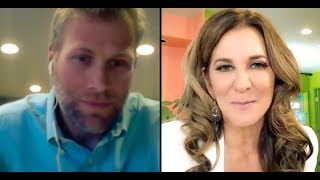
This is a YouTube video titled "The Secret to Building an Unbreakable Company Culture" published in October 2017. It features a conversational interview between Allison Maslan, a business growth mentor and host of the show "Ally and You," and Dave Will, an expert in company culture and founder of Peach New Media. The discussion covers topics such as entrepreneurship challenges, company culture importance, employee motivation, and the development of Prop Fuel, a platform designed to enhance workplace culture and employee engagement. Allison Maslan leads the conversation, engaging with Dave Will on his experiences and insights, providing valuable business advice to viewers.
I hope you're having a fabulous day so far. We are excited to be here for another episode of Ally and you, the business success and lifestyle show. I am Alison Maslin. I'm a business growth mentor and we love helping you, the business owner breakthrough to new levels, new heights in your business. And one way that we do that is that I bring on experts in, in all aspects of business that are going to give you the clues, the success secrets that you need to break through. And today is just a phenomenal day because I am going to be bringing on to you or introducing to you Dave Will, who is truly an expert in company culture. So we want to hear your questions and we will be responding to those. And you know, company culture is such an important topic these days. So I'm going to go ahead and dive right in because Dave's sitting here with us. But just a little bit of background and also I'd love to hear from you what city that you are listening from and what is your business name. So go ahead and connect with us. But about Dave. In February of 2015, a private equity firm, AKKR, acquired Dave's company. I'm sure we'll hear some about that. Peach New Media, a learning platform software that he started in 2001. He as the CEO and founder of the SAS software and surf service business. He grew it to 40 employees, 200 clients. It was all about customer service and company culture and scalability, all those important things that we all want to know about. And then he took all that wisdom.
Yeah, brilliance. It was awesome. And I thought I could use this. Like anybody can smile less and I could definitely walk faster. And I was like if that's all it takes to climb the corporate ladder, I'm in. Man, this is awesome. Like you don't even really have to do the work. Just walk fast and smile less. Perception is reality. So I went on to a few more jobs and I heard phrases like lacks urgency. And so ultimately I started a business on the antithesis of Mark's advice. And that's fortunately in my case, I was forced to to find my own thing. Now I could have gone back into working for corporate, but that's when I was 30. And that, Ali, is when I discovered what just to be me, to be the goofball, to be the. I mean everything that makes me my lack I was meant to do because it's when I discovered that it's okay just to be me to be the goofball to be the. I mean everything that makes me my lack of A filter, my add, which is all over the place. You know, it's like. It's okay. It's okay. And I started the business, and the business did awesome.
Embracing you, which is quite the opposite of corporate America, which, you know, is too bad that it's that way. Although I think the business you have now is hoping that will make some changes.
Ellie, I'm not going to lie. I put on a collared shirt for this interview. Oh, I probably should have kept my. This is. I think I was showing this to you. I probably should have kept my. My. My T shirt on earlier, but I put that aside for a collared shirt because I wanted to look nice for your show.
You look fantastic. But you would look fantastic.
My razor broke.
Well, hey, I'm not gonna fire you from this show. I'm actually thrilled that you are here.
Thank you.
Just as you are. And you have so much to share. And. And so what do you think? Looking back, I mean, okay, so then you. You went on, you started, you built this business. Peach. What is it?
Peach. New media.
Media. And it, like, took off, right? I mean, you. It's.
No, God, no. I. It was. It. In my head. I had planned on having a takeoff, but no, it was super slow. It was super, super slow. And things take time. You know, that's one of the things that I learned is, is everything takes time. Overnight successes are so unusual. And it's easy to sit here now and look back and say, yeah, just. It was a hockey stick. It did awesome. I mean, there were points where we had rapid growth, but there were also points where it was really, really difficult. It was 14 years of building a business before I was able to. To. And I actually wasn't even trying to. Before it. You. To get the attention of the group you mentioned earlier, akkr. So, no, it did not take off.
I love that you share that because I do feel that, I mean, even the overnight successes you don't hear of the years of, you know.
Behind is so hard. I guarantee there's a lot of people listening to this Allie, that are thinking, damn, why can't I find that thing that just takes off? Most things don't just take off. Most things require getting up every morning, getting back to the grind and trying to get that flywheel rolling. Most things require a lot of work. People aren't just willing to sit down and write a check because you think you have an awesome product. It takes so much work to get people to actually identify the value in what it is you're offering. So much so that they're willing to actually give you a piece of their hard earned money.
Yeah. And you know, it's, it's all the wisdom though, that you, you have to learn along the way. I think if it just. A lot of companies actually that do take off really fast end up falling apart because they don't have the foundation underneath it. I mean, they're taking on all these clients and then they can't handle the demand or the culture isn't set, I'd imagine.
It's so hard. I have to imagine a buddy of mine has a business called Butcher Box, by the way, and I'm going to give him a plug because it's an awesome, awesome business. And Butcherbox, this is Mike Salgaro. And Butcherbox is, it's a paleo meat company. This guy in two years. And I've had him on my podcast, so I know this is public information. In two years. So this month he's been around for two years. He's at 30. I'm sorry, 3.6 million. I think it's $3.6 million monthly recurring revenue. That is an example of overnight success. And that even was two years. But it's very, very unusual to run into situations like that, as you know.
What are some of the lessons that you learned in that first business? I mean, you had 40 plus employees, over 200 customers. You were, you know, it was a lot you did in that 14 years. What are some of the biggest lessons that you learned?
So it was an enterprise business. Excuse me, it was an enterprise business. So it's B2B. So some of the lessons, I think the first one I already alluded to, which is it's really hard to make a buck. It is so hard. I can't tell you how many times I felt discouraged over what felt like a lack of progress. And then every now and then something would happen and you're like, yes, in fact, Joe Polish. I know you know Joe Polish. We're in one of the groups together. Can I. Is it okay to be, to be transparent and I mean, is this a PG show or can I say a dirty word?
I know what you're talking about because it's that poster, isn't it?
That's right. So he has a poster. And this is the first lesson. He has a poster that starts with oh yeah. And then the next box. It's like a cartoon thing with all these box next boxes. Then it says oh yeah. Then it starts again. That's what it's like.
So it's hard to make it entrepreneurial roller coaster at the top.
Yeah, there's a lot of dance.
You get those little tastes of the. Oh, yes. And that's what going. Right.
So that's, That's. I think that's my first lesson. You can take what you will out of it. I think maybe the lesson is that persistence wins and hence the phrase grit that we've heard so many times. I think grit is so important because it's really hard to make a buck. The second thing I would, and I like to think in three. So I'm going to give you three things that I learned. The second thing, I'm going to call it cup holders. When I don't know about you, Ali, maybe you're fairly technical when it comes to buying a car, but for me, I trust that the engine is going to work right. And the engine between. Let's look at a Suburban and a Ford Expedition. This is actually. This is one of the two cars we were considering. We ended up with a Ford Expedition. You know why? Because the damn cup holders. I swear to God, both the cars were cool, but I'm sure the engines worked. You talk to my mechanic friends, oh, Chevy, you need the truck with the engine and all that. I guess the mechanics don't like Fords, but I like the Ford because it had a nicer dashboard. The seats went down in a better way than the Suburban. So, Ali, I call these cup holders. And what they are are things that, generally speaking, the more technical purists in a company, they think nothing of them, but it's actually what people are buying. So when you have a platform or a service even, it's the little things. You know what I have right here? Note cards. Because I'm writing some handwritten notes right now. It's a cup holder. So if you're in a service business or if you're a salesman, handwritten notes go a long way. Stupid stuff like this cup holders, it's a little prop fueled hat. So these are the things that I think that's one of the things I learned, is how important cup holders are. And it's not just swag and notes. It's actually components of software. One more point on this, and I'm sorry to go on and on about.
This is great.
I remember we had a client that without going into what a learning management system is and what it does, we had a client that really liked what we had and they liked what our competitor had. And I said, so what's the decision gonna be like what they said, well, you Know, you guys are really good in a lot of ways, but they have the social media buttons that you can. Where you can, like, share stuff. I was like, really? So you're gonna make a whole decision based on the social media sharing? I said, hang on a second. I put her on hold. I called my key developer, who actually happens to be my partner in business right now. I called Cameron and I said, dude, can we get social media buttons put on the site now? I'd like to say. I went back on the phone, it was done. It wasn't quite done. The next morning, it was done and she made a decision. She picked us. That's a cup holder. He laughed when I told him that. He's like, dude, that's not a priority of ours. I said, it is right now because we have a customer making decision on that. That's a cup holder. The final thing of my three lessons, I think that I've learned in that first business. And I'd be remiss if I didn't focus on the topic today, which is culture. My focus was on culture, not the customer, which I know sounds odd because we grew up hearing in business, grew up in business hearing the customer comes first. But for me, the employee comes first for me because I know if my employees are happy and they're smiling like you are and they're proud and they have a sense of. Of accomplishment and ownership of their business and they see a vision, they're gonna do a great job for the customer. The trick is getting your employees to show and feel those feelings. So those are three things. So what I say, it was certainly the culture. Yeah. It's hard to make a buck and couple. There's three lessons. I got a lot more, man. We could talk all day about lessons.
And I love those, actually. I want to just touch on that briefly. So I want to ask you a question. How do you get your grit? Because. Because of the entrepreneur roller coaster like we just talked about. Right. There are those many, many days. Feel like you're hitting a wall and fired and you've had. You've been up till two and you just. You. What is it inside of you where you get that grit and that stick to it. Ness. And like I'm just going to keep going at it.
Yeah, it's. I don't mean to sound like a victim. It's. It's lonely, isn't it? You know, it's sometimes it's lonely trying to start something up because you just feel like you're getting punched and punched and punched Again. And I was talking to my wife today. Something happened today that I didn't like. And I was. We went out to lunch together, and I told her, you know, just gotta get up again. Right. And I think that's what it comes down to. There's a great video on YouTube. It's this motivation video about small steps. I think it is. Shoot. I wish I had the name of it here, but I just thought of it, otherwise I'd have it prepared. Maybe I can send it to you and we can put in the show notes. But it's about these small steps. And the point is that all great things come from lots of little steps. So for me, grit isn't about taking that leap of faith. Grit is not about making that awesome big decision. It's not about finding product, market fit and winning the big customer. It's about getting out of bed every morning and taking that first step.
Yep.
So it's all the little steps. It's just that one step. It's. It's just all the little steps. Here's the thing, though. You can't stop. You can't stop. You can take a nap, but you can't stop taking those steps.
Yeah, you can't stop. It's because it's very hard.
You can't stop.
You know, you have to. You absolutely have to keep going. And I. And I do get flowing.
Relentless forward motion. That's a. That's a mantra I live by. Relentless forward motion.
Yeah.
And, you know, and you mentioned earlier, I don't normally emphasize this aspect because I do it for me at the marathons. I've also done a ultra, and believe me, this is minor compared to what some amazing people out there doing. I did a 50 miler. That's a funny story about the 50 miler. When I. When I went to register that evening, because it was an overnight race. When I went to register that evening, I got in line and I was waiting in this long line to register. And I kind of looked ahead and I saw two signs. One said 100 miles and one said 50 miles. Now, I was registered for the 50, so I had to walk up to the 50 where there were like three people in line. The hundred mile had, like 50 people in line. So here I am walking past all the hundred milers, admitting that I'm the weak one in the group, only doing 50 miles.
Yeah, you lose there. You're only running 50 miles.
But the point of that was there were many, many times in that very slow, arduous 50 miles where it just Came down to taking one more step. So that's a. I like to beat that. It is.
And I love that analogy. It's true. You just have to keep going and taking that step. And I love what you said too, about the cup holders. You know, it's really the experience. And we, I run a mastermind called Pinnacle Global Network and we call it the Pinnacle Experience. Where.
I like that. Is it local or do you do it? Is it national or. Tell me about that.
Yeah. And so it's private.
Of course. It's international. You're like two minutes from Mexico.
This is. It's international. I mean, work with clients all over the world. We're based in San Diego and true, we've had clients from London, Australia, and we have 150 members, business owners that are incredible. But you know, as you know, it is lonely. So having that community and the support to help you, to remind you to take that one more step and keep you focused on the big picture is super important.
That's right. Yeah.
Well, let's talk about company culture. Because, you know, you developed the software on company culture. That was a big focus in your last business.
What?
Define company culture.
Well, I'm not gonna. I won't make up my own definition. I'm gonna use the definition of a gentleman that I have a great deal of respect for. His name is Brian Halligan. He's become a. I like to think he's a friend of mine from HubSpot. He's the founder and CEO of HubSpot, another phenomenal business. I wouldn't even call them an overnight success. They've been a 12 year phenomenal sensation, but not an overnight success 12 years long. And Brian defines company culture. HubSpot is phenomenal culture, Just such a cool company. And he describes it as the way your employees make decisions when you're not in the room. So there's all these values. Yeah, me too. There's all these values and data points and the ultimate vision. And all these things go into how you're going to decide what to do in a difficult decision. Here's a good example, and I won't get too specific because I'm not that creative, but a customer calls and is really upset about something, how are you going to handle that person that's upset? Because there's a lot of right answers. Right. There's a lot of right things you could do. You could give it to them for free. And I'm just making up a scenario. You could credit them, you could tell them to go screw because they're not actually your customer, and they're wrong. You could show them everything involved in the process, how you fix. There's tons of ways to handle that customer. Company culture determines how you're gonna handle that customer.
Yeah, that's true. Because if your employees are excited and passionate about. About your culture, about your vision, they're going to be able to make those right decisions.
Yeah, it's so. I have a hard time with the word excited. I know what you mean, because excited. It's hard to remain excited for a long period of time. Right. Culture, to me, is this thing that it's pumping through your body all the time for a very, very, very long time. It's. It's. In fact, I would argue it's the blood. It's. It's not pumping through your blood. It is the blood in your body. And. Yeah, and I think that's what. There's actually a definition. I remember, I have three boys. I remember one of them in social studies, read the definition of culture, and it was. It's amazing. Like, actual culture and communities. The definition fits quite well for a company. Has to do with, you know, the way people interact and their. The ecosystem and the economy and so on and how it all engages. That's another great definition of culture, is the actual definition of culture.
Right. Well, it's a family. It's a tribe. I have a team of coaches. They're former CEOs, and we get together every week for a couple hours and we discuss clients. And they are so passionate and committed. And I go to sleep at night peacefully because I know our clients are so well taken care of. And it's not because I have to be on them. You know, they want to. But I love what you said because it's like, I should be able to come and go and it should be the same, regardless.
Yeah, that's right. I mean, ultimately, that's the goal. And I've heard this. I think this is kind of cool. In a business, the owner, the CEO, the founder is the only one in the business that's trying to make themselves less valuable. Isn't that funny? Like, everybody in the business is trying to make themselves indispensable except the owner.
Yeah.
In a way that everybody can run it without them.
Right.
It's nice to be wanted. Right. But it's even better to not be needed.
You know, I took my team to Disneyland last week for the full day, and I was thinking about that because Walt Disney's been gone for so long. But here is a culture that has sustained all these years, like 60 years now. And a lot of the things are exactly the same. And, man, do they handle things so well there. It's incredible.
Ali. Talk about recognition. And I didn't interview him. I went to Disney in Florida, so. At Disneyland World. Disney World, right? Disneyland. I don't know what's the one in Florida? And thank you. And I remember we were in the. I think it's called the Intercontinental, and I was checking out of the cafeteria my entire family's food and, like, two trays, and they're all at the table falling asleep because it was. We're halfway through the day already. And an older gentleman was checking me out. And, you know, he's dressed in the uniform, Disney uniform. And at this point, I'm, you know, eight, 10 years into the business. I've got a bunch of employees. I love business, and I love what Walt Disney did and what he created and the culture he created there. It's just. I mean, like you said, it's an incredible piece of work he made there. So I asked this guy, I said, so, do you like working for Disney? I was thinking, you know, I give this like, 50, 50. You're checking people out of the cafeteria. Do you like it? Or is this. Is this kind of like all you could find because you live in Orlando? And he turned to me and he said, I was in the insurance industry for 32 years or something like that. I don't remember exactly. I was in the insurance industry forever. And I can count on one hand the number of times my boss said, thank you. He says, when I leave here, every single night, my boss looks me in the eye, shakes my hand, and he says, thank you.
Wow.
That's what that guy told me about his job. That's what meant something to him. He didn't say, dude, I make pretty good money for a cashier. He didn't say, I get free tickets. He didn't say, I love my Mickey Mouse hat. He didn't say any of that stuff. What he said is, my boss says, thank you when I leave. He felt appreciated. And that actually points to a huge element of why we built a system internal to Peach through this kind of stuff. But ultimately why we built Prop Fuel to help companies create that element of recognition and appreciation in a company that is.
I mean, that says everything, right?
No kidding. I know, I know. It was an awesome story.
So tell. Let's talk about Prop Fuel for a minute. Tell us the inspiration. What is it? You know, I want you to share it because I think it's fantastic.
So I'm sure it's clear by now that company culture was important to me. And it was important to me because I'm going to meander through this. Forgive me. I don't have a concise answer to anything, but company culture is really important to me because I wanted to. To like my job. It was pretty selfish at first. I wanted to like my job. I didn't like. I take it back. I enjoyed Nielsen. I really enjoyed the people at Nielsen. I really liked elements of Kraft Rental Foods, Pricewater as Coopers SAP. I worked at all these big, big companies, and there are elements of them that I like. I tend to be optimistic and positive, so I'm gonna find things alike. But I wasn't very good at any of it. None of it. And. And so I wanted to create an environment where I wanted to go to work. Yvonne Chouinard says, founder of Patagonia, says he had to build his company, and he didn't want it to become corporate. He still wanted people to come to work on the balls of their feet climbing the stairs two at a time. I wanted to build a company where people came to work on the balls of their feet climbing the stairs two at a time. And I wanted to be the one leading that charge. I wanted to get to the work and the balls of my feet climbing the stairs two at a time. So I did it for me. And then it became about the employees. I really wanted people to enjoy their job. And there was a point where I also acknowledged to myself that culture wasn't just about making people smile. I'd like to think it is, but it's actually about creating a really valuable business. And that struck me when I did something. This is silly, but I did it anyway. We used to leave Easter baskets on people's desks the day after Easter. So people would come into the office and they'd have a little Easter basket sitting on their desk with chocolate, and we'd leave, like. Like Easter bunny tracks and all kinds of. I say we. It was actually my kids that would help me decorate the office. Oh, yeah. It was really awesome. And I remember I did that. And then I left on a trip. I wasn't even there on that Monday. And nobody called. And I was like. I was like, why do I do this? Nobody even called to say thanks. That was awesome. And then I realized, wait a minute. That's kind of a dicky attitude. Like, I'm not doing this to get the recognition. I'm not doing this to get the phone call. Oh, my God, Dave, you're so great. Thank you for leaving us chocolate. That's not why I'm doing. I'm doing it because I want the value of the business to go up. And I know that if I create an environment where my people are happy, feeling good about work, whether it's creating a vision or leaving chocolate on their desk, I know that's going to increase the value of the business because they're going to work beyond their job description. They do. They work beyond their job description when they're happy. All right, so the inspiration behind Prop Fuel, one of the tools we used in my last company, we cobbled together this way so that every week an email would go out with two questions. And the questions were, is there anything. No, no, no. There are three questions. One was, how you feeling about your job this week? Second question was. And it was a scale of one to five, I think. Second question was, is there anything you need or we can do to help you do your job better? And then the third question was, is there anyone you want to recognize or nominate for Peach of the Week? Peach of the Week is this thing we did. And so there was the recognition, and there was this kind of scale just so I could keep track of the pulse on the finger of the company. I didn't freak out about any. Made any little changes week to week. It was trends I was interested in with that number. And then the other one, is there anything you need to do your job better? I can't tell you how many people wanted, like, a bouncy ball or standing desk or like, a keyboard. And so I go to Amazon, I buy that before our company meeting, get into the company meeting, which, by the way, is a great thing. If you don't do it, do it on video, because. Not in person. Do it in video, because if you have remote employees now, everybody's on par. Everybody's at the same level. If you do it in person, your remote employees dial in. They're on the outside on video using Zoom or Adobe Connect or whatever. Then you have everybody on par with each other. So in your company meetings, I would go through and I talk about all the nominations for Peach of the Week. We'd select the piece of the week. We'd talk about some of the feedback I got in the weekly thing. So that was the inspiration. It worked so well for us. I could understand a little bit better what was going on inside the heads of my employees, and I was able to address issues before they became big issues. And it worked. Really, you Were connecting, really every week. So we built a platform that allows you to pick your own questions. We have a bank of questions. And so there's. You can do quantified questions, qualified questions, you can give props. And it collects all the stats and analytics and it does it all without you having to do a thing. The only thing you need to do as a business owner, and this is really, really important, you need to pay attention to it, you need to read it, you need to respond to it, you need to acknowledge it. This is your. It's a digital set of ears. And now it's time for you to actually absorb it. So that's the only thing you need to do. So we do the best we can to provide reports to the business owner and to the admin so that we can summarize what it is that your people are telling you. But that's what Prop Fuel is all about.
That's so great. And I think that by asking those questions, number one, it shows that you're interested, it shows that you care and probably saves so much money from people leaving over a little misunderstanding or maybe they didn't get the support they needed. They don't really understand what they need to do. So therefore it avoids mistakes. Probably so many ways.
Yeah. So not everything was gold. There was a year. 2010 is a very, very difficult year for us. I cut my compensation completely at the time. I had a partner. We both decided not to take any money out for a period of time. That didn't fix it. It wasn't enough. So we had to either eliminate a couple positions or reduce compensation across the board. And we chose to do the latter. We reduced compensation across the board by 15%. I checked in with five or so key employees. I said, are you behind me on this? Because if any one of them, we were gonna just have to let someone go. I could not lose any of my key employees. So I went to the five people, they said, we got your back, Dave. And so went into the company meeting and I made this announcement to, I think at the time, maybe 32 or so people. And over the course of a six month period where people were making 15% less the company's pinching pennies. I wasn't super cheery every day. Not a single person left. Not a single person left. That says something, I think, about company culture.
It sure does. And how nice for you to feel like it wasn't just on your back to build this thing, that you really did it as a team.
Yeah.
A lot about you as a leader.
So they were very good people. Very good people.
But you're listening, you care. And I. You know, a lot of times people think someone, that the first thing, the most important thing is the money. Although it is important. But the studies show that's not why someone stays in a job.
Yeah, that's right. Dan Pink has a great video about motivation. And one thing he says in there, if you haven't seen this, it's an RSA whiteboard video.
I have seen it. I know what you're talking about is great.
And he says, he says it's mastery, autonomy. Do you remember the third thing? There's like a third thing. Maybe it's trust or something, but mastery and autonomy are two of the things that really stand out to me. And his point in this is the studies have been done. You can dangle a carrot, you can give somebody money, you can give them a cruise, but that actually doesn't drive them to perform as much as actually giving them some intrinsic motivators that lead to the mastery of a topic and the ability to be, to be autonomous in the way that they do it.
Yeah, I love that. And that feeling that they are growing. Right. That sense of accomplishment.
Yeah. It's about the intrinsic motivators as opposed to the extrinsic motivators. Right?
Yeah. Yeah. Well, I love this. And so for people to check it out, they just go to prop. Yeah.
So there's a couple things. Propfuel.com we have a free trial and it's two weeks. If you want more, that's just let me know. You know, it's. We're pretty flexible on how long you need to make that decision. My guess is that you'll make the decision pretty quickly. It's. It's an awesome, super easy to use platform. But for your listeners, Allie, I want to give them this, this document. It's 101 tips on how to create a great culture. There's no strings attached other than you got to put in your email address and then we take that, we sell it to everybod, everybody. That's not true. We don't. It's just for us. You will get some emails from us. If you don't want that, just unsubscribe. But there's 101 tips on how to create. Create a great company culture that can be found at www.propfuel.com forward/ali a l l I E. Awesome.
Fantastic. And we will put that down in the comments too. And then we also put all these downloads in our library from the show, which is allisonmaslin.com library so you can get Dave's download. We'll also put his special link there that he just mentioned. And you'll get the downloads from all of our past shows as well. So that I already looked through that, Dave, and man, the advice that you share in that is incredible. A lot of things that I have not seen before. So I love the tips that you share on.
It's not all about the pool tables and the free food, although that's a little bit. But it's, I mean, shoot 101 tips. Some of it's got to be about a pool table, but for the most part, there's a lot of very intrinsic things in there. Now, I'll tell you what, anyone that signs up through you alley, I want to send them a hat while we have some. I'm looking at, oh, wow, send them a hat and this cool T shirt. And so just for signing up, when the trial is over, if you want, we got some cool swag here. I'll send it out to you.
Oh, man. I know people will be all over that. I know our clients are going to love that too. And they're going to check out your software too.
Good.
So what are plans ahead for? How's everything going with Prop Fuel?
Oh, so it's awesome. You know, I'm a big believer in niche. Right. So right now we have a tool that's great for entrepreneurs and their teams. We're looking at working with some HR because HR organizations seem. Not organizations, but HR professionals seem to really love data. You can get a lot of data out of this. But what I want to find is that niche that. That absolutely needs something like this. Here's an example. And this is what's next. I'm exploring ideas like this. What if you had a sales team where 20% of your sales team is performing, but 80% is not performing? Wouldn't it be cool to understand what's going on inside the heads of the 20 percenters and what's going on inside the heads of the 80 percenters? And what if you could actually shift a little bit of mentality by asking the right questions to make some of those 80% perform better? So then you don't have 80% of your sales team sucking. You have still some sucking, but maybe not as many. Wouldn't that be cool? So I'm thinking for Propul now, we've got a great base product that a lot of people are using. What I want to do with it is find that niche, find that place where we can really tailor some versions of this specifically for verticals like sales.
Oh, I love that. I think that it's absolutely brilliant. And business owners need that. What about. What about staffing companies? So any business bonus or something like that?
Yeah. Yes. And benefits companies. There's a lot of benefits companies, staffing companies. In fact, any company that has performance metrics. I laugh when I say that now because I realize every company has performance metrics, but you can actually associate performance metrics with these questions as well. And what if you could tag your values as well to certain props? I mean, there's just so much cool stuff we can do with this.
I love it so well, this is so great, Dave. Thank you for taking the time.
Allie. I'm so grateful to be here.
Yeah. No, this is you. You shared so much. I mean, any one of the things we discussed, we could go down a rabbit hole.
No kidding. I know. Nobody accused me of being quiet.
Yeah. Well, this was so great. And everything you said was people can apply right now. So I want you all to get Dave's download. We'll put the link below. And until next time, everyone, we will see you on Allie and you. And remember to put yourself out there and elevate. And just as Dave said, just keep taking one more step.
Step.
All right. And then you can also get this. If you want to be listening to this while you're driving or any of our other shows, go ahead and check us out on itunes. It's all. It's allisonmaslin.com iTunes or if you want the audio version only alisonmousland.com audio all right, thanks, Dave.
Thank you, Allie.
All right, bye, everybody.
More from Allison

There are 90,000 marketing agencies in the U.S. but 99% aren't worth your money.

Would you leave your comfort zone for the sake of your business? #businessgrowth #scalingbusiness

Are you willing to trust the process to grow your business? #businessgrowth #scalingstrategies

He Built a $150M Company Without Taking a Single Dollar of Outside Capital | Erik Huberman




Wing Lam has run Wahoo's Fish Tacos for 38 years and his hiring rule is simple.


