The Truth About Work-Life Balance as an Entrepreneur
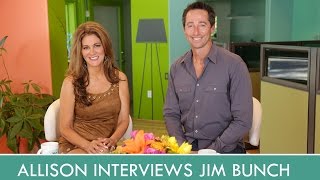
Allison Maslan interviews Jim Bunch about running a business without burning out. They discuss energy management, aligning your work with your values, and designing a life that actually supports what you're trying to build.
Welcome to Ali and you'd. I am Alison Maslin. My friends call me Allie. I'm a serial entrepreneur and we help business owners grow their business. Today we are talking to Jim Bunch and we're going to be talking about starting businesses, growing businesses and helping entrepreneurs lead a more balanced life right here on Allie. And you'd. Well, welcome to Ally and you'd. So we love to talk about business here. Right? That's what this is all about. And I have an incredible guest, Jim Bunch, who is an entrepreneur in the true sense. He has built big companies, he's mentored thousands of hundreds of thousands of business owners all over the world. And so we're really excited to have you here today.
It's great to be here. Great to reconnect.
Yeah. So we'll talk, you know, maybe share a little bit how we met. Actually, I don't know if I told you this story that we sat next to each other at the car wash and you didn't know it was me and I didn't know it was you until I had left, but we live in Cardiff, which is a little kind of beach town in San Diego, and what you can see right out here out the window is the ocean. And Jim and I had known of each other being in the coaching world for some time, but we hadn't actually met. And then we have a mutual friend, though, John Asra, one of my best.
Friends for the last 20 plus years and one of my earliest mentors, actually.
Oh, really? Yeah. John is an amazing guy. He's been on my show like three times. But tell us a little bit about your early days. I mean, how did you know that you wanted to be a business owner? You've created so many amazing things in your life. But how did it all start?
Well, I think knowing that I wanted to become a business owner actually happened because I started to realize that I didn't want to actually become a doctor. And when I went to University of Florida, I was taking biochem and organic chemistry and I was just stressed out to the max. And interesting enough, through coincidence, if you will, or no coincidence, a guy introduced me to a nutrition product that he said was helping people change their health and all this. So I got into this idea, like, wow, if nutrition can help people change their life, maybe I should start selling this. So I got involved in it. But what I figured out quickly, especially being at University of Florida with 35,000 kids, most of those kids didn't give a crap about nutrition at the time.
Yeah. Really? Yeah. Quite the Opposite, actually, no.
So we're trying to sell it to old people. But what happened, freak thing one night is we went out and we went out and partied like we do, you know, we were drinking and doing this kind of stuff and came home and I took my nutrition like I was supposed to. It was like 72 vitamins and minerals and all this. And I woke up the next day without a hangover. And all of a sudden I'm like, wait a second, maybe this isn't the health cure everybody's talking about. Maybe this is actually a great hangover cure. So next thing you know, I'm selling cases of this stuff at the university. Okay.
It's all about the marketing, the positioning, the messaging. Right.
Great product, wrong conversation, wrong target audience.
Exactly. Good lesson. Early on.
So I learned, you know, and I learned sales and a couple of other things that I had done but I didn't really understand at that time. Leadership, which is another skill you learn later on you can do it yourself. But if you're going to build a really scalable business, you have to understand all the positions and how to develop and lead and train people or at least find people who can do that.
Right, right. And so you've had a lot of practice with that in building teams. I think it's true. I don't think that. I mean, yes, I'd say there are born leaders that have that aptitude, but until you have people to lead, you don't really get to put that into practice.
Yeah, and that can be, well, it can be entrepreneurs, I'm sorry, employees. It can be, you know, some people lead direct sales forces, you know, so you might be leading a non profit community, you know, so leading a board.
Or something, or your children.
Or your children. Or they might be leading you, just making you think you're leading them.
Yeah, right. Yeah. So what do you. So being a business owner and you've done many things and we'll talk about a lot of those things today, I'm excited to kind of dive into it. But what do you love most about being an entrepreneur?
I think who you become in the process of building and scaling businesses is somebody different than you would be if you didn't have the environment of a company. In other words, everything you have to figure out from setting a clear vision and mission to, you know, goals, strategies, KPIs, managing teams, you know, running the division, sales, marketing, finance, operations, legal, hr. There's a lot that you get to learn and you can learn a lot of that stuff if you go take an MBA course. But you don't necessarily learn the leadership skills. You don't learn the communication skills. You don't learn how to overcome challenges. You don't learn the inner game that is so critical to success in business. Because you can teach somebody in a book how to do a lot of things, the skills, but the mindset, and then understand how to design the right environments to win. That's a whole different conversation, right?
Yes. Because until you're in it and you're faced with a challenge and somebody has a problem, or you have, you know, let's say one of your top people in your company leaves, or you have to build a whole team, I mean, you might have studied it and learned the logistics of it, but until you're really in that.
And it goes stages. Right. So from zero to million, you have a different conversation than a million to 5 and 5 to 50 and 50 to 150 and so on.
Yes. What got you here will not get you there.
Guaranteed.
Right?
Guaranteed.
And we talk about that a lot with our clients because I think when people get into business, oftentimes they're a solopreneur. You have a passion, and many of you might be in that position right now. You have a passion and you're out there and you're seeing clients and you're doing your marketing. But. But then there's going to be a point where you max out and there's no more time in the day. You've capped out on your revenue. And I think that. I think on average, it's about 450 to $500,000 that a solopreneur can be out there and pretty much seeing clients throughout the day is where. And then usually they collapse and are beyond exhaustion. Right. You've got to start scaling and building that. But I think that business owners have a lot of fear around that. I have conversations about that all the time. Well, I don't have the money to hire someone. And what I tell them is you have it backwards because actually, when you can just get them in within the first month, you should be creating more revenue because it's going to free you up to get out there and bring in more business.
Yeah. And the way that that triggered for me, because I think the hardest hire is your first hire.
Yeah.
Because you as the entrepreneur have to overcome your own thoughts or beliefs or scarcity or whatever it is. But when you think about it this way, let's say that you're a coach or a designer or whatever role you are, you have to put A dollar to that time. So if you're a coach or a salesperson or whatever, let's say your time is worth $500 an hour. Right. So you get to that point where you're really good at what you do. You're worth $500 an hour, and you realize that you're booking your own travel or you're checking your own email, or you're following up on setting appointments. That is something that's worth 10 to $20 an hour. So the framework that works for me is I'm constantly going, how do I increase my dollar per hour worth from 500 to 5,000 to 50,000? And then what's the cost of that? So if I'm making 500 an hour and I can hire somebody for 10 an hour.
Right.
That means I'm losing $490 an hour, and I don't like to lose.
Yeah. And what can you be doing with that time? And that somebody else is really good at that. It's not that you can't do it, but there is a better use of your time that you can be putting towards growing your company. So I think that it's smart. I think people have a hard time making that shift. But there is a statistic that shows if you hire within the first six months of your business, you're going to get to the seven figures so much faster.
That makes sense to me. And if you can, depending on the kind of business you're doing, you know, some businesses will start with an idea, raise capital, and then your. Your job is to build that team that will build it. You know, other people want to start with the idea, generate revenue, and then scale a little slower. So it depends on what the strategy is that you're using, too, as to how quickly you'll build. So the one we just did, you know, we raised capital first. We built our infrastructure and our technology. We started recruiting our team, and now we're going to scale. And so we're already scaling.
Right. So tell us about that, because I think it's quite amazing in so many ways what you're doing for the environment and you're helping people to make a good living and all that good stuff. So let's talk about that.
Well, I think you're seeing this kind of as a trend, Right. You're probably in a business that you feel like you're making an impact. Right. And so for me, I was at the. A couple of years ago, I invested in a company that I was mentoring the CEO, and I just believed in what he was doing, I sit as a chairman of the board of a national nonprofit that's helping with business owners become more sustainable. And as I got deeper and deeper into the conversation, I realized that the impact I was having in my other companies was good. But the impact that I could have globally by partnering up and becoming a co founder in this business was exponentially bigger. And so having a 9 year old, I'm starting to look at my legacy and go, what's the real impact that I can make and how do I impact 7 to 10 billion people?
Right.
And we had had a failure that happened about four years earlier. You know, an app company that grew from, in 79 days, we grew from zero people downloading the app to a million in 79 days. And we thought, oh, this is the way we're going to change the world. And it wasn't. But we learned from that and took a lot of those lessons and said, okay, how do we do that here? But with the right impact and values.
Because the values this is with solar.
Yeah. So specifically we're starting with energy. So if you look at the energy industry, it's a multi trillion dollar a year industry. It's what separates a third world country from a first world. So you know, all the lights and everything that are powering this, you know, your computer, all this, what's happening is there's a, there's a disrupting and decentralizing the energy industry and we want to be a part of that. So we've partnered with Elon Musk and SolarCity and our job is to go out there and to build an army of entrepreneurs that want to shift the power from dirty energy coal to clean energy solar. And we're building that company to do that.
That is so amazing. And it's really taking off.
It has started to scale quickly, which we like.
That's exciting. So going back to the company that, the technology company that had a quick growth and then kind of petered out, what were some of the things that you learned then? Because I think so many people are afraid to move forward because they're afraid to fail, but I think that you need to fail. I think it should be a requirement because I know out of my biggest complete bombs and in the moment, of course you feel bad about it, but that's where it forces you to do things differently and move forward in a different way. So what was your big aha from that?
Well, there's a, there's a couple of them. The number one big aha is, is that we have to have alignment of values with your partners. And so myself and one other gentleman, we were perfectly aligned. The other three had a different agenda, had a different values alignment. So what happens is when you get to the point where critical decisions have to be made, whether it's to bring in more capital, whether it's to scale differently, whether it's to whatever it is, if you have partners, which is a whole different dynamic.
Yes.
You don't get to make a unilateral decision. Right.
Yeah. And that, I mean, five partners, I have had two partnerships and one did not work out well. One's worked out very well. And so you know that that was with two people. So five. And of course you're going to have different agendas.
Yeah.
Right. So how do you, how do you make that work?
Again, I think you start with the values alignment first. This was one of my big lessons. One of my mentors sat me down after this and took me through a full day debrief. So one of the big lessons was start with the values. If you have the right values alignment, you hire the right people, you partner with the right people, you have the right vendors that are all going after the same values, vision and mission, you're more likely to navigate that. The other piece, the big lesson, and I see this in entrepreneurs all the time, is they're not building the proper foundation for success. And if you're going to build, you know, I use this metaphor, if you want to build a grass hut, all you do is you just sweep the ground. You put the grass hut up. Right. If you want to build a home, you pour concrete that's a couple of feet thick and then you can build a two or three story house. But if you want to build a skyscraper and you want to build a large business, if you ever look at how they build skyscrapers, they dig very deep first and then they put in all the infrastructure beneath the ground so that when the wind comes along, a lot of the buildings underneath the ground and the wind's not going to blow it over.
I see. I love that analogy. That makes so much sense. So it's really rooted and I think it is so important about the values and that everybody is in alignment and not just the partners, but the team. Right. The employees. And that's what's going to get you, I think it's that real deep mission that fuels the whole, the whole business forward because everybody's passionate about it, excited, and then you're going to do that wit whatever it takes to make it happen.
You got it? So that's key. There's the soft, tangible stuff, and then there's just infrastructure stuff. You know, we. From a technology standpoint, when you scale from zero to a million people in 79 days, it can test the foundation of what you've built. And so we ended up bringing other partners who couldn't keep up, and that set us back, and it lowered expectations, and we went to market too fast. So the other big lesson around anything is, especially if you're playing a really big game, is timing. You know, I surf. So if you surf, you know, or paddle board or anything, you know, trapeze. Trapeze, right. You know that there's timing built in. And when it comes to a wave, if you're too early, that wave will hit you and take you under. If you're too late, the wave will pass you by. And so a lot of business, especially at the bigger game level, is are you in the right position at the right time with the right skills and resources?
You know, in my earlier business, I ran an advertising and PR firm, and one of my clients was Charlotte Russe. And this was in the earlier days, and we helped them grow from about 15 to 50 stores, and then they ended up going public and selling. Now there are hundreds of stores. But one of the things those three brothers was actually, their father started it, and then it was the three brothers. And Larry Lawrence, who I work closely with, said that one of their biggest secrets was that they didn't grow too fast. They took 15 years. Maybe with technology now they would have gone a little bit faster, but to get the first few stores down and get the systems, and so that when they replicated, which really is what scaling is all about, that it was all the same, and they really. It was flawless. So I think that there is something to that, because I think we do get so excited, and we want it bigger, bigger, bigger, faster, faster, faster. But you have to walk before you run. And so all these people out there that are getting all this funding now to grow these startups, and they have no business experience, and they run through all their money, and then they've got. Of course, they're back in for the next round of funding, but they haven't really learned that foundation because of the last experience. Right.
So we invested our own capital, and then we brought in other investors once we got to the next phase. So there are stages to it, and there are some companies that just.
And what do you think were some of the challenges or hurdles that you went through in the earlier years that actually helped you Become a better entrepreneur, better business owner, mentor and all that.
Wow. You know, I think being married helps. It helps a ton. I read a stat one day that, and this is why I got married, but I read a stat one day that, that, you know, married people have a tendency to build more successful companies.
Yeah.
And I didn't understand at the time why, because I wasn't married when I read it. But when I got married, I realized that you have all the communication skills, you have all of the things you have to manage and deal with. It's truly a partnership depending on what kind of person you're married to. And I think it's also a great place to learn lessons of how you show up in your life and your business.
Oh, we could do a whole show.
We could totally do a whole show. Our spouses could do a whole show on that.
Yeah, I think that's so true. And I, you know, my husband and I both are business owners and he's in the furniture industry. And, you know, we would net we wouldn't work together because we would probably kill each other. But he has such respect for what I do. I have respect for what he does, and we both understand the life of an entrepreneur. After many failed relationships, I finally figured out I needed to be with a business owner. But I always say to him, because my recent success in the last several years has really been since we've been together. And I think, and you speak for yourself, but my heart is really full, and so I feel really grounded and I can go out there and I think just do what I'm meant to do in this lifetime. I know when I was struggling more being single, you know, I was lonely and really wanting that relationship. So there was a lot of energy going over there.
It's energy management. That's an important thing for entrepreneurs to understand is how are you managing your energy? A lot of people go, I want to manage time. You can't manage time. We all have 24, seven. That's it. And you can sleep however much you need or little you need to sleep. Then you have, you know, the stuff you have to do to get ready and to eat and to that, you know, run as a human kind of stuff. And then the rest you allocate to whatever you want to your business or your personal stuff. But when I look at energy management, because how you manage your energy is how you manage everything. So I run in rhythms, you know, I think you were going to. At one point, we talked about balance.
Yeah, right.
And I don't believe that Entrepreneurs should seek balance. I think balance is an illusion. And I think instead you want to be centered in an unbalanced environment or unbalanced world. Because the reality is there's no such thing as balance. One day you might be working 16 hours, right. And you're pushing and everything's working. And the next day you come in and you're like, you can barely squeeze out four hours of productivity and you're just going, oh, my gosh, I felt like I didn't really do anything. Yeah, right. And the concept that I'm going to spend this amount of time at the gym and this amount of time, you know, at work and this amount with my husband or this, it doesn't work.
That way, especially as a business owner, because things pop up all the time that you wouldn't expect, Right?
Yeah. And so especially as a small business owner.
Right, right.
The idea. So the benefits of building the bigger business is you have a team that has to worry about those things, if you will, and your job is to make sure that the team has the right resources they need to execute on everything.
I think that I've learned, though, early on I used to spend so much time preparing for something and now it's like, okay, what do I have tomorrow that I need to pull together? And I don't stress about it because I know that I'm going to be able to pull it together. And I think that's some of the wisdom that comes with experience. But let's talk about that energy a little bit. And you, you know, one of the things that you speak about is the, the nine environments of a business owner. So share some about that. I think it's so fascinating and so important.
Yeah, it was interesting. So how I came across this body of work is I didn't invent this, I have evolved it. But one of my mentors was a guy by the name of Thomas Leonard. And Thomas was considered by many to be the founder of modern day coaching. You know, you start coaching entrepreneurs and executives and this. And he was coaching 40,000 coaches. And I asked Thomas when I got one on one with him on time, I said, you know, I myself have been on stages for years. You know, I've taught with Tony Robbins and Bob Proctor and Jack Canfield, and we've held big events and things. And I said, one of the things that always bothered me as a student because I love to go to them and as a teacher is this idea of how many people come to the events, but they don't actually follow through on the Stuff they say they're going to do. So they set goals, they have these breakthrough moments, and they have these ahas and all this. But then they get back home to their office, in their home, and they end up, you know, kind of falling back into the same pattern. You see it in weight loss, you see it in finances, right? The ups and downs. And I asked Thomas, I said, if there's one thing you can ask for me is, why is that? And he said to me, he goes, most people are trying to use willpower to change their life instead of designing environments. And I paused for a second. I went, okay, there's some wisdom in this. What does he mean? And the concept is this. Everything is an environment, right? So right now, you and I are environments of each other. So when we first met, all of a sudden, we start looking at, what do we have in common? Businesses, this, that. Right? We're talking. So as environments, we bring out something in each other. Okay? Your husband does the same thing. Well, your office does the same thing. Your car does the same thing. Your technology, your computers, this video or this live stream that you're watching is an environment of you now. So when you start thinking that everything is an environment, Allison's teachings are an environment of you. They're impacting the way that you think, the way that you feel, and the way that you act. So if you're around positivity, around good mentors, you're around all these environments that lift you up. They add energy, they inspire you. You, by nature, will be that. On the flip side, if you surrounded yourself with environments that are pulling you down, that are draining you, that you're tolerating, you will, in fact, not perform as well as you could. So when he explained that most people are trying to use willpower to reach their goals, they're trying to force themselves to eat healthy, to work out, to build their business, to do the sales calls, do whatever it is they need to do, he said, instead of designing environments, I went, wait a second. How can I start to design environments that pull me into a bigger game? How can I surround myself with the right people? How can I design my home and my office and my vehicles not unconsciously, but start doing life by design instead of life by default.
Right? I love that.
And that was really the key. And I started doing with people. And I said, the first step is identify the things in your nine environments that are holding you back and start eliminating. Start getting rid of all the things that you're tolerating that are draining your energy. Now you have more energy to accomplish the goals that you want.
And it could be something little clutter.
Clutter is a great one.
Clutter or something like you're walking in your house every day and every time you look at this chair or this picture, and it bugs you for whatever reason. So every single day you're experiencing that annoyance, like, get rid of it.
Not only are you experiencing it, you know, you and I both know this, but most of your reality is not from your conscious mind. Most of your reality and your decisions based on your subconscious. So whenever you see something that like let's say it's a broken blind or a chair that needs to be refinished, or the whole house, like, you guys just moved to a whole new house, right?
Yes, we did. We have a lot of that right now.
You have a lot of. You have a lot of your environments in change, which is good. And here you reminded me of something else. The idea is that you don't want to have the same environments over and over again. You want your environments to change and evolve.
Right.
So people who've lived in the same house for 20, 30, 40 years, who've gone to the same office for five, 10, 20 years.
Right.
They have patterns just because of the environments. So when you start changing the environments, you change the patterns of the humans. And that's where all of a sudden it gets exciting.
I have found in every time I this. We've been in our recent house for 11 years. So this was, this was a big move. But even with my office, so the. I was in an office prior to this for five years in another office. I've, you know, over the years had many environments. And every time I've moved, it's been an up level in my business. There is something energetically that that shifts. And in this new home that we moved into, my husband and I feel that too, that there's another big shift that's happening.
Yeah. And so, so what you can do is walk into that environment and say, how do I want this environment to force me to think and behave? And if it's not doing it, then redesign the environment. But a lot of people will just unconsciously go into the same environments every day and wonder why their life isn't changing. So to wrap up the whole seminar piece is I realized, and this is why your coaching is so important. When somebody goes to the live event, they're immersed in an environment where you're controlling the music, the lights, the content, and all these positive people. But then they go back home and two to three to four days later, they're in their old environments and they're old thinking their old behaviors. So to be able to plug into coaching, to be able to plug into mentoring, to be able to plug into videos that will keep you plugged into that positivity, it's critical. And I'm, you know, nowadays with phones, you can listen to podcasts, you can watch videos, you can always stay plugged in to a mentor or somebody positive that going to help you think differently and achieve new results.
Well, just like when you go to the gym, right. You have to be working your muscles. And it's not like you just, oh, I'm. I'm fit now, right now, I'm done, and I never have to do that again. I think it's an ongoing thing that you have to be working your mindset. And that's why I have a coach. I coach. Many business owners are. That's what we do in our company. And I have a coach, too, because, you know, you're always, as we say, new level, new devil.
All right. I like it.
Yeah. So. But I think that because, you know, we come into new situations, our environments do change, we have stresses that are coming upon us, a lot of influences. To be able to have someone that is there to keep you focused on what is positive, what is going to move you forward, what's going to give you that momentum is key.
Yeah. I mean, I don't know anyone who's super successful. And when I say successful, I don't just mean financially. I mean that they have what we call the trilogy. They have happiness, health, and wealth. Because when I surveyed thousands of our clients in 55 countries, I asked them, I said, what are your goals? What do you really want? And they all fell into those three things. They wanted to be happier, they wanted to be healthier, and they wanted to be wealthier. So if you design environments to help you do that, you're going to win faster than trying to do it on your own and fighting the environments.
Right. And if you're happier, you're healthier.
Yes.
And if you're happier, then you have more energy to do the things and go after your goals, which is going to create more wealth. So it all works together.
Yeah. I don't know too many entrepreneurs that are really successful that have a bunch of chaos in the rest of their life can maintain success in business consistently. So it's. It's all together. And that's. The other piece is separating life and business is not something that I do right now. I Do business with people that I love and enjoy, whether they're clients or partners or vendors, you know, they're all part of a family.
Right.
And I think there's 7.34 billion of us in this game called life right now. And we're all playing this game. So some of us are doing business, some of us doing life, but we're all in this thing together.
Yeah, right. And there's just, there's so much abundance out there and so many amazing opportunities. I know we've had some challenges in our country recently, and I think it's important that people remember that there is so much good out there and so many wonderful people. So. And you are one of those. So let's say someone's out there and they're feeling stuck and they're like, gosh, this sounds great, building these big businesses and so forth. But where do I, you know, how can I make that first shift? Where do I start?
Well, I think the question you have to ask yourself is, number one, do you really want to build a big business? And why? Because there are plenty of great lifestyle businesses where somebody can work, you know, 10, 20, 30 hours a week and, you know, raise their children if they want to do that. And I think that that's an incredible thing to be clear on up front is what is the model that you want? Right. So for many years, what worked for me after we built a couple companies, as I said, I still want to contribute, but I want to work part time and I want to coach and mentor people. I made great money. I only worked four hours a week. So that whole Tim Ferriss, four hour a week, I was living that for 15 years before I ever read his book. I was living on the beach, driving the car that I wanted to drive.
He was writing it about you.
I wish, I wish I had the royalty on that. But the reality is, you know, doing your business by design is really important. So look at that first and ask yourself what's really important for me at this stage? And the business you build today may be different in three to six to nine years. I kind of look at three to five year chunks when building a business to really make a business. Now if you're going to build a big business, you also have to ask yourself, what's the role that I have in that? So I'm really good at, at the beginning stages of a business. I'm really good at the creative stage. I'm good at the early figuring things out stage and going through all the hurdles that most people go Nuts on. I love it. It's a challenge for me. But a lot of people, that's not them. They're better off to join in the second or third or fourth stage of the business where they want to operationalize and systemize and make sure that the business just grows steadily. So look at what is your role in that business now. If you're that entrepreneur and you want to build a big business, you have a big vision. I'd highly recommend that you invest the time in crafting a short plan, but a powerful plan and get it in front of other people. You know, Shark Tank is a great show because they show you how quickly somebody who's savvy can shoot holes in bad ideas. And, you know, there's bad ideas that make money. But to have a good idea that has the right support with the right timing is really critical. And I think that, you know, if you're truly going to build a scalable business, smart money is brought in by smart people. And the one that we just brought in, we brought in investor. We could have funded the whole thing as ourselves, but we brought in investors who are really smart business people because we wanted to force ourselves. They're an environment. Right. We wanted to force ourselves to think the way that these guys do do. And every one of these guys has exited their companies for many millions of dollars. And so we thought, well, you know, yeah, well, the capital is going to be great, but we could have funded that easily. But more importantly, they're now invested in what we're doing. So if you can get a partner, an investor, a coach or a mentor invested in your idea and they'll tell you the truth, they can save you a lot of time because there's been a lot of great ideas that have come across my desk that just aren't going to succeed because the timing's off or because the resources aren't there and they're not willing to go do that.
Right, right. And that kind of takes us back to what we were talking about earlier, is having people around that really get the vision that are in alignment. That kind of comes up here and, you know, just staying true to yourself. Right. With your business and what you really want. And again, you have to ask yourself, do I want more of a lifestyle business or am I wanting to build a big business, a global company that's going to take, you know, obviously, a lot of time and energy investing in the beginning.
Got it. You got to dig deep in order to build that skyscraper.
Right. And you all. And also bringing these other People on that you can learn from. And you know, as they say, you are the culmination of the five people that you surround yourself with most. So look at who you're spending your time with. And I make a lot of concerted effort to get in front of the right people. Like, I put a lot of time and energy in relationship building. Well, I think it's just fun. Yeah, I enjoy it. I like getting to know Jim because he's a really cool, fun guy and very smart. And so, you know, that's a good place to sit. Start is, you know, who are you spending your time with?
Well, it's one of the environments. One of the nine environments is your network environment. And your net worth is related to your network. So if you can start to build your. Another way to say it is money has species recognition. You know, there's a reason that people who drive Ferraris hang out with people who drive Ferraris. Boat owners hang out with boat owners. Right. Entrepreneurs hang out with entrepreneurs and big entrepreneurs hang out with other big entrepreneurs. Because we're learning, we're sharing. You know, that's the other piece is the goal of an entrepreneur is to create as much value for as many people as possible. That's the idea. So you may have a great idea, but if you don't share it with the world, well, you might have infected or impacted 5, 10, 20 people. But start thinking about how do you impact or infect 5, 10, 20 million people and what would that take? So that's another way to look at it too, is you're going to be paid in direct proportion to the amount of lives you impact, your ability to be replaced, which is why you're always investing in yourself, because you're going to get smarter, stronger, more emotionally intelligent. That's a big piece of entrepreneurism. Now is can I deal with the pressure? If you watch presidents who come into office their first four years, every one of them has gone gray. Every one of them.
Yeah.
Right.
Yeah.
Because there's so many things that they weren't prepared for, but they had to walk through. And I think entrepreneurism is the same way you're going to go through the bigger your business. You're going to go through things you never would have dreamed of.
Right. But we get to color our hair.
We get to color. Yeah, I'm not there yet, but I am getting the grays to prove that I'm in my 40s.
Well, it looks good on you.
So that's what I was fishing for, a compliment.
Yeah. So anyway, so tell Me a little bit about the ultimate game of life that you, that you operate. Why don't you share that with everybody?
Sure. So that's a company that, I found that about nine, 10 years ago. And the purpose of it was I really got into coaching. I was hiring coaches, I was spending a lot of time on stages and I wanted to solve the problem of people going to events but not following through.
Right.
So I created one of the first 90 day challenges. We gamified it, we made it fun for people, people to achieve their goals. We built technology and did all this stuff, hired coaches. And now we've got coaching clients in 55 countries that are treating life like a game. We help them with their happiness, their health and their wealth. We've got scorecards, accountability partners, you know, online communities and all this. So it's just our way to not just teach information, but track the results. And my own personal agenda was I wanted the whole industry of transformation to have to level up the game. I like to disrupt industries. We did it in the real estate with virtual tours. We're doing it now in the energy industry. We're going to disrupt that. And I thought, what if every single person who is teaching somebody had to show the track record of all their clients. What if we took the game to another level like your business clients? And we said, all right, you came in at 100,000 a year, you exited at 500,000 or a million or 5 million. And so I've done that with the ultimate game of life where we track their before, they're after and they're after a year later, two years later, what's actually happening, right.
And not just financially, but their, their happiness, their health and their wealth, living life to the fullest and all of that. So I love that. And we're going to go ahead and we'll put a link up there so that people can learn more. But it's the ultimategameoflife.com Alison and that's very exciting. And what is really cool is that our upcoming event, the CEO Success Network Retreat, happening in beautiful Coronado, San Diego on the beach, August 12th to the 14th. And Jim is going to be speaking at my event. Boom. We're good. Yeah, I'm thrilled. It's going to be awesome. He's going to be teaching more about these nine environments, which is so fascinating. And we have talk about high level relationships. We have a lot of influential entrepreneurs flying in from all over the world to participate in this very intimate retreat. And so you can get more information on that and we're almost sold out. So hurry up and go to ceosuccessnetwork.com and we've got Jim speaking. We've got Jan Nordstrom Arnold, who built Creative Nail Design and sold it to Revlon for $200 million. She's still the CEO of that company. And we have Robert Richman, who developed the culture for Zappos, who's also speaking. And. But of course, Jim is a superstar. So you want to come just to see this guy anyway. Well, this is so much fun and I appreciate you sharing. You have so much wisdom to share. We could, like, talk on and on and on, on so many topics. So we're just. We're going to have to have you back.
We'll have to have somebody film one of our dinners or something, right?
Yeah, I know. We just start really strategizing and all that kind of fun stuff.
Well, it's a pleasure to be here. And I know that you're doing what you can to help people level up their game in business and life, and I'm happy to contribute. You know, I want to just say a little plug for your event because what you're going to teach there is very valuable skills and mindset shifts. And the other piece that I really love is you're inviting the entrepreneurs to be in the audience. And I can tell you one of the main reasons I go to these events is to meet other really smart people and to build those relationships because you just never know who you can help in that room and who can help you.
Right. And it really. And why I attend events and why this is special, especially if you are a business owner that is at the place that you're ready to scale. You know, you're starting to get a few employees and you're ready to take it to the next level. We're going to help you build that strategic vision and teach you how to build that team and be the leader that you're meant to be, create the cash flow and the profits and all of those things. But, you know, you could be sitting right next to someone who has a lot of experience and something that you want to learn, and they ask you one question and you're like, it's that one aha that you needed that you could turn into hundreds of thousands of dollars.
You got it.
That's how it works.
That's the way it has always worked for me.
Yeah, definitely. Well, thanks for joining us. This was a lot of fun. Until next time. Put yourself out there, elevate yourself, because you deserve it. Bye. Everybody.
More from Allison

He Built a $150M Company Without Taking a Single Dollar of Outside Capital | Erik Huberman




Wing Lam has run Wahoo's Fish Tacos for 38 years and his hiring rule is simple.




The Guerrilla Marketing Genius Behind One of California's Most Beloved Brands | Wing Lam
