The Value of Fear: How this Ex-Marine Went From PTSD to His Greatest Joy (AKSHAY NANAVATI)
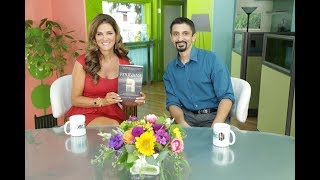
This is a YouTube video titled "The Value of Fear: How this Ex-Marine Went From PTSD to His Greatest Joy (AKSHAY NANAVATI)" featuring Allison Maslan as the host and Akshay Nanavati as the guest. Recorded in 2017, the content is an in-depth interview where Allison Maslan and Akshay discuss overcoming fear, PTSD, addiction, and transforming fear into empowerment and success. The conversation covers Akshay's personal journey from war and addiction to becoming an author and motivational speaker, with practical advice for business owners and individuals on managing fear and embracing struggle.
What if you could turn your fear into joy or turn your fear into empowerment? Like that. This is what we're going to talk about today with my very special guest on Ally and you'd welcome to Ali and you'd the Business Success and lifestyle show. I am Alison Maslin, and my friends call me Ally. And I'm a business growth mentor, a serial entrepreneur, and I love hearing inspiring stories of entrepreneurs, of artists, of individuals that have really powered through, you know, when they, when they got going, when the, when it was tough and challenging. And so I hope you enjoy this too, because this is my mission and my passion to enlighten and elevate business owners just like yourself. So today is going to be super inspiring because I want to introduce someone to you very, very special that I feel is going to be life changing. After overcoming drug addiction, PTSD from fighting in the war in Iraq with the US Marines, and alcoholism that pushed him to the brink of suicide, Ashke Nanavati has since explored the most hostile environments on the planet and built a business helping people live limitless lifestyles. Wow. I mean, how do you overcome those kinds of challenges. Challenges and turn it into creating an inspiring life? So combining his life experience with years of research in science and spirituality, he wrote a book called Firvana. Cool title, huh? And we are going to talk about this today. It's the revolutionary science of how to turn fear into health, wealth, and happiness. And the book about the book, the Dalai Lama said fearvana inspires us to look beyond our own agonizing experiences and find the positive side to our life. So, Akshay, we are so excited to have you.
Thank you. It's a pleasure to be here.
Your story is incredibly inspiring, and I know that you all will just be mesmerized. So I can't wait to share your story. So how did you go from addiction living in a war zone and now helping people break through fear? Because that's a big leap.
It's been quite a journey, for sure. I think. You know, in the Marines, I learned the value of fear. One of my jobs out in Iraq was actually to walk in front of vehicle convoys and search for improvised explosive devices before they could blow up our vehicles. So, as you can imagine, it was fairly intense.
Wow.
Yeah. So I learned to embrace fear out there because I learned that fear propels you to prepare so we would train harder. I used to even my off time, learn Arabic, prepare for everything out there that I could possibly be ready for. And actually, fear also zones in. In a war zone, complacency will kill you. And I translated that to every area, including business. I think complacency kills everything. So fear keeps you zoned in, it keeps you focused, and that's why I found the value in it. And that's what led me to start helping other people engage their fears. Because it's the number one thing that stops people from getting anywhere. Right.
Do you think in the moment it has anything to do with adrenaline?
I think you learn to balance it, and it's a big part of it is learning to kind of work your way up the ladder of risk. I used to be terrified of Ferris wheels. I mean, I was this kid scared of everything. So it's not that I was born sort of, you know, incredibly brave. It was just working my way up fear one step at a time. And then you learn to balance that adrenaline so it doesn't overwhelm you and you find the right perspective when it can. You can channel that fear into something useful.
And so give me an example of a time that you were just terrified and then you turned that into motivation.
So recently I went rock climbing in New Jersey. And I'd been climbing a ton before that, but I hadn't gone a long time. So we're out in this rock wall, and suddenly I'm terrified. I'm scared. And I keep telling myself, what's wrong with you? Why are you scared? Like, you've been rock climbing before? This is an easy route. And I climb, and it was a disaster. The second route, it suddenly hits me that, wait a second, I'm writing a book about this. I should follow my own advice. I. So instead of sort of, yeah, right. That's why it happens. We all forget our own advice from time to time. But suddenly I paused. I said, why am I trying to fight this fear? Instead of saying, what's wrong with you? And I stopped judging the fear. I said, okay, I'm scared. I don't care how, what's causing it, but I'm scared. And I literally just breathed in and I smiled and I said, this fear can be my ally. And the second route was a harder route. But I just. I mean, I cruised up that wall. And I've learned now to do that in everything, that whenever fear shows up, I'm not yet scared at silly things. Like when I'm alone in my house, my wife and my dog are gone right now, and. And it's weird. I get scared just being alone. And, you know, often I used to judge myself, like, what's wrong with me? I'm A Marine. I've, you know, climbed mountains. Why am I scared? But now I don't allow myself to judge that. And I just say, okay, I get nervous from time to time. I'm just gonna pause and then breathe it in and it channels it into something purposeful.
Yeah, well, I mean, I definitely know that feeling. So it's like the conversation that you're having with yourself in that moment instead of fighting it.
Exactly. You don't want to judge any emotion because I don't think there's any bad or good emotions. Any emotion can be your all. It's just up to you to choose it. Choose to make it your ally.
Right. And so instead of working against you, it's actually working for you.
And they've done studies too, that have shown that if you, like with public speakers, instead of saying, I'm calm, I'm calm, and trying to get rid of the fear when they say I'm excited, they actually perform better. As rated by third party objective viewers.
Yeah. Oh, my goodness. I know that feeling. I mean, you know, I lead big events and you would think that after all these years that I wouldn't be nervous, but every single time backstage before we're opening the event, I mean, my adrenaline is pumping, pumping, pumping. And, you know, it takes probably about 45 seconds on stage. My husband can actually see when that transition hits that, I'm like, okay, I'm good. I got this.
You get in the flow.
Yeah. So there's science behind turning this around and using it to our advantage. So can you share that?
Sure. The number one thing is shown that if you actually believe the fear to work for you, it will. So they've done studies with people who are nervous about math tests, and both groups had very high levels of cortisol, which is the stress hormone. And stress, fear and anxiety are neurologically very much the same. So I kind of paired the three, and both groups had cortisol equal amounts. But one group performed well and the other one didn't. And this had nothing to do with their math skills. They were sort of equally skilled. But the one group that performed well didn't view that anxiety as a negative thing. So peak performers don't stress out over stress. You know, as Sir Richard Branson said was an entrepreneur I absolutely love and admire, it's important not to fear fear, but use fear as fuel. So when you do that, it actually changes your biology and you have these neurochemicals that release in your brain, like adrenaline, like cortisol, like oxytocin, oxytocin is the love hormone. It actually helps you channel your fears into meaningful action as well.
Right.
Service of something great.
Yeah, I love that. So, I mean, using your fear to.
Move you forward, simply reframing that belief and then saying, okay, this fear is excitement. I can channel it. And then there's other techniques, like visualizing yourself facing your fears. So every time I go for a long run, I know I'm going to hit a moment where I'm going to be miserable and just want to die at that moment. So what I do is I visualize that moment, and then I'm mentally ready for it. So when I hit it, I'm physically ready for it.
So you visualize that before you even do it, and you reframe your thoughts around it.
Exactly. So the most important skill, you know, research has shown on the largest study on happiness, so that the most important skill is the ability to turn adversity into an enjoyable challenge. The way I like to call it is to develop a positive relationship to suffering. Because suffering is such a harsh word. And if you can develop a positive relationship to suffering, then difficult and struggle doesn't sound so bad. Right?
Okay, so how would you reframe that, that idea of suffering?
So I'll give you an example in the gym poster. In my gym, I have this poster that says, during a workout, you should think four things, and the number four. So the first one is, you should want to quit. And the number four one is that I would rather die than finish this. And then it says, are you working hard enough? So I have that up on my wall to remind me that suffering is a good thing if I get to that point where I want to die. And I'm not saying every workout. Some workouts are recovery workouts, but for the most part, that helps me learn that, okay, suffering is a positive. And I have reminders of it all over my wall, even next to my bed, I have this thing that says, are you willing to suffer for what you want to bleed for it, to even die for it? If that's what it takes. And it's intense, but it works.
That is intense. That is intense. And I think that, you know, and I mean, some of it's metaphor, of course, but that means if you are suffering, suffering, you're stretching yourself.
Exactly.
Because I believe that we all have this ceiling or these limits that we say, you know, I can only run this far, or I can only push myself this far in business, or I can only take this amount of risk. So you have to be willing. I Always say, be comfortable with the uncomfortable. You take it a step further and say, like, don't just be uncomfortable. Like be supper and be comfortable there. And know that, that really, it's just stretching yourself. Because we all have such capacity for greatness, but we, you know, we often stop before it gets, you know, till the real fear of honor comes in.
Right, Exactly. It's all up here that stops us. When you reframe your beliefs, you can achieve so much more.
Yeah. So how do we, how do you feel, you know, as business owners, because we have a lot of business owners either listening to the podcast or watching this right now that, you know, business owners can get into a place of fear. Like, oh, no, cash flow has stopped, or, you know, I have to fire somebody or whatever it is. Maybe, you know, you've got in a big event or you've invested in a big product and, you know, you're waiting to see how it's going to come through. And they just get crippled by this fear which really holds them back instead of allowing them to take the leap. So how can they deal with this and turn it around?
So initially, again, don't judge the fear, be with it. But then what you want to do is isolate yourself from the fear. So they've shown studies that when you label an emotion, it reduces activity in the emotional part of your brain and increases activity in the part of your brain related to focus and awareness. So, so you're not, then you don't become paralyzed by the emotion. You don't let it par, you know, you don't want to cripple you.
Right.
So you label the emotion. Just admit that I'm scared of this. Then when you isolate yourself, you can figure out, what are the things causing me fear? What's the worst case scenario? Write it down, you know, step by step, here's the worst case scenario, things that I'm scared of. Then you can prepare and say, okay, here's what I can do to prepare for those worst case scenarios. And then you can even go further and say, if those things happen, then what can I do? So, so simply isolating yourself from the fear allows you to then rationalize what the steps you can take to be ready for. As I mentioned in Iraq, right. Fear propels you to prepare, but it's up to you to choose to let it work for you.
And if you look at worst case scenario, generally it's never near what we make it in our minds. You know, I mean, we can paint quite a drama there. And then when you say, well, you know, if this happened, I could do this or this or this or I have these people to fall back on or I could use this tactic instead. Right. And then that empowers you.
Exactly. I mean, I was terrified writing this book. Ironically, it's a book about fear. But the whole time I'm thinking, is this any good? Is this going to be garbage? Are people going to like it? Inevitably, I'll get a one star review on Amazon. So what I did was I said, okay, how can I manage this? So I learned from excellent writers like Jack Canfield at Chicken Soup, the sole author. And it sort of helped me prepare to write a better book that now I can truly say I'm proud of.
Yeah, that's so inspiring. So inspiring. And I think that people see authors as, oh, they just sat down and whipped out that book. But I'll tell you, you know, even writing in my book the first paragraph, I called my best friend. Yes, I wrote one paragraph. So do you think overcoming fear is a bad thing or do we, should we try to be fearless?
I don't think we ever want to be fearless because when we push through one fear, so now I push through this fear of writing, for example, then there's the next one of promoting the book. After that there's going to be another fear. So you always want to be seeking out that next fear because the next fear is the avenue to your next growth in every way, spiritually, physically, mentally. So if I can, if I'm comfortable running a 50k, what's the next one? A 50 miler. So seeking out that next fear will push you to your next awakening, as I like to call it.
Yeah, I love that. Well, I'm a trapeze artist. I don't know if you knew that or not. And I believe that's why I love it so much because it's. I'm always working on the next trick and the next trick and it's always scary, you know? Exactly. But I feel like that makes me tougher mentally to deal with other things.
Yeah.
In my life. So what inspired you to write this? And why do you feel that this is important right now to write your book? Vrvana.
It really came about when I hit that low moment where I wanted to take my own life. I woke up this one day after a five day binge drinking session. And I mean, pints of vodka I used to down and suddenly this thought hit me that I'm never going to get out of this pattern. And, and the fact that I thought about taking my own Life hit me really hard, as you can imagine. It was shocking that I would think that. So then I started researching neuroscience, psychology, you know, spirituality. And I realized that this is the most essential thing. Fear is the number one barrier that stops people. Neuroscientist Joseph Ledoux calls it the most primal emotion. Because anytime our brain does something new, it's asking yourself, is this thing going to kill me or not? That's, you know, evolutionary speaking, that's what's most important. So from my own demons, it channeled into this concept of fear of honor and helping other people, because we all feel it at some point or the other. Right. And now it's so important. We're seeing. Not just on a political scale, everybody's scared. It's a divided environment. But we're seeing depression rates rise, suicide rates rise, anxiety, mental health issues. And I think that we need to reframe how we view these things, that they're not negative, you know?
Right. And that the answer is really inside of us instead of looking out outwardly.
Yeah. And it's not about these. You know, we look for these hacks, but it's. It's a lot simpler than we think. You know, sometimes when I offer these solutions, people are looking. They want more. But it's not that complicated. It's not. I'm not saying it's easy, but it's fairly simple about reframing this perspective on these emotions.
Right. And it's not a judgment if these are issues that you've dealt with for a long time and haven't been successful with it. But it's always looking at new ways to deal with these challenges. But you were. I mean, you know, dealing with the. With being in Iraq, facing death, like, at every moment, and alcoholism. I mean, suicidal. And you were able to turn this around just by having that thought and then looking within to see what you could do to reframe how you approached all the fear.
And I'm a poster child for making mistakes. My whole younger days, I was with drug addiction. I got arrested. So if I can do it, I promise anybody else, can I be a poster child?
It's incredible. It truly, truly is. And that's what you're going to help so many people because you've been there and you can relate. You've been, you know, in. In this hell, really, and you've turned it around, and that's why it's so important for you to share this story. I'm really glad that you're doing that.
Thank you.
So what do you think Is one piece of advice that could be. Maybe there's some harmful advice that we're giving to business owners.
Yeah, I think it's this idea of following your passion that, you know, I've speaking to so many business owners are saying, if I follow my passion, then this path will be easy and filled with joy. But, you know, building a business is not easy, it's a struggle. So I think, you know, the thing is, you got to develop that positive relationship to struggle and not seek out passion. If you seek out a worthy struggle, passion will develop. For example, Michael Phelps used to be terrified of swimming, terrified at the pool. But he says that as he got stronger in the water, his passion for the sport grew. And it's the same thing with my business, with running. I used to hate long distance running. I was 100 meters sprinter in school. But as I developed it, that passion for the sport grew. And same thing with business, with writing. So find a worthy struggle. That's also how I beat all my demons, was channeling this, this negative struggle into a worthy struggle.
But maybe a worthy struggle that you're drawn to.
Exactly. It doesn't have to be writing a book can be anything, can be raising a child, it can be building a business, it can be playing chess, writing movies, whatever it may be. But embrace the fact that it's going to be a hard journey, and that's not a bad thing. The challenges of what, how you grow through that, right?
You become something better, how you overcome that.
Yeah, yeah. You develop a whole new you. And it's a beautiful thing.
I remember when I've been working out with the same trainer for 20 years and he's an ex Marine, and he pushes me so hard, and he used to make me jump the jump rope for so long. And I used to, I used to hate, I loved it as a kid. But then when we would pull that, I would be like, oh, my God. But you know what? Now I really like it. And it's become. Because I broke through and I am actually pretty good at it. So I totally get what you're saying. So what do you think is a secret then? To. Once you break through that struggle, how do we stay motivated as entrepreneurs?
One thing I've learned, which actually one of my business mentors told me, which I thought was invaluable, he said, commitment is the fuel, confidence is the reward. So many business owners in many fields, we're looking for confidence, right? Like, we'll look at all these 13 tips on how to be confident and stuff like that. But you can't be confident about something you haven't done before. I was not confident as a writer. I'd never written one. So it's important to just stay. I'm committed. You're clear in your goal, and I know it's going to be hard, and I'm committed, not confident. So don't seek out confidence. That's the big step. And you'll develop confidence once you hit a result. And then the path is to channel that confidence from previous successes as fuel for commitment. So the confidence I developed as a marine, overcoming all these things became fuel. I wasn't confident about writing, but I knew I was committed.
I love that. That makes so much sense because. And I always say, people say, well, how do I get the bravery to do it? And I said, well, you do it, and then you'll see that you can do it. Yeah, right.
The greatest lessons are in the doing. When you take one step, you learn more than anything else. You can do anything, anything. Any knowledge you can consume in your own doing. You learn so much more.
Yeah. So just so fantastic. I hope you're enjoying it. And we have a special gift for you, actually. And I have more questions, so don't go anywhere. But I want to share this great gift with you. This is from Akshay, the Ultimate Guide on how to Overcome fear and win in Life. And it's like a whole booklet. And you're going to be able to download this. This is step by step on how to overcome fear in any area of your life. Is that right?
That's right, yeah. This is the principles applied, every area.
Yeah. So this is. I mean, it's. It's several pages here. You're going to absolutely love this. And to get it, you go on to our library, which is alisonmaslin.com library, and you can download this for free. But you also get all of the downloads from recent Paths guests that we've had on the show. So it's quite a wonderful gift. Now you've got this book that it's coming out, and congratulations on this.
Thank you. Thank you.
And everybody is going to want to read this book, Fearvana. But you got the Dalai Lama to write a testimonial. Now, I have to say, as one author to another, this is very impressive. And so what is your secret about? To get influencers to build these relationships with them. And then, of course, this is a perfect example here, how that's going to support you with the book.
The number one strategy to get the Dalai Lama's endorsement and many Other notable influencers that I got, I was truly blessed and humbled, was shooting personal videos for them. I would literally just shoot to their name. So, you know, hi, you, Holiness. Namaste, you, Holiness, and to every other influencer as well. And I was very authentic in my struggles. So it's important to be vulnerable. Sometimes people are scared to share their struggles because we want to share how amazing we are. But nobody wants to hear how awesome you are. They want to hear your road that you've gone through, because that's what builds empathy. That's what builds connection. So I shot these personal videos for many, many influencers, and I shared the demons that I've overcome. I shared what I want to do with the book, how we're giving the proceeds away to charity. I also shared how they have personally impacted me. And it worked wonders. I mean, you can see the kind of names on the back of that.
Look at the people you've got in here endorsing Seth Godin, Jack Canfield, Marcy Schimoff. Wow. Keith Barazi. Pretty impressive. And, you know, but here's the thing. They did this because they thought this was an excellent book. Right?
You have to have quality, for sure. You cannot take that away.
Yeah, for sure.
You got to do something. You got to put in the effort for. To make something work. I mean, just writing this, I must have trashed about a hundred thousand words worth of work to get to what it is now, because the first version was just awful. At least in my own mind, I believe it was. Yeah, but so you have to have something quality, for sure.
Yeah. It takes lots of rewrites. And so. But here's the thing. Whatever it is that you have fear about, right? Embrace the fear and embrace the struggle, but don't let it stop you.
Yeah. And ask yourself, why not? You know, like when I got the Dalai Lama, for example, at first, initially I thought, you know who? There's no way I can get it. Then I'm like, wait, why can't I get it? Why can't I get from the Dalai Lama? You know? And that's what had me make the effort to make it happen. So a big part of it was just the belief in the possibility of that reality. What's the worst that could happen? You get a no. Right? You're nowhere different than where you are to begin with, so why not give it a shot? And I got many nos as well, throughout reaching out to many influencers. So I got no's, but I got more than enough yeses to make up for that.
Yeah. Well, congratulations on that. Thank you. Well, this is wonderful. So you definitely are going to want to get this download. You're going to want to read Akshay's book Fear of Anna. And I will never forget this title. It is just fantastic.
Thank you.
Very, very clever. And thank you so much for being on the show today.
Thank you for having me.
I hope that you enjoyed it. I know that I did. And to watch more of these shows, of course, every Wednesday at 4:00 clock Pacific time, we air this live right here on Facebook. And we also are you can download our video podcast@alisonmaslin.com iTunes. If you would rather hear this while you're running on the treadmill or driving in your car, just go to our audio podcast on iTunes, which is alisonmaslin.com audio. All right. Well, until next time, get out there and elevate yourself. Break through fear and embrace the struggle. And we'll see you the next time on Allie. And you.
More from Allison

There are 90,000 marketing agencies in the U.S. but 99% aren't worth your money.

Would you leave your comfort zone for the sake of your business? #businessgrowth #scalingbusiness

Are you willing to trust the process to grow your business? #businessgrowth #scalingstrategies

He Built a $150M Company Without Taking a Single Dollar of Outside Capital | Erik Huberman




Wing Lam has run Wahoo's Fish Tacos for 38 years and his hiring rule is simple.


