This is Why You Keep Attracting The Wrong Kind of Customers
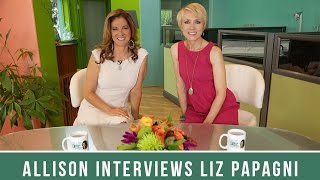
Allison Maslan and marketing expert Liz Papagni discuss why businesses attract the wrong customers. They cover brand messaging, emotional marketing, and customer targeting strategies to help you focus on the clients you actually want.
What do all businesses have in common? Well, customers. We all need customers. And how do you get customers? Well, marketing. We all need marketing. And it's important as a business to stay on the pulse of what's happening in the marketing world. We're going to do just that on Allie and you'd I have an amazing marketing expert. So stay put. We'll be right back.
Foreign.
Welcome to Allie and you the Business success and lifestyle show. I am Alison Maslin. My friends call me Ally. And today we are going to talk about getting you more clients, growing your business. It's all about marketing. I'm so excited because I have number one best selling author of your marketing roadmap and CEO of marketing initiatives initiative works. One of my favorite people, Liz Papagni, she is an incredible marketing expert. She's launched some amazing brands. She's worked with Seneca Foods, Kaiser Permanente, Toshiba, Hyatt, I mean, you name it. And her passion is really working with emerging brands up to Fortune 500 companies. So if you're within that margin, this is exactly for you. So I want to go ahead and welcome Liz.
Thanks, Allison. I'm so happy to be here today.
I am excited to have you. Liz and I have been working together for the last few years. She is actually in my Pinnacle Mastermind program and she is an incredible marketing expert. So you all are in for a treat. So definitely stay tuned for the show. So I mean, you're amazing what you've done for brands through marketing. So what? Just let's back up a little bit and tell us the story. How did you get into this work?
You know, even when I was younger, I was always interested, I was always an observer and I loved looking at different behavior and how people acted of different situations or with different stimuli. So I think because marking is really about changing behavior or looking at how someone's going to act and how someone's going to react. So that was always an interest for me. And then language, I love language. I listen to what people say. One word can make the difference between what they really mean. So you have to listen. So I think with those two things combined, those are two critical things that you really need to know in marketing. It's not how, it's what you say in order to change that behavior.
Right. It's not just the platform. Right. It's actually the language is super important. And I love language too. I mean, I think maybe that's why I'm good in marketing or I enjoy marketing because I like poetry.
Yeah.
Because definitely one word it's interesting thinking of it about that way. So, you know, marketing has been around for centuries. It's not something new when you think of, you know, several hundred years ago, people bringing their wares to the market, getting the word out about their product and service. But it seems like, and I know from coaching so many business owners that people really struggle with marketing. What do you think that. What. Where do you think the struggle comes from?
I think the struggle is in the confusion and the overwhelm. There's so much stimuli out there, particularly today with the whole, you know, years ago with the, you know, Internet and online. I mean, it's not just the traditional stuff we're looking at. There's, you know, all the huge digital. And I think they really don't know what to do. They don't know where to put their money. They don't know, you know, what channels to use. They don't know what to say. Because knowing your brand and your messaging, say, is so much more critical than it used to be because of all of the channels and all the communication that people have because the consumer and your client are in control today. So it's really critical that you know who you are and what you stand for.
I think that's a big point because it used to be. When you think about when I was young, it was like craft. I mean, remember all the commercials, Spaghettios and I could go in singing all the songs here, you know, probably all the foods that are really horrible for you. So. But. And it was more about the brand. But we as consumers are such so much more communicative with the brand and have so much more of a say about it.
So there's so much information at our fingertips. Years ago, brands controlled their brand because there wasn't. There was no other means for people to get information. Today you can go on the Internet and just pick up anything and there's the information there. So it's really more critical to make sure that you have it straight and you keep on with, you know, who you are. Because beyond it.
Right. In so many as. Right. If you, if you're not doing that.
You'Re not doing that, they're gonna go somewhere else.
Yeah, go somewhere else. Or post a negative review and all those things.
Yeah, one review goes viral 10 times than a good review. So you have to really be watching that.
Yeah, exactly. So when you. I think that some of the challenges I've seen with business owners is that, let's say you're having a down month and you're like, oh, My gosh, I got a market. I got to get out there. Right. So you're coming from a place of desperation, which is never good, because you're going to push people away and probably invest in the wrong places. And, you know, we've talked about this, and you really have to come from. Let's put a strategy together. So tell me about that a little bit and your approach.
Yeah, I mean, I always tell my clients that if you don't know who you are and where you want to be, then how do you know how to get there? So if there's not, if you don't have a strong strategy. So when I meet with my clients, I sit down with my clients and I ask them, you know, where you know, what are your goals, what are you looking at doing? What have you done in the past, what do you think has worked, what hasn't worked, and talk a little bit about them in terms of what do you offer? Why are you different? So it's really trying to work with them to build who they are and what their message is. And the critical thing is who their clients are. Unfortunately, some people really don't know who their true clients are. And it's the clients that are going to dictate the strategy. The clients are going to dictate the channels that you choose, because you want to only be where your clients are.
Right.
And. But if you don't know all that, then what happens is a lot of business owners, they go just go right to the tactics and they're throwing money out here. And, you know, they're doing this and they're doing that because they think they need to be everywhere. But you don't have to be. If you have a sound strategy and a plan and you keep to that plan, then in the downtime you just got, you keep on rolling. You don't go through desperation and spend money you shouldn't be spending because you're going through your plan. So there shouldn't be all that overwhelm if they set it up properly.
And I think that you touched on a really good point because your language personally may be very different than the language of your customer.
Absolutely.
And I think it takes a little time as you get into business to figure out who is that right customer. But you have to. It's kind of like being in a relationship. Right. So like the four love languages. So I'm very much visual and audio. Like, I want my husband to tell me, you know, all these romantic things. And he, like, he's a doer, you know, he likes to go get me coffee and do things right. So. So I think you've got to learn to speak each other's language. And it's the same thing in marketing.
Yeah, in marketing, in terms of the approach that I work with my clients is they kind of look at their overall company and their brand and who they really are and what their why and why they're different. But the key thing to that is why does your customers care? What are their needs, what are their pain points and whatever you're providing, how does that help them solve a problem or a challenge based upon their need? That's where the different language comes in, you know, because you want to speak to them how they want to be spoken to. So you can build that relationship. So when they're ready to buy, they're going to come to you because you're going to help them. So solve a problem or a need that they have. And you've built a relationship along the way. That's key in marketing. You have to do an ongoing building relationship. Some clients think, well I'm going to put something out and oh, I didn't get sales from that. I'm not going to do that again. Well, no, what you're doing is you're building an ongoing relationship with that client to keep them and you're building an ongoing relationship with a prospect so they know who you are and what you're going to provide because. So they feel comfortable from buying from you. Because people buy from people that they like and trust and you have to gain that trust over time.
Right.
So that's key too as well. That's why marketing isn't a one hit wonder. I always tell my clients that can't do one thing and expect it's going to do something. It's an ongoing evolution of things and like you said, it's testing different things. If one doesn't work, then you tweak it. One word or one graphic or one color can make the difference between somebody responding and not responding.
Right. There's a lot of psychology involved in marketing. Can you give me an example? I know I'm like putting you on the spot here, sorry, but can you give me an example maybe of somebody when you that was that you were working with that wasn't speaking to the right audience and then once you tweaked some things, things begin to change.
Yeah. There was a components company. I come from tech, not very sexy, but that's where I came from. So I have some tech clients and they obviously are going after a Technical audience. And this was particular, this was components. And they were going after these individuals, but they were always talking about, we have this and it's on sale or things. So they were going the price route. Okay. You never went on price because if you're going for price, then you're never going to grow your company because everyone's always going to want the lowest price. So what I did was I went in and I tweaked their messages based upon understanding the need that your particular component was thinking satisfying in the bigger scheme of things and why they needed to purchase it from you because you had all this experience. You know, I was talking more attributes about the company and their experience and their know how their knowledge, you know, where their executives came from, so we can build up the brand. So purchasing from them doesn't come down to price.
Right.
So it's just a matter of tweaking how you present it, what you're saying. But as you can see, again, it's about satisfying a customer need that they have that's going to make their job easier, that's going to make something, you know, work faster, better or easier. And it never compete on price because you'll never win.
Right. You may get them, but they won't stay. Nobody stays based on.
They'll come in, they'll purchase, and then they'll move on.
Right. You want people, you want to be selling the value of your brand.
Right. Of what you bring to the table. And it's not, it's not about price. People will spend more money if they're very comfortable and they like you and they feel that you're there for them always.
My husband and I were just shopping for bedding online because we just moved and we're trying to fill up the guest room. We bought a couple new beds and we were looking at this bedding, and some of them we didn't buy because the price was too low. And I know some of you might be going, oh, give me a break, Alison. But really, you know, you look at it and you're thinking a whole mattress set and shams and the whole thing for $49. And I'm thinking, I don't know what the quality. And it's hard because sometimes online now, if I was in the store, I'd be able to look at it and.
Go touch it, feel it. Yeah.
But, you know, I definitely equate the value of the price with the value that you're offering. And if it's a higher quality fabric and there's more time put into it and so forth. So I think that's a really good point.
Yeah, Price could hurt you. You're absolutely right. Price could give you a negative perception and not what you're looking for. Absolutely.
So, as you said, there's so many choices out there, so many social media platforms, there's online and there's offline. Do you feel like that offline is still. That people still should be looking at offline strategies?
I think that offline works really well still. If your target looks at those mediums, I mean, it really comes to. If you're. So, for instance, you know, if you're going after the senior care market, right, you're either going after, you know, someone, you know, 55 plus, or you're going after their children. Right. So you're going to go after those two different targets, different ways. You know, people that are not, you know, online savvy, that are 70 plus, you're not going to reach them online. You're going to reach them through their mailbox. So direct mail is really going to work. But if you're going after their children, say, if you're a care facility or something like that, they're online, they're still savvy. So you're going to reach them two different ways. So I think that online and offline could work together and I think there could be an integrated mix, but it all depends on what you're going after. Look at the credit card companies, they still do a lot of direct mail because they get. They have all the algorithms and they have all their lists in terms of when people are ready to renew and things like that. So it's still.
If they're getting their bills in the mail going, oh, my God.
So I think it still works, you know, based upon your strategy and the target and the reason why you're using it.
We just did a big direct mail. We have an event coming up. And did you get that in the mail? Oh, you did? See, it works. You got it. Oh, and you're kind of.
I was already going.
Yeah, you were already going, so that doesn't count. But I definitely agree. I think that it's a kind of a holistic approach.
It absolutely is, yeah.
And they say, you know, hitting people in threes. And I've had people come up to me. I've been seeing you everywhere. I saw this flyer and I saw.
That commercial because it's repetitive messaging. You know, you want them to have recall, and they're not going to have recall if you don't. I mean, this goes Back to the old. Well, back in the old advertising age, right, where, you know, you would have to do at least three times to six times because you wanted to build that, recall that repetitive messaging, like you said. It's like, God, I think I saw her here. I saw her. Because we want people to remember us and remember what we do. And that just can't be done if you're just on Facebook or you're online if your target's not there. I mean, it has to be. When you build a plan, it has to be very integrated and comprehensive, but it doesn't have to be complicated. It could be very simple if you are using and being very strategic with what you're choosing based upon who you're going after and what your goals are.
And you're so good at that. You're so good at that. And so for those of our viewers right now, again, it is confusing. So let's just talk about online for a second. What you know, as a business owner, you're like, I gotta take care of my website, I gotta do the blogging, I take care of my clients, I got employees. I've got so much to do, I've got to do's coming out of my ears. And now you want me, you know, tweeting, posting and all those kinds of things, which is very important these days. So how do you, what do you recommend the strategy would be behind that? Obviously, it's different for everybody.
But online strategy, Yes. I mean, it really, again, it all depends in terms of what your objectives are and what you're looking to get out of it, and who do you want to see the message. Right. So when you're a business owner, you obviously want your clients or potential clients to see the message, so where are they? But we also want to build our authority, we want to build our expertise and things like that. But that's kind of a different strategy. So if you're talking about you as a business owner and your Persona, well, you're going to go after different people than necessarily your customers. So that's a different strategy. So where do I need to be online to do that? If I want to go after my customers, where do I need to be? I always tell my clients, if you're doing more than three social media channels, you're doing way too many. First of all, you can't possibly make any of those effective after three channels because then what you're doing is you're like a tree with all these branches and you're doing a little bit each in every area, but you're not being effective in anything. So you have to focus on no more than three. Two is a good sweet spot to meet your objective to do that, because then it enables you to get deeper into those mediums so you can make more of an impact and you're going to get more of a result that way. Instead of trying to be so many things to so many people when in the end no one's going to see what's happening.
Right. You really need to dive deeply. We talk about that when we're working with business owners that are running several businesses at once. And it's hard. And I know because I've done it. And to really be successful, you need to focus and just kind of pick a path and work with that, you.
Know, and then in that path, it's all about testing and see what happens. And just because it's not working, that's okay. Then, you know, you go to something else. I mean, people, individuals and companies and clients. Just because you have a plan doesn't mean it's set in stone. It's a framework that we're working towards. But you have to constantly look at it and hone it. Look at analytics, look at the data. I'm actually kind of a little data geek if you didn't know that about me. Because data tells us everything that we need to know. If we look at it properly, that's how we can make the right decisions. For instance, if you're on Facebook and you're doing Facebook ads, we know that we can target down to really granular level now, but you can kind of look at what's working on a daily basis or on the fly and then just stop what's not working and move your money to somewhere else.
Right. Which is you couldn't do with television commercials. We were so broad. Yeah, it's really hard. Or magazine ad that could cost thousands.
And thousands more dollars. Yeah. And then once your insertions in there, you're done. You mean you have to do it. But print still works in some industries. I have a client that I'm working right now. It's a medical equipment company. I'm redoing their brand. They've had three companies merged together, so I had to redo their branding and I'm working on their marketing plan right now. And because of the industry, its healthcare and its equipment, that's an old type of still industry. So trade publications, when we launch the new brand, they're going to be one of our channels because that's where their target is. Social, not so much because there's not physicians or people that work at Kaiser and programs and projects, they're not necessarily looking at that from a business perspective. And then probably doing pr, which is a very traditional medium as well. So it really all depends in terms of what you're doing. And it can be flexible. Don't worry if it's not working because that means we just have to tweak it or we have to try something else.
Right. Well, so just as an example, so Snapchat has become really popular all of a sudden. And then, you know, and I have some clients who are like, oh my gosh, I've got to go now, I need to go do Snapchat.
Yeah.
And so what I'm saying to them is, is your customer there? You know, your time is so limited.
Are you going after a 12 year old or a tween? Then you shouldn't be marketing children anyway because that's not allowed.
Yeah, and I think there are definitely more mature on there. But is it really the best use of the time? Would LinkedIn be better or something like that?
Right, Yeah, I mean it depends on where your audience is. I mean LinkedIn is really good for B2B but it's not like a Facebook where you're gonna get mass. You're building a network and relationships where, you know, things can come out of that. But it's not a medium where you can grow mass, you know, like Facebook.
There you're going to get your connections on LinkedIn, you know, Facebook, you're going to build more of a community around what you're doing. And so what are some tips? Do you have some tips that you can share with us? Some marketing tips, social media tips.
In terms of tips, I would say that I do have something for social media that I have that you can, it's five tips in order how to convert your fans into customers. I have that, that's a free opt in. So if they want to get@SocialConversions.gr8.com so you can go in there, put their information in there and it'll automatically get that. So there's some great tips there in terms of how to utilize social media to really convert people. And I don't mean just to convert them to actual customers, but convert them to an opt in list so you can build a relationship. You might want to opt them into a sweepstakes or a contest because it's all about building relationships and community and that type of stuff. In terms of for tips for marketing strategy always has to come first. If you don't have a strategy, then you're wasting your time and your money. I mean, I'm a firm believer, and that's my philosophy.
So let's just say for those that are, okay, I hear what they're saying, and we'll put the link up so people can get your tips. But they're trying to get their business off of the ground or they're trying to take it to the next level. And where would you say they need to start? Is it figuring out the story behind their brand? Is it figuring out the messaging behind. Where would you say they would start?
Yeah, so I have a process that I work through my clients, and the first part of it is building their message. It's kind of like an umbrella. I always tell my clients. It's kind of like umbrella. I mean, your company's at the tip, the little tip at the top. And you have to figure out why you started your business in the first place. What's your why? Because that's where your story's going to come from. Because people always like a good story. And every entrepreneur and every business owner has a reason why they started their business. And people want to know that because that builds the emotion and the personality of your company. So we need to start there. So think of three things in terms of. I always ask them, take. Let's talk about three things of why you use your business, what's the promise? What are you promising to your customers? And really how are you positioning yourselves? Once you know that and your why and you have those messages in place, what your key messages are, then I kind of branch out from there and look at their targets. And then we build messaging for their targets based upon their individual pain points. But also bringing in the messaging from the company into that, because we never want to lose that messaging, because that's repetitive. Once we have all the messaging in place, then we really work through. Through working on their customer. And I don't mean how old they are, what their household income is. I mean, really diving deep into the emotional buying cues in terms of why they buy. Today, 100% of individuals, whether they're buying for themselves or for their business, is done by emotion. So we need to figure it out. So when I work with my clients, I build their client Personas, you know, from a demographic perspective. But what is their personality? Where are they in their life? Are they married? Do they have children? What's the responsibility at their work? What kind of stresses and things do they have? Because we. Because those outside Forces have an impact in terms of how they're going to buy within their business. So once we know who we are, what we're going to say, and who our clients are and what message we're going to say, then we really go into building the marketing plan from there.
Right.
Because the marketing plan is only going to be good as the information that feeds into it once, you know.
So the why, the why, the promise, like, what are they going to get? The results and the benefits, their positioning, how they show up, and then it's about finding the where, the languaging of the target market, and then their emotions that they're trying to satisfy. Right. So. And I think that's because we were so trying to get into their head, but it's really the emotion.
You got to get into the heart, because that's where. That's the emotion is really the emotion side of your brand is so important today.
Yes. That's what moves people to make decisions. So if you're gonna go buy paint at Home Depot, red paint, you might be thinking you're buying red paint, but you're really buying a happy feeling.
Right.
How does that make you feel? In fact, we're painting now, as a matter of fact, our house, trying to pick colors, and I'm thinking, how would I feel every day when I walk in here into the room? So it is all about that emotion.
And colors mean a lot, too, because part of that process is once we develop that, then it's how do we visually represent your brand? It's your colors, it's your fonts that all invokes different emotions in terms of how we look. Even if you're doing a Facebook ad, how you do it and what visuals you put in there could make the difference between someone looking at it and not looking at it. So it's the written, you know, it's, you know, how people are very visual. Right. So it's the. It's the verbal and the visual that have to work together to make sure that they're all in harmony, to make sure that.
So all of our ads should have puppies on them. And then we would just. Our businesses would just explode.
Puppies and babies and monkeys, too, I hear.
Oh, monkeys.
Really?
Okay. This is really good. Well, this has been fantastic. I really enjoyed it. Hope that you all did, too. And so tell us again, where can they go to get these great tips that you have? Because I know we kind of move through quickly. So you really break it down.
Yeah. So the tips for the social media tips, they can go to social conversions.gr.com they go in, fill out the form, and you automatically get emailed those tips if you want to have more information. And Mark, I do a lot of blogging. Have. I do a lot of content. So they can go to my website@marketingiw.com and go to my blog. There's, you know, I'm a content generator.
So marketingiw.com all right, Liz. Liz Papagni. So she. She is the expert here. Thank you so much.
Well, thank you so much, Alison. I'm so happy to be here. Thank you.
Yeah, you're welcome. This was great. So, again, just narrow it down. Get out of the total marketing overwhelm and just pick a couple things and dive deeply with that. I think that's what big messaging is here and get to that pain point and really speak their language. All right. I'm still working on speaking my husband and I that language thing together, but he's a good guy. Yes, it is. It's an ongoing thing. Anyway, until next time, thanks for spending time with us today on Ali. In you get out there, put yourself out there, elevate, because you are worth it. Bye, everybody.
Sam.
More from Allison

He Built a $150M Company Without Taking a Single Dollar of Outside Capital | Erik Huberman




Wing Lam has run Wahoo's Fish Tacos for 38 years and his hiring rule is simple.




The Guerrilla Marketing Genius Behind One of California's Most Beloved Brands | Wing Lam
