Escape The Rat Race & Build Multiple Income Streams
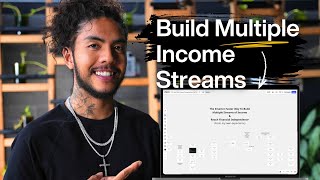
Al Makise describes using $150K in credit card offers to invest in crypto, AI stocks like NVIDIA, and metals, doubling his portfolios and reaching $275K net worth in three years. He emphasizes profit-taking discipline and reinvesting gains to build multiple income streams and escape a single paycheck.
Chapters
Welcome to this video on the smarter, faster way to build multiple streams of income and reach financial independence, all from my own studies and from my own experience. This is going to be a No BS. It's going to be straight to the framework, straight to the teaching, straight to the value of why this is such a game changer and alternative contrarian approach to building multiple streams of income, as opposed to, you know, the more traditional path of maybe investing in a 401 a Roth IRA, buying real estate. Those are not nearly as profitable and effective as the ones that I'm going to be sharing with you guys today. Before I get into this video, allow me to introduce myself. I'm Al Makise. I have, in the ripe age of 27, am financially independent. I've accessed over $150,000 in funding, which I used to multiply my wealth in the markets. I'm gonna be sharing that with you guys actually today, uh, why I did that and why it was the fastest way and the smartest way for me to reach financial independence. And I also teach, uh, people how they can do the same. I've had clients access $55,000 in funding, see ROIs of up to 260%, which is absolutely insane if you compare that to the returns on, let's say, the S&P 500 or your Roth IRA or your 401k. Um, this is going to be very different from what you guys may be used to seeing. In the financial space if you've ever looked into these types of things. So without further ado, let's get right into it. Before I share with you guys my preferred methodology, I'm going to share with you what the average person does. And to be clear, this is actually how I used to live back when I was working multiple, you know, jobs, working at Starbucks, serving at a restaurant, or even working as a bartender. This is something that I've come to experience, and I'm not just, you know, sharing these things to shame anybody. In fact, this is how I was living before I knew that there was a better way. Year 1, And to also, for clarity, the work income, these numbers, the hours, these are all just examples, okay? I made it super simple for you guys so that way you can just understand the framework, understand the, the proposed system here, so that way you guys can kind of play around with the numbers yourselves in your own lives to see how it would match up against these types of things. So year 1, less than $100,000 net worth. It's what you're starting out with. You work 30 hours a week and you're able to see $40,000 a year as, as a result of working those hours. Your bills and expenses add up to $35,000 a year. So after work and and bills and expenses, you're left with $5,000 savings/cash on hand. It's actually kind of bizarre, but I looked up the statistics and it's a shocking amount of Americans out there that don't even have 6 months worth of living expenses on hand. So just something to take a mental note of as we go through this process. You have $30,000 in credit cards that you, you have available, but since you don't have any financial literacy, you're practically scared of debt and you don't want to use debt. Even though the system right now that's being proposed is that you go into a 6 figures plus, multiple 6 figures in debt to go to college to pay for a degree that the piece of paper won't even guarantee that you'll get the job that you want. And even after you get the job, you're paying a ridiculous amount of interest on your debt, your college tuition, just to be able to get that job. So it's kind of bizarre, but Bear with me, guys. Keep an open mind, okay? Because you're working so much, right, and you don't really have, you know, living on $40,000 a year, you don't really have the means to fund a meaningful life. So to fill that hole in your life, you use that credit to buy useless things. This could be a car. This could be that new iPhone that just dropped. This could be, um, you know, just things that don't appreciate in value and don't add to your wealth. So now you're, you know, year 2, you're less than $100,000 net worth still, and now you're in $30,000 in debt. So because of all this stress that you've just tacked onto yourself, you decide to work more hours. Maybe you get a raise or you work a different job that pays you a little bit more. You're now working 40 hours a week and you're making $45,000 a year. Okay, because of this higher income that you see, you start to increase your living expenses just to match this higher income, kind of a keeping up with the Joneses mentality, right? So now your bills and expenses are $40,000 a year instead of, uh, what it was before, which was $35,000 a year. Now I want to note that this is very, very common, and I've seen this with a lot of people, and even people that I speak to on social media. You guys DM me and we have conversations about these things. It's— it comes down to an identity and a belief system that you have, and and a relationship that you have to wealth, to money, to abundance. And so because you don't have the right, as one of my mentors would say, wealth thermostat, you almost sabotage yourself because you're not used to making this amount of money. And so now you raise your living expense because you don't feel comfortable to hold that wealth. So you're just spending it. And it's very, very common, which is why, you know, number one thing I like to teach first when I go into these types of processes is how to reprogram your mind and your identity to match a new style and way of living when it comes to attracting and holding wealth. So just a little side tangent. For you guys. But in any case, now you still have $5,000 cash on hand because, well, most of the money went to bills and now you're responsible for debt. So you say, screw it, I'm not even gonna save up, I already have $5,000. Why the heck not? So you pay off your— you pay $5,000 in debt, but here's the thing, because you don't have financial literacy, you're paying your debt, but the high interest just keeps your debt up. So you paid $5,000, but you're still sitting with $27,000. So with all of this stress, you know, working more hours, 40 hours a week, You decide, fuck it, I'm going to fill that hole that I feel inside with more external things. So you buy more useless things, and by year 2, you're now, you know, $29,000 in debt with still less than 6 figures net worth. And so for the average person, this is a very, very vicious cycle that continues where you're trading your time for money, you're dependent on one income stream, you're vulnerable to inflation, you're vulnerable to currency debasement, you're vulnerable to being laid off. Like, it, it's just such a vicious cycle that, you know, I, I share this with you guys because awareness is the first step, and I don't think enough people are aware of the cycle that they're undergoing. So that's where this new system and this alternative and, dare I say, contrarian approach comes in. So just like the average person, you're starting off with less than $100K in net worth. You're working the same, right? 30 hours a week, you make $40,000 a year from your income. The difference here is that you're financially literate and you know how to access 6 figures in funding and access 0% APR bonuses, which is actually what I did. As you can see with the picture below, all of the credit cards, the business and personal cards that I had, I was able to access over $150,000 in funding. This is from business and personal funding. So the difference here is that you now have two income streams that you're about to utilize, right? And you're utilizing it in a smart and responsible way. So apart from your work income, which goes to paying off your bills and expenses, $35,000 a year, after all of that, you have $5,000 cash on hand from your work income. And now you decide to invest that credit into specific investments. Now I do want to note that these aren't just any investments, okay? This is investments that are towards the future of money as well as disruptive tech, okay? Why is this such a game changer? Because We are investing in where the world is heading. 2030, 2035, and even 2040. That is where the real money is, okay? I don't teach people to invest in the past and where things have been. There's not— you're not going to see a, uh, high ROI in comparison to these investments that I'm going to be sharing with you guys. So that's where these percentages are coming from, right? Um, when you invest in the future of money, you're investing in cryptocurrency, okay? This isn't just, uh, coins on the internet that people use to buy illegal things. This is quite literally what money is going to be in the near future, and actually it's already happening as we speak, where there are literal countries that use Bitcoin, for example, to pay for things. Think of third world countries that are just working in, you know, in, in their country, and in order to combat the currency debasement and inflation that they're experiencing, they take that money and they put it into Bitcoin just so they can hold that value and even accumulate it because it's more effective than holding their native currency. When you invest in disruptive tech like Nvidia, for example, you're investing in the future of what we're going to be experiencing and utilizing. Think of when Apple came out with the iPhone, or when Amazon came out with Amazon, right? We didn't— it just started off as a bookstore, but now it's like a global shipping and e-commerce landscape. So with stocks like NVIDIA, for example, you're investing in AI, right? In order to run AI, you need chips, you need cloud computing, you need technology that's going to support the demand for AI. If you look at how, how much global adoption of ChatGPT is in comparison to the internet, it's quite palpable. And so this is where the money is. If you were to compare these ROIs that you would be getting on crypto and disruptive tech, it's mind-blowing to say the least, right? If you compare that to a Roth IRA, to your 401, to real estate even, you're not going to see these ROIs in those investment classes. And I even teach people to invest in metals because When you invest in metals like gold and silver, you're hedging yourself against inflation and you're preparing yourself for a potential, you know, collapse in our financial economy, like in terms of money and what we use the dollar for in our banking system and our credit system, which is all fraudulent. If you, if you take the time to look at it, you know. And also, before I move on, I want to note that, you know, I don't want you guys to just take my word for it. I want you guys to realize what I'm sharing with you guys too, and to challenge these examples that I'm giving you guys and, and do your own research so that you can empower yourselves with new ways of seeing value and money in the world. All right, that's the— that's really the, the biggest way that you can truly change. So moving on, I know that was a little side tangent, but you invest in the future of money, you invest in disruptive tech, you invest in metals, and as a result of doing that and positioning yourself in this once-in-a-lifetime generational wealth transfer opportunity you're able to double your crypto portfolio. So you went from $80K to $160K, which is literally what I did. I invested in crypto here, it went up, I rode the wave down, and then it went up and I was able to double my crypto portfolio because I stayed convicted, because I did the research, I did the work to understand the inherent technology and the adoption of this tech. And so I, I rode it and I was able to be rewarded with the ROIs that I'm sharing with you guys today. Um, so you did the same thing for stocks, right? You invested $60K, you're able to come out with $120K, which is literally again what I did in a year. I doubled my stocks portfolio because I understood the technology. I understood where the world is heading. And so I positioned myself accordingly to see these types of returns. And with the metals portfolio, you see yours, you see your metals go up just a little bit, right? Just as a hedge, just as like a kind of, if the world went to shit type of investment, because it's, it's important to have a diverse enough portfolio to where you're not just stuck in, in one asset class, in one crypto coin, and now you lose all your wealth. But it's also honed in and focused enough to where you're able to see outstanding returns on your money. And so you decide to take profits, right? $160K, you take your initial investment out, $80K. Uh, stocks, you take out your initial investment, which was $60K. And so this is the— this is how you play the game. Uh, you, you put in an amount of money, you see a return, you double your portfolio, and you take out your initial investment. And now you're just playing with house money, aka you just printed money out of thin air. Call it magic internet money. That's where you're able to, you know, you've built multiple streams of income now. You now have $140,000 savings, cash on hand. Your crypto portfolio is at $80,000. Stocks is at $60,000. Your metals is at $13,000. And by year 2, you have a $293,000 net worth with the cash on hand and your assets. And you're also $150,000 in debt, which is drastically different from the guy who is in year 2 over here, the average person who is still less than 6 figures net worth and is in $30,000 of debt. Okay, so a drastically different reality, right? So now you're going into year 2, round 2. Because you, you see this amount of money, you're going to play it smart. You're going to work the same amount of hours or even less. And I actually advise that you guys work less if you're able to see this type of return on your money, so that way you can direct that energy towards other meaningful things like You know, maybe it's to build a side hustle, to build a business, to pursue your passion. So work— you work less or you work the same amount. Either way, what you're doing here is you're showing that you value your time, that you value your energy, and you value your attention and what you're able to put towards your— towards those things, right? With these so-called superpowers that we have: time, energy, and attention. Don't underestimate these things because these things have quite literally transformed the world that we live in today. It's no different from you right now who's watching this video who maybe has less than 6 figures net worth. You have $140,000 cash on hand, so you decide to play it smart. You pay $100,000 of your debt back. So now you're sitting with, you know, $45,000 cash on hand. You use that work income to pay off your bills and expenses, $35,000 a year. You now have access to 6 figures in credit again, and you're sitting with $50,000 in debt as opposed to $150,000. And because you, uh, did your research, because you did the work to understand the tech that you invested into, uh, your crypto portfolio went from $80K to $120K. Would you look at that? Your stocks portfolio went from $60K to $90K, and your metals went up to $15K. Would you look at that? Your multiple income streams working for you. As you work your job, you have 1, 2, 3, 3, you know, 4 in total with your job included, as opposed to the average person who only has one, which is just working. Um, so you decide to take profits, right? That's the smart thing to do. You never just want to hold these things unless it's Bitcoin or Ethereum. You know, these aren't 5 to 10 year holds. These are less than that. Because that's a smart thing to do. You don't want to just hold on to these things. You want to take profits. You want to realize those gains. So you take $40K from your crypto, you take $20K from your stocks, and now you're sitting with $105,000 cash on hand. Your crypto portfolio is at $80K, your stocks portfolio is at $70K, and your metals is at $20K, right? So by year 3 You're sitting at a $275,000 net worth with access to $100,000 in credit and funding, and you're in $50,000 of debt. You can now use the savings and cash on hand to pay off that debt, and you can pretty much rinse and repeat. When the markets, um, reprices and maybe things go down, we enter a bear market, you can re-enter You want to buy low, sell high. That's the nature of the game. But because the game involves the markets, and markets are emotional, this is where you have to use knowledge and logic to play the game. You don't want to just rely on emotions. You want to understand the emotional game of the markets, but in essence, this is how you build these multiple streams of income and you leverage the markets, you leverage your, you know, access to funding so that way you can reach financial independence and work towards building your dreams, building that dream business, pursuing your passions, whatever it is that you want to do, whatever it is that your soul came down here to do. It's entirely up to you. We didn't come down here to be enslaved by money, okay? God didn't create us in his image so that we can be a slave to money, a slave to corporate work. And I'm not saying those things are bad, corporate work. I'm just saying it's bad when you're living in scarcity, in fear, okay? That's not the way God intended us to live. God made us to take dominion over earth, okay? So that is the methodology that I've used to reach financial independence in my 20s, that I teach my own clients and students, where they've been able to quite literally changed their lives from these systems. And I share this with you guys to give you guys a glimpse of what's possible when you utilize this system to build multiple streams of income. And it's not just about money, it's about the impact and the purpose that you have on this earth. I can't say what that is for you. Only you can find that out for yourself. But the caveat here is that you won't find out if you're a slave to money. You'll just be living in that vicious cycle where I showed you with the average person. If you want to learn how to implement these things and you want deeper guidance and knowledge of, um, okay, so how do I actually become financially literate? How do I access large amounts of capital funding? How do I invest and what do I invest in so that I can see these types of returns? In the description of this video, I've linked my ebook Internet Money, which goes over this entire system in depth, okay, so that you can access multiple 5 figures in funding. So that you can invest and see, um, insane ROIs on your money, and you can begin to build multiple streams of income. So if you guys want to check that out, it's going to be linked in the description of this video. The ebook is called Internet Money, and I'm only selling it for $27, which is literally less than a dinner in California, okay? But It has the potential to change your entire family's wealth and financial reality. So I highly recommend you guys check it out if you thought this video was valuable. And if you don't want to, that's completely fine. You can take what I've given you guys already and you could absolutely run with it and still transform your financial reality. The only difference here is that you'll be doing it practically on your own, which I personally don't recommend. In fact, the most effective way that I've come to learn and the fastest way to actually change is by investing in myself. That is the highest ROI activity that you could be doing. Before you even invest in assets, invest in yourself. Invest in your, your knowledge, invest in your mindset, invest in your— and what you think is possible for yourself before you go ahead and start throwing money into Bitcoin when you have absolutely no idea how to even invest, you know, how to conduct technical analysis, how to conduct fundamental analysis, you know, all of these things that come with being an investor. So again, this— I've simplified all of these things so that you guys can take this and you can run with it. So if you thought this video was valuable, check out the ebook. I recommend that you share this video with some friends and family that you think would benefit from this knowledge. And if you guys have any questions, feel free to leave questions below this video and I'll be more than happy to answer them if I can. And we'll go from there. So with all that being said, I will see you guys next time. Peace.