Creating Purpose with Pao: Guest Speaker ~ Coach Ambereen
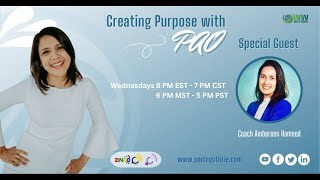
Coach Ambereen talks conscious parenting: pause before you react, show up present, let kids fail so they build resilience. She uses a five-word "clarity words" exercise to help families find their values, and offers a five-month coaching program capped at 10 kids.
Questions this video answers
Three (two boys and one girl).
A five-month program.
Capped at 10 kids per group session.
Chapters
Foreign.
This is Paola Guthrie from Creating Purpose with pow and I welcome you to the Spanglish War Network and her network on Single TV channels 250 and 251. Please remember to download Single TV app on the respective app stores. When you download it, please leave a, you know, leave a comment, see how we're doing our job. The app is totally free. You can find single TV in Google Chromecast, in Amazon, Fire Fire TV Stick, Roku Roku Stick, and all smart TVs from 2016 and forward. Welcome, everyone. Thank you so much for joining today because we have an awesome guest today and her name is Coach Ambreen. She is a family coach who helps parents, you know, with their kids to listen and become more confident, more independent. She will be talking today about fostering a healthy relationship between, you know, our kids and we parents. She is the host of her very own TV show called Leading with Intention. And I welcome her to the show. Thank you so much for being here.
Thank you for having me, Pao. It's a pleasure and a delight. Yeah.
So please share with us, you know, like, how many kids do you have and how did you, you know, got inspired to teach others, you know, as parents, to develop that healthy relationship with our kids.
Yeah. So I only have three kids and I say only because in our culture it is only. I've got two boys and a girl. All of them are at adolescent, which is kind of where my story took me. So it's just been my life. I've always loved being around children. I've always loved understanding them because I think they're so pure, so authentic. They're bold, they're creative, they're imaginative. They say it like it is like there's no fluff. Right? There's no, like, oh, in the worldly way we would say it like this. They're like, no, that looks like a horrible outfit, Mom. Don't wear it. And you're like, hey, got it. Thank you for the straight up feedback. What caused me to kind of take this journey on was my own life. And what I've understood it to be is every parent that I talk to, it always talks about their kids. Kind of like taking the kids down, not like an uplifting way. Right. They don't listen. They don't want to talk to us, they don't understand us. We don't understand them. And I started to kind of reflect my own life and I realized, like, and that sparked this whole conversation to, you know, making sure that parents are the leaders of their families. But where they're very conscious leading their families. And that really spun up to be an idea and now morphed into a beautiful five month program.
That is awesome. And it is true.
I mean we.
We tend to say what's going wrong instead of what is, you know, going right. And sometimes we tend to see what they're doing wrong out of, you know, like we get fear. You know, I've experienced fear is what just sometimes strikes me to handle the situation, especially in the past. So how could we tell our beautiful parents to, to begin to build that leadership as parents?
Yeah. So leadership is a whole, it's a whole beast of industry. I always tell parents and myself before any parent is just pause. That's it, pause. And if you can pause and ask yourself what would the best, best version of me do? Or a simple question like what's the next best act of integrity or action of integrity? Then you start to see that, oh, there are possibilities. Instead of yelling, screaming and just repeating the behaviors of yesterday and the conversations of yesterday.
That's so powerful. I mean, you said two things, very powerful. What would the best version of myself do?
Right?
Because instead of leading our reaction, you know, stop and think, like you said, pause and think. You know, what would the best in version of myself would do in this case? And then the second one, you're talking about integrity. Like, wouldn't that this be a beautiful world if we learn to nurture everyone's integrity, you know, and begin at home, you know, as a parent is like, how can I nurture, you know, her integrity? Talking about my daughter, I have a six year old and she has a mind, you know.
Right.
And I grew up differently, so that popped in my mind just the other day. I'm like nurturing like how not to destroy that integrity or, or step on her integrity when I am parenting. That is a big one for all of us. Because I, I'm guilty, you know, like I am guilty coach and brain for, you know, like stepping on her integrity at times. Because I'm like, I'm sorry, but you're not gonna wear that to school. You know, you're showing your belly or it's not. I mean, no, you're becoming a lady, right?
The right words.
Okay. How, how can I, you know, Anyway, so it's like this is powerful for some of our parents who step on their own kids integrity, like where we, you know, the integrity to me like sometimes is like the dignity, you know, like we, we don't ruin nobody's, you know, dignity. And, and in our Life. And it's part of, you know, leading a powerful, perf. Purposeful life.
Yeah. And I kind of want to, you know, jump off of what you're saying. You're talking about integrity, of you being in integrity with your daughter's, you know, viewpoints and our perspective. But I want to really reel it back to say how the best version of me do. The integrous version of me. A lot of times we as parents are not in integrity with our own selves. Right? Like, we. Let's say you had some chips in lunch. How you were like, I'm just gonna have it today. I'm gonna have some chips. Now the kids come home and they're like, we traded in lunch and we got chips. Now you're like, no, you're not gonna have it. You're just not gonna eat the chips. And the conscious parent is like, oh, I remember. I slurred today. Maybe I can understand why they want the chips. Or maybe we can have a dialogue to say, hey, can you have some Some other day. It's. But it all starts with this idea of it's coming more and more, like, in my path, in my life. It's. We have two ears, so we should listen twice as much as we should speak. And these kids are brilliant. They're giving us information all the time, but we're not present to retain it and take it. So if we as parents are not in integrity and not listening to our children, why are we expecting them to listen to us? Isn't that hypocrisy.
Present? I mean, that. That's a. You know, here is another one. Is like, how many of us are truly present when each of our kids are talking to us? Because I hear. You know, it's like, I'm guilty of it, too, because it's like, I'm in the middle of cooking, or I might be texting my mom, and then, you know, one of my kids might be. Well, mom, as I was telling you today in practice. Oh, okay. And you're in the middle of doing, you know, other things. So it's like, present.
Yeah. So exactly what you're saying, pal, that happens to me too, right? Because a single parent of three, you're like, you're doing more than what the. What the parents of you know to do. So I tell my kids, hey, if you want to talk to me, I'm cooking right now. Just come here and talk. That way, while I'm cooking, at least I can get a glance. You know, I can maybe gauge the energy. Maybe I Can uplift better instead of them screaming for someplace else, you know, dining table. And here I am in the kitchen cooking. So it's this, I think the most beautiful gift that we can give our kids is the gift of presence, which becomes a present. Right? The gift of a present. Like you're just here, fully aware, connected, consciously showing up. Why? Because your intention is to listen, to understand. And as turns, if I ask any parent, even if they are not even parenting, you know, like with consciously parenting, I asked them, what's the most important thing in your life? And how. What's the answer?
Being present.
Being present with your. And they'll always say, my family. My family is the most important thing in my life. And I say, well, do you prioritize them? So our presence is the priority that we show up with people that matter to us, should see that we're here for them, that, hey, we bring these humans into the world, they don't come by themselves. That's a lot of responsibility. And being a conscious parent, that's the next level of responsibility.
Yes, definitely. And this is awesome, like for all of us to be on that reminder of like, okay, how many times have we been present this week and how many more could we add to the list for next week to improve that time with the quality of time with our kids? You work with youth and I would.
Love for you to.
Share with us a few strategies, you know, like, how can we foster that relationship? Because, you know, they're going through some independent, you know, transformation I would call it, where they're like, they're trying to think on their own. They don't want some of them, they don't want to follow A, B and C like mom and dad are suggesting because they see it differently. So how as parents, could we begin to establish that healthy communication, you know, whenever things don't go our way as parents?
Yeah. I think parents also need to have a time. I have had a timeout. A timeout, okay, so I've had a timeout for years. I'm like, so I began with this concept of I don't want to scream and yell because then they messed up the whole energy. Then we're like on a different vibrancy now. We're all trying so hard to like forgive each other for the mess ups. So when I've had enough where I'm like, there are three conversations happening right now while I'm mopping the floor. I can't, I can't be everywhere. So let me say hey. And they know now this means Timeout. And what they've done is they've tested it, they've tested the timeout to be like, oh, let's see what happens. Like, they'll ask the questions like. And I look at them in their face and I say, believe me, you don't want me to tell me tell you. Don't me tell you what's on my mind right now. So let me take my time out and let me come back to you a better mom. And that timeout they can give to me as well, they can give me a timeout because there are times where I've lost it, where I'm like, in my own, like, you know, negative pile of palatra. Like, just, it's just going right. So my kids will say, hey, mama, I think you need a timeout. And that's my cue. In that moment, I have a decision to make. Am I going follow through with what I have said? Am I going to be integrous? Am I going to be intentionally becoming a better mother? Am I just going to go in my rut and keep going and mess up everything? So when you were talking about adolescents, yes, they're nothing like us, but it's because we don't know them. There was a point in time when you went through the exact same stage that they did. Yes, the world was different back then. 20, 30, 40, 50, 10 years, it doesn't matter. Even five years ago, the world was different. If you're raising kids that are five or 10 years apart, it's like a different, you're raising a different human. You're like, am I like part of a different dynasty? Because life is changing so rapidly. But if you don't know our kids, how can we communicate with them? And it all starts with creating foundational values that you as family live by and honoring them. I think that's the key. Have to honor. You have to honor the foundations, the pillars that you come up with. And that's an activity that I do with, with all my coaching clients. And that's one of the biggest things that we have. And it's a complete breakthrough for them to say, oh, I've never thought about it in this way with families. And when I work with adolescents, what I realized, pal, is they're so simple. Like every week I'm inspired. I'm like, pour into me, please pour into me. Like, because they're so simple minded, what matters to you is always family on top. Whereas the parents will say, then he, they never care about us. He doesn't care. She doesn't care. They. All they care about is their friends. When I've asked them, no, my family is the most important. Why does your family matter? I want to make them proud. But how does a child communicate that with a mom or a dad who doesn't have space for listening, understanding, or presence?
That is a beautiful question for all of us. You know, I mean, it's like to think, it's like, how, How. How are we getting to know them? You know? And it's like, are now you're like. Another question that pop in my head is like, well, are we giving them the space to express, you know, their opinion versus being told it? You know, like, this is a better way and without, you know, hearing their side of the story.
Yeah. So this kind of goes back to what we talk about, right? If you're in a corporate world, if you're in any job, there's a leader, right? And then there's a manager, okay? So the leader is the one who is like, where's my hand? I can't find it. So. So the leader, either way, leader is the one manager tells you, okay, pow. Your job is make sure that you're ready for soccer practice at 4, okay? Make sure you have to cook like the dinner is warmed up at this time. That's the manager. He just manages. That's easy. But the leader leads the lead by asking, the lead by inquiring. Did we lead by finding out? That's the shift. When I am being a manager, I know I'm like a drill sergeant. Literally, like a drill sergeant. I was like, my God, I'm no different than them, you know, because you get into this head space where, like, there's so much to do. Boom, boom, boom, boom, boom. And for them, they're like. Like those things don't even matter. But when you lead, you begin to ask. I think we can. We really have the power to persuade our kids when we learn the art of persuasion. And it's not something that just shows up. It's something you have to cultivate. You kind of have to really pour and understand those emotions that are coming up. You have to raise their ambitions to kind of say, hey, you know what you're talking about? That thing is going to take you. What I'm talking about, that thing might take you here. And then they start to see, okay, follow that up with action. And so they. It's. Are they great listeners, most of them? No. Because sadly, we as parents haven't taught them how to listen. We've only told them what to Do. And, and that's where my program is so different. You're not telling your kids what to do. You have boundaries. You have a routine, you have a schedule. You have all that good stuff. Amazing. But it's a conversation because now you're a family member. You know, it's not like your parents tell you what to do with. Because they're the ones with the authority. You know, leaders who are great leaders have a lot of authority, but they don't leverage it.
So how can we teach them to listen?
By listening first ourselves. Okay. Everything starts with us. The reason why my program talks so extensively and really pours in the. And to understand how are. How is every parent. Like, how are they as human beings? And once, like after a six months journey of me working with them alone, then I really work with them together. And you realize is they don't even know who they are. So how are you going to pour in a version of you that. That is, that's listening? Because when we start to role model, and it's literally called a role model, you know, like high performance mindset, it's when we start to model the behaviors that we want to see, we start to lead. And again, that requires work, a lot of work that requires you to first pause and be like, my brain is about to explode. Explode. Let me take a timeout. And then you come back as the best version of you.
Okay, this is. I mean, I think I'm going to write this and hang it on the wall. You just said with a role model to the behavior, you know, we want to see. Yeah, yeah. So that's amazing. And it's so true. You know, if we are. If we want them to be no. So loud, but we're loud. So we continue to be loud. They'll. They'll continue to model, you know, the way we're talking. If that's one of our, you know, habits, it's like raising our voice. Then they will learn to raise the voice at the same time, you know, that the parents are doing it. You know, a scenario happens in their lives and they're going to learn to raise the voice because that's what they seen. Now, if. If there is someone in the audience right here that are wanting to feel, to build the. The foundation you were talking about, you know, like you said, get to know our kids, honor the foundation. Could you elaborate a little bit on that so that they can get a better idea? Because I think that's kind of like level number one to begin to make a shift in our family Dynamic.
Yeah, I love. I love your. That you're asking. And this is something that I actually actively do as part of the program. It's called the clarity words. So as a family, what I do is I take them on a journey and I ask every family member to come up with words that would define their family. And it's fun because, like, they're writing it first, and then I break them up. And now they have a breakout session. The two of them are discussing, and I'm like, come up with the top five. Share what the. Both you have come up with a top five. Sometimes a mom and a kid, sometimes two brothers and sisters, some of the husband and wife. It's like, it's just a fun mix, right? And then they start to come up with a list of five, and then you bring them all together and you say, okay, These are the 10 words that. That your family came up with as words that matter to you. These are the words that you would want someone outside to use to describe your family. And then what you do is now you vote anywhere from three to five. I recommend five because, like, the five pillars of the house, the five pillars of the families, the five foundations. I just like that. I feel like five is a great foundation for a family. And then you define those five, and we literally, like, it's a full on game. It's like, all right. I'm like, now persuade. Like, no, we want this word. And they're like, all right, go ahead, pitch it. You have to be able to sell it because your mom and dad are saying no, but you are saying yes. So, like, it's. You see the coaching in action. You see the spontaneity, the love, the joy, the connection happening right in front of your eyes. And it's so much fun to watch because you're like, I wonder what they'll come up with. And then those five words become the foundation. So, okay, these five words are written, please print them out. Put them with someone. See, and the next time somebody isn't really aligned and he's trying to fight you with it, you just gently hold their hand and you take them in front of the word. And then you just step away. Because now you're giving them time to say, hey, reflect. One of the words that we came up with that kindness matters to us. And right now, the dad is just on top of his lungs screaming. The mom gently, politely brings him in front of the paper. Wherever you have it, I recommend you put in a frame. I love to send it out to my guests. You Know, like, people I'm working with, my clients, I'll print it out, make it really cute and send it to them. That way they have it someplace that they can physically see. And so now you've taken so much of the stress, the anger, the frustration out of the equation, because now it's time to lead with intentions and be conscious parents and be conscious family members. Right. Because listening is an art that we can always improve. It's not like you're saying, oh, I've maxed out on my listening skills. Like, that's it.
Pow.
I can't go above this. No, you can always get better. But it all starts with understanding that there are. There has to be some foundation. What does your family stand upon? There is no house that can be constructed without foundation. It's. It's impossible. No building, no house. Nothing that we look at and we aspire and we're like, wow, how do they build this?
A mall?
It all has to have a foundation. So why don't our families have foundations? The most important relationship thing in the world, we say, right, without a foundation, so how is it going to hold up.
That, I mean, what you're sharing with us is like, I'm fascinating by it because we see it in the leadership world. You see it in personal coaching. It's like, it reminds me of like, okay, what are your five, you know, values? You know, personal values that you want to stand by. And whenever things go out of whack, you know, you always go back to that to realign. Or if you're trying to create or if you, you know, working on a project, you go back, hey, this is where. Who I am. This is, you know, like, what I stand for individually. But then as a family, that's even better, you know, because by nature, we want to belong.
Yes.
And it's like having this five words, five pillars is like, this is what, you know, part of our tribe. Like, we stand need, you know, for kindness or love, gratitude, whatever, you know, those words that we choose. So. Yeah, because even, like right now, it's May, and here in Oklahoma is like, graduations are happening. Like, life gets out of the routine sometimes, and we, you know, it feels like you're not walking on solid. It's like you're just going to. And when that comes the time to say, okay, you know, time to. To breathe and we're. And see where we're at. And then what beautiful would it be where it's like, we can sit down and it's like, okay, you know, what are the Five words. Summer is here.
What.
What are the plans? You know, what are we going to do as a family based on that? And kids love to be included and be a part of projects. So, yeah, bring it to the next level family. So that's awesome. Thank you for sharing.
Yeah, my pleasure.
What have you. What changes have you seen whenever you bring this into the family?
Like, it simplifies life. I'm all about simplicity. You know, I think we complicate things too much. You know, imagine if, like, the mom is really frustrated because she came home from work and now she's expected to cook. And not only is she cooking, but she'll start the laundry. Not only the laundry happening, but, like, the kid is screaming from, you know, from upstairs, and all of it is happening. But if the mom can just. If some mom could just. Someone just remind the mom to say, hey, mom, you know, generosity is one of our words. And when, you know, not even saying, like, when you're screaming and yelling and losing your cool, Ma, you're not being generous to us. You just, like, literally. And the whole intention is that. That respect for me is one of the most important things in the world. It has to be done respectfully. I cannot jerk my kid and bring him and tell him, stand in front of the thing and watch and look what you're doing wrong. No. The concept of respect is given and is taken. So when I hold my little kid's hand because he in a place and he is mad because he couldn't score the four soccer goals that he tried today, and he just, you know, miserably failed. And he's going on and on and on. I just literally bring him and say, hey, look, you know, being mindful was one of your words, one of our words. And I just let that kid stay there with those words. And what a great way to remind all of us with were getting better. Where we work, where we were yesterday, and now where we are today, that.
Is awesome, you know, being able to do that. Because, like, I. I'm gonna be very honest with you. Like, there's times where it's like, my words. All they can say is like, stop right there. You know, we'll talk about it later. So I'm still working on, like, the flow. There's days where it flows. Most of, like, right now, it's like, most of the time, it's like here lately, I've been, you know, observing myself, and it's like, we'll talk about that later. You know, like, I stopped. I don't like it you know, But I said, okay, we'll talk about that later.
Yeah. So.
Because, you know, here we go. We're learning. And I'll go back to their dignity. You know, it's like, I don't. Like when I grew up and I don't know if it happened to you. I don't think our parents and grandparents thought about nurturing our dignity. It was like, you do it, you know, and I'm telling you so. And I told my daughter today, because he was where she was wearing a blue. A blue outfit and she was showing her belly. And I said, I was. I said, that shirt's backwards.
I said.
And she's like, how do you know? And I said, if I would have said that to my mom, you know, like when I was your age, she would have probably spanked me right away. All I said, you know, but it's like I. It bothered. It triggered me a little bit, but I stopped right there. So it's like, I know we have room for improvement, and I'm. I'm, you know, I'm in the path of parenting as well. And we have so much education right now that than our parents had. So trying to do it better. They did a good job, you know, I'm not complaining. Yeah. They did the best that they could with what they had. Now we have more knowledge. We have, you know, more books, more programs. We have the ability to look at, you know, watch a video. This, this interview. It's free, you know, and learn and. And do it better. Like you were saying, it's like nurturing their. Their dignity in keeping our integrity intact as well.
And then also in power. Their dignity, our dignity. Why are they outside of us?
Well, the way I see it, outside of us. Because give them the free to choose. Yeah, but I guess, you know, like, sometimes it's like I. It's not my. You know, but they have to learn. You know, like, they have to learn. But it's like by letting them messed up, that's another one. Parents, we struggle like that fear of, like, oh, but they're gonna mess up.
Yeah. And the best part is we're still messing up as parents.
Right?
Am I just like, yeah, I'm 10 years in. I'm 12 years in. I'm 15 teenage. I'm 40 years in. You're like, I'm still messing up. And that's what it means to be human. We're all going to mess up. And I'm actually one to say the exact same thing. I remember, I've always been like, the protector of my kids, you know, because I am like next level when it comes to kids. I don't care if they're your kids, some of this neighbor's kids. I. I go up next level in my head. I mean, the rights of kids, the justice of kids. And so what I realized is in that I wouldn't let them fail and fall. So I'm not making them out to be resilient humans. And if they don't have resilience, how are you going to succeed in this world? And so letting them fail, letting them fall, letting them make mistakes, makes them who they are. That's why you and I are here today, palace, having our own TV shows, because of the mistakes and the lessons that we learned, the experiences that we had which allowed us to say no. You know what? Integrity is Ambreen's word. And you know, purpose is Paula's word. And that's what we do. That's how we show up.
To empower others with our mistakes, right? And learning, like, with our learning experience. That's one of my favorite ways to learn. To be honest, like, whenever I love to listen to interviews. And I learn a lot from that. Like, so I pick one word, one phrase, and it rumbles, you know, it rumbles. And I was like, huh? Yeah.
You're unleashing the genius inside of you, right? To be like, okay, there's more, there's more I can offer. There's more I can offer myself. There's more I can offer my family. There's more I can offer community, there's more I can offer this world. But it all starts position to consciously lead. Because without that, we cannot get better.
What would you say? Something that you have discovered about the youth, the we adults, you know, in the traditional world have not really, you know, pay that close attention to it. I like that question.
It's making me do a little bit of digging, pal. What is something that we also are overlooking, our parents are overlooking when it comes to our own children? We have to trust in them far more than we give them credit for. Every kid that I have worked with, they know what the family's foundations are. They know what the family's values are. They know what they want to do for their own selves in the future. They know the direction that they want to go at. But we as parents are not trusting them enough. Because in our mind, God forbid, if I trust her and. And she decides not to go to college, then I'm like a miserable parent because that was never the plan. Like, you Finish high school, then you go to college, then you finish your college, and then you get a job. And they're like, no, I actually think I'm gonna take a whole year off. And you're like, no, no, no, no, no, that's not. And they're like, mom, I'm taking a year off. I'm gonna go on internship, and I'm gonna learn how to do it the right way. So that way, I know exactly what I want to do for my future instead of going in and out for three and a half years, understanding which degree is going to work for me. Because when we know ourselves internally, we have a direction of where we want to go. Which is one of the biggest things I love and I adore about the program is we are so big on clarity. Like, crystal clear. We seek crystal clear clarity as who we are as people, who we are as partners, and then how we want to show up with our families. Now you know where you're going.
So.
Trust them because you're guiding them.
Are you able to see their growth? Like, I mean, it's like, for someone to really know who they are as a youth, it's impressive. And then knowing how they want to show up with confidence.
And this is the thing that when we start off, every single group coaching session that I do with the youth, we start off, and the first thing is, all right, let's set our intentions. And they're like, oh, here she comes. The first thing we do is, what is your intention? When they know their intention, now, they know how they want to show up. Right? And without that, they won't know. Now these kids have a practice that's kind of already, like, getting the buffing up every single week. And in one of my testimonials, one of kiddos said, we do this really cool thing. We set our intentions. It tells us, how do you want to show up? I was like, this is brilliant. I love it. Is it working? Yes. The other thing that you see them doing is you're talking about, are they really able to understand who they are? I had an extraordinary breakthrough with these kids who were being taken down and compared by their parents to others, to their siblings, to ourselves. And I had them. I was like, that's it. Coaching is done. We're. We're pausing, we're chatting. We're diving into this. How 40 minutes left, these kids were like, oh. And I'm like, reflect back to me with what you've gotten reflected back to me. And they were like, my job is to be myself. I Don't have to compare myself to anybody but me.
Oh, wow, that's beautiful.
And so is it possible? Yeah. So trust in those kids. When they. These kids show up for coaching sessions, they're coming to do the work. Because if they're not, I will not keep them on my sessions. You know, and so the intention is you're coming to coaching like you would come to any class, and you're being graded now. You're grading yourself, and I'm watching and observing. But if I feel like you're not making progress, I'll give you a nudge here and there. After that, I'm very much like. Because when you're doing. Is this. This one kid in session that keeps. Bring everybody down? That's the negative one, the down, the Debbie downer, The one that's, like, focused on the wrong and question the whatever. Right. You give up. You give them a few. Okay, you know what? I get it. You're in a place. But let's straighten up. Let's reset that intention. And if the behavior doesn't change, I am not taking down, you know, 20 other kids because of them. First, that energy space is too sacred. That community. Literally building an empowering community of peers. Like, can you imagine that? An empowering community of peers. These kids are your age, and you're building a space where you're collaborating, you're understanding, you're listening, you're growing. Why? Because you're here showing up to do the work.
You're teaching them to get along.
Exactly. With kindness and respect.
Kindness and respect. Yes. That is beautiful. I've noticed, like, as a teacher, you know, like this year, there was one student who would not sit down at his desk. He would just sit down at a. Like, a table. And at first, it's like, I noticed that when I let him sit at the table, he would behave, you know, and. And I was like, okay, I can do that. You know, so at the end of the school year, just now, he was sitting at a desk, you know, last three months, and doing his work. But I guess here we go back to the trust. You know, I. I gave him that. The trust is like, yeah, I trust you to sit at that table. And he would sit down and he would just, you know, would not do his work. But as I continue, you know, to let him sit right there, it. There was a transformation, and I'm like, I wonder if it was because I trusted him. You know, I never made a big deal. It was like, okay, that's your spot. And if you're Gonna behave, you know, just go for it. And it was beautiful just seeing, he's seeing his, his, like, transformation at the end. And here we go. It's like, I wonder if, you know, that trust, you know, I always treat him with respect, and I guess that's, that's, that's, that's all they want, you know, like, treat me with respect and. And they turn around.
Yeah. First of all, I want to celebrate you for crushing it. Like, most teachers wouldn't say, yes, go ahead, take a seat in the back. And I don't know how this is going to pan out, but for you to listen to your gut and say, yeah, I can do that for you, how beautiful is that? For him to know, oh, like, she thinks I can do that. I had a bizarre request, and she fulfilled it. Let me pour back into her, because why? Because it matters. Because now you've become a teacher, you know, where you're more than the ordinary teacher. You took the time, gave him the space, and when he said maybe, it was trust, there's no maybe about it. Had you said no, you'll still be fighting with him, trying to get him to be in his seat and do the work, you know, So I think it's so important to recognize that. What a beautiful way to lead your classroom.
Oh, I mean, and it is because of my, you know, our, our education, I think, in self development that allowed me to go to that next level, like, not see it. Like, you have to do what I say because I'm the teacher. That was like, first year teaching, second year teaching. I was like, it was very crazy because, you know, they're. They're. They're teach. They. You think that they're hiring you to teach, but no, you know, you're there for way more. You're not there just to teach is like, that's kind of like the third thing that you get to do. But the fundamental is keep a safe environment for. For the kids and then make them feel comfortable. And then you get to teach.
But I love that. Okay, and then teach. Okay. Yeah.
Yes. I mean, it's. It's beautiful, you know, it's beautiful seeing my very own transformation from the first two years of being a teacher to like, now with neuroencoding, brain health, and all these beautiful trainings that I have the privilege to take and be able to apply it, you know, in a classroom.
So, yeah, and that's what, that's what the key is. Right? We have so many tools, so many strategies, so much knowledge, but the execution, the Application. That's what's missing in our lives. You know, it's. I'm kind of put it out there. It's, it's. It's probably too blunt for everyone listening, but I have to say it like it is. I am a high performance coach. How many of you, after listening to this session today, are gonna make a conscious effort to pause before responding back to your kids when you're not in the right headphase? And that's where you start to see that even if everybody has these tools and strategies, Paula, the execution isn't there in that step.
Right.
Baby steps, literally. If you can say, I was present today for 45 seconds, just today, 45 seconds. I am cheering you on. You will feel my energy coming and saying, keep going Tomorrow, get to 50 the next day, get to 55 seconds. Build up. Be so graceful with yourself. Because the undoing in our ages takes time versus when it's the little humans. 40 minutes. I'm like, 40 minutes and they were down and, like, so sad, so upset that everybody's always comparing me to this kid who gets the A's and B's. They're comparing me to the kid who takes four honors classes in a freshman. They're comparing me to, like, say I don't play as well, basketball, somebody else. Even the parents doing it to the kids. And 40 minutes later, the kid is like, I hold my own space. I was sent in this world to be myself. And you know what? That's what I'm gonna do.
Yeah. That is beautiful. Yeah. For all of our beautiful parents are listening to us right now. It takes time. You know, it's not like, oh, you're gonna say, you know, time out right away. But it's like, like you said early, make it conscious. You know, when you're thinking about it, it's like, oh, I'm not going to react. You say time out. But it's bringing, you know, making it conscious into your life. How if we're being present, if we're choosing to. To. To react or just pause for. Just for just a little bit. It's like we, in reality, we do have the power because in between the stimulus and the response, we have a space. And in that space get to choose how to react. It takes, you know, training to build those habits. And it is doable. And it's doable. And sometimes we might fail to say timeout. But if, you know we're having a hard time, then know that we can always default to. To service behavior.
Yeah. And the other thing Is I recommend and I suggest for every family not to say timeout, not to say reset. Because what I realized, and this was my own, like, teaching or like my own discovery, is when I am irritated with my kids, I'm like, mopping that floor. Remember I told you about I'm mopping the floor, okay. And the three people talking at the same time. I can't in my brain. And so now I'm frustrated and angry. My kids don't know, but I know because I'm like, right now the only task is mop this floor, get you to bed, and like a whole list. But when I can say, when I say, okay, I need a timeout, give me a timeout. Okay, I just need to reset. It is mean, it is unkind. It is energetically something that's not going to serve your family. So that's why I recommend for every single family member, come up with one gesture. You want to put a piece on. You want to put up a high five sign. You want to put a thumbs down sign, A thumbs up sign. Why nothing is being spoken. There's no energy exchange. I love energy. I love purification of energy. I love keeping energy positive and high and vibrant. But when I'm in a space where my energy isn't that way, I'm not giving that to the kids or the world. So come up with a gesture.
So for a beautiful parent. So it's normal to have those moments. That's what you're telling us.
Oh, yeah, Girls. Every day it's like a reset. You're like, okay. Every day, five times. You're like, okay. So that's right. Right. And I am not here to say that everyone is not doing their best. You talked about this a little bit. You said that your parents did the best that they could. And I 120% believe and know every parent does their their best. That I'm teaching you is not only for parents. It's for grandparents, for brothers, for sisters, for aunts, for uncles, for friends. It doesn't matter who is. This stuff works in any relationship.
How often do you start your groups? Could you teach us a little bit before we go?
Yeah. So my group, my groups are usually now open enrollment, so I cap out at 10 kids per group sessions. And what I'm starting to do a lot more is work with the parents of these groups as well. Because what I realized, Paula, is the kids are growing a lot, but the parents aren't. So not talking about if you can't understand your kid back then, now with their growth Part it's going to be even harder to understand them because they're stepping into their own. And so I love the journey of having the parents kind of join in that process and with the groups like, you know, feel free to reach out to me. I'm coach, I'm brain across any social media. You know, reach out. Let me know that you want to learn more. You can easily hop on a breakthrough call and we can take it from there and really see is this program going to serve your child to make them have a success driven mindset? You know, at the end of the day.
Yeah, she's in LinkedIn. I know for sure. I know you're on LinkedIn. So please follow her.
LinkedIn, Instagram, Facebook, YouTube, Twitter, all that good stuff. Yeah.
Yes. Thank you so much for being here today. Do you have any last message you want to leave us with?
Celebrate life, have so much fun. Like bring joy and enter with positivity, embrace of it, the ups and the downs, you know, like you have got to celebrate life a lot more and really tap into who we can be for ourselves. And then of course, lead with, you know, with the role model mindset.
Yes. Lead with intention. That's how she teaches in her beautiful show, Leading with Intention. And it makes so much sense. You know, it's like us parents, it's like our kids are watching. So leading our behavior, leading, you know, the way we talk, the way we express because they are watching. So thank you so much. I appreciate your time and all of the wisdom that you shared with us today. So. So for a beautiful audience, you're welcome to free to watch the replay or share it with anyone that you think it would benefit with this information. You can go to my YouTube Paola Guthrie or you can go to Spanglish World Network. This show can also be heard in Spanglish Radio Network. Please check out Spanglishworld CA for news and programming Spanglish World. Watch it, hear it, read it, download it and live it. And blessings and we'll see you soon.
Thank you so much, pal. This was a blessing. Yay.










