Lead with Intention: Carrie DeGrandmont~ Discover Health & Nutrition
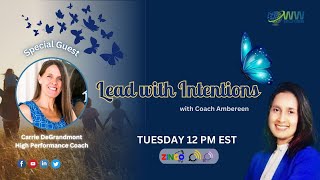
Carrie DeGrandmont, a nutrition coach and cancer survivor, shares how chemotherapy led her to natural healing, recovery from addiction, and adoption. She advocates preventative health through whole foods, sunlight, and grounding, with practical steps like adding spinach to meals. Her memoir, Scrolls of a Survivor, comes out in 2025.
Questions this video answers
13 years old (an 18-month chemotherapy prescription was begun during adolescence).
An 18-month course (Carrie stated doctors prescribed 18 months; she received treatment during that period).
55 years old (she says the natural-healing journey began about 41 years prior).
About 20 years clean at time of interview (she says February will mark 21 years).
Title: "Scrolls of a Survivor"; first draft complete and expected to be published in 2025.
Chapters
Foreign.
Blessed day to every single one of you showing up here on this beautiful day. Welcome to Lead With Intentions, where every single week I show up here as your coach and brain ready to serve you. So that way you can really tap into the best of who you are because there's greatness within yourself. The most beautiful thing is somehow magically, you and I and our guests have crossed paths today to prioritize ourselves. And I really, really, really want to say that I am super fortunate and blessed to have the most valuable commodity, which is your time in this very moment. Welcome to Spanglish World network and Xingo TV channels 250 and 251. Please remember to download that app. Go ahead. As you're downloading it, give us a review. It's available across every smart TV 2016 on forward, along with the full Roku lineup, Amazon LineUp, Chromecast supported iOS, Android, you say it, you name it, it's there. So go ahead, download. It's completely free for you to use. And as you're kind of doing this, share feedback with us, tell us what we're doing. Great. And then also that most important thing is what can we do a little bit better? All right, let's get into it. So our guest today. My guest, your guest, Our guest, her name is Carrie de Gramont and the Grandmont and she is a certified high performance coach. So from our family. Gotta say that, gotta say that she's been an integrative nutrition coach for nearly a decade. That's right. She's owned and operated a multi supplement store for about five years and has had a long history with natural and holistic practices. You guys already know I'm loving on her because that's why she's here. And the most beautiful and the brilliant thing is she's a cancer survivor and a brain trauma survivor as well. The main focus for her profession is on preventative chronic diseases and maintaining natural energies and vitality. You guys know like, she's up my alley. This is like this. Get ready for a lot of learning, a lot of insight, a lot of wisdom. And as always, I encourage all of you to take notes while we're having this conversation. Because it's in these small wisdom drops that you will actually start to progress your life in a more meaningful way to tap into your own greatness. Mama of three adults. Hey, hey. Married to her best friend. That's, that's gotta be celebrated. She has a heart to serve and helps people discover how to live the best versions of themselves. Welcome to our show, Carrie.
Thank you thank you for having me. So happy to be here. I appreciate you and I love your energy.
Beautiful. Well, today is all about you. So I really want to ask you.
Carrie.
Who are you and what is.
It that you do? Well, you summed it up pretty good in the bio there. So who I am is somebody who just has a very great love of life and of good health and of people. And I just want this whole world to just be healthier and have a more elevated mindset. So that's really me in a nutshell. And my coaching. The fact that I am a coach is not just what I do, that's who I am. The health thing came from a long history. I had childhood cancer and a couple of the things you named. But it's just, we need it so bad, the natural health, the preventative health in this country. And it's just, that's where my heart is the most, to help people with that.
I love that you said it so easily. You know, you're like, you know, like love, like love my life. I love great food and healthy eating and I love people. How did you get there?
Oh my gosh, that wasn't the easy part.
Yeah, I know.
I'm asking being able to help other people with it, you know, I, I, I was directed in the way of natural healing while I was going through an 18 month prescription of chemotherapy when I was 13 years old. And that's what started me on the path. I, I had already had an exploratory emergency surgery where they pulled out half of my reproductive organs, two liters of fluid. I nearly died. And instead of, well, they, they put me through eight. They wanted me to go through 18 months of chemo. And after about nine months I was dying from the chemo. I didn't have any more cancer. They were using it as a preventative measure. Somebody at my mom's job redirected us, an angel named Frank redirected us to natural healing and sent me to the library and the health food store and I started researching it then. So now I'm 55. So that was about 41 years ago when started my journey. Finding out about food as medicine, finding out about herbs, sunshine, vitamins, all the beautiful things in life that are already here that help us to prevent further chronic disease or any disease in our life. So it's been a long journey for me and has not always been easy. That's just part of it. But that has, that's helped me come to where I am right now.
Well, the fact that you're Sitting on this chair, I don't think is what are the people like, oh, it's a coincidence. I'm like, no, no, I don't believe in coincidence life. I believe that in serendipity. I believe in divinity. And I really want to ask you because their mothers, fathers, grandparents, siblings, aunts and uncles who are listening, who know somebody or who may potentially know somebody who might have cancers a young age that, where they're literally, you know, adolescent teens or preteens or even children. What, what was that stage of your life like? And also kind of think about it in a way where now you're a mother. How do you think your parents dealt with?
And very astounded by the way that my parents dealt with it. My mother was right there, full time job, and somehow she was right there with me whenever I needed her. And my father was a constant, you know, supporter of all things and was there whenever he could be, but always in my heart and right there, you know, they dealt with it the best they could. They. What they didn't do was ever get sad or look at the negative side of it. They always spoke life into me. And I think that that was the biggest thing and I think that that's what pulled me through was my mindset that they helped me to have them, my grandparents, and my realization that there's a God there in my life, whether I knew him or not. I was a kid, but something greater than me was at play. And so all of those things together, I think my parents, they really, they just supported me and they, they were not that they were fake positive, they were just, they always knew that I would see the other side of it and they always made me believe that as well. And so I really took that into every cell of my body and I think that that's really what pulled me through. Like I said. Yeah.
Okay, so first of all, to our viewers, to our audience members, to our brilliant and amazing humans who are here listening to what Carrie said. You, me, and every single one of us has a power to speak life into another. So often when we go through challenges, especially when it comes to our family members, I think there's no bigger challenge. You know, a lot of times we can take it on ourselves. But if when you see somebody else that you love suffering, it's the hardest thing. So. But your mindset and our mindset could really cultivate so much beauty and belief and faith. Right? So I, you know, my coaching company is called Tawakal Coaching, and that's just all it is. Tawakal is means having faith. Now, when you have faith at such a young age and you start to kind of shift and pivot and see that my body is dying in nine months, and I got nine more months to go, I don't think this is the right plan. How does that happen? How does Angel Frank. So shout out to Frank.
How does he.
How does he get into the picture to. To really elevate all of you?
How did Frank come into the picture? Yes. Oh, my gosh. So I would go to my mom's job on Fridays. Every Monday, I went to the hospital and got three vials of chemo shot into me. By Friday, I could get up and walk. So my mom would take me to work on Fridays at her job, and she was a receptionist at a car dealership, and I would help her pass out the mail to all the guys in. In the place, the salesman and. And all the guys. And so I remember that I brought Frank his mail and said, you know, and he went, oh, I have some information for you and your mom. Frank had been watching. All of her coworkers had been watching me. I had gone into her job before I ever had cancer. So they all watched my decline fine. During the chemo. They could see. You could not help but see that I was dying. And, I mean, I was bald. I was skin and bones, and I was in a bad way. And so Frank walked over. He goes, I'll bring it to you and your mom. He walked over and he gave us some information from an alternative cancer center. And on it, his wife was there. He was in the Bahamas. I lived in Miami at the time. And on it, I thought to myself, alternative? What's alternative about it? All I could see was the hospital, and all I could see was, you know, smell was all the sterile and all the stuff that, you know, the chemo was doing. And. And I saw words like food and herbs and sunshine on the. On the piece of paper that kind of jumped out at me. And I thought, how do those things prevent cancer? That's insane. And so he explained that his wife had been going through this alternative cancer center, and she was healing and she was. They needed to share the information with me because of, you know, him seeing me every, you know, every week at my mom's job. And it just. It changed my life. He sent. He gave me a list of books to go get at the library. He gave me a list of herbs and vitamins that I should go explore at the health food store. And that's where we went that day. After work. And I've been on that train ever since, even during times in my life when I wasn't 100% taking care of myself. I have a long history of drug addiction passed down through the family, and I was able to break that cycle for my children. But so I wasn't always on top of my game with my health, but that was always in me because I learned it so young. And so I was always a great eater. I was always aware of the importance of natural medicine, which is sunshine and grounding and community love and, like water, all these simple things that just mean so much. So that's how Frank came into my life and changed the trajectory of my life. And I'm so thankful for him. I'd like to find him again.
All right, universe, if you're listening right here, we are looking for Frank and Carrie to get back together again so she can share with him the uttermost gratitude for saving her life. You know, such a young age, and I really want to go back. You've said a lot, Carrie, and there's just wisdom that's dropping, you know, and every one of you that's listening here with me to carry, I want you to think about food, herbs, and sunshine. It sounds pretty simple. In the world that we live in now, it's not so simple. So we're going to actually come into that point a little bit later. But you said that there's a history of drug addiction, and you also went through that. And I think it's sadly a dilemma that is increasing with the legalization of many drugs in our. In our community, in our world, where I think it's okay to normalize stuff. But once we become addicted to something, you know, even in our religion or, you know, in my whole spiritual practice, addiction isn't something that will ever serve us in a positive light or will be a blessing in the long run. So can you tell us a little bit more about this addiction and maybe shed some light on the people who are facing it for themselves or they know somebody who they. They know they can support in this area?
Okay, well, I will start at the end. I. I am clean off of speed, meth, and cocaine for 20 years now. And so February will be 21 years. And I began using not that long, even though it sounds really twisted and just weird. And this is all in a book that I'm writing. I'm. I just finished the first draft of the book, so we can do details in there. But basically, I started using pretty early because it was in my house, and it was normalized in the life that I was around. And so I got a hold of drugs really easily. There were other kids at school who got hold of alcohol, and we would all kind of bring stuff to our school and share it. And so I had the line on the cocaine and on the marijuana, and other people had the alcohol. And so it was recreational at first. And then it turned into. Probably around the time I was 18 or so. I think 17 years old is when it got really heavy and bad. And I gave my firstborn child up for adoption. And after that, went into a severe depression with a nervous breakdown and started using capacities that I can't even imagine now. So, all that being said, how did I break the cycle for my children? Because I don't know where to go with this question exactly. But I'm just the tool. I got clean multiple times over the years, but I didn't stay clean until I wanted to, number one. And until I had tools to help me say no when the time came. So there were other times that I wanted to get clean, and I did every time I got pregnant. I stopped that day. I found out. And I was clean for years. Six years at a time. Six, you know, five years at a time. And then. And then I start using again. And so I wasn't able to stop doing that until I knew how. And so rehab was something that I took very seriously and was able to implement the tools that I learned in a way that I still use them to this day. So I don't know what I said here that was helpful for somebody who's going through it, other than you gotta love on the person. You. You have to realize that people, when they're in their addiction, they don't really have control of their mind the way they normally would. They don't have the full capacity of what's going on. They can't always grasp what you're saying, what. What's happening, because it breaks. It can break your mind depending on the drug. And so you gotta just love on them. You gotta pray for them a lot. If you're a praying person, you have to be, but not to your own fault. And you just have to realize that everybody has their own path. And it's not really up to any of us to pull somebody out, but when they're ready to come out, it's up to us to be there to support them.
Yeah. Going back to what you said, it's a choice, right? The life that we live is a choice. And when we choose ourselves and we choose to love and care on ourselves and even support ourselves, we can really change the trajectory. When I ask you a very difficult question and I think it'll support other individuals, however, it's a very challenging one. What was it at that age that you recognized, you know, adoption was a route that you were going to take with your first kiddo? Because I already can feel the difficulty of that decision.
Well, the doctors told me that I couldn't have kids when I went through the cancer situation. And so when I got pregnant the first time, I had a miscarriage and I thought, oh, that's what they meant. I can't carry to full term. I didn't explore it or do any research. I just kept fooling around with my boyfriend and got pregnant again. And this time I stayed pregnant. I stopped using. I was still a vegetarian at that time, coming out of cancer. I was taking excellent care of myself naturally, but I didn't expect to keep being pregnant and I was. And so here I am at six months and a friend asked me and my boyfriend why we weren't shopping or nesting or doing anything to get ready for this baby. And he was just really have an answer. I was at my wits end wondering what we were doing. We weren't communicating well. We were kids. And so the. It was presented to me to explore and so I, I explored it. I spoke to somebody who knew a lawyer who placed children in homes, private closed adoptions. And so she didn't go into the foster system. So I feel like I did due diligence on the prepping ahead of time before I decided and I decided that it was probably going to be better for her if she was able to experience a life different from the one that I was in. Because I didn't know any other way, right? Not really. I'd seen but I didn't really know like personally and I didn't want to put a child at that time through what I went through. And so it was heartbreaking and it took everything out of me and I gave her up for the closed adoption. I didn't want to sign the papers when, when they came, I was, I fought it tooth and nail in the hospital and I finally did. So yeah, I guess people directed me in that way and I just decided that that was the best way to go. But just a little tidbit is fast forward 18 years, I got on the adoption registry, she also did. And we. A random person called me one day and connected us and so I know where she is. I've met her twice. I'm on her social media, we don't talk, but I have her address, so I get to send gifts and things now, which is new last couple years. And she just made me a grandmother a few years ago, and so I can see those pictures. So I am grateful for social media, even though I'm not real big on, you know, the whole virtual thing. Although this is amazing right here. But for that reason, because I have kids all over the country, I am very, very appreciative of it. But yeah, that's kind of it in a nutshell.
I think, rightfully so. Right when our heart gets broken and we don't have the support that's there, you know, we do dip down.
We.
We do go under depression. And I think that's what I really believe is kind of the essence of this addiction. You know, even if you're addicted to something that isn't per se, a drug addict. I think we take this route when we feel lonely, when we don't have the people and, and the community to support us. And I remember you saying just, you know, just not too long ago, the importance of community. So kind of share with us a little bit, you know. Carrie, what for you it means to live an intentional life.
So now that I know as a woman, it's basically aligning my daily choices with my deepest values and my long term vision for my life. That's it in a nutshell. It's what I decide to do every day and making sure that is aligned with what I'm trying to get done in my life before I die. There's things that I have to get done before I die. And so I just need to do those things every day and just live into the best version of myself. So I do that through making sure that the choices that I make each day are aligned with who I want to be, who I want to show up as in the world, and who I want to role model for. Anybody who's watching me or anybody who I'm coming into contact with.
Okay, well, a lot of our audience members may not know what you're talking about when you say alignment. I know that as high performance coaches, it's kind of part of our curriculum, congruence and alliance, and we really take our clients through this essence. But share with us what it means for you to, you know, to live in alignment with these deepest values and your long term vision.
So what I mean by alignment is, is just in line with so just going after those things that matter to me each day, making sure that I am valuing other people, making sure that I'm valuing myself, making sure that I'm in love, in. In a state of love all the time with myself, with everybody around me, making sure that I'm displaying an amount of respect towards myself and towards everybody I come into contact with, making sure that I stay in a state of service to others, because I believe that we all are called to share something that we have inside of us with others. And that is a state of service. And so for me, that's what that is. And just trying to help other people. So that's what I mean by living in alignment. Those are my values. Those are the things that I want to encompass in my life. And so that's what I'm trying to live into every day. That's what I mean by being aligned. Did I lose you? You're frozen on my screen. Hello? Hello. Oh, looks like you've been dropped. All right. I wonder if I'm still live. It looks like I'm live. So I hope that what I said made some sense. Here she comes back. And I hope that whatever I have been saying today is helping somebody out there to just find a better way to live or to just live more into your own values. And. And you. What it is you're trying to bring into the world and what it is you're trying to help others with. And so, yeah, I'm going to talk a little bit about my. My book. It is going to be called Scrolls of a Survivor. I just completed the first draft. I expect to have this book out in 2025, and it is basically a memoir. You're back. Hi.
Yes. I thought you were gone.
I started talking because it said I was still live, so I. I was talking to whoever might have been able to hear me.
There you go. Perfect. Okay, go ahead. Memoir, you said?
Yes, that I just finished the first draft of my book called Scrolls of a Survivor. It's a memoir of all of the trauma that I've gone through, the resilience that I gained from it, and the transformation that I've experienced because of it all. And through it all.
That'S the best, because I think those declarations are so key, you know, to becoming who we are. Now. I want to ask you something and kind of want to take this into a direction where the individuals that are really listening and are here are able to gain some wisdom, gain some actionable items, gain a better way of. And a more holistic way of really making food. Herbs and this glorious sun. Something that serves us. So can you Let us know how we can start to incorporate small changes in our lives to live a little bit healthier.
Yes. So I think that a big one would be to be looking for foods in the way that nature gives them to us. So anything you're eating or trying to buy at the store should probably not be in a box or in a container. That's a great first step, is to just go for whole foods. Another one would be when you're shopping vegetables, they're. Whenever it's you're able to be affording it, you want to look for things that are organic so that you're not overloading your system with pesticides and genetically modified organisms, which have been shown to cause a lot of health problems in kids. My youngest son was an example of that. And when I got him off of those things, he was really sick. We got him better. We have been seeing doctors for months for him. So it's very personal for me. But just trying to go with whole foods, trying to reduce the pesticides and then genetically modified things, those are big. For starters, getting outside each day, preferably in the mornings or whenever you wake up for a good 20 minutes, can really have a positive effect on your health and your sleep cycle, which is a big part of your health. And if you can do that barefoot, even better, because the grounding the earth gives us energy and does a whole beautiful thing to our system. So sunshine is super important. You want to make sure you get some every day, whenever, on as much of your skin as possible. Because vitamin D is really important. The rays from the sun, really important. I know a lot of people want to lather on a lot of sunscreen. Sunscreen also blocks the wrong sunscreens will block the vitamin D absorption. So a lot of people have vitamin D deficiencies even if they're out in the sun all the time. So you want to take it easy on the sunscreen and make sure you're getting some sun naturally on your skin on a daily basis. And just trying to go for natural whole foods, those are two big, easy things I think that maybe you can do. Cutting up vegetables, looking at nut butters and vegetables for snacks instead of looking at fruit for snacks, instead of packaged things like that are good steps. I know it's hard with children. They just. They make so many great little containers and things. And if you just bring your family into the kitchen and take them shopping or make lists with them and try new, different colorful things to put into snacks and lunches and things like that, then, you know, getting the kids Involved can be really helpful in helping them to understand why they're needing to eat those things. And it's just health supporting to. For the family unit as well. So I hope those are helpful. Little.
Those are very helpful, Carrie. But how do we do it? How do we live in a way where it's so much more difficult to, you know, afford whole foods? It's so much more difficult to make those decisions. So much more difficult to meal prep. It's so much more difficult to be like, yeah, sunlight and grounding. I live in Chicago. It's going to be today. It felt like 34 degrees. Most people are not going to go outside for a walk themselves unless I totally went out without a jacket. I was like, I gotta, I gotta feel the cool. I just, I need to embrace it. But how are we doing that? What do we need to have in our mindset? Because I remember you talked about, you know, the mindset that your parents and your grandparents have given you so young age has allowed you to embrace who you are and become all facets of yourself. So what more can we help individuals understand where that shift is needed to be able to prioritize this?
Well, number one is that if you don't have your health, nothing else in your life is really going to be doable or enjoyable. So prioritizing our health is pretty huge. So getting a little bit of sunshine can be as easy as standing at an open window. You don't necessarily have to go outside and go for a walk. I actually was born in New York in an apartment building on the 13th floor. And I remember my mom having us go next to the window where she had her plants growing and she talked about the sun coming in. And so I know we were getting some on our face, although we spent a lot of time outside. So even just an open window, as far as sunshine goes, and then just keeping that mindset that any time that you're able to get fresh air, that you're able to get that sunshine and you should go for it. It's something that is free, it's easy, and it's just so health supporting. So I think it's just a mindset around do I want to be healthy or not? And same with the food. Every time you put something in your mouth, you're making a decision to either be healthy or to not be healthy. That's basically the bottom line. And I learned that early. I didn't want to drink carrot juice. I didn't necessarily want to stop eating meat. I didn't want to eat all the vegetables all the time and drink the green juices and do all those things that I was doing to get off of the chemo. But I made an agreement with myself and with my parents that if I did stop the chemo, that I was going to do these things. And that was my decision, that was my mindset change was that that those things started tasting like life where the chemo was tasting like death in my mouth, literally. And so I guess it's just a shift. It's a choice. Just like everything, it's a choice you have to make for yourself if you want to have energy and vitality and longevity in your life and if you want that for your family as well. I feel like it's everything because if you don't take care of those things, what do you have? I think we all learned through the pandemic how important our health is. I hope maybe not everybody, but we all know we need it. At least everybody knows that it's more important than it was before. But it's always been equally as important for me. And so how to do that is just really start thinking, look at your life and decide what you want out of it, I think. And you just have to make those small changes. As far as the organics being more expensive, sad but true. Vegetables don't cost that much. And so I mean, compared to say if you were buying foods down the aisle, up and down the aisle, if you're in the produce department or at a farmer's market or, you know, depending on where you live, vegetables tend to be less money than a lot of other things. So there is a resource called the Dirty dozen that you could look up on EWG.org and they give you the list of the 12 most pesticide ridden vegetables. So if you were only able to buy some of your vegetables organically, you could avoid the ones that have the most pesticides. There's 30 dozen, the clean 15. So that's a good resource to go by. But just making those small changes, it didn't happen overnight for me. Well, when I was young it did. But when my son started getting sick, sick, it was harder because they had, I had gotten on board with processed foods and things like that through my husband's family. And so my son got really sick. We had to take baby steps back into where I was when I was younger, into a place of organic foods, of healthy eating, of more vegetables, of less garbage. And you know, it it so through his health improving. And so I'm, I'm just such a firm Believer in it. And I've seen so many people. I've been working at Whole Foods part time for 10 years and I've been a cashier a couple days a week. Got my little discount. I get to communicate with people who care about food and all that. And I've seen so many people come through the line who the reason why they're buying g of vegetables is because they got a diagnosis or because somebody in their house got sick. And it's just so sad to see people wait. Like you don't have to wait. You can get in front of it and just add more. Have a salad a day, get a thing of spinach and add a handful of spinach into each of your meals. You can cook it down, it's not even like you're eating it. That's a great start. That's what I have all my coaching clients do in my health coaching practice for years who don't eat vegetables is just get some spinach and get a handful of spinach into each of your meals to start. So simple little things like that, just adding in a new vegetable a week, a new color a week is a, is, you know, start exploring it because we need those phytonutrients for our health and vitality and you just got to make it. Yeah.
All right. So I love what you said. I think that simplifies it, right? Like add a new vegetable or add a new color a week and you're like, oh, that sounds simple enough, I think. Or the other tip that I've heard from my own wellness coaches, shop the outside. Shop the outside in a, in a grocery store, not the inside because it's all boxed up and contained and then that will kind of give you an option. And I think it's so true. You know, often think about my 89 year old grandmother who passed away just recently and strong, determined, role model, high performer, invincible in my eyes. When I think about her life and, you know, married at the age of.
14.
A mother by the age of 15 to a man who was very traditional Pakistani or Indian, you know, South Asian I guess we can call it. And you know, it was so cute because it was the end of her life. I'm so weak, so weak. I can't move, I can't do this. And I think it was more of a mindset where she was like, I'm just done with life. It's been so difficult. I don't want to keep living. And so she was like, oh, I need help getting up. And I'm like, oh, okay. But then she didn't know how to ask for help. So, like, in two seconds, the woman's like. And you're like, wait, you were just lying on your bed now, like, how is that a thing? And so I kind of began to start thinking a little bit about how is it that my mom has so much strength at this age. My grandmother, my grandfather, you know, like my great grandfather. I even got to meet him. He was 103 years old. And it was that they only ate organic food and they walked all the time, so they were in the sun. They had a great way of burning fat or, you know, stuff that was not, you know, not needed in their body. They ate healthy, just naturally. There was no gmo. Now, I do want to go in a little bit because I myself want to educate, gain from your knowledge and educate myself to say what you said, genetically modified organisms. What does that mean? Because we hear that lingo all the time. Oh, it's gmo. Is gmo. What does that mean, Gary?
It means that the food got taken into the lab and mixed around with in a way that does not support our health. That's it. In layman's terms, it causes digestive upset in so many people when you cause digestive. Digestive dysbiosa. So basically, if your microbiome is not good, that means all of the healthy bacteria that lives in your gut, if it is thrown off, then it affects your whole system, especially your immune system, and so. Which is everything. So genetically modified organisms that are in our food system now, that they put in probably about 40 something years ago without telling us, have been trickled into everybody's diets. And now we have a higher rate of autism, of adhd, of childhood diabetes, which was never even a thing before. All of these things are happening because of a compromised immune system. And so GMOs are a thing that you want to avoid. Everybody needs to get educated. I want to backtrack a little bit, because you were saying, how. How do we do this? How do we do this? We got to get educated. There's so many resources online. I mean, that's how I revisited the situation when my son was getting sick before, when I was young, I had to use books and go to the library. Now it's so much easier. I was able to. To punch in some information and get just a plethora of, you know, resources out there. Functional medicine, doctors and naturopaths, and natural healing people are. I know there's probably a lot of not so great stuff out there. But there's a lot of really good stuff out there on the Internet that you can find. You know, I'm a health coach. There's many health coaches available to talk to people, people who, who give classes, who give certifications and things like that. I think that's where we got. We have to get educated so that we know what a GMO is, so that we know what organic even means. I remember when I first heard that term, I went, what is that? And I was, you know, this is me coming out of, like, I was a full grown woman, did not understand what organic meant. And because our system has been so messed up that we need a certification to say this thing doesn't have pesticides, toxic pesticides on it. We need a certification to say that. And that certification is organic. Under the organic certification here in America is also means that those things have not been genetically modified. So that kind of covers it all. So that's a good way to go. And of course, I don't 100% trust any little symbol or any certification, but that is going to give you less pesticides than the next thing and less on the GMO side than if you go with conventional. So, you know, veering towards organic as much as possible is one of the things that we just need to do for our health. It's super important. There's a toxic overload that happens in our systems, especially in children's systems, and it affects. Yeah, I think I'm so boxed about this for a really long time.
I feel like, girl, I feel you. Okay. I'm like, wow. And so let. This would be a great time to ask, how does somebody who's like, well, Carrie resonates with me. Maybe what she's saying is right. But this whole GMO shenanigan, like, how do I even start? I would love to use her service or figure out if she's the right person for me and my family. How do they get in touch with you?
Well, I have three ways right now because I'm pivoting my whole coaching program. And so I'll have a website soon again. But I don't right now. What I have is my social media. I'm very present on Instagram right now. And it's Coach Carrie_ CHPC_ I N. Let me get it right. H C. So it's Coach Carry Underscore CHPC underscore I N H C for Integrative Nutrition Health Coach. And the CHPC is Certified High Performance Coach. So there's that. And then my My email address is wisechoicescoachingmail.com and wisechoices is my business that I've had for about a decade. And then you can text the number 1-925-2047999. And those are all ways that you can get in touch with me directly and we can have a conversation. I do free consultations with people, I do classes, I do workshops, I do one on one coaching. I do personalized coaching. And I have a big heart to serve and I want to help everybody and I just want to have a big ripple effect on, on the world as much as I can while I'm here. So I love that.
I think that's so important. I think that that driver, right, that intentionality to serve our purpose. And you said something that I very much resonate with and that's we all have a gift and this life kind of allows us to discover that gift. And then you just serve it up, right? Like I call my gift Umbergi, which is my energy. Because you're like, oh, I love the energy. Like, it's a legitimate thing. Like, I have had to go through a lot of challenges to discover it. And now spreading it kind of refuels me, gives me more alignment, it gives me more intentionality. I want you to kind of let us know, Carrie, you said you are married to your companion. You've got three adults, you know, that you have raised. Allow us to kind of, you know, tap into your, your family and can you share something about your family with us?
Something about my family? I'll share something about when they were all here in the home, and that is that every single night we had dinner around the table and we took that time to communicate with one another. And I think it made a huge difference in our family life. And I always brought joy and value and respect into the world around my children and our family dynamic. And I think that also it shows in them as adults. They're productive and respectful and full of love people. And I think that those things when I instill, when you instill them in your children and in your family, they, they show and, and it goes out into the world. So that's a big thing about my family. A big challenge right now for my family is that we're all long distance. My two youngest live on the East Coast. My oldest lives about four hours from me. My adopted daughter lives on the east coast as well. And so it's just me and him, empty nesters. But so I travel a lot because I need to see them. But yeah, our family is better than I think, and that's the goal, is that we want to make ourselves and our families be better than whatever it was we had. Even if we had a great situation, we want a better one. And so I had an okay situation. And I feel like my parents did the best they could, but it could have been better. And so my husband and I did what we could to try to make our children's lives better. And I think hope that my children, when they decide to have children, do the same and that that just continues.
And I think that's the beautiful thing, right? I think as parents, we can never get it right. Or maybe as family members, not even as parents, right. Because you always have something that you don't like about your sibling, something you don't like about your grandma or how your mother is still at this age is something like, you know, is triggering you or me. And I think it's like, you know, recognizing that the past was there to teach us these lessons. And we need to change the future by making sure that we made this modification right here in the present moment. And I love the way that you're saying that, you know, that I had it.
Okay.
Although your parents gave you this beautiful mindset and they gave you faith and belief, you know, at a time when it was so difficult for them to even maybe have it, but making sure that you had no other way of thinking and being. However, there was this essence of addiction and drug use and all the stuff that kind of things that you've removed from your life, even though it wasn't a one time thing or second, like it was patterns that you saw, like a high, like I've been flow, Right. Highs and lows.
Yeah.
And so I think that's just what life is. We don't always have to get it perfect and right because I don't really believe in perfection, but just you got to keep striving and, you know, and getting a little bit better. What is a challenge that you think you're facing in your family right now? Carrie?
I'll go back to the separation. It's really hard to have children who are after being so close and so immersed for so many years, having them go and move far away and not be there, it's. It's hard. You can't just jump on an airplane every other week to get a hug and. But I'm due. I'm getting ready to go because I need a hug. If I go for three days to the east coast just to get a hug. I'll be okay. So it's just that distance, and so communication is limited. The two youngest are in their 20s. They're living their lives. They're doing their thing, and it's. It's hard to not be needed as much as a mother. I guess it's really what it comes down to. Yes. Yeah.
Yeah.
It's hard challenge for me.
We do find validation as women in our roles, and when we don't have them, you're like, wait, now I have five hours. What? What is this? What is this? Why are you purging me? I don't need these hours. Okay, well, I could talk to you probably on and on, but our show is kind of coming to an end, and I want to ask you a set of questions. And these are what I call the intentional wrap up. These are rapid fire questions that I want you to just answer it with one word maximum one sentence. And it's kind of a great glimpse of how we as human beings think the way that we do and what matters to us. Ready? You got this, Gary? Let's do it. All right. What do you want to leave behind for the world?
I want to leave behind a legacy of health and presence. Meaning I want people to be present and be healthy.
Wonderful. How will you know that you've led an intentional life?
Repeat that question.
How will you know you've led an intentional life?
Well, I guess at the end of it, I will feel like I did all the things that I needed to do and that I touched all the people that I needed to touch and that I said the words that needed to be said, and I took the actions that my heart was tugging me to take, that would be it.
Perfect. If you could create one law in the world that everybody had to follow, what's that law, Carrie?
I am safe and sound. I follow my heart and my intuition. I make the right love. Love a lot. Love yourself, love everybody around you. That. That would be it. Love it and show.
Can't ever go wrong with love. That's for sure. What is one lesson that you would like to share with us that has made you who you are today, Carrie?
Life is a choice that has been my biggest lesson. That everything, the reaction we have is all that we have control of. So whatever's going on around us, we get to choose how we react to it. And that's a choice, and that's been my biggest lesson. Absolutely.
All right, our last question is, what is the key to a healthy relationship?
A lot of love and acceptance. For who? That other person Is whether it's a spouse or anybody you are having a relationship with, everybody's in their own place, and we need to love and accept who they are in order to have a good relationship with them.
Yeah, indeed. That is part of my own mantra within coaching. I'm like, you've got to accept your family, because if you don't, nothing is going to change. They're not changing for you, you're not changing for them. Let's do it. All right. So thank you so very much, Carrie, for coming on today and sharing your, you know, your plethora of knowledge and your authentic self. I know that I took you down a very difficult memory lane, but you stay strong to yourself and fully aligned and served all of us in such a most beautiful way. So thanks.
Thank you for having me. It was a pleasure. And I love being asked all the questions whether I can get through all the pain. It's okay. I feel like everything happened to me for a reason, and the reason is to help somebody else. I figured that out, and that's just what I've been with it for years.
All right. To my faithful Toko filled, you know, family who comes here intentionally to show up. This show can also be heard on Spanglish Radio Network. Please check out Spanglishworld CA for all the news and the programming. As we close, my prayer is that this show will embark us on a journey of transformation where we become grateful for our paths and our blessings, accept the unfoldings of life, and commit to values and dreams which will allow us to tap into our own greatness, as I have the Wako, which is faith in every single one of us. When we leash around that, when we leash our authenticity, we live intentionally. Remember, there's only one of you, one life. Design it with excellence. Spanglish World. Watch it, hear it, read it, download it. Most importantly, live into it to better serve who you are. Thank you so much, folks. See you next week.
Bye.










