Lead with Intention: Eric Ferguson ~ Full Potential Living
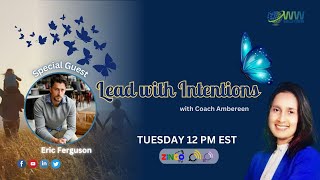
This is a recorded episode of the Lead With Intentions show hosted by Coach Ambereen featuring Eric Ferguson, a high-performance coach and former athlete. Eric describes his journey from 20 years pursuing professional baseball to world travel, meditation and yoga training (including study at Kopan/"Copan" monastery and teaching in Botswana), and his pivot into coaching. He now specializes in helping young high-performance sales professionals maximize income without sacrificing health or relationships, and the interview centers on vision-setting, intentional living, alignment, family dynamics, and practical habits for progress. Contact details for Eric (LinkedIn, website, Instagram) are provided at the close.
Questions this video answers
High-performance young sales professionals (maximize income while preserving health and relationships).
LinkedIn: Eric Ferguson; Website: full-Potential-Living.com; Instagram: full_potential_living.
John Butcher and the Lifebook process.
Taught in Botswana; studied meditation at Kopan ("Copan") Monastery in Nepal; studied yoga in India and traveled across Europe and southern Africa.
Chapters
Hey, Joyful day. Welcome to Lead with Intentions where every single week I, your host, coach and braid shows up here ready to serve. It is truly an honor to cross paths with you today and I appreciate you taking the time out to prioritize yourself while giving us the most important commodity which is your time. Welcome to Spanglish Network and Xingo TV channels 250 and 251. Please remember to download the Xingo TV app on your respective app stores. IOS, Android, the whole Roku lineup, Amazon lineup, any smart TV 2069 forward along with the Google Comcast Chromecast lineup as well. So now as you're downloading this application, go ahead and give us a review rate us, let us know we're doing well. But more importantly, what can we do to improve your experience because that's what it's all about here. Lead With Intentions, this lovely show that you're watching today is set out on expedition to allow us to discover the best of who we are. And today's guest is just that man. His name is Eric Ferguson and he is a high performance coach. So he's in the same family as me, which I love. And he's a former athlete, a podcaster and a seasoned sales professional. So he's actually dedicated to working with individuals, transforming their lives into high performance living which we all know that we love here. Along with that, Eric thought why not add a little bit more life to this whole mix. So he's travel the world and he's trying to find a very holistic approach to just better living which means he's going to be empowering you through yoga, meditation to mindful practices to make sure that you can bring out the best of you as you work with him. And, and now he's kind of shifted and pivoted a little bit, which we all love here, right. We want people who are constantly growing and realizing that's not exactly me anymore. Let me do that. I'm going to let Eric talk to us a little bit more about that in details as we carve out how he can add more value into your life and hopefully into every single one of your interactions. Welcome Eric.
Thank you. Thank you, Amberine. Yeah, absolutely. I think it's been, I think my coaching business and process has been a continuous evolving and you know, throughout the couple years that I've been doing this full time now it's evolved and the more and more people that I work with, the more and more I realize of specializing in the right areas. So it's evolved. I do you Know, I'm a high performance coach. So I take people through the high performance process with other modalities there. But it's more specialized now towards a different target audience that I've been working with naturally more anyway, so it makes more sense.
All right, so let's not keep that a secret. Let us know who you're working with and you know what's got you kind of going into this direction.
Yeah. So I help high performance, young high performance sales professionals. I help them maximize their income potential, double or triple their sales without having to sacrifice their well being or their relationships. So I have my own experience in sales for years now. I have seen the trials and tribulations on my own and also seen my team around me and seen, you know, some of the problems that come with this type of a somebody who's a high performer and somebody who is really burning themselves out by going after their sales goals and really achieving that. Because really full potential living is about maximizing your fulfillment, success, generational impact and a higher consciousness state living at this. And so it's really helping people find fulfillment, success, health while they're reaching their, their sales goals. And so it's something that's evolved, it's something that I realized I was doing anyway and that's who I help more specifically now.
Okay. And so kind of walk us through. Why do you think sales is something that's resonating with where you are in life right now, besides the fact that there are people who are just flocking, you know, towards you with this specific concern?
Yeah, so I've, I've, I still do independent contracting for solar sales and I've worked in multiple states now. I've worked across the US I've been doing it for a while. And I think that there's just a lot of commonalities with who I am obviously being in sales, but also, you know, the people that I serve in what they're doing. So there's a commonality in what we do. And I think it's just the type of person that it really matters as a coach. It really matters to help the right people. Because you want to help people, you can help the most. And within that sales professional realm, I've seen people grow significantly. And like the values that matter to me the most are courage, freedom, passion, purpose, fulfillment. These values that, you know, people are really after tend to be in the sales field, the entrepreneurial field. They want their potential. I mean, since I was a little kid, I wanted to maximize my potential. You know, in, in athletics, first and now, you know, and then it was traveling the world. Then it was okay in business and coaching and entrepreneurship. And I've always wanted to maximize my potential in life in all the most important areas. So it's for those people, those high performers that feel like they're burned out, overwhelmed, not reaching their potential, whether it's in relationships. I've been in places where I've been incredibly lonely, you know, during COVID when we're all making decisions and. And tough, really tough times, you know, with family stuff, with friends, with communities, you know, growing in and out of relationships. Hello there.
Yeah, she did.
Yeah. And so it's. It's naturally what I've been doing myself and. And helping others do the same is. Is the most rewarding thing in the world. And this is what I'm doing the rest of my life.
Beautiful. Now tell us something so we know a little bit about what you do. I'd like to ask the guests here. Tell us something about you. Who is Eric?
Who is Eric? Oh, man, where do I start? How much time you got? No, I always say that one. I would say, yeah, just a little bit of background. You know, since I was nine years old, I really had a mission to put be a professional athlete. It was between, you know, I just knew my. My dad was a professional tennis player. And I mean, I. You know, my parents happened to be split, so I didn't necessarily know that until I was a little bit older. But when I was nine, I just remember being like, okay, I'm gonna be a professional athlete. That's what I'm gonna do. I'm gonna figure out a way to do it. That's what I choose. That's my commitment. Let's go. And it was between baseball and football. Really. Basketball I love, too. Now. I love other sports, but at that time, it was like baseball or football, because that's what I watched on. On TV as a kid. And based on, you know, my body type and not wanting to really hurt myself for the rest of my life, I ended up choosing baseball instead of football. American football, right? Not. Not football. Like what we call soccer.
Yes, yes.
I'm cultured around the world, so I understand. Yeah, football in the United States compared to football. So anyway, I had a mission of doing that, And I spent 20 years going after that dream. 20 freaking years. And dedicated my life to it. And, you know, I went as far as I possibly could. I could have dedicated another five, 10 years to really, really grind through the minor leagues, but it was a real. It was really Difficult. And I was like, well, I could go off and feel, you know, figure out who I want to be next. And that's what I did. Traveled, I went to Africa. I was a teacher in Botswana. I was, you know, in South Africa, Zimbabwe, Zambia, kind of the southern Africa tip. I taught there. I went to the Himalayas, in Nepal where I studied meditation at Copan Monastery. I met amazing people around the world. Then I went to. I actually studied yoga. I was really on this journey of self discovery. Like who am I? Who am I? Beyond sports, I had no clue. And I really had to do that, that self discovery. So then I got in. Yeah, I got into. I went to India and I studied yoga and I went all around Europe. I've been to many countries in Europe and I've been there many times. And that really allowed me to step outside of the US and reflect back not only on us in the United States, but on me and go, who am I? What do I really want? And there's a lot of transformative journeys through there. And I always encourage people to get outside your comfort zone, your environment, go travel and go see the world because it see more of yourself, really. And so after that I came back, I tried a bunch of different careers and a lot of them didn't pan out. And then I was like, what is this coaching thing? Like I'm an athletic coach. I got back into coaching baseball and that led for a few years and doing a ton of lessons. And then that led to life coaching. I didn't hear about, I've heard of executive or life coaching. From there I started to really move into doing it part time. I think in 2020, my whole life just totally opened up and transformed based off of my own inner work, my own personal development and a specific process that really was the catalyst for my coaching business and just personal, my personal growth and success. And I can't believe, I'm sure you've gone through this too, Ambereen. You know, where you've seen your own growth like a couple years later or maybe who you, who you were even five years ago.
Definitely yes.
Right? I mean an amazing coach sitting here leading this, you know, leading this awesome lead with intentions. And I think I looked back and I'm like, oh my God, I can't believe the type of person I am because I dove into personal development. Like if you met me five years ago, I'm a different person. I literally am a different person. And that's an amazing feeling when you can look at, still love that person who you were. But look where I'm at now, man, and. And sit with that for a minute and be like, whoa, I really love myself. Why? Not because I'm the best of the best or whatever, but because I've seen my growth, I know I'm on a trajectory towards my full potential. I know I'm there going there, right? And I can see you're doing that, too. And it's like when you. When you, you know, Tony. Tony Robbins said, you know, progress is happiness. It's. It's very simple. It's a simple concept. When you see progress. Now, what I would add to that is like, aligned progress. Alignment are like, let's not make, you know, a lot of people will make progress in a direction that doesn't really fulfill them. When you know who you are and you're going in that direction and you're making progress towards that person that you feel so excited about, you're living life to the fullest. You're maximizing your potential, and that's what it's really about.
Yeah. So I want to actually dive in because this question has now come in my head, like, three times. I'm like, now you have to ask Eric. So you're talking. Because the reason I think it's important to dive in this direction is many of us who are watching, and I really do admire and I thank you, and I'm in uttermost gratitude that you're giving us the time to sit here and listen to this conversation, which hopefully is benefiting you and living, you know, allowing you to live into a higher potential.
Absolutely.
How is it that, you know, somebody dedicates, you know, let's say, 20 years of their life, you know, on a career path, and then they're like, well, what do I want? You know, first of all, and the way that I'm going to actually tie it in for the general audience is you have a kid, you have raised this child, you know, for 20 years, and now it's kind of like their time to fly. But you are, as parents were so hell bent on, like, nope. Like, you can't leave the state, you can't leave the country. You can't try this career path. You can't do this. You've never lived alone. All these things that we do to kind of make bring obstacles, you know, into the lives of those that we love and have good intentions towards. How do you come up with the courage, like you said, right. The purpose, intentionality of saying, you know, what? Yeah, let's kind of. Let's reimagine A different future. How did you go from, you know, baseball, is it? To coming to that decision?
Yeah, I mean, I can't, I can't think. I think there's, there's multiple ways I could answer that. But I want to say, you know, from my own experience, I can't thank, you know, my mentor, John Butcher, and Lifebook, the process of Lifebook. I can't think that I can't thank him. I mean, I'm still in contact every month with John Butcher, and I can't thank them enough because, like, so for anybody listening out there, the process of Lifebook, what it did for me, and this is like a concept that you can take, is it helped me go within and look within and really create a vision for my future. Because I was starting over. I was starting over. Anybody crossroads and they're like, all right, man, I'm now, you know, becoming an adult. If it's your child or I'm, you know, becoming a teenager, or if it's somebody who's, you know, in sales or somebody who's in some different type of nature that's at a crossroads in their life, whatever that is. Retirement, you know, next level of career growth, okay, Just Step off the hamster wheel of life and stop moving so fast in the busy life, especially with these, and go, okay, wait a second, hold on. I don't have to rush through my whole life now. Let me make intentional action conscious action with my life, right? And so it starts with creating a vision for, like, what you really want. What I mean by that is not a goal. I mean something beyond a goal. I mean a lifestyle and I mean the type of person you want to become. So literally knowing, okay, in my, like, what kind of lifestyle, what kind of quality of life do I really want to live five, ten years from now? You know, what, like, what, where do I want to be living? What's. What's my optimal environment? You know, what's the quality of. What's. What's the ideal career path that I can evolve into? Where do I really want to go with my career, my work, you know, where do I really want to go with my, my finances? How can I be healthy financially to support the person that I want to become? You know, how can, what are the character traits that I really want to step into every day? Like, you know, as a high performance coach, you know, we talk about the best and truest of who we are in our, you know, interactions, in our personal self, in our success partners, like, sure, you know, people with that and it's like, so the character trait, the best and truest of who you are, and it's really knowing yourself there. So it's, it's, it's not just creating a goal. Like, most people just set a goal in a vacuum and they go, let me just, let me just, you know, I want to be a millionaire. Okay, well, why, why do you want to be a millionaire? What's that going to do for you? Understand the, the, you know what that's going to take to be a millionaire? Do you understand the sacrifices you're gonna have to make? You understand that if you want to be a millionaire in this field, like, that's going to start to sacrifice. If you don't have help, that's going to sacrifice your. I'm just putting out a random goal out there, right? That's going to sacrifice your relationships. It's going to sacrifice your health. Like, what are you letting go of to get that goal? So most people just set random goals. I like to say, setting goals that lead to nowhere instead of going, wait a second, who am I? Where do I want to go? Let me take a little time, couple weeks, and write out of, like, create a vision. Or even if you don't have a couple weeks, just five hours, three hours, like, line up five important areas of your life. Six important areas. Who do I really want to become? What's my vision? What's the reason I actually want it? Is this coming from me or is this coming from society, who I am or from society? What's my purpose for achieving this goal now? What beliefs might be holding me back now? How do I actually get there? What's the strategy? Put that together. And so my life since 2020, 2019, 2020, has catalyzed. Like, I could just list off things. This is so just, like, absolutely true. My life is just catalyzed because of this process. So much of this I learned from my mentor in Lifebook, and it catalyzed my potential for me to grow and then evolve that and grow that. And like, can't tell you, like, the four years how much I've evolved. It's amazing. And I, I think when you, for, to answer your question, when you set a vision, a comprehensive vision, meaning what's the lifestyle I want to, person I want to become in those most important areas. Everything you do is now in alignment with that person, you know, and so you start to cut out all the stuff that you were doing before that you now realize, like, why was I acting like this in this group? I don't even have that friend. Like, we don't even. We don't even really relate that much. I. I just feel trained every time I'm around them. Why am I even in this career? Why am I even doing this or doing that? Like getting conscious awareness instead of the very simplest way. Like an analogy. Instead of being in the passenger seat of your life and just going with the car, going on the highway, hoping you go to a better. A better life by. It's like a ship going out to see with nowhere to go. When you have a vision, it's like having gps. Oh, I want to go to the top of that mountain. Let me type in the address. How do I get there? Okay, that's your vision. The top of the mountain is my vision. Oh, I need to drive X amount of miles. I need to then park. I need to bring my friends, and we need to walk up this freaking mountain. And then we get there. And this is what a vision does. It cuts out all the breath of the jungle and it clears the path for your truest and highest potential.
Yeah, and I kind of want to tie this back. We as high performance coaches use a lot of huge terminologies and really actually understand it. So you're talking about this concept of evolving in the last five years, especially since 2020, and really discovering the best of who you are, because now you're becoming clear on your vision. So when we go through this, you know, the program of high performance coaching, which I've gone through before I became a coach, and I can swear by it, which is exactly why I became one. Right. I'm not. I'm not going to do something. I don't even know if it works or not. So I invested two years of my life into this. And when we're talking about alignment, you know, for those of you who are here still listening, and I thank you for that, is we're talking about when your heart, your mind, your body and your soul all are striving in connection to something greater. Eric talked about alignment, happy, progress. I look at it more like just intentional steps that you're taking to create the life that you want. And I think it's so simplified. Right. Every single time I start off the show, I do set an intention, and that's my daily intention. And it's not because I have to do it, but I realize when I don't do it, then every single day, like, if my. If today I'm supposed to not be joyful but courageous, every step that I take has to now tie back into that so every day I'm developing some version of me while having that higher vision of what life do I want to create. But I think it's that simple thing of taking intentional actions. Right. And if you, you know, Eric said take out some time, pause, and it is true, many of us don't have the time to pause. So for that, like every day I'm like, just take a five minute journal entry and write down like, how do you want, say, to pan out? Yeah, that will really charge you towards something that's at least a lot more intentional in the day. And I think that's what it is. So how would you describe, you know, what it means to live an intentional life?
Eric, man, can I.
Can I ask you a question all the time?
What, what is your intention. What is your intention of today? You said you have like.
My intention today is to have a joyful day. So everything connects back into joy. I was out over the weekend actually, just got back in yesterday, late night without my kids. My sister and I took a trip celebrating my 40th birthday. So this is another like a very big. Yeah, I was like, as women, you say, you know, like, you're out loud. Are you okay? I'm like, of course. Like, it doesn't matter. It's a number. So my sister and I went to an island, beautiful island, which was just completely on foot. So there are only horses, carriages there, bikes, or you're walking and it has hardly any pollution. Super amazing, glorious. Like you just go there and you come back, you're like, wow, I needed that pit stop. So for me today I have to really pour back into my little humans. So living into joy with them is going to be the essential theme for today, you know, while pouring back, of course, into the business and into you guys as well.
Yeah, amazing. What was your question for me?
My question for you was, what does it mean to live an intentional life?
Yeah, I think it's, it's bringing just. It's like the, the cliche. It's not, you know, the cliche saying of being in the present moment, you know, it's. It's really like being aware, like waking up, you know, your senses to be like, okay, this is really the only moment that actually exists, really. And so when you do that, you wake up to being your best every moment and then you go, okay, if I'm going to be my best every moment, every moment I'm breathing here, like literally alive. I'm alive right now. I'm waking up to, I'm alive, I'm Here I'm conscious. I'm bringing awareness to being alive instead of just moving, moving, moving, moving. I'm not sure what I'm doing. I'm just busy, busy, busy. Pause. I'm a human being on planet Earth, and. And I'm alive here. Right? Wow. Okay. Okay, wait. So what do I want to, like, if I want to be my best, if I want to live a great life, you know, how do I do that? Okay, what is my intention? What's my intention? Right. So now I go, okay, my intention is to. To be my best is to live joyfully. Is to live purposefully. Right? And so that's. It's really just bringing conscious awareness. Just. It's. It's like, if you want to just put one word on it, it's just awareness.
Just.
Just awareness on the present moment and around why you want something, you know, why do. Like, what's my intention? You know, what. What is my focus or sort of my goal of what I'm going towards? So I think it's. It's really just like bringing awareness around what you want from the best and truest of who you are. Instead of just, you know, running subconscious, unconscious programs that are from your parents or. Or, you know, the people you grew up with or, you know, your teachers, your preachers, it's going. Wait, hold on a second. Are those from me or put on me? Because all of us put on a bunch of beliefs, thoughts, you know, mindset of how to live life, even from the people we love the most of these, like my dad, my mom, like, you know, my people around me, you know, my. My siblings, and just close people in my life, they love me and they want the best for me, but sometimes they'll say things that are like, no, I don't believe that, because that's not my path in my life. That may have worked for you. That may be what you think is best, but I know what is best for me because I know where I want to go. So sometimes we have these people we love so much. Our partners, our family, our siblings. They're like, no, you should be doing this when they, like, your path is not their path. Everybody's path is unique and different, and we must own our path and lead it with our own true intentions.
Yeah, I think it's like, a lot of times I'll just say, like, you're designing your life. Yeah, right? If looking at your logo and my logo in the background and thinking, if we were to explain this is what we want and give it to 10 people they would have 10 different interpretations of the exact same logo that you kind of enunciated. So it's this understanding of we get to choose and design the life that we want. Now, in the designing of your life, Eric, and all the beautiful experiences, young age, what is one personal thing that you can share with us so we can all get to know you a little bit better?
One personal thing. Let's see. I think I am a very multifaceted person. I think I have, you know, such a unique kind of combination. And I don't think this is unique to me. I think all of us have these unique combinations of who we are. And me, it's. You know, I've got this background of a serious athlete. I'm determined, I'm focused. I'm gonna make stuff happen. Like, I've got that drive and that. That ambition. I've got another side of. Of kindness, passion, really. I want to serve. I want to help. I want to make the world a better place. I've wanted to do that since I was, you know, a little kid. I wanted to change the world when I was a little kid. You know, I always said that. So I think. And. And I have this spiritual side. You know, I. I connect with a higher. I've been praying. I didn't necessarily grow up with a big religious background, so I. I found my own. And I've been praying to God in the universe for. Since I was a little kid. It just naturally happened. Like, please, please, you know, God, universe. This is what I want to happen. And I learned about personal development. And. And, you know, the mind and how. And. And other things. Like. What's it called? Metaphysics. Like, a lot of personal development is from psychology, philosophy and metaphysics. It's this combinations, like what personal development is. And just experience from the working world too. That's kind of the culmination of personal development. And I love the idea of metaphysics, you could say quantum physics, that everything is connected. That, you know, we. We become who we think about the most. You know, we. We become, you know, the per. The. The mindset and the thoughts that we have. Emotional states that we're being are representative of the beliefs that we have within in a particular context. And so this kind of stuff, I don't want to go too deep, but it is. It is a metaphysics. Spirituality and the athlete, grounded, practical athlete. That's just going to make stuff happen, you know, with this kind, compassionate, you know. You know, Bodhisattva, as they say in. In Buddhism, you know, here to make the world a better place. So I think it's this multifacetedness that I experience about myself, especially the more and more that I grow. And I think that's something that everybody could start to see in themselves, that you're not a title. You know, you're not a. You're not just a figure, a face, you know, not just the way you look even. You're so fascinated, beautiful and incredible. And you've got. And. And that's what humanity is. We have different emotions. We have anger, we have happiness. You know, how to use them in the best way. These are all part of humanity. And so when we can understand ourselves deeper, we can understand how other people work better, understand how the world works better, and be able to make our lives and other people's lives better.
Yeah, it's kind of all of it tying back into this concept of looking inward instead of outward. And I think many times in the hustle of life, you know, we don't really take the time out to know not what is it that I even want or, like, why do I do that. Right. Like, in our culture, a lot of times, like as a. As a family member, as a mom, you know, when you and I were kind of in a lot of groups together, I would talk about this concept of, like, I want to be X Mom. And, you know, everyone, like, what is X Mom? It's a compassionate, accepting, loving mother. Now, I can be all those things, but maybe at that moment in time, my kiddo needs something different. So unless I look inward and I ask, what can I give, I really won't be able to provide whatever it is that they need. Right. And I think it's many times we look at life in like. In, like, chunks. Yeah, right. Which could be helpful. However, you talked about that overlying vision, and if it's not aligning to that, then you kind of can't chunk it up. It kind of has to all morph in together. So talk to us a little bit about. You know, you did say things about you growing up, you know, as a. In your family and you're with your mom and dad and their separation. What is something that you can share with us about your family so we can actually dive in, you know, to. Into that world as well with you.
Yeah. Something about my family, I think. I think one thing that I think is the most beautiful part of really my. My entire family, but I want to kind of choose my. My parents for the moment. We all have parents that aren't perfect. We all have parents that have flaws because we're all human. They don't necessarily, you know, parent us in the perfect way, in the best way. Like, they have flaws, they have problems, you know, and I'm sure I'm not going to be perfect, you know, when my, you know, children are born, I'm not there yet, you know, So I think the one thing that I go, okay, they may be flawed. I wish this was different. I wish this would have happened. This made me really angry. This made me really sad. Why couldn't this parent X, Y and Z. We all have those childhood trauma, you know, we. We have even sibling tough times with siblings. The hardest things, Some of the hardest things in life are. Are with. With family, you know, or, or. Or maybe, you know, your. Your son or your daughter, that relationship is hard. There's conflict. You have to deal with it because your family. And I think that's natural. But I look at my parents and I go, you know what? And this is what I told to my brother, too. I was like, you know what? Like, if there's one thing that my. Our parents have, they love us unconditionally. Unconditionally. No. And. And I was like, you know, if. If I wanted to turn around and be somebody completely different tomorrow, they'd be like, oh, okay, let's go. What. What's your goal now? Where do you want to go? We love you. It's not necessarily that they're perfect or they're, you know, always there or whatever, but they've got their own lives. But, you know, because they don't have to be there because, you know, I've got. I've got my own stuff going on, but they love me unconditionally. And they may have flaws, they may have problems, they may have things that really make me mad and angry and sad. What they did, choices they made, the habits they had that really hurt kids, you know, and I have those. But I can go, you know what? Even in all those problems underneath, they just want the very best for me. They. They just want me to be happy. They just love me for me. They love me for me. And what that does for a kid, for somebody, is it allows you to just be yourself. It allows you to go, oh, I love myself, too. If my parents love me no matter who I am, I love me no matter who I am. And so now I can be that full potential because I'm unconditionally loved. That's the power that comes from. That came from my family. And I hope to help people really just understand that Too unconditional love.
Yeah. I think, you know, for me, family is where my coaching like, lies. Right. And I think it's essential for me to make them understand that at the end of the day, you're doing your best. However, reminding myself and them that that best is always going to be changing. Right. On a vacation, your best will be amazing. Apparent. Your kids are like, I'm gonna take this mama back home with me. Right. Like this, dad. But when you come back to reality, if you can just continue to progress, like we said, like alignment, intentional progress of one small thing, then it makes the world of a difference. However, I think parents want to be perfect. And you know, I don't believe in perfection. It's a bold statement to make. I do. I believe in excellence. I don't believe in perfection. I think we, I think the creation, I think the creation of something greater than is perfect. The flower is perfect. The trees are perfect. The humans are perfect. But as human beings, we, we are all flawed. And I think a lot of times allowing as parents, allowing ourselves that grace and forgiving ourselves before other people because, you know, your parents, for me, I'm making an assumption. Your parents had to have self love to give you unconditional love because they can't give what they don't have.
Yeah. Well, I can, I can say it's a little bit different story with my, with one of my parents, with, with my mother. I think that's one of the things she actually struggles with the most. I think she, it's interesting because I think she didn't necessarily have it from. It's like sometimes we have things that parents, you know, they kind of raise us a certain way. She didn't have unconditional love from her parents. Her parents, my grandfather was an economist and, and was very, very highly careerly motivated on that side of my family and was doing amazing things. So it wasn't always around my mother. And you know, at that time, you know, in the 60s, you know, my 50s. 50s. 60s, when my mom's growing up, her mother wasn't able to necessarily, you know, express things or, you know, there wasn't always a I love you. You know, there wasn't. That wasn't necessarily a common thing to be like, I love you. Let me give you a hug. 60s, it wasn't as open, at least in the United States. So she actually, which is interesting because she actually didn't get that. She didn't get. And she struggled a lot. She's, she still goes through her stuff and we're the ones after she's poured unconditional love into us, we're coming back and going, hey, love yourself. We love you. You know, we love, love you. And so it's interesting because she didn't have that and now she's, you know, now she's. But she gave that to us. Like I love you no matter who you are. You don't have to be this super successful or this, you don't have to fit in this box. Like she felt she had to fit in. And so I do think sometimes you can give it in that circumstance.
Yeah, I agree. I think it is true. I think a lot of women, not just your mom, like myself included. Okay, like it's hilarious. Say that I can pour in love, energy, respect, you know, like generosity, kindness into other people without thinking about it. However, when it comes back to myself, it is a struggle. Yeah, I think as women we look at it very differently, right. We have it to give. We don't have it for ourselves as much maybe or we look at it. Sometimes I look at the transition of my life and in that moment when I was having like little humans back to back, right. So I have like three within five, which was perfect planning is. I had so much to give, but in giving all of it, I didn't give it back to like I didn't have time for me, right. However, I would find self love to be. I'm making a fresh dinner. I am training my kid. I am doing so in, in a way for me, like you talk about your mom, I'm not sure if this is the right connect or not. But for me, self love at that point was like being a great mom, being a great wife, being a great daughter in law, being a great daughter. And if I could do those things, great, then I was like, oh, I do love myself a very different type, right. It's like the doing love, not the being love right now, the being love is what has to show up because if that can be consistent then it's not dependent on anybody or anything else.
It's very interesting conversation because through that she found more like what you're saying too. She found more love for herself because she's like, oh, I, you know, I raised some, some good, some good men, you know, I did something.
So she, right.
She found you know like, you know, love for herself within doing that. And that's, that's fascinating. And I do think there is a, you know, there's a difference in how we're, how we're made up. There really is. There's a masculine and feminine. And I think. I like to say for 80 of us, because there's a 20 that are. That are. That are different, and that's totally fine, in my opinion. And I think 80 of us are naturally, you know, this masculine or more feminine. And, you know, that 80% typically has things, you know, that. That are more in alignment with masculine energy and feminine energy. We all have masculine and feminine both. We have both of them. As we've discovered more and more, you know, as. As the 60s would turn in the 70s into the 90s into, you know, nowadays that, you know, I can express my emotions as a man, and I can be cool with that, and I can be like, yeah, these are my emotions. Let's go. I love it makes me stronger, you know, and women can be like, oh, I want to step up and take lead here, because I. I have. I have, you know, knowledge here. So we all have the masculine and the feminine energies. It's just that 80% of us, again, not 180 of us, you know, are more dominant in either masculine or feminine. And there's certain things that a masculine or feminine energy does and. And loving and caring for others is a feminine energy. And. And women in that 80%, you know, tend to have more of that. And it's just a natural thing. It's not a. This is not a sexist conversation. It's a natural how we were born and how we were made for that 80%. That's another conversation.
But, yeah, no, I love it. I love how there's no agenda. Like, things are just flowing and diving. I could probably talk to you for hours on an airing, but we do need to wrap up the show, and the tradition that we have here on the show is I call these a rapid fire. I'm going to ask you a set of questions, and I would like you to answer whatever comes to mind as fast as you can, in a word or in a sentence. Okay? So here we go. Ready?
Ready?
All right. What do you want to leave behind for the world, Eric?
A powerful and positive impact.
Okay. How will you know you've led an intentional life?
If I brought conscious awareness to who I am.
If you could create one law that everybody had to follow, what would that law be?
Be yourself fully.
Oh, I love it. One of my favorite words ever. Okay, no, I would say.
I would say. I would say know yours, know, know yourself is really the two. If there's two words that make up, you know, like personal development or like becoming your best self, it's really when you get down to, it's really know thyself. That's what it, you know, going back thousands of years from all, you know, religions and philosophies, what we've. What we know when we go back thousands of years to this point. Know thyself. If you know thyself, you can be thyself. And everything comes from that.
And then you unlock potential that you didn't know existed. So you start living a lot more into your full potential. Living. What is one lesson? I know there are many, but share with us one lesson that has made you who you are today.
One lesson. Does it have to be in one sentence?
Give you a little bit more?
Okay, one lesson that has made me who I am. I would say, you know, the first things that come to mind are, you know, there's been some financial lessons, but there's been family lessons. I can say that the relationship with my brother, there was a. We had a conflict last year, you know, towards the end of the year, and it was very hard. It was very painful. There's a verbal, you know, sort of fight.
And.
I think, you know, because he was very hurt from things of the past and from the whole family dynamic. Whether it's whose fault doesn't really matter. Family dynamic. Whether I was a part of that or not, he felt like he needed to kind of bring it up to everybody. And so what I learned from that was that in the hardest moments, I can still be peaceful. When I have an opportunity, when somebody's right there, you know, ready to fight, I can still hold my ground and be peaceful. I think some of the greatest leaders in the world were able to do that. Gandhi, Martin Luther King, John F. Kennedy. Those people, to me, are nonviolent. And I think that's the greatest strength not to have to physically fight, because that's really the deepest part of who we are, which is unconditional love. That's what we come from. So when we can that on planet Earth, we are, you know, we're being in alignment with our highest and truest self. That type of a leader.
Hey, I love it. I think that is so true. Being able to choose our reactions is so key, people that we become. What's the key to a healthy relationship? We just talked a little bit about relationships. What would you say is the most important thing when it comes to making it healthy?
Healthy relationship? I would say communication. Really, it comes down to compassionate communication.
Hey, well, I love it. First of all, I want to just apologize to every single person. I'm literally sitting outside and my hair is flying and people are coming in and out. And I was like, you know what? It's either you shift and pivot with the flow of things, you don't have a room available right now, or you, you know, you buck out. So I apologize for all the distractions, but this was truly a beautiful conversation. Someone did drop a comment. Hey, what's up? What's up? As we are wrapping up and we are super excited that you were here to be with us today. And for every single one of you who wants to reach Eric, how can they do that? Eric?
Yeah. LinkedIn Eric Ferguson. So high performing sales professionals that want to maximize their sales potential while also building their health and their without sacrificing their health and relationships and people in general that just feel connected. LinkedIn Eric Ferguson website full-Potential-Living.com and then Instagram full underscore potential, underscore living.
Love it. All right, make sure to drop in and give Eric some of the goodness that you've heard today. Let him know how he connected with you, how he can impact you. And just like the good stuff in the conversation, we as coaches, as human beings who come on this show, dedicate some of the time and efforts from our own lives, really do want to pour in and we would love for you to share what it is that you're taking away from this conversation. As we are wrapping up this show, I want you to know that the show can be heard on Spanglish Radio Network. Please check out Spanglishworld CA for all the news and the programming as we close today. It is my prayer that this show will embark us on a transformative path to be in gratitude, accept the unfoldings of life and commit to values and dreams which would allow us to tap into our own greatness as I have, which basically means faith in all of us. When we unleash authenticity, we start intentional living. Remember, there's only one of you design that life by excellence. Spanglish World. Watch it, hear it, read it, download it. Most importantly, live into it with internationality to better serve who you are. Thank you so much, folks. Thank you.
Peace it.










