Lead with Intention: Robb Gilbear ~ Grow through Habits
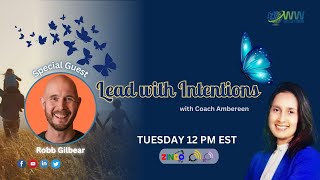
Robb Gilbear, founder of Growth Habit, talks about his path from DJ to entrepreneur and coach. He shares how he helps hundreds of entrepreneurs build better habits, why authenticity in messaging matters, and his own struggles with mental health and recovery.
Chapters
Foreign.
Mindful day to every single one of you who is here tuned in today. Welcome to Lead With Intentions, where I, your host, shows up here every single week, 12pm Eastern time, ready to serve you as best as I can. And it's truly an honor to cross paths with you today because this is now by chance. And I love the fact that you're appreciating yourself a little bit more by investing your time and prioritizing you. I think it's the most important commodity in the world that time. It's limited. And you being here tells me, you know, that I should be in gratitude, but that you actually matter to yourself. Welcome to Spanglish World network and single TV channels 250 and 251. Please remember to download our application as you're downloading it across any app store. Right. You got the whole iOS, you've got the whole Android, you've got the smart TVs, 2016 forward, the Roku lineup, the Amazon lineup, even got us plugged into that Google Chromecast. As you're downloading this free Zingo app, go ahead and leave us a review, rate us. Let us know what we're doing well. However, more importantly, what can we do better? Because that's how we grow. Right? And the app is completely free. So come along that journey with us. And if you do download the app, you can actually engage with me, live chat with us, ask questions of all the brilliant, amazing guests that we have on our show. Now, you know, I bring on people who are living intentional lives. That's kind of the ticket to getting a hot seat on one of these shows. And Rob is someone who has been just that. He's an entrepreneur since the 1990s when that wasn't even like a big thing. Yup. He was already tapping in and exploring. He's toured from coast to coast as a dj. I know there's a lot of hidden stuff that's coming up. Right. Spent half of a decade as a people and cultural leader in tech companies before launching his very own endeavor, as he calls it, Growth habits. He's driven by the desire to make people understand how business can thrive regardless of market conditions. And I think that's such a beautiful and brilliant way of letting people allow themselves to believe in that, that their own inner being and their own inner calling. You know, you all talk about the Tawakkal thing, that belief, it is so crucial. On top of that, you know, he wants people to realize that becoming more confident, more creative and joyful is a journey that we should all actually take part in. He's an author of a best selling book, Die before they do. And yes, it is a brilliant and amazing short small clips of his life. So I really encourage you to go and get yourself a copy. And he's now actually doing something very different. He's helped, he's already helped 300 plus entrepreneurs in 16 countries and growing to just to kind of make them understand their own business, their own impact and how they can build something that's thriving and not something that's just like, you know, like baseline. Right. Because I think it's so important that you do the work that you want to do to make yourself happy and of course welcome the limitless wealth that's going to come in. So we're going to tap into all of that. On top of that, we know, and I know his, you know, how much he values being a father. And I think that's brilliant to have two teenagers here, you know, in his life who've become a big foundation in who he has become. On top of that, he's not like really serious. So he loves to dance. He's an addiction. With funky socks. I am going to get in there. So welcome to the show, Rob, thanks for having me.
And Bre, appreciate the introduction and your energy.
Yeah, always. Okay, so let's, let's dive in. Mostly my questions are very like straight, you know, straightforward to the, to the show. But what is it with the funky socks?
So years ago, to limit the amount of decisions I need to make in any given day, I created a uniform for myself and 90% of my closet is navy blue. I have 15 T shirts that are all identical T shirts. I have a few pair of jeans that are the exact same. But I still need and want a creative outlet. So I have a very vast collection of loud and funky and creative socks. And actually I might even have some here. When people work with me, one of the things that they get in the mail is they get sent a pair of custom growth habit funky orange socks as well.
I love it. I think that's so beautiful to be able to say. I can keep the tire simple, but I still gotta add a little bit of oomph or a little bit of mean to it. And the socks are a great blend. I always have funky socks on, even right now. So I'm, I'm happy to hear that.
That's great.
All right, let's dive in. Rob, like tell us something about who you are and what is it that.
You do about who I am. I am someone who's creative. And I have, through all of my different things, you've shared my journey. Finding creative ways to live, to explore, to express myself. Whether it was the music stuff, when I was in people and culture, I always found ways to infuse creativity into it and even to what I'm doing now and the ways that I'm helping people. And it's. It's messaging, it's communication, it's how you put offers out there that people want and. But always with some creativity. That's really key and paramount to me. And I think a life without creativity and without creative output is a life maybe not worth living. It's not a life fulfilled. So that's really huge to me. And then the second part, would you say, like, what am I doing now? I mentioned it a little bit. Yeah. The way I'm talking about it now is I'm helping coaches build businesses they love. Businesses where they're proud to tell their friends and family not just about the impact that they're making, but about the revenue that they're making as well. And the people that do this work, truly from the heart, that care so much, that really are doing this because the work has so much meaning, they're not always the best at getting the message out there, at enrolling clients, and at making an actual business of it. And if you want it to just be a hobby because you care so much about it, that's great. That's wonderful. We. We need this more than ever. Do it. But if you do want to make it an actual business, if you do want to make this your main focus, then you do you need. There's some things you. You need to do, but it's about how do you do these things in a way that feel good? How do you do the important things that need to get done in the business so that you're attracting clients, you're enrolling clients, so that you're doing work that you love, but it doesn't feel off, it doesn't feel icky, it doesn't feel misaligned.
I think that's such a beautiful and a profound way of looking at business, because oftentimes what I face for my own self. Right. As you get into new territory, you don't know how to be a business person. You don't know half the things, half all of the things you don't need. You know, what do you mean by messaging? What do you mean my clients? What do you mean by, like, my niche? What do you mean by what is it that you're talking about. Because if you're somebody who wants to is driven by impact, the lens that you look at life is so different than somebody who's driven by the, like, the money, the monetary, like, this would be a good place to set me up for financial freedom. And so how do you help people kind of bridge that gap to be what you said, you know, to be aligned?
So it's about like, all things. It starts with like, who the heck are you? What, like, what makes you unique, what lights you up? What are the things that you share in private with clients, with family members, the people that you trust, like, and what makes other people go like, wow, okay, I love spending time with you. I love being with you. This is very helpful. This is meant so much. And finding what those things are and bringing that to the forefront and bringing that, like, okay, this is what we're going to build your business around. When it comes to your message and the things we're going to put on social media and the things we're going to put out there, we're going to make this the core of your message. And when it comes to who you want to serve, like, how do we infuse that and making that the focal point? Because it's amazing. Like the Internet, the fact that this is being broadcast all over and I think I saw like broadcast 1.5 million people. The fact that you and I met thanks to the Internet, it's magic. It's really incredible because when I started businesses in the 90s, this wasn't here. I had to go store to store, door to door and talk to people who ran the stores and haggle with them to carry my stock. I used to pay. I like paid to print flyers that I handed out places. I paid for magazine ads. I used to fax things to places to try and get my message out. Like, it was insane. The uphill battle. So it's amazing that we have this ability now to be able to share stuff and to put stuff out there. But a big mistake people make is either not sharing who they actually are, like, hiding behind this fear, like, oh, what if I'm judged? What if I'm critiqued so then the world doesn't get to see the light that we. That you have within you, or the other mistake I see people make is they make a fabricated version of themselves. Like the, the version online is so different than who they are as a person. And then there's this genuine misalignment and then it's tough. And then that can work for a bit. But people are really good at sniffing out crap and something's not quite off here. And then if you. Even if you can, you keep it up, then it's a facade. It's another thing you have to, like the weight. Oh, I have to keep doing. I have to keep pretending this. Well, one of the best things I ever did is I embrace that I make typos, that I. I am not the best grammatically spoken written person. And it allows me to just, like, share ideas when they come to me. And it's okay that they have mistakes, and it's okay if they have typos. And it's funny because sometimes people message me like, oh, Rob, there's a. You misspelled a word here. I think you want to fix it. And it. For them, it's triggered something where for me, I thank them and I'm like, it's fine. Like, I'll fix it later. So those really. That's what it really comes down to. Who the heck are you? What do you share in private to others that you trust? How do we show that publicly? And how do we build your business around who you genuinely are versus trying to create some fake crap that you have to maintain?
I love what you said, and I think this is something that I read upon as well, is there have been this consistent theme. When we make those mistakes, right? When we mistypo or typo or we don't are not grammatically correct, or you put a comma or it's a period. We do all these things, people resonate with us more because that human element is coming through. You know, like I think one of my friends said, you know, like, done is better than perfect. And that's so key now. Kind of help us understand because most of us who are, you know, who are here, most of you who are here watching you guys realize that we're going to constantly make mistakes. However, I think humans don't embrace those mistakes. And you've kind of been able to tap into that. So help us understand how we can get there.
So it starts with understanding where this comes from. And then there's another really cool part, which is now in 2024, going in 2025, it's actually to your advantage more than ever in a way you might not realize. So the first part is understanding the history is. So you went to a school where it was you. When the bell rings, you line up, and then you go to your workstation, and then you don't answer unless spoken to, and you have to wait for permission to Go to the toilet and then like it's just so structured and then if you think about, well wait a minute, what's that like? Because forget swap teacher for foreman. The bell rings, you line up to go to your workstation and you need the permission for the foreman and then you have set breaks. The school system as it exists in most western countries is based on a 200, 250 year old model that was developed in Germany to turn rural people into good factory workers, into obedient people. And then between that and then a lot of work, especially if you've worked in corporate companies, it's yeah, like you, you, it has to be perfect, it has to be great. If you do anything wrong, you will be called out. If you go even further back, like this tribalism that if you make mistakes and are ostracized from the tribe, like you'll be kicked out and then what happens? Then you're gonna die. So there's just understand there's all these layers and depending on your family, your parents, the cultural background that you had, like, like it better be good, it better be perfect. And like an A minus is you might as well have failed. So just understand that there's all of this programming and to be an employee in a corporate company, yes. To be a good factory worker, yes. But to be an entrepreneur, it's actually so counter to everything. Entrepreneurship is about hypothesis, experimentation, feedback, adjustments and it's feedback and adjust and it's this ongoing evolving thing. So if you want to succeed with your own business, you have to acknowledge where it comes from and break it. And then the second part, the way that this is actually really darn good for you that you might not realize is the world is being overwhelmed with ChatGPT Claude AI created Drivel. It's just, it's just like top 10 ways to BL and it's, it's all the same, it looks the same, it smells the same and people are craving human connection. People are craving uniqueness, people are craving genuineness, authenticity. And your willingness to have a comma instead of a period or a typo. It actually makes you feel relatable. What I think is going to happen, people are going to see that there's this movement towards less edited stuff, less polished stuff, people putting out videos where it's just like here's what I'm thinking right now and it's not hyper edited with all these fancy and it's going to do well because that's what people actually want now in a world where there's so Much over polish.
Yeah, I couldn't agree more. I think what it's showing is that the AI will take over about 30 to 40% of jobs in the next three to five years. Right. So these people now have a choice to make. Right. And I think what they're saying is humans will start to be more service oriented and really connect with them because AIs will potentially do anything. I was talking to a friend of mine today, literally for breakfast, and she was like, yeah, like, with ChatGPT, developers can write code. And I was like, oh, so like, we won't even need humans because. And the thing is, AI has such a vast memory, doesn't forget, you feed it. Once it remembers all of it, it's driving all the information, the answers from the previous knowledge about the exact same subject that you've already fed it. So it is very intelligent. It's got a plethora of unlimited knowledge, you know, that it can retain. Us humans have limitless memory. I believe as well, however, that retention or the ability to remember it for the rest of your life isn't something that we can rely on. However, Maya Angelou said something that was profound. And since I've heard this, you know, I was like, oh, okay, I'm going to use. I love it, right? Like, it's a thing. She says people will never remember, you know, what you did for them, but they will always remember how you made them feel.
It's such a great quote.
It's such a good, like, oh, so that's what sets like for me. That's what sets me apart. It's this pulse, like this boom of energy that can come to you, or it's like this, this necessity of, like, all right, you're hurting. I get it. I'm here, you know, no judgments. I'm here. And I think that's such a beautiful way of kind of realizing our own strengths and superpowers. And I love that you do that for entrepreneurs, especially coaches, because coaches are very ambitious and wanting to have people see something greater for themselves.
Yes, that is so true. And it's the. How you make people feel. And then you. As a coach, we're asking people to do brave things, to take a leap, to try things they've never done before, to be willing to look at things differently. And if you're only presenting this like, everything is perfect, everything is polished, then it's. It doesn't work like it. You're not creating that space. There's a. You talk about creating the space, whether it's either, like, hey, I'm excited. I can energize you. Or like, I see you and there's no judgment. But if you're only ever presenting this facade online, which is your hair is always perfect, you don't ever make any mistakes, there's no typos, like, it doesn't actually connect. It's really, really hard for you to get to this meaningful, impactful work that you want to do. Yeah.
How do you help people, not even just coaches, like, the relationships that you have. I think it is true nowadays things are very superficial, Right. And so the superficialness kind of takes away a lot from the human. And I'm going to share something out of just observation. There's no judgment there at all. And now, like, we talked about that wonder of like, oh, there's an element of curiosity, it's an element of understanding and there's an element of like, ah. Like, oh. So I went to a party, you know, recently and it was just something I did not expect. Amazing, amazing. Like this host outdid, forget herself. Like all of us, we were like, are we like in a private restaurant? Like, this is, it's crazy. But she threw something for just like, you know, quite of us ladies. So I wanted to kind of have all us get together and just have a great meal together and just bond. And of course people come, you know, as they are. And so you see someone who I'm like, okay, so you can see that she got work done, right? You see someone who got partial work, then you see someone who is very big on like, you know, the amount of makeup they apply or the way they look or the chisel of their face. And. And then you see someone who's like a little bit more authentic than you see somebody who is more traditional. And you're seeing like, I am seeing all these different flavors come to light with just one thing in common. We're all just here to mingle, connect, have fun. And so I think as I was looking at it, my mind couldn't stop but like, try to find out, like, what is it about these people that are running after the superficial when the world of course, is training us to be that. How do you bring that back to say, you know, that authenticity, embracing who you are will allow you to, to live into a life of fulfillment and creativity and uniqueness and, you know, impact.
That's just because it's a never ending game. Like for me it's a fool's errand. It's just like there is. That's like saying, I'll Be happy when. And there's a common line that's used all the time in business and marketing which is you need people to know, like and trust you. You need your clients to know, like and trust you. You need to be sharing your message so people know like and trust you. And it's a, it's a bit backwards because it's very much about external pursuit of other people's approval. And you need to know like and trust yourself. Do you know who you are? Do you know what's really important to you? Do you know what your actual priorities are when push comes to shove? Do you actually like yourself as you are now? Even if your hair isn't quite like it used to be, even if you have maybe have a few more wrinkles, if you don't fit into your old jeans, the same. And do you trust that if you say you're going to do something, you're going to follow through. Do you keep your word? If you say you're going to get up at 7am, do you do it? If you say you're going to go to the gym, are you going to do it? And, and having that with yourself is, is really invaluable. There's a quite famous book called Psycho Cybernetics and it is a popular book because it is all about understanding the difference between your self image and the external image and can rewrite that. And it was originally written by a plastic surgeon and I'm thinking of this because of what you shared right now. And he was very well known and did a lot of facial reconstruction and cheek lifts and nose jobs and most of the time he would do a surgery on someone and they would be transformed. They would start showing up with more confidence, they'd have more luck in their dating life. They would start getting promoted. They were just like bam, huge, massive change. Once in a while he'd have someone come in and call him a liar and a thief and say you didn't do anything and I want my money back. And I can't believe that. And what it, it took him forever to realize but what it was is he, no matter what he did to their face, their nose, their cheeks, whatever he did, that their internal image of themselves didn't change. And as long as their internal image of themselves didn't change, they actually didn't have any shift or any outcome. So I'm, I'm. No, I, I, I've thought about getting hair plants. Like I joked earlier about my plants. It's something that came up. I actually had a ex A father of. The father of an ex of mine, over dinner, brought it up, and he could get me a family deal and all this, like, it's. But I'm not gonna do that. It's not for me. I don't want to place judgment on those who decide to do that, but it just. For me, it is a fool's errand. And that there's always this external pressure, and it's been around forever. And it's like, are you. Do you have hair there or do you not have hair there? Do you have more muscles or less muscles? Is your. Are your hips this way or that way? Is your. Some. Sometimes it's just like, culturally, your eyes are likely to be dark if you come from a certain background. But, like, that's not good enough. There's countries in Asia where. In Japan and Korea, it's huge. Where they all get their eyes redone to look like they have Western eyes.
Yeah.
So it's just this. This never loving and accepting of yourself, where all real change and impact and growth and contentment, fulfillment starts with loving and accepting yourself, who you are. Because for me, that's just. That's a treadmill that you just can't get off. If I. If I. And I see people on that treadmill, and it's just never ending. Because it'll be. It'll be this one day, and it'll be the next week. It'll be something else.
So I think that's a. That's a great way into another question that I have for you. You know, I've read your book. I've seen how much you've explored. Like, come on. Like, Northern Lies. Just because they showed up in your face. Like, if I was. I was like, that's on my bucket list. Look at him, like, driving through. I'm like, oh, is that. Is that. And you have had so many experiences that you were present for. And that's one thing that I noticed while reading your book, Diet before they do, is you've been someone who's shown up for life. You've been somebody who accepted and embraced your mistakes. And how did that tap into accepting and loving yourself? Because that's. I think, a challenge most people in the world are facing right now is they don't know who they are. They don't accept who they are. So how will they even think about loving who they are? Or they're becoming.
It's tough. It's been a journey, and I appreciate you saying that and reflecting that to me. And it's ongoing and it's just a willingness to look at the parts that are difficult and a willingness to, to reflect and to. Because you can ignore it. We all have stuff. We have some trauma. Maybe it was apparent, maybe it was some difficult experience, maybe it was more difficult. Like, we all have stuff and we can either pretend it's not there and ignore it and hope it goes away. And depending on your ability to cope with it or how severe it was, you might just like have this part that you're pushing down all the time. But for some other people, it will manifest in drug addiction, alcoholism, like, abusive, like, it's just. It will show up. And if it's not that extreme, it'll still just show up in other ways where it'll be that it's difficult to work with you, that you will struggle with sharing your message online, that if you're an employee, you'll be in the situation where you just seem to be like, why am I keep attracting this kind of a boss? Like, it just, it is there whether you acknowledge it or not. And then once you've made that decision, once you've made that, like you've accepted that, then it's a willingness. And for me, it's meant a lot of therapy, a lot of coaching, a lot of self reflection, a lot of journaling, a lot of seeking out mentors, and a lot of curiosity. Because before I really started exploring this, I almost took my life. Like, I got to the point where I was 10 seconds away from ending my life. And once I decided not to and that my life, I was going to make it worth living because I have young children and I, I didn't want to just take this burden that I didn't know how to deal with and just, I was. All I was going to do is hand it to them and they definitely wouldn't know how to deal with the pain then. From then it's just like, okay, well, what can I do? And I. Meditation and yoga and journaling and coaching and therapy and just trying different things and figuring out what work works for me and what doesn't. And there's so many different ways that, that you can do it, but it's worth doing. And I think that's the bottom line, is that it's, it's worth doing. And if you, you think like, oh, that's difficult, that's hard. It's. It's messing with you in your life and your relationships now, whether you're being ignorant to know or pretending otherwise or not, it's. It is. Yeah.
And for for all of you who are tuned in thus far, I'm super grateful for sharing these moments with us. I do want to say that there's a lot story and how he's come this far. You know, he has had, he's faced alcoholism, he's filled drug, you know, challenges and addictions. He's thought about, not even thought, but I, you know, planned on committing suicide. And, and those things are. It's a lot of baggage to kind of shed. So for somebody who needs to hear this, for somebody who is there on the other side of the screen and listening to our conversation and really just feeling hopeless, forget about embracing, accepting, loving myself. Like they are in a place of darkness and there is so much shadow that is overtaking that light. How would you guide them, Rob?
It's very contextual. It's hard without knowing the person and where they're at. But it's like all things. It's like finding a seed, finding a small seed and then watering it. And I remember reading a story of someone who was thinking of ending their life and they're on their way to where they were going to go do it. And on the walk there, a stranger smiled at them and that small act was enough for them to think, like, maybe not everything is terrible and maybe I can find. So, you know, I shared in the, in my darkest moment, the last minute I had this aha around my kids, that I'm just going to hand that to them. But if you don't have children, so like, who is someone that you know that loves you unconditionally? What is one small thing that you're grateful for? And if you are lucky enough to live in a world where you have warm water, where you have the Internet, you can do this. Where you are able to have food in your fridge and eat most days, just know that like you're, you're better off than a huge proportion of the world that we, we have luxuries now. Like the, the fact that you can have a hot shower every day is a luxury that royalty didn't have 100 years ago, 150 years. Like, so just trying to find those little moments or little things that you can be thankful for, be grateful for, and then to, to water them. And like any seed, if you, if you were intentional and give it a bit of sunlight and give it a little water that, that it can grow from there and there's, for most people listening to it, there's something that you, when you do that you feel a bit more alive. There's one Thing, like, it could be drawing, it could be spending time with children, it could be speaking with a certain friend. Just paying attention to these moments where you feel a bit more alive, you feel a bit more expansive. And then same thing, like, okay, like, okay, it's this big right now. Like, how do I get a bit more time and energy in that area that makes me feel more alive, more meaningful, more. More grateful?
I think it's true when you are in a place of darkness, you know, it's something that only you as an individual can experience because your lives, your life's moments have led you to be there. And they're different for everybody. We all, I think, as humans have similar difficulties and struggles in our lives. But every story is profoundly different in the way that it unfolds itself from moment to moment, minute to minute, year to year, so on and so forth. And in that moment, I think to stop and pause and say, and think that maybe I'll be grateful or maybe I'll find a reason or maybe I'll do something that makes me happy. You know, quite often I think that requires a ton of courage. But how are that momentum of that simple act and that courage and what you feel inside? I think that feeling is such a game changer in the way that we start to show up for life in ourselves.
Yeah, that feeling really does. Is a big game changer. And there's a way you started saying that there. Remind me of something else and it might be a Jim Carrey quote, essentially is that, yes, mental health is a real thing and there's really mental health challenges. However, are you eating well, are you sleeping regularly, are you getting outside, are you moving your body? And just these basic things that, yes, I know I should do it. Like, it's just like, it seems so simple, but they make a massive difference. And if you look at the data again, I'm going to go to the most extreme place because hopefully for most of you, you're not in this most extreme place. But when they look at the data of people who do go through with taking their own lives, like 98 times out of 100, they find insomnia, they find poor sleeping, they find these, these patterns that recur repeatedly with people who get to that point. So yes, there's difficult things. Yes, you might be struggling to find something to be grateful for. Yes, there might be people who have made your life difficulty, you might have trauma. We can go through all the list of. And, and yes, of course these things are difficult. And what can you do now presently in the moment. And it probably take turning the screen off. It's probably putting scrolling away. It's probably going to bed a little earlier. It's probably like, maybe you don't go to the gym, but can you walk around the block? And maybe you don't have that sweet thing. Can you have an apple instead? And it makes it way easier. It will give you the energy, like the. The feeling that you were just talking about, Ambreen, that once you start feeling that energy inside you, then it's easier to put some more logs on that fire and to build it up. But sometimes it's hard to even connect to that. But you're making it almost impossible if you're not doing some of these basic things. And it's. Then it just amplifies it all.
Yeah, I mean, I think it's, you know, kind of the premise of this show, you know. And I want to ask you, what does it mean for you to lead with intentions?
I love the word so much. Probably a day does not go past where I'm not talking with someone about intention or leading with intention or living with intention. And it's fun because it's a theme for a lot of the stuff we've been chatting about so far. So starting by getting clear about exploring, like who you are, who you want to be, what's important to you, what are the things that when you do you feel good about yourself, you actually like yourself. It makes you create more trust with yourself and then making that a part of your schedule. Like what. What gets scheduled is what gets done. And you can say it's really important, but like, really, are you putting it in your schedule and are you increasing the likelihood that you're going to do it? The you talked about, like going to a party. That's a social thing. Normally we are social creatures. Like we need a certain amount of social time. But it also works in other ways. If you do want to start exercising more and you know that in the past you're like, oh, when I've exercised more in the past, I felt better. I like the way I looked. It made me feel more confident. And you start realizing it has this positive effect. Well, one of the best ways for you to increase the likelihood to do that is to bake in some social fun and some accountability, meaning that there's someone and you say to each other, we're going to go together. Because I used to do yoga a lot, I fell off. That's one of the things that I lost in the pandemic is yoga. My Yoga practice. However, when I think about it before, if I went to yoga, I don't know, 300 times in my life, 400 times, let's say 396 of those times was with someone else because it would be like, hey and Breen, let's go, we're going to meet up together. And that, that you can increase the likelihood that you're going to do these things by, by doing that. And so just. Yeah. What is it? What is it? If you know who you are and you know what brings you more life, more energy, more meaning, then structuring it that way. And for some people it's boundaries. That's a, a buzzword that gets used a lot in the coaching space and self help space. But essentially it's, I'm willing to do this, I'm not willing to do that. I'm going to choose having dinner with my family instead of staying late at the office. I'm going to this person who whenever we speak together, they make me feel down and are, you know, trying to make me feel bad about myself. I'm, I'm going to limit my time with them. I'm going to say no thank you to the invite. And it just you. It's easy to feel that you don't have a choice if others have always told you what to do and your family put pressure on you and school told you had to be this way and bosses told you to be that way. And I get why you feel that way and surprise, you do have a choice. There is a blank piece of paper there if you want to, if you're willing to pick up the pen and then that's to me what it really means to live with intention.
Yeah. Create that life. Right. That's driven by the internal. And I often was talking to a client of mine who's going through a really rough patch and she was talking about how like, you know, since I've been married and it's been a decade, you know, I'm just championing his dreams and what he wants to do and what he wants to doesn't really fuel me. And what I want to do is like this. And regardless of how much I do, it's just still not enough. And so I was like, well, whose life is it? And she's like, I'm like, in our lives, our relationships play a huge role. However, if we are not fueling us that relationship internally within ourselves, we're really just giving bits and pieces to the surrounding. Right. And I said, when you go and you read a Book on, like, cupping, because that's your jam. You love cupping. You love psychology. All right, so you're now learning about cupping. And she said, I finished the book so quickly, it's like, great. And she. I bought all different library, like, great. And I'm like. So then she goes, but I got this thing of like, oh, stop reading that stuff is not going to help you make money. You know, and all we need right now is financial freedom. I said, who's to say it doesn't make you money? Do you know how much people charge for cupping? Like? And I said, and the fact that you are so driven by it, you can charge off the market rates because you know, what you're providing is a part of your soul and energy that's going into that cup. It's not like everybody else was just doing it to get the job done for you. It's essentially sharing your essence with the person who you're trying to heal. And there were just so many, like, light bulb moments that went on in her mind to be like, oh. And I was like, okay, so then make that a priority. How will you do? She goes, yeah, I'm gonna. Like, when he's just, like, going on and on and complaining about me, just gonna leave the room and pick up a book. And I was like, great. What a way to lift you up. Right? And so these small shifts that we don't really think we have a choice, and I think intentionality is all about that at any given moment in time, we do have a choice as to how we show up. Now, can you please share with. With us, you know, myself and all the amazing audience members who are. Who are tuned in, what is one thing that you can share about your own personal life that'll allow us to tap into Rob's world a little bit more?
I talk about her a bit in the book, but I want to spend a bit more time talking about her just because she and I are in our. Our pairing is so good and so healthy for each other, and we bring the best of each other. My partner, Melissa, she's now my fiance. Yeah.
I was waiting. I was like, what happened to the story? Does it, like, keep going? Because I'm not there yet. All right. Congratulations.
Thank you. Yeah. So you're reading the book, and there's parts of it that are in there, and I just. I think about where I've been in the past and relationships I've been in and relationships that didn't work out and ones that were my fault because I sabotaged them. And that I've never been in a relationship with another human where it feels so mutually supportive. And we lovingly referred to each other as care buddies first before we ever made anything official and grew our relationship on top of it. And it meant that the foundation of this role is to care and support one another. And everything is built on top of that. Is just. Is really outstanding. But it takes work. Of course we have disagreements, but it again, with intentionality, you can say you want a healthy relationship. And again, this is assuming that you've done some reflection, some work and know what you've been through and know what baggage you're bringing so that you're maybe not bringing as much. Or you can at least say like, oh, wait a minute, they said that this triggered this thing in me because of this thing from my childhood or ex past relate so that you can at least like see it, call it out. But her and I will say things to each other. Like the story I'm telling myself is something happens, it comes up and like it triggers something. We'll say, the story I'm telling myself is, is that I'm a bad person because you mentioned that it means that I didn't do this. And then it just, it brings us to empathy or that there's a practice and we're in a good flow with it right now, which is most days I get up earlier than her and I get up and I leave the room because the morning hours are so great for me for thinking, for reflection, for writing, and for just getting lots of stuff done. And then like, it just, it sets my day for a wonderful, wonderful tone. But on Sundays, I stay in bed on Sundays, we lounge around on Sundays. And it's just like, we might be just sharing stories, we might both be doing like crosswords together. We might. But it's just this. Again, like it. So it's ensures that at least weekly on Sunday mornings that we have these moments. So like everything else, you can say it's important, but unless you actually make it a priority in small moments with small habits, with small things, then like, of course it's not going to work out. Of course it's going to be hard because you, you haven't, you know, intentionally put the time and effort and energy into fueling it that actually goes back to a thing earlier like that. These are little indications of how, like, how are you adding sunlight to this thing? How are you pouring water on this thing?
So I think the way that you've just mentioned, right, and you've kind of simplified It. So every single one of you, I always tell you have a notebook and a pen available at all times on this show, because oftentimes there's so much wisdom that our guests are dropping that you may not remember. But if you write it down, you know, you're more likely to remember. It's 70% more likely to remember what it is that you are learning, how you can reflect differently, how you can change your Netherland perspective when you're going through a difficult time. And this, you should bold it, caps it, quote it. Like, the story I'm telling myself is. And in a relationship, I feel like that removes so much ambiguity. And it kind of is like this level set with you. Like, Rob, is it. Is it still inside? Like, is this. Is it empty now? And you're like, well, that's what I was telling myself. And the other person validates you to be like, I didn't even think in that way. I know you too well to even assume that. And I think in families, oftentimes we don't put forth as much time. Intentionality, effort to understanding and accepting our members. Talking to, you know, I think she'll be a friend. Going from an acquaintance stage now to a friendship, which I. Which I'm loving is. I said one of my breakthroughs as a mother was when I began to embrace and accept my eldest son for who he was, because he is the complete opposite of me. And the things that he would say, I would be like, dear God, like, bury me alive. People are here. Like, my whole family's living. And it's like, here, a hundred people are listening to you babble this, like. And I'm assuming all things negative from my mind. And then I'm like, what does that mean? And they'll be like that. Like, he will use the word evil when someone intentionally does something bad. Oh, that was evil. Why would you do that? And I was like, wait, that's evil. Like, his brother is purposely, like, hiding his wallet, knowing he has to go on a drive, right? He's like, that's evil, man. And you're like, oh, oh, that's evil. Okay, simmer down. I mean, there's still hope, right? And then I think that such a. It's such a simple way of the story I'm telling myself is. And I had to change a lot of those stories. Now, for all of us who are here and really want to tap into your wisdom, how would you define and describe your own family dynamics? Because I know that you've got two kids. Melissa is not Your fiance, you were previously married. So how does that look? You know, in the Gilbert home, the.
Kids live halftime at each house. So they live a week here and a week at the other house. The amazing thing about my ex is it didn't work out. And we got to, you know, came to blows as far as, like, us not being able to work it out, and we split. But this really wonderful thing happened once we realized we were going to part ways and knew we're going to go forward, is we made this decision that this didn't work out for us, but we're not going to make it terrible for the kids. And just because it's working, it doesn't mean we need to make it a war zone for the children. And this other really beautiful thing happened, and this is not in the book, actually, she. This is when we were still living together. We were separated. We were still living together, and before I had moved out and started the next chapter of my life. And she pulled me aside and looked me in the eyes and said, now use your power for good. And it was just like you. Her acknowledging, lovingly saying that I, like, I see you and I see what you're capable of, and, like, this went to shit. But, like, use your power for good. And we're. We're friends that share kids. Like, if I gave you my phone right now, and you look through the tax exchange, there's, like, stuff about, like, okay, kids this, dates that, payment that. But there's also, like, wait a minute. Like, these are friends that share kids. We live five minutes drive apart. We cover for each other. Like, hey, I can't do the. Can you do that? And it's. It's incredible. And the other piece is Melissa, my fiance, has become a very active member in caring for the children. And they call her Mama Llama. And there's a story behind that, but they see her as a parental figure, but that's also mean. Like, she's kind of stepped into this role of being a mom. And I. For my ex, I'm sure it was really difficult at first. However, now, like, we have a group chat, and everyone's kind of sharing and supporting, and they're not like, friends, but they get on great. And there's this real mutual respect for each other, which is like. It's incredible. Like, it truly is out of this world. Actually, last thing this is in the book, but this is a heck of a story. After I moved out in the first Halloween, I went back to the. The old house and met up with the kids. And my ex and to go out trick or treating. And I showed up and I had what was essentially a tuxedo. It was a gaspeedo tuxedo. It's called a morph suit. And I had a top hat, and it was kind of fun. And then I showed up and my ex was trying to figure out what she was gonna wear for Halloween. She was like, oh, I've got an idea. And she said something the effect of like, either you're gonna love this or think I'm crazy. And she went missing in the other room. And I heard her, like, making noises or whatever. And she walked back into the living room. She was wearing her wedding dress covered in blood. And then we were the, the, the. The Halloween bride and groom as far as, like, she was like a zombie bride and I was a zombie groom. And we went out together and our. Our friends had, like, very strong reactions. People were either like, wow, this is incredible. You're showing an example of what's possible as far as, like, you know, divorce and separation doesn't need to be a war zone. And for some other people are like, ah, this is. This is too much. Right? Like, I think this is too much. But it, I think it was. It was early and it was a real sign of where we've gone since then.
I think really understanding that when you go through those difficulties and a husband and wife, it doesn't work out, you know, exactly what you're saying. I didn't want to give that on to my kids.
Yeah.
And that takes a lot of courage and integrity to be like, okay, let's do things differently. Let's start up on that blank canvas, you know, and paint the picture in the future that we want to design for our children. Putting aside our egos, I think it's the biggest thing, like, and people pour into, like, your ego. They're like, do it this way. You're like, nobody doesn't feel right. Your heart is messed up. What kind of heart do you have? Like, you're like, it's trying to aim for purity. And I think that's such a beautiful way of looking at it. Your own relationship with your ex wife, with Melissa and the kids, like, this element of coming together in harmony, and that changes the whole direction of not only your life and your day to day, but the future generations, because they see that things can always work out if you put for the time and effort. Now, Rob, you and I can talk forever and ever. But this show is coming to an end. I want to ask, how do people get in touch with you, mister.
So my main place online would be on LinkedIn. So if you go find me there. R O B B G I L B E A R. I moonlight a little bit on Instagram. I'm on there a little bit as well. And if you just want to dive into my world and read a bunch of vacations in my newsletter and get some free, helpful workshops. Growthhabit.org growthhabit.org all right, that's beautiful.
I mean, you guys have to go, like, drop something. Tell him something like, make this man happy. Make me happy. Always reach out to us. Hey, Adele. I see that you are tapping in, so I pray that your day is filled with mindfulness and just wonderful moments. Now, as we come to a close, I'm starting this tradition, you know, talking about habits. It's part of my habit. I ask you these questions. They're called the rapid fire questions. And it's my way of kind of intentionally wrapping the show. Okay, Are you ready?
Let's do it.
All right, Rob Gilbert, what do you want to leave behind for the world?
I want to leave behind a belief that you can rewrite who you are.
Kudos to that. How will you know that you've led an intentional life?
When I get up and am excited for the things on my calendar. When I get up and I am grateful for what is going on, which is the case today, like, that I'm.
Living that life right now, the day ahead, man. So gratitude is key in lighting you up and lighting me up, too. If you could create one law that everybody had to follow, what would that lobby.
Something around? The first thing come up is self reflection. And that everyone would have to either embrace a journaling habit or hire a coach or a therapist. Like, there's some. And there might be more ways that. But some way that forces self reflection, processing that. That would be a must for everyone.
Okay. There are many lessons, and in your book, the lessons are limitless. What is one lesson that has made you who you are today?
The belief that I could create my experience. The belief that I could create who I am.
All right, my last question to you, Rob, is, what is the key to a healthy relationship?
It was a boring answer. But it's communication. Like, it's. It's. Yes, you knowing who you are. And we already talked about that. But it's communication and it's funny. And it. It's the cornerstone of all relationships, whether they work or not. It's the cornerstone of whether organizations do well or struggle. It's the cornerstone of whether your business grows, because that's just you being able to communicate your message, what you can do, how you can help people, what's possible. It's all communication. So the cornerstone of a good relationship and because then it's not expecting things to be perfect. Because that's bullshit. That's not true. But how do you communicate when someone gets upset, when things don't go well, when you. Whatever. And then how do you talk through that stuff? So it is all communication.
Yeah, we get that answer a lot on this show, and I think it is true. Right. And there was a simple thing someone said, like, no one knows anything about you until you open your mouth. That's right. So I want to say my greatest admiration and gratitude to you, RA, for showing up, for coming up on the show. For every single one of you who's tuned in and watched, I pray that you have learned something. And as the show comes to an end, I want to let you know that it can be heard on Spanglish Radio Network. Please check out Spanglishworld CA for all the news and the programming as we close. My prayer to you is that the show will embark us on a transformative path to be in gratitude for all of the blessings that life brings to us, accept the unfoldings, accept and commit to values and dreams which will allow us to tap into our own greatness. Because I have faith, Tawakkal, in every single one of us. When we unleash our authenticity, we start to live intentionally. Remember, there's only one of you. Design that life with excellence. Spanglish World. Watch it, hear it, read it, download it. Most importantly, live into it with intention to better serve who you are. Thank you so much.
Thank you. Thank you.










