Lead with Intention: Souraya Matar ~ Contribution through Consciousness
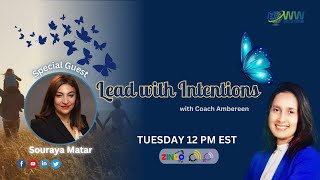
Coach Ambereen talks with Souraya Matar, a professor and parenting coach, about intentional living and personal growth. Matar draws on solution-focused therapy to discuss how self-care and gratitude shape better parenting and leadership.
Chapters
Foreign.
Welcome to Lead with Intentions. I hope today you're having a day filled with your coach Umbreon shows up here. It's truly an honor to cross path with you and for you to share the most important commodity your time. Welcome to Spanglish Network TV and Xingo TV channels 250 and 251. Please remember to download the Xingo TV app on your respective app stores. IOS, Android, Chromecast, Amazon Fire Sticks, Roku and any TV 2016 on forward will support this app. Downloading this app which is completely free of charge, make sure to give us a review rate us share with us what we're doing well and also what it is that we can do better. More Lead with Intentions is a show that is set out. It set out us a path of discovering our best selves. My intention is to bring forth topics and related topics with more authenticity. With that said, today's guest is no surprise for her showing up here today. Her name is Saraya Matara and she is currently a professor, a personality professor and a university along with that wasn't enough. She is a parenting coach and is working with parents, couples without children with children who want to desire a little bit more in their they really want to better themselves. Her approach to serving her clients is her strangers actually approach serving everybody she crosses paths with. So her clients, the students strangers does not vary much because she believes with no exception that she wants to leave everybody that she meets with an increase. We'll dive in a little bit more and find out what that increase truly is. Our passion for parenting actually stems internal instincts of being a mother. Sometimes even as I just know the therapist, we can raise our hands to ask for support. And she knows that creatively marrying the two, her formal trainings and in clinical psychology therapy into one is now the new normal when it comes to the coaching industry and the era. She is super excited to be here. But more than that, I am so.
Pumped.
On this dialogue.
Thank you. Thank you for a great introduction and I am so happy to be here and call you a friend. Truly.
Been that deep. But yes, Soreya and I have met a few years ago and since then our journey has beautifully evolved into one now where my friends and I honored have you on board here with us.
Thank you. I really appreciate it. Same same same.
Let's dive in. I know, let's dive in. Let's keep this stuff about you because I know there's so can really create when you're on this call with us and for every single person here listening you know, and viewing this show, I really encourage take some notes to write down what resonates you're more than welcome to chat with using their app as well. I want to start off and ask you. Sorry, tell us something about yourself.
Who.
Who are you?
All right, so the first thing you know that comes to mind when you ask this question to someone, they jump into sharing their identity. So that comes up. My identity is being a mom, a working mom, a professor. Just like what you stated, it's all the identity stuff, the things that we accomplish. But behind that there is that, you know, connection with yourself, like who you truly are is a person, a helping person, somebody who loves to help. So I would say that outside of these competence and certification and trainings, there is somebody who loves to help. And that's what, that's what I do. And I meet people, is, you know, come up with a creative solution, building solutions for them if I can, whenever I can. Love that.
Okay, well, how do you are looking for solutions and they really can use your help.
Yes. So when you go around and talking to people, one of the things that I find is that people are so, you know, they share their struggle. They sort of feel. Feel like they have challenges in life and problems in life occurs to all of us. That's the bottom line. And we can choose to go into that, you know, conversation or we can choose to go into that conversation and sort of have some hope, field transformation from that conversation. And so, you know, part of my, my approach has been to go into conversation that just transforms each other, not just the person that I'm talking to, but me. So learning from someone, always leaving myself with an increase. So it always is motivated by that versus having a pity party or sort of like talking about problems and complaints. And that's what I used to do. So I'm coming from that place. And so that's what I see with people whenever I conversate with them, is that they stay. Stay in that head space and sort of everything is the same and they are in survival mode because of that.
Well, I know that our audience comes later because we've all been complainers once in our life. Right. But you said you were in this perpetual complainer, you know, area or place. What else? What helped you get out and how did you know you don't want to be there anymore?
Okay. So one of the things that allowed me to get out of that victim mindset is not only switching approaches in therapy, but also getting myself help in terms of coaching or, you know, for parenting. It was getting a parenting coach to help me with my own problems as a mom of three. And so those little things, you know, opening up myself to experiences and getting help, whether it's, you know, through practices, as I started doing it, allowed me to understand that we are, you know, so attached to the outcomes and to the circumstances around us. And that's how we operate all of us most of the time, until we sort of learn something better. And that learning something better went from shifting my approach to parenting, shifting my approach to doing therapy. So going into solution focused brief therapy really was a shift for me to allow me to have more conversation with myself that are about hope and not problems. So that would be shifting, shifting my timeline, really, when I switch gears.
I want to dive in a little bit. And you said, you know, really understanding and using this tool. Right. What do you mean by more solutions oriented grief therapy? The conventional way of.
Yes. So traditionally. So I've been a psychotherapist for over eight years, you know, going online. And I've been a professor in psychology for 10 years now, last month, which is amazing. And for many years, both of these sort of the career in teaching was. I looked at it as a job. It was sort of like difficult at the beginning because I was so involved with the outcomes. You know, students not being satisfied, not getting their a. So I was making their, you know, their problems, my problems. And similarly to therapy, you know, when you're in this industry and you're in service, you really. And you do conventional therapy, you get to a place where you get burned out because you are sort of, you know, helping so many people with problems. And the conversation is about that is how to, you know, heal, how to get people better. Um, and, and that, you know, it was fine then. It was a great way of helping people through conventional ways of therapy. But when I switched to solution focused brief therapy, it became sort of like a game, meaning that the conversation were more positive. It was about change, it was not about problems. So this orientation altogether allowed for more success in therapy because the language that is being used in therapy itself is building on solutions versus coming. And even therapy, you know, clients coming in to talk about problems, the clients themselves sometimes come to therapy just to complain over and over. And that is just long standing is draining for both the therapist and the client because it's leave. It leaves them in the same loophole. So that's what I would say. The conversation has changed, the language has changed, and that is, you know, why I am so passionate about this approach to therapy. Cost solution, focused brief therapy, which I can talk a million hours about.
I love it. And I can hear it in your voice and I can hear the power, you know, the passion that comes through. I think it's beautiful to understand that you kept doing something in a specific way and you realize that now you're capping and now you're like, I don't know what more to do, but I'm getting burned out and drained now. For somebody who's listening right now and they're feeling right, like they're wearing many different hats or maybe, maybe they're in an environment where there's a lot of nerves or maybe they're not appreciated at their work, kind of navigate the situation to really uplift themselves and come out with an increase, like you said.
Yes. So the first thing is to, you know, always say the cliche, you are not alone. And sometimes, you know, the best of us gets back to that WI fi setting. I call it wi Fi setting because it's how we operate. It's automatic, it's on autopilot. So getting out of that wi fi setting is a matter of a decision. You know, it's sitting with yourself and deciding how do you want to be, how do you want to feel and knowing that you are in charge, you are not your circumstances, you are not your kids problems, you are not the society and economy failing. No, you are not all of those things. And the one thing that I remind myself that you should too is that you are the essential, you are not the incidental, meaning that you can take charge and you can move your emotions. If they are in low, you can move them to a higher vibration because, you know, from, you know, like a psychology training and personality psychologist, psychology professor. I know that from, from so many areas of that you have the power to make changes to your personality by understanding it first. So it takes, it takes time to observe yourself first and make a decision to change how you want to feel. It starts with observing, observing yourself. And sometimes people are having a hard time with that.
Exactly. I 100% agree.
Yeah, people don't want to feel all their feelings. And it's about experiencing all of it. It's experiencing the negative feelings because the negative feelings are telling you something. But we tend to want to reject them, put them away, put them under the rug. And so that doesn't help. So that's why I say that coaches have coaches who have coaches who have coaches and therapists. Have therapists and coaches and therapist. So it's, it's not, you know, Even as a therapist, I strongly suggest even, you know, getting yourself either support, you know, assistance, whatever struggle you have. And you could also do it yourself. You could do it yourself from home by knowing that you have the agency and autonomy to make changes no matter the circumstances you're in.
Well, I, I 100 agree with you. I think the, the, you know, the audience members who are here listening can already see why we're friends because it is true. We are just one decision away from reaching where we want to go as long as we stop the pity party. And a beautiful way that I have now morphed, it is like a pity party is just like, like any party, just a day long party and they.
Come to an end.
The pity must be over. You got to rise and shine above that. And I want to dive in and I understand a little bit, you know, about and I think maybe it goes hand in hand. What does it mean for you to live an intentional life or to lead with intention? Sorry.
Yeah. So intentional living for me is taking accountability and responsibility. That's you know, at the most important thing is you are not you, you are here to live a great life. This is for you to choose to go for. So. But it, you know, it doesn't come, you know, it doesn't necessarily come to you. You have to reach for it. You have to reach for it. You have to wake up with that intention and, and take accountability. That that's your desire and it's a worthy, worthy desire versus let things happen to you so you can change your trajectory, your timeline and everything that you want to do and whatever you want to desire by just deciding again to take accountability for the things you want. And sometimes we don't, we just, you know, we don't want to choose a favorite meal or a favorite car or a favorite outfit or we don't take the time to pause to understand what we want. So leading with intention is, you know, for me how it comes about personally is choosing how I want to parent, choosing how gentle I want to be with my conversation or with myself. So it's all in the small things again. Moments of decisions in the small thing. Choosing what you love, choosing what you prefer versus just letting it happen. If that makes sense.
100. It's all about choices. We have plenty. Limitless, I believe. And it's for us to kind of focus. I really heard this beautiful little framework, you know, which is like, I'm calling it bff. That's not what it's called. But for me to remember it is basically the Breathe, focus and feel. And that is exactly what we're talking about is when we're able to understand there are choices. But when I pause, I can understand that what do I want? Like, what do I desire comes into fruition and then you're feeling your way into actually executing that and getting that to be a little bit closer to attainment. Want to go back to a point that you had made earlier is you said, every time I meet somebody or when I cross paths with someone, and the reason why I changed, shifted have a place of increase for the both of us. What does that mean? You know, feel increase.
Yeah, feel an increase is. Well, first surrendering to the fact that we are never all experts in anything. No. You know, you are not an expert in anything except yourself. Right. And learning takes time. It never ends. So you're growing, you're learning from other people, you're learning from yourself every day. You're learning from your mistakes, you're learning from your wins, your challenges, everything. So when it comes down to just interacting with others in this type of like service, I learn from my clients all the time. You know, I've learned, you know, so, so many professions that I've never heard of, like death doulas, you know, being a death doula, I've never heard of that profession before until I' had clients who have this type of industry. So it's not about just sharing knowledge, but also having a mutual growth. So like everyone is left with a win win. And so when you are in that place of like, you know, surrendering to learning and learning from others, you're able to make more impact in people because you're more relatable. You know, people want to approach you with their challenges and you can relate to them because sort of like the challenges are the things that will help you grow. And you know, like when we have that kind of conversation with people, it makes them feel, okay, I'm not doing that bad. What is the next courageous thing I can do? And so that conversation leads to solutions and you know, building on solutions. So another acronym that I have that I love to use is what is important now. When we go back to those low vibration, then we are feeling like we took 10 steps, 10,000 steps back. But in fact, even if we took a few steps back, we just need to be reminded what is the most important now. Like now that I've had this struggle or this hiccup w I n what is important now. So for me, that's what, that's what I use when I interact with people and I am left with an increase. I go into the conversation with that idea, what is important now.
I love that, I like that. I mean I say that this is like the time is now, right? And all those things. But I like this simple wind because, you know, like me, I love, I love wins. I love to focus on. Let's tell us one thing which you would like to share with the audience and with myself so that way we can get to know Surya Madar a little bit better.
Okay, so a little bit more about me. What can I say? I, I live a creative life to say, you know, say the least just in one sentence. Because around this time every summer when I'm done teaching for the semester or for the year, I get into this creativity mode and I've gone from being a fitness and nutrition coach to helping women, you know, after baby return back their body. I've done that for many years, since 2020 to now being on, you know, being on a trajectory where I want to write a self help book. So that's how creative I allowed myself to be. And so the way it impacts the world or my world is, you know, when kids, when my own kids have conversation with me about their, their joy and their aspirations, I am open to it because here I am at almost 40 years old. You know, I have dreams before, you know, before I was more closed up. But because of my consciousness and expanding, I'm able to dream. And so that's what I, you know, that's how I would say that my kids always are like impressed by the energy that I bring. And even, even, yeah, even that has been so phenomenal to see in them.
Now. Yeah, so let's dive in there. I love how you ended. How have you seen that? Because I believe and you know, for the audience members that are listening here, they, everybody knows like I am all about family and all about the fact that given moment. So why not do it more mindfully? So you're talking about living more creatively with yourself and being open and, and accepting and receiving to all of the goodness that life brings. How have you seen that mindset shift?
It's okay. So lately I would say intuition diving into more of that versus being in sort of like the logical mind and an intellectual analytical mind of knowing, you know, how things linearly should work. So for me it was a sort of decision again moments of decisions, realization where I'm realizing that maybe I don't know the trajectory of everything and maybe by taking a step back and leaning into intuition has really Helped me see that my kids are different. My kids are creative in their own ways. There is no forcing here. So I need to take time to step back and watch and observe them and understand their personality and how different they are. So it makes me think of the work that you do with adolescent and how important it is to give them space and give, you know, give attention to them because they, they have certain desires that they feel they're not, you know, worthy of, you know, at that age their self esteem is pretty low. And I can see that in little kids as well. I mean, all the way to adults, Adults feel that way. So if we can do the work early on with our kids, with our adolescents, so that we can also help our adults with it. Because sometimes the adults have those inner child issues. That's what comes up really. So it's all intertwined. I would say say.
Yeah, it is intertwined. I'm sure when you know, you've been, you know, when you're in that seat, that therapist seed helping somebody, you can probably and say, wow, that's like a child and healed and it's still coming up at the age of 50. You know, share with us what you think or what you have believed and seen to be one of like the more common things that people come in support for.
Yes. So the parenting couples that come in, so I'll talk about that. They come in because their own relationship have took a damp because of the challenges that, you know, a home with multiple kids and working parents does. So their own relational marriage has been affected by it. And they start to be resentful towards each other and really blaming and shaming each other for the things that, that they are doing or not doing. So attributing their problems to the other party has been, you know, it's kind of like the, the book, the textbook thing about couples. Couples come because they, you know, make certain, they have certain expectations about each other and then if they don't meet them, then they become upset and furious and, you know, angry and whatnot. So I would say for parents, that would be their challenges is just, you know, I don't like to use the word, the concept, life work, life balance as much as using it as integration. What they want to is to integrate that life work balance in a way that everyone is happy, everyone is more fulfilled, everyone has, you know, better amicable relationship within the home. So that's what they come with, is finding their own personal desires in this relationship and, and also as a whole, as a family, what is, what is their Their best hopes. It's one of the questions that I ask every single client when they come is what are your best hopes from this meeting? Because that gives them sort of like a sense of centering onto what they really want. And many times they think they know, but they have no idea, as the MTV show used to be. You think you know, but you have no idea.
I think that's exactly what you said. Right. Life is a journey of learning and growing. When you're realizing that you don't have the answers to most things that we really start to learn and, you know, we can hopefully grow from now. We've dived in a little bit about your family and you've shared with us that you have three kids and that you are, you know, a creative parent and that you kind of translate into their own creativity, which may not be, you know, acceptable in our dictionaries as parents. Can you share something with us about your family dynamics so we can get to kind of get a glimpse of your home? You know, almost like we're sitting there watching a TV show at your house, right?
Yes. And you can see that I positioned this camera right, to show the littles right behind me. So I have three boys, 8, 7, 8, 6 and 5. So they're all pretty much very close in age. And all my life, I mean, all my life as a mom have been dedicated to, to them. I call myself a stay at home mom who works. I don't know if that makes any sense, but that's kind of how it is. I do everything part time. So you've heard about all my certification and years of experience. Everything for eight years have been a part time situation. Basically my calendar is empty and I put in when I want to work because I am, you can call me a dedicated mother. It's been, you know, we've had our challenges for sure, and as a mom of three active boys, but I've learned and I continue to learn from them and with them and just work through it with them really. So that would be the dynamic is understanding that they are their own persons, you know, they are creative, they're, you know, in their own ways and parenting is not intuitive. And so I teach them things, but I'm, you know, they teach me things. So and so that is helpful. Making a decision, you know, to get help whenever I need it is a really good thing for, for moms who feel burned out or have been overwhelmed. So I don't feel that way as, at all. This is how I used to feel though, with three kids and working. So prioritizing.
Okay, well, prioritizing yourself.
Yes. I would say prioritizing yourself comes before prioritizing work, the kids, the husband. So that. That would be my message, too, actually.
Was gonna dive in a little bit and say, well, for a word, working. And not only a professor, but also a fitness coach and also has done, like, other things for the people who are like, well, you know, yeah, I get support and I get help, and I, in my own life, that asking for help is one of the most courageous things that we as humans can do. So how did you. And how would you help viewers here who are listening and watching? How would you help them to give them a little bit more courage to say, give yourself permission to do that? Because that unlocks so much goodness for our own selves, you know, as humans. I was a mom or a dad.
Yes. So that's a big challenge for many people is being, you know, in that zone of, okay, I only can ask for help when I need it to, or not to just sit down and relax. Right. We have different priority or we prioritize different things with that. So I, you know, for me, you know, I'm in the health care industry. I provide health care, but it really started with noticing that I need to provide health care to myself in order to be, you know, my best version for others. So for those people who are in that place, I would say, how are you, you know, providing health care to yourself foremost? And that, you know, by asking this question and, you know, again, taking courageous action to sit with yourself and understand that you are important, you are enough, you know, you don't need to be achieving these things in order to feel, you know, worthy of relaxation or worthy of indulging some into something or even doing nothing is absolutely, you know, gracious. So surrendering to this, like, doing mode versus just being. Being with yourself, going out on play dates with. With your inner child is an example of it. As adults, we don't. We don't play as much. And so that's what I was telling my kid the other day. Like, what is mama doing? She's gonna go play. And we were just painting, and I had. I got my own painting gears because I decided to play in that moment. And so I think as adults, we don't. We don't play. We just want to do, do, do.
Yeah. And kind of reminds me of, like, imagination has to be unleashed for life to feel more fulfilled and for us to really tap into who we're meant to be. I love how you, you know, you keep coming back to this place. Point of prioritizing.
Yeah.
The best to others. But as a society, I would say we're taught to do the complete opposite. So you know, for, for those dads who are struggling, for those moms working, for those grandparents who are like, I have too many responsibilities. What is this woman talking about? Prioritizing myself, doing nothing, Sitting there having a play date with me. Like, what is she saying? How do you help them to show the different sides of what Health care or. Health care.
Yeah. Well from, from the point of view of psychology, you know, we look at all the diseases medically or psycho. Psycho psychologically. They stem from stress. And so we do. We don't, you know, counter intuitively. We. In order to feel well being. So in order to feel well, what are the things that we do to de stress. And when we look at that, we think that they are just mundane things. Oh, I do that. No you don't. You are sitting on your phone and that's not relaxing. Sitting and scrolling is not a relaxing thing. You're loading up things on your brain that are unnecessary. So those little things that we take for granted like pausing or you know, sleeping, taking naps are, you know, the ways that you distress your nervous system. When you wake up, you are automatically ready for the day who died, what happened, you know, what's going on with the world. You, you have to let your body know to de stress to feel at ease. In fact, we are living in a world where everything is about disease. And if you look at the word disease, you know, it has. We need to dis that disease word. We need to feel more at ease in my view. So that's why I say you, you're the only one who can make changes because it starts with you and it will. The way you do things in one area will have an effect on everything else. Like your, your relationship, your business, your, you know, your co workers, your. So it starts with the self. That's why I so commend people who you know, talk about mindset work and you know, self care and healthcare because it, you know, the only person you can start with is you. And then you'll see an effect on the family, on your relationships. And I promise that that's very true. Like the domino effect you know, will be presented to you, but it definitely starts with the decision that comes from you, for you, through you.
Yeah, decision that comes for you, through you, with you and consistency. I think my intention today was like spot on. I had to be disciplined and disciplined just doesn't mean like a go, go, go, go, go and get stuff done. Yeah. I had to really think about like discipline is prioritizing the important things. Right. And with discipline, I think consistency is important. So consistently showing up for ourselves as human beings is probably one of the key things that we can do.
Yeah. And you know, the, the first step to do it is even, you know, taking, you know, take. Taking things that are inconse consequential. Sort of like deciding, making choices that we want instead of feeling like, oh, we have to do this task or we have to, you know, go to work or we have to talk to this person person with that. While you do the things that are important and necessary, you have to sort of also get to a place where your mindset is aligns with things that you are already doing that are good for you and that you desire. I get to sort of switching your language to I get to have my favorite coffee today or I get to pause here and actually enjoy myself. I get to. I get to. So if you start talking like this, then these other things, the task and the priorities will not feel as stressful. You will go and flow into it with ease as long as your mindset is right and you give yourself sort of the opportunity to understand that you get to do things. So tapping into gratitudes also and, and choices, desires that you get to do. Yeah.
Yeah. I think life has so many blessings that are really pause to see that as something grateful for. And I think the world that we live in, especially, you know, the western world, we have so many things that people would consider luxuries. What comes to mind right now, I don't know why it does it is. I used to work with Somali Bantus who were refugees and they came into the US and these little humans, these little kids, they don't know what. Know what a doorknob is if in a tent or in a hut. And so we are so privileged and so honored to live the life that we like live, which is filled with so much abundance. Challenges keep coming at different levels and different paces depending on where you're at with life.
Yeah. With that said, whatever good you pay attention to gets bigger. So even with your example of the kids who didn't know what a doorknob is. Well, we know what a doorknob is. We're privileged to know what that is. We're privileged to have water. You know, when we open the sink, we have hot water if we want to. But the part that we're not doing is understanding that, okay. We are abundant for this water. So if in the moment when you are opening up the door and you know, what's a doorknob and you go into the room with, you know, intention, leading with intention to have a great interaction with your spouse or a great interaction with your kiddo, then you know how you can change that trajectory of, you know, victim mindset or problem thinking versus okay, I'm going into this conversation to. For an increase and a win, win. It's going to be a win win no matter what, you know, conversation you know is going to be. It's going to be positive. So positive conversation. And with the, with the example of the water, when you open the water and water comes out your mind, you should already be thinking, wow, I am so abundant. This is, this is for me, I am grateful for this water. So tapping into gratitude when you are doing these, again, silly things or mundane things, but making them extraordinary. I know it sounds like a weird thing, but the more you train your brain, then you're going to just feel more at ease when it comes to the bigger problems, when you tap into more ease. All the time. All the time.
Anyways, you know that, like me and gratitude, we are best friends. And I think it's so beautiful how you're talking about this. I even take it a step further with my kids, and I'm like, y' all so, like, abundant. You guys live in so much wealth that each and every single one of you can cater the water to be exactly how you want it to be, because one of them likes it really hot, one of them likes it a little cooler. All of you just like, flip on the tab. And I said, you know, even when I was in London, I noticed that they have two different faucets. And so you're like, whoa, it's cold, it's hot, but it's not together. You know, and the fact that somebody sat there, thought it through, an idea that became a vision, that became something more that kept getting iterations and innovations to now say, oh, you just, like, flip the tap and you just do and you have it.
It's.
It's. It's such a focus on everything that we have that we didn't really ask for. And that came to us. You know, how have you seen that? When you tap into this essence of gratitude and noticing the small blessings to the big things, what have you seen shift for yourself and even for the people that you're. You're supporting and helping?
Yeah, the. The first thing that comes to mind, the shift would be in My thinking in my state of consciousness, what I'm, what I'm conscious of when I tap into gratitude leads to just expansion, thinking about other things, more positive thinking, more expansion versus thinking about the same old thing in the same old way. And problems, problem, you know, a problem mindset. I call it, you know, the drama triangle where I make everything drama. Okay. And so that used to be how I used to operate. I would wake up and feel like, okay, what, where, where are we to cause drama here? What is bothering me? And sort of like taking on all everyone's problems and experiencing a lot of self blame. So it led to just appreciating the expansion in my thinking, in my state of consciousness and even understanding of the iteration of me that's different from the before. So when you say we have, you know, your kids in London were noticing all these things like how did they get created? There's so many iterations of them. Well, it goes the same with our personality. I think that we are not just stuck in one body, in one personality for our whole life. We get to grow and change things about our personality. If we do things one way 10 years ago, then 10 years from now we can have an other iteration of ourselves that greater so the greater good instead of the sameness. So I believe in change. I believe in growth. I believe in that sort of like what coach called, you know, the highest version or the best version of yourself. Yes, that's what it is. I think we can change our personalities and study our behavior so that we can have fulfilling lives.
Because we've dove in a lot. Talking about not only just your career path but the practice you're really driven by personality can change into motherhood. What we haven't touched upon is your partner. And you know it takes to take the soul because you've got both parents. You seen him evolve as you've shifted your mindset from a complainer and a victim to now growth oriented and looking series of growth, feeling the blessings and adding joy and really allowing yourself just to be, you know. How has that changed? Because I want everyone who's listening here and I want to still, you know, take a moment and say, I'm in the uttermost gratitude that you've listened thus far and you're here with us on this journey as I bring on Surya is I want you to know that just because you don't see changes so quickly or you don't get the expectation because your life deserves it. So coming back to you, Soraya, how has that changed in your own Marriage or in your own relationship, even before marriage.
Yeah. So I can definitely say that there is a. So me shifting into a different self image of me has led me to notice myself change and so you. I sometimes ask myself, do the other parties notice? They may not notice. That's the interesting part because they may still be in that older version. They're not doing the work. Okay. They may not notice, but what I can say is that there is a domino effect on their behavior. So they may not notice or, you know, like attest to what has changed for me. But I can notice. I know what have changed. I know how I have impacted them. So their parenting has changed, their language has changed, the way they are, you know, offering support has changed. So I see their change. They may not see my change. And that sometimes because, you know, I do the work as much as I can and then they are kind of receiving the end of it, which I'm pretty sure they are pleased because, you know, they. Who wants a mom who's always complaining or feeling burned down and stressed? So I, I would say that they, you know, sort of like a something in disguise, like there's something there, but it's in disguise. When you talk about it, you notice it. And so that those are conversations we've had afterwards that overall our relationship has gotten way better from all the changes from one person. So that's what I want to stress is it does take two to tangle. However, I would say that it starts with the one and then. And then you get the two to tangle for sure.
Yeah. So I don't want you to feel disheartened because you are not getting something in return right away. I want you to know that yourself because when you start to fill your cup, feel more life, add more joy, really take on this journey of gratitude, you know, from somewhere. It's called coming to you for a reason. And once we can identify and realize that it does begin to shift our mindset and you never know who you're going to positively impact, you know, in your life.
Absolutely. One example of that quickly, if you have time. Ambreen is the way I listen to his passion is much different. So he has a passion for breeding birds. And in the past I would be. So, you know, I'm not into to that. It's not my thing, it's not my industry. But now I go to him and say, do you want me to help you write your book about it? So I'm open to his passion and that's how he probably feels it. Oh my Wife is interested in me again. So that's an example of. Yeah, again, leading with intention and how it impacts, you know, your spouse, your people, your coworkers, your boss, your kids. So yes, you are one decision away.
It's all around us.
Everywhere starts with you.
Okay, well, I do want to ask how do people get in touch with you, Soraya, and your goodness and really tap into you, give you comments and compliments about this conversation and really just hear more. Didn't help them.
Yes. So, okay, so I have, I have a website with, you know, it's just my name, sorayamatar.com you can always find information there on how to reach me directly for services, whether it's coaching or psychotherapy. Really. And you know my social media platforms, I'm on LinkedIn against Soraya Matar and my IG handle is balutfitmamo. It's French, so I probably will send that in the transcript. But yes, I am on social media as well as, you know, working in person, physically in academia and therapy. So I enjoy this era where we could do both. Look at us on a zoom or here. Yeah. So I am pretty creative.
We can do it all. All right. So wonderful. Okay. Sorry for cutting you off there. My wi fi is a little apologies for everyone who's listening either. I'm coming. Delayed will be much better. I want to ask you this thing called the intentional rap on this show and these are just rapid fire questions that I ask and the intention is to get a response in a word or in a sentence topic. So whatever comes to mind, you go just flow with it. You ready?
I am ready.
All right.
As can be.
What. What do you want to leave behind for the world?
A self help book.
Okay. How will you know you've learned an intentional life?
In the way that I am being to myself every day.
If you could create one law.
If you could create one law.
Yeah. What would that lobby?
That's a good question. A law that. That says that it's okay to desire things and not to just hear things, but to have faith over fear. And you can have both. You can have the health and you have. Can have the goodness. So something along those lines. That you can have it all. Have it all.
We love that. I love it. Okay. Is the key to a healthy relationship.
Okay. So what comes up with that? Understanding yourself. Understanding yourself first and then expressing your needs.
I have not heard made you who you are today.
Forgiveness. Forgiving self. Forgiveness. I love it.
That's what my journey this whole month.
You know, all of us are surrendering to, you know, forgiving ourselves and having a different truth, a better truth. And so you move on from, you know, problems thinking to building solutions when you give yourself self forgiveness.
Love it. All right. What's one change that you want to see in the world?
I think children knowing about psychology early on all the way to adulthood. So just even, you know, the work on self development and mindset starting earlier than later.
I love it. Okay, well, that will wrap us up for today. I think it's, you know, it's really important for me to say thank you so very much. This conversation has definitely served me and I felt that's been here too. And as the show comes to an end, I want you to know that this show can be heard on. Please check out Spanglish CA programmings as we close today. My prayer is that this show will embark you on a on embark us on a journey of transformation where we are in a path of gratitude. We accept, commit to values and dreams which allow us to tap into our own greatness as I have tawakal, which means faith in us. When we authenticity, we start to live intentionally. Remember one life designed by excellence the English world. Watch it, hear it, read it, download it. Most importantly, live into it with intentions to better serve you. Thank you so very much.
Thank you, Sam.










