Lead with Intentions: Eduardo Harari ~ Family & Social Change for Autism
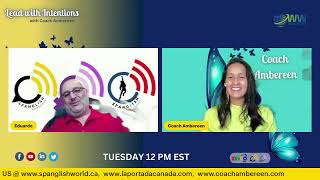
This content was created by Coach Ambereen. This content was uploaded by Coach Ambereen. This is a YouTube video titled "Lead with Intentions: Eduardo Harari ~ Family & Social Change for Autism" featuring a conversation between Coach Ambereen and Eduardo Harari. The discussion, recorded on August 7, 2024, covers Eduardo's background, his family's multicultural roots, his experiences raising a son with autism, and his efforts in community building and social change for autism awareness. The conversation also touches on personal growth, intentional living, and the importance of communication in relationships.
Chapters
Hey. Welcome to Lead With Intention. Today is Compassionate Day. Welcome to the show where every single week I, your coach, Ambrain Hamid shows up here ready to serve you. It is truly an honor to be here right now in this moment. Beautifully planned as you cross paths, so that way we can serve each other, learn from each other, and hopefully grow together. Welcome to Spanglish World Network alongside with Xingo TV channels 250 and 251. Please remember to download our application on your iOS, on your Android, on your Smart TVs, 2016 forward, full Amazon lineup, Roku lineup, and even supported on the Chromecast devices. While you are downloading this app, feel free to engage with us. Let us know we're doing well, but then also what's more important is what we can do better for you, because that's what we're here for. We're here to actually allow all of us to be on a journey of growth together. App is completely free, so make sure that you can actually tap in. There's also a beautiful thing that I'm learning that you can engage with us. So you, as a viewer, as a viewer watcher, audience member, you can actually talk to us through the app and you can actually leave messages, which I'll be highlighting a lot more during our conversations with our guest. Many of you don't know the man behind the scenes, but here he is today, Eduardo Harari, who is not just my producer, but a man of many hats. He's a father, he's a husband, he's an entrepreneur, he's a businessman, and he's somebody who loves to give and pour in. Somebody who's super resourceful and loves sports, which I'm sure many of you already know. But I really want to dive in today and understand him from very different light, what we see him usually in. Welcome to the show, Eduardo.
Thank you for having me, Ambreen.
You're welcome. All right, let's dive in. So talk to us a little bit about who are you and what would you like to share with our audience here today?
Well, I mean, who am I? Very simple guy, I would say. I, I am very, very broad, come from a Middle Eastern, Latin American background and someone that likes to share with the world, likes to help. This is, that's why this, this network is here. Everything that I surrounded myself with, in and learned from my, from my family was about sharing and giving and always being there for others.
Okay, now you. That's a beautiful way of starting the conversation. What was it about your family that allowed them to Kind of teach you, I'm guessing through role modeling to just be supportive and be generous in the way that you show up.
So I'll look at both sides of my family so you understand a little bit more about my background. So my, My father's family comes from Aleppo in Syria. Comes my. My great grandfather and his, His. His father were both men of wise, very wise people, men of religion, very deep in embedded, both rabbis in the Jewish culture and yeah, people that gave everything for. For their communities. My great grandfather went from Syria to Israel, from Israel to Colombia, Colombia to Mexico, Mexico to Guatemala and always had a business on the side. But he, the first thing that he always said is you have to serve your community. And he always, since I can remember, when I was 2, 3 years old, he always spoke to me about sense of being a human and being someone that gave back because everything will come back to you ten times over if you are kind to others. From my mom's side is different. She's from Romania, from Austro Hungary. I. My great grandparents and my grandparents are from Hungary and Russia.
Okay.
So. And although my ex. My life in my lifetime, I didn't see my great, My great grandfather in a good health condition because he had early in his life a convulsion and he was paralyzed as a child. Basically became a child from about age 40. So I didn't really see him as such. I understood him.
Yeah.
But one of the things that he always. I always saw of him was that he. What he did remember was going to Singapore and again, the religion and community.
And how have you kind of seen this morph into your own life, rather an intentional living?
So I think you always have to live with intention. You have to live with a sense of who you want to be, who you. Not. Not who you want to be remembered as. But what, what can you do for others? Intentionality in, in the aspect of how you can affect lives and make them better.
Yeah. Okay. And how have you seen kind of, you said it comes back in full, you know, having to. Having the right intentions, doing things for other people. How have you seen that in your own life play out?
So I think it has played out incredibly because one of the things that especially when in the. In the business world, you know, you always tend to. Yeah, there is a purpose that you. That you do need some. Some type of income to. To make a life for yourself. And I, you know, but I was taught that, you know, following my. In my. In my grandfather's footsteps was that yes, you need money, but you only you need money to do good with, keep watch, keep what's necessary for you and share with others, Share with others your wealth and your, and the intentionality of being who you are. So in both, both, both my businesses, we have a foundation that we try to elevate community, community life, community charity. Because that's, that's what's, that's what's essential in, in life and, and through, through that is that, you know, if it wasn't for what I was doing to try to build community, a friend of a friend of mine with a friend of mine in la, we build an application. In the early, early days of my career in it, that was a Jewish dateline and that's how I met my wife. We met online. It was that. It wasn't. We didn't build application to meet women. We made the application for people to, to talk to each other, to, to interact because all over the people from all over the world want to meet each other. Not necessarily someone in your hometown. I mean, and that's what it, you.
Know, so, so how does that idea spark upon you and your friend where you're like, you know what, let's create a dating app and let's really find out how people can intermingle and create something even bigger, not only for themselves, but for other people as well.
So it was funny because we both came, we both had the same impression of dating life. Dating life was, you know, going to clubs and trying to see if you can, you could pull someone into the dance floor and, and try to mingle. And I got tired of it, and he got tired of it because, you know, it was a thousand questions before you even go into what you were supposed to go to dance and to meet. You know, it was a. Digging as to what you did, how you lived your life and who were your parents and what you have to give me. And I said, that's not for me. So I, I told him, I said, you know, there is other dating apps out there, but there is not one for the Jewish community. So let's, let's try to build something like that, but not, let's not call it. It's not a dating site, it's going to be a meeting site, because that's what it was all about. And, and we started that with the purpose of. We started doing so once we got a, a sizable group together of people, what we were, what we, we did events, hosted events in Toronto, we hosted events in, in la, in Chicago, in New York, and once a year we did a cruise and we guided all the people and we went for, for a 10 day cruise in the, in the Caribbean because it was the way for people to understand each other, to meet with each other, and they came from all over the world and that it really became really nice. But it was more of a French idea than a dating app.
Yeah, I think what I'm hearing you say is like, it takes the pressure off of the whole dating game because you are like, oh, we're just going on a cruise. That's it. We're just going on a cruise. We're gonna go have fun, we're gonna eat food, we're gonna be taking really great care of and explore maybe a brand new place that we've never been to. So now I don't know how old you are in this timeline. I'm assuming a lot younger because you said, you know, this is when you guys were kind of butting heads and trying to figure out how to find the right women. Now you're in the space, take us there and kind of talk to us through this experience. It required a ton of courage, which is something that I think you're in a way downplaying. You know, two boys or two men who are like, oh, no, let's just create an app. Okay, let's create an app. Let's have a bigger vision. The vision became, let's host event. How did you push through to that? And then really understanding that we need to even take it a step further and make it a bigger experience, which became the cruise.
So we started this venture with him as a joke because we didn't, we didn't have. It was, it was truly a joke. It was, we'll give it to some of our friends and they'll, they'll share with their friends and that kind of situation. It wasn't, it wasn't a business that we wanted to create. It turned out to be a business at the end of the day because as it became bigger revenue, we needed revenue to maintain it. But the, the idea was technically to have a social, a social platform. And we were, What, I was 24 at the time, 25. My friend was 20, 26. I think he was two years older than I was. It was, as I see, a side hustle, let's say, for, for us in the idea that we had full time jobs. And this was something that we did, we did at nights, you know, and we use some of the principles of the 80s. I mean, we started this in the 19, in the 1980s, 1990s, and it was it was funny because, you know, I don't know if, how, how far back you go in it, but we started like, type of situation, like an ICQ that it gave you a beep when someone actually wanted to speak to you. And we, and, and we created rooms inside the, this, the application. There was one giant, one giant room where everyone gathered and then they could create their own rooms to go to speak to each other. People can, to have groups of people. And we had a database behind it with all the memberships and everything. And you know, we started seeing a growth, a big growth very, very quickly, especially from the universities and young entrepreneurs that, you know, they, they didn't, they don't have time to socialize, so they, they came to us. And the idea with the, with the doing the cruises and stuff like that, it was more of our, oh, we have to have an, an option where people can actually meet in person, not just over, over the application. And we, you know, we had, we had gatherings in the cities, but at the end of the day we found out that the same people that we were seeking the clubs now are in the application.
Just like us. They did whatever we did. Oh, I love it.
So, you know, but it became, we became really a community inside that, inside the app. You know, we started online. Now my friend has taken it to a different scale. He has an app for the phone and he has, now he has everything. I, once I got married, I, I kind of left it out. But yeah, it was, it was like that, you know, and it was very, very interesting.
So let's dive in there. Let's dive in. And you said you found Rebecca on the actual app. Now how did that idea mature itself and how did you know that she was the one?
So my, I met my wife on the app on the, on the platform. But what can I say? I, Because I had back, back door access, it was much easier for me than for mom. You are not supposed to do that. But, you know, I, you're the boss.
You could do whatever you want.
No, you know, it was when I went into the app, I said, look, I'm. I started looking for someone in Latin America and I said, I'm tired of the US and Canadian scene. Let me go somewhere. So I started looking Latin America because is my other background. So I said, and I went to Venezuela because that's, you know, a country that I have affiliation with. And so. And there were only two, two girls coincidentally, at a time that had signed up for Venezuela. So I looked at one and she looked too much like my mom. So I said, no.
Love the honesty.
So I went towards. Now my wife Rebecca. And so I started chatting with her, send her a message and said, you know, my name is Such and such. I live in Venezuela. From this time to this time, I came to Canada and this and that. And we started talking, and we found that we had friends in common. And so we start talking, and we went from our platform, JDate, to ICQ and started talking more privately and for longer hours of time to the point that we were, you know, everything expanded. And we talked for. Probably from early in the evening till the next morning when I had to go to work at some points.
Love it, but it be.
You know, and that's what the power of. I always said that's the power of the Internet has. It can do very bad things, but it can do very, very good things also. It depends how you. How you. How you use it for what you use it. And, you know, and that's the intentionality. I wasn't intentional about meeting. I was intentional about meeting somebody, but it wasn't aimed for marriage or, you know, it was, you know, and I was checking the other day, actually, I was checking to see how many couples, because when I got married, we were at over 20,000 people that had married through the. Through the platform. What?
Love it. Okay. Wow.
That was when I got married in 2000. They are now. Right now. It's over 150,000 people that have met through the application, through their platform, and got married and have kids. And, you know, so it's. The intentionality worked.
Yeah. I mean, you didn't do some homework too, Right. Like, you kind of sat down and said, okay, I don't want somebody from the. From the North American region. I want somebody who is the more native to me. What's more native? Okay, it's Venezuela. Let me see what's happening in Venezuela. Okay. Too much map. Okay, let's try her out. I really think your intentions were pure because you weren't looking to just kind of pass time. You were like, I want to evolve now. I need something more deeper now. What was it about Rebecca that you spent hours and hours talking and communicating and just getting to know each other a little bit more. What was that? Seal the deal, because I think it's really important for every single person who's listening here. Thank you so very much for continuing to contribute the most valuable commodity, which is your time to us and hearing about Eduardo's personal story, which is the way I'm taking conversation. Like, what was it about her that you were like, yeah, she could be the mother of my children.
So I think that, that we, we were talking at length about different things, whether it was politics, whether it was, you know, our likes and dislikes and stuff like that. And we got to know each other so well as friends that I always, I always laugh because my, my father in law said, are you sure you want to marry my daughter? And I said, yeah. He was. You sure? I said yeah. And you know, we, we weren't boyfriend and girlfriend. We, we were friends. We actually got married. We date. I think we got to know each other more during the first years of marriage because we never were boyfriend, girlfriend and went out or anything. We went from. I went to Venezuela for two weeks, asked for her hand in marriage and two months later we were married. So, so basically, you know, we, we grew with each other, but we knew exactly what we wanted and where we were, what we were looking for. And we knew, you know, we talked about kids and how we want to bring them up and how know what, what was about, you know, education and stuff like that that we wanted for the kids. And I, and I. And I think it was premature. It's always premature when you start talking about that kind of stuff. But you know, because none of the, none of what we talked about has happened so far. You learn as you go with kids, there is not a man.
You do. Yeah, I mean you can read. That's what I often tell people. Like as a family driven coach, I'm like, you can read all the books, all the articles, all the research and you're still like, I don't know how to do. I, I don't know how to do what I need to do in this moment because I think parenting is probably the most difficult, you know, role or you know, path in the whole world. And so I love the fact that you not only did you guys keep it very friendship oriented, which is what I keep here, it's like the fifth reminder in the last week that marry a come, you know, marry somebody who is your friend, who's your companion and that really builds a greater foundation. Now allow us to kind of take a glimpse and a glance into your home if you would share something personal with us when it comes to your own family.
Yeah. So I mean, I think, you know, the basis and I always said this, that the reason that Rebecca and I, we are going on almost 25 years of marriage and the reason that we have succeeded at this is because we had great communication from day one because we didn't meet in person and we talked about it as friends online and we talked about different topics. When we got married, we learned that communication was the avenue to our success. And you know, that's what it came down to. And I was talking to, you know, you know, we have two kids. My daughter who is that is 13, my son is 14. He, he is, he has autism. And you know, it has been very difficult because. But again, communication is the. Many, many couples when they have a kid with deficiencies tend to have issues within their marriage because they don't know how to handle it. In our, in our, our strength was that she's very methodical and I am very go very a person that I go beyond to try to resolve issues. So, you know, being that we were in Canada, that also helped because I was very well connected politically here and very well connected in the community. So, you know, I started hitting the ground to see how I could. And this is the other thing about what I told you from the beginning. Intentionality and community awareness. See where the community you can go not just to benefit for yourself, but to create a, a community that will benefit everybody. So I started getting involved with autism in, in the autistic autism associations in Canada, in, in the, you know, in Toronto. And I noticed that, you know, a lot of, there's a, there was a lot of political cloud around subject of audience and no one want to do anything about it. So I started, I actually started going to start going to. How, how, how can I say Start going to our politicians, friends of mine that are in the. Were in politic in politics and saying, hold on, why are we not supporting research to create a cure? Oh, because autism is something that no one knows about. So that's why you need research. That's why you need to put money behind it. So that, and I started asking, doing a survey within my political friends, with my political friends and said, you know, excuse me, I see that your son has this morality. When did you discover that? Oh, he started very young, at a very young age. So I said, you know that that's one form of autism. And they said, no, my son is not autistic. Can be. I found out that almost 87% of the politicians in Canada had kids with autism, but they did nothing about it because they didn't know that they weren't diagnosed. There was no diagnosis plan for autism in Canada until the late 2000s. So you know, so it became really interesting, became really, really interesting in that regards because. So it became very, very interesting in that regards that, you know, they didn't know what their own kids had because they, they didn't go through the diagnosis process, but because they had the money, they had the cloud, they had this, they, they had doctors looking for at them. So we started building a network of people that, that helped in the communities to help out with us.
Wow. Super commendable. I think it's that when, you know, God, everyone will offensive. I like when, when you, what do you do with the lemon? Do you. The lemonade? Do you sit there in your misery and stay sour? What now explain to us a little bit because it seems like you just kept putting, pushing yourself and elevating. Because the vision is. It's not about me, it's about something broader now for anybody, you know, listening here today, which I'm super grateful for. What could you share from your own experience with a child who is autistic? What could you share? So that way we can not only be more aware, but we can more be more accepting of individuals that have it and actually be more forthcoming with embracing them and making them feel like they're valued.
So it's funny because growing as a, as a parent of an autistic kid that doesn't communicate, my son is nonverbal. That's his level of autism. But he's a genius in other areas. And it's funny because he has transcended my knowledge of it ten times over. But he's, he's just doesn't speak about it because he can. And when you see him that he goes to a computer and he will write down what he wants. And it's, it's commendable that he learned by himself everything that he needs. And I always say that understanding the levels, yes, there is autistic kids that are by. That might be a little bit more out of touch, but you have to understand their, their, the way their mind works. And that's the first thing. They are not unable to reason. They need a little bit more time for people to understand how they reason. So when you see someone with autism and you have many types of this, this, it's not. And it's not a disability because you cannot cope. This autism disability, it's an different way of putting things together. And that's what I always say, learn, observe how they act and you will learn how to communicate with them. You know, Asperger, which is one of the highest levels of autism. These people are brilliant. I mean, Bill Gates has Asperger. You know, the highest minds in the world were autistic and People don't understand that they are there. But you know, and that's what I, that's, that's what I, I want. I, that's the ultimate goal. The ultimate goal with me right now is get my son through the process because I want him to go to university. I want to, I want him to have all the enjoyments of life, all the, all what he wants in life, but understanding that, understanding that, understanding, like I said, that he has his, his deficiencies and I have to, I have to guide him slowly through a process and do the same thing, have, create that path for more kids, more people. Because behind my son there is many, you know, we have, we have to help.
Wonderful. I do want to take a deeper dive into this, into your family and I want to ask your son, his autistic and you and Rebecca are finding ways not only to understand and to observe him, but to serve a broader community. How do you think for somebody who's listening and going through just even not in autism, like just general challenges where one kid requires a little bit more time, effort and attention. How do you think your daughter has evolved in this situation? What have you seen as some challenges that she has faced? You know, being the sister of somebody who, who needs a little additional support.
So I, what I would say is very simple. Yes, you do put more attention on the child that may have a situation, but you have to balance. Don't disregard the other one. My daughter is very bright. She also has hd. She has a deficiency that she doesn't concentrate as well as she does, as she should. But I have again the wonderful age of technology. We have learned to help her through technology in the arts. She's a brilliant kid when it comes to design and music. So we, we, what we have done is that we have taken her and put her in a arts minded school so that she learns math and everything else, but is more guided towards the arts because that's what she has a strength in. And I think she has learned that she has matured faster than most kids have because of her brother. But they love each other and it's amazing to see it with those two, with the kids because you know, I asked my daughter, can you please take care of your daughter? I am, I have to do something for work. And she will say yes, no problem, don't worry. And she'll go downstairs and she said she'll sit beside him while he, while he's playing around and she's doing something for school. And you see him whenever we take her to the, to the doctor or whenever we do whatever with that. She, she's not feeling well. You will see that she. He walks over to her and says, at least be happy. And it's his way of saying, I understand. We are. You are my sister and I care about you. I don't like to see you sad. And, you know, it's. It's very interesting. It's very interesting that, that you see the two kids melding with each other. This is the first year that they are going to go to camp together, summer camp together. And she is going to be his counselor, although he's older.
Okay.
But it was a way to bring him into regular camp because he, he. For all his. All his lifetime, he has been going to special needs camps because he has grown up with that crowd. And so he's going to go to camp with her for three weeks now in the summer. And, and you see the joy in his face because he sees his sister going with him somewhere and being spent the whole day, not just the afternoons.
I love hearing that now for, for myself just to better understand as well, is how did you know that your son. I don't know his name, so if you could remind me, please.
Nathan.
Nathan. So how did you know? For Nathan, it was time for him to kind of take the next step forward and be in a place where he hasn't just traditionally been seen.
So he has been going. He has grown in. He went to a special school all his. All his, since he was about 6 years old. And that school actually has summer camp program where they went overnight. They did some overnight camping and stuff like that. But now he's 14 and all the kids. The funny part is all the kids call him Grandpa because he's the oldest kid amongst them. So some of the activities that he was normally doing weren't activities for his age.
Okay.
But this year he. Now he's living. He's going to. He's going to enter a regular high school.
Okay.
Because has come to a time. So we said, what's the better way to enroll him into going to a regular high school? Let's send him with his sister to camp so that he can. Through the ease of having his sister around then it's going to be easier for him to understand how to operate around the regular crowd.
And there's a lot of intentionality in the way that you and Rebecca are kind of, you know, raising these children. You said. We talked in lines about, you know, how we're going to raise kids. And it was like. But when you foresee parenthood. It's really different now. I feel like you guys had laid the foundations of what you wanted as partners, as parents and kind of, you kept building on it. Which is what I think life traditionally is when you are, when you're talking to other parents. Not about just this, you know, this, you know about your son or his condition. We're just talking to general parents. What do you, where do you think that parents lack a little bit of wisdom when it comes to raising a family and leading a family?
I, I don't think is that parents lack wisdom is parents. Because we grew up in a different environment when we, when we were kids and I can say that I had HDHD and I didn't know that I had it. Most likely that's how my daughter has it and how much and why my son is autistic a certain way because there are certain genes there that are going to be predominant. But I think that parents in this day and age need to understand that because of circumstances life is not the same as in the world that we live in. There is more accessibility to information right now than anyone would want. And kid has access to that information. And you can say yes, I'm going to monitor what they do and this and that. But you cannot be 247 on top of your kid seeing what they are doing. And if you are going to, let's say censor what they can watch and what they cannot watch are doing more damage than because they are going to find the information somewhere else and most likely will be from, from their peers who might not have the same upbringing as you might want. So I think that parents have to start questioning themselves more and learning more about what, what's out there right now. Parents have. There wasn't a manual built with exact rules of how to be a parent. I as, as we, as I told you, I mean we talked with Rebecca about this is what we want to do, this is what, how we are going to do it. This is where we are going to send them. And my two kids were born and we were like what did we say we want to do? Yeah, no, that doesn't work that way. And you know it's, it's very difficult to put two and two together to, to me I think that you have to take it with stride. Everything, every day something changes that changes the way that you are going to take that decision. You cannot be very liberal, but you cannot be extremely conservative either. You have to have a break even point in the middle where you meet and you say no There in today's society, you are surrounded by many groups. The kids are surrounded by many different types of people. And they don't want to be the outcasts and say, oh, I don't want to associate with those. So you have to teach. You have to teach. Take the good things from everybody. Look at, yes, the kid might do something like, is not appropriate, but look at what he does that is right and copy that and don't disassociate him from, don't. Don't judge him. The bad things he does always be there and mel meld with them. You have to have friends from all, all, all facets of life.
I think that's, I think that's under. That's the essence of understanding them and accepting them as they are, which is something that I do work a lot with a lot of families just to let them know that I get it, they're not doing things the way that you do. But then again, when we were growing up, you couldn't get an answer in a nanosecond for a question that you had. Right. Like if you wanted to find out something simple like when is sunset today? You literally had to find ways to find out when is sunset today. Now it's like, you say it and it just happens. So I think it's so true. As parents, we have to kind of keep taking one step in front of the other times, try to become a little bit better because we are taking that intentional action of observing and understanding them as they are. How do people get in touch with you, Eduardo? Know anyone that wants to kind of share what resonated well, or maybe the way that you can maybe help them and support them in the expeditions that you're currently on in your own life.
So the best way with me is the online look for Eduardo Harari. I am, I am one of those very open people. I have all my information. You can find it anywhere you want.
Yeah.
And you know, it comes to that. I mean, I don't. My email is everywhere. My telephones are everywhere. Reach out to me if you want to learn more. If you have kids that need help in any way possible, if they want apprenticeship programs or something like that, I, we in both, both my companies, we take students in and teach them it. And the other side, we teach them how to do shows like this.
I love it. Yes, definitely. Eduardo is not only resourceful, but he's genuinely a simple, kind hearted, loving man who does want to impact, who does want to serve, who does want to build a greater level of Community. So that way the world can be just a little bit more beautiful. As of course, you know, all of us have to part one days. Now, I want to ask you, as I do every single person, let's get into our intentional wrap. These rapid fire questions, they're coming at you. One word or one sentence is what's going to take to answer. And then hopefully we'll be wrapping up that show. Okay. What do you want to leave behind for the world, Eduardo?
Better. A better understanding of humankind.
Okay. How will you know that you've led an intentional life?
If I can affect impact one person, I have done something good for with my life.
All right, I can say you already done that. Hey, I'm standing right here in front of you. If you could create one law that everybody had to follow, what would that lobby?
Very difficult. That's a very difficult question. Because what I law of kindness. Look at your neighbor the way you look at yourself.
I think that's really true. Yes. Kindness in our home is super cool. What's one lesson that has made you who you are today?
Repeat that one, please.
What is one lesson that has made you who you are today?
My great grandfather once told me, don't judge. Don't judge a person. But why? By what you see, but by who they are.
Okay, so the essence of character. I love, love that I will be using it a lot in my own life. Okay. And what is the key to a healthy relationship?
Communication, understanding and perseverance.
Yes. All right. Well, it was a beautiful, beautiful, beautiful, beautiful, spontaneous thing to have you on the show today. I'm glad that things work out the way that they do. As the show comes to an end, I do want to say I appreciate every single one of you for tuning in thus far. And hopefully you've learned something not only about Eduardo, but about yourself through this journey of leading with intentions. This show can be heard on Spanglish Radio Network. Please follow and check out Spanglishworld Cat. For all the programming, all the news. As we close, my prayer is that this show will embark all of us on a transformative path to be more in gratitude for what we have to accept the unfoldings of life and to commit to values and dreams which will allow us to tap into our own greatness, as I have Tawakkal, which is faith in all of us. When we unleash our authenticity, we start to live more intentionally. Remember, there's only one of you to design that life with excellence. Spanglish World. Watch it, hear it, read it, download it. Most importantly, live into it with intentionality to have the best version of you serve others. Thank you so much, folks.










