Lead with Intentions: Guest ~ Creating Vision
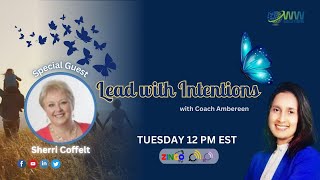
Sherry Caufeld, a results consultant, walks through her Freedom Finder vision process for living intentionally. She shares how she sold her house to travel, uses the rule of three for consistent action, and helps overwhelmed entrepreneurs build systems that actually stick.
Questions this video answers
Almost 24 years.
LinkedIn (handle: her name 'Sherry Caufeld'); email: sherry@resultspartner.com.
Chapters
Foreign.
Day. To all of you amazing souls joining here us today, welcome to Lead With Intention where every single week I, your host Ambreen Hamid shows up here every single week to serve you. It's truly an honor to have crossed paths with you today and I want you to know that I am so incredibly appreciative for you taking the time out to prioritize yourself and for giving us the most important commodity which is your time. Welcome to Spanglish World network on Xingo TV channels 250 and 251. Please remember to download the Xingo TV app on your respective app stores. IOS, Android, Amazon, the full lineup, Roku, the full lineup, and even on Google Chromecast. While you are downloading this application, please remember to rate and review. This allows us to serve you better. Let us know what we're doing. Wonderful. But also what can we improve to make your experience even better. With that said, the most important thing is the app is completely free to your use. Single TV is available on any smart TV 2016 on forward. And today's guest is somebody who actually crossed paths with not in the most typical of ways. Sherry Caufeld is a results consultant who provides services, support based services to entrepreneurs to attract high quality clients. She's a trainer and international speaker who wants to make her clients realize that they can finally live a free a life filled with freedom and have the flexibility to enjoy their bucket list right now as they take their business on the go. Welcome, Sheri, to our show.
Oh, thank you. I'm so excited to be here.
Wonderful. All right, so we like to start the show off by asking you a very simple yet profound question. Tell us something about yourself. Who are you, Sherry?
Oh, goodness. Well, I have been, you know, in this crazy world of coaching consulting for almost 24 years. I'm a world traveler. I am an avid reader. What else did I tell you about? You know, it's I love life and I love supporting entrepreneurs to create a life that allows them that freedom and flexibility not only live the lifestyle that they want to live, but as you said, take your business with them.
Okay. You said something really profound to all of us and we love, I love to dive in a little bit deeper to those, those nuggets. And for anybody who's listening and watching, please make sure you have your paper and your, you know, your notepad or notebook, whatever handy with you so you can take down those notes and kind of be on this journey with us. You said you love to live life. What does that mean for you?
You know, I I think that there is such a tendency in our culture right now to accept the way things are and to not realize that we have the power to create our life with. With intention. We're here about intention, right? We have the power to create our life with intention. And when we walk through the path of life through the lens of intentionality, it is amazing what we can create. But in order to do that, we have to start by getting clarity on what it is we want. And that is what we've kind of lost. The ability. We've lost the ability to dream. We've lost the ability to take the time out and actually take a step back and say to ourselves, what do I want my life to look like in a year, in five years, in 10 years? What do I really want to do when I wake up in the morning? That not only fills me up, but also makes an impact in the world, gives back and makes us happy. Yes.
That happiness portion is something I feel that we're all striving for. And one of the most simple and the most profound things my son said, I would say about five, six years ago. He's only like 10 years old. He said happiness. I mean, you just be.
Yeah, I have a T shirt that says choose happiness. And it's true, it is true. Where we are the creator of our circumstances and we get to, to live with, in a sense, those circumstances, be them good or not so good. Yeah.
So you just said something to us. I think that our, you know, that our audience members here will really benefit from, you know, it's, it's a very simple way that you put it, like we are the creators of our circumstances. For somebody who doesn't really want to accept that viewpoint, how could you maybe help them shift that perspective a little bit? Sherry?
Oh, well, it is a shift, and I get that. It starts with recognizing that every action causes a reaction. And one of the things that, that I learned long ago, I was, I did some training in neuro linguistic programming. And one of the big things that we talked about is that our beliefs cause our emotions, our emotions cause our actions, and our actions cause our results. And that's what I mean really, when we are the creators of our circumstances. Because the belief, again, those beliefs that serve us and those beliefs that don't, is a lot of service, then that creates our emotions and how we look at the world and our perceptions about what is reality, and that those, those emotions and those feelings that we have cause what we choose to do. Our actions and the actions we take, of course, Create our results because we're responsible for every action we take. I think most people would, would agree with that. And, and granted, there happen to us in life that, that, you know, we say, well, I can't, I can't, you know, stop the world from turning, so to speak. And you can not change. Change is the wrong word. You can intentionally choose how you react to it. I like the word respond actually better than react, because reaction is something that's involuntary. That something, you know, you touch your, your hand on a frying pan and you, and you automatically pull it away. That's a reaction. A response is something that we decide, an action we decide we're going to take.
It makes complete sense. It's wonderful that you're saying that. I was talking to my huddle of, you know, youth that I work with, especially in a mentorship circle, and we were talking about this. One of the kids was like, yeah, my four people started yelling at me because I dropped the milk while I was holding my sister. And they all knew I made a mistake, but they were all yelling at me. And then it made me feel so bad about myself. I felt blameworthy and shameful and even though I was cleaning up and nothing was stopping them. Right. And so we talked about this, like, this automatic, you know, this automatic reaction which we don't really think through. And so at the end of it, they were like, ah, that makes so much more sense. Let's say that there's a person who is listening here today, actually watching here, not just listening, but actually fully present and saying, okay, well, you know, maybe Sher is the person that can help me today. Maybe her viewpoint in her life will teach me something. And they are putting in the action consistently and they're not seeing the results. What can they do?
Keep going? I, I think at the end of the day, that's what we can all do. We get up in the morning and we decide, am I going to take the actions today that move me forward or am I going to slip back into old patterns, old beliefs? Which actually brings up another thing that they can do is check in on what am I making up right now about what's happening. So, you know, the boy that was being yelled at, he was making up that they're his friends thought that he was, whatever, clumsy, he was stupid, whatever he was making up. Was that truth? Maybe, but just as likely not truth. It could have been. They were, I'm gonna assume, teenage boys that were just messing around and were, were making it a joke and they didn't Think any of those things that he was thinking about himself because he was reflecting back what he believed in that moment about himself. And that's. That is a mistake that so many of us make is that we make up our reality. And I had a coach at one point. This has been a long time ago. It was when I was doing my NLP training, actually. And he always used to say, we make it all up anyway, so why not make it up the way we want it to be versus the way we don't? So if that. If that. That boy had made up that, oh, well, they're just having fun with me, and, you know, they're just. They're just making a joke out of this whole thing, then his response to that situation would have been different than what he was making up and saying. You know, they were making fun of me, they were laughing at me, they thought I was clumsy. Those kinds of things that were. Those negative emotions that he was bringing up were causing the actions that he was taking, which was to feel bad about himself. Right. Well, when you feel bad about yourself, what are the results that you create? They're usually not the results we want to create. Right. So you have to go back to the belief, because that's where it all starts.
Yeah. My notes, I just wrote down beliefs versus facts. Right. The fact of the matter is, yes, the milk fell down, but the belief doesn't have to be that he's clumsy, that he did it in purpose, or that he's not owning his own mistake. So I love that little reframe. And I think, you know, for every single person here who is listening and watching and really trying to understand how you can become a better version of, you really understands. It's as simple as it all starts with our beliefs. You know, we have full control over that. Nobody even knows what we're thinking, what we're imagining, what we're perceiving life to be. So why not make it a beautiful journey, you know, and like Sherry said, love the life that you live.
Yeah. Everything about it. Because we learn as much from our mistakes as we do from our successes, actually, more from our mistakes. And. And. And in fact, mistakes is maybe the wrong way word to use. We learn from our results. Both positive results we wanted and not so positive results we didn't. Right. And we learn more from the results that we aren't happy about in life, typically, than the ones that we are. So, you know, I tell my clients all the time, there's no such thing as a failure. There's only results and the results that you get in your. If you're a business owner like I am, the results you get in your business aren't a reflection of who you are. They're reflection of the actions that you took and the results that they created. So it's that. What's that phrase? It's not personal, it's business. Well, I guess that's maybe a weird way to use that phrase, but in a sense it is. It's not like when you do a launch, if you do a business launch and you don't get the results that you want, you don't get as many people to sign up for your workshop or your program or whatever it might be. It's not because those people didn't like you or, you know, took some. Some negative interest in you, so to speak. So they said, oh, no, I'm not going to Sherry's workshop. It was about them. It was about their decision, their beliefs that drove their emotions about your workshop, that drove their action. Did they sign up or not? And that becoming the result. So again, 90% of what happens to us in life is not about us. As much as we would like to believe it is. It's about the other person.
Okay, so then if 90% is not about us and only 10% is, what consists of that? 10, Sherry.
That. What we control. Because the. The things that. That other people. When I said that, I meant 90 of what happens. What we perceive about other people isn't about us. Not 90 of our results aren't about us. Okay, so do you see this distinction? So how someone responds isn't about us. It's about them. The actions that we took, the beliefs that we led to our emotions that led to our actions, led to our results. Those are all about us. And we, and only we control those.
So the right way I, you know, just for everybody here to get more clarity is 90. 90% of the responses are not about us, and 10% of them are about us because that's what we can truly control. I think it is important in the world that we live in right now where we feel like we want everyone to accept our viewpoints and accept who we are and like, just love us and like us, we. We kind of start to lose most of who we are because we're so zoomed on that 90% versus control, that belief, control, that thought process, and really create the life through actions that you want. Now, let's get into a little bit. You've spoken about this, you know, already three or four times. What does it Mean for you to live an intentional life.
Sheri so intention, another great word, right? To live an intentional life goes back to what I said earlier about getting clear on what it is I want and making decisions in my life from that, that point of view, from that intention. So when I set an intention, I do a process I call the Freedom Finder formula, where I create a vision for my life a year from now. Typically, I do it in the fall. I get, I really let myself dream, and I also let myself feel the feelings about where I am right now versus where I want to be and get really clear on a year from then. You know, at the end of the next year, calendar year, let's say, what do I want to have happening in my life? And then once I get clarity on that, and I mean my whole life, I don't mean my business. I talk, I talk about my business all the time because it's, it's a big part of my life. But I don't mean what do you want your business to like and how many clients that you want to have. Yes, that's important too. But what I really mean is what do I get up in the morning every day and do? Where am I living? Who am I spending my time with? How am I feeling about life? What's exciting me? What am I enjoying? What are the new things that I'm going to try? How am I going to learn all of those things that make life enjoyable? Getting some clarity around what it is that we want to create for ourselves. And in the next year, once I do that, I can be intentional about the actions that I take. So now I can create a belief system, obviously, that, that, that I believe that I can create whatever life it is I want to have. So that's going to drive my emotions, whether it's commitment, whether it's excitement, whether it's all those emotions, the positive, I create the positive emotions around that. So that leads me towards taking the actions that are going to get me there. And the other thing that it does is it gives you permission to say no. Okay, so I'll share this story. For me, I use this vision process. I do it every year for myself, and I do it with every one of my clients. That's where I start with, before we ever talk business at all, is starting with what their vision is. And for myself, several years prior to the pandemic, I was going through this process and I had what I call one of those knock upside the head moments when I realized that I had a perfectly fine life. I was happy, healthy. I had a very successful business. Everything from the outside looked really good. But I realized as I was writing my vision letter, which is part of my process that year, that once again, I was writing about someday I want to travel full time. And I. The knock upside the head moment was the realization that, you know, I'm doing exactly what I tell my clients to avoid, which is leaving, living in the someday. Because some. There's always a someday. And it's like saying next week. I call it next weeking yourself to death. There's always a next week. There's always a someday. And what had happened was that I had, unintentionally, it had been one of those unconscious things that had happened. I had gotten myself to a place in my business that I was reliant on, going to live networking events, going to, speaking at a ton of events across California. I was living in California at the time. That's where my clients came from. So I couldn't leave and go to Europe for three months because if I did, my leads would dry up. And that knock upside the head moment was. It was a big one for me because I felt so, so out of integrity. Here I was teaching my clients, live from intention and get clear on your vision for your life so you can create the life you want. And here I had subconsciously got myself to a place that my business was holding me back at that point from creating the life I wanted. Not to mention the, you know, big house in California and the whole. The whole lifestyle that I was living, which, don't get me wrong, I love my lifestyle in California, too. But that was the day that I put the stake in the ground and I said, okay, no more. Once you see it, you can't unsee it. And I made the decision, no, you know, my intention is to live a life where I get to travel as much as I possibly want to travel and be able to take my business with me while I'm doing it. So within six months, I had put my house in the market, sold it, had completely revamped the marketing in my business so that I went from mostly those live events, those live networking events, and live speaking again. I had a virtual element to my business, but it wasn't my focus. Took it completely virtual or almost completely virtual, and was off for four months in Australia. And I never looked back. Yeah, yeah. And. And I never looked back. And, you know, life happened. You know, pandemic happened, for one thing, so can't exactly travel. I was tra. That time. I was in New Zealand when the pandemic hit. And I was traveling about nine months of the year internationally, taking my business with me. And so that was a pretty big wake up call. And the, you know, the universe told me, this is your chance to concentrate on family. And during the pandemic, I had the gift of being able to spend a lot of time with my dad, who was ailing, had dementia, had copd. He actually ended up passing away last July. And. And if the pandemic would not have happened, I don't know whether I would have had that gift or not. So, you know, that's an example where there are things outside of our control. I mean, no one can say, you know, you control the circumstances of the pandemic. But I did control the way I reacted to them. And, you know, instead of going into. Excuse me. Instead of going into what I can't do, I focused on what I could do, which was use that time to be with family. My mom got cancer, supporting her through that. And, you know, I had all kinds of family stuff. Life happened that the pandemic gave me the gift of me being able to spend the time with them. And, And. And I do really see that as a gift. So now I'm back to traveling. Sorry, I went kind of into the not so good times during the pandemic, but. But it was a gift. And now, you know, things have shifted and I'm back traveling again. I'm leaving, actually leaving on Saturday for some family travel and then going to Iceland and then Canada. And so, yeah, so it's. I get to have both. I get to the best of both. Both worlds.
Well, you're describing my, My. My dream life here, Sherry. And I do want to take a moment and kind of just say that, you know, I know losing a father, regardless of how old they are and how old we are, something that's very difficult. But I am happy that in those last moments, you were there and he knew.
Exactly.
And you could feel, you know, your presence and alongside with, you know, your mom kind of knowing that she needs your attention and she needs that kind of dump back. A lot of times, I think emotionally we can support people, but there's something that happens when you physically show up in front of somebody. Yeah. And almost like they heal faster. You know, they get. They get better.
Well, and if I. If I may share one of the. One of the other gifts in that whole experience, because there was a, you know, the. The last year, basically not quite that, I guess now a little. I had to put my Business. And I was very, very, very much a second priority. And the gift for me in that was that I realized that the work that I had done in the previous. Of course, I've been in business for 24 years, so I've been around a long time. But the work that I had done set me up so that I could do that. And then, and things kept working. I had a system in place that, you know, the day to day stuff kept getting done, whether I was physically there or even emotionally there or not. So that when things started lightening up and things kind of got back to the new version of normal, that I could ramp up my business again. And that was a gift too, just to realize that. That's why as a business coach, those of you that have had a business coach or hear business coaches, and they're harping on systems and automation and planning, for God's sakes, that's why we do it. It's for those times that you don't expect because that's what's going to get you through those times you didn't expect.
Yeah, I love that. I think it's so important to realize that there's so much support out there for us to kind of take life on the go. Right. It could be something as simple as us, you know, just taking a quick note of a meeting that we have, you know, instead of having to, you know, physically write it down a piece of paper, you could take it on your phone, you can literally schedule it. It'll remind you, it'll tell you. And those simple moments and processes are so critical. One of my coaches also says, like, fundamentals are foundational. Like there's nothing that you do. Those are a must. You have to have those down. Which I think is such an essence of making, you know, and simplifying our life as the business, you know, grows and things like that. What's one personal thing you've shared a lot about, you know, about yourself? What's one personal thing that you would like to share about yourself? So we as a community, you know, as a show, can get to know.
You a little bit better. Oh, my goodness, I've shared so much already. Let's see, what's a personal thing? Well, I grew up on a farm in Iowa, so I'm literally the Iowa farm girl that you have heard about. And, and it was, it was awesome. Didn't necessarily want to live there my entire life, but still have lifelong friends from there. I have three girlfriends that I met, two in kindergarten and one in third grade that I still go on an annual girlfriend's trip with them. And that to me. Oh, bless you. That to me is again, one of the other greatest gifts is lifelong friends. And I'm fortunate to have not only them, but other lifelong friends in my life.
And.
That'S another thing that's intentional. We have to intentionally cherish and build and grow the relationships in our life because if we don't, who's going to?
Yeah, I love that you said that. That's one of the biggest things that I focus on with my own clients is ability to pour in to see the results later. Right. Like we're saying, oh, our kids don't listen. And you're like, well, do you listen like that?
Do you listen to them?
That's a good place to start. Like you are the role model, you know. Exactly. Oh, they don't communicate.
Well.
How often do you all put down your devices and just say this? Family time, 30 minutes. Nobody moves until we've shared something or, you know, these small things that kind of are no longer part of our lives. We don't really build on them, so we really have no reason to cherish them. And we see them being stagnant, if not depleting, because they're not, they're not growing, you know, because that intentionality is not there. Okay. And then can you share something with us about your family so we can get to know you and that dynamics a little bit better?
Sure. So I already talked about my mom and my dad a little bit. My, my mom and stepdad live in, in Arizona, in Yuma, Arizona, near the New Mexico border. So it's. I'm there right now and it's 100 like 7 degrees. I think it's supposed to be today, 107. So it's nice and hot. And I'm so fortunate because. And my parents divorced when I was 13 and my mom remarried when I was 19. My dad remarried when I was, I think 17 and had my sister Carrie when I was 19. So I was a freshman in college with my only other child. I was an only child until then when my only other sibling was born. And so that's a very, very special relationship because I'm almost like a second mom to her because she is 19 years younger than me and she has a 10 year old nephew who I adore and spend as much time as possible with. I get to see him when I'm back in Iowa and taking him to see Willy Wonka in the Chocolate Factory at a children's theater that I love. And you know, family is. Family is everything. And without the support of my, my mom and my dad and my, my stepparents, I couldn't have done anything of what I did. My dad was a big driver in my life when it came to really, me believing that I could do anything I wanted to do. And he was a farmer and one of the smartest people that I knew that I know now even. And he, he did amazing things with his life and, and, and lifelong learner and really was heavily into the stock market and things that you wouldn't expect from an Iowa farmer. Right.
Yes.
But he, he went to Africa seven times during his lifetime because he loved, Absolutely loved Africa. And. Yeah, and, and so I'm, I'm just very fortunate that I'm close to, to my family. My mom has, has two sisters, one of which had six kids, so I have tons of cousins and, and yeah, so the family's. Family is everything.
You, You're. You're saying my words. Family is everything, I think is the most foundational unit that we really have and one that we actually don't appreciate as much as we should. Now you talk a little bit about almost like I see you, I see you as a reflection of your father, just from this conversation that you just mentioned today is, you know, he was somebody, was a lifelong learner, very intentional, had a belief, did things that were out of the ordinary life, you know, like, what do you think made him become that person living in Iowa, you know, with his farming family?
Yeah, I think my grandmother. My grandmother's another very important figure in my life. His mom, she was a school teacher. You know, she literally taught in the one room, school room when she was first starting to teach. And she believed that you can do anything that you can be do and have anything that you want in your life. Again, there's an intention. Again, as long as you set the intention and take steps to get there. She definitely instilled in my dad the lifelong learning desire. And then of course, she did in me as well because she was a big factor in my life.
She.
She passed away when I was early 20s. No, I was actually older than that. Anyway, doesn't matter. But she was a big factor in my life as well as my dad's life. And so I think it's having. Having people there in your corner and finding. And if you don't have that in your immediate family, finding people who will be that for you. Because I'm fortunate. I had two sets of parents until, you know, my stepmother passed away in, in June of 2020. So until, until I was, you know, decades old, I would say that go how far I am, but decades old, I had four parents. Not everybody has that, and I am grateful for that every day. If you don't have that, find those relationships. Create those relationships that give you those 2am Friends, those people that you can call no matter what, and you know they're going to be there for you because that's, that's. Everybody gets to have that.
Yeah, everybody deserves to have that, I think.
Absolutely.
You know, I really want to kind of go back a little bit, backtrack to get to the present moment. And you mentioned when you were 13 years old, your parents, you know, divorced now mostly. That's a very critical age. I'm thinking about that, you know, in my own family, my own kids and kind of where they are right now. And you tell the story of that kind of being a gift and having now four parents, not two, but two sets of parents.
Right.
How did you know for, for the people who are here who are viewing and, you know, and listening and learning and really are understanding. Well, I know a best friend of mine who's going through a divorce and her kids around this age, or I myself am facing a lot of challenges and I don't know where life is going to take me with my marriage. How do you help parents and even kids shift that mindset to say that whatever happens is happening for us, not to us?
Yeah, well, yes, it was a very difficult age and it was a different time too, in small town Iowa. Divorce wasn't as common, quite honestly. And so, you know, I think. I'm not sure I have a good answer to that other than love them, let them, give them the space to share their emotions, ask how they're feeling. I know that was something my dad and my mom did. You know, they, they stayed very close to me and, you know, checking in. Share with them how you're feeling because, you know, it's, it's kind of, it's a, it can be, for a lot of people at least, a tough time out there. And, and not that you're going to go into the quote, unquote, gory details about maybe the challenges that you're having, but having your kids understand that it's okay to be human, it's okay to, you know, not feel hopeful today because tomorrow's another day, you know, and, and being, being that person that's, that's willing to share their feelings is going to show them it's your actions again are going to show them that it's okay for them to feel the way that they feel too. Yeah.
I think being vulnerable is such a courageous to do.
It is.
It is. You know, and quite often, I think as parents, we feel like we have to put a shield up, like a guard up where the kids can't see those true feelings.
Right.
And it is kind of a disservice to the kids and even to the other family members because they think you're always so well put together, like there's nothing. Nothing bothered. So when they grow up, they're gonna be like, oh, wow, I'm feeling so sad and so down and so weak. Yeah, I'm not a strong person because my mom never felt this way or showed it, you know.
This way. Yeah, exactly.
Or my dad. Not even just my mom. You know, I keep saying, mom, two ladies here, but that's not the intention at all.
Right.
You know, I think it's really important. And now let's say you, you know, you mentioned, you know, you're blessed like I am. You have a herd of family members that you have people that you can call and reach out to at 2am and you did say try to find those people who are, you know, are gonna kind of be your. Your group, your cheer squad is what I call it.
Exactly.
Yep.
Exactly.
And for somebody who's like, yeah, Sherry, that's really nice. You've been working for 24 years. You live in California. You live and you do this, you do that, you travel the world. You. You are saying it so easily. It's not that easy to find the right people who are going to lift me up. So let's. Let's dive in there and kind of help people figure out. Doesn't have to be so complex.
Yeah. You know, put yourself in situations that surround you with those kind of people you want to be with. That's a big thing. They're not going to come knocking on your door. And so whether you're an introvert or an extrovert, put yourself in situations where people you have something in common with will be. Now, for some. A lot of people, that's. That's church, perhaps. It can be community groups. It can be working with a charitable organization. It can be in your business networking. Some of my best friends, some of my 2am friends I've met through business events, and we've developed relationships over the years that turn into not just business acquaintances, but. But true friendships and. And people I know I can count on. Give to get, I think is another thing you have to go into any relationship first, being willing to give. Not only. I don't mean give things, I mean give of yourself and let people that. That vulnerability that you mentioned earlier, let that vulnerability come out. Be willing to show people who you really are and be not. Not holding that back, but be loud and proud about who you are, because there's only one you. And the world. The world is. Is lucky to have you just as you are. So I think those would be the few, the things that I, you know, it's like meeting new friends is not easy. You know, I'm. I tend to be. I am definitely introverted. People are amazed at that sometimes, but I'm very introverted. And so I don't need a huge group of friends. I tend to have a smaller community that I'm really, really close with. And then I have a lot of connections, I know a lot of people, and I tend to be more comfortable with, you know, in a smaller group, typically. But until you give yourself permission to be open to those people that you come into contact with, you're going to be sending the signals that you're. You don't want the contact.
Yeah.
You know, and you have to be aware of that. It's like that's. We talked about intentionality, obviously, that's the whole podcast, you know, that you have to be intentional. If you, if you set the intention that I am going to meet three people in the next 30 days that are people I want to have in my life long term. And every day you wake up and say, okay, what actions am I going to take today to make that happen? Because you see, that's. That's no problem. Do you remember the secret? This was years ago, but it was the secret. It was all about, you know, you can have, you can, you can have anything you want. You just have to be clear on the, on the vision. And what people didn't hear is that didn't mean that you didn't have to take any actions to create that intent to create that outcome. You know, remember, it's our actions that causes our results. So people watch the. The Secret and they said, okay, I want to be a millionaire. I want to be. I am a millionaire. That was, that's one of the things is. Is act as if, okay, I am a millionaire. And every day they'd get up and they'd say, I am a millionaire. And they took zero action. So did they become a millionaire? Highly unlikely. So what are the actions that I'm going to take today to create the people around me? To attract the people that I want to be around me, to give me those 2am friends and just take that step. Maybe it's going to Starbucks and setting the intention that I'm gonna, you know, start a conversation with three people.
I totally agree. I think it's. Sorry, go ahead.
Yeah, I was gonna say I've ever been in line at the grocery store. I just said, you know what? I'm gonna see who I can talk to. That's amazing.
That's. That's what I think. A lot of people, they let the labels kind of stop them from proceeding. Like, I'm an introvert. An introvert is not supposed to talk to people because I'm not comfortable in it. But I. So I won't do it. This recently, literally this week, I came back, you know, with my kids. I went on a cruise, our first time ever. And by the end of it, it was hilarious. We're like, in the exit line, my son is like, hey, mom, just stop interviewing people. You have to know their whole life story. Mom, just stop it. And I was like, hey, cruises are all about experiences. I can have the ones that they have on the. On the actual calendar, or I can create my own. And I would say the ones I created on my own are going to stick with me because there was intentionality. There was a lot of giving of myself to really get that connection. I came out with, you know, two or three people. My kids found three mentors. All of them have a mentor now that they found because of an action I took, and I decided to get the kids involved in that action. Now, you talked a little bit about, you know, kind of letting the. I call it, like, elevation of frequency, you know, in my head, that's the way I think about it, is allowing ourselves to say, I'm open and receiving to the things that I want.
Yes.
And being aware of it, something that you mentioned is really important. How does somebody who's been living, you know, a very superficial life or unaware life or a mundane life, where do they start? How do they start to really just even understand and become aware of those patterns of. I want to be a millionaire. I'm not putting any time and effort. And is that going to give you the results?
Yeah, well, there's. There's another. Another phrase that I use a lot. Once. Once you see it, you can't unsee it. And once you recognize it, you can deal with it. So the first step is getting honest with yourself and realizing where you're. What are the limiting beliefs you're Making up, first of all, as we talk, been talking all, all the time that are holding you back from what you truly want and what is it you truly want. So really giving yourself permission to be honest with yourself, that's where it all starts. And once you start getting clarity on that, then it's all about taking intentional action. And, you know, I'm. I'm a big one on the rule of three. There's been a lot of research done around brain, how our brains work, and I'm fascinated by the brain. And one of the things is that our brain works best when it has three groups of three things. So give your kids three choices on what they can have for dinner tonight or three offerings in your business that you sell to people. So do the same thing. What are three things that I can do? What are three next steps? I can take whatever they are. They can be gargantuan or they can be small. And it's better if they're small when you're starting out and take those three steps and then what are the next three steps? And it's that, you know, I feel like I'm coming up all these cliches today that you eat an elephant one bite at a time, you know, it's so true, though, when you. When you think about a goal, I want to be a millionaire, that's a pretty huge goal for a lot of people.
People.
Is it going to happen overnight unless you win the lottery? Not likely. So there are steps that have to be taken to create the foundation that give you the. The steps that you need to take to. In order to create the wealth, to grow the wealth, to scale the business or whatever it might be, there's a whole series of steps. And when you keep thinking about it, well, I want to be a millionaire, I want to be a millionaire. It can get very overwhelming. But if you look at it from the standpoint of, okay, I want to be a millionaire, what are the three steps I can take today that are going to move me towards that? You know, is it learning something new? Is it, you know, meeting your next mentor? Is it? Whatever, what is? What is it? And then start taking steps towards that. And you will be amazed how quickly you can actually get some traction. And momentum breeds momentum. And once you start getting in, into, into momentum, then momentum is going to start naturally happening.
Yeah. And it's that thing of, like, action creates the momentum. Right. Oftentimes we just think, like, why is the momentum coming? Why am I not motivated? But it's like that small action. I think it's so beautiful how oftentimes the person on the other. On the other chair. I don't really understand how much we're on the same wavelength and, like, the conversation topics are just kind of hitting home. I identified three things on this cruise. I was like, what are the three things you just gotta do, what things you have to do to put yourself out there and to be like, that's it. I also identified this month's goal. One of the goals is do three things every single day to move myself towards those, you know, those actual achievable goals. And in our culture, there's a saying which basically is in Arabic, it says. In Urdu, it says, so abundance lies in action.
Oh, I love it.
And so I think oftentimes it's those simple things. And that action, I don't think has to be something so physical. It could be a lot more belief and mental.
Right.
Getting into a mindset where, you know, you're helping yourself and being generous to yourself over anybody else. Okay. Right. What's. Let's find out this. Sherry, I don't want to. I do want to ask you, how do people get in touch with you?
Sure. So the best place to get in touch with me on social media would be on LinkedIn. It's really the only social media platform that I play on, if you will, a lot. And it's just my name, Sherry Coffee. You can see it on the screen. The spelling is my handle. And send me an invitation request. Send me a message, whatever, whatever, or just email me. My. My email is sherry results partner.com. my business is results partner. Email me. I love meeting new people. It's one of the things that. That I do every day. And in fact, it's how we met, if I remember correctly, was via LinkedIn. So, yeah, so reaching out to people and LinkedIn is a great place to do that if you're a business owner. You know, there are all kinds of people on LinkedIn for you to meet that can support you in building your business, in building your life and learning all that kind of good stuff. So, yeah, so just reach out.
Now. Let's go back a little bit and talk about the clients that you work with. I think we've talked a lot about family, talked about your own personal, you know, personal life. Now the clients that you work with, you did say, are predominantly women. What are some way. What are some change themes that you see them coming in, you know, into your partnership with, and then how do we work to reverse that? And the reason why I'm not. I'm saying that is not only because for clients, for those of you who are still here listening, I'm truly grateful for the time that you're spending here with us. But I do want, you know, it's a partnership that you can have with anybody, you know, and so how do we shift those themes and what are those themes?
Yeah, I mean, so many of the women that I work with there, I work with service based businesses. So most of the businesses, not most, all of the businesses are, are offering some kind of knowledge base. So whether it's in coaching or it's a graphic designer or you know, virtual assistant, those kinds of businesses that usually that support other businesses. And so many of them, when they come to me, they are just plain overwhelmed and tired. Because starting up a business is not for the faint of heart. It is, it's a labor of love. It is one of those things where a lot of it is you don't know what you don't know. And you've got all these messages coming at you from all these different places of what you should do. And the fact of the matter is there are only a few things in business that you actually, I would say that that qualify for shoulds. You know, one of them is get clear on your vision before you start your business so that you create a business that fits into your lifestyle versus taking over your life. That is a huge one. You know, a second, a second must do, I'm not gonna call it should do as a must do is creating a solid foundation for success. And that's one of the biggest things that I see that the women that come to me, they start their business and they're told we have to market yourself, you have to get out there and market yourself. But they don't have any clarity on what they really want. So that they're doing marketing in a way that fits their lifestyle they want to live. They don't have any clarity on who they really work with. They're, they're, I can help anyone kinds of people. That's a big one. Or they, they just don't know what makes them different. They haven't really done the work to figure out what's the problem, that you, you're uniquely qualified to help people solve. Solve.
Yeah.
And then how do you do that? What's different in your potential client's life when you've helped them get to where they want to be? And you know, that's so huge. So those are definitely some things that, that you have to do. You know, Consistency and overwhelm are the biggest enemies of entrepreneurship. And I believe that that inconsistency causes most of the overwhelm. Right, I said that. Wrong. I said consistency and overwhelming it. Inconsistency and overwhelm. Inconsistency. You know, not doing those things consistently that we talked about every day that move you towards the results you want to create, that stop start. It feeds into everything we've talked about today. Now, momentum breeds momentum. Well, if you're doing stop start and today you're doing webinars and tomorrow you're doing five day challenges and the next day you're off doing live speaking, you're never going to get traction in any of them. So just taking a breath to figure out, what do I want, who do I serve and how do I serve them? And then how is the best way for me to connect with them, to attract them to me. Those simple steps, and I say, I say they're, they're simple, but they're not easy. Are going to be what makes a difference. And most of the time, the women that I come across, they're stuck under the hamster wheel.
Yeah, I can see that. I can feel that. I think for my own life. We do have just about a few more minutes. I do want to do something which is a ritual here in Lead with Intentions and that's called intentional wrap up. These are rapid fire questions I will be asking you to answer in one, one word or maximum one sentence. And let's see how it goes. Okay, what would you want? Yeah, what would you want to leave behind for the world, Sherry Peace. How will you know you've led an intentional life?
The legacy of my family.
Hey, if you could create one law that everyone had to follow, what would be that law?
Tell the truth.
What is the key to a healthy relationship?
Being vulnerable and telling the truth.
What's one lesson that has made you who you are today?
I can be anything I want to be.
I love that. Well, thank you so very much, Sherry, for your time here today. This was honestly a very profound and a beautiful conversation. I hope every single one of you that is here still listening and focused on getting yourself just a. Just a little bit closer to the life that you want to live. And intentionally. I think you've benefited from the show today. This show, of course, can be heard on Spanglish Radio Network. Please check out Spanglish CA. SpanglishWorld CA. For all the news and the programming as we close today, my prayer is that this show will embark you on a transformative path to be in gratitude, accept the unfoldings of life and to commit to values and dreams which will allow you to tap into your own greatness, as I have Tawakkal, which basically means faith in all of us. When we unleash. When we unleash our authenticity, we start to live intentionally. Remember, there's only one of you. Design your life with excellence. Spanglish World. Watch it, hear it, read it, download it. And most importantly, live with it with intentionality to better serve who you are. Thank you so very much, Sherry.
Thank you very much. Enjoy being here, Sam.










