Lead with Intentions: Guest Genta Vazquez ~ How to be the CEO of your health & wellbeing
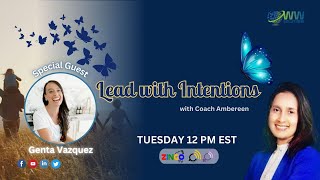
Genta Vazquez, a holistic health coach and founder of Rez Health, shares her journey from Albania through a health scare that led her to integrative nutrition. She breaks down what actually matters: gut health, stress management, whole foods, and a simple rule of 1 gram of protein per pound of body weight.
Chapters
Foreign welcome to Lead With Intentions. I am Coach Ambreen who shows up here every single week to speak with an individual who is super impactful in how they lead their lives. Today is no different. As we start the show, we first and foremost set our intentions. What is it that you want to get back from your day today? For me it is a jubilant day and I am super excited to dive in today with one of my favorite people on the planet. But before that, let's go ahead and welcome you the Spanglish World Network and Xingo TV channels 250 and 251. Please remember to download the Xingo TV app on your respective app stores, whether that be iOS or Android. While you are downloading this app, make sure to please leave a review and rate our application. This helps us serve you better and and kind of sees what we're doing while what also we need to improve. Okay? So we would love to hear about all of that. As you know and you may already know, this app is totally free and here to serve you. Xingo is also available through the Google Chromecast, through the Amazon Fire Sticks and you know, and even the Roku devices along with any smart TVs 2016 and on forward. Like I said to you today, I have a special treat for you. She is somebody who I adore door somebody who I've gotten to know in a very short time. But Genta Vasquez is a certified holistic health coach and the founder of Rez Health. She's dedicated to empowering individuals to embrace a holistic approach to wellness. Fanta's journey to wellness coaching was inspired by her own personal health scare. Sounds like many of us people, time to wake up. Which ignited a profound commitment not only to transformation, transforming her own life, but also to guiding the pathway to optimal health for others. With a focus on nutrition, nutritioning, the mind, body and the spirit. Renta's mission is to inspire and educate others to make wellness a way of life, which I love hearing. Through personalized coaching, Renta helps to unlock the full potential for vibrant health, guiding people to cultivate habits that will support their unique needs and goals. A whole lot of stuff, but welcome, welcome.
Thank you for having me. I'm really happy to be here.
I am so, so, so psyched for our session today. And for those of you who are tuning in, thank you so very much for being here. Fully present, engage and please make sure you've got your notebooks ready to take down those wonderful, wonderful nuggets that Renta is going to be sharing with us today. So as you're on here, please tell us something about you. Who are you and what is it that you do?
Of course. Well, hello everyone. Again, my name is Genta Vasquez. As Amberine noted in my, in that beautiful introduction, I'm a holistic health coach and I work with individuals really teaching them how to live a life of health and authenticity and well being and how to essentially come back to ourselves and live a life that is going to provide us that vitality and that longevity that I think we all deserve. And as kind of you mentioned, my journey to health and well being has been.
Long.
I would say as many of us. Right. But you know, I think I've finally come to a place with, within myself where, you know, I feel like I've overcome something. And you know, now I'm working towards really sharing that with the community and inspiring and teaching others again how to make that wellness just a way of life rather than, you know, a diet here and there or, you know, I do something that is good for a couple of months and then I stop. Right. I think the, I think the goal is, is really to make it a lifestyle and just a way of being at the end of the day.
I love that. I think a lot of times it is true to say you start a diet, you start a fitness plan, you're like, yeah, so in and, and 60 days later you kind of start to go downward. Would you please share with us what is it that you faced? Because you did talk about your health scare a little bit. So kind of want to dive in and figure out what was something that triggered this whole purpose for you.
Yeah. So I love getting this question because it's so personal for me and I want to really take it back to like all the way to the beginning and when I was a kid. So many people don't know this, but I grew up in a small city in Albania. And I think like a lot of people, my childhood wasn't, I would say, the happiest of childhoods where I didn't necessarily feel safe in that space. I grew up in a house environment where, you know, I witnessed a lot of violence, whether it was emotional violence or domestic violence. But you know, one thing that, that really kind of stuck with me throughout that was every summer my parents would send my sister and I to my grandmother's farm in the countryside. And for me that was really a place of healing. You know, I got to just be a kid again and hang out with my cousins. I made a lot of new friends there, you know, make cheese and bread. My grandmother and, you know, sit at the. At the dining table and, like, eat the vegetables and the fruits that, you know, I picked up from the garden or from the farm that day. So all of those memories for me, just. Just incredible. And, And I feel like, you know, during those summer months, that was really healing for me. And, you know, I didn't know it back then because I was, you know, five or six years old, but, you know, being away from an environment where I felt like I was always on survival mode to now, being in a place where I felt like was very healing for me from a place of community and then from a place of food really made that huge difference as a kid. And then eventually my. My family and I, we moved to the US and, like, things weren't perfect, right? But I think one of the things that. That really stayed consistent was like, that nutrition, that home cooking, the food. You know, I remember waking up to my mom making us breakfast before my sister and I would go to school. You know, she would be cooking dinner at the same time, too, before going to work. So that when we got back home, you know, there. There was food for us to. To eat. And so that. That I think upbringing really had a lot to do with how I thought about food and nutrition. And then about five years ago, I think I was a very at a. I would say at a very low place in my life. I ended up gaining about 35 pounds, you know, digestion issues, you know, acne, dry skin. I had no energy, and I just didn't. I hated the way I looked when I looked at myself in the mirror. I just was not happy. I ended up getting a physical one year, and, you know, my cycle was all out of whack. So I asked the doctor, like, you know, this. Like, this isn't normal. So we did a whole bunch of tests, and one of the blood results was for just to check and see, like, if there was anything off with my cycle. So they wanted to, you know, they wanted to do. My prolactin levels were. Were elevated, and that's what kind of keeps your. Your hormones and in check. So, you know, the doctor recommended, hey, let's send you to a specialist. We'll do an MRI of your pituitary gland, which is kind of this little bean size in the back of your head here, because they thought, well, maybe, you know, maybe you have a tumor that's growing, just throwing off your prolactin level. So I went through that whole process of you know, getting an mri.
Come.
To find out, you know, there was. It had, like, my pituitary gland had shifted a little bit, but it wasn't anything serious. So we, you know, we kind of just didn't really do anything about it. Just checked it to make sure it was still, you know, it was good. And then a couple of. I think a couple of years later, I would say, or not too, too long after that, I ended up finding lumps in my. In both of my breasts. And, you know, I was freaking out. I'm like, oh, man. Like, it can't be breast cancer. Like, this is. This is awful, right? Because at the end of the day, you know, when you see something like that, I feel like for most people, our mind goes to that automatic negative of, like, oh, my God, I'm gonna die, right? And then you go to Google, Dr. Google or WebMD, and then you're like, oh, man. Like, this is bad. Like, you know, you start. You start to see, like, all right, how much do I have to live? Like, this is pretty serious. So I started going down this. This road of just, like, negative thought patterns. And then I remember one day, very, very vividly, I was coming back from seeing one of my clients. It was nighttime, it was raining, and I was driving. And so I. I stopped close to my. Close to my house where I lived, and I just broke down crying. You know, it. It. Like, all of it. All of it hit me like, I'm like, man, this can't be my future. Like, mind you, I hadn't gone to the doctor yet. Like, I knew nothing, but my mind was telling me all of these things, and I really just broke down. You know, I had a. I had a hard time with it. I'm like, man, this isn't the way I'm going to go out. Like, this isn't what my Out. My. My future is going to be. And so I cried it out, probably. I just bawled my eyes out for maybe, like, a good half hour. And then I made a deal with the universe.
Here we go. It's all coming. Okay? Said.
I said, if it turns out that I don't have breast cancer, I promise you, whoever is there, right, whoever's out there, that I will make my life mean something. And so I think it was a week later I went to the. I went to the specialist, got an mri. They said there wasn't nothing. They just. It was just, like, really dense tissue in my breast. So it was. You know, it's. It was fine. But that really sparked something in me, right? Like I had to now hold my end of the bargain, my deal that I made with the universe. And so I went back to basically what I knew as that little girl, you know, going back to community and relationships and eating, you know, the foods that, that come from nature essentially. And I started moving my body more and that kicked off this, this passion for me of man. If, if I was dealing with all of these different things, then how many other people out there must also, you know, kind of be dealing with the same thing and not knowing where to turn to. So I ended up going to the Institute for Integrative Nutrition, which is one of the largest nutrition schools in the world, where, you know, I received guidance there from some of the top individuals in functional medicine and holistic well being, such as Dr. Deepak Chopra, Mark Hyman, Dr. Andrew Weil. And from there, you know, like it's, it's history from there, right. Like I continue with that and now I work with other individuals to really teach them how do we get back to that state of health? Because at the end of the day, I truly believe that our body has the ability to heal itself if only we get out of its own way.
I think there is so much that you've dropped on everybody who is listening. I hope you're writing stuff down right. Like, it's like you have that meeting with your creator being like, okay, I put you on this earth not for this reason, so I'm gonna make it so difficult where it's like you're almost pinned against the wall and now you have nothing but to face the reality in your future. And I love what you said, and this is a theme that's coming back in my life often too. It's like, simplify life, go back to the basics. You, you know, you began the story, which was in a very beautiful way where you said, my grandma's, you know, home was a place where you kind of fell in love with food. You know, whether it be vegetables or fruits or cooking or those experiences in the summertime made such an impact in almost like carving out a path for your future. And now you want to give the same back to, to individuals. So how is it, you know, from going from that stage of I'm going to make my life meaningful and purposeful universe, if you're out there listening, this is my commitment to you now what are you doing where you're actually adding value to the lives of people that you're working with?
Yeah, such a good question. And I think a lot, and I think it goes back to, or a lot of it goes back to self love, right? Realizing, okay, I need to change. And our body's always talking to us, you know, every day, every minute, it's, it's always talking to us. And sometimes it's little signals, you know, you have little, you little crack or, or little, you know, little pain here and there, or maybe you get a headache, right? Like these are signals that your body's given to you to, to, to make you realize that, hey, something might be out of whack here. And then if we don't listen, right, maybe. And then there is something else. And then if we still don't listen, right, the alarms kind of grow louder and louder to a place just like you said. It's like, okay, now you, you're faced with it, now you really have to do something about it because you know, you, you have no other choice. And it's really true what they say, right? Like if you don't make time for your wellness, you're going to be forced to make time for your illness. And so right now I'm working on a course that will support individuals in restoring their gut health. I believe, you know, our health is really tied to our gut. I think that's kind of where it all starts. A lot of people call it our second brain. I think it's our first brain. But yeah, I'm working on a course that we'll be launching soon. And on top of that, working with individuals on that one on one basis and really personalizing the support because at the end of the day, I mean, we are, we're all different and we all have different needs. So my food could be your poison and vice versa. So rather than, you know, kind of having a step by step blueprint of hey, here's how you're going to do this and leave no room for change or for personalization. I don't think that works because just like I mentioned, you know, something that I find appetizing or that I enjoy, you know, for somebody else, like that might actually give them a really bad stomachache or they're not able to digest that food like they should.
Wonderful. So I love hearing about your course because I do think a lot of us take our gut for granted, right? The only time we use it is like, oh, listen to your gut. It's your intuition, right? But I also have realized, you know, through my own personal journey and just like the, you know, the spiritual element of it is like that gut is such a big part of, you know, the intern the internal of our body that we don't really recognize. So how are you customizing or cultivating this course or these programs to actually suit your client, you know, your target audience or your clients?
Yeah, so it, we go back to the basics, essentially. I don't necessarily teach a specific diet. A lot of it just kind of like I mentioned when I was a little girl, is going back to the basics and eating real food. I think people innately, they want to be healthy. I don't think if you talk to anybody, they'll tell you, yeah, sure, I'd love to be sick. You know, like, that's just, that doesn't happen. So innately we do want to be healthy. We just don't necessarily know how to. Especially when we're being hit with all sorts of different things, whether it's from the media, our friends, family, you know, there's so much information out there. So it's like kind of, where do you start? So a lot of it is one, going back to the basics and just removing all processed foods, you know, highly processed foods, whether it's, you know, your, your, your chips and cookies, your, your fried foods, your, anything that's like in, you know, teaching individuals how to really do that. And then also like when we do go to the supermarket, like learning how to read a nutrition label, you know, a lot of us, let's say we read the front of a packaged food and says, you know, it lowers this or lowers cholesterol or, you know, sugar free that or sugar free. So the marketing is perfect. You know, looks appetizing, the colors are beautiful. It's like, yeah, of course I want to, you know, you're right, you're salvating just like looking at something sometimes. And so just like reading nutrition labels and seeing, okay, what is it that is, you know, what, what is in this package and what, what am I putting in my system? Because, you know, when you think about whatever we, we put in our stomach, right, it's going to show up here. Whatever is going to show up here. You know, we're going to feel it in our stomach too. Just kind of just like you mentioned, you know, having a gut feeling about something like our body and our, and our gut really knows. So it's kind of just like getting out of the way, right. And not putting things or like foods in our system that is going to cause trouble within that system. But a lot of it too has to do with, you know, we think of nutrition as like only the food that's on our plate. But, but as I mean, as people, right, we have so many different other needs, and most people don't realize that, like, even stress has the ability to impact our gut microbiome. And the example that I always like to give is, say, for example, you know, you're getting chased by a wild animal. You know, you're getting chased by a bear or, you know, whatever it might be. So in that moment, your body's like, all right, I got to get out of here. You know, I'm going to run as fast as I can because it's under that stress. So you're, you know, your adrenaline is, is, is heightened, your cortisol levels are heightened because your body's seeking that safety and so you want to get out of there. Well, you know, it works the same way with just stress in general. So let's say, for example, you know, you have a high demanding job. You got an email from your boss, and you're like, oh, man, I really don't know how to answer this. So it's stressing you out. Now, even though you may be eating all of the right things, your body is not necessarily processing that food because, you know, your cortisol levels are elevated, your adrenaline is elevated. So the, you know, your body is in that fight or flight stage. And the last thing that it's going to think about is digesting food just like as if you're running away from a bear. You know, you're not thinking about like, oh, what am I going to have for lunch? Right? You want to get out of there as fast as you can. And it's really the same way. Just like with any other stress in our life, whether it's, like I mentioned, we got an email from somebody, our body doesn't know the difference whether it's a stressful, you know, email or whether you're getting chased by a bear. So, you know, learning those lifestyle modifications, in addition to that nutrition, you know, food that's on our plate, I think it's a really great way of making that, well being like our way of life.
So talk to us about that. Give our, you know, our audience members, our viewers who are listening, give them that one tip that they could do when they're feeling like they're getting more stressed out and, you know, their body's doing this fight or flight mode. What is it something that they can do to kind of de. Stress.
Well, pause. Right. I think so many of us are like, so used to, like, doing, doing, doing and just running around. And, you know, we don't take that minute to just pause and. And give ourselves that moment to breathe. You know, it's interesting how just a couple of breaths can really bring you back to that balance. And so when we do feel ourselves feeling that stress that may be coming up, just take a minute to pause and say, okay, you know, I got this. You know, one of the things that I say when Dan. When Dan. When stress comes around and I notice it, and I'm like, all right, let's dance. You know, let's. Let's party. Let's dance. Because it's here. So wishing that it wasn't here, it's gonna cause me more stress. So just allowing it to be and finding joy from that is. Is really. Is really tremendous.
Yeah, I think it's so true. We hear this theme, you know, for. For those of you who are tuning in week to week, we hear this theme of, like, move, right? Like, when you get that. When you get that email, you know, when you feel like it's becoming overwhelming, stop and just move. Your boss doesn't know if you've, like, checked it the same second they've sent it or the expectation is in. Like, there's a response the next five minutes. But if you're able to just physically move your body, you know, even if that is, like, to go grab some water, really give your mind the place to almost, like, breathe, you know, and to say, okay, collect your thoughts and then move forward from here. Okay, so explain to us, you know, everybody who's watching. I really want to dive into this one. What does lead with intentions or intentional living mean to you?
Such a good question. I was thinking about this earlier, too. I felt like this might come up, so I was thinking. I was really thinking about it. Lead with intention. Honestly, what I would say is living from a place of authenticity and from a place of love and worthiness is what I would say. How do we show up for ourselves at the end of the day, no matter what else is going out there? And how do we get to be the CEO of our own health? And I think that's. That's what intentional living is. Is for me. Right? Like, showing up as. As who we truly are and who our creator intended for us to be, and live a life that provides that vitality and that longevity so that we're able to give back to the world and. And be able to contribute in. In a meaningful way.
Yeah, you saw my favorite words. So thank you for sharing authenticity with us. I think, you know, we really try to bring individuals here on lead with intentions, where they are living into the authentic life because at the end of the day, it's this gift that they have which they've kind of tapped into similar to what you're talking about. Like, I am the CEO of my health and my well being. So are you. And how do you do the right things to not only feel good, but know you're staying true to who you are? Can you share one personal thing with us so we can all get to know you a little bit better?
One personal thing? Gosh.
What?
Let's see. Well, well, in terms of like my health and well being, it's still a journey that, you know, continues to this day. Right. Like, some people may see me, oh, you know, like she's a new, you know, she's a health coach. Like she has her life together and all of this stuff. Right. Like on the outside world, it may seem terrific too, to a lot of people, but I'm still, you know, I'm still figuring out as, as we go. Right. Like we're, I'm still on the same journey as, you know, as other people that, that I work with and that I try to support. Right. We talked a little bit about being the CEO of your own health. And for me, I think being the CEO really means, or when we peel it back, right? When we look at CEOs at certain companies, they judge how their business is doing based on actual data. You know, like, they don't say, oh yeah, I think my, you know, I feel like my business is doing this way, right? Like, no, they're looking at their profit and loss statements, they're looking at their reports, they're checking in with the team to see exactly where they are. And so that's also what I encourage, you know, everyone to do too as well, like go get a physical, you know, see where your health actually, actually is. And I recently did this. Just this year back in January, my husband and I for, for Christmas, we, we, we gifted ourselves like lab tests through Function Health, it's a Service provided by Dr. Mark Hyman where you get to test over a hundred biomarkers. So when you go to get your physical at the doctor, you can't just say, well, test me for everything, right? You got to have a reason why you're being tested for something, otherwise your insurance is not going to cover it. And typically they will only test about 19 biomarkers. But yeah, that's usually what I tell everyone, hey, go get a physical. See exactly where you are now. You have data, you have metrics of where your health is. Sometimes we get that ache and pain somewhere and you don't really think about it. But that's not normal, right? Like waking up and feeling fatigued and tired and having digestion issues or whatever it might be. Like, none of that is normal. And our body is really telling us something. So as the CEO of our own health, we get to have a notebook with whatever is going on with our health. My cholesterol is. Here's how my thyroid's doing. Here's how my heart is doing. Liver, kidney, everything in here. You know, you have that in front of you, and once you do have that, you can then track it over time so that, you know, you're able to see. Okay. You know, this is. This is where my health is going. And so, yeah, I. I recently did that back in January. And so it was really interesting to see, like, some of the vitamin deficiencies that I had. Or, you know, like, thyroid is a big thing to check that. So I'm still going through this process and, you know, I invite everyone to really take it seriously, because I think. I mean, just looking at the. The world we live in today, there's so many young people that are being diagnosed with so many different diseases, whether it's cancer, like obesity. Right now, especially in America, is like the number one epidemic, you know, and it's going up, and that's only going to increase our health care costs over the long run. And so I think we need to get out of this place of treating disease and actually creating health.
I love that you ended with that creating health, because I think it is something that we have to create. So for those of you who want to tap in a little bit deeper to find out how Genta can actually help you before you get to the Genta Vasquez health page, okay, you've got to make sure you have at least a starting point. So bring that physical, that data with you, even if you're not able to go through and do an elaborate, you know, functional. Functional health test. Again, that did for herself. The other thing I want to pause and appreciate is what we love here is like celebrating ourselves. You said, and I thought you were gonna say, my husband and I gifted each other, but you're like, I gifted it to myself. And so that small moment where you realize that for me to celebrate my life, I gotta give back to it. And I think often we live in a world where it's so easy for us to do things for other people, but to really zoom back in, especially as. As mothers, as daughters, as wives, you Know, as sisters, we so readily give to other people, you know, and not do it for ourselves and even for the fathers, because fathers are so good at providing and taking care of their families, you know, or the son or whatever you are.
But to give back to us, it's.
Like this, it's like you really are wrapping that, packaging it up in a way where you matter. And one of the things that you said when you're talking about this essence of being worthy, you know, because you're authentically loving who you are. So I want to actually dive in a little bit into this space, but connect that back over with your family. How is it that, you know, share something about your family with us first and then how is it that you're really taking this mission and impacting the people who are closest to you?
Yeah, it's a really good point. Well, so as I mentioned, like, especially with my family, like, eating out was never, it was never really our thing, like fast food. I mean, I had no idea really about like fast food until like I moved to this country and never like, I didn't grow up eating cereal. And you know, it was that just this, all of this was like really new to me. And so, you know, I would see my dad too, like eating a piece of garlic with his like, with his like lunch or his dinner. And I would always find that like, really weird. You know, I'm like, what are you doing? Like this smells weird. But it was, it's really those small things. And even when we were like my sister and I, we, if we get sick, like the last thing that they would recommend is like, you know, go get a medicine or something. It's usually my mom would make us this like, you know, tea from the, the mountains like of Albania or just making sure that the, the food at home, it's just a home cooked meal. And so I think, you know, in our world today, we've gotten so away from like really sitting down as a family and enjoying a home cooked meal. You know, it's like we're eating from our car or we're eating from our desk or like just grabbing something real quick to, you know, stuff down our mouth so that we're able to like now run around and add all this other stress to our life. So yeah, I mean, I think like taking all of those and like applying it to our family too. So like, you know, my mom is now making sure she's like juicing. She got like a juice there.
So.
Like my sister is, is really into it as well. She recently had a baby back in December. So I'm a new aunt and my nephew was actually pre prematurely born about, I think it was about six or eight weeks. And so when she was in the hospital with him, I made sure that, you know, I was like cooking for them, giving them like real food that they can eat and like juicing all these fruits and vegetables. And I think that really helped like my sister's nutrition to then be able to provide that to like my nephew who was, you know, premature, you know, creamy essentially at the end of the day, right. So it's like seeing how the changes that you're making in your own health and well being, really other people are watching too, like whether you know it or not, but people are like picking up on, on your habits and then as soon as they see the results that you're having, they get curious, right? They're like, oh, what are you doing? Like, this looks kind of cool. I want to learn about it. So, you know, not necessarily being a gatekeeper with that information, just like sharing it and telling people about, you know, the lifestyle that, that you live in. Whether it's, you know, how to manage stress or like what the morning routine is or what the night routine is, or even like small tips, for example, like how to, you know, how to eat a meal so that you're not spiking your glucose level when you're eating or how much protein to eat or like, you know, the, the amount of vegetables that we should have on our plate. So like different things like this and, and making sure that they're also aware of it so that they too can enjoy, you know, a long and healthy life.
So for those of you who are listening, I just want to go ahead and say thank you so very much for also taking some of these notes because I am flipping pages and when I'm looking down, I am not ignoring anyone. I'm just like, gotta jot that down. So you essentially shared this idea of role model lifestyle that you want for everyone that's here zoomed in and trying to like find the good nuggets. They're like, again, give us something like what is one thing you would tell people to do regarding their health every single day that can make the most profound difference in their well being?
Well, so in addition to, right, like I mentioned getting your, getting your physical, I would say lowering or kind of getting rid of like ultra processed foods. And I want to give you guys like a tip for how to actually eat your meal. So a lot of times when you go to A restaurant, right? You'll probably notice, you know, they, the waiter comes by, they'll give you a glass of water, and then the next thing that comes up is like, your bread. So what I tell people is, anytime that you do go out to a restaurant, don't start with the bread, because what that's going to do is it's going to spike up your, your glucose level. And then, you know, in a couple hours you'll probably have a crash, and then you're gonna spike it up again, right? So some people just are kind of on that flow of, you know, like, spiking up their, their, their glucose level essentially. And they do that all day, right? They start the day with sugar, you know, like a donut and a coffee. And then 12 o' clock comes around, they feel tired, so maybe they get another two or three cups of coffee or maybe they have that little piece of chocolate that's in their desk. And what that's actually doing is it's aging us faster. So I always tell people, you know, don't start with your bread, don't start with sugar, start with your vegetables. Because that way you are, you know, you're able to digest your food better, but also, you know, you're not spiking your, your glucose levels. And then in terms of how much protein to eat, I think a lot of people get focused on, like, you know, how much of this should I eat? Or, like, how many grams of this. Right. Like, there's definitely a baseline, but also I would recommend that 1 gram per pound of body weight per day is what we should have for protein. And that would be separated out into three or four different meals. Now, for some people, it's like, well, that's a lot of proteins. Like, yes, but that's what's really going to help us, you know, build our muscles. You know, we, we, we need our muscles in, in order to have that vitality and have that longevity. So make sure you're having enough protein every day, you know, that one gram per pound of body weight. And then make sure that you're eating enough vegetables.
Okay. I love that. That I think is great. What if someone is like, well, I don't want to just like, keep eating meat for proteins.
Yeah.
Yeah.
Pea protein, like protein powders. Like, pea protein is really good. So, you know, if you can make yourself like a protein shake in the morning with, like, protein powder, that's a really great way to get your protein in. And also, you know, like nuts and seeds and like beans and tofu, like, I'M not so much of a red meat person. My. I think my taste has definitely evolved throughout the years. But I would say, like, eat food that's like, alive. You know, if you eat food that's alive, you'll feel alive. But if we're constantly eating highly processed dead food, then that's, you know, that's going to have an impact on how we actually feel all day as well.
Yeah, feel alive, but eating the food that is alive. So pull out that raw stuff. I break that, you know, like that apple off the tree. I love, I love the simplicity of that. And I think it's true. Like, I didn't know it's 1 gram per pound for myself. Right. But for my own family, we have like, we have set limits to how much red meat we're gonna have, how much poultry we're gonna have on, on a week's basis. But I also think, you know, for those of us that are listening, we never think of it like, oh, I can have like some seeds, I can have some nuts, I can make a lentil soup. You know, something so simple. And get that protein in which you're right, is it's so much more raw, you know, than, than actually consuming other, other live, you know, animals or whatever. So. Okay, let's dive in a little bit. I'm going to ask you a pretty tough one here and I'm going to ask you what's the biggest challenge that you are facing currently?
Ah, that's a great question. Honestly, for me, it's like staying consistent with my exercise routine right now. Think with like everything going on, like running a business and, you know, life too, I really gotta set an intention and like, stick to, okay, I need to move my body. Because when I move my body and especially like first thing in the morning, then it really sets up my whole day for success. And like, you know, sometimes that doesn't always happen. You know, like, it just doesn't always happen. So recently for me, that's been quite a challenge to, to really find the, the time and like the motivation sometimes to like actually move my body. You know, the hardest part is just like actually getting to the gym, right? Like getting to a place where you can like move. But once you're there, you know, you get this boost of like serotonin and all these good feel hormones that are, that are firing up and then you feel like a rock star at the end of the day. So, yeah, that's, that's been one of my.
Let me pull your leg and let me ask you Starting today, madam, how are you going to ensure myself and for the viewers that are here listening, that you're prioritizing your health and well being through exercise as well? What are you going to do the next time that friction comes? Like, I got exercise, I don't want to go to the gym. What are you going to tell your mind and prepare to say, that's it, no more excuses. Time to get it done.
Yes. So good. It reminds me of this, this rule. I learned this from Mel Robbins. She has this, she has the five second rule. And I love this because she gives herself five seconds. She like counts down from like five, right? So five, four, three, two, one. Okay, Just do it right. You just don't think about it anymore. Give yourself five seconds and then just go for it. So that's, I mean, that's super helpful for me. And also having like an account of like an accountability, you know, somebody that's going to check in on you and say, hey, did you work out today? Like, you know, did you, did you exercise? Like, did you move your body today? Rather than like, okay, I sat in front of my computer for God knows how long and I like, I barely moved. So yeah, five, like the five second rule. And then actually having it's, you know, that account that, that person that's, you know, going to be accountable, whether it's your partner, whether it's, you know, a coach that you might work with.
Or.
Even like an alarm or something. I don't know, Alexa, I, I'm glad.
You said that because I was thinking in my own mind. It's bizarre that a lot of times the people I'm speaking with, the guests on this show are doing exactly what I'm doing. I'm like, wait, did you like get in my mind before the show? I started doing the five second rule a lot more for the past two weeks. And I'm like, girl, get yourself together because today we're embarking on Ramadan. And for those of you that don't know, it's, it's like Islamic month where we are fasting from dawn to sunset. So we're talking about everything. No water, no food, no intimacy, none of that stuff. You're kind of like forcing yourself to reset, to define that next best version of you. And so for me, like, things are coming in. I'm like, girl, you can't have excuse anymore. Like now you must wake up early because you must eat. You must feed those children before they set up for like 13 hours plus of no food. And today I was like literally out 5, 15, I was out running and I was like, even if it was like a 10 minute jog, it's better nothing. And I came back so pumped because when I woke these kids up, they felt that energy. I got my kisses super quickly. I got plenty of kisses from every kid. I got my tight hugs, which I don't normally get on those weekdays. And I was like, man, I'm loving this. So that alone shifted my own perspective to say, look, you practice the five second rule. Literally it's that simple that you said, like, thought comes in your mind, you give yourself five seconds, come backwards on 5, 4, 3, 2, 1. And by the time I met one, my intention is like, all right, get that first sock on, girl. Like, get it on, you know? And I think these small movements that we don't really understand will make the most profound difference, whether it be like, okay, learn to read the nutrition label. Like, just flip it, you know. And what is one thing that you know, I really want to ask people here because for me this is all knowledge too. What's one thing that we're looking at the label and we're like, God, this woman Genta is like, oh, look at the nutrition label. I have like to feed six people and have to buy all this food and have a whole list of stuff. And now she wants me to read a nutritional label for everything that I buy. Tell them, what's that one thing we gotta all just zoom in on and be like, oh, if this is like this, check X. If this is like this check, get it. So what can you tell us about that one?
Yeah, so I always recommend people, anytime they go to the supermarket, always shop the outer aisle aisles. So the, anytime you go into a supermarket, your outer aisles are gonna, your outer aisles are always going to be your, like your fresh fruits, your vegetables and then, you know, your protein, your meats, right? So, and then the more you go into the aisles, right, you'll have all your processed stuff, your box, your juices, your sodas. So always shop the outer perimeters of a supermarket. But when you are looking at nutrition labels or you're looking at, if there's anything on there that you can't pronounce, it's probably not good for you. If there's anything usually, like I like to say, if there's anything that has more than five ingredients to it, then it's most likely ultra processed. The other thing too is the first five ingredients on a nutritional label are always going to be what the majority of the food is made up of. And so, you know, if you see like, you know, all these different sugar names, all the, you know, the sugar name ends with the O S E. Sucrose. Like all of those. Right. If you see that in the first couple of ingredients, then you'll know like, okay, this food maybe has a lot of sugar on it. So as a rule of thumb, like, stay away from anything that has like natural flavors and anything that has ingredients that you really can't pronounce. But always, you know, always shop the outer, the outer aisles.
I like that rule. I did not know that.
There's also an app called Trash Panda. So you'll be able to actually scan the, the box and then it'll tell you, you know, if it's safe to eat, if it's something that you're going to want to stay away from. But yeah, there's, I mean, there's definitely a lot of, a lot of apps out there. So Trash Panda is one that I highly recommend. And then just, you know, shop the outer, the outer aisles of the supermarket.
Will do, madam. All right, now please tell us, how do people get in touch with you?
Yes. So you can find me on my website, gentavasquez.com or on my Instagram Entavascuas. And if you go to my Instagram, you'll also be able to sign up for a free guide that I have on there where there are eight signs that will show you if your gut is inflamed through one of those eight, eight signs. So go to my, go to my website, check out my Instagram at Gavasquez and get a copy of that, of that guide. You know, it's a starting point to see, okay, like, you know, I'm having, you know, I have a sugar craving or you know, maybe I'm feeling feelings of anxiety or depression. Right. These are all could be things that are tied to our gut.
Wonderful. All right, so we have this tradition here. We do an intentional wrap up where you just rapid questions. I'm asking you, you know, a few words maximum a few sentences of how, you know, you're gonna really lead into that intentional living. What do you want to leave behind for the world?
Wow, what a great question. You know, my legacy is she helped someone, you know, she, she made someone smile and that's it. You know, if I could, if I could make someone's day and, and show, and, and really show them that they are worthy that I see you, I love you. That, that's, that's my intention for, for being here. To find joy and love and be able to give that freely.
All right, if you like that one, follow up with this one. If you could create one law in the whole world that everybody had to follow, what would that be?
To love yourself fully.
I like that. I gotta write that down. I think that's so important because we all have battles within that. Okay, what is one lesson that has made you who you are today?
One lesson that has made me who I am is, I would say, never giving up. You know, there's, there's so many different, like, obstacles and challenges that we all face and sometimes, you know, we get stuck in that. Whether it's health or, you know, really any other situation that might come up in our life, just pushing through it and knowing that, you know, it's everything is, is temporary. Situations are temporary and then they're, you know, and that we can change them. And so just keep keeping that in mind to keep, you know, keep pushing forward, keep moving forward and, and not giving up.
Yeah. That resilience, something we are talking about all the time with the monster. What is the key to your health.
And well being right now? It's, it's like in living intentionally and being mindful of, you know, my body and, and what it's asking of me and learning how to, learning how to listen to it at the end of the day. Because it's always, I mean, it's always communicating with us where, you know, wherever it might be or whatever stage we might be in our life, it's. It's always, always speaking to us. So like listening to that, to that voice that, that just knows.
I love it. I love it. Thank you so very much for showing up here, giving us your time, your energy, your knowledge, your inspiration. This has truly been a beautiful last 50 plus minutes or so. And for all of you who have listened up to this point, I am truly honored that you have given me the highest commodity, which is your time, and that hopefully you've learned something and you're going to impact yourself a little bit better and use the tips that we've learned in this last, you know, last little bit with Genta to really embark on this journey of wellness for yourselves. As we wrap up this show, we I just want to go ahead and let you know that Spanglish Radio Network can be heard as you need to. Please check out Spanglishworld CA for all the news, the programming, Spanglish World. Watch it, hear it, read it, download it, most importantly, live into it with intentions of bettering you. Thank you so very much. Until next week. Bye, folks.
Thank you. Thank you for having me.
Sam.










