Lead with Intentions: Heather Griego ~ Creating Wellness: Self-care, Love, and Well-being
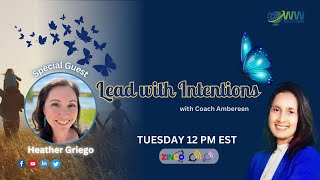
Transcript of a YouTube interview (Coach Ambereen interviewing Heather Griego) about intentional living, self-care, high-performance coaching, and family dynamics. Heather describes using "Guiding Lights" (daily intentions), simple self-care practices (short meditative "pit stops"), planning routines for busy families, and supporting children with ADHD and hearing challenges. The conversation closes with rapid-fire questions, contact details, and program/playlist references.
Chapters
Foreign Day to all of you. Thank you so very much for tuning in and watching us as we come here every single week to serve you with people who are leading intentional lives. My name is Coach Ambreen. For those of you who do not know me and I am super passionate about working with families and the youth. As we come here every single week, it is no doubt that we want to go ahead and welcome you to Spanglish World network and Xingo TV channels 250 and 251. Please remember to download that app. As you are downloading this app, go ahead and leave us a review. Let us know what is going wonderful and what we can do to tweak and improve the experience just for you. While you know this app is free. Recognizing and realizing that it's not only available on your iOS devices and your Android devices, but also across all of Google Chromecast, all the amazing fire sticks and Amazon products and the Roku products as well, you should be able to stream this app on any TV 2016 and on forward today. I am super excited to share with you a wonderful human being who I actually got to know through a very close and intimate mastermind. And although she is many things, Heather Grego is a visionary founder of Wellness recreational 360 and she is committed to peace to serving people and their well being. With over 15 years of experience at recreational therapy and leadership, Heather brings a wealth of knowledge and and expertise. Her background in leadership, mental health and animal assisted therapy allows to address diverse challenges and what she wants to do is actually empower individuals to break through their own barriers and achieve extraordinary levels of self success and well being. Welcome. Welcome Heather.
Thank you so much for having me.
Hey hey hey. So as we start the show one of the things I'd like to ask is how about you take the time to tell us who you are.
Yeah so I have been a certified high performance coach for over a year now and just been loving the journey. Like you mentioned a lot of the background I have is within mental health and recreation therapy which just paired in really nicely with the coaching world. I am very happily married and have two kiddos that are 10 and 8 sometimes going on 16 but as kiddos are. But yeah and I have a service dog that I use to do animal assisted therapy, go into group homes and crisis homes and I actually use the dog in at the kiddos school too for some of the kids who have a hard time with like the lockdown drill and you know anxiety, stress and things like that. So it's been Great. Being able to use my coaching skills just very diversely in all aspects of my life.
Yeah, I love what you said because it is true. A lot of these lessons that we learn, the skill set that we have, are so important in just every part of life, right. Whether it be a mom, whether it be on career path, or whether it just be in relationships in general. Okay. So for you, Heather, what does it mean to live an intentional life?
That's such a good question. And this is actually something that I've been just really highlighting in my everyday life, is coming into situations, and before I'm going into the day, just starting that day with intention and having something that's positive, healthy, that just kind of helps guide me. One of my really good fellow coaching friends, she recently taught me about Guiding Lights. And so that's really been a big part of just helping guide me through having intention and being able to lead a life, lead a moment, even with some of my best intentions. And so one of my guiding lights is to be joyful and intentional and to be able to do so in a way that protects my energy and has boundaries so that I can help to show up best for me and serve those around me.
Wonderful. So I love everything that you've said, right? Who doesn't want more joy in their life and more direction and more intentionality? But for those of us who have no idea what you're talking about when it comes to Guiding Light, can you help the audience members who are so beautiful and amazing to show up here? What does that mean? How can they themselves create Guiding Lights so that way they can live more intentionally?
I love this question, and this has actually come up several times for me lately. So this is a fantastic question. For me, Guiding Lights are just things that I've chosen to help guide me and create those intentions, to, you know, live each and every moment. And those are going to change, right? Because as our seasons change, as things come into our life, whether they be challenges or joys or joyful challenges, as. As things come up in our life, our intentions change. And so having something that helps to. To just guide that and create an intention and say, okay, I'm gonna like this TV show, for example, I'm gonna show up to this show with. With joy, with vibrancy, with enthusiasm, and just saying a couple of words to myself before the show just helps to bring that forward in. In the conversation, in my behavior, all that stuff. So just choosing something, whether it's a word or a feeling, that you can go with so that when you're going into your next thing or next part of the day or your next chapter, maybe choosing something that helps you lead with an intention that you want to bring forward. Because, you know, a lot of times we let our environment create our intentions and influence our behaviors, our. Our feelings. And a lot of that's normal, right? We're human. But being able to bring your own intention forward is really where you're going to make that needle moving change.
So for those of us who are running away from those feelings, right? Because a lot of times we are so sucked up by the, you know, the environment that we have by the situation that we're in right now that we don't really know how to get out of that rut. So what Heather just told us, you know, and for all of you who are listening, I'm going to take a pause and say, make sure that you've got your notebook and your pen. I'm looking down, but it's not because I'm ignorant. Oh, I gotta drop, you know, drop that down and make sure I have that in my notes. Is these Guiding Lights are basically like your North Star. It doesn't have to be something so, like, so robust and so like vision based. It. It's literally learning and reminding ourselves as humans to feel again, to say. Yeah. You know, one of the quotes that I often think about is like, this too shall pass. Yeah, right. When you're on this emotional high, you're like, yeah. And then it kind of. You're like, okay, well that's gone. And you're like, oh, well, this too shall pass. So reminding ourselves that these are basically anchors. I love that. I love how beautiful that is. And, you know, the fact that you just like myself, do those daily intentions, you know, because I started off the show saying, I hope all of you are having a mindful day where you're able to just recognize the thoughts that are in your head and really choose the ones that are going to serve you and really not pay attention to the ones that are not right. To kind of and to not be in a loop. Now tell us something personal about yourself, Heather, so that way myself and these amazing audience members can get to know you a little bit better.
Oh, yeah. Okay. One thing that's personal, I could think of probably a whole bunch of things, but okay, I'll go with this. So for many, many years, I was a competitive gymnast. And so I got all the way up to level nine, which level 10 is like collegiate, you know, going towards Olympic level, that it's very, very Challenging to even get to that point. I never competed as a Level nine, but just qualified to be able to be a level 9. I was about 20 when I considered myself retired because my body was just done. But a lot of the foundations that I learned in gymnastics, the perseverance, the motivation, the just ability to practice something over and over again and really get it just right. You know, they aim for that perfect 10, right? And that's actually something that I've been trying to just have more of a balance, is not having that perfectionism, but just being able to practice in a way that is leading towards progress and not perfection. So it's a bit of a mind shift for me that I've been working on over the last many years. But, you know, a lot of those foundations that I learned in gymnastics has really been a huge pillar in how I show up today. And I would say definitely something that shows up a lot in my coaching practice, both as someone who gets coached and someone who provides coaching. So huge kudos to my parents who spent many, many, many hours on the bleachers and lots of money towards me being able to do gymnastics and then be able to bring it into my coaching life. And, you know, even as a parent today, it's. It's something that really, really was, really was profound in my life.
Yeah. So, I mean, what I'm hearing is, like, you are somebody who is, you know, in a state of gratitude for that experience. The fact that you're championing and saying, you know, thank you, Ma, thank you, dad, for not only, like, taking me, like, physically driving me to these places, but just being there in, you know, with your energy, to know that this is something I want to do. The one thing that you said, which I want to dive in deeper because I think it's something that's going to serve many of us, right? The people who are listening and then alongside with myself, because often you said, you know, you aspire and try for that 10, that perfection. But what I have now done is shifted this mindset to be one that says, is there progress? Why is that important?
This is a really great question. You know, perfectionism is something that I think a lot of us, we battle with, trying to just be perfect and show up with, you know, flawless. And at the end of the day, we are humans, and that's not possible. And so when we're striving for that perfection, we're actually setting ourselves up for. For failure because we're trying to achieve something that really doesn't exist. And, you know, I would say too, the most, most of the time when you get something just perfect, then you're like, now what? What do I do? Now I've reached that goal and, you know, the plateau has settled. So even though I think a lot of us think that we want things to be perfect, I don't think we actually realize the challenges that come along with that. So that's why I like to shift instead of showing up and trying to be perfect, just trying to put in my hundred percent best effort. And that even is going to change day to day, moment to moment, because my effort that I'm putting in today is definitely different from last week when my son went through. He was at school and he went through a little bit of a traumatic injury where he just split his knee open. We had to go to the ER and get stitches. And so the days following that, for me, my effort and my energy was very low. And so being mindful of that and being able to pay attention to that and show up with just more ease so that I'm not demanding that perfectionism, I'm not trying to do all the things that I would normally do, which I tried to for about a half a second and then realized, what am I doing? This is not. I don't have the energy for this. And I'm still emotionally and physically recovering from the lack of sleep, from just the emotional turmoil that I was in and seeing my boy hurt. So being able to just give myself a little grace and some patience went so far. You know, I took it easy. I took a bunch of things off my plate so that I wasn't trying to get all the. To do things done. I took things off of last week, put it onto this week, right? And this week it's tons better. I got better sleep. You know, the worst of it is over, and so we don't have to. I'm not dealing with the same amount of low energy that I was last week.
So.
So being able to have my 100% best effort today is. It's still my 100% best effort, but it's different from last week. And being mindful of that and knowing that we can give ourselves that grace, that patience, just taking it easy so that we can move through the days and the moments, it just makes a world of difference.
Indeed it does. And I think that's something we talk about often, is this concept of self, compassion and grace, right? The way if you're. If your friend were to, you know, go through a difficult time with the same situation, you would be like hey, you know what? You haven't had sleep. It's been a lack of sleep. And I am one who can attest to that right now. I literally was journaling in the morning, like a deep dive, like, what is happening? You don't have the energy to do the things that you did. But it's because I'm fasting. But then I'm also hosting and all the kids are home this week. So this week has been like a mumble jumble. And we've had three marathons of just like hosting these huge events, like 30 plus people every single night. And then you're like, oh, now I have to stay up at night and pray and, and worship and all these things. Because when the Ramadan is here for us Muslims and when you think about all these things, you forget that. Yeah, your capacity right now is not what it was, you know, at the beginning of March versus now because the routine's completely messed up. I mean, I gotta wake up and my kids, they all have to wake up, you know, by, by five o' clock in the morning.
Wow.
That way we can all eat right before we actually have the intention to fast.
Right?
So I love what you said and I think that's key. So for those of you who are listening, I really want you to understand this concept of grace and self compassion the way that you would, not only to your own child, but to like your best friend to that person who you're like, man, you're, you're so amazing. Just like loosen up a little bit. Don't let, don't set yourself up for failure. And I think that will really hopefully start to shift the way that we treat ourselves, you know. So tell us a little bit about, you know, your family dynamics. Share something in, in that area where you think that can benefit every single person who's listening in today.
Benefit every single person. All right, I'll try. So like I said, been very happily married to. He's actually my high school sweetheart. So we've been together for a really long time and our kids are 10 and 8. So we have daughter is the oldest and then son is eight. And then we have our dog Whim, who is also is. Well actually she just turned nine. But it's easy for me to remember that her and my son will be the same age, you know, a couple more months and then he'll have his birthday too. But yeah, family dynamic wise, my kiddos, they really like to do sports and activities. They love to, they love to just play games and have family time. My Evenings right now are very packed because both kids are doing different sports and so, you know, busing them over from one thing to another between practices and games and things like that and, you know, just being able to hubby and I trying to tag team and, you know, drop this one off over here, pick this one up over there and also be supportive and show up to all the games and have each other show up to the games. You know, sometimes there's a lot of challenges in there. One challenge in particular is what time are we going to have dinner? When this five. This game is at 5:30. Right. So we're doing a lot of prepping beforehand, just packing snacks and having things ready to go, sometimes grabbing something on the way from one thing to another so that, you know, everyone's fed, everyone's nourished and can show up for their things. I told my kiddos before we went into this busier sports season that they should have activity bags packed and ready to go so that when they're going to each other's practices and games, if they need to take a break or they want to do something on their own, that they have something that they can do. So my daughter has her backpack full of colored pencils, markers, coloring books and beads and, you know, all kinds of things so she can switch gears. And books, tons and tons of books. My kiddos both love to read. So, you know, family dynamic wise, it can be challenging then to then come together and have that family time because we're going from one thing to another and, you know, packing this and, and scooting on to that. And so we're just trying to like anyone, trying to make the most of what, what we have. And also when we do have those times where there's no sports, like last night we had no sports, so we got to have family dinner together and then after dinner we sat down and we played a game together. And just being able to make the most of that time, it just means the world to us. It means the world to them. And I feel like it sets up some really good, healthy habits for everyone.
Yeah, I love the fact that you're kind of diving in to say, well, it's not just one thing. It's so many things that are coming down the pipeline, you know, for us. But success is determined by the planning that you do prior to 100%.
Oh, I love that.
Yeah. And I think many of us kind of get stuck when it comes to planning. So, you know, as you are a coach, you know, as you are somebody who really Wants people to shine and rise into their own wellness. What is. What is one thing that you can teach us today with respect to how to just take a little bit of time to plan better?
Oh, that's a good question. How to take time to plan better. Well, what I like to do, and I would say it's different for everybody because it depends on. Depends on how you work. So I'll share what works for me. And what I find is that when I hear something that works for someone else, I'll take bits and pieces of. Of what other people are doing that you know it's working for them and think, oh, I like that, and I like this, and I'm just gonna put it together and kind of create my own thing. So I always like to go with the mind frame of take what works for you and leave the rest. So what works for me and my family is that usually on Sundays, we'll talk about what's going on for the entire week. Monday, Tuesday, Wednesday. Right. And the things that they're gonna have to have ready to go. There's no way that anyone can remember every single detail from Sunday to Friday. Right. But it just kind of gives an overview of what to expect for the week. And then each day we'll talk about what they have to have ready for the next day. So on Sunday, I have them lay out all their school clothes for the week so that it's not something that we have to run around and find socks and shoes and, you know, shirts and whatever else. And I also have them pack their lunches the day before. I've tried to encourage them to pack their lunches for the entire week so they could just grab and go. And it's not for them. And again. Right, that works for me. That's what I love to do, is pack four or five days worth and then just grab and go. But for them, they'd rather pack the day up so that that's fine, that whatever works for each individual is totally good. And then. And then once we get home from school, just getting those things ready to go. So depending on what sport it is, what team color they're wearing and whatnot, you know, their activity bags, if they want to change things out or have, you know, right now it's a little bit colder. So when we're going to things that are outside and being in sports outside, bundling up and having those layers ready to go. So I think for us just being able to talk about it ahead of time, prep the things that we can ahead of time, and also, you know, just lean on each other to go over a checklist of do you have this? Do you have this? Do you have this? And you know, oh, hey, don't forget that. So that that helps because we can all just help each other out and make sure that we can try to get on the same page. Of course, we always forget something, right. There's something that always slipped through, slips through the cracks and then you get to the corner and you're quickly turning around and driving back to the house two seconds later. But, you know, I think everyone is just doing the best that they can and with what they have.
Yeah. So it almost sounds like communication is something that's really important for your family. But then you follow that up with, with planning to say, hey, you know, the both of you have practiced at the same time. So listen, like, be ready because mom's literally gonna come home rushing from work and they're gonna take you, or like vice versa, whatever it is. Right. And I love the fact that, because you and I both know in high performance coaching, one of the biggest things that we talk about, this concept of like prepping for the week, you know, taking that time out to do that, now that we're talking about your kids, you know, I really wanna understand a bit of what are some challenges that you think that they're facing, you know, in their everyday.
Well, I would say the biggest challenge my son is having is sitting. Sitting, just sitting. Because he's in a position right now where he's got his knees all stitched up and he is, he's an active kid. If he could spend every moment of every day outside, he would be the happiest little camper, quite literally. And right now he's limited in what he can do. And, you know, it's only for 10 days, but 10 days in the world of an 8 year old feels like an eternity. So trying to help him find other things that he can do to occupy his time when he's at recess, when he's, you know, got some downtime, things like that, it's been challenging for him to, you know, and it's been frustrating. There's been a lot of tears and sadness because he feels like, you know, especially every day that goes by, his knee closes up a little more and he's like, but I'm feeling better. And you know, I'm like, yeah, right. But we don't want to bust the stitches open and do this all over again. Right? Because we just need to get through 10 days of being able to Relax and let our bodies heal so that you can move forward and you can, you can go run and jump and play after you're healed. And that's really hard for him. And it's, you know, being active and being involved in all these sports, that's a huge part of who he is and the things that he loves to do. So that's been, that's been a very big challenge that he's just learning to navigate. And for an eight year old boy, you know, it also brings its challenges of just being able to understand that, okay, I really have to take care of my body right now. I mean, even as adults, right, we're, we struggle with taking care of our bodies. Right. And so for him to wrap his mind around being able to really set aside the time to heal, there's. It's been hard.
Yeah. I think that, you know, the ending is just what you said, right? Healing. And healing can be in so many forms. Right now we're talking about the physicalness of healing, right. The fact that he's done something to his knee and, you know, there was an emergency that happened and mom had to deal with so much trauma and dad is like, what's going on? And now the kiddo's like, but really like, I'm, I'm good. Like, knowing the kids, they're like, yeah, I can jump and, you know, I can jump and play. Yeah. Not my 100%, but then mom always says 100% is different every day. So maybe like.
Right, right.
I love how they like loop in ways to be like, let me just kind of like test and see what's possible. But the key is healing. And healing comes in so many different forms. Right. For us, what have you seen in your own experience, you know, with your own practice that the people that you're serving, how do you help them heal? Heather?
Oh, man. That's something that I think we all have struggles with and that changes as we go through these challenges and these hardships in life. Because the healing aspect, it's going to look different with every challenge and with everything that is really difficult in our life. So I think, you know, the thing that really helps the most is just being able to reach into that, you know, metaphoric tool bag of what you do have at your disposal. The coping mechanisms, the things that have helped you in the past, and using those first and seeing if what helps and what doesn't and if it's not helping. Right. That's when you have to learn some new coping mechanisms because each situation is different. And requires a different set of coping mechanisms or skills that you can utilize in order to just help yourself get through the moment or get through the challenge. And some challenges, they're. They're bigger than others, right?
Not.
Not all challenges are the same, and therefore not all coping skills are. You know, it's not like a one size fits all. And. Well, I used this five years ago. Why is it not working now? Well, like I said in the beginning, we go through seasons of change. And with each season of change, we're learning, we're growing, we're developing, and we're finding out a little bit more about ourselves each and every day. And from these challenges, from these hardships is also where we have the opportunity to experience a lot of growth. So when I'm working with my clients and they're just having. Having a really hard time with, you know, getting through those breakthroughs, those real big, challenging moments, you know, it's. It's a lot of detective work and asking questions and trying to tap into how it is that you're feeling. Where is that showing up in your body? And that'll give you clues as to what. What you need to do to take those next steps. For example, one of my clients said that they just wake up every morning feeling really anxious and maybe had a good night's sleep and don't really know why they're feeling anxious. And so one thing I suggested was to just start a journal in the morning and just brain dump and get everything out, because maybe there's some residual feelings from yesterday or last week or a year ago, something that happened, and it still. Still sitting in your body. And our bodies are amazing. They tell us things all the time. And we just have to find what it is that it's telling us so that we can figure out how to move forward and what to do next. So if you're. I love this phrase. Somebody said this recently. If you're wearing your shoulders up by your ears like earrings, that's a. That's a. That's a clue to just take a few deep breaths and relax. But I love that visual of wearing your shoulders like earrings because. Yeah, how many of us walk around like this and then we're like, why is my. Why are my shoulders so tight? Why is my neck so tight? Oh, because I'm holding all this tension in my upper body. I need to breathe. I need to take some. Some mindfulness moments and just let my body settle.
I love that. I think really understanding that life isn't what it was. It's one of the most important things I think we as humans don't realize, right? Like, no, like, before, I could just really up my workout and get rid of some of the stress, right? Like, I was working out twice a week. I would go up to three or four times a week, or I would make it more rigorous. I would go at it faster. And you're like, well, it's not working now. What's going on? So our body does. It does keep track of everything that we do. And, you know, I just finished this book, and the brilliant thing about it is, like, your subconscious mind will remember every single thing, but we really don't remember every single thing. So it's like a database, right? Just keep stacking on top, on top, on top.
Oh, I love that. A database. Yes.
And it compartmentalizes, okay. Like, family's here, health is here, personal is here, problems are here, people are here. And it gives us, like, so much information. But quite honestly, it's. What you said is like, we're not taking that pause to reflect and dump. And when you dump, I think this, when you are able to, like, you know, follow those breadcrumbs that you were talking about, like, see the feelings that are coming up with the questions and see the triggers that are actually coming into, you know, into fruition, and then you can actually tap in to reverse some of that. I think that's. I think that's great. What about. What would. Is something that you would say as a family? Because you've painted this beautiful picture of your family, and I. And I really love it when there is a successful family, right? Because for me, being a family driven coach with, like, two kids, you gotta. You got youth like you. You guys are all functionaling and doing what we would say is a life that is just brilliant, you know, and that happens with planning. But there's a human element to all of us, right, Which a lot of times I think doesn't come up. And so one of my intentions with the show is to bring all of you to our. To our audience to say, yeah, like, Heather's got herself put together. She's married her, like, high school sweetheart, she's got two amazing kids. But what is that biggest challenge that you see your family is facing right now that you want to share with us?
I think the biggest challenge is being able to work through some of the mental health aspects that my daughter and my husband are facing. They both have adhd. And my daughter's also has some hard of hearing. She had. She had some ear issues when she was younger and had a few surgeries to. To try and help correct the hearing. And, you know, it's just been quite a journey to try and navigate through that. And in fact, actually just yesterday we had a meeting with her school to just, you know, all show up as a team and figure out how can we best help her in her education and set her up for the best success possible. And she always, she's so insightful and very, very just wise beyond her years. And she's great at being able to say, this is what's working, this is not what's not working, and maybe we should try this. Right? She's. She's awesome at that and very admirable that she can do that at just the age of 10. But, you know, sometimes it gets really challenging to manage all these things. And, you know, for me as the mom especially, you know, I tend to remember things better. And two people with adhd, they tend to forget. And so for me, it's a lot of repeating. And then you add in the hearing challenges, it's a lot of repeating. And it can get frustrating as a mom, as a person to constantly say, well, I told you, remember? Right. But that's something that they struggle with. And so for me, you know, it's hard to be, you know, the brain for everyone, where I'm like, okay, I can't remember where everything is all the time, even though a lot of times I do. And so they'll come to me and where is my watch, where's my book? And, you know, I can tell them, oh, it's here, it's here, it's here, it's here. But, you know, that gets. That gets really exhausting. And I just want them to be able to do that for themselves. But it's. It's not always doable and possible. So being able to remember on a regular basis that there's life happening, there's mental health challenges that we're all dealing with, and that plays a role in the family dynamics. Like I said before, our evenings right now are just really busy. And so being able to try and keep things organized and in a flow comes with some stress along the way. And managing all that, it can be really hard.
Yeah. Well, thank you for being super vulnerable because I think it is true a lot of times we don't spend enough time on that mental health element. Right. We're just like, right, I already told you, like, figure it out. Right. But what if you were to use maybe like a calendar, like a monthly calendar that the whole Family could see to. To really drag down the, you know, the activities that are happening.
I love that.
And what I've seen is like, now you're not repeating yourself. You're just like, wherever that calendar is that you're literally pointing. Right. And this way, I think it reveals, like, it alleviates so much of that frustration. The other thing that I'm thinking about when I'm putting on my own coaching hat, you know, Heather, it's what if you. For your family to set them up for success, so you're leaving some of the frustration off the table and not having to always. More than the brains. I feel like you're always in the service mode. Right?
Yeah. Yeah, right.
And you're always serving away. Okay. That's where the phone is. Or that's what the key is. That's where. That's where the shoe is.
Right.
Like, I don't need the couch. Okay. But you're making all these mental notes. What if you were to help your family and say that this is the spot? Like, this is the spot. This is where if I find your phone, I'm gonna put it here. If you are gonna leave your phone, leave it there. How would that help your family?
Oh, that would be great. Just to have a. Like a centralized space for, you know, all the things are going here. So if you don't. If you don't know where something is, check this space first. That's brilliant. I love that. Thank you. I'm gonna read that. Yeah.
And I. And that's what I often think, because I think as a mother, too, I'm constantly like, the sock is under the bed.
Right. But just one.
Yeah, just it has to be because the other one is somewhere else. So now you're like, okay, mom, like, mental load scan for the other sock. Right. Or be prepared that you're going to only watch one sock this, you know, this week. And so when you think about these simple ways that a lot of the. What I think is important is, like, the responsibility then falls back upon them. Right?
Yeah.
And I think, you know, especially when I'm working with my own youth group, you know, because I am launching more and more youth group, you know, adolescent group coaching programs. And this is like one of those things where it's an idea that nobody really knows or hears about, but it's coaching for adolescents. So anywhere from the age of 9 to 19, and what these kids are doing is they're coming together once a week, virtually. Right. And they're building a supportive and collaborative environment and giving each Other, like you said, tools. Right. Well, how do you cope with that? How do you cope with that? And then at the end of it, these kids have a list of stuff and we're really active. So it's not like you're just babbling. I'm literally like, here's the question, write down the answer. And then we're going to open it up and share. And you see camaraderie, you see community. And through that we're fostering another sense of confidence. Right. And another sense of building habits that are working or even something as simple as how do I communicate my message without sounding like a rude person. Right. And in the world that we live in now, I think, you know, the way that we grew up, we grew up with community. We'd have to go and find and search it. But these kids are so, they have such a different upbringing. Right. The world has changed. Technology has influenced so much of who we are. And so, you know, for anybody who's interested in just learning more about the program and understanding how you can serve your own children, because I think as parents, what we often are like, well, how do I even get my kid to listen? You see this kids, you see the QR code, scan it and just book a free call with me. And this way we just dive in, answer a few questions so I can get to know you and your kids a little bit better. We hop on a 30 minute call and then it's just literally like, oh, well, this thing can work or maybe this program is not right for you. And I love the fact that all of this is kind of like what you said, checking in those tools and seeing what more do we need and then being the support. Right. Because often we don't know where to raise our hands.
Yep.
You know, and these small little shifts can really change the bigger picture of how these little humans become adults and how they actually serve the world and change the way that they're living by themselves. What would you say is the one change that you want to see in the world, Heather?
I only get to pick one. You know, I think I'm a huge proponent of self care. I love what you talked about, being able to simplify things. I'm always trying to just simplify things, simplify processes in life and things that we're doing to so that it's not this complicated multiple step thing. And within that, just being able to, just being able to do that self care for ourselves. And I'm such a believer in putting yourself first, putting your needs first so that you can better show up for everyone else around you. But it has to start with you. It has to be something that you show up for you and you fulfill your needs and you fill up your cup. In fact, embryon, I think you said this multiple masterminds ago. You know, you talked about filling up your cup so much that it's overflowing and then you use that overflow to then help and serve other people rather than continuously depleting yourself. So I always like to think of ourselves as a battery, right? Just like our phones, we have to constantly plug it in and charge it because we use our phones all the time, every single day. And a lot of times, you know, they have all those fancy batteries now you could just clip onto the back of your phone or you know, we have all these ways that we can on the go charge our phones so that we can continue to use it. But we forget to recharge ourselves and we forget to do that same self compassion, that same self care for ourselves so that we do have enough battery, we have enough energy to continue to do all the things around us and serve all the people around us that we want to serve and help. So being able to put yourself first, do those self care things first and foremost so that you can keep and then keep doing them throughout the day. It's not like a one time thing, like okay, I did my 10 minutes in the morning so I'm good throughout the day. That's not how it works, right? Remember like that battery charger for your phone, you have to keep plugging it in because you're continuing to use it and we're continuing to use ourselves and use our energy so we have to keep recharging. And all you need is just two minutes every, every hour or so. Two minutes. Take a few moments to take those deep breaths to center yourself, to ground yourself. That's all it takes. And it's the easiest thing for us to forget because most of us, we just get stuck in the service mode, right? I mean your mom, you, you know how it is to just keep, keep giving and giving and to, you know, be able to manage all the things and all the people and all the calendars and you forget about you. So I think if we had, if we all did some more self care, the majority of us would tend to be happier. And when we have happier people and happier communities, you know, it's that ripple effect, right, where we then have these happier things of support around us and our environment overall is just more uplifted and inspired.
I mean I think it's brilliant, right? The fact that you're saying, take care of yourself first and thanks for remembering months ago what I had said. But it is something that I really think I've tapped into. Listening to the wise people all over the world, you really realize that their wisdom and their success comes from the standing of self care of putting themselves on a list. So my coach told me once, she was like, umbreon, you don't have to be first on the list every single day, but you got to make the top five. Like, you have got to make the top five girl. And I was like, top five. Like, are you serious? I'm serious. And so when you were talking about these two minutes, let's call them pit stops, right?
Oh, I like that.
Stops every single hour. Why did you start to practice that? Like, how did that become something that became a habit for you or that was important enough for you to say? No, I deserve, I deserve that time.
For me, I just got to a point where I was constantly stressed. I was wearing my shoulders like earrings, right? And I had tension headaches because my neck would be so tight. It'd get to the point where I couldn't even move my neck side to side. You know, I'm driving and I'm moving my body and instead of just turning my head and it just got to that really extreme place where I knew that this was not healthy and I needed to do something different and I needed to do it now. And so I started just doing very small incremental things. And I start my day every single day off with, with a meditation, you know, hit that alarm, snooze off, and I just take a few moments to just set the intentions for the day and take a few deep breaths for myself to really ground and center myself so that I have a powerful start of the day. And when I'm able to do that, I'm able to then start off a little stronger. And so throughout the day, being able to remember, oh yeah, I need to just take a few minutes and take those deep breaths because my earrings are. My shoulders are up by my ears again, I'm wearing them like earrings, so I need to bring them down and take those breaths. When I noticed, I start getting snappy at the kids or my husband and just recognizing that that stress has built up so much again, right? We talked about being able to read and tell what those signs are in our body. In our bodies. And recognizing that, oh, that, that's a sign for me, that's a warning. That's A huge red flag waving around saying, stop, stop, take a breath. So, you know, I think that with any of us, it always gets to the point of this extreme where we're like, oh my gosh, this is so unhealthy and I don't want to keep showing up this way. And so for me, that's exactly what it was. I knew I needed to do something different so that I could. So I didn't want to be that parent, that person in the world that was snapping and stressed out all the time and having tension headaches. And I wanted to be able to be healthy and clear minded so that I can just better help everyone else.
I think that's, that's what a lot of women, I would say, even men, many men, I would say, because growing up in the culture of Pakistan, I don't think men take care of themselves either. I think that other people take care of themselves, but they don't take care of themselves. Right. And I think understanding that as humans, these habits are something that we need to instill for our own sanity and for the longevity of the people that we want to be in the, you know, and the way we want to impact and lead and serve. I have this amazing practice of my own kids, like every. It's so fun to even say it out loud where my kids are old enough, right, where they can get up on their own. But the one thing that I have noticed that really sets them up for success in the morning time is I physically go and wake up every single one of them. Wake them up. We say a little prayer in Arabic or I say it in their list. And then we say, literally say, I'm happy to be alive today.
I love that.
Because no one's guaranteed another moment along the day.
Yeah.
And so my sons. And I'm like, well, am I really though? Am I half asleep? Are you not? And then we dive in and we, I will just say like, you know, three things that they're grateful for, I'm grateful for, but make it a collab, right? Like, I am so grateful that I get to, that I get to sleep on this mattress, right? And these. And then we do end up by just saying, today I'm the best version of me. And, and the days when it's like a little bit more like, rush, rush, go, go. And then after they get five minutes, they all get five minutes to unwind and to mentally prepare. But what I've done is planted a seed in their head to say, oh, we know how the day is going to start. Like, we know how today is going to be. It's a blessing. And I love what you said is about, you know, waking up every day and for you, you know, when we think of meditation, people are like, oh, like 10 minutes right after you wake up. Like I'm already half asleep. What if I go fall back asleep? But you're like, no, literally like an intention with a couple of, you know, a couple of deep breaths. That's so much simpler, you know, for everybody to, to practice. You know, this has been a very beautiful, I would say, trans transaction between myself and you and I love spending time with you as, you know, like we, we, you know, we've been homies for a little bit now. How do people who want to work with you and get to know you a little bit better, Heather, how do they get in touch with you?
Oh, great question. So I have a YouTube channel. It's Heather at CHPC for certified high Performance Coach. And then on Facebook It's Wellness Recreation 360 and LinkedIn. It's just my name, Heather Griego. So either one of those you can get in touch with me or my website@wellnessrecreation360.com.
Yeah, so I think that's, that's simple enough. I think even if you like search up Google and just said, you know, hello, chpc, I'm sure she'll pop up everywhere. She is doing a lot of work. She creates a ton of content. And when I watch her content, I feel a sense of tranquility because I'm so like high energy. And you're just like this calm, serene. And I was like, okay, even for that two minutes that we're talking about to recollect, you know, like to bring our center back, I will go and I'll just watch a few things and I'm like, oh yeah, that does bring a very different energy into the game. So now we're actually almost near the end and we have this tradition of what we call the intentional rapid. So these are rapid fire questions I want you to answer in just a word or maybe just a sentence. Okay. What do you want to leave behind for the world, Heather?
You know, I think it's just, I think the last thing I said is the most prominent is to remember to show self compassion for yourself and to take care of you.
Wonderful. Okay. How will you know that you've lived an intentional life?
I think by just how it's showing up for you and you'll know by the way that everyone else is responding around you.
Okay. If you can create one law in the world that everybody had to follow, what would that be?
To a law to just enjoy life and to just take every moment as something that you can be grateful for and enjoy.
All right. Well, for those of you who have tuned in thus far, I thank you so very much for coming here and listening to how you also can lead an intentional life and really look at how intentional you already are to give yourself a credit for how amazing and wonderful you are to just be alive and things that you do which you may not take into notice, you know. And for those of you who are here thus far, if you want to get in touch with me, I am just coach and breen on any social media network and platform and and you can DM me, you can click the QR code, set up a call and we can dive in deeper there. As we are coming to a conclusion of this show, I want you to know that Spanglish Radio Network can also be heard on Spanglish TV can also be heard on Spanglishnet Radio Network. Please check out Spanglish World CA for all the news and the programming. Spanglish World. Watch it, hear it, read it, download it. Most importantly, live into it with intentions to better yourself. Thank you so much for tuning in. Stay blessed.
Thank you.










