Lead with Intentions: Judy Ryan ~ Empowering People
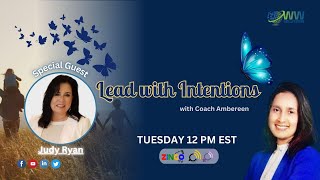
Judy Ryan applies Adlerian psychology to families and workplaces through a shared-power model that builds safety for authenticity. She teaches concrete tools like mind trust to stop gossip and a three-part frustration tool, and connects family practices like responsibility-based meetings to organizational culture change.
Questions this video answers
July 31, 2024
lifeworksystems.com
Chapters
Beautiful day to all of you who are showing up here. Welcome to Lead with Intentions where every single week I, your host, Coach Ambrain shows up here ready to serve you. It is truly an honor to cross paths with you today and I want you to know that I appreciate you taking the time out to prioritize yourself and most importantly, sharing the most valuable commodity in the entire world, which is your time. Welcome to Spanglish World Network and Xingo TV channels 250 and 251. Please remember to download the Xingo TV app on these respective app stores. IOS, Android, Google Chrome lineup, Roku lineup, Amazon lineup, wherever you can think about it. We're available alongside with any TV Smart TV 2016 on forward. As always, the app is completely free of charge, so please install it. Let us know as you're downloading it. What are you enjoying about the app? What are some things that we can do better for you so that way we can make experience one that's perfect for you and your loved ones. Lead With Intentions, this show that you are here watching set out on expedition to allow us to discover the best of who we are. And as we do every single week, the intention here is to bring forth people who are bringing the best of themselves by living intentional lives. Today my guest Judy Ryan is no exception to this beautiful and amazing, you know, I guess overview. Judy's mission is to create a world in which all people love their lives. Sounds beautiful, doesn't it? One of our missions is and our visions in life is a fulfilled intention and in partnership with like minded people, heart centered innovatives, which I love hearing about thoughtful leaders and world change agents. You know, these are people who are really just ambitious enough to say let's change the status quo, let's do something differently. Judy believes, as many of us do here as well, that women are rising at this time and to create a balance that includes a new way of modeling what it looks like to have support spread, especially in this domain of power. Right? How do we actually create power within power together? And first of all, power in a way that is leveraging creativity, boldness and the changes are necessary to make this world a better place. Welcome to the show, Judy.
Thank you. I'm so happy to be here. Umbream, you're very gracious.
I mean I heard a lot of things about Judy. So Judy came on my radar through other individuals. They were like, hey, hey, you got to invite Judy. And I was like, who is this Judy? Let's find out, who is she? So let's open the floor and ask. Let's ask that simple question. Judy, tell us something about you. Who are you and what is it that you do?
Well, I would say I'm a bit of a soul sister with you because I really believe the most important thing in our life is to be intentional. And it's really interesting because when I go into client sites and we do a workplace culture change, we do a whole segment on identity, identifying what you're here to cause, your purpose, and what are the core values that serve you in living that. And we get more pushback in that month than any other month. And I think it's kind of because people are afraid they can't live up to what, you know, what they're really here to do. But the reality is if we all had the right support, we would be able to cause that purpose. And so a lot of people, I think, are just so afraid of that power because they've been kind of taught to be ashamed of their power.
So.
I know that's a really long answer.
Oh, no, no, that's a very short answer. I usually get a lot more. So you've kind of chosen, you know, an area to focus on, you know, in this conversation of workplace culture. And so walk us down, you know, like, let's say that we're working together and, you know, what is that you're doing in these environments where you're going to serve and allow people to discover what it is to live a little bit more intentionally in their, especially in their, you know, in their career paths?
Well, it's really interesting because in studying you and seeing your involvement with families, I believe that culture is something that begins in the home. It begins it also in schools. It happens in our society. And so part of what we're doing is our model is called a responsibility based model. That is purpose and value based, but it's also a shared power model. So when I was raising my five children, they knew how to run a family meeting by the time they were five years old, because we would rotate the family meeting leadership position. And we did a lot of unorthodox things. Like we learned how to redirect misbehavior instead of punishing it and bribing it and enabling it. Well, what else is there? And we also did things like we would teach them, especially the first older four who were close in age. We would teach them how to go to the grocery store. We would take them and train them and how to stay on one side of the aisle and how to be respectful and how to, you know, be secure in the money and grocery list and all of that. And we would then drop them off after they were trained to do that by themselves. Now, nowadays, I'd probably get called in by the police or something. Yes, you would.
Like, what are they doing here alone?
It was so powerful for them because they would get to the checkout and the person would say, where are your parents? You have $250. You know, and they're like, well, we've been trained. We know how to protect the money and how to make sure we don't go over the budget. You know, they were just really empowered. And the reason is that the model we use, it's all about transferring responsibility to people at every age, in every role. And you can't do that by just talking it at them. They have to have experiences of feeling empowered and connected and contributing and lovable. In other words, seen and heard. Yeah, yeah.
Now how did. Because now, I mean, you're doing research on me, so now I want to find out how did that idea come into your mind? And when you're saying we can you let all of us here know who that we is?
Yeah, my organization, I've been in business for 22 years. But even before that I was a parent educator. So we have kind of got that in common. I stumbled upon a model based on the psychology of Alfred Adler. And he was born in 1870. It looks like you might know a little bit about him. Yeah. Because you were in Chicago. I got my training from the Adler Institute in Chicago. So a lot of people. There was a book written about Adler a couple of years ago by two Japanese authors called the Courage to Be Disliked. And it said that Adler was at least 100 years ahead of his time. And from the time I learned Adler, I felt the same way. I don't know about 100 years. But the reason I felt that way is that if you really understand the concept of people feeling inferior because he was the one that coined the phrase inferiority complex, then you would never do win lose with people because you would know that would just feed that inferiority complex which is at the root of all struggle, you know, the big and the little. And so when I stumbled across it, I was raising my kids and I went to a parent program based in Adlerian psychology, which is called individual psychology. And I absolutely loved it because it was starting to heal my own childhood, even though my childhood was probably kind of normal, you know, it wasn't real fraught with really big T trauma. But all of our Many people have been raised in traditional families where it's not so good for them. And so I loved it so much. I kept taking the program over and over. I remember the first day I went in and I said, this is my son, the biter. He was only four. And I put them in the little daycare. And the woman that was leading the group said, I'm not trying to scold you, but I just want you to know you don't ever want to say anything in front of your kids that you don't want to cultivate in them because they pick up on that and they start believing you. And even though I felt a little embarrassed, I was so impressed because she had that sense of honoring people at all ages. And I was pretty much that way, but I didn't. I hadn't really been taught how to do that. And so that's how I began, because not only was it healing my childhood, it was making me into a parent that I felt really good about. And as I got further and further into that world, I realized the same human systems that I was learning and how to do it in an application, what kind of behavior changes would be good for everyone, including people in a corporate environment, a nonprofit environment, a government environment, all environments. So that's. That's kind of how that.
I love that. I love how I think a lot of times, you know, as individuals, we talk about the inferiority complex or making sure that you're not going to be liked by everyone. Right. And that's something I think we, as a site, don't do a good job of. We try to assimilate with every single person and the way that they are, where we put down our own integrity to please somebody who in the long run, has nothing vested in us. Right. Versus our own selves. And I love the fact that you took the feedback and many of us would be like, oh, how dare she? So rude. Like, who gave her the authority to do that? But she was kind of in a very polite manner saying, hey, you're coming into this new territory, so it's time to step up.
Yes. Yes. There was a book I read recently in an interview that I would be happy to send you, Caddy K, who is an MSNBC contributor, and Claire Shipman, who wrote a book with her called the Power Code.
Okay.
And what they said in the Power Code is that the reason women are not more consistently and with equity in the positions of, you know, chief executive officer and all of that is because women approach power differently now. Not I. I'm Generalizing. Not all women do and not all men don't. But in general, men are conditioned to have sort of a power over power under dynamic and a win lose dynamic and a zero sum dynamic. And women really don't like that. I've seen women adapt to that, but it really costs them to adapt to that because they have to ignore what they know to be the kind of collaborative, supportive ways of showing up. I know a woman who is very successful and her mentor was a man who told her how to kind of step on people's next to get where she got. And she came to me and, and she knew that she could do things for the people under her, but she was afraid to give up what she had gained, which was selling her soul, of course. So it, you know, when, when I mentioned inferiority complex. If you study Brene Brown, I love.
Her, she's a homegirl.
She's saying the same thing. She's saying that if we don't deal with the shame that people feel, which is inferiority complex, then they're going to be, you know, addicted, obese, suicidal, come terrorists, all kinds of things. And when she goes to speak, people will say to her, brene, you're so smart and you're so funny, but how about you not talk about that shame stuff because it's a little dark and it makes people uncomfortable. And she said, that's why it's my number one platform. Well, that's always been mine because if we get that. So going back to the power code, the women want a situation where we're doing win, win, and we're doing power within and power with, power forward, power between and until. And they even say in this interview, until women are given the opportunity to bring a new kind of power into culture, they will not rise into those positions. So there's. I can't feel like there's a battle right now in the world between win, win and win, lose, and, and it's affecting the way we treat women or don't treat women.
So in an ideal world, you know, Judy, what would you say is that, Is that beautiful way of showing up for women when, especially when it comes to that power, to be able to say that, yes, I am the cfo, I am the CEO.
I believe it's the CEO. Oops, I think he froze up. Just.
I'm all of these things and this is the way that I look at power. I did. Keep going. I can hear you.
Well, in an ideal world, men and women would be helping each other together because I always think of men and women working together in a really respectful, safe, trustworthy way is like the wings on a bird. If we don't have the wings of both sides, both wings on the bird, the bird's not going to do so well reaching those heights. So. And I think what's interesting is that I kind of mentioned this before. I think a lot of people have been trained to be afraid of their own power and a belief that there's something wrong with them. And so in an ideal world, they start to realize there's nothing wrong with them. And that's a great. A much better place to start from. We always say, like, if you think of somebody that's in a gang and they go out and murder someone because it's required by the gang, the reason they would do that is because there's such a deep need in all of us to feel empowered, lovable, connected, and contributing. And if a person says in their head, the only way I'm going to get that is by joining a gang, because I'm not getting it in my home, I'm not getting it in my neighborhood or whatever, yeah, they will override their conscience and their fear of imprisonment. So when Adler psychology was introduced into some of the prisons, the amount of repeat reincarnation goes from the 65 to 75% range down to the 4% range.
Wow.
In the ideal world, we would all learn that. And part of it is they would go in and say to them, look, you're no different than me. Take yourself out of the monster box. I don't have you in the monster box. We all want to feel empowered, lovable, connected, and contributing. And you just thought you had to do this to get that. So wanting that is good. We just want to help you find a different way to get it. And so it takes them out of that monster box. And the other thing that's really huge is teaching people how their power is, what their power is causing others. So your organization is about living intentionally. If people aren't living intentionally, they're kind of like a bull in the china shop with their power, and they're not paying attention to what it's causing, good or bad. So when they teach them what's called social interest, that contributed to them not repeat offending.
Okay, well, you took me perfectly to my next question, which is, hey, I mean, I believe this floor and I love it. Okay, what does it mean for you to lead with intentional. To live an intentional life? Judy?
You know, for me, it is remembering that my intention is the best part of Me, who I came here to be. I'm also a person that believes in consciously intending to work on seeing our nobility. So every day I say some things that come out of a book called you're not Broken, which is very aligned with my work. Have you ever heard of that book? I'm read, I feel like I have.
But I've not read it.
It's really, really powerful. There's a couple of books by the same name, but it's written by a man named Duncan. His last name is Duncan for your listener. And the four things I say every day are, I love my life. Because even where I don't love my life, I have a lot of places I do love my life and it just reminds me to look there and then I always say I'm vital and healthy. Even though I can see places I want to improve, I can see the places I am vital and healthy because I have a brother in law that has ALS and he can't even raise his arms. Luckily he doesn't have any hair. But if I couldn't raise my arms, I couldn't even wash my own hair. So it's remembering where we have things that we love. And then another one is, I live my true purpose in nature. So I learn a lot about who I am, what is my human design, which is a system, human system. And I work to live within the truth of me and not try to be somebody that I'm not. And then, and then the last one that I have is that I'm the predominant creative force in my life. And it's true for everybody. And Adler talked about that. He said, we are self determining. We're creating our reality. We're trying to shape things to match what we believe. So we better, that's another place, we better be intentional because otherwise we will be unconsciously creating all kinds of crazy this. So that's what it means to me is to, you know, I think if every person only did one thing and it was to look at and celebrate every possible way they could themselves, we'd have a totally different world.
Yes, you are preaching to. I love it. I love it because I mean a lot of the people that come up here, they know that I am like, like the hype girl, like the cheerleader, right? Which people are like, you know, like we had a producer be like, oh, get ready, Ambreen's gonna unleash and unlock and if she's standing, it's gonna be even more exciting. Right. I think in our lives, you know, I've been There in my own life when I've hit a, you know, a threshold where I've lost all of me and will you lose all of yourselves or bits and pieces of yourself? Whether I've been the workplace, in the home, in a relationship, in a French. It doesn't matter where. It's because we don't see that that's who we are meant to be and we start to kind of hide those parts of us.
Yeah, Well, a couple things, Umbreen. I noticed that about you right away. Not. Not even just that you're a cheerleader, you are freely open hearted and like Brene calls it, wholehearted living.
Yeah.
I think a lot of us have been trained out of that and I find it to be very exciting and very helpful. And just like right now in our country, people are criticizing Kamala Harris for laughing, like, why would we do that? And part of it for me is also realizing that I don't have to be anybody but who I am and not try to. Like, I even have this thing I read every day and it even says things. You don't have to be attractive. You don't have to be agreeable. I love that one. I don't have to be agreeable. We've been taught we always have to be agreeable. And mostly I am, but I don't want to worry about it, you know, so it just is a reminder. But yeah, I think when I first started my company and I told marketing people that my mission was to create a world in which all people love their lives, they said, oh, you don't want that. Because business owners don't care if their people love their lives. And at first I kind of bought into it. Then I was like, no, I don't want to work with leaders that don't care about their people loving their lives. And that's where I think the shift is happening. We're not trying to fit into an old paradigm. We're trying to bring forward a more loving, more trustworthy, more mutually supportive, mutually respectful kind of environment. I think you are as much as me. That's why I say we in that context.
And I think it's very important, you know, for people to recognize and realize now that we're talking about this, the self. Right. Like each single one of us is unique. And I think when we forget that our authenticity is the gift to the world.
Yes. But we also have to create it to be safe for people, to be authentic.
Yes, 100% agree.
That's what I think confuses people. Okay, I've Been hearing I have to be authentic, but when I do it, it doesn't feel very safe. And part of that is I read an article one time called When Authenticity Becomes a Bloodbath.
Yeah.
Because if you don't create a safe environment with safe practices, and I don't mean safe like everybody should be fragile, but just not harmful. People can't be themselves in that environment.
Yeah, I mean, I've been there. Exactly. What you're saying is when I actually got certified and became a high performance coach, which kind of puts me at an edge because there's only 2,000 of us in the entire world. So the, the program that we use is stuff that Oprah Winfrey has leveraged in her own life. You know, like Olympians go through these trainings, presidents go through the same training. And the program that I'm using to work with, you know, like mothers, daughters, fathers, sons, you know, grandparents, it doesn't really matter what you are in your title, but it's. It's proven to show results, something unlocked in me. You know, how you, in your life, you're working a job, you do a great job of your job, you're like, striving to be excellent, but then you unleash a part of you where you're like, oh, wow, this is what I meant to do. So that, for me is coaching. It's like I live into it. And when I became my authentic self, I felt it, I saw it, and it kept elevating so much. It was like, strip her off of whatever she thinks that she is because you weren't allowed to be yourself. So now if you're working with a team or organization, you know, Judy, who isn't even recognizing they're doing this, how do you get them to understand that you have to create an environment where free people flourish by authentically being able to demonstrate to me accepted for who they are.
Well, one of the things that's interesting is even though I do coaching, I coach organizations, so the whole system becomes coaching. So, for example, one of the first things in terms of tools, and we're not real big on pushing tools until people have mindset shift. So we always tell them, don't try to rush into doing these tools. But for example, one of them is called a mind trust, and it's how to stop gossip. So if I was doing a mind trust with you, I would say I'm green. I'm going to promise you four things. I'm going to promise you that I won't say bad things about you behind your back. I'm going to promise you that I'm going to come to you if I have a problem with you and work it out with you. And I'm going to promise that if someone comes to me and starts saying bad things about you, I'm going to stop them. And I might even say, hey, I'm happy to do healthy venting, which is another tool, but I made a commitment to unbreen that I'm not going to say bad things about her or listen to people say bad things. And then the fourth commitment is that I'm going to try to talk them into going to you so they don't hold on to that grudge or take it to someone else. Now, even that tool requires a bunch of other supports. Because when somebody does have a problem with somebody, maybe it's the boss and they're afraid, oh, my God, whenever I try to go talk to somebody about a problem, it blows up in my face. And what if it's my boss and I can't committed to her? I'm going to go to her and I get fired. You know, so all that is in the space. So that's why we have people mentoring each other. But it's not mentoring where you're giving advice. It's mentoring where you're helping people recognize where they have a problem. Like, you know, something between you and a boss. And how. What tool will they use out of all the tools they've been taught? And what concept will they keep in mind so that they can go have that conversation in a way that does not. Does not feel unsupported? So it's. It's. To me, that's what I love about the scalability of what we're doing, is that we need more people doing what you and I do with individuals, with it, with each other. So do you mind if I tell you a little story about that?
I love stories. Please share.
Okay. So there was this company I was working with where the CIO was doing all kinds of this work with their team. They originally had two managers that were at each other and their teams were lining up against each other, and she was going to lose her job if she couldn't get it figured out. So they ended up doing the culture change eventually. Well, she had a secretary. Very, very sweet. You know how some people are like, they don't want to make any waves. They don't like conflict. You know, she's like that. Well, half of her time she was recording to another executive. And he would. He had a reputation for managing by intimidation. So he was a very power over kind of person. Yes. So one of the things he would do to her is he would make appointments with her to come and meet with him, and then he would cancel them, but he wouldn't tell her. And this happened multiple times. Can you imagine that? So she learned a tool called the frustration tool. And in the tool, it has three major parts. And one is, I don't like it when you. And you state a behavior. You don't say, I don't like you. I don't like it when you cancel meetings and don't tell me. And then in the second part is because what I most desire is. And hers was because I most desire to feel competent and competent and relaxed and do the best job I can because I know where I'm supposed to be and I'm not freaking out wondering if I got the wrong date, you know? So in her mind, she also said, I desire really good, strong teamwork with you so that I can serve you the best I can. Yeah. And then she said, so what I want is. So the third part is asking for behavior change. And she said, so what I want is for you to just text me or call me or email me if you're going to change the meetings that you set with me. Are you willing to do that? So you state what you want. You say, are you willing? Now, this is how he responded. How dare you, lady, I pay your paycheck. You don't pay my paycheck. Who do you think you are? Right? But here's the good thing. She comes back and she talks to her mentor about it, because all her mentor did was help her recognize she didn't have a 10 with him and she wanted to use was the frustration tool. And she practiced it with the mentor. I happened to be there overseeing their mentoring when that happened. And then she calls not only her mentor, she calls me and tells me what happens. And I said, okay, how did you do in your yard? Because we always talk about, whose yard are you in? You practiced and you went and applied what you learned, and you did it from an intention that you have. How did you feel about that? She goes, well, when I only think about that, I'm really proud. Yeah. And I said, then whose yard is his reaction in? And she said, his yard. And I said, is that your business? And she said, no. And I said, well, then don't let him take that from you. That. That. That accomplishment. And the mentor was there for her also. Do you see how that sense of security and safety and all that. Well, she called me about three months later and she said, I just want to tell you something. He's never done it to me again. And he came over to my desk today and he said, what is this stuff you guys are doing over here? And she said, oh, it's just this culture work. And he goes, well, we've got a lot of gossip over in my area. And she's like, yeah, we used to have that too. And then she hears him go, go into the CIO's office and says, what is this stuff you guys are doing over here? People were wanting to leave his departments. So I say that because if we can help everyone, like when my kids were little, they knew to bring their friends into the house and practice tools with them when they were in a fight or something, you know, and that makes it so that not one group of people, managers, you know, per se, or even parents, per se, have to figure everything out for the people that they lead. They're helping them build those skills.
Yeah. And I think it's really important what we just kind of are talking about, this conversation of there's one thing that's called leading, right? And then there's another hovering. And I found this beautiful conversation. I had a conversation with my own, I guess a certified high performance coach. And he said to me, oh, when I was going through my own difficulties in the corporate world. And he goes, oh, so you have a manager, not a leader.
Yes.
And sometimes, like the simplest sentence, you're like, ah, no, I'm a micromanager, not a manager. I'm a micromanager. And I think when we lead, it's so different than managing. And in the, you know, in the corporate world, many people want to manage because you're right, they want the power over.
Right.
They want.
And they think that is what it means to be a good manager. Like when I go to conferences and I ask the audience, I'll say, how many of you believe in the saying, be a parent, not a friend? And I can't tell you how many people raise their hand. Oh, yeah, that's a good thing. Like, no, it's not. What it tells me is you believe that you have to manage children. You have to bribe them to get them to do things because you believe they're selfish and lazy if you don't give them the incentive or the motive. You believe that you have to shame or praise them into being good. And you believe that you have to often enable them and overcompensate for them. And that is all External motivation, it's not developing the leader within them, which is their internal motivation. And so you're right. I think we talk about that right after we show that inferiority causes all these struggles. And part of where it starts, that's where people get nervous. They're like, wait a minute, if you're telling me my boss. Boss isn't doing it right, I'm okay with that. But if you're telling me as a parent I shouldn't be doing that also. Oh yeah, poke the bear.
Yeah, I got a lot of. I get a lot of poking, I do. And I think it's that, right? Because I think as parents we have to recognize that we're their guides, you know, we're their shepherds, not the. They're coming into this world to be themselves, not mini me's mini use. Their intention should always be just themselves. And our job as parents cultivate that and really let them live into themselves. Right. Like you said, making sure that they have the capacity to elevate and keep flying, to strengthen those wings, you know, whether that be like one sibling versus the next. And I love what you talked about a little bit as giving tools to the kids, having them figure it out. Where do you think, where do you think as leaders, you know, in the household, like for my instance or for you in an organization? Where do you think leaders find empowerment within this area?
I think most leaders that start to understand this kind of a model, because I always said one of the biggest things that we struggle with is just like you could take a group of 10 parents and say, what's good parenting? And they'd have 10 different opinions. You could say that about workplace culture. So the very first thing we want them to understand is what is the kind of culture? Is it a responsibility based one where the priority is to transfer responsibility to people until they learn how to pick it up, or is it one where you quote, unquote, manage people? Right. Because everything I'm saying about parents applies. It's what we do in our work with, with adults. So your question is how do. Tell me your question again so that I can make sure I'm answering.
How do you, how do you give leaders the ability to feel empowered to lead their organization or lead their teams?
Okay. The way that they feel empowered is when they begin to realize that they take the burden off themselves by empowering other people. Because if I am a manager, I have to police people all the time and I have to be in control so much that it's stressful. But if I'M teaching people how to help one another to pick up responsibility for their relationships, their productivity, their engagement level and their progress plans and how they understand and practice certain tools so that they have them at the ready and that they have, you know, that makes it so much freer and more empowering for the leaders of the company because now they can focus on moving the business forward. Right? Yes.
I love it.
Yeah. But they just don't always make that connection because they've been taught to be managers, not leaders.
Leaders. Yeah. And I think it's like this essence of giving the leaders their power back by allowing the teammates to, to have their power and also have an autonomy of how they care about doing their, you know, their, their work. Okay, now could you share something that's personal to you, Judy, which will allow myself and all the amazing audience members that are still listening here a glimpse of who you truly are. So share something personal with us.
I would say, you know, probably the personal thing that might make me a little bit more like, understandable is I, I have a part of me that's pretty woo woo. Like there's a thing that I'm getting ready to put on my website that I love to do and it's called Human Design. And it was channeled in, in the mid-80s, around the same time that I learned Adler's individual psychology, only I didn't learn it until recently. And what it does is it helps people to understand who they came into the world to be in their own unique design before they've ever been conditioned so that they can be aligned with that. And the reason it appeals to me is I'm a human systems person and I see human design as a human system. That time has come because otherwise we just treat everybody like a one size fits all. So I think there's a part of me that has always wanted everybody to be included and everybody to be seen and heard. The reason I do the work I do for myself is that even in a loving family or a loving company, people don't always realize how important it is to a lot of people to feel seen and heard and given opportunities to contribute. And when they don't know that, it's like a person can feel invisible. So I remember one time in my 20s when I was going through a lot of anxiety and depression. Depression. I went to a therapist and he, I said, why do I keep having this dream? I'm walking around my house all the time and there's nobody there because we had six kids and two parents and our house was Pretty small. And he said, because intellectually and emotionally you felt alone. And that just really made sense to me. So I, I think what makes me me is that I have just this passion for inclusion. And I don't even mean the traditional inclusion, like including everybody. And so one of the things I did was when I started my company, I wrote a vision down in my own blueprint to have the parents, the teachers, the school counselors, administrators, and the students all on the same page with our model. It was a vision I wrote down. Then I just released it to the universe. And I went, went about getting little bitty programs in the schools, you know, along with our corporate work. And one day I walked into the St. Louis City School District, which was 110 schools. It's a big, the big public schools. And I just stopped by to see this woman who was really an advocate for getting us into these little one day programs. And I said, I didn't even know she was gonna, if she was gonna be there. And I said, hey, I just came by to thank you for all your advocates. And she goes, oh, I've been hearing such good things about your work. And she said, sit down, I have a really strange question to ask you. She goes, what would you do if money was no issue? And I go, oh, that's easy. I have this vision where I can help people like the parents and the teachers understand how to redirect negative behavior and all kinds of other things. And the kids would do classroom meetings and they'd go home and have family meetings, and the teachers and parents would even know how to be with each other. And the kids could learn how to redirect their parents when they misbehave. And I'm telling her this, and she goes, well, that sounds really cool. She goes, here, here's an application from the Walton foundation, which is Walmart, and it's for $300,000 and it's due in two days. And I don't have time to write anything, so if you want to take a stab at it, if I like it, I'll sign off on it. Well, within a month we had $300,000 and I had crammed like six schools into it, probably $600,000. And then a couple years later, somebody said, you should go to the mayor because the mayor, mayor has this taxis collected called Proposition K for kids. And it was being overseen by the mental health board. And so we went and found a project and we had to partner with a nonprofit because we're a for profit company. We couldn't have written for either of these. And we did one for high school kids in the inner city, both private and public, who were not staying in and graduating high school. And so ours was called.
Go the.
Distance, which is a football term. And we brought in, they gave us $800,000. So what I'm telling you is I believe I've had these passions and these visions, not like spiritual like that way, but just knowing this. And I think when you're aligned with what's true for you, the universe provides you things that, that are way beyond what you would have ever been able to come up with on your own.
Well, I'm always looking for mentors, Judy, and I'm going to put it out here. So it's not easy for you to say no, but I would love for you to be my mentor because I think the work that you're doing hits home. Right. Like I love working with the youth to make them understand there's nothing wrong with you. You just don't accept it as you are, you know. Yes, we all have anxiety, we all have know stress. We all go through ups and downs. Our family is one. We don't get to choose. But how do you understand that they're meant to be there for you because that's what's kind of been destined right for you. And I love, I love this conversation of giving parents the tools that they need, not to look down upon themselves, but to say, you know what, I can always improve myself.
Yes, they, they, they need the help. There's another way.
Because I feel like the most difficult job and you've had, you know, you've had your own set of kids. The most difficult job in the entire world is to raise a little human.
Yes. And if you can help them at that stage, it's so much more powerful for the world because then they don't go in the world with all that fear and their power is shameful and scary and they gotta be, you know, careful with it. Instead they need to celebrate it and be guided in it and then exercise it, you know?
No, I mean, I think, I think you would be one of the, one of the most amazing mentors for me because I can kind of see you already carving out pathways into the organization, doing the work, especially to understand humans. Right. You said human desire is something you want to do and you love to do what is something that you can share with us about your own family. So that way it's almost like we're getting a glimpse into your home, you know, Judy.
Yeah, I would say that my family, my kids are very confident for the most part. You know, my, my son just started a new business of his own. My daughters, they've been very effective in leadership in their organizations. One of my daughters became a lawyer and then she decided to become a financial person. But she had, was top of her class. And I think it's because they were encouraged to know themselves, to trust themselves and to be themselves. So, you know, that's, that's what I want. You know, there was a woman recently, I forget her name, but she said the job of a parent is to become irrelevant to your children. And that sounds. A lot of people are like, gulp. Because that's my identity. But I think that's really wise because first of all, when you're irrelevant to your children, you can go off and do whatever you want to do because they're self sufficient. And that's what I wanted. I wanted them to feel empowered and lovable and connected and contributing.
Yeah, I think that's, it's so beautiful. Right? But. And here we are in the world that we live in right now where everyone's trying to be everything but themselves.
Yes.
They don't know who they are, which allows them to have no capabilities, you know, to trust their own intuition and that like that gut where you know that something isn't sitting well. Well, however, they're not able to speak up for those things. So what's one piece of, of advice that you could share with our audience member here today who I still want to say thank you so very much for continuing to watch and explore this conversation with. I'm having a ton of fun. I think it's gonna go on for hours, but I know we do have a timeline. What's one piece of advice that you can share with everyone that's watching? You know, just the, just the human elements. Not a specific.
I promise this is not self serving. I would love it if people wanted to connect with me anyway. But I have this thing that I'm going to send you that I have on my refrigerator that I read every day and it's by a woman named Danielle Kopke. And I love it because actually there's two things I would send people and these are more personal to me. They're not about my company, but one of them is about how we kind of sell our souls to be loved and how much that costs us us and how it's pointless to do that. And the other is really just one that helps me remember to reassure, love myself and to choose to stay away from people that are not good for me, which a lot of people don't think they can do that. And it doesn't mean you have to be harsh or mean or close your heart to anybody. It just means you are protecting the kind of support and love you have around you so that you can be yourself. So I would love to send those to anybody that wants those. The other thing, though, is to read the book you're not broken by, because that book is full of really, really vital information. And it's very aligned with what I'm doing. It just takes a person individually deeper into it.
Beautiful. So let's get into that. How do people get in touch with you? Judy?
Well, the website that we have is Life Work systems dot com. Most people want to call it lifeworks. It's not lifeworks. It's Life Singular Work Singular. And then systemsisplural dot com and if somebody wants to get in touch with me personally, they just put a Jubie in front of that. So that's, you know, there's lots and lots of information on our websites. We have hundreds of articles and videos and just about anything anybody would want is there for, you know, the looking at.
All right, so that's Judy@lifeworks systems, lifeworksystems.com and then also, I'm sure you can easily, you know, tap into Judy Ryan and get a plethora of Google searches and responses that you can actually use. And I do encourage everyone here to kind of take that route and learn, because the model that you're talking about, about based on responsibility, it's literally each and every one of our responsibilities to be ourselves and to put out the best of who we are in this world. And it all starts within. So do the work. Check out the website. It's completely free. If you've got 10 minutes of your life, which I'm sure every one of us can take out. Actually, let me shrink it down. Eight minutes is what I learned from research. Eight minutes of your time. Go ahead, dedicate it, read an article, watch some content. Just realize where you're at right now is not some place you have to be. That's where you are right now. And we always scale up, level up, and become best, the best of who we are. Okay, so I do want to ask you that, you know, as you're talking about your own work, you know, and you're talking about raising children. We. You talked about this beautiful concept of now. They're confident, they trust each other. They trust themselves. They're great leaders. What were Some challenges that you faced that you want to share or maybe that you still face within your family so that people know that, oh, Judy's life isn't like, you know, cookie cutter perfect.
No, it's not perfect. In fact, probably one of the biggest challenges I had is I was married to a man who was kind of working at cross purposes. And that can be very difficult when you start to really find what's true for you. And you might be in a marriage where there's, you know, a lot of working against, which can sometimes happen in companies.
So.
But mostly it was fun to test my mettle on my kids. Like, I remember one time my son, his sister came and told me, which they don't normally wouldn't tattle, but she did because it was a pretty big deal thing. He and his friend were going around in the summer where the tar was hot and melty and putting it on some of the people's mirrors on their cars. So she came and told me. So I said to the two boys, because it was my son and his friend, and I said, so here's what we're going to do, you guys. We're going to go around the neighborhood and I want you to knock on the doors of the places where you did this and just tell them, hey, I did this. I'm sorry, and I'm going to clean it off. And is there anything else you want to do with me? You know, do you want anything else from me? And they were kind of shocked that, you know, that's what I was going to have them do. I was very matter of fact, I wasn't scolding them or anything. So we went around and they did that. And the neighbors were very gracious. They're like, sure, you just clean it off. That's fine. You know. And then I said to them, so you guys, you used your energy to do harm to the neighborhood. What's something you can do to use your energy to give back to the community? And they're like, well, we're not sure. And I said, well, what do you think about, like, maybe getting some garbage bags and going around the neighborhood for a couple hours and just picking up trash? And they said, we could do that. And I go, would you want to? And they said, sure. And they did that. Now, to me, that's restorative justice, and that's facing what you did head on. And that's the kind of thing that I believe shaped them to be able to do that with their family.
Yeah, I think that comes back to that. Whole concept of responsibility. You take responsibility for what you did and you make sure that you reverse it to bring out the best of who you are. All right, so let's get into the fun stuff. We've got this tradition on this show where it's called an intentional rap. And these are rapid fire questions I'm going to ask you. So if you could answer in one word if possible. It's not one sentence, whatever comes to your mind. And it kind of gives us a really fun flow and a way of ending this conversation. Okay. What do you want to leave behind for the world, Judy? Love. Okay. How will you know you've led an intentional life?
Results.
Okay, if you could create one law that every single person had to follow, what would be the law?
Loving themselves.
What is one lesson? I'm sure there are hundreds of them, but one lesson that you'd like to share with us that has made you.
Who you are today live intentionally.
Okay. I love it.
Look at that.
What's the key to a healthy relationship?
Shared values.
Okay, can you talk to us a little bit more about that? Because that's literally in my mission statement.
Yeah, I think. I think we can love a lot of people, but if we don't respect people. Like, I loved my husband that I had been married to, I loved him, but we did not have shared values. And so there were places I didn't respect him and he didn't necessarily respect my views. I. And that is much bigger than just love. And I'm not saying love is not big, but having that trust and those shared values is what makes a life work.
And when you're talking about this, shared values, you know, what do you think are some values that as a family, you all shared?
I think it was empowerment. I think it was learning that leadership is power within, not power over and power under. I think it was friendship going to the wall for people, you know, to. And I think it was about social interest, caring what we're causing other people. Like that little story about my son was really a social interest exercise. How do I help you realize what your power does for good or bad? And I think that's probably most of it.
So explain to us a little bit about. I think we're now living in a world. This is, of course, my perception and my perspective. Not at all, you know, posing on anybody else. I think we're living in a world now where a lot of people are on the. On the ends of the spectrum. Right. But the middle is kind of really muddy. So people are extremely conscious Very social and service oriented and like intentional about what they're doing versus people who are kind of living the mundane in the day to day. How, how do you help people understand that we all do have social responsibilities because we are social beings.
I would say the biggest thing for people to realize is there's a huge difference between being consciously aware, which we call the cupcakes at the party and managing yourself and managing your relationships, which is the vegetables and the fruits at the party. And most people are very comfortable in the dessert category, but they're not as comfortable in taking on the mantle of changing their behavior and helping others change their behavior. So to me, that's where it it the rubber meets the road. I hope that makes sense.
It does. And I think that's where I think a lot of us struggle is that change of behavior. What will be that first thing that you think is important for them to actually change the behavior and do something better for themselves?
I think part of it is for people to recognize how much they don't know that they don't know know. So there, there's a change process where you're unconsciously incompetent, unconsciously unhelpful to yourself and others. And then you start to learn that you now I'm aware of what I didn't know, but I'm not ready to change it yet. That's really hard on people. That's consciously unhelpful, consciously incompetent. When I was raised Catholic, that was a mortal sin that you're going to go to hell for. But we don't teach that. And then you, if you are determined, you become consciously competent and then eventually you become unconsciously competent where it's second nature to do these things that are so much more helpful and so much fulfilling. More fulfilling. Yeah.
I do feel, I do believe and I do pray that every single one of us becomes unconsciously competent because we do want a world where we are striving to be our best and living in harmony and love. So for every single one of you who've tuned in thus far, thank you so very much for listening to this dialogue with myself and Judy Ryan. You can reach Judy at you know, lifeworks.lifework systems.com and please follow up with her. Let her know what you loved about this conversation. Tag me. I'm coaching brain across every social media platform. Let us know what resonated well with you because we come here to do the work so that we can serve you with with just by being ourselves, you know, and being our best. And thank you Judy so very much.
For being on so much umbreon. I'm so aligned with you. I do want to also tell people if you want to connect with me on LinkedIn. LinkedIn, I would love that. Just look up Judy Ryan because I'd love that. So thank you for your. It was so easy to talk with you. Umbrella. I feel like we could keep going on, but Eduardo would probably kill us.
I got a life. All right, as we wrap up this show, this show can be heard on Spanglish Radio Network. Please check out Spanglishworld CA for all the news and the programming. As we wrap up the show, my prayer is that the show will embark us on a transformative path to be in gratitude for what we have, accept the unfoldings of life, and to commit to values and dreams which allow us to tap into our own greatness, as I have Tawakkal, which means faith in all of us. When we unleash our authenticity, we start to live intentionally. Remember, there's only one of you one life designed by excellence, Spanglish World. Watch it, hear it, read it, download it. Most importantly, live into it with intentionality to better serve you. Until next week, folks, take good care.










