Lead with Intentions: Timmie Mirza ~ Simplify One Thing
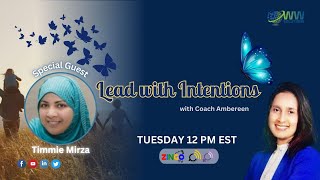
Timmie Mirza, founder of Simplify One Thing, talks about helping coaches and course creators launch programs by combining tech coaching with mindset work. He moved from Pakistan to the US at 18, and now focuses on tackling fear and perfectionism through small-step experimentation and daily intention-setting.
Questions this video answers
September 11, 2024.
Ambreen Hamid (Coach Ambereen).
Timmie (Timmy) Mirza — founder & CEO of Simplify One Thing.
simplifyonething.com.
Free Canva training and a weekly tech tips sign-up (linked at the bottom of the site).
Chapters
Productive day. Welcome to Lead With Intentions, where every single week I, your host, Ambreen Hamid shows up here at 12:00pm Eastern Time ready to serve you. It is truly an honor to cross paths with you in this beautiful moment and I appreciate you so very much for taking the time out to be with here, be here with us, because you could be doing anything. However, what I love most is that you have prioritized yourself and you're adding hopefully a ton of value into your own life by listening to these dialogues and simple conversations. Welcome to Spanglish World Network and Zingo TV, channel 250 and 251. Please remember, download our application. You can literally talk to us live. You chat, I listen, I read, I ask. So please engage with us. The app is completely free across every single platform that you could think of. IOS devices, Android devices, the full Roku lineup, the full Amazon LineUp, any smart TV 2016 on forward, and even the Chromecast devices. As you're downloading our application, please, please, please let us know how we're doing, what we're doing great, and then also what we can improve to make our experience one that is seamless and, and hopefully beautiful. All right, so this show is set out on an expedition to allow us a pathway into discovering the best of who we are. My intention is to bring forth topics and amazing people who will allow us to live better lives, create authentic relationships and unleash the best of who we are. Today is no different as we invite Homegirl. Like literally saw her and I was like, yep, yep, there's something greater than just a one time thing. Timmy Mirza is a founder and CEO of Simplify One Thing. She's a world class tech coach who combines her love for technology and I literally mean like, she's like a geek. Literally like a geek. Like I saw her getting excited about like creating Canva. Okay, Canva snippets. And she actually wants the people to realize the goodness of this world. So it's not only just about, you know, empowering other people to use technology to benefit us, but really to tap into the best of who we are. She actually helps coaches and creates a ton of content and, you know, actually courses that allow us, you know, individuals to tap into the best of who we are by simplifying technology. Because raise your hand if you have been there. You're like, this is too much. Where do I go? 17 things, 14 plugins, like running a website. What do I do? And so Timmy really does help all of us kind of hand held, like holding our hands. And taking us from start to finish. And our mission is actually just to create a massive positive impact in the world by creating one tech solutions one client at a time. I actually love this specific part of one client at a time because often we don't realize how much value we can add by just focusing on one person versus impacting like hundreds and thousands of people. And she knows that it will be a ripple effect because once you prep one person enough to be an amazing creator, guess what? It's going down. You all know the butterfly effect. Come on. Same exact thing, right? So also just a tad bit of a small note, which is important to mention she is a foodie. So if you're a foodie, start taking some notes down. I'm sure she's going to give you some great restaurants, some great places hit up. But that brownie sundae, that's what filled her cup up and maybe her heart too, as that's one of her favorites. She loves and adores. Welcome to the show, Timmy Brain.
It is my pleasure to be here. I'm so excited. You're such a beautiful soul. I feel like, you know, the minute we connected, there was like this instant connection. And, you know, we've been friends since then, so it is just such a. So wonderful.
Yeah.
Here having this conversation together.
Well, I mean, you exude the energy I just brought. I just felt it and I was like, yep, that's right. Okay, so tell us a little bit about yourself, Timmy. Who are you and how would you describe yourself?
I feel like you have described me pretty well. I am a geek. I call myself a tech nerd, for sure. I live and breathe tech all day long. But what truly energizes me is seeing the transformations in people who we become while working together. And I think that passion for empowering others, passion for seeing transformations and inspiring transformations in people, I think is what fuels me and keeps me going. I think tech is just one of the ways to get there, one of the mediums to get there. It's, you know, and it's a pretty, pretty nice one because I get to balance my left brain with my right brain and, you know, it's a. It's a pretty neat combination, I feel like. So that's what I do. And I literally just try to help simplify tech for. For pretty much for anyone. But primarily I'm working with coaches and course creators who are wanting to launch their first program because I feel like that is what I get the most excited about because there's so many unknowns and you Know so much. You have to figure out when you're first starting out, and if someone can just show you that path and help walk that path with you holding your hand where you feel like, I cannot fail, I'm just trying this. I'm just gonna do this thing and be successful with that. So that is something that truly just energizes me, and I don't need a vacation from that. I feel like I could just, you know, work on the weekends to do that. I would not get tired.
So I love what you said in that word. You know, that key word there being transformation. Because I think life is all about this evolution and transformation. However, many of us don't have the courage, you know, to say, yes, I can. When you're working with individuals, especially on that first thing. Right. Because I think a lot of times it's that first program that's scary. The launch into entrepreneurship or the launch into creating your own content, even just putting yourself out there, it takes a whole lot of courage. What do you find as one of the common themes, you know, amongst these individuals that you're working with?
So I think mostly it's mindset. Right. Many clients come to me, they think it's a tech problem. But when we dive deeper, when we start to work together, we actually realize, you know, it's not it like, you know, tech is just like a thing that. A thing that you could solve for very easily. There are so many people that can help you with the tech.
Yeah.
But really, it's that mindset, you know, am I. Am I. Will I be accepted? Will I be loved? Will I be liked?
Right.
That thought, I think that kind of keeps us stuck. And then also I see a lot of perfectionism saying, is it good enough? Is it perfect? Right. First we go for perfect, but then we say, is it good enough to be. To be posted, to be published? You know, will my voice be accepted? And I feel like I've had to do a lot of work on that myself as well. English is not my first language. So for me, I think the biggest thing was, you know, getting accepting myself that when I am speaking, people can't understand me. For some reason, there was a voice in my head that said, people can't understand you. And I'm like, where does this come from?
And where did it. Where did it come from?
I have no idea. But I've. You know, we've been working on that. But I also feel that I work hard on whatever that obstacle is to overcome that. Right. And I encourage my clients to do the same. Whatever that thing is, Right. If showing up on camera scares you, actually go do the thing. Go show up on camera.
Do the thing.
Right. Because the fear goes away after we have done it, right. The. It's a famous quote by whatever we desire is like, on the other side of fear or something, right? Whatever. Like, worth having is on the other side of fear. So I think it's just working on that mindset and. And facing it head on.
Yeah. I actually told myself some time back where when the life throws challenges your way, and you're like, what do I do? I literally say, look at fear. I look at fear in the face and I wink at. I say, bring it. Right? Like, it's such a manipulation of my brain. But you're like, oh, I'm just gonna take it on what's fun and with determination. Now I want to actually go a little bit further into what you've just talked about, because I think the people who are listening, you know, our audience members, and I really do, you know, thank you tremendously from the bottom of my heart to be here with us listening and learning. And I'm going to try to kind of connect this coaching conversation and this entrepreneurship to just the humanness of who we are. You said that the number one challenge that you see people going through is a mindset, Right. And for those of you who are listening, you yourself know, sometimes we shrink our own mind, shrink our own lives because of our mindset. You've said it so simply, Timmy, but I don't think it's that simple because you've done the work. You said fear just goes away when you've done it for someone who's listening and who's like, yeah, girl, whatever. That's not true. How will you help them? Say, no, you can make it possible.
I think taking one little step in that direction. Right. Setting the intention and taking one little step in that direction and then just see what happens. And I think so many times we kind of lock ourselves in or box ourselves in. We say it has to be perfect.
Out of the gate.
It doesn't have to be. It's. I. A lot of times I think me saying it's a pilot run, I think that takes the stress off for clients. Right. We're just testing the waters. Even the first time you come up with, like a tagline or whatever, that may not be the tagline that you're gonna use forever. Right. But you have to come up with something that you move forward with, test it out. If it works, if it connects Go with it. If it doesn't, drop it, right? You're not, like, you're not tied to it, you're not married to it for life. And I feel like little by little, you know, we're able to do that. So one of the things that I. It's funny, like I talk about, you know, being on video. I was terrified. I was scared of being on video. And I was taking a class for. I was in the MBA program and one of the classes was where we had to record a six minute video recapping our leadership journey. And I struggled with that assignment so much. I think I took probably like 36 takes. And at the end of the day, it was probably around like 11:40pm and I was literally crying and I was like, what if I just don't even submit this assignment? What would happen? And then I was like, okay, just. Just patch it up and just send it. Like edit the thing. Just send it. And I sent it in and I went to bed. The next morning I woke up and I was like, I am never going to stop being afraid unless I actually show up on video and record videos. So for the next seven days, I challenged myself. I said, every day, record a short video and post it and post it somewhere. Like, it's not just the recording, it's also the posting of it. And on day seven, I was literally giggling in the video because I'm like, I can't believe I did this. And this was something I was so scared of. And I'm like, so what? You know, and people are probably watching me. They're like, what's going on with her? And I even addressed that in one of the videos. You know, you might be thinking, what's going on with this person? But here's what's happening, here's why I'm doing this and all that. And it was totally okay.
Were the videos great?
No. But did I get over my fear? Absolutely. And then every step of the way, I think it has gotten better for me. And that was the window that I needed to, you know, give myself permission to be online. That's when I started to do workshops online and, you know, little things here and there online. And that's how this whole thing started.
So I think that belief. You said, give myself permission. And for those of you who are, you know, who are trying to wonder, what does that even mean to give yourself permission, can you dive in a little bit more, Timmy, of why would you need permission? And like, what does that do for us?
I think women especially struggle with that. Right. Women struggle with permission. I. I think it's also probably my upbringing and, you know, what's ingrained in me, that you need to seek permission to do certain things and stuff like that. This was probably one of those things. And I realized that as an adult, I don't need external permission. That permission comes from within. And initially when you're. When you're doing the work, I feel like we don't even recognize that that permission needs to come from within. So we're seeking that permission externally. Right. So I feel like working with coaches and in that phase is so great because they are the ones who give you permission, you know, and you don't need to have a lot of people in your life that believe in you. You need to literally have one person, one person that you say, I am going to show up for this one person, and I have this one person that is going to encourage me and love me and accept me just the way I am. And I just, you know, need to come and just do the thing. And once you have that, after you take a few steps in that direction, you eventually you actually say, I can find that courage. I can find that permission. I can find that acceptance within me to go on to do that. And now some of the things I do, and I'm just like, I do them just because I enjoy it. Right. Like, even if it doesn't get accepted by anyone, I love it. And I can't take credit for that myself. I have worked with amazing coaches who have helped me with that. You know, Martha Arnett is an amazing coach. I will share her information. She has helped me so super much. Courtney Copeland is also an amazing coach who has really, truly helped me find my voice and told me that my voice has value. My voice needs to be shared. My voice needs to be heard. So anytime I'm doubting myself and I say, okay, do I share this message or not? I literally have her in my head saying yes to me. Push the button, like.
Go, live.
Go, go.
Oh, I love that. I think, you know, if. When you're listening to Timmy, I pray that you can kind of see where a lot of that gratitude is coming in. That life isn't a journey of being alone. When we give ourselves permission, we also have to give ourselves permission to allow others to help us get there. I think many of us struggle trying to do things on our own in the world that we live in now. Loneliness is something that's kind of increasing, you know, with the way that the world is so connected. Yes. But most People are feeling lonely, so allowing ourselves to say, you know what? I'm okay with somebody else being able to support me and take me there and, you know, hopefully unleash a better version of yourself. So I want to ask you, you touched upon this a little bit, but I really do want to dive in. Like, what does it mean for you to lead with intentions?
Oh, my goodness. I love this question because I feel like all of us are taking action, all of us are striving, but I think the thing that we hang our hat on is that intention. Right. I feel like I could make plans, but if I. They may or may not get executed that way. But if I had the intention to be of help, to be of value, to be of service, that will be blessed. Like, the plans will work out. If it will not be the initial plan A I came up with, it'll be a plan B or a plan Z, whatever, you know, it'll happen. And it's so funny, Ambreen, like so many years ago, I literally heard the words that I want to create a massive positive impact in the world come out of my mouth and I didn't even understand what that meant. Like, what. How that was going to manifest, how that was going to show up by little, by little. As I look back at my life, I'm like, that was my intention setting moment. You know, I set that intention, set that direction for my life and everything else I feel like has fallen into place.
Right.
I started to volunteer at nonprofit organizations. I started. I took a position with the university, started working there. So everything I feel like has aligned to help me with that. And God has totally, totally blessed that intention. And I see that in action. I see that in practice. You know, every single person I meet, I work with, either we're collaborating or we're, you know, coaching or anything, right. They. There is a deeper impact on that person, on me as well. Right. They get impacted and I get just as inspired and just as impacted back by them by the work they're doing. And together, you know, we are transforming and then we're transforming the world around us. And it's, you know, that beautiful ripple effect or the butterfly effect that we're after. And it's happening and I love it.
Yeah, I think that's so true because for me, that just the intention of this, creating the show and the title of the show was something that was such a. A moment because it wasn't going to be lead with intentions, it was going to be something else. And then you just kind of like Say it and you surrender. You're like, okay, God, you. You figure it out for me. Just put it in my head so I can just go along with it and kind of do it. And when I reflected on my life, that was a common thread. And for us Muslims, we believe when we set intentions, it becomes a way of worship, right? And that could be something as simple as, I'm just gonna wake up and make my kids some nice breakfast and not yell today, you know, like at all, at all. Like something as simple as that. So as you're listening to this conversation, I really want you to understand that one action the team is constantly talking about, that one action will build momentum. It doesn't have to be something a physical action like a check mic. It can just be that daily intention setting. How do you want to show up? Today will really change the way that you conduct your day to day. The way you talk to the people in your life, the way that you lead with your teams and every single. Even how you eat your lunch. Because if today for me is a productive, that's what I started off. Hey, everybody, it's pregnant day today. Every moment I'm looking at it like, how can I add some productivity? And sometimes in a dialogue like this, you have to kind of change the way that productivity is meant. That's like, check mark, check mark. It's really understanding. Like, what is that? That mission that Timmy is on and why does it matter so much to her? You know, I want to dive in a little bit and get into things that are a bit more personal because, you know, like, how I am. Right. If you would be so honored, you know, if you would give us the honor of sharing something about you that's pretty personal so we can get to know you a little bit better, to me, I would really appreciate it.
Sure thing. So embreed. I was born and raised in Pakistan. I moved to the US when I was 18 years old to go to college. And it's funny, I used to say the day I graduate, I'm going back because I was so homesick. But I met my husband pretty much right away when I got here. And a few months later, we got married. So I feel like, you know, the rest is history. I've been here since then. We have two. Two sons, two boys. They are both teenagers. I have a ninth grader and a 10th grader. And they are so much fun. So much fun. They bring so much joy to our lives. And they're just such interesting combinations of me and my husband, each one in Their own ways. So, you know, we sometimes, like, talk about that, and sometimes we make fun of, you know, how they're wired, how we're wired, how that shows up and all that. But one interesting thing is that my husband, his parents are from Pakistan, but he has never been to Pakistan. He was born in the US and he has never been to Pakistan. And my kids have yet to go also. So if we're out and about, you know, like, walk around or something or go to a restaurant, if somebody asks, like, where you're from, and they all, like, you know, point at me and they say, mai's from Pakistan.
The black sheep.
Yeah, so I said, yeah, that's right. So that is some interesting, you know, dynamic that we have in my household where, you know, they all, the three of them associate themselves. They're like, you know, we're Americans because they actually don't even speak any other language. You know, they speak English, and I speak English at home with them, too. And, you know, that's just something interesting. But they are learning. They're picking up on words here and there. And it's just something interesting about us, I guess, that.
I mean, that's okay. So a lot of us have that similar story. And for those of you who are, you know, kind of understanding Timmy and her personality and her life and the story a little bit more, I think it's important to dive in a little bit. There are two topics that are coming in my mind, so you pick whichever one you think is best. Is like, what is it like to be an immigrant, you know, in the US especially at the age of 18? And how did you know your husband was the one? You know, you said, I met him really early after moving within. So it seems like 18 to 20 is, like, the range that I'm coming in my own head. How did you know that that was the right move for you? And he could potentially be, you know, your partner or your companion, I should say.
I think we definitely felt a connection instantly. But also interesting, like, I knew of about his siblings before, but I had never heard of him. Like, I had never before the day I met him, I had never heard of his name. I had never heard, like, he existed, but I had heard of his siblings. So the first time, like, I meet this human is like, you know, the day. Very soon after I came to the US and we started to, like, spend time with each other. I was going to college, and he was also going to school in the evenings, and he was also working there. So he was also kind of you know, helping out with things as I needed stuff and stuff like that. So we just, I guess we just developed like a friendship very quickly. And he and I are actually total opposites in every sense of the way. Total opposites. But in a way, it's so beautiful because he brings to the table what I lack and I bring to the table what he lacks. So it's, you know, it's a. It's a beautiful thing. So how did we know that that was going to be it? I. I'm not sure. I think our parents also liked each other, liked us and all that, so it was a little bit of that, too. That's what I would say.
Yeah, I think you, I think you said it, but maybe you didn't connect us. What I'm hearing you say is we just felt a connection and we built a foundation on friendship.
Yeah, I.
Honestly, when I'm working with, with couples, that's one of the biggest things I'm like, just be companions, bro. Like, just be companions, which is based on the friendship. Don't be partners. Because part of the 50. 50 compared to like, okay, you're. I get it. Today's a bad day. I'll do 90. That's it. Meet me there. Right? Because it's built on this companionship, this understanding, this acceptance that every day you can be a hundred percent, you know, and you're able to cheer each other on and celebrate each other. So I love the fact that it's based on friendship. Now for the, you know, a lot of the people who are listening, like opposites. Yeah, Opposite attract. Yeah, we hear that. But in our own life, this whole opposition. And again, that stuff doesn't work. Right. Like, how do you think. You said that you two are a great balance, you know, because he brings what you don't have. How do you think that your relationship has complemented each other because of those opposites? You can go back and, like, pick some stories out so you can share with our audience members.
So I don't think it's always convenient to live together when you're opposites. Right. Like that. There are moments when it's like, you know, you're just like, ah, I wish, like, he would just get it. Or he's. He's probably like, you know, I wish he would just get it right and we don't get it. But I think it's the. When we start to appreciate the differences. It's when we start to really embrace and appreciate the differences. I feel like, you know, we very easily appreciate the similarities in each other, even in our friends. You know, people we hang out with are like, a lot of times, or to us, so we appreciate that. But I think once you begin to appreciate what's different and seeking that in the other person, I think that is where you feel a different type of connection. So, literally, I feel like I'm. I'm. I'm a positive person. I feel like everything will work out for the best. You know, that's just how my programming is. That's just how I'm wired. But there's also an element of developing, like, a blind spot about things, right? Because I don't even think that something is going to go wrong. There's a, you know, statistically very, you know, high probability sometimes that things are going to go wrong. And I just don't even think that. I don't even consider that. So anytime we're making, like, bigger decisions, we actually come together. And I ask him, I say, okay, I see, like, this is how it's going to go. What am I not seeing? And he's like, okay, have you thought of this? Like, nope. Have you thought of this?
Nope.
That could happen. And I was like, okay, like, thank you. You know, like, we will work through that. So things like that, I think, you know, we kind of joke about it. So I think it is okay. But if he were to very seriously come and say, you know, you're missing this or you're missing that, that would probably, like, rub me the wrong way, you know, Then you feel like they're putting a little damper on your. Your dreams and all of that, right? So he, like, we have had to learn that about each other, right? So I've had to literally tell him, like, when you're coming at it, if you're telling me this way, it works, and if you're not communicating it this way, it doesn't work. And same thing for him, right? I know that uncertainty causes him stress, like, literally stress. And I am like, I want this adventurous. I want to go, like, do things. So I've had to learn that, you know, I. He's never stopping me from pursuing any dream whatsoever. But I need to be intentional and need to communicate that ahead of time. I need to let him know that this is what's coming down the pike, even if I don't have all the plans and, you know, everything figured out yet. But just giving the. Giving him the heads up that this is happening, this is about to happen, I think that kind of eases his mind. So it's, you know, learning each other and understanding what we each need to thrive and supporting each other, you know, so supporting each other in their dreams and supporting each other in their. What they want to pursue in life.
I think that. So, you know, when we. When we think about marriage, a lot of times you feel like it's a one and done deal, but that marriage is a unit that requires constant work. That relationship that I know sometimes or many times gets left behind the back burner because, like, you're just so focused on going forward. But you have to recognize and realize you can only go forward so much. So because we kind of connect, that dot of people will support you if you take them on that journey with you. And you never know. Like you said, your husband giving out, like, seven blind spots. And you're like, I was about to go launch. And he's like, yeah, like, baby, like, maybe, like, I know adventure is hitting you, but let's eliminate these, you know, these challenges that are coming forth. What would you say is that one challenge that you can, you know, openly share with our audience members here and our viewers that your family is currently facing that you're trying to just, like, get through? Because often I think we focus so much on the other aspects of life that we don't recognize. There's always a challenge within the home that we're trying to work through and try not, like, because if your home is happy and peaceful, then everything else in life gets blessed, I think, to be in more harmony. We. What's that one thing that you can share with us? You know, if we were in your home, that we would sense that your family is really just trying to get better at.
Brina. I appreciate this question so much. So I feel like, very intentionally, we have built a very, like, peaceful home, right? So we don't have. I try to describe, like, my living style. We don't live lavishly, but we live comfortably. But there is peace around us, right? When you step into my home, there's going to be clutter, but you're going to still feel a very happy, positive vibe because we're at peace with each other, right? So that is what we have built and developed together prior to that. I think that's also, like, a mindset thing. I think that used to cause me a lot of stress and take away my piece, like, even seeing clutter and stuff like that. But I realize and understand the value of having that because that's a home that my family is living in. My children are living in, right? They literally. They come in the door and they Drop everything, like, right in there. And, you know, like, that used to cause me. That used to tell me, like, you don't respect me. Right? Like that I take it to mean, like, you don't respect me. But now I don't feel that way. I have disassociated that. You know, that is disrespect that they're dropping their stuff in the kitchen, on the kitchen floor. So I still am at peace even with all that. Right. So that's why I, like, mentioned the clutter, because I feel like that's, you know, the story that we tell ourselves, so, you know, just paint that picture. But I think one of the things that not necessarily we're struggling with, but I think something that I think in my mind are my children. How do I want to say this? Are they bringing to me, to us, their full selves, their whole self, whatever is happening with them? Because I think I am so focused on the positive things and stuff like that. So I want to just make sure that they understand that even when negative stuff is happening in their life, they can even bring that with them. They don't have to, like, mask it with positivity. And they. You know what I mean? Like, that's almost like a fear I have. Then when I follow that thought forward, I. I say, do they even have to bring it to me? I'm not 100% sure. Right. Like, I just want to make sure that they feel supported one way or another. You know, if they are going through something, they don't feel that they're alone in that. They feel supported because they're growing. Their minds are growing. They get exposed to so much. And, you know, some of them, they can deal with some. Some of the stuff they cannot deal with. And sometimes they just, you know, they're just internalizing and not necessarily sharing. And I know there's sometimes that issue of sharing with parents, even though we're very friendly, very open, talk about anything and everything. But I want them to feel that they can be themselves, and I want them to feel that they're supported in just the way they are.
Yeah, I think you. That's a valid concern, right? Because I have the same challenge where my kid. My son's like, mama, you're always just so positive, like. And so he's. The beautiful thing is your two sons are exactly the same age as my two sons. My eldest is a sophomore, seconds a freshman. And they both have very different personalities. But the eldest one would be bold and say, mama, everything isn't always pretty and Perfect. And I was like, yeah, baba, I know, right? Like, and so really allowing ourselves, you know, when we're so positive and uplifted. Your husband's like, sweetheart, there are seven things you've forgotten. And listen to me, like, positive, human. I love you for positivity, but let's be realistic too, right? So allowing ourselves to say, you know what? We don't always have to come across this chirpy, bubbly, positive person, because being vulnerable and showing all ranges of emotions allows our children to tap into those comfortably in front of ourselves. And that's been a shift that I've been working on a lot since last year. Once I got that comment, I was like, oh, he is right. So then I will intentionally, like, be like, oh, I'm going through emotional stuff. Let me intentionally go and, like, just show them. There's a part of me that is emotional right now. And I love the thing that you said about how your clutter in your home isn't a representation of who you are. So help us figure out, you know, how do people. And it's not only about clutter, you know, for those of you who are listening and viewing and learning and watching, how do we allow ourselves to not take things that are outside of our control personally?
Gotta do the. Do the deeper work, right? Can't live a shallow life where you're. You don't even get in touch with. With your own emotions, right? So even I feel that I've had to work so super hard, and I'm still working on it. Even for me, I would only validate my happy, positive emotions, and I would not validate my negative, sad emotions. I. As soon as, like, I am in pain or I see someone else in pain around me, I'm like, I got to do something to get them out of it or get myself out of it, right? Like, I. I do not want to sit there. I do not want to deal with it. But my super amazing coach, soul coach friend, Martha Arnett, she is amazing. She, like, literally is rewiring my brain right now because that is exactly the work that we're doing, right? And I'm understanding and learning that all emotions are valid. My fear is valid, my sadness is valid, my anger is valid, all of my emotions are valid. And I'm allowed to have them and I'm allowed to express them. I'm allowed to use them. And I don't need to, like, try to, you know, get out of it as quickly as possible. So I think that is, you know, step one, like, recognizing, acknowledging, and Then also then figuring out what story am I associating with the thing that's happening. Right? So for me, I think one of the things I struggle with, long time ago, even before kids, if my husband brought groceries and he put them on the floor and the. I would feel disrespected by that. Like, I'm just like, you know, why are there bags on the floor? And I would mean it to say, he. He doesn't love me. But I'm like, it has nothing to do with love. Right. But that was a story I was telling myself, disassociating myself from that story. Is it, like, to a third person, would it still feel this way that if grocery bags are on the floor, your husband doesn't like. No. Right. It is me. My own thoughts are giving me that story, and I'm so tied to it that I just keep repeating that story over and over. So I needed to disassociate that and, you know, but also communicate that, you know, grocery bags on the floor, when you come in kind of thing. And then my husband did that a few times. He would not do that anymore after hearing this from me. But then later I realized that he didn't even need to change it. Like, I needed to see it differently, right? So the combination of both of those things, sometimes you do need that external thing so that you feel validated, that, you know, like, it's making me feel sad, it's making me feel disrespected. Please take care of it. Right? Like, please, like, take care of it in the moment. So it is so awesome to have a partner who would do that. Right. Have a companion who would do that for you. But then in addition to that, then still doing that deeper work, inner work, why does it even trigger you? Why does it even bother you? Right? And then figuring out, how can I develop a different story and look at it differently?
Yeah.
And then sometimes you cannot. And that's okay, too.
What you're saying, a lot of the things that you're talking about, Timmy, I think it has to do with the way that we were raised in Pakistan. It is so bizarre. I'm like, oh, yeah, I've done that. Oh, yeah, I've done that. And it's like a clutter home. In Pakistan, your home cannot be cluttery, Right? But then you have, like, three maids that come to help you with, like, washing the dishes and, like, cleaning the house and cooking for you. So you have that support, which is pretty readily and normally available. However, in America, you're even the Plumber. Right. And like you're, you're everything. You're the handyman, you're. You're all of it. And that clutter. You're right to say I, it would be a thing for me too. Like, oh, yeah, they don't respect me. They just don't. They're not listening. They're not hearing me out. But now it's like, listen, I'm bringing. You're Talking to a 15 year old within America, not a 15 year old in Pakistan. It's very different story. And not to take things personally, you're right to say that. However, this, the simple thing of like grocery bags being on the floor, that is a thing for me too. And I think it's because we've been taught that food is something we respect and so we don't put it on the floor.
Yep.
Right. Is it. It's just like a thing like don't ever put your feet up at the food. Don't disrespect the food, don't throw food. And I really understand that common theme. You know, I'm glad that you were able to do the work and tell your husband, hey, you know, like, just come up, you know, And I also think, like validating it to say it's a sign of respecting what a lot God has given to us by kind of elevating the status because 75% of the world doesn't have one meal a day. So how fortunate that we get to bring bags of groceries into the homes. So for me, I've kind of shifted that narrative in my own mind and communicate to my kids why it's important to respect their food, you know, and I think like, it is true, like whatever stories we tell ourselves is the stories that we tell ourselves. All right, So I want to ask you, you know, how can people get in touch with you?
Timmy, my website, simplifyonething.com is a really good place. I really want everyone to go there. And it's going to help you with two things. One, at the bottom of the page, if you scroll all the way to the bottom, you're going to have an opportunity to sign up for my weekly tech tips. I literally send out tech tips with some other fun, interesting things that are happening in my life and business with those. So definitely check that out. In addition to that, I also have free Canva training available under the services. There's free resources listed there. Check that out as well, because I literally feel that Canva is one program that everyone should learn how to use because there's so many uses for it. Whether you are an online entrepreneur or not, you still can use Canva for so many different things. So many creative projects and things like that around the house and with your family, create your planners, things like that with it, meal planning. And all of that can be done in Canva and it can just makes everything look pretty. So definitely check that out. That's what I would say. I'm also on Facebook and Instagram. Simplify one thing. If you just look that up, find me there, have a YouTube channel.
Yeah, so definitely simplify your life. Literally, like simplify your life. I think that's so important. I think we've been hearing that as a theme throughout the conversations, not only when it comes to, you know, like, your tech life and your business, but also even in your own life, where you're going and digging a little bit deeper. I want to go back to that question of, you know, when you came here as an 18 year old and you came here to study, what were some things that you saw that were different or being done differently here in the US versus in Pakistan?
I feel like everything, everything. The whole, the whole everything was. And I think it's likely no longer the case because when I go back to Pakistan now, I see a lot of westernization in Pakistan now too. So the gap is closing for sure. But when I came, like, many years ago, over two decades ago at this point, I saw a lot of diversity right away, which I didn't. I was not exposed to in Pakistan at all. Right. Everybody speaks the same, you know, like, even though we have different languages, different dialects and all of that. But, you know, like, everybody more or less, you know, is similar in their cultures and things like that. In the US that was a total change for me. The college I went to had, I want to say, probably like 70% international population. So I literally got to meet people from all over the world, all different beliefs, all different, you know, they look different, they have different cultures, different religions and all of that. And I got that very, very quickly.
And.
And I thought that was such a cool experience. I got to see my first snow in the US I got to go to the beach for the first time in the U.S. so many, like, cool things, you know, Like, I. I feel like everything was. Everything was different. I. I'm gonna share something funny. I thought it was in Pakistan to turn on the lights, you flip the switch down to turn lights on. In the US it's the other way. So I used to, like, confuse me so much.
I love it. Yeah.
I thought that was different. I was like, what? Who does that?
Who does that? Us does that? Now, what are some, what are some core values that you think that you learned in your own upbringing, you know, coming from a third world country that you've, that you're happy to pass on to, you know, in your interactions into your family and into who you are?
I would say helpfulness, like helping others. I literally have an affirmation that I tell myself I am helpful every day. I'm helpful, I help people, I uplift others. That's literally what I tell myself. But I think that comes from my upbringing also. Whoever you see, whoever needs help, lend them a hand. And sometimes it's not even like, you know, lending them a hand. Lend them an ear, lend them your, like one look of appreciation or gratitude.
Right?
Something acknowledging them, seeing them so they're not invisible. So I think that is something I would love to pass on to my children and also inspire other people I work with as well. And I would say probably ethics. Ethics, right. Like, I. There was a lot of emphasis of that. Right. Like growing up, even if, you know, nobody's watching, you still, you know, do the right thing. That having that internal compass and, you know, leading on, that I would say would be the thing. Because I realized that I will not be with my children forever. So they, I want to cultivate that in them. That, you know, even when no one's watching, they know that God is with them. God is watching and also knowing what's right, what's wrong, and then having the courage to do the right thing, you know, even if it's scary, even if, Even if it seems impossible, having the courage to at least attempt, you know, at least try.
Yeah, okay. In the world that we live in now, doing the right thing a lot of times seems very difficult, especially when it comes to these, you know, 15, 16, 16 to 14 year old boys, depending how old your little humans are, little big humans. How would you, how would you know that you've set them in a way where they will be successful? They might make those mistakes, but the internal compass will dial in enough, you know, as they find out who they are or they will do the right thing, even though it's going to require a ton of courage and even leaving some people behind.
Maria, I feel like I pray about that a lot. Right. I think that we do, we do our best. We show them examples, we, you know, coach them, we teach them all of that, but it's totally up to them eventually, right, who they're going to Become. But I think what I've learned over and over is that when you plant those seeds, those seeds are there. Even if they stray away from that, they will come back to it later on. So that I truly see that in my own life too. You know, when I, my parents planted those seeds, I strayed away from that. And then as a grown up, you know, in my 30s, I returned back to that and actually found that I found a lot of peace in, you know, being myself rather than, you know, trying to please everyone and trying to be all things to all people. So I would say, you know, we do our thing, we do our best. Plant those seeds, leave the rest to God. They will find their way, right? Find their way. And they're going to make mistakes, we made mistakes they're going to make. And that's okay, right? Bouncing back from that, learning from that, and, you know, just seeking. I want to constantly be seeking that, that guidance, seeking that path. And I don't think that once you have it, you have it forever, you know, like, we have to constantly be going after it. So I hope that at least they have that within them.
I think when you're talking about that, what comes to mind is when I'm working with couples, you know, as a family driven coach, and I'm kind of taking them on their own journey and going from this concept of being partners to being companions, one of the biggest things. And it's literally like my whole model is just a role model mindset because our kids are not listening to us. If you have not figured it out yet, they're not listening to us. They're just there, but they're watching us. And those, those actions that keep kind of building that integrity pillar, right? They just keep seeing like, mama's always so helpful. Mom is also helpful. She's always helpful. That person was so mean to her last day, but she's still helpful. And it's like they see it and even though they may not like it, they realize that it has to be something greater. There has to be a reason why Mom's just always helping people who don't ever come back to help us, you know, and that role modeling, it's planting the seed. But then what? We started off with the conversation like, take the action, do what's right. Take the action without expecting much in return. Because what I truly believe is we are servants of God that come into this world. And, you know, our thing is just to find what that gift is and serve it, serve it up for you. It's simplifying tech. For me, it's. It's pouring into families and really unifying this unit to say, yeah, I get it. You didn't pick it, but it's placed there for you for a reason. Like, this unit is the toughest one you're gonna have. However, if you literally allow them to embrace it, you're going to find out those differences like we talked about the differences with your husband and you. When you can embrace them and you can learn to grow from them, you find out a version of you that you didn't know existed. So I do want to. I mean, you and I can talk forever and ever, but I want to ask you. We're going to do this thing called an intentional wrap up and do this rapid fire question that I'm going to ask you.
Okay?
First word that comes to mind, spit it out. Or one sentence to kind of sum up that answer. Ready? You seem very calm, Tim. Are you sure about this? All right, here we go. What do you want to leave behind for the world, Timmy Mirza?
Goodness.
Okay. How will you know that you've led an intentional life.
Dying peacefully?
If you could create one law that everybody had to follow, what would be that law?
Be a blessing.
Love that. Okay, what is one lesson? I know there are plenty of them. What is the one lesson you share with us that has made you who you are today?
Showing up.
Okay, maybe we'll dive into that one. I love that. Okay, what is the key to a healthy relationship?
Understanding. Clench my teeth as I say that.
Okay, add on a little bit more. What do you mean by understanding?
I think just everybody's going through something, right? Understanding where they're coming from. Like, they may say the wrong words, they may give you the wrong look, they may whatever. But understanding where they're coming from or understanding, I guess better thing would be to understand their intention behind it, right. What they were doing or saying or not saying.
The element of empathy, I think that's so key and so important. Well, thank you, Timmy Mirza. Wow. From simplify one thing so all of you who are listening, just go to simplifyonething.com, scroll to the bottom. Sign up for her tech tips. She also talks a lot about her own family and her own mindset and things that are happening in her life. Not only just the tech element, which I think is so brilliant, because there's all of us that we want to bring on. And I really pray that you all got to see a little bit glimpses of Timmy through all areas of her life. So I want to thank you so much, Timmy, for showing up and serving us, because it's been a beautiful conversation.
This was such a. Such a fun chat. I loved every moment of it. Thank you so much for having me. And we'll do it again sometime. Maybe.
Yeah, definitely. All right. As the show comes to an end, I would love for you all to know that this Spanglish radio network can be. You know, you can watch the show and it can also be heard on Spain Spanglish Radio Network. Please check out Spanglishworld CA for all the news and the programming. As we close this conversation, my prayer is that the show will embark us on a transformative path to be in gratitude for all of our blessings, accept the unfoldings of life, and commit to values and dreams which will allow us to tap into our own greatness. And because I have Tawakkal, which basically just means faith in every single one of us, when we unleash our authenticity, we start to live more intentionally. Remember, there's only one of you, one life. Design it with excellence. The English world. Watch it, hear it, read it, download it. Most importantly, live it into it with intention of better bettering yourself. So that way the show can serve you. Thank you so much for tuning in, folks. Bye now.










