Upgrade Your Marketing for the New Digital Landscape
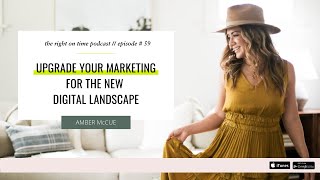
This is a YouTube video titled "Upgrade Your Marketing for the New Digital Landscape" containing an English podcast episode recorded in November 2021. The episode features Amber McCue hosting a conversation with Emily Hirsch, discussing topics related to marketing strategies, business growth, launching products, and adapting to changes in the digital marketing landscape. The discussion covers practical advice on messaging, process, niche specialization, and balancing content creation with business sustainability.
Get ready, because everything is about to change. There's a new way of living life and doing business that will blow your mind. This is a podcast all about the timing of life and the timing of success. It's what we call the Right on Time life. And you are listening to the Right on Time podcast with Amber McHugh. Emily Hirsch, welcome to the podcast.
Thank you. I am so excited.
Me, too. And for you, as you listen, this is the first time Emily and I have officially talked in person. So this is so fun. This is so real. We didn't even do. I'm like, I'm not going to ask you any pre questions about anything else in your life. I did ask about your remodel and where you are right now, but I stopped it there. So we can keep it all super real on this podcast today. So. And Emily, I just want to commend you and say how much I value from the jump, because we ask when we are gearing up to speak to someone on the podcast. You know, anything specific you want to talk about or that you don't want to talk about. And you are, like, open to anything, everything. I'm like, oh, that's fun. So we're going to have some fun today.
Yay.
So we were talking about that remodel. Since I mentioned that you're remodeling your house right now. You are. You've got some makeshift work arrangements. You've got a family. You've got a lot going on. How does it feel? How are you doing?
Yeah, I really do. Yeah. We are in a remodel, which, if you've remodeled, you know, like, supposed to be six weeks. I think we're on week 11 at this point. If it's not done yet, we're almost there. We left our house. I'm like, such a planner. We left our house for six weeks. We're going to come back. It was supposed to be done at that point. We went to Colorado, and then I came back. It wasn't done. My kids had to start school, so we had no kitchen for a month. We have our kitchen now at least, but I don't have my office yet, so. But you just make it work, and then, you know, you honestly learn through those things how little you actually need to be happy. Like, it did have some good family bonding moments, but I do have a 14 and 6 year old, so they loved it. They thought we were, like, camping up in the playroom, which we were, but I was going a little crazy.
So you said you realized how little you need, which is something that I'm living, like, every time because we move. My husband's in the foreign service, so we're moving around every couple of years, and that's our average schedule. And I'm like, oh, I need. I need to streamline even more. What came up for you on, like, realizing how little we need?
Yeah, I mean, it really, like, for me, it put me back to where I was, like, before I had kids, when I didn't have a lot of money with my husband and, like, how we used to live. And I was like, man, we were, like, so simple and so happy then. And, like, life got so chaotic and crazy, and you think you need all these things, and you really don't. Like, happiness comes from the quality time and a lot from your perspective. And so I'm not gonna lie. I got home from the trip and I had a complete meltdown the first night. Crap was everywhere. I couldn't even unpack my suitcase. I was like, I am a very organized person. So I had a complete, total meltdown. Embarrassing to my kids, where I was throwing a tantrum.
Oh, my gosh.
But I chose to, like, okay, I'm gonna make this work. We're lucky. We have this beautiful remodel happening. I just spent six weeks in Colorado, in California. And so it was all, like, a lot about mindset. But I did have a moment, a night that my kids still are like, mom, remember when you, like, totally melted down over this? I do.
These are good stories, though. And I think one of the things that stood out to me right there is that I had a moment, but it didn't define everything about the experience. Like, we're going to point to it and we're going to laugh, and it was a moment back on track.
Yeah, exactly.
Oh, my goodness. You know, it's interesting because you run a pretty significant business, and I was thinking about that as you were talking about simplicity. And, you know, business can be a little wild. Like, for example, You've done over 107 million in generating revenue through from ad spend and ad managing ads, and you've done 26 million ad spend over the time that you have ran your agency.
Yeah.
Like, these are big numbers.
Yeah.
How do you keep that simple? Like managing a team, managing an agency, managing big accounts. Like, you work on big brands.
Yeah, yeah, yeah. I mean, honestly, like, it all comes down for me to process. Like, that's what I've learned. I've. I've been building my team now for about four and a half years, and I've got 27 employees now and everything is processed. Like, I think going into it I thought, oh, you gotta like find the unicorns, like find these people who can just do everything. And I barely have to train them. But what I've learned is everything is about the process. And so the big ad spends don't really feel scary anymore because it just comes down to like the process of what we're doing. From the creative to the strategy to the communication. Whenever there's a problem, I come back to process. And you know, from the beginning, from your recruiting and your hiring process to your training process, to your delivery process, like especially in the service industry, it's all about that.
Oh my gosh, I love systems and process. As you probably know, we are very much in sync here. And it is so true. One of the things that I learned early on in running my business and in working in corporate was it's a story that comes out of Starbucks. And Howard Schultz had asked his, one of his VPs that sign, the B is out on that sign on my drive to work. Somebody's got to fix that. Who's going to fix it? And the mentor, the vp said to him, you are asking the wrong question. This isn't about who is going to fix that sign. This is about what is our system and process to make sure the lights never go out on our signs. It's a different way of thinking. And I think you're so spot on. Whether it's service based or anything. Product, ads, agency, especially in an agency model with team.
Yeah.
All right, what's our system? And it also gives us the thing to point back to, like, this isn't about who did what wrong. This is about what's our process for this and do we need to change that?
Yep. And getting to the root of everything, like you just explained, was getting to the root of the actual problem. Not just that the light was out on the, on the sign.
Yes. Oh, this is so good. And this actually aligns with, you know, the work that you do. You started doing business in a more personal business model, right?
Yeah.
Tell us about how you got started.
Yeah, so I started my company about six years ago and I started as a virtual assistant. And so for me, So I was 20 years old and had my first baby then. And so I've always been an entrepreneur, like since I was like 12. I think a lot of people can relate to that. Like I'm a born entrepreneur for sure. So I knew I didn't want to be a stay at home mom. I Needed something else that was mine that I could put that energy that I have into. But I also didn't want to leave my new baby. So that was kind of what threw me into the online industry as a virtual assistant and then the online course creators. And that was, it was very big back then. It was newer, you know, six years ago. And so then I started doing Facebook ads for those clients myself and really just got to learn. I learned through doing, I learned through like podcasts, through trying, through, you know, marketing comes very natural to me. I love the psychology of it. I love looking at it from a perspective of like, it's all about connection, it's all about trust. It's about how can you be different so that all comes naturally. But as far as like everything I've done, I dropped out of college. Like I didn't have some amazing mentor. I bootstrapped it. And then I got to the point where I had my second child and I was like, okay, I can't keep doing all this by myself. Like I was doing the ad copy and the billing and the sales calls and all the things. So that's when I decided, okay, I'm gonna start building a team. That's where I was like, I have no idea what I'm doing. I did get a mentor at that point and I've learned so much. And if I look back, like what I was doing four years ago on Facebook ads to now, I mean, I don't actually run the ads. I don't do anything in the day to day execution. Like I'm in the leadership role now. So it's very different. But my journey isn't where I set out and was like, I'm going to start an agency. Like that's going to be my business. You know, it's kind of like taking each thing and going in the direction that I was being pushed throughout that time.
Oh, I love this so much. And this is like the story of many people. We start something, we're like, oh, okay, yeah, this could be something more. And speaking of, right fast forwarding, you went through this growth stage, you went through this evolution. We already alluded to the fact that you've worked with some big brands, some names that people who, you know, run online businesses likely know. How did you connect with these people? How did you build the agency? So like, I'm gonna do the big, the big dollars, right? They don't feel like big dollars now. Cause you've got the process. Yeah, but how did you go from that, that I'm starting An agency to know we're doing, we're doing like significant ad stuff here.
Yeah, it really just started happening. So. So we got. Our first big client was Marie Forleo. Like in the beginning, when I was even starting, I was still like in very heavily involved. So I was the one meeting with their team and doing all those things and from there. And that came from like a referral. And so it was just someone referred me to her, someone on her team. So that was super cool and amazing. And then from there, like once you get in, you then. And everybody like knows each other. And so we got a lot more referrals. Um, and that pushed me to go the direction. Well, two things that pushed me to go to the direction of like, okay, we became this more elite agency working with these bigger names. But I also, like two years ago, two and a half years ago, I didn't want to just be that. I made that decision of like, I love working with the big clients and the big names. Some are difficult and you see that behind the scenes of that. And I also was like, I also want to help the business owner though, that has like, is just starting and has no idea because really there's more of them. And I also think true marketing skill comes in when you can take something that has had zero sales and zero success and bring that success versus someone who's like already making millions. Done. Eight launches, they're going to come do that, repeat the process. They need innovation. So I started like a done with you program because I really believe that anybody can be successful with their marketing if they follow a formula and a process. And so I had like, I went in that direction and we still have our elite service. But I also wanted to be able to help people because there's so many more. Right. Who want to start their business from the ground up or maybe they've made less than $10,000 and so they need that support that I wanted to give.
You know, you said something that gave me head to toe goosebumps, which was, yeah, working. We can do it on a proven model. We've launched eight times. It's successful. Okay, we know. But when we come back to a new product and scaling it up and starting from scratch, it's a different energy. What I heard there was like, it's challenging. Yeah, it's a new challenge. How, how do you navigate that when you're starting something new? Because so many of us either have established businesses with models in place, but we want to make a change to it and it feels like we're starting over or. Right. We're entrepreneurs, we're starting new stuff all the time. So how do you navigate that when you're like, new product, new brand, let's make this happen.
Yeah. So I mean I have a process and a formula and I think marketing is a process of mostly like refinement of test, refine, repeat. And you just keep doing that until you're successful. And so that's where I believe anybody can be successful with selling, you know, their offer and building a business if they're willing to commit to that process. If they're expecting results in 14 to 30 days or they're out, like, you may as well not start. But for me, like the first like foundational thing is the messaging and like the offer positioning and your understanding of your ideal customer and doing that work. And if you can do that and build that foundation and get clear on your offer and your offer positioning, the marketing becomes so much easier and clearer after that. So anytime someone's starting something new, that's where we start is with that messaging, with that offer position, how are you going to be different? How are you going to stand out? How are you going to connect to your audience? Because that has to come before ads, before your funnel, before your strategy, before all of it.
I so value and appreciate that. I'd say one of the things that I struggle with is getting sexier with my marketing messaging because. And we've shifted to this concept of the modern CEO and we are here to help you run your business better and lead your business because we want sustainability, not one hit wonders. So when we come in, we're like, I need this in 14 days. Okay, we're gonna try. But I, it's, I want to work with the people and support people who are going for long term growth and sustainability. And it's not always sexy. So how do you take something? And there are a lot of people who are like, it's been done before or oh, this isn't super sexy. How do you make offers that aren't super sexy necessarily, but they're like the vitamins, not that I broke a leg, I need help now. But you need this, you still need this. What do you do in those situations?
Yeah, that's such a good question. I would say number one is getting clear on your ideal customer, what they're saying, like what's their frustrations, what are they trying that's not working? Because even if what you have isn't sexy, like you're saying, if they're struggling, if your ideal customer is struggling and having problems, you can make sure that your offer is an answer to that problem. And so first, like, as long as you're clear on that and you can talk to them in their language and on their level related to your offer, that's like, step number one. And then the second piece I would say is, how's your offer different? Like, you don't want to be a commodity where you're just kind of compared, like, by price. Right. You want to be. And that's kind of always been the goal with my business, is like, we are different than any other agency out there, and here's why. Yeah.
Why? Fill in that blank.
Yeah. And so for us, the why for me has always been like, we're not just an agency where you're going to hire ads. Like, we are, like, hiring an entire marketing team. And so I've evolved that over the years, and now it looks like, okay, you get a strategist, you get an ads manager, you get a full creative team, you get content ideas. And that's always been, like, one of my angles. And then also, we are extremely urgent and innovative, which I think a lot of people, like, they're still doing what they were doing a year ago or 18 months ago, and that just doesn't work in this industry. And so your why might be different, of why are you different? But, you know, if I sat down with you and just having a casual conversation was like, why should I buy your offer? What would you say? And it can't just be like, oh, it's the cheapest, or it's the best price. And I think a lot of people think that's like, the hook is like, I'll have a really good price or whatever. And I think you have to figure out what's your process, what's your values, what's your why, your company, why that makes you different than the other options out there for people.
Mm. So good. You said something that made me think, do you think it's important to niche down, or do you think, like, you describe to me what I would look like as a differentiator of specialty? Like, we are. We're in the marketing space, and here's how we do things different. Right. Which to me also stands out. Like, so do you believe it's important to have both? Do you look at sort of specialty differentiators different than niche? What's your take on that?
Yeah, so, I mean, I do think it's important to niche down. I think there's a balance, though, because I think sometimes people do it too soon where they like hear that advice and they're like, okay, I need to niche down and I'm gonna say no to all these things. But they don't really know why. So if you look at my journey, it's like I was a virtual assistant. I was doing everything when I started. Like I was helping with Facebook ads, I was loading emails, like, you name it, I was doing it. I said yes to everything. And I think that's a journey like a lot of us have to go through. But then over time, you do have to niche down for a few reasons. And one is your marketing and how specific you can talk to someone. Because imagine now if I was like, we do every single thing for your online business, like it wouldn't sell. And the other reason is your delivery. Like you can't, like you're talking about process. Like you can't serve everybody the same, especially you know, with marketing. So for us, like, we don't work with brick and mortar businesses because that's a completely different marketing strategy than online brands and that strategy. So you also have to figure out your delivery. Like if you want to scale, you can't keep doing everything. And that's a big part too. So yes, I think it's important to niche down, but not just because someone told you to do that, but because you have like actual reason and you do want to talk specific to people. Like, you don't want to just be like, I help you save time. I always say to people, like, if everybody in the world wants that thing, that's not specific enough because you know that's not going to stand out. So you have to take it a couple of layers deeper what you, what problem you solve. And that could mean niching down in the people you serve or it could be around like the offer and the problems that you solve. And so, you know, we don't do YouTube and Google and Facebook and all the things because I can't deliver that. And I also don't want to be that, you know, full on agency right now, maybe in the future. But I'm specific with that.
So good. You mentioned scalability. So. And I want to take a little bit of a business model shift now because I know that you work on launches, I know that you help people get consistent passive income in as well. And these are two areas that are pretty big that people debate about that we go through like, oh, I'm exhausted from the launch, I don't want to launch anymore. Let's go Evergreen or let's go Passive. Let me make money while I sleep. So I want to dive in first to the launch stuff.
Yeah.
Now my first question on this is because you've worked on some pretty incredible launches, can you make us all feel better and say something that you've seen that was like, oh, this was not going well?
Yeah. I mean, so, so much with launches and like big launches that you watch in influencers have, you know, and I've been behind the scenes of many. First of all, you have to realize there's months of planning that goes into before that launch happens. Like I think a lot of people think, like it just happened right then and they had a big launch and then they want to go emulate that. Most big companies that are launching are planning the year before that. That's what they're doing. And everything leading up to that launch is really what's contributing to that launches success. The second thing is I've been behind many launches where they weren't meeting their lead goal, they weren't meeting their sales goals. And I think I've talked about this a lot. Like, that's where the true marketing comes into play. Because that's actually like more the expected, like that's more normal that that's gonna happen where you're not actually meeting your goals. The second you press go on your ads or you launch your thing, that's where the pivoting and the like, okay, we need new ad creative. Let's test this new angle. Let's add a webinar, let's add some emails. Let's throw in a bonus that might look really smooth on the front end. When you're viewing someone's launch, that's all happening like a lot of times by the moment in the back end of a launch. The other thing is you have to also see, do they have a huge warm audience? Because every time they launch, it's easier for them to. They have an audience, you know, that's been sitting on their email list or following them for years. And so you can't like level yourself at the same place unless you have that same thing. But I'll also say in the last year they've had to work a lot harder. It's gotten harder. And so what used to be easy four or five years ago, I can guarantee for everybody, they're working harder. They have to be different. They can't template things anymore. They can't do exactly what they did last year again this year. They've got to have new, they've got to have unique. If it's just the different wrapping paper on the webinar. It's got to be different. So that's also become a massive thing. And I think people who don't realize that are in for a surprise when they go to launch and they're like, we did the exact thing we did last year and it didn't work. And it's like, yeah, because it just gets stale faster.
It gets stale faster. Okay, what is driving that? Because I have talked to so many people in the last six months who like, oh, that launch didn't go as planned. Oh, right. It's not performing like usual. I changed these things up to try and adapt to the. What changes in the market and the landscape. And this is in multiple industries, not just B2B, business to business, consumer. And it's across the board. So what is driving this need for change and updates?
Yeah, so number one, you have the iOS updates, but I do feel like those are a little bit of an excuse to be like, oh, it's just because of that. Right. So that's my opinion, because I've seen really successful launches and campaigns too. I think it is human behavior that's changed in our attention span. So now you have the content, like TikTok or Reels, and it's new every day. Like, I need a new video. That's 15 seconds. I need new. It's a stimulation. I'm bored. I can't read a long blog post. I can't listen to a long podcast. I can't watch a 90 minute webinar. That's our audience now. Like, we're, they're, they're like crazy. Like, we're all humans. Like, we're stimulated like crazy. And so a lot of times I think what happens is the problem is in the creative. The problem is in you're using templated images or ad copy that's like very formatted the same as what you used to. It doesn't stand out. It looks like everything else in the feed. And people are also more weary of ads, of webinars, of online courses or whatever it is. But like you said, it's across multiple niches. I think it's gotten more saturated. Your audience's attention span is way shorter than it used to be. Just showing up and doing video is now not enough. Like it used to be. Like, nobody did Facebook Live, you know, five years ago, and now it's like everybody shows up and does stories and all the things. And so now your video, you can't just show up and do video. You have to Be like a content creator and funny and entertaining. And so I just think it's exhausting and people can't keep up with it, and they don't have the process to keep up with it unless they really put the resources into it.
So what do you think is the solution to that for a small business owner? Like you said, it's exhausting. We can't keep up. I mean, from a consumer perspective, I don't keep up. I'm like, this is way too much. So as we think about also on the business side, wanting to play but not wanting to completely change our lives, still wanting to have balance, still wanting to show up as who we are. Where do we find the balance?
Yeah. Yeah. And this is something I, you know, personally wrestle with too, because I'm the face of the brand and I don't want to be on TikTok and all these things all day. Like, I don't. And I'm, you know, I'm my kids and I value that time within. That's why I started my business. So I think that we are in what I'm calling the era of the creator. So I think we have to accept that where if you want to have an online business, you want to have an online brand, you have to be basically become a creator or have a face of the brand. You've got to step into that versus resist that. But I do believe that you can create a process and a system and support where you don't have to actually be online all the all day and constantly pumping out content if you can get the support and you can look like you are. So one thing, like, in my internal team, I probably spend two hours a month recording reels and videos, but there's a lot of planning that goes into that. My team finds a bunch of inspiration. They pull it all in a deck. We have, like, one day set aside where I do it. They're editing it, so there's a way to streamline it, but you can't resist stepping into it and be like, I refuse to do those, you know, and you definitely have to do it in your own way still. But I think it's not black and white of like, I'm either not doing reels or I am doing reels, or I'm not doing this or I am. Like, you've got to figure out how do you make it work for your business and your brand while stepping into that creator role. And, you know, internally, on my team, but also in our delivery, we've added a ton of resources around this around content ideas, innovative video ideas, video editing, messaging. Because I don't want my clients to have to spend all day doing this anyways. Like, it's like, how do we create it the minimum amount of time and then build in the resources to constantly come up with the new ideas? Because that's the thing is, like, you basically always have to put new wrapping paper on your stuff. So if you do a launch, it's gotta have, like, this fresh, new taste to it. And that's been my experience for the last year.
Oh, so stinking good. So you don't have to overhaul your entire business model. You don't have to overhaul every single product. Put some new marketing or some new wrapping paper on it. I love this. So as you think, this was phenomenal. Little scoop and update on the launch side. Now, the flip side to this is passive, consistent, reoccurring revenue and income. How do you recommend. I mean, so many strategies just came to mind for how one can accomplish that. What is the best way for someone to start with passive income or like, I got a product, I need to make this Reoccurring.
Yeah, yeah. I mean, first is figuring out. I mean, the phases is first figuring out your messaging. You can't. You can't do anything without that. And then it's the strategy. And you can absolutely have recurring profit, whether that's through a webinar or, you know, a lead magnet to something on the thank you page, type of a funnel. So it's identifying that strategy which is relevant to your audience and also to your offer. So it's not saying like, oh, everybody's doing a webinar, so I have to do one, but asking yourself, will your audience watch a webinar? Is this the best way to sell your offer? And so figuring out that strategy, and then you can create something evergreen, but you will have to still have that element of new. And so that could be new ads. Every month or every quarter, you change the webinar title or you change the front end. The front end is having to change a lot more is essentially where we're at. Even with evergreen models, gone are the days where you could create a webinar and it runs for two years, and you never change the webinar title and you never change the webinar. Like, you have to freshen it up. And that's because of both the Facebook algorithm, our audience, the saturation, the competition, and all of that.
Wow. New. This is the theme. Like, keep it new, keep it fresh. Update. Do you feel exhausted, like, thinking about.
That it, you know, I live in the marketing world, and it's exhausting sometimes to be like, okay, we gotta, like, keep up with this for our clients. But I do think that getting support has become more essential now. And I don't just say that because I have an agency, but I think in the past, you used to be able to DIY a lot more and do it like 70, 80%. And it doesn't have to be 100% because your leads are cheaper and because there wasn't a million webinars out there. Now, I think just tightening it up is now the new reality, which is bound to happen at some point. Right. The wild west of cheap Facebook ads and no webinars years ago is gone. So it's exhausting. But you can sit there and be like, oh, this is exhausting. I hate this. Or you can be like, okay, what am I going to do to make this work for my business and my own life?
Yeah, it's so true. You know, sort of as we stand, I stand, we're sitting here today and think, like, all right, we've been doing this for a while. We've been running online businesses for a while, or heavy. My photography business is obviously not online, but we do heavy online and digital marketing for that. Yeah, it was much lower barrier to entry and a lower cost to enter this marketplace. And this was one of the selling points. Right? You can start your business for very little investment. It's easier than a brick and mortar and you can reach more people and et cetera. But now the investment may be higher as you're stepping into, build scale, grow running a business.
Right? Yeah. I mean, I don't know if it's higher. I think business in general is difficult. Like what we're signing up for, 90% of people can't do. And like, there is no easy business. So that. That is the reality. And so I think I do agree with you. People think, oh, online business is easier. And it's like, it's actually not like you have the potential to have more impact, but in order to have that impact, you have to have great messaging and a great strategy and a great offer and great marketing. Still, like, the rules of business still apply.
Yeah, it's so true. If someone is listening to this and they're just starting out, what would be the number one advice you would give them? Like, maybe I don't have a lot of budget, or I didn't want to have a lot of budget and I would like to get to reven sooner rather than later. How do I get that flywheel going quickly?
Yeah, I think, like, the best investment in your time right now if you're just starting out, is in your messaging, is in talking to your audience, building an audience of people, figuring out what they're saying, what they want, being willing to pivot your offer if you need to, not being like, this is exactly what it is and this is a great offer without ever, like, talking to someone about it or trying to sell it. So I think, I almost think sometimes people starting out now, like, it is a little more difficult, but at least you're starting with a solid foundation now. Like, you have to. Where I'd say, like, the people who didn't have a solid foundation and were successful, like, four or three years ago, they're pissed right now. They're like, this used to work and it doesn't work. And, like, they're really struggling because they're, like, trying to blame, you know, whatever. And it's like the industry has changed, and so now you have to go back and build your solid foundation that you never had to be successful. And so I think if you're just starting out, don't feel like, oh, I'm at a massive disadvantage because it's so hard. It's just like, no, you have to set the solid foundation that everybody has to set, and at least you're not going to do this enough to go back and fix it a year from now. You're going to start out with that foundation, with that knowledge that that's what you need to do.
You know, I love to talk about the foundation because this is what gives us also sustainability in our business. And when Covid was happening 2020, the year I was talking to a lot of clients, talking to colleagues, and one of the key differentiators of people who did had more ease, not that there was a lot of ease during that year, but who had a little bit more peace of mind in their business and in the future of their business, had strong foundations.
Yes. A hundred percent essential. Yeah. I think Covid, the iOS updates, everything that's happened, has just shined a light on the people who don't have that. And it's shining like you're shining a light on your cracks in your business, and that's okay, you can go fix them, but that's what it's essentially done. And, you know, even for myself, like, I found things that was like, oh, we used to get away with that. Now we can't. Like, that's. That's a gap. We've got to fill.
This is flipping awesome. Emily. I would stay here talking to you for hours, but I know you got other things to do. So. And as you're listening to this, I know that you who are listening, you've got other things to do to. But I want to ask Emily one more question, and this is because it is the Right on Time podcast. So I want to know whether it's business or life or just how. However, what is right on time for you right now and what do people need to know right now?
Yeah. The first thing that comes to me is that it's the era of the creator. And the sooner you step into that and figure out how am I gonna define becoming a creator if I want to grow an online business, business for myself, for something that works for my own values and my own life, maybe it pushes you out of your comfort zone. It probably will a little bit, But I think the sooner you're willing to do that, the better you're going to get quicker and the better your results are going to be. So I think really leaning into that because it's not going away. We're in kind of a new era of marketing and of marketing your online brand.
Oh, my gosh. Amazing. I'm not going to lie. My heart rate accelerates when we talk about this era of the creator. But it's one part because I agree and I see it, and it's another part because. Okay, now what are we going to do about it? So. Oh, incredible. Thank you so much for being here with us. Before we wrap, is there anything we missed?
Not that I can think of. Like, this was such a great, fun interview. Thank you for having me.
Thank you. This is going to add so much value to so many people. You are so real, so transparent, and I can't wait to talk again sometime. Thank you.
Thank you.
More from Amber









Embracing the CEO Mindset with Amber McCue! Strategies for Time Freedom and Business Success

