SZN 4, EP-3. Amy Nelson, founder of The Riveter on Falling Apart, Fighting Back & Building.
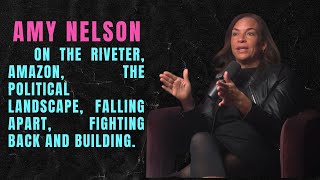
Amy Nelson, founder of The Riveter, survived an FBI raid and 22-month asset freeze after her husband left Amazon, then watched her $30 million coworking company collapse overnight during COVID. She talks about the legal fight against Amazon, laying off staff, and what she learned about resilience.
Chapters
Three, two.
Hey there, you beautiful badass. Welcome to the Keri Croft Show. I'm your host, Keri Croft, delivering you stories that get you pumped up and feeling like the unstoppable savage that you are. So grab your coffee, put on your game face, and let's do this thing, baby.
Hey, Maria Milligan here with Re Max Premier Choice. I grew up right here in this town. I know the schools, the parks, even the best places for coffee on Sunday morning. When you work with me, you're not just getting a realtor, you're getting a neighbor who knows this town inside and out. Let's find you a place that feels like home sweet home. Text me at 614-314-1355.
Ready to elevate your self care game? Boscal Beauty Bar is a modern med spa offering everything from cosmetic injectables, lasers and micro needling to medical grade facials and skin care. Conveniently located in Clintonville, Grandview, Powell and Easton, making self care a priority has never been easier. Use code croft for $25 off your first visit.
You ready? I'm ready.
Fuck yeah. You're ready. You're like, am I ready? Talk to me about my life last four years. I'm ready. I'm ready for your little podcast.
No, I'm excited.
You are?
I am.
Good. I'm excited too. Amy Nelson, welcome to the Carrie Croft Show.
Thanks so much for having me.
Carrie, you've got badass energy.
Maybe it's just all black.
It definitely is. It's giving badass. But like, and knowing your story, but even if you didn't have the Amazon story, like you just being who you are, like sitting down with you and having coffee, I'm like, this. This girl is a force. You are a force.
Well, I've had it. I've had a fascinating life.
Oh my gosh, yes, you have. So let's just glaze over because I feel like the people in the streets, if they want to look you up, there's a lot out there.
Yeah.
Especially your tick tocks, which. That's how I originally heard about your story with Amazon. In a very small nutshell, just for the person at home, that's like, who is Amy Nelson? What are you talking about? With Amazon?
Yeah, my husband worked at Amazon for about eight years. He worked for aws. They build data centers. And he left, started his own real estate development company. Nine months later, FBI shows up at her house. And over the course of four years, we learned that the DOJ is investigating him for a crime. Called private sector honest services fraud, which is allegedly like, violating your private employment terms. Amazon had accused him of a crime. The DOJ seized all of our assets for 22 months. Like, took our money out of our bank accounts for 22 months. And we had to prove my husband's innocence. He was never charged with a crime. Like, never even charged. Never convicted, but never charged. And we went through all of this, including an FBI raid. It was wild. And in trying to prove his innocence, at a certain point, I looked at him and I was like, the only way we do this is by doing it in the light. Right. Jeff Bezos owns the Post. He says, democracy dies in the darkness. I agree. And so we just went public with it because we didn't have anything to hide or be ashamed of. And it was the unexpected thing. Right. Because I think people in power think if they've got you in a vice, you're going to be quiet and you're going to obey. And so we just fought it out publicly. And the DOJ closed their investigation, didn't charge my husband. We got our money back. My husband beat Amazon in a civil lawsuit. But, like, I go quickly over it, but it's been hell.
A lot. It's been a lot.
It's been hell. And, like, winning. We didn't win anything. We survived. Right. And so now our life is very different.
Do you think you will win? Can you go after them, though, for, like, emotional damage and all that? Like this? You can do that, right?
Yeah. My husband has already sued them and already won part of it. And then, you know, there's so many more other things to come in the world around this, but for us more than anything, like, part of the reason we went public is, and I have this TikTok that we talk to 250,000 people about it now every day, is I wanted our four little girls to see in real time how we fought. Because they're gonna grow up and read about it. And I want. It's their story, too. And so I wanted to have this. And when I started, I didn't know what would happen. I didn't know if my husband would get charged, if he would be arrested in front of them. And I wanted them to know that we tried to win and what courage was and what the truth was. And so, you know, they have that. But the other part of it, too, and the reason we still fight, even though we beat Amazon, is that you don't let a bully go after you and then not try to make it right.
Oh, without a doubt.
Yeah, with.
I mean, there's a circle that still needs to. To close here. And. And, you know, and it's not all about monetary, you know, gain. I think looking back this last four years, you've lost things that you'll never get back. Your peace of mind, your stability. Like, when you. When they take your money and you have to move from Seattle to Columbus, like, did you have any money at all to, like, go buy groceries or. How did that. I mean, what did that feel like?
That was wild. I mean, that was like. I'd never. It's called civil forfeiture. I'd never heard of it, to be honest with you. I'm a lawyer, and I'd never heard of it, but it happens to lots of Americans every day in different ways. But, you know, we. So the FBI showed up on April 2, 2020, for the first time, and they gave my husband a letter that day saying they intended to seize our assets. And basically, it's like, don't move them out of these three accounts. Like, listed three bank accounts. And then if he'd moved money out of those accounts, that could have been seen as, like, evidence of a crime, even though he's never been charged with anything. And so we left all the money in those accounts and didn't move it. But we had, like. I had my bank account. We had another joint account that they didn't list there. And so we paid lawyers from a joint account. They seized the money. We paid lawyers from the lawyers bank accounts. I mean, just bananas. But between April 2 and when they took our money in the middle of May, we opened a new account and started putting money we were making right then in the new account. So we had, like a month and a half of earnings. That's what we had. Right. And it was just. It was. It. It was unbelievable.
And your husband, Carl.
Yep.
The impact it's had on him, on your. I mean, marriage goes through shit, right?
Yeah.
This is an extraordinary circumstance where I'm sure the both of you were tested in ways where you're like, holy shit. Like, what about that? What about your marriage? What about your kids? Like, can you think of. I'm sure there's gifts, too. I'm sure there's resilience and everything else. But looking back, what else emotionally kind of strikes you where, like, you took that or you created that.
I mean, they. They. Like you mentioned it, they took our sense of safety and peace. Right. Like, when the FBI raids your home, you no longer feel safe at home. That's what I can tell you, like, they don't, you know, they don't knock, they bang and they have guns and it is terrifying. And you feel like you're in a movie, but it's happening to you. And we had four little kids, and it was just. I mean, our kids were under the age of six when this started. They were in diaper. I mean. But yeah, I mean, Carl had to deal with something far different than I had to deal with. And that was a bridge he had to walk alone. Like, I didn't know what it was like to say, every morning these people are trying to put me in a cage. I don't know. I don't know how he survived it. I don't. I really don't. For four years. Right. Like, to have that uncertainty. But like, we both, you know, it's like there are ways we came together, like we came together to fight and there are ways we fell apart, you know, to each other. Right. Like, two working parents of four little kids is like madness to begin with. Layer a pandemic. My business blew up and he is being faced with prison. And it's just like, you don't really think about your marriage for a long time because you're just thinking about survival, right? So I think that that's part of it.
Are you at a phase though, now that sort of. He has been vindicated, you have a new house, you moved into. Are you starting to kind of look at it? It's not over.
Yeah.
But a little bit in the rear view. Can you kind of take a breath at all yet?
I mean, when the DOJ investigation ended in January of 2024, for me, that was a game changing moment because, like, okay, now we're just dealing with Amazon. Now we're just dealing with trillion dollar company, not the Department of Justice, which I know sounds crazy, but that, that was game changing. But yeah, I mean, like, we. We are living. Like sometimes I kind of look around and I'm like, I cannot believe that, like, our children are pretty okay, that we're both working. Like, how. Right. You know, because we've never stopped living. I think at one point I thought, if we don't have forever with Carl, I just want to take advantage of the time we do have. Which is like a horrible thing to think. But yeah, I mean, like. But yes, like, we are moving forward in a lot of ways. Like, he's working and building things again. And so, yeah, there are ways we move forward and then there are ways where you're like, this is never gonna end. We're like, halfway through it, you know? Cause the legal system is slow as molasses in America.
Justice.
They turn slowly, if they turn at all.
Yeah, yeah. So for people listening to this, and they're just meeting you for the first time, and a lot of people, their entryway into you is this Amazon situation. But when I sat down with you for coffee because we got introduced by Kate.
Yeah.
Borges from the massage garage, you know, it's fascinating what an accomplished badass human you are. Like, move aside. The Amazon situation. Like, you are a very impressive human being in terms of. Went to nyu. You know, you're an attorney. That wasn't. That wasn't all. You were an entrepreneur, created the river, which, by the way, is a badass space for women. And you built it up pre Covid. Right. I mean, so, like, there's so much to talk about. And you were on Obama's, what, financial committee?
So a group of people, about 10 of us back in 2007, we started this organization called Gen44, which was the under 40 fundraising arm for the Obama presidential campaign.
Yeah. So I don't want, like, this Amazon situation is definitely. But. But put it aside for a minute and let's just put some shine on you as a person and everything you continue to accomplish, I mean, I'm in awe of that. And so I think people can Google the rest about Amazon and go down their rabbit holes of the salacious, you know, juicy shit. I mean, I will say to you, kudos for your TikTok, and if anybody hasn't seen it, go to her TikTok and just watch the way she literally, like, took on. I mean, you didn't care. You're like, this is my story. We're gonna put this out there and we're gonna fight. And that's just so great. It's so badass to me.
Well, it is, like. And I think, like, it's kind of a combination of a lot of the things I've done in my life. But, like, when you're kind of. When you're in a corner, there's only one way out, and it's to go right through it.
Yeah.
Right. And. And also, like, they threatened us with guns, took all of our money. Like, they didn't leave us with a lot to be afraid of. Like, you know, like, you're just kind of like, all right, this is what we've got.
But you're also like, I'm a fight. Like. Like, I'm not gonna lay down for any of this.
Yeah. And I feel like if Googled us before they went after my husband. Like, they would have maybe figured that out about us.
Yeah.
But who knows?
Okay, so speaking of Obama.
Yeah.
And the Democratic Party, and I feel like you're a special case in which I think you, you will talk about politics and you're smart about it, and so I do in this whole state of the world. And you. And I had brushed on it at coffee because you were quite, you were, you were very much a Democrat.
Oh, yeah.
And so just talk through your own experience with being a Democrat as these elections have sort of evolved. And then what just happened? Like, what do you think about everything?
I mean, I've had a wild ride in the, on the political side because I spent my life not just, like, voting as a Democrat, but truly believing in it. Like, a lot of people might believe in a religion, which I think is how a lot of people feel, you know, But I. It was a North Star to me. I believed in the party. I believed the party meant something. And then. And I also, like, I thought it was the party of justice and the party that would help people in trouble, like, whether, you know, you're an older person who needs medicine or a kid who doesn't have enough food. And then when all this happened to my family, I reached out to a lot of people on the Democratic side in politics to talk to them, to see who I should lobby, who I should advocate, you know, who could help me. And no one would talk to me really, like, at all. And it was kind of mind blowing to me. And then it was even more interesting because there were people who would talk to me and it was really like, it was, I guess what you would call, like the MAGA world. Right. Like, I went on Tucker Carlson Show, I went on Glenn Beck and a lot of my very progressive friends who hadn't messaged me to see how I was, how my family was doing. Like, just out of the blue, send me emails like, I can't believe you did that. I would never do that. To which I responded like, you have no idea what you would do if someone was coming for your family. Like, I'm not gonna. I was like, I'm not gonna sit there 10 years from now and tell my daughters, I'm sorry I couldn't try to help your daddy, because I don't like Tucker Carlson's politics. Right. Like, he's a journalist and he wanted to hear our truth. And it was also very interesting to me because I was called a conspiracy theorist by a lot of people, including Amazon's Lawyers, they, like, made a filing in federal court calling me a conspiracy theorist. And, like, we won.
Why were they calling you conspiracy theorists?
Because everyone says, why did Amazon come after your husband and Amazon had partnered with one of their business partners, kicked a real estate developer out of a contract? And per. Like that contract, the only way the real estate developer could be kicked out without hundreds of millions of dollars in damages is if the developer was found guilty or pled guilty to a felony. They kick him out on February 19, 2020. They meet with the DOJ on February 20, 2020. Like, this is. They weren't really trying to hide it, right? But they call. Amazon's lawyers called me a conspiracy theorist in federal court filings, in litigation that I'm not in, like, citing to my TikToks just to try to shut me down. So anyway, they're calling me a conspiracy theorist, and I'm like, but the only journalists who will listen to me are Glenn Beck and Tucker Carlson, and everyone says they're conspiracy theorists. And it kind of just like, blows your mind open, right? Of, like, what's happening. And, you know, I don't think that journalism should be political, but in this country now, it is, right? Like, there is no fourth estate that is independent. It is. It is political. That's where we are. And so. And then, like, also, like Senator Mike Lee, like, lots of Republican politicians invited me up to the Hill, spoke with me, and helped our family. You know, they couldn't tell the doj, don't do this, but they talked with us, and they helped us navigate it, and it really meant something that people would hear me. And I don't know what to think about the political landscape except that we are so polarized. We're not willing to hear something that doesn't fit into what we want to believe. It's like, you take the Hunter Biden pardon. I don't think Hunter Biden should have been prosecuted for what he was prosecuted for. Right. But he was, and I fully expected his father to pardon him. The president has the pardon power. What I take issue with is that Biden said he wouldn't pardon him and then just completely went back on it. It's like, why lie in the first? You're gonna pardon your son. He's your son. You're gonna do that. Right? But then also in his letter about it, he said, I just. The prosecution of my son was selective. It was selective prosecution. And I'm like, President Biden. I don't know if, you know, the Department of Justice, but everything they do is selective, right? Like, a prosecutor in Connecticut might charge you with a crime where the same prosecutor in Dallas wouldn't. And it could depend on who, you know, how much money you have. Are you gonna fight? The whole thing is selective. And so if you're gonna do that, why not pardon all the people in prison for lying on a gun application, Right? Like, why wouldn't you do that? Why wouldn't you treat everybody the same if you're mad at the DOJ for being selective? But it was interesting. I made a TikTok about that. And half of people are like, oh, my God, Hunter Biden should have been prosecutor for so much more. And the other half were like, my God, you're a rabid maga. What are you saying? And I'm like, what I'm saying is like a nuanced position that should be pretty obvious. Like, don't just treat everyone the same. If you're going to. Don't lie. But it doesn't fit into somebody's political view, so they just can't even hear it. And I just think that's, like, the death of America. Like, we should be able to talk. You should be able to understand that not everything you think is gonna fit into a progressive position or a Republican position. And you should, I think, also, like, question everything you're told at this point. Who's telling it to you?
Question your echo chamber, too. Get outside of your own. I'm like that by nature. I'm always questioning.
And.
And if I think something, is there something that can challenge what I'm thinking? I'm just built that way. But I don't think that's the norm.
I don't think it is anymore. Right. I think it's, like, scary for people to stand in the middle and question and fight and debate and learn and learn. Right? Like, you don't learn if you sit in your echo chamber. And I think I've said to a lot of my progressive friends, like to say that everyone who voted for Trump is racist or sexist or slavery, something nativist, I don't know. Like, over half the country voted for him. So perhaps you should speak to that half of the country and hear what they have to say and why they made that choice and what they think of Trump. And I just think it's incredibly important. And I also think, you know, in 2016, when I voted for Hillary. No. Yes, Hillary. It was 2016. I voted for Hillary. And I stood there and I resisted. Right? I was like, I am. You know, I'm. I Didn't go to Washington in March because I was pregnant, but I was like, pink hats. I resist. I spoke at the Women's March in Seattle. And this time, the way that I feel about all of this, and I wish all of America would feel this way especially. But if you voted, if you didn't vote for Trump, take the issues you care the most about and try to do the good you can while the party you didn't vote for is in power. If you think about, like, I go back to 2004, when John Kerry was running against Bush and I was living in New York. I came back to Ohio to do, like, get out the vote the week before the election. And it was very clear to me in Canton, Ohio, where I was, that, like, the wedge issue was gay marriage. The Republicans were running on an anti gay marriage platform. The Democrats were pro gay marriage. Bush won. And if at that point in time, everyone who was progressive had said, you know what? Fuck it, we're not speaking to the Republicans, they're homophobic and we won't talk to them, we wouldn't have gay marriage today. Yeah, right. And, like, because we stayed in the game and we educated one another and we talked, we have gay marriage. Like, and it just, to me, it's that simple. Like, you have, and I lost sight of that for a while. But, like, you have to talk. Yeah.
And because, like, right now, you can't control who won. It's done.
It's done.
But you can control now how you're going to proceed and move forward and improve your little, you know, ripple in this huge world. I mean, you're a tiny little speck of fucking. You know, that's another reminder. But I like to tell people every once in a while, it's like, your opinion and you are a tiny little speck of shit dust on the big rock that we're all on.
I mean, so just improve spinning through space.
Yeah, Improve your atmosphere.
Like, literally and to that point, which I think is really important. Like, your atmosphere, a lot of it is right around you. And so if you are spending hours every week online engaged in some bullshit debate with people whose name you don't even stop, like, come back to where you live in your community. Go outside, volunteer somewhere, say hello to your neighbor, right? Like, take up a local issue, do what matters. It's here. All politics is local. And you will do much more good in the world by turning and looking at the people next to you and around you in real life than you will engaged in a dumb debate on a Platform on the Internet, which is not a real place.
Absolutely. No, for sure. It's this imaginary wild situation let's keep moving into. So you are, you are an attorney and you're an entrepreneur.
Yeah.
I find that to be like, I mean, you've got it all. You've got the frickin toolbox, you've got. You're like, what's in my arsenal?
I mean, I will like, I will say being a lawyer has helped me in entrepreneurship a lot.
Absolutely, it has. So let's talk about though, when you decided to spawn into the riveter and what was inside of you to make that happen and tell people what the riveter is.
Yeah. So I'd been a lawyer for a decade. I was a litigator, special kind of lawyer, the kind that fights. But I shocker.
Yeah, you were training, you were training your whole life for Jeff Bezos.
Oh, yeah. But I loved parts of it and I hated parts of it, to be honest. Like I hated like the bullshit of lawyering that is like, we are just gonna stand here and fight over dumb things and not try to reach a resolution. So I hated the part of lawyering that was like, we're just gonna stand here and fight instead of actually try to come to a resolution. I was like, what are we doing? This is dumb. It's a game for the game' and it's not helping anybody, including our clients. And then second to that, the big shift in my life is that I became a mom. So I have four little girls who are now 10, 8, 7 and 5. I had them all very close together. But I became a mom and I really started to think differently about time. And as a litigator, litigation is client services. So you're just beholden to your client, what they need, when they need it. And litigation is often like people's worst moments, worst years. And it's very unpredictable. And I found myself not seeing my first daughter, not seeing her a lot because of my schedule. And I didn't want that. But I'm ambitious and I wanted to work. I need to work. It's like in my bones. I've worked since I was 14. So I, you know, I was like, what should I, what shall I do? So my first step was to leave a big law firm and go in house. And I went and worked for a cell phone company, which is like a great company. But my first day at the cell phone company, I was like, now I'm a cell phone lawyer. No, that's not for me. I was like, this isn't. I can't. No, it's just like this. I felt like I was in office space, to be honest with you. And so I was just like, this isn't going to work for me. And so I was like, well, then maybe I'll become a trusted estate slayer or something I could do on my own. Because I do think, and now I'm massively passionate about this, but the most control you can have in your life is knowing how to make money on your own outside of corporate America.
Hold on, let's do a little clap for that.
I mean, but it is like, it's true. Everyone's like, it's so much safer to work for someone else. It is not. It is not. It is not safe to work for someone else. And also, like, when you're working for someone else, you're making money for someone else. Oftentimes you're making them a lot of money, right? And you're not getting a lot of it. And so you know all the things. But anyway, I was not very creative at this moment in time. And I was like, maybe I'll do trust and estates or family law on my own, set my own hours. Because that was kind of my driving force at the moment. So because I'm very type A, I was like, well, I can't just do it. I have to go take classes on how to do it. So I started going to classes on how to write a business plan, steps to do to start a business. And this was in Seattle in 2016. And all of the classes in Seattle that weren't like out of college were at WeWork spaces. WeWork or co working spaces, if you don't know them, like in Columbus, like Cohatch. And they were at WeWork locations which were these big co working spaces with foosball, ping pong beer and full of men. Like I was in these classes and they were all bros. Tech bros were in Seattle. And I'd been reading all these stats that women were starting businesses at five times the rate of men. And I'm like, well, where the hell are they? Like, where are these women? And I was thinking about it and I was like, well, what if I just like built that but for women, right? Because if women are starting a lot of businesses and they're not coming here to learn about it, where are they going? Maybe there's not a place. So I thought they would build like a lifestyle business where I built one single clubhouse for co working at events and learning for women in Seattle. And at that point I had two kids, I had two girls. So I had this idea. I entered a business pitch competition. And I bring that up because, Carrie, if you want to start a business, you need to do something that will light a fire under your ass and make you move. And if I'd not entered this tiny business pitch competition, I never would have quit my job. But it made me like, I entered it and I was like, okay, I have to have a business plan. I have to have a 90 second elevator pitch. I have to have a financial model. So I did the things and I won. I won $10,000, which is amazing for the business. And then two weeks later, I had the courage to, like, quit my job. And then two weeks later, I found out I was pregnant with my third daughter. Because it turns out if you can't get pregnant while you're breastfeeding one child, you can get pregnant while you're breastfeeding another child.
Unbelievable.
But then, you know, between that and, you know, but right as I was quitting my job and starting the Riveter, this lifestyle business, and I named it after Rosie the Riveter. Do you know Rosie the Riveter? So if you don't. Rosie the Riveter is kind of the women. You see her in posters. You have your whole life where she's giving you the strong arm. And she's an icon from World War II. And during World War II, men went to fight the wars in the Pacific and in Europe. And women, we're here, but we needed to build the machines of war. We built the tanks, we built the planes. And for the first time in American history, like, women went into the full time workforce. We had fully federally subsidized childcare. It's amazing they could do it under the Lanham Act. It's like the biggest secret in America. And then they took it away after the war. But Rosie the Riveter is this icon of that moment in time. So I named it the Riveter for that. And very quickly, I was talking to a friend of mine who was a lawyer, and I told him about my idea and what I was doing. And he was like, wait a second. You know how to raise money? You've raised money from politicians. He's like, why wouldn't you build a hundred of these things instead of one? Like, build a big business? And I was like, well, I don't have an mba. He's like, you don't need an mba. He's like, you go raise venture capital. And I was like, what is venture capital? I mean, this is where I was in the world. But then of course, he started me thinking and I'm a competitive person and I want to succeed. And I was like, well, this is a challenge. And I was talking to my husband about it. Like, we have two kids under three. I'm pregnant and I go to my husband and I'm like, so what about this Carl? What if instead of building like a part time lifestyle business, I build a massive nationwide business? And my husband just looks at me and he's like, if you're asking me this, you've decided already. So it doesn't really matter what I think.
Smart guy.
He goes. But second, he's like, if you're gonna take the bat, swing it as hard as you can. Which is amazing. And so I took the. I like the Carl. Yeah, Carl's great. So I took the bat and I started swinging. And in two and a half years, I raised $30 million from venture capitalists across the country. I built 10 co working and community spaces in six states. I had a staff of about 140. We were featured everywhere from the New York Times to the Today show. And we started working with brands like Amazon and Microsoft and Alaska Airlines. And we had people in the space from Joe Biden to Jane Fonda and Abby Wambach and Robin Roberts. And we built a really big business.
Let's go back for a minute. When you said, well, I don't have an mba, so it's funny and like how you had to enter that, that pinch, that pitch competition. It's like we have, it's in. We underestimate ourselves so much. Even someone with the pedigree that, you know, you're an attorney and you have experience in life, but there's always this like intangible permission or thing that we're waiting to get or that we don't feel like we have. And I always say, ask for forgiveness later.
Yes.
It's always in corporate America. Someone said that to me and I was like, oh my God. That's the smart, like never ask for permission, ask for forgiveness later. Yeah, because if you're always asking, who are you asking, like, are the NBA police? But here's the thing, like it's when you don't have your MBA though, it's like this self talk is like, is the MBA police? The po po are gonna come and be like, pardon me ma', am, you don't have your mba, so you're not. But that's how we feel.
Oh, I know it.
How am I qualified? Little old me Well, I mean, it
goes back to, like, I read the statistic once that men will apply for a job if they meet 50% of the listed criteria. Women will apply if they meet 100%. Right. And I think there is no one who. Who is in charge of starting a business. Like, there's no entrepreneur police. Anybody can do it at any time. And I think the other thing. And I think maybe this is what was stopping me, too. What if I fail? Well, if you fail, you get to start another business or a third one or a fourth one. And I think there's a sense, and maybe I don't know if it's more for women because there are far fewer women who've raised lots of venture capital. But, like, you feel like if you fail, like, you're done. That was your one shot. You're kicked off the stage of life. Like, that's. You get to try over and over and over again.
Yeah. I just think whoever started saying failures and just think of it as an experiment. Like, I know, like, I would. This is what I would tell anyone. You're going to fail, of course. Right. So, like, I. At some point, on some level, especially if you're reaching for this, you're swinging your bat for a grand slam. Expect failures.
Yeah.
All the time. But, like, the worst thing in the world is to miss out on the doors. This is how I think about it.
Yeah.
And I've talked about this before on the show, but what drives me crazy would be the FOMO of missing out on the doors that will only open if you take that chance. Yeah. Like, there are doors. Like, I want people to know that. Like, there are doors that are in the universe. Think of them as these doors that until you go and get off your ass and make that move and start, you can't get to those doors.
You don't even know the door exists if you're not willing to, like, go and search. Right.
But I'm here to tell you they're out there and you can't get to them until. So for me, it's fear of missing out on those doors.
Yeah.
So to shift the mindset of, like, oh, my God, what if I fail? It's like, no, no, no, you will.
Of course.
Yeah, you will. But go. And then give yourself the opportunity to get to the doors that are gonna open.
Yeah. I mean, it's such good advice. It's such good advice. It's such good advice. I always. I think about it now, and maybe this is because my girls are playing sports, but I'm like, what if they were like, I'm sorry, I can't try lacrosse as a seven year old because I might lose a game. Right. Like, of course you're gonna lose a game. Michael Jordan missed as many shots or more that he took than he made. Yeah, right. Like, you're going to fail. You're going to lose. You're going to miss. And. But if you aren't even trying, like, you don't get the chance to win.
Yeah. And so then Covid comes around and it knocks. It kind of takes your. Takes you out at the knees.
Well, it's nuts, right? Because our business model was like, how many people can you squeeze into a building for as many hours a day? It was like Covid was the black swan for my business. And so we went from. I would say, like, March 17th was like our D day. And I think at the time I was, like, very much in denial. And I was like, this is a short horizon event. We'll be back at work in two weeks. But I also, when I shut down the spaces, because I had to shut down the spaces, and we were in Seattle, so we were forced to shut down really immediately. And for lots of reasons. We felt like we then had to shut down across the country because, like, what if one of our employees got sick? And, you know, anyway, so we shut down immediately. And then I, you know, said we can't charge our members because we're not able to provide them a service. So we stopped charging our members. We lost 90% of our revenue in 48 hours. Like, we were on track to bring in $20 million in revenue in our third year of business. I can't. So. And then it was gone, you know, and it. I mean, my immediate concern was that I was furloughing and then laying off a bunch of people. And that as a business owner, it's the worst. It's the worst. And I can't make it about me because these are the people that lost jobs. But you feel so responsible. So responsible. And that was just. And I did it. I got on every Zoom and did it and did all of the furloughing and all of the laying off because it was my company and I owed it to that. To everyone. But that. Yeah, that really sucked, you know, It. Yeah.
Yeah. So. But Riveter is still. It's. It's online. Like, you have like a whole. So. So after this happens, then what? Well, then Amazon.
Yeah, so this. I mean. Yeah. So with Riveter. So the Riveter shut down, like, March 17th. The FBI shows up April 2nd. So it's like our life just exploded into a million pieces in 14 days.
So wait, can we take a minute for that, though?
Yeah.
It's bad enough to have the FBI come to your house, but to have Covid looming, I mean, you're like, wait
a minute, hold on a minute. Well, and then, like, it was like the. I don't know, it was like living in an alternate universe because you had this happening. And then we had, like, Then you think back to the summer of 2020. So, like, Covid hits, then George Floyd was murdered, and the country lights on fire. Seattle really lit on fire. And, like, my flagship Riveter was in what became known as the Capitol Hill, occupied. I don't know, Chop or. Yeah, like the occupied precinct or something. And so, like, the police literally abandoned the area. So it's like a lawless area where my flagship location is. And then we had wildfires in Seattle, so it was raining ash. And I was like, this is the end of times. And I will say, and I think this is important because I didn't start speaking publicly about Amazon, and the Riveter didn't really make a strong comeback for a number of years. And everyone's like, you're so strong. You're so brave. I fell the fuck apart, like, at the beginning of this. I mean, I could not stop shaking physically. I lost 20 pounds. My hair was falling out. Like, I had very real physical reaction. I was terrified. I now know that I was freezing, which is a biological response. And often animals freeze because they're getting ready to fight. And that gave me a lot of hope when I learned that. But, like, I froze and I felt like a failure for freezing for my husband, for freezing for my kids. I had a baby. I had a baby and an 8 month old. And so even in the most hopeful stories you hear of people surviving horrible things, there are very dark parts that you don't know the whole part about. And so, like, there's no weakness in the fact that people go and fall apart.
And here's the thing. Like, I don't care. You can put the strongest person in front of us who has been through the craziest things. Like, everyone falls apart.
Everybody.
And it's part of being human. And so when people do say, like, you know, you're so strong, you're so brave, you're so. Yeah, it teaches you. You, you. You become conditioned, but you go through a shitload.
Yeah.
You know, and no one's strong all the time. Let's Be honest.
Yeah.
I kind of hate when people are like, you know, you're so strong. You're. It's like, no, you're forced to be.
I know. I hate when people are like. And then people are like, well, if anybody could survive it, you could. And I'm like, I don't want to survive. Could you take it for a while?
Go. Go ahead now.
I know, like, I'm good, I'm good, I'm done.
But yeah, I mean, yeah, wrap the eight month old. I'm just trying to like, place myself in your world at that time. Like, truth is stranger than fiction.
And I know someday I'll watch it. I'll watch it. I'll watch a movie or I'll watch TV series and I'll be like, what?
Yeah.
How did that happen? Yeah.
So then how does Riveter then how do you resuscitate it?
So long journey. Like, I spent a year getting out of these leases, these 10 leases. And you know when you have 10 big commercial leases and you're not bringing any revenue, like you think you're going to end up in bankruptcy. And so like project one was avoid bankruptcy, get out of the leases. And for that year, that's all I thought about with the Riveter. Like, we had, we were doing some digital programming. The business was running, but I wasn't like trying to build it right. I was running with what we had because we took our programming online and people would pay to attend that and brands would pay because we had a big audience of professional women. But I wasn't like, oh, what's our next iteration? What are we doing? It was like, just get through this piece. And I think that's a helpful thing in business. Whether you're growing or trying not to fail or wherever you are is like, take the piece that you can handle at that moment and do that part. You don't have to always be thinking of everything. So once we got out of the leases, I then actually left the company for a while and launched a brand for Hudson's Bay Company, which owns Saks. I needed to bring in some revenue for my family and Saks wanted to turn a bunch of dead retail into coworking. So I went to New York Monday through Thursday, away from my kids and launched this company for them that was then acquired by Convene. So that was a great. I mean, that was great for my family. And then I came back to the Riveter and I was like, okay, what are we here? Like, we have this, you know, we have this business. And at the time, I really sat down and I was like, literally, what do we have? Okay, we have this much money in the bank account. We have a newsletter with 100,000 subscribers, which we'd started right before the pandemic. Thank God. We have X number of social media followers, and we have these brand relationships. That's what I had. What can I do with this? It's kind of like building a business in reverse. And so for a while, I kind of flailed about. I was like, well, I'll send out the newsletter. And I was writing the newsletter and talking about what I wanted to talk about. We had a podcast, too, called what's Her Story? Where we had on, like, Melinda Gates. Like, we had big guests. So we were doing that, selling ads against that, ads against the newspaper and doing some digital events. And then because I'm me, I was like, I can't just do this. Like, this. I can't just, like, have this forever. I need to do something more with it. And so eventually I decided, you know, I kind of. I actually talked a lot to my audience. Like, why do you listen to me? Why are you subscribed to this newsletter? Like, what are you coming here for? And what I learned is that most of the women who tuned into whatever the Riveter was doing were thinking about pivoting from corporate America or had. Whether they wanted to, or they were forced into it, or it was temporary because of childcare, and they were like, what do I do? Who do I talk to? What can I do? And because I'd done it, and because a lot of the women who came to speak at the Riveter had done it, I was like, well, I know how to do. I can teach people to do this. And realizing in, like, building a business where we now teach women how to get ready to pivot, whether they're, you know, going to do it 10 years from now or in the. They're in the middle of it. I realized that I did have this very strong passion, which I mentioned a while ago with, like, you need to learn to make money on your own. Because trust me, of all people, I understand shit can happen. Like, unexpected things can happen. Whether, like, you don't have enough childcare to go work in corporate America or. Or your partner gets cancer and you can't. Or you get laid off, or you're just like, I don't want to do this anymore. I want to do my own thing. I think the future of work is working on your own. I think eventually we will unbundle from corporations, which I think will be a net positive if in America we can figure out the benefits issue. Like, it's so dumb that our healthcare is tied to jobs. I can't tell you how dumb that is. It's so dumb. But so I now get to do something I love and I'm very passionate about, which is making sure that women build the skills and relationships that they can make money on their own when they need to or want to. And so we do that through courses, through expert guest discussions, and through content at the Riveter. And it's really fun. It's really fun.
It's full time. Full time job.
It is full time. I still do consulting on the side. I do legal consulting on the side because we're still, you know, in the civil lawsuit with Amazon and we have to pay lawyers, but. I know, but like, you do what you got to do.
And I do think that, sure, you're a hustler. Grind.
I do also think that, like, you know, when you learn to make money on your own, learning to do it in a bunch of different ways is also great.
And it really is. When you have that mindset, the challenge is, I mean, you know, it gets real.
Yeah.
Do a bunch of different kind of fun.
Yeah.
Weird. If you like that kind of fun. Yeah.
I mean, I like it a lot more than I would going to a desk every day. That's what I can tell you.
Listen, the freedom to be able to make your own schedule and not have to, you know, report to your boss. All these things that I do not take for granted. Being in corporate America for 15 years, there's so many little things that I'm like, grateful for. Riding along with your boss. Really? Yeah. Come on in. Come on in the car. Let's get in the gets. Have some windshield time. I know.
You know, like, it's. I know. And it's just, you know, and actually, like, I come at this too from like being the boss of a company with 130 people and I, you know, I have so many thoughts and I'll probably get just that I actually haven't even really shared. But like, when people would say, like, bring your whole self to work, like, no, don't bring the part of you that works, then go have a life. Right? Like, just be here for as little time as you can to get your job done. And then go live the life you're on this planet to live.
Right.
And if part of that life is building something great, I love that. That's part of who you are. But, like, no, you shouldn't have to, like, go to forced social activities. You shouldn't have to pretend you give a shit about coworkers. They're not your family or your friends. And they don't have to be if you don't want them to be.
I like that.
And I also think that, like, I don't know, for women, I would always see women in offices. Like, you know, we talk about women carry the mental load at home. They carry the goddamn mental load at work, too. They're like, oh, you're not gonna get paid for this, but organize the holiday potluck. Oh, can you make sure the office kitchen is full? No one's asking men to do that. And it's just like this other layer of like. No. Yeah. So.
No, it's so true. It's so true. Okay, so what else? What's on the horizon? Because I know you're not.
I mean, so many.
Just other. You know, I was like, so. Yeah, because when we met for coffee, I was like, oh, this is not. This show is not going to be our last hurrah. I feel some collabs.
Oh, yeah.
Some mind share. Some think tanks happening here. Yeah, let's do the corporate speech.
Hunter tanks. We can double click on this right now.
I mean, I'm not trying to boil the ocean here, but, you know, or be the longest pole in the tent.
Don't put that in the parking lot. Lot. Let's address it right now. I don't want that to be in the parking lot. I mean, I mean, that's the thing. Like, it's just. It's ridiculous, right?
I mean, there are so many AT T acronyms and like and corporate speak and like, that could actually be its own brand.
Oh, I know. Somebody could make a hilarious.
I thought about that too.
Tick tock about it, too.
The branding of, like, the whole business speak.
Yeah. Here's what I think. I think it's a really interesting moment in time, both, like, within our world here in Columbus, Ohio and across the country. And I think people are craving connection and experience. And so what I want to do is find ways to serve people with that, you know, to, you know, I have the Riveter, where I can help working women find that. Find ways to make money on their own and come together. Like, because a huge. A huge part for me of building the riveter and the reason I've been able to be so successful is I have the coolest friends and the best women who have opened doors for me. Like, the Idea that there's only room for one woman at the top is complete bullshit. The world I live in, we're all like, come up here. Come up here. Right. And just making connections. And so I want to help do that in this community here in Columbus for families, because I think a lot of families are isolated. We're just like, go, go, go, go, go. And so how can we help bring families together to do things that are just fun and not your club sports team that you're traveling for in this very specific box.
Right. Like, there's very specific things that cost so much money and you're going to hotel. That's a whole nother topic. I just don't get.
And so much time.
It's crazy, too.
Right. Like, I'm sorry, most of our children are not going to be pro sports players.
No.
And so their childhood should include things other than sports. Yes.
And like the competitive thing and then some of you living your lives vicariously. I mean, I just. I can't with it all. Like, let's just diversify. That's all I'm saying. I'm not saying it's not cool or it's not helpful. It teaches them teamwork and camaraderie, and I think it's a positive thing within reason. But it's not the only thing I know. Like, when I hear about these families, they're constantly somewhere, every single weekend, all the time. I just think to myself, like, I really don't want to do. Like, I'll do it for Dane if I have to, but, like, is there any other options?
It's hard. It's really hard.
It's hard out there.
It's really high street. Yeah, it's really hard. It is hard out there in the streets. But doing that and then, like, continuing to tell stories, I think storytelling, like, we are all storytellers. We crave stories. And whether we're living them out loud or helping people tell their stories, I think it's really important.
Yeah, agreed. Did you always want four kids?
So I grew up with one sister here in Columbus, and she's my best friend, but we have a very big Catholic family. And so I grew up around, like, the chaos and commotion of a big family. So, yeah, I wanted more than two kids because I wanted to be part of a bigger family, like, within my own home. Does that make sense? Oh, yeah. But I thought three, and then I had four.
But then once you have that fourth, is it really that big of a deal? Like, once you. Once you already have three, is it. I Mean, I just. I don't know.
You haven't met my fourth child.
No, I mean, I'm just asking ignorantly.
No, I mean, I would say, like my husband always says, and he's right, because we had kids in our 30s, so he was 35 and I was 34. And we say, like, the biggest transition for us was 0 to 1. It was like a bomb went off in our face. Like, you got to go to brunch and now you're never going to brunch again. You know, like, you don't sleep anymore, those things. And we had them so fast. I don't really know the difference between 1, 2, 3, and 4 because we had them in under five years. But my fourth child is just like. We call her the punch you in your face child because she's as much work as the other three combined. She's amazing. Like, she's here for a reason. I can't wait to see what it is. I think she's like John Connor from Terminator. She's basically gonna save the world.
She's wild.
She's wild. Yeah. I will say having four little kids was easier than having four talking bananas kids with lots of activities. Like, I mean, the amount of times I hear mommy in a day, it's like 722.
And you're like, I love you so much, but, like, I'm mommy to Alec.
No, I'm just like, stop.
Are you patient?
I mean, I am until the moment I'm not, which is my problem. Like, I'm very patient until I'm like, okay, I'm flooded. This has to stop immediately. Yeah, but I'm pretty patient.
Is Carl, like, is he balanced or is he, like, loses cool or what's the.
Like, some. He's. He's very calm and collected until the moment he isn't. Carl and I. The problem with my husband and I is, like, we're very much alike.
Yeah.
Like, you have like two alpha. Like two alpha people, two entrepreneurs. It's a mat.
Like, you know, for sure. And then him having all females.
Oh, yeah. He loves that.
I bet you that's great, though.
Well, he's like, My husband is 6 4, Minnesota ice hockey player, Hunter. You know, like all the things. But when we got. When we were dating, he said to me, he's like, if we ever get married and have kids, I swear we will have all girls. He's like, I just know that's what the universe is gonna deliver for me. And he loves it. He embraces it. He hates when people are like, oh, do you wish you'd had a boy? He immediately is like, why? And people are like, well, so you could go hunting and fishing. He's like, I take my daughters.
I was gonna say, I can hunt and fish with my girls.
I know, I know.
That's such a stereotype, isn't it?
It is. It's so bad.
Such bs. Okay, closing advice for anybody out there who wants to start something, Just anything that first comes to your brain.
So the inspirational advice to anybody that wants to start a business is just do it. Like, there's not going to be right time. No one needs to give you permission. Just do it. Try it. See what happens if you can't quit your full time job. Try it on the side. The very tactical advice that's not so inspirational. But I think this gave me a lot of peace. And people don't talk about this a lot. When I did quit my job to start the Riveter, my husband and I made a spreadsheet and we were like, how long can we go living the life we have today and paying for childcare without Amy bringing in any salary? And we had 19 months. And I liked it because it gave me a target. And I like targets.
Yep.
But it also gave me a peace of mind of like, okay, I have a minute to try this. And I replaced my salary within 14 months entirely as a lawyer. But, like, just, you know, like, give yourself some goal posts, but just do it.
Yeah, you got to set some goals. Yeah, that's right. I have a feeling I'll be seeing you again sometime soon. Very soon.
We will.
No, seriously, you're incredible on a lot of different levels. I'm glad we got to sort of, you know, delve into the more360 around you and who you are as a person, because, I mean, it's. There's so much here that's just that people can benefit from. And Riveter. So it's at Riveter. What's what. Tell people how they can.
Yes, you can find us at our website, at the Riveter code, or on all of the social platforms hereiveter.co. and then you can find me at Amy Underscore Knelson, which I'll be tagging
the hell out of all those things. All right, thank you so much.
Thank you, Carrie.
And if you're still out there following your girl, follow me on YouTube, Spotify, Apple, or wherever you get your podcasts. And until next time, keep moving, baby.
That's awesome.
You're so easy to talk to. Three two, one.
More from Amy
Ed Rosenberg With Amy Nelson Of The Riveter on Building a Community Around Your Brand
From $30MM in Capital Raised...to Nothing...and then a Comeback, w/ Amy Nelson Founder, The Riveter

Amazon’s Campaign To Crush The Nelson Family: The Ugly Truth Behind Corporate Power And Greed

Amy Nelson, Founder and CEO of The Riveter - Founders Live Conversations (Full Video)