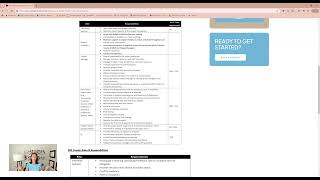
Andrea Jones explains why IT matters in ERP implementation but shouldn't always lead the project. If involved, IT needs 15-25 hours weekly, ramping to full-time at go-live, to handle hosting decisions, infrastructure setup, legacy data extraction, user access, and integrations.
Questions this video answers
Approximately 15–25 hours/week, up to near full‑time around go‑live.
Within the past five years.
Chapters
Hi, I'm Andrea Jones and this is a little addendum to our ERP implementation series. After the first step, which is where we talked about gathering the team and making a plan, I want to go through a little bit more specifics on the team and one department I failed to mention in the last video, which is it, your information technology team. So if you can see my screen, this is a blog we put together and I will try to get it linked here in the comments section. You can see that in this we talk about the ERP implementation roles, responsibilities. So who do you need on your team to deliver a successful ERP implementation? And we'll talk about your team before we talk about the vendors team here. I'm going to not read all of these because I talked about most of them in the last video. I am going to jump into the IT section though. Often people think that their IT department should run their whole ERP implementation, perhaps be the project manager. And certainly they are absolutely essential in this whole process. And if they have, I would say 15 hours a week minimum, up to 25 hours a week during heavier periods, possibly closer to full time around go live, definitely closer to full time. But you know, that's a lot of people, anyway, I go live, then maybe they can, especially if they have the rapport with the entire organization, great relationships and they can drive people to being accountable and ideally have an experience implementing ERP before in the relatively recent history. So within the past, I would say five years maximum. Okay, so perhaps I can. But what they will need to do, regardless of if they're driving the project as a project manager, is they need to do what it always does, right? Like where is this system going to live? Is it going to be in the cloud? Are you putting it on a server? How are you going to make sure that IT physically can live within your information technology environment? So they've got to prepare all of that, make sure the connectivity is working. We're working with a customer right now who doesn't have great wi fi throughout their whole warehouse. And so their IT department needs to figure that out before they can even determine if they can be in the cloud or have to be on prem. There's a lot of data extraction and IT often is stuck with it. You know, if something's coming out of really old legacy system, it might need to help with extracting that. If data is coming from spreadsheet and disparate sources, honestly, it's got to come from where it started. I don't know if it can really Help, you know, don't blame them if they can't find everything if they don't have access to in the first place. But still, data extraction support for IT to be migrated into the new system that makes sense for it to help with it's a pretty big task. They might need some support, technical assistance as required. You know, people are going to need login information and quite frankly the IT team should be the systems administrator after the system goes live. So they need to be able to help people get into the system. Perhaps some basic navigation. People are always going to ask IT first, so it's a great idea to get them familiar in the system. But you know, if they haven't used whatever IT is you're buying, they're going to be getting familiar just like everybody else. So it, they're probably wanting to be part of the team versus driving the team, that's my guess. But they should be. Most likely they will be taking on the systems administrator role to make sure that things function properly over time. So they'll have to really learn that system. And you might be putting in integrations with existing Systems like maybe Bill.com or Avalara or some new interface that you have, or your, your website or your client, customer portal or whatever. And so they'll have to work with those integrations too. And so that's. Those are specific tasks that are going to have to be done throughout the implementation. On the vendor side, they'll have some IT as well. They'll make sure that you have a training or sandbox environment, a place where you can play around. It's not going to mess anything up. You can practice and set up training sessions and things like that. And, and if you need help with what kind of infrastructure you might need, how much cloud service or, excuse me, storage or things like that you might need, they should be able to advise on those things too. Okay, I hope this is helpful. Again, an ERP implementation is a pretty big deal. Sometimes people think it should drive the whole thing, maybe as I described, if they have experience, if they have time, definitely. They're an essential part of the team though. Thanks for watching.