Post Executagility Team Overview Training Webinar - Meeting Recording

Andrea Jones leads a training session on execution agility and project management. The webinar covers project alignment, time management, and competence in managing projects, with interactive examples throughout.
Chapters
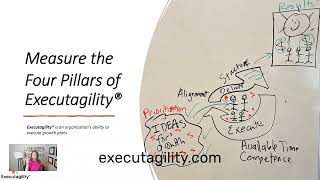
Please break in on me and or you guys are welcome to just shout out as well. Okay, fair enough. All right, here we go. Let's see if I can make my screen actually do what I want it to do. Yes. So if you recognize somebody on this screen, you're in the right place. Thank you everybody for letting me present with you last Tuesday in the D.C. area. And Todd, again, thank you for inviting me to the team. I've been a Vistage member now for going on 10 years and I feel like every time I go into a presentation and I think it's so interesting and the speaker is so engaging and I have been inspired and I'm like. I go back to the team the next day and I try to share and it just falls flat because I'm not the speaker. I don't really know their content. I'm probably not as inspirational as they are with their content. And so I've always wanted to be able to share a little bit more directly with people that I present to. So this is why we have invited you here today. This topic is on execution. We call it easier execution. And I want to share with you why I even care about strong execution. I mentioned I've been envisage for a while. I started my career actually at intel and I didn't share this with you guys last Tuesday, but this is my little intel bunny suit guy. You can see that on the screen. I was a process engineer in the factory. The factory at intel runs 24 7. My job was to run growth and improvement projects so trying to make the process better, faster and stronger. And in doing so we worked a lot of hours. It was a great place to be from. But when I decided when I got engaged and got married, I really wanted to have a family and these guys came along and. And it was not exactly easy to run a 247 facility at the same time as having children. And so I decided that I would help other companies with this kind of project execution that maybe weren't the enterprise level and maybe didn't have someone whose entire job it was to do that kind of project work but still needed help with projects. So I became a consultant, honestly for that reason so I could have a family and continue my career. And you can see the team that we have here, we've grown since then and we have actually a few more people than are shown there. But we call it the time value of life. So the projects that we are going to talk about today are things that we have found a way to do while you're still doing your day job. So you're running projects and you're doing your day job. And we'll talk about that in a minute. Why do other companies in general care about strong execution? This. If you don't execute, you're not going to be a business for a whole lot longer, right? I mean, I think it kind of goes without saying. And when there's problems in execution, problems that lead to delay, that leads to delayed invoicing and delayed cash flow, and there's just all kinds of problems. So in general, most companies care about execution and they don't only care about execution, they care about improving their execution. That's how companies will grow. And so when you try to improve, that in and of itself requires executing a lot of projects. So I want to really start this conversation by making sure we are aligned on what a project is. This is straight out of the Project Management Institute. So the sort of gold standard of project work. A project is a temporary endeavor undertaken to create a unique product, service or result. And the key phrase here is temporary. A temporary endeavor. So you can imagine your business is operating in a certain way, right? It's running day to day operations and the team would like to grow the business and be operating in a, in a better way. All of the steps to get there, all of those things you have to do are projects because once you get there, you finish them, right? So that is what we're talking about with respect to projects today. That anybody have any questions or concerns about that definition looking at the side screen? All right. So it's really hard to measure your ability before you get started on running this kind of project. And we have coined a term to help with that. It's called execute agility. Yes, it is a seven syllable, really long word. And I'm sorry that I didn't come up with something shorter that I could trademark. But execute agility is where it is and what it means is it's an organization's ability to execute its most important projects consistently over time. And it's really hard to measure something like that because your ability to execute these growth projects is not a line item in your cash flow statement or something you have in the assets of your balance sheet. It is something that often people will say, well, you know, the results will speak for themselves. Well, that is great results by definition come after. That's a lagging indicator. How do you know before you get started with these projects or as you're getting going, whether your team can really do that on top of the day? To day work they're already doing. And so we did create, well, we created assessment for that, but I'm going to go through how we're going to talk about that today. So we're going to talk about the four most common gaps in project execution. That's where this assessment comes into play. And, and this is from our experience of doing projects like this with small, medium businesses for almost 20 years and how you can close those gaps. And I'm hopeful that if at nothing else, all of you get the same language and the same ability to talk about how you can close your own gaps. And then we'll talk a little bit more specifically about what you as your organization can do to close those gaps. Okay, thank you by the way, to Todd's group because you guys convinced me to actually put my name on this quote. I like to say that ambiguity is the enemy of execution. And what I mean by that is if you don't know what you're doing, why you're doing it, what specifically has to be done in the short term or this quarter, who is doing what, it's really hard to get anything done. And you know, a very simple analogy would be imagine that you're talking with a big group of friends about going out to dinner. Where are you going to go, what time are you going to go, what day is it going to be, what restaurant? Like, do you need reservations? Does anybody have any food allergies? I mean, all these little things, if you don't have the answers for them, often we wind up with, nevermind, we're not going out to dinner at all. Right? You just don't do anything. But imagine on the company level this is even greater of a problem because you want to get this project work done and improve your business. And when people are unclear about what is expected, they, they often don't do anything. And that leads to that delay in that picture I showed you before, which is a lost cost and sunk money. So ambiguity is the enemy of execution. We need to be real clear here. I talked to a few of you guys before we got started. We do have this assessment and if you have not taken this and you want to please put your email in the chat and we will make sure first with the leader that was in the presentation that it's okay. But we'll get you the assessment because this really will help your organization understand where you're at today in terms of your ability to execute those most important projects. A lot of you have taken it and Dan, I don't know if you're going to be okay with this. But if there's time at the end, I'd love to show your guys scorecard because it is really awesome and you got most people take it. So kudos to you. Okay. After you take it. This is a representation of what you will see. So these are the four areas that we have seen gaps. And these are the four areas we're going to talk about closure for today. But I'm going to describe them briefly right now. So we'll start with the yellow. That's the alignment one. Just like that example I gave with the restaurant. Right. This is alignment. It's not the same as some of you might be using something like this. It's not the same as the mission, the vision, the values, the purpose, all of that alignment is very, very important. I highly recommend using something to at least get on the same page with that. But what we do is complementary because we're talking about alignment in the execution of the work you're doing now. So it is, what are you doing? Why are you doing it? Who needs to do what? What needs to get done? This quarter, are we all very clear on that? If that is not green, I will show you how to get it green. And if you kind of kitty quarter down to available time, I'm sure everybody can guess what this means, right? Like how many hours do we have in the day, in the week, in the work week? Do we have enough time to do both the jobs that we have to do to keep the lights on and also those projects we have to do to grow the business? That's a challenge for everybody moving. Actually, I'll move over to the green one you see here competence. This is pretty representative of what we've seen. So I have given this assessment in one form or another to over 100 companies. The dashboard is relatively new, but the assessment is not new. Competence is do you have the technical skills to do the projects? So the company, you might have people who are very capable of running the operations. That's your productivity metric. But what we're talking about here is the work to grow the business. And I will say this one might go down before it goes up. And the reason is part of competence is running the projects. And people don't always think that when they first take this. But you'll see that when we talk about the roles, responsibilities for this section and the last one in the top left, the structure, so you might know what you're going to do. Everybody's on the same page. You know who's doing what you feel like you have enough time to do the work and you feel technically competent to do it. The structure is the vehicle in which you're moving. So for example, whose job is it to get our team together and get things started? Right. Like, do we just sit around and wait? Like we decided on this, but how many weeks does it take us to kick it off? And as we're going, are we measuring our results? Are we showing what we're doing and having transparent results as we go? So we don't wait till the end of the quarter and then say, oops, you know, we had a problem six weeks ago but we forgot to address it and we all got busy and we just. Now the whole quarter is gone and you don't have any results. That's a problem. So all of those things are what are encompassed in that structure. Are there any questions on this? I know I'm kind of going through this fast because we only have an hour. It's not as interactive as the Vistage presentation. All right, I'm going to keep talking, but please break in if you're like, this woman's monotony is starting to get on my nerves. Right. Okay, so let's go through each of these pillars as though it were red for your company. The first one is alignment. And I shared this tool. I know you can't really see it, but I'm going to give a video version here in a sec with the team on Tuesday. It is a tool to get alignment. It is what I have been called, is called a rudimentary tool. So this is, please, this is not a long term roadmap strategic planning tool. There are lots of great and very sophisticated tools. This CEO told me she has all kinds of sophisticated tools for her long term roadmap and strategic planning. And I said, great, because that is not what I'm offering you here. I am telling you there is a one stop shop to make sure you're aligned on what you're doing right now. And that is what this is. So before I get into that, I'd like this quote or this little cartoon. I ranked all of your assignments by priority so you won't waste time on unimportant stuff. And everything is an A priority except for your personal life. Well, this helps a lot and I'm still working on the B must do priorities. Right. So how, how often do we see that in an organization? We feel like there's this list of everything that gets done and it all needs to get done now. So here is the rudimentary, straightforward one stop shop tool. I've given a copy of this to everybody last Tuesday. If you need an electronic version, please reach out and we will get that to you. I'm going to walk through how to read this. I'm not going to walk through how to do it. That was last Tuesday. But how to read this. So on the far side you see project list. These are the what? This is what you will be doing this quarter in the immediate term. And you can see that the numbers aren't totally sequential because we canned one of them. Right. It didn't meet our criteria. So it may or may not have a really long list. The goal is to get you to something realistic. Okay, so that's the list of what the blue is what you would expect to have done this quarter. So we call that the definition of done. I think that's actually an agile phrase. We'll talk about agile a little bit later. But in the first one that I have listed, this is from my companies this past Q1 of 2024. Reconnect with previous customers. Okay, that's, that's what we want to do. But what does that mean? We've been in business since 2006. That would be a lot of customers to call and is it realistic to get a hold of all of them and not 90 days? So we were very clear we wanted to email and call all of our customers from the past two years. Right. That's what we would consider to be successful. And by the way, that is how you can chunk up bigger and longer term projects to feel like you are making demonstrable progress every quarter. What do you need to have done this quarter? Be specific. Okay. That criteria that you see on the top, this is the why. And again, it's not like your long term strategic roadmap. Why? We want to be the best XYZ company in the entire world. You know, we want to quadruple our revenue, we want to be super profitable, we want to have this many employees. Okay, that's all great. And then again, feel free to do those things. That's strategic long term planning. But what this, why is, why are we doing anything this quarter? Sometimes there's seasonality, sometimes you have specific needs. If you got a ton of customers one quarter and your operations fall down, maybe you don't want a ton more customers the next quarter. You want to fix the ops first. Right. So there's always micro rationales that still fit within your larger organizational goals. That will be important individual quarters. That's what These three whys are, and what I shared with the team last Tuesday is, you know, there's a lot of examples that was on the back of their sheet and I'll share with you the ones from, from Steve Jobs at Apple in 1997 when he got back to Apple, he said, we're going to make the best products in the world. We're going to change how people think about technology and we're going to provide a fantastic user experience. Anything that doesn't meet those three criteria we're going to ax because you have to sacrifice 99 great ideas to get to the good one. Now, I recognize that that might be longer term, big picture stuff, but it's still true in the shorter term. So some of the things that these companies that we talked to on Tuesday said are things that will give us an immediate return on our investment. If we are going to be spending money, we need to be able to recoup that cash relatively quickly or it's something that is going to improve our operational efficiency. So if we're spending a lot of time on something right now, we want to reduce that so we can take on more work and scale. And then there were some, and this is something I've heard before, we need to be able to do whatever these projects are with our current team's resources, like their skill set. That jumps right into the competence we'll talk about later. But if you know that you don't have the internal capability of, for example, rewriting your entire website, maybe that's not the project you want to take on right now if you don't have the capital to do something like that. So those are the types of criteria that you might come up with or you might see. And when you can tell your team this is why we're doing anything, then people will start to put all the new asks under that same rubric. It very much helps when you may have somebody who's asking you to do new things in the middle of the quarter. You can kind of say, hey, do those new things fit under these three criteria? Alright, so that's how to read that those high, medium and lows should be done for you. It's probable that they might even take them out because that's how you evaluate every project against each criteria. So probably the things that you're doing will be at least high, highly likely to meet those criteria on two, if not all three categories. Okay, the regulatory column, that is a binomial. So there might be things you have to do if you're in A compliance industry. Like if you're in, I don't know, biotech or finance or in general, you can see ours getting ready for taxes. Everybody has to do it. If you don't do it, the government could shut you down and that's problems. So sometimes even if it isn't highly likely to meet your goals for the quarter, you might have to do something anyway because of that regulatory reason. So we did give a nod to that. Now we get into the who, and we will be talking about these roles, responsibilities, but at a high level. The sponsor is the person that's championing the project, making big picture decisions. So like, do we have a budget? What is that definition of done? Did we meet it? They're adjudicating whether we met that level of quality and answering any sort of roadblock or troubleshooting questions along the way. But the sponsor ideally is not spending a lot of time on the tactical work. And here's the reason why. If your sponsor, who tends to be somebody in the leadership team, is spending all of his or her time on the immediate term work, that is a large indirect cost for your business. And we talked about this in the meeting. What's a direct cost or an indirect cost of some of the choices you can make here? Well, you might not be directly spending extra money if your sponsor is doing tactical work because you're paying that person a salary. But if that person is not looking ahead and seeing where the market is going, what product market fit you have for new ideas you have out there, how your customers are doing in the big picture, that could actually cost you a lot of money in the long run. And that's really the responsibility of that level of person in your company. So the sponsor needs to be identified, but not spending time in the weeds. The project manager, this is the one that's often missing in companies that don't have a project management office or somebody whose whole job it is to run those projects. Like I was doing it when I was at intel, that person needs to be designated. And what we've seen is, you know, back to the example of getting a group going out for dinner, there's almost always somebody who kind of rises to the top and just does it anyway, right? Like, hey, we're just going to go here and I'll make the reservation and you know, all that stuff and that's fine. But in a company, if that person is always doing that and nobody else knows that they're supposed to be, sometimes people get really resentful of that. We've Seen. Why is this person constantly telling me what to do? It's not their job, right? The person themselves can get resentful. It's not my job. Why do I always have to be picking on everybody? So it's really a great idea to say this person will do this and let's give them this role and this responsibility and let's acknowledge it to everybody so it is part of their job. So just being clear. And then the team members are who you expect to do work on the project. We'll talk about that later. So again, this is a one stop shop. It's a straightforward tool. If you can fill this out completely and share it with everybody whose name is on this list, then you should be able to go back to that assessment and get 100% on the alignment. All green. Any questions before we move on to time? Everybody's favorite problem to have. All right. Well, in the interest of time, I will keep pressing forward. So available time. This is, I will say, I don't think I have seen in the hundred or plus that we've done anybody being green on this from the very beginning. Because it's so hard, right? There's always stuff that comes up and so do not kick yourselves if this is not green. That is normal. Do you prefer that I focus on one project at the expense of all the others or should I spread my attention across all of my projects and do low quality work on all of them? Your answer cannot involve magic. So can I hear the choices? Again, this is very normal. There's so many things to do and you've heard it said, right? If you spend your time on everything, you never get anything done. So how much time does a project really take? So we have to remember the audience we're talking to primarily here is the audience that still has a day job. So they still have work they need to do to keep their current customers happy and ship or deliver whatever service or product you're providing. So it's hard because there's not a lot of extra time. This is what we have seen as far as how much time these growth projects typically take and you will get better as you go with that definition of done to make sure they can stay within the time that you're going to have from the sponsor's perspective, honestly, it should not take a lot of time if all this person is doing is a true sponsor role. We'll talk about this a little bit later the process. But you know, at the beginning they have to fill out the tool and they have to communicate it for sure. After that, they're only there for troubleshooting. And when we talk about structure, we like to do a every other week little snapshot of how the progress of the project is going and they should be participating in that. When we talk about our recommendation, it's 30 minutes every other week. So that's not a ton of time. But it allows the sponsor to stay on top of things to demonstrate that they care about this project, right, show their face and be available. And it's not a ton of time. The project manager though, on average will be the most time, we say 8 to 10 hours per week for any project. And the reason for that is this is the person where, you know, the buck stops here. Like they have to set up the meetings, they have to make sure that everything people say they're doing is written down. Ambiguity is the enemy of execution. They can't let there be ambiguity in the project. If two people in different, you know, groups or different locations have to get together and they've got a ton of work to do and they don't have time to figure out their schedules, this person should schedule the meeting for them, honestly, because sometimes if you don't, they just never talk. And I've had that experience multiple times in my career. So it does take a little bit more time on average. That's why it's 8 to 10. Not like the team members, which can be 5 to 10. So from a team perspective, you'll see again in structure, the way we recommend doing it is listing out your tasks and committing to what you can, what you believe you can do in a two week time frame. So typically it's about five to 10 hours a week. And if your PM is helping people maintain focus on things you tend to not forget. Because what ends up happening if you only meet irregularly or you don't meet consistently at all, and people say they'll do things, you know, the regular work has cropped up and they forget. It's not intentional, it's not trying to sabotage the project, it's just they got busy, which is understandable. But when you have that focus, team members can really get things done in five to ten hours a week. So the big question, of course, will the team have time? So let's go back to our tool here. And you can see the projects that we prioritized in this example. And you can see that I've highlighted, I've highlighted my own name, four projects and I said five to 10 hours a week per project. So that's anywhere from 20 to 40 hours on average. That's a pretty big range. I don't know that I have that kind of time. You know, I'm probably busy at least 25 hours a week just doing what I need to do to run this business. Can I add four more projects on top of that? Probably not. When you take the assessment, you can find out before you get started and then you have some choices. The easiest one. Cross something off the list. No, people don't always love to do that. This tool is not going to tell you what the right answer is. All it can do is highlight that you have identified the same human being multiple times for the projects you prioritize and gives you a talking point. There's a few other things you can do though. One that we've seen is we were working with a company that had really big backlog of invoices that they had in an old system. We helped them with the new system implementation and they had this big backlog of invoices they wanted to distribute from the new system. So they're still running the business and new needs to send out invoices. They're coming in every day, but they have this backlog to get done. By the end of their fiscal year, which was only a couple of months away, they had to chip away at that backlog the whole time. What we found this company specifically, what they did is they, they serviced industrial generators in the field, like at Home Depot or Lowe's. You know, if the power goes out, you've got an industrial sized generator in the backyard. And they would do preventive maintenance on those things. So the invoices were for coming in and doing like a six month preventive maintenance or an annual or whatever. Normally those things were very straightforward. They check specific things and they would, you know, mix gasket repairs or filter replacements or whatever. They knew what they would need and those were very straightforward. But sometimes they go into the field and they would, you know, change the filters and fix the gaskets or whatever. But they'd also see there was a big problem with the motor and so they would have to pull parts off their truck and do an extra troubleshooting. They'd have to get approval from the customer, not just charge them for this stuff. They'd have to have documentation of the approval. So when they sent in the invoice, the customer didn't wonder why they were charging them more things like that. Those were very complex. So what this company decided to do is they hired some temps, honestly to do the easy ones and the temps just got the easy things done where the more senior staff would be able to focus their time and attention on the more complicated things. So that's one example of something you can do. It might not be temps, it might be people that are in your company. You have some people take on some extra work from the other people who are doing projects. So there's ways to increase time. But it certainly is the, I would say most challenging pillar of all four. Anybody disagree with that? We did discuss that nobody in the room had unlimited time and resources, so I'm guessing that that's still true. Okay, so moving into competence if your gap is competent. So again, this is the technical work to get these projects done. Really inclusive of the ability to run the project because that's a role project management. So this is another bit of an eye candy chart. I think it's all on here. I'll make sure I read the bottom ones halfway. Hidden. Can we do these things? What we expect again from the sponsor is to say what's the goal for this project, the vision for this? That definition of done. They have to be the ones to say this is done to our expectation or my expectation. That's another reason why it's great if they can not participate. Because sometimes it's hard to say that your own work isn't up to the quality level expected. So it's nice to kind of keep checks and balances there if possible. They set the budget, they make any sort of decision about troubleshooting around budget extension scope that needs to be made throughout the course of the project. The project manager, this is the person who will really be establishing and owning all of your logistics. When are we going to meet? Set up the meeting. Is it virtual? Is it in person? Somebody's got to do that or those things do not happen. They facilitate the meeting. Because if you just get into a room or especially a virtual room and everybody's there like you just waste time. If nobody takes on takes over the leadership role, they keep status of all the tasks, what's gotten done, what's not done. Are there any problems with these things helping company or the team members drive those things to completion? Because work does pile up and sometimes you forget coordinating between people. Like I said before, if they need to talk to each other to troubleshoot, this person should be helping to facilitate that. If the team can't do it on their own, of course we want to empower people to do things on their own. But the reality in small companies, when your whole job is not Running a project is that you do forget. And I think it's better to recognize that and work with it than ignore it and get mad at people when they forget. That's my personal opinion. And then they're tracking, they're keeping track of the metrics, of the results, and they're escalating things. If there's a problem there, right up to that sponsor. So it's important to have somebody who can do these things. And we'll talk about what it takes to do those a little bit later. The team members themselves, I can't tell you exactly the technical skills they need. That really depends. Are you coding some new software? Are you putting in a new equipment line? I don't know. But they need to be able to say what they need to do to get the project done. They need to be able to commit to those things, say, yes, these are what needs to be done, and I will do these things, and they need to get them done. It's pretty straightforward. If they can't do those things, they shouldn't be on the project team. And the bottom line says, provide improvement suggestions for everybody. And we'll talk about this when we talk about our structure. But we have what we call retrospectives, which is a way for the whole process to get better all the time. So it's not about the people. It's about the process and how this company can run this process, run that structure better internally. So this is what's needed as far as competence to get those projects done. Any questions? Not seeing any. Okay, so again, back to our tool. Can your team do the technical work? The tool does not answer the question. It does give you the opportunity because you've highlighted the individual's names. You've also sent them in the assessment. They get to assess for themselves whether they can do that work. All right, My favorite one is structure. Like I said, we've been doing this for a long time with companies who don't have teams who can just all jump on the project, and that's their entire day job. So we have to figure out a way to run these projects while still giving people time to run their day job. I did take a video. This is only in this group, so hopefully it'll show. We ran this little game. Okay, so you can see there's Dan over there. And you can see this little red thing. Here is a ball that's in Abby's hand. So watch them do this. That going, Aaron? Is it showing? Yes. Okay, good. So I apologize that it's so fast. I Probably shouldn't do it so fast next time. But what this group is doing is they're passing this ball around a circle in a certain sequence, and they get one minute, and they have to count how many times they can get it around in a sequence. All right, so that was the first time they did this, Right? Here's the second time, so you can see. Let me see if I pause it. Yes. In this group, especially, these guys got closer together, right? I said, the only thing is you have to try and get better and that and stay in the same sequence. So how could they do that? So they brainstormed for a little bit. They're like, what can we do to get better? Right. And this group, specifically, they just got closer to each other, and they were able to get better. And here's what happened. So there were two teams based on ball color. First round, one team said 25 they would do. The other team said they do 24. The second round, the first team got 40 done. That was the team that got a little closer together, but the second team improved as well. And the point is, this team, with this repetitive approach, even though they were doing kind of the same things, they got better every time. And that is. That is an analogy for the structure that we put together. So I'm going to walk through each of those steps. So first we had the teams identify their tasks. If you're doing a project and the definition of done is this, what are the things that you need to get done? And in the game, it was, what's the sequence we're going to pass this ball around in? Right? And what we ask them to do is set at least two weeks of project tests. They will often come up with tasks going all the way through the quarter, but it's much easier to forecast in the short term. And so we really want to be as clear as we can for the first couple of weeks approximately, and then we'll flesh out the rest of the quarter as we go. The next thing they do, and I didn't share this, I forgot, is they commit. So I meant to do this in both rounds, but for this group, I forgot the first round, I asked them before the minute of passing the ball around, how many. How many times around the circle do you think you'd do? Right? And they gave me a number that's kind of like when you've got this list of tasks, let's say that you have a list that's, you know, 30 things long. And you're saying, as a group, we are going to commit to these 20. And specifically, there's names against each task that people commit to themselves. This is not the project manager saying thou shalt. This is the people themselves saying, this is what needs to be done. This is what I'm going to get done and this is how much of it I'm going to get done in two weeks. Then they did work that was the passing of the ball. They actually have to do it at some point for two weeks. We recommend starting every day. I understand that you might back off from that, but what we do is we get into a quick 15 minute virtual huddle and we say, hey, here's this list of tasks. Go around the virtual room, or if you're in person, around the room, what'd you get done yesterday? What are you going to do today? Are there any roadblocks you either already experienced or you anticipate? So with that company I mentioned, with the invoice backlog thing, there were a few of these invoices that had to go through a new credit card processor and the credit card processor hadn't set up the back end yet. So the customer service people who were really good were calling and know being on the phone listening to the muse was wasting all their time. And I was like, hey, I can call and listen to the muse act for you, right? Like, I'm not able to do the work here, but I can call and help with troubleshooting. That was an example of something the team resolved on their own rather than just not saying or keep trying to call when you remember and sitting around waiting on the phone for so long. We got through it as a team. We didn't even have to escalate that one. So you're doing the work, you're talking about it regularly and keeping each other accountable. And honestly, it's kind of fun. You know, you get to work with other humans and if you do sit remotely, it's a way to continue doing that and stay connected even when you're far apart. We do measure. We measure as we go. So again, the project manager is responsible for staticing every task pretty much every day, or at least as often as you meet. And especially at the end of the two weeks. How many? We said we were to get 20 things done. Did we get all 20 done? Did we only get 10 or 15? What percent of our commitments did we get? Did we get over? So we're measuring this, we're showcasing this when we set it up in companies. I highly recommend use something where it's a shared place that everybody can see the results. If you don't have like Jira or Asana or something like that, just use Microsoft Teams and put it in a spreadsheet, but make sure it's accessible for everybody to see. At the end of the two weeks, we review, and we don't only review with the people on the team, we invite in the sponsor for sure. This is one of the zero to two hours a week. This is a 30 minutes every other week that the sponsor should expect to spend time with the team and anybody else who would benefit from knowing this. So I told you guys about the example of the invoices, all the customer service people. There were seven states, there were seven people, they were all participating on that. There was a second project happening concurrently to improve the invoicing process itself. So there wasn't as much manual entry. They had to set up some new forms. It was like their phase two of their erp. That team invited everybody in, even the people who weren't working on the project, so that they would know, here's how we've improved this process. This is what we got done in this last two weeks. This is what you can expect to use tomorrow in the system. Right? So it becomes a de facto communication tool and a training tool. So when you have those reviews, our strong recommendation is to invite anybody who would care about the result. Have them come. It's only 30 minutes after the review, we actually kick out everybody who is not a member of the core team. So we can do what I talked about before this retrospective. I know, Todd, you talked and sort of underscored this as well. And if you had something else to say that would be appreciated. But the idea here is if we committed to 20 things and we only got 10 done, it's not you this and you that, it's how can we as a group be better? Did we over commit? Do we need to do less? Do we need to try and think outside the box about how to get stuff done? How can we improve this process for the next two weeks? Todd, do you have anything you wanted to add on that?
Yeah, my comment was just that this is the core of agility. It's the taking the time to reflect and think of what can we improve or what different directions should we go or should we even be doing this project? You have to ask those questions now and then to steer your organization and get the benefits of the Agile process that we're executing here.
Awesome. Thanks, Todd. Great. Now you've done that. And what we'd like to do is again Remember the project manager, Ambiguity, enemy, execution. We're writing down these ideas and the team is going to commit to a few of them and they're going to use them in their next step, Sprint. So the example from that team with the invoices, what they told me, seven different regions, right, with different human beings, they were meeting virtually. They all had a problem when they would under. They commit to a certain number of invoices for two weeks and they fall short. And their problem was, the way they described it to me was that their manager kept barging in on them when they were trying to finish the invoice. But nobody had the guts to tell their manager, hey, could I have an hour of uninterrupted time? But when they talked about it as a group and they discovered all of them were having the same problem, we were able to brainstorm some ideas. Like, hey, could we put a curtain up and just say I'm working on invoices for the next hour and have somebody else answer the phone for us, right? Like, the managers had no idea they were doing this. They're like, if I knew they were doing invoicing for the next hour, I would much rather not bother them because I just needed something I could ask in another time of day, you know, so little things like that can kill a project's results. But if you never talk about them, to Todd's point, you're not going to be able to get better. So it's really important to talk about them, to write them down, commit to them, and then you just like I showed you with the video and the team, getting closer together and getting more reps, the second round, that's how companies improve over time. You will find as you get better at setting the task, better at the commitments, better at the forecast, that is what's going to allow you to add more projects and to be able to do more things and scale the business and scale that growth work. So at the end of all this, we've closed all our gaps and now we are 100 on our score and our assessment for this quarter. And that, of course, is my hope for all of you. I will say this assessment is not a once and done. It's not like the Myers Briggs or a personality assessment where you take it once and you know your style and you never have to take it again. Things change, right? The season changes, the economy changes, the product market, that changes, the people change. People go on vacation, people go on maternity leave. Like, you have to keep taking the assessment because everything will change. The projects Change. So it's, it's something that, in my opinion, it's a key performance indicator, just like it would be to close sales or to receive cash or whatever else. It's something you have to always be monitoring. So now we're going to walk through a pretty high level process of how to put all this together. So you can see there's two types of groups here. There's a strategic team and the tactical team. Strategic team, it says lt. That means leadership team. So the leadership team is prioritizing the projects every quarter. I am sure they are doing a lot more on a quarterly basis, but at the end of their meeting they should fill out this form, that's the first week of the quarter and then they communicate it to everybody. My recommendation is do it both verbally and in writing because people need something to reference. Once they've done that, they should assess people. With the assessment I talked about, they should be looking for the green or at least for high yellows. And if there's any gaps, especially anything in red, especially available time or competence. Right. You need to close those gaps because if you do not close those gaps, you, you are not setting your team up for the success you would like to receive as we go. This is the structure. Of course, if the gap is structure, you've got to close this one as well. The project manager is assembling the team. That's the human beings whose name you put it on the list. Done some work in the neighborhood.
We do windows, doors, roofing and siding. Notice on the siding.
Not sure if you're pressure washing or never. Okay, so he's got a project that he's getting interrupted to be able to handle. So the team is getting together, they're planning their work, they're setting their tasks, they're running their sprints. And for the next several weeks, in that quarter, weeks three to 11, they're running those sprints, they're doing the review, they're doing the retro. Right. The sponsors coming in every other week, also available for any escalation decisions. But generally speaking, the team is running the work and sponsor gets to see the metrics. So when you go into your standard weekly meeting or your L10, if you're using EOS, you can say that your project is on and you can say it with confidence. Every month I highly recommend reassessing because like I said before, sometimes new things encroach. Right, you started. We're starting a new quarter here in October. By the holidays, something new might come up and is that to Todd's earlier point, should that displace what we're doing or not? Right. If it is supposed to displace, then you need to get really clear on the new thing. So I highly recommend. It's not hard to take. It takes only a couple minutes. Just take it every month and make sure the team is still on track at the end of the quarter. In the last week of the quarter, of course, if holidays are there, you might have to do this before week 12, but summarize the results. So this is not hard because the PM has been doing these reviews every other week anyway. So it's kind of just taking the last one and reminding us, here's what we set out to do. Here's what we actually got done. Is there anything that's left over or did we even get past this? And summarizing that so the sponsor can take it back into the next quarter's session. And now you're able to repeat this cadence consistently. All right, so what can you personally do next? So I would like to congratulate all of you. I congratulated the Vistage team on Tuesday because they have already gone through step one, which was for them to go through the workshop that we did on last Tuesday. And everybody in that meeting, they actually took the assessment and a lot of you guys took it to your teams. And now good job. You guys have gone through the overview training too. So you've already done the first two steps. So really what's next is to review your results. And Dan, if you don't mind, I might pull yours up. You okay with that? Awesome. And close the gap. So let's. And then I'm just going to finish out this slide before I move on to dance stuff and then keep that monthly assessment going. So let's pull up. Okay. I think I already had your guys's open. I know that's answers. Okay, here's Here is lodging source. So forgive me, I don't actually know how to make my screen bigger. But you can see the colors. So congratulations, Dan, because your team feels pretty competent. And what they specifically said is they have the technical skills required to do the work. The majority of them strongly agree that they'll take initiative to learn and they feel like other people have the skills. The only thing they were a little bit low on is they weren't. You know, a lot of people took this. Seven people took this. So somebody or maybe two somebody said they were neutral and if other people would learn the skills. But in general, this is looking really good. I wouldn't worry about it. The alignment was pretty high already, Dan, so congratulations. But it's very easy to fill this out if you would like it to be 100. Right? So that's just the same questions I described to you guys. We're working on projects to improve the business. Everybody 100% agrees on that. Have the shared understanding of what done looks like. It looks like there's some confusion there. So be really clear. That was the blue thing that I showed you in the image. Agreeing with his priorities. Yes, everybody does. There was a neutral on the why. So again being really clear about that. There is also a neutral on the sponsor. There were several neutrals on the project team and a couple on the project manager. But again this is a pretty high score for alignment. So it's not your biggest fish, but it would be also very easy to close it. Time was not your biggest challenge at lodging source, but it is a challenge. It's a challenge for everybody. But it looks like most people feel either between neutral and strongly agree that they do have time to do the projects that they've been asked to do on top of their normal jobs and they also feel like the rest of their team has time. The questions here on confidence that they'll finish their work before more work is required. They're a little neutral on that. And that's normal. Okay, that's very normal. As you guys get better at executing these things and saying what your definition of done is, you'll feel like, okay, we can get to that step before we move on to something else and you'll feel like you've accomplished what you set out to accomplish and then the not burning out and leaving is pretty good. There's a few in the middle there. So I am confident that when you get your structure in place, then people will feel a lot better about that. But that's pretty good in the structure. So I think your biggest area from concern is, well, it's all about the same. But you said we begin new projects consistently without wasting time or effort and somebody disagrees with that and there's somebody else that's neutral on that. So again, it's whose job is it to get this thing moving and keep it moving? You're really clear about that. You can use the agile structure, you can use something else, but doesn't matter to me. Just make sure you're clear about how you're going to get started and everybody knows it. And then you should hopefully make sure that somebody is keeping track of the results because there is some confusion around that. Are we not sure that we're demonstrating transparent, measurable results or getting things done? That was Dan's results. Any questions on that one, Dan?
I think that might be a little inflated. I think there might have been some technical difficulties and people repeating them. So I don't take too much credit for getting seven, but nothing really surprising. I figured structure bpi, one of our biggest issues. An available time I think is probably a little higher than maybe my team agrees with because I think I probably voted we have time whereas my team probably thinks maybe less time. So maybe a little inflated there but no, I think it makes a ton of sense.
Awesome. Well, if you want to go back to it, execute agility.com and you hit assessment and then member login, you can go to password help. If you haven't done this yet, you put your email in the same one you use which is your lodging one hit submit and that'll send you like a magic link to get back to your dashboard. Okay, thank you. You get back into your own. Your results will be bolded. Obviously I'm going in the back end so I didn't put anything in here so I don't have any bulge. But then you should be able to see how you your answers compare to the rest of the team and that's true for everybody. We want it to be anonymous, but you know what you said and it's sometimes nice to see where you differ from where the rest of the team. Yep. For answer there are only two people that went through it. So like I said, we're going to see if it's okay with Jessica that the rest of you who are on this call go through this hopeful. I'm sure she won't say no, but I don't want to overstep. In general, the way to get to it is execute agility. I'm going to send this thing out. If you're a first time user and your company has never taken it, you have to set up the campaign. That is how we make sure that your company does not get mixed results with some other companies. I'm sure we'll get better over time, but this is the way we've done it for now. If your organization already has been put in. So people at Answer, if you put in the answer's website here, it'll say that you already have one and you're going to have to get somebody to send you the link. So we're going to make it a little bit easier to get to it. But right now it's got to Go through Jessica or me. Andrea, Aubrey has a question or comment. Thank you. Yeah, hi.
I just had one question. So when you were going over Dan's results, it made me think. So let's say on these different dimensions, let's say your team sort of comes out with gaps to close. But a lot of the different dimensions, they're sort of scoring within the same range, right? Like, is there one of these dimensions? If you had to like pick or choose the order that you would maybe address the dimensions in, are there ones that are more foundational or higher leverage to go at first?
Yeah. Aubrey, thank you. That's a great question. I would go after alignment first even if it's not grad because it is so straightforward to close that. And if you use our tool, like I showed you before, it allows you to put the names in for who you expect to do what and that sets you up for closing the gaps for available time and competence. So my strong recommendation is to do alignment first. Thank you.
I also think that doing the alignment helps you prioritize and know which things to trim out of your work effort.
Definitely. Thank you. All right, I think I have like one more slide which is how you can follow up with us. Does anybody have any other questions? Okay, so I'm not going to make this big again. So if you want more help. Right. So we actually have a whole series of videos where I have talked about each of those pillars independently of each other. I have an overview one, I talk about each one and I talk about a summary and a wrap up and how to get to the assessment. If you want to see those, there's going to be a QR code here and it'll also be sent to you later. Let us know. We're happy to send them to you. They're on the Andrea Jones Consulting YouTube page. You could probably just find it. Of course, we do offer coaching in this because I really think especially the project manager role, that is such a crucial role for running this type of work. If somebody could coach and help help that person or people within a company stay accountable, that could be very valuable. And then at ajc we do this right, so we call it on the job training, but we can be the project manager. And when we do that, we typically do that with companies who feel they're not sure if they have somebody already. So they want us to run their projects for them and then help them figure out who they have that has the acumen to do this type of work, which is somebody detail oriented that gets their work done. That people really enjoy working with. Right. Because it's hard to work for kind of not nice person that can have 10 hours a week per project available to do the project management work. That is pretty much it. So I do have this QR code. You're welcome to take it. We will email it to you as well. It's just asking if you want to send me the videos, you want to be at our newsletter or you want us to reach out to you for anything else. Yeah, that's pretty much it. Thank you for your time. Thank you. Yeah, you're welcome. Any other questions?
I think I have a quick one. Andrea, these kind of look like KPIs, right? They're measurements and they're leading indicators, as you mentioned, that they're not the lagging indicator of how many widgets you produced or customer satisfaction or some of those other kind of typical KPIs. How would you recommend making this visible to the leadership team and using it to steer the organization?
That's a really good question, Todd. Thank you for asking. It definitely ought to be looked at in the quarterly review meeting and probably every time the assessment sent out in a regular sprint review at the monthly cadence, they could put it into their. You know how in traction you have their scorecard. You can certainly add it to the scorecard as well. I like that question. Thank you. I'll think more about that, too. All right, well, thank you all so much for joining. Hopefully we'll hear from some of you and if we can be of any service, please let us know.
Thanks, Andrea.
All right, thank you.
Thanks so much. Great training.