Episode 23 - Sharing the Faith: A Theology of Work

Dr. Tom Neal talks with Andreas Widmer, a Catholic University professor, about work as a calling rooted in faith. They explore how St. John Paul II and Michael Novak shaped Catholic thinking on business as creative service, and how work cultivates virtue and holiness.
Welcome to the Sharing the Faith podcast, where every other week we explore the beauty and power of faith in Jesus Christ, the light of the world. Now, here is your host, Dr. Tom Neal.
Well, hello everyone. Thank you so much for joining me. Again, this is Dr. Tom Neal. And this is another edition of Sharing the Faith, which is a production of the Diocese of Pensacola, Tallahassee. An opportunity for me to engage in conversations with people about matters of faith, especially as it relates to life in the world and witnessing to the person of Christ. And today, I'm very blessed and honored that Professor Andreas Widmer has agreed to join me today for a conversation about a topic that I find incredibly beautiful and deep and profound in our faith, which is a theology of work. Professor Widmer, thank you so much for being with me today.
Thank you. Thank you very much. Thanks for having me. I'm glad to be here.
Okay, well, Professor Widmer is joining us from his home office in Washington, D.C. he teaches at the Catholic University of America. Just do a little tiny biographical introduction. I'll leave out a number of things, but just to give you viewers a sense of who you are. So, Andreas Widmer is an associate professor of practice and entrepreneurship at the Catholic University of America's Bush School of Business, where he's been shaping minds since the fall of 2012. He also serves as the director of the Art and Carlis Sioka center for Principled Entrepreneurship. Andreas co founded the Seven Fund, a philanthropic organization that promotes enterprise solutions to poverty. His extensive experience as a business executive spans high tech, international business strategy, consulting, and economic development. He has held leadership roles at the OTF Group, Eprise Corporation, Dragon Systems, and FTP Software. His work has taken him across the globe, from the United States to Europe, Asia, Africa and Latin America, leading teams to bring over 100 leading edge technology products to the market. And as an author, Andreas has explored the intersection of leadership, entrepreneurship and spirituality. His book, the Pope and the CEO Pope St. John Paul II's lessons to a Young Swiss Guard, draws from his experiences serving as a Swiss Guard for Pope John Paul II and his subsequent career in business. And his latest book is the Art of Principled Entrepreneurship, Creating Enduring Value, released in April of 2022. So that's a bit of Professor Vidmer's background. There's quite a bit more. But today I would like to do at the beginning here, if you wouldn't mind, is I'd like to begin our conversation by quoting from another author who speaks on this topic, Michael Novak. I know, I'm sure You. You were very familiar with his work, particularly his work, a book called Business as a Calling. Have you read that book?
More than once, I would imagine. Love to get into it, but. But I'm gonna love the quote no matter where. Where it's at in the book, because.
I love it, where I get it from. So I'm. Yeah. So I'm gonna read a quote. It's my favorite quote from the book. I used to use his book in my class that I taught seminarians on the lay vocation. And I also had them read your book, the Pope and the CEO. And by the way, Professor Widmer kindly, in 2022, joined my class by zoom with the seminarians and led a class discussion on his book. But here's the quote, Professor Vidmer, and I'd like you just to comment on it or respond to it to kind of open up our conversation today. So Michael Novak says this. What was the vocation that from all eternity the Lord God Creator chose for his only son born of humankind, the Lord God Creator called the Christ the Redeemer to shoulder the vocation of small business? A creative vocation, a vocation of humble service to nearly every human household. As a carpenter, Jesus found freedom to be creative and to serve others. Creativity, exactitude, quality, beauty, service to others, independence. This was the substance of his daily life in preparation for all that was to come. And like Jesus, each of us must earn our way by the sweat of our brow amid disappointment and sorrow. So I love that quote, sets in context the magnificence of business as a calling. So, any thoughts? To begin with, it's beautiful.
What I wish he. He would say on top, but he says it later on in the book is, of course, you know, the. The reference at the end, he sort of talks about the vocation of business. And Jesus was, in a sense, a family business owner. Not in a sense, he was a family business owner, second generation, probably third, and worked every day, creativity and all that, but then also the toil of work where not everything goes the way you want it and there's the obstacle of our will and maybe customer will as well. And so he brings the two things together that, you know, comes from the Bible. The toil of work is a punishment for the sin, but work itself, it's punishment for the original sin is the toil, but work itself predates the original sin. And that's the creativity part of it. And so, so that even Jesus had to. Jesus was sinless who never sinned, still had to toil in A way at. At business, just like all of us do. And I think that's a very beautiful image. How many people identify with. With Jesus as a small business owner, you know.
Yes. And even to think of the vast majority of his life was spent in that and not doing his public ministry, which is only the last three years. And so how sanctifying that is.
It is. It is. And I think that's one of the things that Michael Novak did. This is actually what you just read, that that was the first book of Michael's that I read, and at the time, it must have been in the late 1990s or so, at the time, I didn't really know him. And I read that book, and I felt, when I read it, because of my own experience as helping to start and grow businesses and leading businesses, I felt that he verbalized a lot of things that I always felt, but I didn't know. I didn't have the vocabulary or the insight to actually vocalize it. And so in that sense, he wrote out of my heart in a way. And it was only later that I actually was introduced to him. And we hit it off right away, became fast friends. He moved to. I met him right after his wife passed away, and that was a very difficult time for Michael. He. I. I want to say he almost died of grief. And then his brother, so. And then his brother and sisters intervened and. And basically his brother said, look, come with me. Let's move to Florida, to Ave Maria, to this Catholic community and retire there. And. And Michael did, and they moved. They bought a house together, Ben, his brother and him, and they lived down there. And I would go visit them here and there until he had this idea. There was also another couple from Massachusetts, Michael and Katherine Pacolik, who I knew back in Boston in earlier years, who also moved to Ave Maria. So in the wintertime, you know, as people like to do from Massachusetts in the wintertime, they go visit Florida. And so we. So I would go and visit them. And one day Michael had this idea to say, you know, we need to make sure that we start a business school here, not just the university. And so I thought that was brilliant. And the four of us came up with a plan to write to. To propose to Ave Maria to build a business school. And I was just, as they say, between two gigs and didn't know what my next thing was going to be. And so he convinced me and said, listen, you need to come here, come a month and. And. And sell this to the community here and to the president and Everybody. And lo and behold, it did not work. We had the plan, and we tried to sell this idea to start a business, a Catholic business school, authentically Catholic business school, to. To Ave Maria. They wouldn't have it. And so I said, well, that's God's will. I. We did. We gave it a good effort, and they just. They're just not. They're not interested in it. So. So I moved back to Massachusetts, and about three weeks later, I got a call from an Andrew Abella, who I never met before, from the Catholic University of America, who I did that I didn't know much about, saying, hey, we. We would love to start a business school, and we'd love to. We know. We read your book, the Pope and the CEO, and it should be something along those lines. And I couldn't believe what God did. I mean, this is like, so providential. And he says, you know, we're just figuring out how to do this and everything, but. And we're just in the planning phases. And I'm like, look, don't plan any further. I have a plan right here. It's all set and ready to go. And of course, I met Andrew, and he brought me to D.C. and I signed up, and my first hire, I ended up taking over the entrepreneur. Well, we built everything from scratch, but I built an entrepreneurship center, the Sioka center, as you said. And my very first hire was Michael Novak. He was 80 years old, and he moved back from. He moved back to D.C. from Florida to help me build this thing. And so the last three years of his life, he spent here at Catholic University, just like he started his career at Catholic University. And he. He and I shared an office together. And, you know, we both are opinionated and entrepreneurs, and so we. We on. On ideas and. And things. We fought like cat and dog. But I love. We love each other. I mean, we loved each other. I was there that, I think, a couple of days before he passed away in the hospital. He was a real mentor and in spiritual father, in a sense, to me. And we. We dedicate a lot of our work at our center to Michael Novak. So I. It's. Again, it's a. And let's just say, Tom, like, I didn't tell you to read this, right? This was your idea.
That's astounding.
And. And. And so it's like Michael is in the room, right?
It is in the room that gives me too much mistake. Amazing.
Yeah. So he's actually, you know, I'm very close to him, so I love the man.
Thank you so much for that, that amazing story. And I read that book so many times over the years and it had such a deep impact on me. I mean, I don't work in the world of business per se, although there are business aspects to what I do. But just the way that he showed what a Catholic character or a human character made in the image of God looks like when it is placed in service to humanity in that book is so. And you can see himself shining through it, his aspirations, and obviously mentoring you into that as well. That's amazing. You know, there's a comment you made on a podcast you did fairly recently where you're talking about macroeconomics and you said, you know, there's really no such thing as macroeconomics. You know, in terms of the meta, everything's, everything is local, everything's micro, everything's detailed. And so when you and he would disagree over things, it wasn't over the kind of Catholic principles of human dignity and the meaning of work, it was over how that, that micro works. Is that right?
Yeah. I can give you a few, a few big disagreements. And you know, I love, I find as an entrepreneur, as somebody who's, who's brought a lot of products to market, I love to argue with somebody because it's like good friends argue because you don't let me launch a product and not tell me the truth beforehand. You know what I mean? Like, arguments among friends is actually the honesty of saying, here's what I'm thinking and let's, let's work this out. And, and in a way, you know, iron sharpens iron and it's a service to say, let me argue with you before you go out into public and make a fool out of a fool out of yourself with the product not working. And so the kind of things I disagree with him and we fought about is the, I find that what we live in right now is not proper, a proper competitive market anymore, but what I would call crony capitalism. I think we have very large companies and very large government and they collude with each other. And I have a real distaste for that. I think that the SME, the small and medium sized companies, the little guys, people who have to, who can only succeed through competition, are being locked out by large companies, you know, for all the benefits that Amazon or Tesla or just large companies bring, Google and so on, and Facebook and all these people, for all the benefits they can bring, they end up like by definition, blocking out the other competitors and they become so big that the little guy doesn't have a chance next to them anymore because they get to influence the government. You know, when Amazon goes somewhere to create a warehouse, they get tax relief, they get all the benefits, and they, they don't are not held to the same rules and regulations as we are because they get to negotiate with the government. Well, you and I, when we start a company, we don't get to negotiate with the government. And so it's like right off the bat you're out of this advantage and that hinders, that hinders competition. And he had, and so I said, I'm, I'm completely against that and I criticize it loudly, just like I did. And he basically made the argument that as a matter of fact, large government is a, is a, is a fact of, of our reality and that large corporations are the only. So I'm, I hope I do him justice with the argument. Michael. Okay, Large governments, large companies are the only ones who can actually measure up to and hold accountable large government. So these large companies are needed in this environment to keep accountable and to be evil, even in a way from the business perspective, independent of government, that they could choose to go somewhere else where you and I, we can't choose to go somewhere else with our business. And so he felt that they play a role that is vital and that he would not want to break them up and make them smaller. And so that was. Over how many beers or glasses of wine did we have this argument? And I, you know, I understand what he's saying. What else do we argue about? You know, the different, I was much more embracing of new technologies. He sometimes saw the issues of technologies. And I am of course, a tech guy. I mean, I come out of software industry and, and I, even now with AI and everything, I always see the benefit first. And I think to me, technology is a tool and it's in the, and it's the person who uses it that does good or evil technology itself. I mean, there can be, I mean, a suicide machine is a bad thing. Yeah, if it's designed for that. But, but usually it's the person who uses it who abuses a certain technology and not the technology itself. And we had arguments about that. But all in all, he's been just such a blessing to us to start, literally to start our school with his vision and with his, his frameworks. We, to this day we have, we teach his teachings, we teach with his book. Later on I started to read the book he did earlier, the Spirit of Democratic Capitalism. So many beautiful ideas in it. If you have not Read it. If you're listening to this, check it out. The easy book to read is the Vocation, Business as a Vocation, I think it's called. Actually my class is called Business as a Vocation.
This is a vocation.
So that's the easy book to read. Yeah. And then the more complex book is called the Spirit of Democratic Capitalism, which was a watershed book that you need, you need to take some time and digest it when you read it, but is so brilliant to, to understand how our economy and, and our society works. It has informed leaders. I, I know for a fact that when he, when he told me that, that when he won the Templeton Prize, he, he gets invited to England and then the Queen gives him the Templeton Prize, right. And, and when he was there on the side, on the stage next to him was Margaret Thatcher, who, who asked for an invitation to this because she wanted him to sign her book, which was the Spirit of Democratic Capitalism. And he said he could see that it had notes all over and, and, and things stuck into it and everything. And it was completely, he said it was a well used book. And she said it was one of her favorite books that she uses. And I think, and I can say from my perspective, John Paul II was very engaged with the thought of Michael Novak and read attentively what he wrote and was very informed. You know, the whole idea, the whole encyclical, Centesimus Annus is very much informed by what Michael Novak taught. And so, you know, he had a very strong impact. But he was one line removed from the front line.
Yeah, just incredible. But that there was all of this behind that quote that I thought of. And I'm grateful you corrected that. I guess I've always said it was business as a calling. For so long I haven't even reread the front cover, Business as a Vocation. In that book, Professor Vidmert, he talks quite a bit about the, the fact that free market economies are really ripe for promoting vert the work, kind of a virtuous life, if they're understood correctly and informed correctly. So when you think about, you know, a free market, free market economy or capitalism, I don't think you prefer the title capitalism because of its Marxist origins or just it's kind of a misconstrual, I think you've said. But, but how do you think. So thinking about how a theology of work, how work helps us to cultivate and grow in virtue, how does a free market economy help to do that? Or what is it that makes a free market Economy work towards cultivating virtuous people.
See, it's the toil part. The toil part in a way because we fell away, you can explain it in a sense with the original sin that because we fell away from God we have in a way through our free will discovered this. The, the antithesis that. The desire, the anti God desire, which is sloth and latency, if you will like to, to actually reject God, the true, the good and the beautiful, in a way, the excellent, you know, that we have, we have now suddenly received this propensity to, to be more like the animals than the humans, you know, God is excellent. And through our godliness, God likeness, we have this potential to soar, you know, to be, to be beyond, you know, not just to be an animal, to basically soar and be Godlike, to continue God's creation on earth and all of that. And through the, the original sin and through the fall of nature, we have now fallen to the point that we tend to do nothing, tend to reject excellence. Because excellence of course comes with this, with this effort. And in order for us to, to overcome this, which would be in the, in, in the beginning I think we, we didn't have to overcome this. We just did this naturally. But since the original said we have to overcome our sloth, that when we want to become excellent, we have to toil, right? That's actually to overcome that. We're almost like we have to really work to fly, you know, to, to overcome our gravity, right? And, and to become, to, to be, to reach human excellence. And because if we, if we wouldn't be in a competitive environment, and that's my answer to, to your question about why the competitive economy or the market economy if we wouldn't compete. It's almost like in a race that you run at least as fast as the guy next to you and you have the competitiveness to win, to run faster. God needs to put us into this situation. We have to put ourselves into the situation that we constantly have to compete otherwise, to reach higher, to reach our excellence, reach our potential. Otherwise we would left on our own, we would fall short and we would stop excelling and stop pursuing excellence. And so this, this issue of competition. Humans don't like it because it takes, it forces them to overcome sloth and like weak, weak willedness, weak will. But it is absolutely necessary for us in order to advance as humanity to have this competitiveness. So often then it's presented to us with different systems, I think to say, oh no, you don't have to worry, you Don't. You can just hang around and do and, and, and not compete because competition is hurtful and makes people feel bad. We're, we can, we can have prosperity and progress and human excellence without it. That's a lie. Because the truth is that we are fallen and that if you, if we don't have to compete, we will absolutely not rise to the excellence that we're made for. And the free market system is, I think that the ideal is the only system I can think of that ensures that we pursue excellence. And maybe there is another one. The Church doesn't really define it and say, you have to do this when the Church is sort of saying, well, just take a system that does it. But I think the free market system is the only one that I know of that really helps us pursue, in a way, forces us to pursue human excellence.
And your whole career has been pursuing human excellence within the realm of business particularly, and obviously teaching economics in business. And as you've talked about innumerable times in your career about your influence John Paul II has had on you. And I encourage everyone to read the book, the Pope and the CEO that you wrote, which is a marvelous autobiographical story about your, your evolving relationship with him and the impact it had on your future business career and mindset and marriage and everything. What, what did John Paul II impart to you that gave you a, a different way of looking at this kind of competitive market, this free market, competitive approach that is conducive to virtue? What, what does he show in his own example, in teaching?
So, so the core of what John Paul has taught me, he's often say that he, you know, I was not a faithful Catholic when, when I went into the Swiss Guards and, and I sort of, I found my deep faith through him, through both his guidance and his example. And it's almost like if somebody takes you by the hand and walks you up on a huge mountain and lets you see the whole, you know, the whole surroundings. And I, I remember thinking of, why did. Nobody ever told me this. Why, why not? Why never? Why don't, why am I not aware of this vastness of what we can see here and the height that humanity can achieve and, and just these beautiful thoughts and vistas that you have with this faith and with this, with this Catholic patrimony and both faith and reason, you know, and, and the depth of what he showed me there is that, that this is not something that you, you go just into a spiritual realm and you, you leave your body behind and, and then you sort of float up there? No, it's actually. It's actually both of it together. That my body is actually a reflection of my godliness and, and that my body is sacramental. My body has meaning both now and in eternity. Right. But whatever I do now is also valid in eternity. And it's just beautiful. You can see it in. In Jesus's. You know, just now we're in this season where you read all these things where Jesus says, what you bound on, bind on earth is bound in heaven. And he tells the apostles, he tells us that what we do here counts in eternity, in the good and in the bad. And what he showed me is this sacramentality, in a way, of all of me, not just my mind or my spirit, but my body and everything. And that changed how I saw the world. And it's like taking scales away from my eyes that has shown me that I have this opportunity as a person, let's say as a business person, as I go in to imitate God and to be. It's almost like, you know, he would. He would explain to us that we are like God in that we get to continue creation. Yes, and you get to continue creation by being a. A subject rather than an object. So he would. He would explain that the animals are. Are objects because they have no mind of their own. The animal has no choice, meaning it doesn't have free will. It has to do whatever it's programmed, in a sense, to do what its nature tells it. God is the being that can do what it wants to do. You know, God can do what, can do what he wants to do. He's not really limited by anything. We're like God because we get to actually go against our nature. If I don't want to eat, I'm not going to eat, right? And I can say, I don't. I feel like doing this right now, but I'm not going to do it. I'm going to do something. No animal has this power. This is our. This is part of our godliness. And therefore, when you listen to this and you feel that your body is demanding something, know that you have the freedom, which is part of your godliness, to say, no, I'm not doing that. I'm doing this. That's part of it. And so. And so we're called in. And we're also. We also are the only animal that can say, let me think of something and make it a reality. It's like God creating the world. Like, I can think I was part of company. So I was part of the company that Invented speech recognition. So we basically have a team that thinks, wouldn't it be cool to create a software that can transcribe human speech? Boom, there it is. I have it now on my, on my iPhone with Siri. And it's its own little thing. And it's. And I'm not in it. You know what I mean? It's not a part of me, but a part of me is with it, right? Because it's the product we, we created. And I helped in. I'm not an engineer, but I helped in bringing it to market and all that. And that is very much like God created the earth and then turned to us and said, now I'm going to make you. I give you my. I make you in my image and I allow you to go into this world and in a sense, play me or participate in my creativity. And so now I get to make. Create goods and create services in a way to continue this creation. But I get, I have now the ability. And this goes back to this, to John Paul's insight or at least how he explained it to me. Now I have the choice to create goods that are truly good, right? And to. To create or provide services that truly serve or not. And I get to decide. See, this is now, this is in a way where we then can fall. Now it's not just Adam and Eve that fell. You and I can fall. Anybody listening to this can fall again over and over with their physicality by creating goods that are not good, not truly good, or providing services that don't truly serve. And this becomes a very personal thing, of course, because what is truly good and what does truly serve, and this is a part of your godliness in the business world that you get to make that decision in a sense, except that at the end of your life, you're going to have to talk to the big guy to say, here's my measure of what I say is truly good and what truly serves. And then you basically stand for that, right? You bring that back to the Lord and say, here's what I did and that is a merciful Lord and everything. But there's a lot of consequences to this. And my point there, which is John Paul's point, is that you will bring that physicality that you did into eternity, right? And that's both, that's both beautiful and frightening, but it is this, this. It is a completely different way to look at our being Christian, at our being a phys. An, incorporate an incarnate spirit, that it's not, you know, our view, view of heaven is. Isn't that one day my soul is going to be free and fly away and be like an angel? No, actually, heaven and the New Jerusalem is going to be the second, the second coming of the resurrection. And we say it in the creed of the, of the body, of the dead, the resurrection of the, in the, with the body and the soul right back together. And he called that the theology of the body. Right. And that's, I've had the privilege to listen to him for two years on this, that it inspired me. I mean, I keep learning and, you know, going forward with it, but that is really what I'm bringing to this teaching here at Catholic University is the business teaching business in light of the theology of the body. And I think that is where Michael Novak and I really were one in putting this program together, in that we felt that that is where it's at. That's the perspective. And that's a uniquely Catholic perspective that I think is, is our best kept secret.
It really is our best kept secret. And what's listening to you here now, the secret of theology of the body, because theology of the body, I think if you ask Catholics who were engaged in that language, in that world and the thought world of John Paul ii, there would think largely sexuality when you say theology of the body. But what I love here is that you see that John Paul II's thinking about the body is far larger than that, far broader than that. His social teaching was deeply formed by his theology of the body, and particularly in this case, his theology of work, of toil and then therefore business.
And, you know, you could compare. I, I think, of course, the most important human relationship we have is marriage that's molded after the Trinity. And it's, it's, it's a God, you know, it's, it's like the highest form of relationship we have. But other relationships and other parts of our personal life fit into that in a, a sort of a lower level, but nonetheless a critical level of our path to holiness. And I would like to point out that the first objective and privilege of marriage is to be able to create an eternal being, a new. And so when we have a child, this isn't some angel that now gets caught and stuffed into a little baby. And this angel, you know, was there before. No, this is a completely new being. But it is a being that has been created through the love of a, of a husband and a wife. And that being will never die. That, that is the highest privilege that God has given us humans to be like God to create that. This is, you know, John Paul would talk about how that is such a joyful and a. And a pleasant experience to create a child like this. Because God's presence, because of the ecstasy reflects God's presence, right?
Yes.
But let me ask you, where else do we create? Where else do we get this privilege of creating? Okay, not an eternal being, but where we get to continue God's creation? And that is in business and in work. And I don't, I don't say that all of that has to be paid work or the economy work or something like that. A lot of that is not, not in the, in the formal economy, let's say. But all of that is what we would equate to work. Whenever we rise to the level of work, it means that we overcome our inner sloth. Like where we actually. Over where we pursue excellence, where we make an effort. Right. And that is when we rise to the potential of our godliness and of our imitation of God. And I think that's a shadow of that because that also in its own right, is an act of creativity because we can make something that didn't exist before out of some new combination of whatever nature or even just thought. And so my point is that, and I think it's clear, if you read the Theology of the Body, interested me in how I heard him talk about it, it's clear that he didn't. He meant marriage as the ultimate human to human relationship. But I think he saw business as a shadow, in a sense, you know what I mean? Like a shadow of business. Marriage is a sacrament. It's a completely different, you know, it's different in nature, you know, but as a shadow, us to come together and do business together and be creative together in that way, Theology of the Body all over.
That is, that is such a magnificent, it's such a big vision, but it has such incredibly practical real world consequences. And yeah, first of all, I can't, I cannot believe that our show is almost over, by the way, I feel like we just started. This has been the most rich conversation I've had in this show. It is, we are, we are seven minutes away from the end. So I guess if I had to throw everything into a final question to you, to bring all of this together, thinking about business as a vocation, to use Michael Novak's book title, that idea of the calling of business, with all of this kind of theological worldview you talked about, for a person who works in the business world, who's engaged in the work of business and maybe Thinks of business. As you've said many times, we think of business too often as just about the products, the money, the results, and so on, but not about the actual work itself and its deeper meaning. So with a vocational worldview of business, or of work, rather in business, how would you say for the people listening, that could change the way they view the. What they do every day in their own business, work life.
So work has to be good, you know, for. For what you make to be, you know, the goods that are truly good or the services that truly serve. They have to be truly good and truly serve in two ways. They have to be truly good and truly serve to the people who receive it, but also to the people who make it. If your. If your actual work every day isn't. Isn't a happy occasion and something's wrong, you cannot get good out of a bad process. And I'm saying happy. Look, am I happy every Monday morning to go up or get up and do do this, or am I happy if I have to? I just had to grade, you know, whatever, 200 papers or something like that. I mean, yeah, we're talking about toil, okay? But I'm saying, if I take a step back and say, is this good? And do I want to do this? Yeah, I do. And I see the good in it. And actually, overall, it gives me choice. So I'm not saying I'm in bliss every second, but I'm saying I see the good in this. And the path itself makes me grow. The path itself makes me focus. And I see how my excellence is increasing as I'm doing this. Not the fruit of the labor only, but the actual labor itself. I ask you to focus on this, and then you say, well, right now it's not so. So should I stop if I don't feel like this? Like I'm working in the kitchen or something, or I'm doing cleaning or something, or I'm taking care of some person. And I don't feel that right now. And therefore, should I quit? No, you shouldn't quit. But what you should do is to reflect and go into each aspect of this and say, what is my excellence like? Like think of your talents and of your skills and how you can grow in excellence. And then look at what's in front of you, what you're doing, and start to look at how that what you're doing can contribute to this excellence that you're looking for. By the way, this excellent you're looking for. In the Catholic world, we call that holiness. Think of Whole, you know, fully you is who holiness. And so if what, how is what you're doing and how can what you're doing, if this is not an evil product that you're creating, then how can what you're specifically doing in this job contribute to your holiness, to, to your excellence, right? To, to make your talents shine and make you have better skills to create value for others. When you start to do that, you're actually feeding your excellence. And I guarantee you that itself makes you happier. So, so there's not just an end result of this. There is the result of once you and once you understand what makes you more excellent, more complete, more whole holy that is in itself, then work makes you happier. And I think that's one of the ways, you know, two thirds of our workforce is, is disengaged, doesn't like the job, just wants to go home in the evening. And I think this is the method against it. And Tom, if you, if you allow me, I'd love to do a plug.
Yes, please do.
I, I did an eight part video series series called the Gospel of Work that I just released last year. It's free and it's@siokacenter.com maybe we can put this in the show notes.
Yep, show notes.
Yeah. And so it's called, it's. It's at sioca c I o c c a center.com and you can watch there the eight. You know, you have to register, but it's, it doesn't cost anything. It's an eight part series and all of this stuff that I'm just talking about is, is in there with the objective to help people to find deeper, greater meaning in everyday work.
Wow. And that would be perfect even for a business leader or people work in business for a retreat, for a workshop, for kind of help reflecting on their, their work as a vocation that I've watched quite a number of them and we use them in my last year at seminary classes there. So they're very rich. I can say thank you so much. Thank you so much for all that you've done for today. Sharing this in your work though, for the church and her mission, I mean, John Paul II, St. John Paul II, his impact on you obviously reverberates into so much of your life and your work and to so many of the people's work. So thank you so much for sharing that today with us.
Professor Vidmer, thank you very much, Tom. Thank you.
God bless you.
Pleased to be here. God bless.
God bless you too. And is there any other website or something where people can find more on your writing or your work.
I, I have a website, andreas-widmer.com and then of course, at the Catholic University of America, I'm very easy to find Widmer W I D M E R and I look forward to hearing from people.
Okay, well, again, thank you so much for your time. This has been a great blessing to be with you. May the Lord bless you and your family and your work.
Thank you.
This has been another edition of Sharing The Faith with Dr. Tom Neal. This is a production of the Diocese of Pensacola, Tallahassee. Thank you so much for joining us today. Please join us again in two weeks for another show and God bless you.
In the meantime, thank you for tuning in today to the Sharing the Faith podcast. If you would like to learn more about the podcast, visit ptdiocese.org sharingthefaith if you listen to the audio version through an app such as Apple podcasts, Spotify or iHeartRadio, be sure to rate, review and comment. If you watched on YouTube, be sure to like and subscribe or leave a comment on the episode. Thank you for listening.
Much for all that you've done for for today. Sharing this in your work though, for the church and her mission. I mean, John Paul II, St. John Paul II, his impact on you obviously reverberates into so much of your life and your work and to so many of the people's work. So thank you so much for sharing that today with us.
Professor Vidmer, thank you very much. Tom. Thank you.
God bless you.
Pleased to be here. God bless.
God bless you too. And is there any other website or something where people can find more on your writing or your work?
I. I have a website, andreas-widimer.com and then of course, at the Catholic University of America, I'm very easy to find Widmer W I D M E R and I look forward to hearing from people.
Okay, well, again, thank you so much for your time. This has been a great blessing to be with you. May the Lord bless you and your family and your work.
Thank you.
This has been another edition of Sharing The Faith with Dr. Tom Neal. This is a production of the Diocese of Pensacola, Tallahassee. Thank you so much for joining us today. Please join us again in two weeks for another show and God bless you.
In the meantime, thank you for tuning in today to the Sharing the Faith podcast. If you would like to learn more about the podcast, visit ptdiocese.org sharingthefaith if you listen to the audio version through an app such as Apple podcasts, Spotify or iHeartRadio. Be sure to rate, review and comment. If you watched on YouTube, be sure to like and subscribe or leave a comment on the episode. Thank you for listening.
Sam.
More from Andreas



He Teaches Entrepreneurs How To Be The Leaven of Society | Andreas Widmer | The Pope and the CEO



Principled Entrepreneurship with Andreas Widmer: Lessons in Leadership and Humanity

Principled Entrepreneurship with Andreas Widmer: Lessons in Leadership and Humanity


The Virtues of Free Enterprise and the Heroic Spirit of Entrepreneurs | Villanova University | 2024

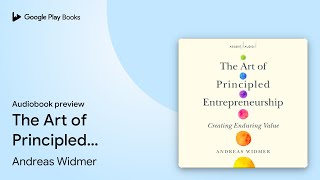
The Art of Principled Entrepreneurship:… by Andreas Widmer · Audiobook preview