Principled Entrepreneurship with Andreas Widmer: Lessons in Leadership and Humanity

Andreas Widmer, a former Swiss Guard at the Vatican, discusses principled entrepreneurship and how faith shapes business. He shares lessons on creating value for others, building culture, and reconciling Christian belief with capitalism through his own entrepreneurial journey.
And I put the whole, I asked myself, how is one, how can one be a capitalist Christian? And the answer of that is my, in my first book. And I, I wanted to sort of answer that question for myself and then I just share it with you all.
And this is great, Andreas, but I'm going to hold you on that point because I want to leave something, some more excitement for the end. I promise that you're, if you're ready to go big and to elevate your organization to new heights, you're in the right place. You can find the Going Big podcast on Spotify, iTunes, Amazon, iHeartRadio, Pandora and YouTube. And don't forget to follow us on social media and Visit our website 10x Strategies t e n x strategies.com for some great free resources. Let's dive in. Well, welcome ladies and gentlemen, to another Going Big podcast today. Today's subject is about principled entrepreneurship and how that can really help you go big in a very meaningful way. And I'm so excited to have my guest today who I think you will agree is one of the most fascinating and important people to speak on a subject of. By the conclusion of today's conversation, I think you'll agree is a subject of extraordinary importance as well. So I'm very pleased to have with me Andreas Widmer. Andreas is an associate professor of practice and entrepreneurship at the Catholic University of America's Bush School of business in Washington, D.C. and he's also the founder and director of the Art and Carlis Sioka center for Principled Entrepreneurship. Well, Andreas, welcome. Help us get started. What is principled entrepreneurship and, and why should we be interested in this subject?
Kevin, thanks so much for having me. It's an honor that you would invite me. I'm glad to be here. Principal entrepreneurship is actually a term that was coined by Charles Koch and he coined that term in connection to what at the time was called MBM market based management. And he called it an approach of people to create more value for others. Create starting an effort to create value for others, which is increase in GDP in a sense, creating more, more value, more profit for others. And he never, so he started to talk about, and he keeps touching on it during, during his book, great book called Good Profit. And eventually I asked him if I could and in the book, by the way, he says, I invite others to continue to develop this term and this concept. And I asked him if I, if he would allow me to jump in and in the spirit of MBM and good Profit, to continue to develop it and he said yes. And so we not only started the center for Principled Entrepreneurship, but I wrote a book on the matter and with the help of a good friend of both of ours, Artsioka actually took a step and developed principled entrepreneurship, which, to answer your question, Kevin, has to do with creating using your talents and creating value for others. Create value for others through the skills and talents that you bring to the table, in a sense, according to some principles, principle based approach to business. And we set out five pillars of principled entrepreneurship and they would be loosely based on those five is the definition.
Oh, great. Well, I want to dig into those five because each one of them is really, I think, highly meaningful and consequential. But let's lay the table, set the table a little bit more for this. Andreas. First of all, even before I ask the question, who is Art Sioka and why is he important in this? I have another question first. I, I don't think you're an academic. You have a fascinating background as an entrepreneur, a Swiss guard at the Vatican, which I hope we can get into as well. But if you're not an academic, how have you been a professor of principled entrepreneurship?
That's a good question. No, I'm not an academic. I don't have a PhD or a doctorate. I have a master's degree and my master's degree is actually not, not even in business, it's in ministry. And but my, my story is that I, as you said, I was in the Swiss Guards. I'm Swiss. I was born in a small village in Switzerland, but I came to America. I met a girl in Rome when I was, when I was serving in, in the Vatican. And I came to America for love. And I did fall in love. Both, you know, my wife, now 35 years, but also I love America. I really fell in love with the whole, yeah, the whole American situation and by the grace of God, fell in with some entrepreneurs up in Boston when I went to college and from the beginning of my career here in the United States was able to participate in some really big inventions in technology and software and became a software entrepreneur, if you wish, of about four times over, either going public or selling the company and then of course, you know, all along collecting my experiences. Eventually I moved into business strategy. I ran a business strategy firm. Then I did some philanthropy myself with Sir John Templeton. And then I wrote a book about my, my overall experience specifically addressing, I'm a believing Christian, I'm a Catholic and I'm a believing capitalist. I believe in the free Market very much so in the American founding.
We're going to be a fascinating and important speaker today and we're just beginning to scratch the surface. So this is great. I want to hold that just for, for more at the end. Let's dig in more to Artsyoka you mentioned. I got to know Artsyoka through Charles Koch, the businessman. Charles Koch. You met him a different way. But who, who was he and why is he important? And then why are you at a center named for him and his wife?
Yeah, so I met Artioka about 15 years ago when I ran my, the consulting firm I'm, I, I, I ran back then. And a friend of ours introduced us because, because Art was frustrated that the, that academia was so, so negative about business and was looking for ideas to change the mind of academia, of academics, about business. And this friend introduced us and Art and I hit it off right away and we came up with this idea. I'm an ideas person and, and practically driven, let's say. I immediately came up with an idea to create a seminar for academics to show them that business is a force for good and what it comes out of. And he loved it. And the two of us put a seminar together for several years for academics there in the Boston area to show them why we love business and why we think it's a force for good and for excellence, human excellence. It didn't work. But what worked? We couldn't convince the academics, but we convinced each other that we became friends. And years later I was through this book I wrote. I was approached by university, by Catholic University of America to help them build a business school, found a business school. And I immediately started to talk to my business students about this friend of mine, Arts Yoka, who I think is one of the greatest entrepreneurs of the last 70, 80 years. People don't know. Most people have been affected by one of his innovations and the way he innovated in the marketplace. But most people don't know his name or even his company name, but they know brands that he promoted. So, so Art is of course the person who made Franzia, the wine company, what it is today. That brand is second largest white wine brand in the world. He's the one who made boxed wine successful. He was also in the 80s into wine spritzers and wine coolers, all this stuff. Art had a lot to do with and he did that. And that's really, you know, the innovations with the products is one thing, the innovation with the company. He built the second largest wine company in the world by Going against every convention in the industry. I can give you some examples just so that you see the key things. And we can talk about his theory behind this. The key things. Archioka built a behemoth of a retail company, because wine is of course, a retail business, by taking all sales incentives away, by having no sales quota and giving no sales incentives to his salespeople. And he was the only company in his industry who did that. And he became the second largest company in the world doing this. This is.
This is radical.
And I'm so when I met him, I was so fascinated by this guy. I'm like. And you know, I ran a strategy from. I didn't just run any strategy firm. My strategy firm was. The Harvard Business School has a strategy firm called the Monitor Group. And they had a subsidiary that focused on uncertain markets. So we did business strategy in uncertain markets. And that was the company I ran and I spun it out of Monitor Group. But Michael Porter was, was a board member in our company and shareholder and all the big Harvard professors. And you know, I know a thing too about business strategy. When I met Art Coka, I'm. I kid you not, Kevin. He would run circles around these people in terms of him as a strategist. And there's no, there's no substitute for experience. And he, I just, I was, became a, you know, as radical as he was, I became a radical fan.
Well, let's dig into that, Andreas. And you know the book that you wrote with his help, the Art of Principle and Entrepreneurship. What a great title. And how to Create Long Term Value in Society. I mean, you've already said some things which are individually all radical. You know, how can capitalism be a force for good? How can your Christian beliefs coincide effectively with capitalism? I thought capitalism was a situation where one party always lost and one party gained. I'm being facetious here, but you're really getting to the heart of some very important principles. But it was through somebody who approached things in just a very different way. In fact, you, you and I know that he wrote even a little book for his employees that was thinking outside the box, which was a play on the fact that he developed boxed wine out of necessity. Hopefully we can get into that as well. But in the process, he was such a transformational figure in so many ways, because more than anything, not just even developing boxed wine, but he really democratized wine consumption in the United States. He helped take it to the masses. Because at the time, really when he was getting started, it was really more attainable or accessible to People at the upper ends of the economic strat. It was not consumed as widely. So there's so much here. But let's dive in a little bit more to the book because I think that helps us understand art and it shows an application to these principles. You mentioned five pillars. What's the first pillar? That is, I think it's something like the economy is there for the people. The people are not there to serve the economy. What in the world does that mean?
The core. And this goes back to Charles Koch's mbm. And sorry, they name it differently now, but I'm going to use MBM because I started with that also in the book Person Centered Business. Start with the customer in mind, end with the employee. So business is how may I help you? So there's you and me in it. These are two individuals who help each other in a sense. Right. And we should never forget that at the end of the day, there's. There's a person at the center of what we're doing, not a. Not the economy, which is an abstract. Right. And that's why I love this, this term that, that art also stressed so much that how may I help you? Because that's the core sentence that animates business and that has two people in it, you and me. And so we should never, never forget, or how do you say in English, never to miss the tree for the forest. For the trees. Yes, that at the end of the.
Day, a Swiss Guard at the Vatican, which I hope we can get into as well. But if you're not an academic, how have you been a professor of principled entrepreneurship?
You are, no matter how large your company is, you do well to remember that the individual customer who's buying your product is really the focus of your company. And the person in your company or persons in a company who create that value for them are your chief concern. And that is how art treated business in general.
Well, it's amazing and a little ironic that you're teaching this in business schools because this is not taught in business school. And that's what makes principal entrepreneurship so special. So I think the second pillar is to work is to create, and to create is to be human. All right, discuss that one.
So that's where a bit of my faith comes in. And arts faith. We were all. Did you ever think about that? Animals can't work yet. Animals are pretty much like us biologically, genetically. You know, a gorilla is 99.9% of my space, my DNA. What I mean to say is that they can't Work, and we can work means that work has to be something above biology because we're the same biologically. The reason why the gorilla can't work and I can work is because I'm made in the image and likeness of the Creator. And my image and likeness of the Creator isn't physical because that's the image and likeness more like the gorilla, but it's spiritual. We have the creator spirit in us. Our stewardship mandate means that we get to continue creation, we get to continue God's work, and we call that work. Right. When we work, we imitate God. That's the stewardship mandate, that we continue to create the world, whether it is to clean up a room, to bring order. This is the same as God bringing order into chaos. Whether it's to create a room or, or invent the. The, the, the. That's a good question. No, I'm not an academic. I don't have a PhD or a doctorate. I have a B. Master's degree. And my master's degree is actually not, not even in business, it's in ministry. And, but my, my story is that boxed table wine. This is a godly thing that we're doing here. And when we, and when we imitate God like that, we don't just make more, we become more. Because when you imitate somebody, you become more like them. And therefore a deep Christian conviction and deep Christian teaching is that work is a path to holiness. I, as you said, I was in the Swiss Guards. I'm Swiss. I was born in a small village in Switzerland, but I came to America. I met a girl in Rome when I was, when I was serving in, in the Vatican. And I came to America for.
Well, this is, I said this was going to be very meaningful and very important. And you, you've proved me. I think you're exceeding expectations already. That's beautiful, Andreas. Well, let's take a little diversion before we get into the third pillar because of what you just shared. You mentioned you were a member of the Swiss Guard. You're teaching at the Catholic University of America. You've mentioned your faith. I thought the Swiss Guard were the, the guys that hung out the Vatican with the weird uniforms and the pointy shoes and things like that. How did you end up at the Vatican? And you wrote a book, I believe, even about your relationship with the Pope. Could you just share a little bit about that and how that perhaps even has some influence in this conversation?
Yeah, I, I, as I said, I grew up in a small village in Switzerland. I wasn't Very academically gifted. Let's say I was an outdoors boy. I, I have four older brothers. The best thing I knew how to do was to fight, right. And the first thing I excelled that was the military. We have a militia in Switzerland, so everybody has to go mandatory. And they. There is the first time I excelled at anything. And when I learned from there that I could become a bodyguard, I felt like that's what I'm going to do. And so I wasn't particularly religious or Catholic or anything. I mean. I mean, I was cradle Catholic, but more culturally, let's say culturally Christian. And. But I. But to the extent that I didn't mind when they told me that I would protect the Pope, I have nothing against that man. And I didn't really know much about him, but then I met him.
And which pope was this?
John Paul ii. Polish one.
Yes.
And he changed my life. Not in the way that he started to. Well, he. He started to notice in love. And I did fall in love, both, you know, my wife, now 35 years, but also I love America. I really fell in love with the whole me that I was a searching, an insecure young man and was searching. And he started to reach out to me in a sort of individual way of just, just in the beginning saying things like that he, that he appreciated that I was around, that he liked the work I did because he was my boss. Remember, this is not. He is the Pope. This is like, you know, he's the subject that I'm protecting. And so you're 24 hours around this person. You check what they do, what they eat, what they sleep, and, you know, every, Every. Everybody. Yeah, the whole American situation. And by the grace of God, fell in with some entrepreneurs up in Boston when I went to college. He goes there. So you get. You're close, but it's a. It's. It's a work relationship. And he started to just say that he. He enjoyed working with me and, And. And that I, you know, that I. That he hopes that I would grow and, and like. Because he knew that I didn't like to be there once I figured out how hard it was and how much he appreciated to work with me. Checked in with me on a regular basis, you know, whenever I was around, and eventually earned my admiration through just being the most authentic human being I've ever met in my life. The man has never told me what to do, ever. It is always that he was so. What he. How he was, was so attractive to me that I said, I want that. But he would not take my accolades. He would in a way say that what I was looking for is, is not him, but is Christ. And he taught me how to pray. And I had, I mean, there's no two ways to say it. I had a profound experience of God through my prayer, which of course then made me see I wasn't an atheist. I was agnostic. It's easy to be agnostic. You're on the fence. But once you say maybe there is, maybe there isn't, through this experience, I had to say, well, God exists. I know, and if God exists, there has to be a consequence, like, what does this mean for me? And so I worked with him on this, by the way. His, his approach to me was always to say, you get to decide and I cannot want for you. Like he would never, you know, this whole time that I worked with him, he's never, especially in the, in the face. And from the beginning of my career here in the United States was able to participate in some really big inventions in technology and software. Faith part. He's never told me what to do. He always say, you get to decide. And when I pushed, he would say, look, I cannot want for you. You have to want yourself. And he left. He. He left me a changed man also in with my relationship to myself. Of course, I was, I, I was changed, of course, because he introduced me to a relationship with Jesus Christ. And when I and became a software entrepreneur, if you wish, of about four times over, either going public or selling the company, and then I left, he took me aside and he said, look, I know that you found Christ here. Now I need you to go and bring him where you go, because I can't go there. And if you don't bring him there, then nobody else is going to bring him there. So kind of commissioned me a second time. And it took me, let's say, like 15 years to realize that I how to do that, because I struggled with it because I was a Sunday Christian and during the week I was successful in entrepreneurship and business. And it wasn't until about the year 2000 that I started to understand how to do this. And that is when I wrote a book called the Pope and the CEO. Which is why I studied ministry, by the way, because I wanted to understand the Bible better, to see if I could actually reconcile my faith, Christianity and my praxis, capitalism. And that was my answer.
Wow. Well, now we're seeing how this all comes together and what an extraordinary opportunity you had to be brought. Brought to Christ by the Pope himself. And then you're doing this work in business, in entrepreneurship in a way that coincides with your values. It's an extension of it. So let's, let's continue with these principles. So these pillars. The first pillar, that the economy exists for the people, not that the people exist for the economy. The second one, to create is to be human. That is, that is what we do. Work is to create and to create is to be human. This is really coming together now. So the third pillar, how does it fit in? I think this is a Peter Drucker line and that is Strat. Excuse me. Culture eats strategy.
Of course you know all along collecting my experiences.
Eventually I'm for breakfast you're. The culture of a company is far more important than the business strategy.
Moved into business strategy. I ran a business.
Okay where did does this come from and how does this fit in and how does it go back to Arts Yoka strategy firm.
Then I did some philanthropy myself with Sir John Templeton. And then I wrote a book about my. My overall experience specifically addressing I'm. And then I wrote a book about my. My overall experience specifically addressing I'm. I'm a believing Christian. I'm a Catholic and I'm a believing capitalist. I believe in the free market very much so in the American founding. And I put the whole. I asked myself how is one. How can one be a capitalist Christian? And the answer of that is my. In my first book. And I, I wanted to sort of answer that question for myself and then I just share it with you all and this is.
This is great Andreas, but I'm going to hold you on that point because I want to leave something some more excitement for the end. I prom you and his company, the wine group and the principal the entrepreneurship approach.
Kevin. We both. Yeah, I read. I'm a. I'm a. I'm a devoted reader of your newsletter and one of the things we share is that we share the admiration of some of the classic marketing and management people and.
And you're going to be a fascinating and important speaker today. And we're just beginning to scratch the surface. So this is great. I want to hold that just for. For more at the end. Let's dig in. More to artsyoka you mentioned. I got to know artsyoka through Charles Koch, the businessman Charles Koch. You met him a different way. But who.
Who you do a brilliant job to. To. To embody them in your. In your newsletter. And Drucker is one of those people, right? You do all you do it with others as well with the four horsemen and all that kind of stuff but I'm I know that many people look at this as a cliche but that that doesn't mean it's wrong and in today's world we don't focus on culture enough in a company who was he.
And why is he important and then why are you at a center named for him and his wife?
Yeah So I met Artsyoka about 15 years ago when I and culturally is is what you're doing when push comes to shove namely when you're not when you're not purposeful and you just nobody's looking that's when you do what really matters to you. Art had Iran my con the consulting firm I'm I I I ran back then and a friend of ours introduced us because because Art was frustrated that the that academia was so this saying that many business people say one thing and do something else believing Christian I'm a Catholic and I'm so negative about business and was looking for ideas to change the mind of academia of academics about business and this friend introduced us and Art and I hit it off right away and we came up with this idea I'm an ideas person and and practical believing capitalist I believe in the free market very much so in the American foundings and the doing something else speaks louder than what they're saying and that's why there's this this influx of what companies say and what they do. Let's say I immediately came up with an idea to create a seminar for AC and and underneath it all it's actually the culture of the company is a wink wink not not we have a an HR and the policy academics to show them that business is a force for good and I put the whole I asked myself what it comes out of and he loved it and the two of us put us how is one how can one be a capitalist Christian and a seminar together for several years for academics there in the Boston area to show them what we the answer of that is my in my first book and I I wanted to sort of answer that annual that this is this thick but but the management is doing this so we're following that I'll give you a quick example and he was very strongly against that he wanted he told me I wrote a manual an HR manual once when he first I we love business and why we think it's a force for good and for took over the company and it was I don't know how thick and he is at the end I just threw it away and I say, let me do this. Let me just focus on a key. Key few key excellence, human excellence. It didn't work. But what, what worked? We couldn't convince the academics, but we convinced each other that we became activities of what I'm doing. There's a famous story of how, you know, this is a winery and how they made vermouth as one of the sign friends and years later I was through this book I wrote. I was approached by university, by Catholic University of America Products. And two guys were working on boiling and on simmering on creating the vermouth, which you have to America to help them build a business school, found a business school. And I immediately started to talk to my business students about this friend of mine, Artsy Oak, mixed some herbs and oils and stuff in it and they spoiled a huge batch of them. I think 250,000 bottles of vermouth at a time where art's company was 26 to 1 in debt. Like he couldn't. The water was so high. One wave and he, you know, he would take in water. Who I think is one of the greatest entrepreneurs of the last 70, 80 years. People don't know. Most people have been affected by one of his innovations and the way he innovated in the marketplace, but most people don't know his name or even his company name, but they know brand. And so suddenly they, they face this huge loss of 20 that he promoted. So, so Art is of course the person who made Franzia, the wine company, what it is today. That brand is 250,000 bottles. I think it was. And it was, it was serious for a company to take that kind of loss. And so the team told Art, look, the vermouth isn't. Isn't second largest wine brand in the world. He's the one who made boxed wine successful. He. He was also in the 80s into wine spritzers and wine coolers. All this stuff Art had. It doesn't taste that much different. It's just a bit. Got a lot to do with. And he did that. And that's really cloudy. And we could still sell it and nobody would notice. And some other people said, well, we could sell it white label and then you sell it back. You know, the innovations with the products is one thing. The innovation with the cushion for myself and then I just share it with you all out the back door and at least we recover our cost. And Art turned around and says, no, destroy it. We didn't we. Well, this is how.
This is great, Andreas, but I'm going to hold you on that point. Because I want to.
He built the second largest wine company in the world by going against every convention in the industry. I can give you some examples just so that you see the key things and we can talk about his theory behind this. The key things Artioka. We are artisans in this company. We do not. We say we create the best value for our customers and that is not the best value. We want to have a good price for the greatest product. It's not the greatest product he has, by the way.
Let me jump in here a minute because you. You do highlight this in the book.
The Art of Principle built a behemoth of a retail company because wine is of course a retail business by taking.
All leave something some more excitement for the end. I promise that you are going to be a fascinating and important speaker today. And we're just beginning to scratch entrepreneurship. And just to be clear as you sedge the surface. So this is great.
I want to hold that sales incentives away by having no sales quota and giving no sales.
He. He had been at Coca Cola Bottling of New York which owned the Franzia wine business. He was the CEO of the Franzia wine division. And Coca Cola Bottling of New York was going to sell it to meet the quarterly earnings profits as a. As a public company and didn't even tell Art.
And Art came to them as incentives to his salespeople. And he was the only company in his industry who did that. And he became the second largest company in the. In the world doing this. This is radical.
This is radical.
And I'm so when I met him, I was so fascinated by this guy. I'm like. And you know, I ran a strategy firm. I didn't just run any strategy firm. My strategy firm was the Harvard Business School has a strategy firm called the Monitor Group and said this is.
This is ridiculous. This is a. I think he said this is a damn good company and if you don't want it, I'll buy it. And then as he said gee, I've got to figure out how to buy it. And he leveraged himself.
They had a subsidiary that focused on.
Personally and with friends. 26 to 1 he's starting this new company.
He's taking it over uncertain markets. So we did business strategy in uncertain markets. And that was the company I ran and I, I spun it out of. Of Monitor Group. But Michael Porter was. Was a board member in our company and shareholder. And all the.
He faces immediately one huge critical challenge and that is he didn't realize that as part of Coca Cola bottling of New York. They were getting a special discounted deal from Corning Glass on the bottles. And without that discount, he wouldn't be able to be even competitive with others.
And so big Harvard professors and, you know, I know a thing or two about business strategy. When I made art Sioka, I'm. I kid you not, Kevin. He would run circles around these people in terms of him as a strategist. And there's no, there's no substitute for experience. And he, I, I just.
So that's why he was forced into coming up with the concept of boxed wine, because he had to compete in the marketplace against the other big companies.
So I was. Became a, you know, as radical as he was, I became a radical fan.
Well, let's dig into that, Andreas. And you know, the book that you wrote, he's already in this mix of survival, and yet they come up to him. 250,000 bottles with his help. The Art of principle and entrepreneurship. What a great title. And how to create long term. Say, look, it'll work. Get it out there in the marketplace. It's okay. No one will really notice any value in society. I mean, you've already said something. He says no and says, these have got to be destroyed. You talk about this in the book. I've talked about this with many things which are individually all radical. You know, how can capitalism, the others, this particular story, what just for. For more at the end, let's dig in more to artsyoka. Humanism be a force for good. How can your Christian belief happened when he did that? So see the way thieves coincide effectively with capitalism? I thought capitalism was a situation where one party always lost and one party gained. I'm being facetious here, but you're really getting to the heart.
He did it. And this goes to the core of who artsyoka was that I admire so much. He says, no, dump it. So they destroy this and the two guys who did this. And he says, you do it. And so they do this.
And you know, this is some very important principles, but it was through somebody who approached things in just a very different way.
Kind of in a winery like everybody's seen. This is a lot of people around.
And in fact, you and I know that he wrote even a little book for his employees that was thinking outside the box, which was a play on.
The fact they start to. To work on this and they see how art is telling that he developed.
Boxed wine out of necessity. Hopefully we can get into them to do this.
And everybody goes like, three, two, One, you're fired. Right. I mean, this is a big loss, right? Art said and mentioned.
I got to know Art Sioka through Charles Koch, the businessman Charles Koch. You met him a different way. But who, who was he and why is he important? And then why are you at a center named for him and his wife?
Yeah, So I met Artsyoka about 15 years ago when I. And one more thing. So. So you destroyed. And then one more thing. The two of you are the only two people now who know what happened as well.
But in the process, he was such a transformational figure in so many ways because more than anything, not just even developing boxed wine, but he really democratized wine consumption in the United States. He helped take it to the mass. Because at the time, really when he was getting started, it was really more attainable or accessible to people at the upper ends of the economic strata. It was not consumed as widely. So there's so much here. But let's dive in a little bit more to the book because I think that helps us understand Art and it shows an application to these principles. You mentioned five pillars. What's the first pillar? That is, I think it's something like the economy is there for the people. The people are not there to serve the economy. What in the world does that mean?
See the core. And this goes back to Charles Koch's mbm and sorry, they name it differently now, but I'm going to use MBM because I started with that also in the book. Person centered business. Start with the customer in mind, end with the employee. So business is how may I help you? So there's you and me in it. These are two individuals who help each other in a sense. Right. And we should never forget that at the end of the day there's, there's a person, Iran my, the consulting firm I'm, I, I, I ran at the center of what we're doing. Not a, not the economy, which is an abstract. Right. And that's why I love this, this term that, that Art also stressed so much that how may I help you? Because that's the core sentence that animates business and that has two people in it, you and me. And so we should never, never forget or how do you say in English, never to miss the tree for the forest, for the trees.
Yes.
That at the end of the day back then, and a friend of ours introduced us because, because Art was. You are, no matter how large your company is, you do well to remember that the individual customer who's buying your product frustrated that they, that Academia was soaked is really the. The focus of your company and the person in your so negative about business and was looking for ideas to change the mind of academia. Company or persons in a company who create that value for them are your chief concern. And that is how art treated business in general.
Well, that's, you know, it's amazing and a little ironic that you're teaching this in business schools because this is not.
Taught in business school of academics about business. And this friend introduced and that's what.
Makes principal entrepreneurship so special. So I think the second pillar is to work is to create. And to create is to be human. All right, discuss that one.
So that's where a bit of my faith comes in and Art's faith. We were all. Did you ever think about that animals can't work yet. Animals are pretty much like us biologically, genetically. You know, a gorilla is 99.9% my space, my DNA. What I mean to say is that they can't work and we can work means that work has to be something above, above biology because we're the same biologically. The reason why the gorilla can't work and I can work is because I'm made in the image and likeness of the Creator. And my image and image and likeness of the Creator isn't physical because that's the image and likeness. More like the gorilla, but it's spiritual. We have the creator spirit in us. Our stewardship mandate means that we get to continue creation. We get to continue God's work and we call that work. Right. When we work, we imitate God. That's the stewardship mandate that we continue to create the world, whether it is to clean up us. And Art and I hit it off right away and we came up with this idea room to bring order. This is the same as God bringing order into chaos. Whether it's to create a room or invent the boxed table wine. This is a godly thing that we're doing here. And when we imitate God like that, we don't just make more, we become more. Because when you imitate somebody, you become more like them. And therefore a deep Christian conviction. Yeah, I'm an ideas person and, and practical and deep Christian teaching is that work is a path to holiness.
Well, this is. I said this was going to be very meaningful and very important and you've proved me. I think you're exceeding expectations already. That's beautiful, Andreas.
Well, let's say I immediately came up with an idea to create a seminar for academics to show them that business is a force for good and what it comes out of. And he loved it. And the two of us put us.
Take a little diversion before we get into the third pillar because of what you just shared. You mentioned you were a member of the Swiss Guard. You're teaching at the Catholic University of America. You've mentioned your faith. I thought the Swiss Guard were the. The guys that hung out the Vatican with the weird uniforms and the pointy shoes and things like that. How did you end up at the Vatican? And you wrote a book, I believe, even about your relationship with the Pope. Could you just share a little bit about that and how that perhaps even has some influence in this conversation?
Yeah, as I said, I grew up in this here. I need you to turn around and analyze what happened and come up with the solution that this never happens again. How much time do you need for this? And they're like, I don't know, two months. He said, okay, you fix it because you now have the perspective that is unique because the others haven't seen it. How it goes bad. Small village in Switzerland. I wasn't very academically gifted. Let's say I was an outdoors boy. I have four older brothers. The best thing I knew how to do was to fight. Right. And the first thing I excelled at was the military. We have a militia in Switzerland, so everybody has to. So instead of firing them, he put them in charge of figuring a way to say they come back to Art and promise him this will never happen again, to go mandatory. And they. There is the first time I excelled at anything. And when I learned from there that I could become a bodyguard, I felt like that's what I'm going to do. And so I wasn't. They invented within two months a way to make vermouth, which is still made today with everybody else is using it today. His method, which a seminar together for several years for academics, particularly religious or Catholic or anything. I mean, I mean, as cradle Catholic, but more culturally, let's say culturally Christian and actually had to do with putting the liquid liquefying this stuff first and then putting it in, which is. But I. But to the extent that I didn't mind when they told me that I would protect the Pope. I mean, you don't need to be Albert Einstein to figure this out, but nobody ever did. And then art sees this and instead I have nothing against that man. And I didn't really know much about him, seeing as the people as the problem. He saw the. But then I met him.
And which Pope was this?
John Paul ii. Polish one.
Yes.
And he changed my life those two guys as his solution that takes a deep faith in humanity to him. His employees were always a part of the solution. Not in the way that he started to there in the Boston area to show them what we. Why we love business and why we think it's a force for good and for ex. Well he started to notice not the problem.
Well that's a great illustration of culture eating strategy and. And we're going to touch on some other things in a minute about how all of this is me that I.
Was a searching and insecure young man. Excellence, human excellence. It didn't work and was searching. And he started to reach out to me in a sort of individual. But what. What worked? We couldn't convince the academics but we convinced each other that we became a way of just. Just in the beginning saying things like.
That he just on long term value creation which is very difficult for most people to. To really compre. Much less apply.
But that he appreciated that I was around that he liked the work I did because he was my boss.
Remember it's very important to this discussion today into our audience. And that's a great segue into the fourth pillar. And the fourth pillar this is not.
He is the Pope. This is like you know he's the.
Blur is essentially that principal business creates.
When subject that I'm protecting. And so you're 24 hours around this person. You check what they do, what they eat, what they sleep and you know every, every everybody that goes there. So you get. You're close but it's a. It's.
It's a work relationship when situations.
Yeah.
What. How can that be? I thought you know in every business deal I'm being facetious again. Tongue in cheek that you know.
And he started to just say that.
There was one winner and one loser. The person's selling me. They're ripping me off. How can it be a win win? How could it have been a win win for the wine group to destroy the vermouth? How could it be a win win for them to engage in these long.
He enjoyed working with me and that I, you know that. That he hopes that I would grow and like. Because he knew that I didn't like to be there once I figured out how hard it was and how much he appreciated to work with me. Checked in with me on a regular basis, you know whenever I was around long term partnerships.
How could it be a win win for a salesman not to get a sales commission or what Tell what's going.
On here Andreas I tell my students all the time that one and eventually earned my Adam. The biggest lies that they're being told that our society tells about capitalism is that it is a win lose situation that nothing could be further from the truth in the free market business is a simple friends and yearly admiration through just being the most authentic human being I've ever met in my life. The man has never told me what to do ever. It is always that he was so what he, how he was was so attractive to me that I said I want that but he will proposition how may I help you? I use my talents to create value for you in a free market. The value is measured by what he would not take my accolades. He would in a way say that what I was looking for you're willing to give me for the product or service that I provide to you. The difference between what it cost me to provide to create the product, make the wine and for you to buy it that it's you you find it is is not him, but is Christ. And he taught me how to pray. And I had. I mean there's no two ways to say it. I had a profound experience of where I was through this book I wrote. I was approached by a university by a Catholic University of America worth a certain amount if that worth is above what I've got through my prayer. Which of course then made me see I wasn't an eighth record to help them build a business school found a bit I paid for it what it cost me to make it the difference. I was agnostic. It's easy to be agnostic. You're on the fence. But once you say maybe there is, maybe there we can call profit. But I call the difference new money because it's newly created value. Money is the transfer value. The business school and I immediately started to talk to my business students about this friend of mine, arts yoke we have. We could have, you know, we would have traded chickens or something like that a few hundred years ago. But the transfer value that we have is money. And we call the difference of the transfer value the gain in transfer value profitability through this experience. I had to say, well, God exists. I know and if God exists, there has to be a consequence like what does this mean for me? And so I worked with him on this, by the way. His. His approach to me was always to say you get to decide. Free market profitability only happens if you have a freedom to sell and a freedom to buy. And if these two buy, the buyer and the seller come together and I cannot Want for you. Like he would never, you know, this whole time that I worked with him, he's never especially in the, in the faith and they create, they have a transaction at a profit. Then we can genuinely say that new profit, new value in the world has been. He's never told me what to do. He's always say you get to decide. And when I pushed he would say look, I cannot want for you. You have to want yourself. And he left me a changed man also with my relationship to myself of course created. And I would say new money in the world has been created because the amount of money in the world in a free market is never the same, not for a second. As long as people. I was, I was changed. Profit by selling and buying at a value add it constantly increases the amount of money. Of course because he introduced me to a relationship with Jesus Christ and when I left he took me aside and he said look, I know that you found Christ here. Now I need you to go and bring him where you go because I can't go there. And. And if you don't bring him there, along with that comes this false perception. Out of this comes this false perception that there is a certain amount of money in the world which means the mon. The world, the, the, the wealth of the world is like a pizza. And the more. And nobody else is going to bring them there. So kind of commissioned me a second. More people we have, the more slices we need to make. There is a fundamental misunderstanding of the economy. The economy is not a pizza. The economy is a pizza. Time. And it took me, who I think is one of the greatest entrepreneurs of the last 70, 80 years, let's say like 15 years to realize that I how to do that because I struggled with it because I was a Sunday Christian and during the week I was successful in entrepreneurship and business chalk. And by having more people be able to do more business and have access, free access to do business in a free market, we can make more and more pizza. And so this whole notion of redistribution is a fallacy at the core of. And it wasn't until about the year 2000 that I started to understand how to do this. And that is when I wrote a book called Understanding what our System is Meant to do. People don't know. Most people have the Pope and the CEO, which is why I studied ministry by the way, because I wanted to understand the Bible better to see if I could actually reconcile my faith, Christianity and my praxis. And that is to create win win situations which only happen on the Freedom have been affected by one of his innovations and the way he innovated in the marketplace, but and thus create more and more wealth for more and more people. And I think that's the only. You know, I've done a lot of work in emerging markets and in, In. In. In poverty, you know, in prosperity creation. And that is the only way out of poverty capitalism. And that's my. That was my answer.
Wow. Well, now we're seeing how this all comes together. And what an extraordinary.
Most people don't know his name or even his company name, but they know.
Brand the opportunity you had to be.
That he promoted. So. So Art is of course, the person.
Who made friends brought to Christ by the Pope himself. And then you're doing this work in business, in entrepreneur is to create prosperity.
Through the free market, our own worship.
In a way that coincides with your values. It's an extension of it. So let's. Let's continue with these principles. So these pillars. The first pillar, that the economy exists for the people, not that the people exist for the economy. The second one, to create is to be human. That is, that is what. Right. This is great. Andreas. So the last of the five pillars is always think like an entrepreneur.
Yeah. That was Art's favorite.
Well, what does that mean? I, I, of course, let me. Let me share with everyone. I had the tremendous opportunity and honor to work with Art in his role as a philanthropist, especially later in life. He was very focused on ways to create value for society through initiatives and education, particularly innovate. We do work is to create, and to create is to be human. This is really coming together now. So the third pillar, how does it fit in? I think this is a Peter Drucker line, and that is Strat. Excuse me. Culture eats strategy for breakfast. The culture of a company is far more important than the business strategy. Okay, where does this come from and how does this fit in? And how does it go back to artsyoga initiatives where people would find greater meaning in life. And that became a very important part of his life. But all of us who got to work with him, he would say, you know, he was big into taking risks and making bets and constant innovation. He. His favorite thing was more better faster. That he would say to us, more, better, faster. More better faster. And his company, the wine group. And the principle, the entrepreneurship approach.
Kevin, we both. I read. I'm a. I'm a. I'm a devoted reader of your newsletter. And one of the things we share is that we share the admiration of some of the classic marketing and management people. And Zia the wine company, what it is today that brand is.
Sir. What why did he like that and what did he mean by always think like an entrepreneur?
He you do a brilliant job to to, to embody them in your in your newsletter. And Drucker is one of those people, right? You do all you do it with. You know, it's during the last two years of his life that I worked with him on this and I feel very fraternal with you Kevin about this because I think you and I were the most constant save his wife, you and I were the most constant communicators others as well with the four horsemen and all that kind of stuff. But I'm. I know that many people look at this as a cliche, but that that doesn't mean it's wrong. And in today's world we don't focus on culture enough in a company. With him during his last two years of his life because he often told me about how much he talked with you and I talked with him a lot. I I second largest white wine brand in the world. He's the one who made and culture is is what you're doing when push comes to shove, namely when you're not courted. Our, our, our conversations because he was constantly saying I'm not going to make it. You know, I'm, I'm at the end of my life. He, he was ill and he wanted me to record things so I boxed wine. Successful. He he was also in, in the 80s and, and when you're not purposeful and you just nobody's looking could always finish the book without him. And he took me aside. That's when you do what really matters to you. Art had this saying that many business people say one thing and do something else and the doing something else. Wine spritzers and wine coolers. All this stuff. Art and he said at the end one thing I want people to understand. I've met two kinds of people in all things I do in life because I had a lot to do with and he did that and that's really in business, in philanthropy and everything. And he says the world is split between harvesters and creators speaks louder than what they're saying. And that's why there's this, this Inc. Theaters and to take the analogy of his books of what companies say and what they do and, and underneath it all it's actually the culture of the company is a wink wink, not not we have a an HR and a policy man of the vineyard. He Would say if I would approach the wine group or Franzia, our vineyard annual, that this is this thick. But the management is doing this. So we're following that as a harvester. I would ruin it in one ag cycle. I'll give you a quick example. And he was very strongly against that. He told me, I wrote seven years. But the Goodwin wine vineyard owner doesn't do that. The good man an HR manual once when he first took over the company and it was. I don't know how thick and he is at the end I just threw it away and I say, let me do this. Let me just focus on a key few key vineyard or doesn't focus on the harvesting. They focus actually on. On the grooming, on the creating of the vineyard, of looking at the soil and clipping and pruning and making sure activities of what I'm doing. There's a famous story of how, you know, this is a winery and how they made vermouth as one of the sites that there's water and you know, and you get the analogy to everything. The conditions for growth and the condition for products. And two guys were working on. On boiling and on simmering, on creating the vermouth, which you have to mix some. Some herbs and oils and stuff in it and they for profit. And he says it's deep. It's a culture. It's deep down, deep set in people that they look at the world from a creator perspective or from a harvester's perspective. And he says the key in doing good oiled a huge batch of them. I think 250,000 bottles of. Of vermouth at a time where. Where Art's company was doing the world and doing well in the world is to always, you know, the innovations with the products is one thing. The innovation with the 26 to 1 in debt, like he couldn't. The water was so high. One wave and he, you know, he would take in water and so suddenly they. They face this huge loss of 20 to remain a creator. And he. He equates the creators. We start with principle one as the entrepreneur.
Well, Andreas, I want to bring this to a close.
250,000 bottles, I think it was.
This is great. And ladies and gentlemen, if you want to go big in your life with your nonprofit organization, whatever you're doing principled entrepreneurship.
It was serious for a company to take that kind of loss. And so the team is.
Is a key. And I would strongly recommend Andreas's book company.
He built the second largest wine company in the world by going against told Art look, the, the vermouth isn't isn't.
About the art of principled entrepreneurship which largely focuses on the work of art. Sioka. Sioka is CIO cca if you want to look it up. The father of boxed wine.
It doesn't taste that much different. It's just a bit. Every convention in the industry cloudy and we could still sell it and nobody would notice. And some other people said well we could sell it white label and then you sell it back.
But in many, many other ways, many other innovations, many other consequential actions but.
Andre out the back door and at least we recover our cost and aren't turned around.
Yes. You, you said something earlier and I think it's one of the most challenging of. Of many challenging concepts to really I.
Can give you some examples just so that you see the key things and we can talk about his theory behind this. The key things. RTO come and says no destroy it. We didn't. We. We are artisans in this company. We do not. We say we create the best value for our customers.
Really comprehend. And that is much like a vineyard owner would look at creators.
And that is not the best value. You know, we want to have a good price for the greatest product. It's not the greatest product that's anything long term value.
Because by the way, let me jump in here a minute because you, you do highlight this in the book the Art of Principle Wine grapes are not a one year proposition. Right. And wines are not a one year proposition. But he was always focused on long term value creation, even to the point of not paying sales. Entrepreneurship. And just to be clear, as you said, he, he had been at Coca Cola Bottling of New York which owned the Franzia wine business. He was the CEO of the Franzia wine division and Coca Cola Bottling of New York was going to sell it to meet the quarterly earnings profits as a, as a public company and didn't even tell Art. And Art came to them and said this is, this is ridiculous. This is a. I think he said this is people a commission for what they had earned this year. And for those involved in non profit fundraising, we all know at the heart you want to be focused on the long term, the long term value creation. But it's hard to do that. And you can sometimes be focused on the immediacy of a, of a gift right now which slips you into a, a very damn good company. And if you don't want it, I'll buy it. And then as he said gee, I've got to Figure out how to buy it. And he leveraged himself uncomfortable place of even risking being trans personally and with friends. 26 to 1 he start actionable go into this piece about how in the world did he pursue successfully this radical approach of telling his salespeople I'm not going to pay a sales commission. This new company, he's taking it over and I'm going to reward you on your long term value creation.
So I do a lot of coaching on this now with different CEOs and this is of course I'm going to go a little bit more into the apps. Built a behemoth of a retail company because wine is of course a retail business tracked so that you can see how this applies to your company, be it a fundraising or, or, or, or whatever. And the gist of what he did.
He faces immediately one huge critical challenge and that is he didn't realize that as part of Coca Cola bottling of New York they were getting a special discounted deal from Corning Glass on the bottles. And without that discount he wouldn't be able to be even compet.
And so is this that he says if you know what the law.
That's why he was forced into coming up with the concept of boxed wine. Because he had to compete in the marketplace against the other big companies.
So define what long term value creation is.
He's already in this mix of survival.
And yet by taking all said him it was the act cycle was seven years. So it would be somewhere out, 14, 21 years that he was interested in so that there could be this, these, these life cycles if you wish. And he would define what, what helps that and what hinders.
They come up to him 250,000 bottles say look, it'll work. Get it out there in the marketplace, it's okay, no one will really notice. And he says no and says and.
Short terminism hinders it. So because you make dumb mistake, dumb decisions, you know.
And what he says, these have got to be destroyed. You talk about this in the book. I've talked about this with many others. This particular story, what is that?
Identify the main obstacles. I'm not for example saying and he would need it that everybody needs to get rid of sales quote sales incentives away by having no sales quota and giving no sales incentives to his salespeople. And he was the only company in his industry who did that. And he became the second largest company in the, in the world or something like that. It's, it's something you have to think about. Here's the abstract I, I, I'm, I'll.
Give you two happened when he did that.
So see the way he did it. And this goes to the core of who Artsyoka was that that I admire so much. He says, no, dump it. So they just would sort of instigate your thinking. What he said. I destroy this. And the two guys who did this, you know, identify the key obstacles and the signal posts. It's like, you know, who was it Cortes, who, who, who landed at the, with the ships. And the man would not leave the beach because the ship was there just in case. And he says, you do it right? And so they do this and you know, this is somebody attacked, they would run back and he says, identify. Kind of a winery. Like everybody's seen this is a lot of people around and they start to, to work on this and they see how Art is telling them to do this. And everybody goes like, three, two, one, you're fired. Right? I mean, this is a big loss, right? Art said, and, and one more thing. So, so you destroyed and then one more thing. The two of you are the only two people now who know what happened. Buy the ship and then burn it. So take the big cultural value that is there, that is the obstacle to your progress towards your goal of long term value creation, and then burn it. And so what he wanted to do is to say, look, you're not here for a quarter, you're not here for a year. If you want to make money here, you have to hear, I need you to turn around and analyze what happened and come up with the solution that this never happens again. How much time do you need for this? And they're like, I don't know, two months. He said, okay, you fix it, because you now have the perspective that is unique because the others haven't seen it, how, how it goes back. Stay here for 10 years or more, and I won't compromise in doing this. This is radical.
This is radical.
And I'm. So instead of firing them, he put them in charge of figuring a way to say, I would say, art, you're going to lose the best salespeople. And he says, not my best salespeople. Hang your values high on the flag pole and show them to everybody so clearly that you actually burn the other ship. And then you will they come back to Art and promise him this will never happen again. They invented within two months a way to make vermouth, which is still made today with practicing talent that will make you successful. Everybody else is using it today. His method, which actually had to do with putting the liquid, liquefying this stuff first and then putting it in, which is so when I met him I was so fascinated by this guy. I'm like. And you know, I, I mean you don't need to be Albert Einstein to figure this out.
Well Andreas, I'm going to suggest something as a conclusion of all that you've shared. But it's something I also I learned not only from artsyoka but from Charles Koch and working for the Koch family.
For many, but nobody ever did. And then art sees this and, and.
Instead many, many years was that focus on long term value creation.
Seeing as the people as the problem. He saw those two guys as his solution. That takes a deep faith in humanity. To him his employees were always a part of the solution, not the problem.
Well, that's a great illustration. It's key to the success of Koch Industries. It's key to the success of the wine group. I would suggest that it is key to the success of any.
And a strategy firm. I didn't just run any strategy firm. My strategy firm was the Harvard Business School has a strategy firm called the Monitor Group and they had a subsidiary.
That focused on non profit organization that is working to make a difference in society of culture eating strategy and, and, and we're going to touch. It's unlikely that you're going to solve the problem in the next couple of years but it's easy to keep focused on on some other things in a minute about how the all of this is focused on long term value creation which is very difficult for most people to, to really comprehend and understand much less apply. But it's very important to this discussion today and to our audience and that's a great segue in the immediate things at hand the year raising more money this year than you did last year. And it is so clear to me that that focus on long term value creation is what creates a win win partnership in philanthropy to the fourth pillar. And the fourth pillar, because it's not the gift, it is ultimately the partnership is essentially that principal business creates win win situations. What? How can that be? I thought, you know, in every business deal I'm being facetious again, tongue in cheek that you know, with the donor where you're creating true meaningful change, really getting to the root causes of problem, making a big difference. And in the process that philanthropic partner is also finding deeper purpose and meaning. There was one winner and one loser. The person selling me, they're ripping me off. How can anything in their life, you know, we have these terms Sometimes in fund be a win win. How could it have been a win win for the wine group to destroy the vermouth? How could it be a win win for them to engage in these long term partnerships? How could it be a win win for a salesman not to get a sales commission? What reason? Like, well, I'm going to go shake them down or twist their arm or hit them up for a contribution. Let's tell what's going on here, Andreas.
I tell my students all the time that it's terrible, it's horrible.
That's the win lose proposition that we sometimes associate falsely with capitalism. It is a win win, it's a partnership. And I'll just let you comment on that. And in doing so, perhaps uncertain markets.
So we did business strategy in uncertain markets and that one of the biggest lies that they're being told that our society tells about capitalism is that it is a win lose situation, that nothing could be further from the truth. In the free market business is a simple proposition. How may I help you? I use my talents to create value for you.
Let's also give your parting words to those that are listening and watching today.
In a free market, the value is.
Measured by what from all of this. What would you suggest to us all so that we can enjoy this, this creative aspect of our human condition?
Art would love these challenges of saying and, and I'm enamored with this myself. I, I believe in creative destruction in my own organization, in my own. You're willing to give me for the product or service that I provide to you, the difference between what it costs me to provide to create the product, make the wine, and for you to buy it, that it's you. You find it was the company I ran and I, I spun it out of, of worth a certain amount. If that worth is above what I paid for it, what it cost me to make it the difference in life. To say you have to burn a few ships along the way because otherwise you might always go backwards. Right? The ship was the metaphorical way to go back, to retreat and go backwards. Sometimes that's the right thing to do, but more often than not it's just a safety blanket that makes you not move forward. Even in philanthropy, I would encourage every. We can call profit, but I call the difference new money because it's newly created value. Money is the transfer value that we have. We could have, you know, we would have traded chickens or something like that a few hundred years ago. But the transfer value that we have is money. And we call the difference of the transfer value, the gain in transfer value profitability in a group. But Michael Porter was. Was a board member in our company and shareholder and all the big Harvard professors and you know, I know a thing or two about buddy listening to say where's that ship that you need to burn? And have a debate and a discussion about it. And then I know it looks just symbolic, but you have to burn that bridge. It looked first symbolic when art free market profitability only happens. The thing about the sales incentives and the sales quotas. But it became very real once he did burn the ship. And so once you take a position like that. Yes, if you have a freedom to sell and the freedom to buy. Business strategy. When I made art Sioka, I kid you not. And if these two buy the buyer and the seller come together and they have a transaction at a profit, then we can genuinely say that new profit, new value in the world has been. Yes, that is a risk, but it is also the promise of the creator. Right. You do the creation before the harvest and the harvest is always a risk. But that's true creator behavior is if you identify that ship and say okay, we're not going there. Sometimes you have to put the pull versus the push and create it. And I would say new money in the world has been created because the amount of money in the world in a free market is never the same, not for a second as long as people create profit by selling and buying at a value add. And you can do that. But you get the idea of what I'm saying. What I want to say just as a parting word is it constantly increases the amount of money. There's so many things you can appreciate and follow. In terms of what I learned from art, I have a website called andreas widmer.com along with that comes this false perception. Out of this comes this false perception that there is a certain amount of money in the world on it. I have. I have the first chapter of the book is that which means the month the world, the the wealth of the world is like a pizza. And the more people we have, the more slices we need to make. There is a fundamental for free. And there's I. I do a video about every chat, every pillar and there's all kinds of material on there. I'd be misunderstanding of the economy. The economy is not a pizza. The economy is a pizza. Kevin, he would run circles around these people in elated if you would be in touch with me to talk about this. This is what as you can see, one of my favorite things to Do. And I teach this here at the Catholic University of America at the Sioka center, which Art and Carlis have so generously helped me fund. And yeah, and I'm also available. Like, I, I'm on social media. I engage. I love a good challenge. So if in terms of him as a strategist and there's no, there's no substitute for. You guys have questions, you can send me something either through Kevin or, or also with social media and by having more people be able to do more business and have access, free access to do business in a free market, we can make more and more pizza. And so this whole notion of redistribution is a fallacy at the core of understanding what our system is meant to do, and that is to create win win situations which only happen on the freedom and thus create more and more wealth for more and more people. And I'd love to get engaged. I think that's the only, you know.
I've done a lot of work, Andreas, and, and really to our audience, you can see that Andreas and I are.
Both verging markets and in, in, in, in poverty, you know, in prosperity creation.
Very passionate about this subject because we just truly see the win win nature of it and the extraordinary value and the meaning that comes from it in leading in this, this way. So if you also want to check out the 10.
And that is the only way out of poverty is to create prosperity through the free market.
Our site, my website, 10x t e n x experience.
And he, I, I just, I was, became a, you know, as radical as he was, I became a radical. Right.
This is great, Andreas. So the last of the five pillars is always think liturgies.com I'll have this podcast there. I'll have the resources to reach Andreas like an entrepreneur.
Yeah, that was Art's favorite.
Well, you can sign up for the free fundraising tips that Andreas referenced. We're both in this because we have such a passion for it and such a belief. What does that mean? I, I, of course, let me, let me share with everyone I had the tremendous. Andreas Widmer. Thank you so much for joining us. And again, I can't recommend enough. This is one of the great books, the Art of Principled Entrepreneurs. Well, let's dig into that, Andreas. And you know the book that you wrote in this opportunity and honor to work with Art in his role as a philanthropist, especially later in life, he was very focused on ways to create value for society through initiatives in education, particularly innovative initiatives where people would find greater meaning in life. And that became a very important part of his life. But all of us who got to work with him, he would say, you know, he was big into taking risks and making bets. Chip, you brought it out. Was it last year or the year before? But recently it's just fantastic and constant innovation. His favorite thing was in so many ways. And thank you for all that you're doing.
Thanks for giving me this opportunity. I really appreciate, appreciate it.
Ken, thanks for listening to the Going Big podcast. I hope today's conversation inspired you to take your fundraising and marketing strategies to a whole new level. If you enjoyed this episode, be sure to subscribe More, better faster that he would say to us, more, better, faster. More, better faster. What why did he like that and what did he mean by always think like an entrepreneur?
He you know, it's during the last two years of his life that I worked with him on this and I.
And leave us a review on Spotify, iTunes, Amazon, iHeartRadio, Pandora or wherever you listen to podcasts you can also watch.
Feel very fraternal with you Kevin, about this because I think you and I.
Watch all of our episodes on YouTube and don't forget to follow us on social media and visit our website 1080xstrategies.com that's T N x strategies.com for more great content and for free resources to.
Help you go we're the most constant Save his wife. You and I were the most constant communicators with him during his last two years of his life because he often.
With his help, the art of principal.
Told me about how much he talked with you and I talked with him a lot.
I, I go big with your leadership and with your giving. I'll see you on the next episode of the Going Big podcast.
Recorded our our, our conversations because he was constantly saying I'm not going to make it. You know, I'm, I'm at the end of my life. He was ill and he wanted me to record things so I could always finish the book without him. And he took me aside and he said at the end one thing I want people to understand is I've met two kinds of people in all things I do in life.
Entrepreneurship. What a great title. And how to create long term in.
Business, in philanthropy and everything. And he says the world is split between harvesters and creatures.
More from Andreas



He Teaches Entrepreneurs How To Be The Leaven of Society | Andreas Widmer | The Pope and the CEO



Principled Entrepreneurship with Andreas Widmer: Lessons in Leadership and Humanity



The Virtues of Free Enterprise and the Heroic Spirit of Entrepreneurs | Villanova University | 2024

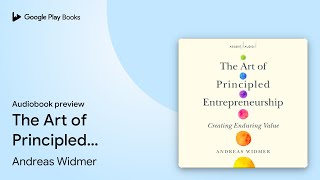
The Art of Principled Entrepreneurship:… by Andreas Widmer · Audiobook preview