Acquire.com Seller Office Hour - June 24, 2022
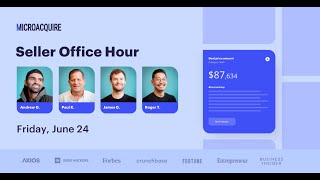
Andrew Gazdecki and the Acquire.com team answer questions about selling startups and navigating acquisitions. Topics include timing your exit, how to find the right buyer, and how the platform matches sellers with acquirers.
We love to know where you're from. Feel free to drop your name and just your location. All right, Roger, Todd.
Let'S go.
Roger, man the myth.
What do you do for fun?
Just hang out in the suburbs, Tony.
Oh, here we go. Rayleigh, North Carolina. Tony, great to have you. Maxine Cumberland, British Columbia. Thank you so much for, for joining. Definitely different time. Z.
All right, just a few more minutes. One more minute.
Michael Choir. In addition to that, I do some subject matter expertise and operations stuff. So yeah, no bunch about the process and stuff to get you acquired.
Hey there, everyone. Paul Kelly here and I am the VP of M and A. So pretty much anything related to a transaction, I'm here to help along with the rest of our team and share whatever knowledge, you know, I've accumulated over the last 20 plus years, both in Main street and lower Middle Market M and A. And I'm here in San Francisco, so I'm glad you guys can make.
Awesome. And I'm Roger. I'm head of marketing. Just help out with everything that I can. And so I'm going to be leading this in terms of asking the questions. And just to give a quick agenda here, we have 10 questions already asked from our type form. And also, so we'll take questions as well as live. So first we'll go into the Q and A and then Andrew will actually show a live example because he's actually selling one of his businesses automatically acquired. So you kind of take a look at some of the. Well, he's gonna give an example of a conversation he's had and, and we can see kind of real life example there. So. All right.
And it's, it's a small business, so don't get too excited. It's a little, a little fun Shopify app. But yeah, I'm excited to walk through kind of the platform upgrades and as well as answering any questions anyone has.
It'S for five figures, so it's no. No small feat. Okay, so let's start with some of the questions that we already have and let me get them. So the first question is, what is the typical time frame for a $10 million M&A deal? Whoever wants to answer can take that.
Andrew, you want to take it? I can take it. Whatever. Good. You can go.
It really depends. I mean, there's so many different factors. I mean, an analogy I'd probably use is, you know, how long does it take to sell a $10 million house? You know, is it really worth $10 million? Have you, you know, prepared the house properly for Sale, like there's. That's a very, very broad range. How many potential buyers are there? What type of business is it? So the amount of variability in that question makes it extremely, extremely hard to answer. But sometimes years, just being honest, like years. I mean.
I could jump in and dovetail, if you mind, you know, when I was answering that question to clients in my firm previously and, you know, having data to back it up, you know, typically it would take seven to nine months from the time we would engage, meaning we would engage with that client in a formalized agreement and start packaging, going to market, fielding buyers, due diligence, and all the way till close of escrow, seven to nine months. Now we've, you know, Andrew's vision here was to reduce friction in those transactions. So we're seeing that timeline expedited, just in a general sense. That being said, to Andrew's point, you know, if you want to sell, if there's an impetus to sell quicker, rather than if you have a longer Runway, you know, price obviously has a big determining factor as far as how quick you get into a transaction as well. So if you want to move, move it quicker, you know, adjusting to the lower end of the multiple, opposed to testing it higher.
Yeah, and I like that answer. And the reason I said years is, you know, sometimes the hardest part is, you know, finding a buyer. And this is just from my personal experience, took me three years of searching to find the right buyer for, for business apps. So. So Microcquart definitely solves that problem and shaves ears off of that. So we help you there, but you still have the factors of finding the right buyer. So we bring you a ton of different buyers, ranging from private equity groups to strategic buyers, even public companies. And so the time has definitely been reduced, but definitely factor in just the variability of what industry are you in? Are you growing fast? How big is your potential interested buyer pool? Have you structured a process or thought through, you know, how you're going to engage your buyers? All of those. Every little detail matters because you can get also false starts where you kind of go out to sell your business, you're not successful, and you're back at the starting line. And that's a mistake I personally made. So I guess I'd probably default to reach out to us for help if you have questions specifically with business of that size, because we could either introduce you to an M and a advisor or guide you ourselves or refer you over to a myriad of different resources that we've created on Microvolire and not.
To bemoan this one question, but the other thing there is how well you have prepared the business for sale. So that's how your, you know, financial statements are organized, how your memorandum is prepared, how prepared you are to field questions, what bandwidth you have to take higher calls and meetings. So I would say why don't you reach out and let's get on a call and I'll walk you through process. Happy to do that. And that's why I'm here.
All right, hope that answers. So next question, how startup founders can determine the right time for exit. Again, another broad one, but any context here, any feedback.
Can I take that one, Paul, or do you want to take.
Sure. I mean that's another canned question in a sense, but I say this often and this is literally hundreds and hundreds of founder meetings since, since over the last year. And what I've been harping on and what I've been also, it was part of my practice previously was the, the, I'm sorry, I lost my train of thought. That's what happens when I stay up too late working on Sims. I just posed the question one more time, so I make sure I answer it correctly. Roger?
Yeah. How does the startup founder know when to exit? Right.
So it's really a question that I would ask very early on. You know, why are you exiting? What is the impetus for even having the initial conversation or thought? And that actually kind of dovetails to the last question as far as, you know, if you, I use the analogy of, you know, somebody's getting ready to retire and they're at the end of their career and they have some Runway and they kind of want to, they have time to wait out, you know, the best possible transaction. That's going to be a different strategy going into marketing than if it was, you know, gosh, if I have to go in another day, I'm going to jump off, you know, the bridge or something. There's, there's different reasons for wanting to sell and there's a myriad of different reasons. So it's really, that's an important thing. It's really understanding and getting your, your, your thought process around what it looks like post sale and making sure you're prepared for that and then really everything plots there. So again, happy to jump on a, on a call and have a consultant meeting with you to kind of dive in a little bit more there.
Yeah, I love that from Paul and definitely understand that's, yeah, a great answer. And I understand that's usually the one of the first, if not second or Third question that every single buyer will ask you is why are you selling? And a big part of it is personal. You know, it could be you've grown the business as far as you've take, you can take it on your own. Maybe you want to move on to another project. Maybe, you know, you have to sell the business for other personal reasons. Maybe you're burnt out and tired. Maybe, you know, it's time for you to, you know, cash in your chips, so to speak. There's, there's so many different factors, but having a clear, crisp and honest answer as to why you're selling I think is really crucial in that first step of building trust with buyers. And then also when you do, you know, answer this question, one piece of advice I would give is to just, you know, be upfront and don't play the dance of like, yeah, we're like kind of for sale, but not really. But if you say the right price because buyers are looking at lots of different businesses. And so if you're not fully commit, like Paul said, if you're not, if you haven't really thought it through, you haven't really thought, you know, I want, like I'm, I'm selling my business for these reasons, a buyer is going to feel that as like a, you know, you're not, you're not completely sold on selling your business, which is fine, but to a buyer it'll just kind of be a, you know, maybe a light yellow flag in terms of, you know, your seriousness and, you know, it's, it's not the best signal for them to be willing to spend time really digging in to make sure this is a fit. So when you do go to sell, my best recommendation is just, you know, think through it from like a personal, you know, know what, what does your ideal outcome look like? Can you achieve that with where your business is at today? And, you know, articulate that very clearly to buyers and be upfront and also.
One step further, you know, play the tape further all the way through. So do a hypothetical. If you sold for X, do the math. You have debt, perhaps, maybe you have some balance sheet items you need to take care of. There's going to be the tax man you need to pay at the end of the year. What are you left with and is that going to work for you? And if it's not, then, you know, maybe you need to do some things to get to the number you need to get in order to exit. But, you know, be cognizant of what your net net is at the end of the day after a close of a transaction. Because there are things to consider just.
To kind of spice it up too. Sometimes the best, the best time to sell is when you get an offer you can't refuse. Sorry, dad joke, but yeah, personal, you know, figure out what your outcome is, your ideal outcome and you know, kind of reverse that backwards. But put a lot of thought into it because it's an important question.
Right? Great answer, guys. I'm going to see Tony's question in here right now. He just asked my reservation for selling is a relationship I have with my clients. Any tips on how to navigate them? Not feeling abandoned and leaving the door open for opportunities.
I could feel that one if you'd like to. Yeah, Paul, get that one.
Yeah.
So you know, deals, something like that can be, it's. First of all, that's a bonus, that's a benefit. In a buyer's side, you care, care about your clients, you care about your business. You know, if you care about your employees and their future, that, that all shows very well to a buyer and it reflects on the business and the value of the business. If you know, I've done deals where the, the owner of the business was very much the figurehead of the business, the brand in a sense and, and the concern was both for the, the like your question as far as how do I address that? But also on the buyer side, it's like, gosh, once that person leaves, I need to be protected on the downside if the clients leave as well. So I've done it where in various different ways. The ones coming to mind right now is you can have a tail where it's not Paul's buying the business from Roger, Paul's the new owner. It's more, it's, you know, Paul stepping away from the business to focus more on development or something else, taking on a partner. Because in most cases your deal is going to have some, some tail on it anyway, whether it's a seller node or some kind of contingencies built in. And you very much are partners for a period of time. So it's an easier way to transition. There's a whole transition plan you should go through and really understand how that's going to work. But there's a way to maintain the continuity of that relationship and goodwill that you've built because that's valuable. That's why the buyer is buying the business. But while still removing you from the business over time, you're not doing the day to day grind. So again, happy to chat with you and dive in a little bit more to know more details and happy to share whatever thoughts I have there.
All right, thanks Paul. And then moving on, what's the minimum revenue figure required before the acquisition process can be started? I think this might be revenue to be listed on Microacquire so I can grab that one.
So we no longer list pre revenue startups. We do occasionally. So you still will see some previously listed, but in very rare instances we will. So I would say, you know, at least get your business to a minimum of, you know, a thousand years. Probably where I'd put it at because really what buyers on Microcore are looking for is a business with product market fit. You've de risked the business to some degree even with just a few customers. It'll just make selling your business so much easier and also the exit so much more meaningful for you. And the reason if you're wondering why we don't sell or we don't we decided to no longer list pre revenue startups was mainly one is, you know, a lot of the times the code can just be a script and someone bought throws it up on a server and so you're not buying proprietary IP.2 they're just really hard to price in terms of, you know, the value and like there's just so many different variables around, you know, how the quality of the product that is hard to, you know, really validate without paying customers. Paying customers is the biggest validator even if you just have a handful because then the potential buyer can speak with those buyers or see that you have people actually using the product. It is functional. And when there's no revenue, you know, you kind of have to walk through the whole product. Is it even working? Is it in a working state? And my bigger question is always why is there no customers?
Right.
So and then in a sense, you know, we want to see entrepreneurs have small but life changing acquisition channel. And when there's no revenue, you know, you kind of have to walk through the whole product, is it even working? Is it in a working state? And then, and my bigger question is always, why is there no customers? So and then in a sense, you know, we want to see entrepreneurs have small but life changing acquisitions. So if you're at pre revenue, I say keep pushing, just get a few customers and your exit price could arguably be 10 to 100 times more than if you list at pre revenue.
Right. And you know, to your point it's if you, I can, you can, you can defend, you know, I'm working on the next project and you know, I need bandwidth and there's a reason for wanting to sell this business because I'm onto this other thing I'm really excited about, that's defensible. But if you spent time, you've built something and haven't like, you know, like Andrew said, haven't even started generating customers and revenue in that aspect. Why, I mean that's a harder, that's a harder reasoning to defend. I would think so. And keeping in mind that buyers natures, you know, they're by nature they're going to be skeptical and they're looking for anything that perhaps is not being shared. Yeah. Push on live customers. Get it done.
Awesome. Maxine just asked what is the why behind most Microacquire acquisitions? Example merger. Wants a new job. Looking for a challenge. New challenge. Opportunity to make money. Wants to learn. I think, yeah. If anybody wants to take this one without the data in front of them, please.
I mean, Andrew's talked to a million people. I've talked to a ton of founders. It's because of the, the amount of listings we have on microacquire and the, you know, the $25,000 API to a $50 million transaction. I mean that's, that's, you can't answer that specifically, but I would say in general most people are looking to work on the next thing or you know, I'm hearing a little bit more lately about, people are concerned about what's happening in the market and they just want to take risk off. And the third one, as Andrew said earlier, is, you know, they're self realizing like they've done a really good job of getting it to here, but they realize that they don't have the skill set to take it to the next level. And there's something there. So there's value there, no doubt. But understanding that is critical. And so there's a myriad of reasons why people are selling, but I think those are kind of the three basic ones or main ones I'm seeing.
You nailed it, Paul.
Micro. Yeah.
All right.
We like to have fun here.
We, we goof around way more than any people have behind the scenes.
All right guys, next question. I think this, this relates to the previous question.
This is going to James automatically, by the way. Hey, I'm here.
It's you guys.
James, this could be a curveball or knuckleball. We don't know it's coming at you.
We'll see how, we'll see how it pans out.
Is it just really there to be.
On the mute button right in Case we. He's on. We're on a three second delay.
This one's similar to the previous one James.
A hard one.
There isn't. Okay, there's one that says Indian acquisitions about Indian acquisitions but that one we'll tackle in a second. Is it necessary to have a company or just revenue is fine for getting acquired and so I think we just touched on that. But so never mind. Not this one. Andrew already touched on that. We would like. We're not listening pre revenue anymore so. And it bodes you all to have some revenue to get started to customers.
So.
So let's move on to the next question. Is there any way to get acquired if you don't oh man. Have revenue? Nevermind.
Sorry, same question, different packaging.
Exactly. Let's get one from the audience here. So about the best acquisition time. I did not get that. If there are particular metrics like financial metrics other than personal reasons, we're not listing pre revenue anymore so. And it bodes you all to have some revenue to get started to customers. So let's move on. Next question. Is there any way to get acquired if you don't. Oh man, have revenue. Never mind. Sorry.
Same question, different packaging.
Exactly. Let's get that can show founders that this is the right time to put their startup for sale.
I don't necessarily understand that question.
I would say, I mean I'd rephrase this as like, like is there a certain scale at which one from the audience here.
So about the best acquisition time. I did not get that. If there are particular metrics, like financial metrics other than personal reasons that can show founders that this is the right time to cut their startup for sale.
I don't necessarily understand that question.
Buying a company or selling your company is best.
Yeah, I think it's, it's, it's very open in that sense. There's no follow up at the moment. So I think maybe more in terms of if there are specific thresholds of metrics that can be expected in terms of a good time to sell. But again I think there should be.
Too many I would say. I mean I'd rephrase this as like is there a certain scale at which buying a company or selling your company is best?
We can answer that and we can answer the broad question in broad, with the broad answer. So you know what buyers will look at is your historical financials, the durability of your, of your clients, the stickiness, you know, if they're there. If you've got a big recurring.
Yeah, I think it's it's, it's very open in that sense. There's no follow up at the moment.
So I think revenue piece or if it's just a churn consistently.
Right.
So you're almost like a job shop and your growth and your margins. Those are probably the three indicators that you could be around for. We've seen businesses transact that have been launched six months later. It's just on this trajectory and it's very appealing to an acquirer.
Maybe more in terms of if there are specific thresholds of metrics that can be expected in terms of a good time to sell. But again I think there should be too many factors.
I think that if you look at those financial metrics that's kind of the first answer that we can answer the broad question in broad. With the broad answer. So what buyers will look at is your historical financials, the durability of your indicators. If you're going, you know, the other direction, it's probably not the best time to sell unless you just want to sell at a fire sale.
That's a great answer, Paul. Thanks for doing that. We have a few more from Maxine actually. So I think on the inverse of what she asked about why sellers are.
Selling but of your clients, the stickiness if they're there, if you've got a big recurring revenue piece or if it's just a churn consistently. Right. So you're almost like a job shop and your growth and your margins. Those are probably the three indicators that.
Decide on the buyers. Why are most people buying on market acquirer and what are the reasons?
How do you take that one? Or James, you want to take that one?
We'll do half and half. I mean there's a bunch of reasons. Diversification, getting into new industries, adding, you.
Know, you could be around for. We've seen businesses transact that have been launched six months later a certain API.
On top of their tech stack. Maybe there's like I hate this word but I'm gonna use it.
It's just on this trajectory and it's very appealing to an acquirer anyway.
A good synergy between a seller on the platform or what they're doing already or maybe it's just like an exciting opportunity for them. You know, they would just want a new challenge. That's some, that's what we see often we have a whole spectrum of buyers, like institutional buyers to like basically.
I think that if you look at those financial metrics, that's kind of the first indicators if you're going, you know, the other Direction it's probably not the best time to sell unless you just want to sell at a fire sale.
Just sort of, you know pretty successful. The very successful entrepreneurs that are seeing something that's going to excite them and get them going again. So yeah, I think those are some really important ones from the very calculated to the just sort of emotionally driven like oh let's do this and they don't they want.
That's a great answer Paul. Thanks for doing that. But we have a few more for Maxine actually. So I think on the inverse of what she asked about why sellers are selling but decide on the buyers. Why are most people buying on market acquire and what are the reasons I.
Want to buy something that has wheels under it already rather than buy like just starting that on their own.
Yeah and I think that it's a hard answer due to the fact that.
I can take that one or James, you want to take that one of.
Just the sheer amount of listings we have and the size and the various.
Categories of we'll do half and half. I mean there's a bunch of reasons diversification, getting into new industries, adding industry.
That they're working in. So we have buyers all shapes and sizes from somebody looking to buy API and dropping it on their stack because it makes sense to somebody a certain.
API on top of their tech stack. Maybe there's like I hate this word.
But I may use it looking for a job. I coined this term years ago where they're corporate refugees. They're ready to leave the corporate environment and take the bull by the horns and run their own show.
They weigh a good synergy between a seller on the platform or what they're doing already. Or maybe it's just like an exciting opportunity for them. They would just want a new challenge. That's what we see often.
And so they're looking to buy themselves a job effectively. And then you have like the larger institutional buyers private equity groups looking they have a platform and they're looking on. They're looking for logical bolt on acquisitions that are synergistic. Your favorite word James with what they're.
We have a whole spectrum of buyers like institutional buyers to like basically already.
Scaling so.
Just sort of you know pretty successful to very successful entrepreneurs that are right.
That was really I think to think.
To you know flip the coin on that who is the logical buyer for your business. I mean the best person to know that is typically the founder and put yourself in that person, you know the other person choose and kind of play role playing and you Know what, what would you look for as a buyer of your business? And then that's a good way to.
Fix something that's going to excite them and get them going again, you know. So yeah, I think those are some really important ones from the very you know, calculated to the just sort of emotionally driven like oh let's do this and they don't.
They want it as well.
Nailed it.
All right, we have a bunch more for Maxine. Thanks Maxine. Franc are asking all these questions. Have you seen any companies on marketquire partner up with each other? Have you seen any equity swaps buy.
Something that has wheels under it already rather than buy like just starting that on their own.
How much matchmaking is happening on market by your team?
I'll take this one. Not, not too much. I mean when we do so we aren't involved in a transaction by any means. So we aren't involved on so when deals close sometimes we don't even know. Like yesterday I did a podcast with someone and he told me he bought a company on Microware. I had no idea.
Yeah and, and I think that it's, it's, it's a hard answer due to the fact that of just the sheer amount of listings we have and the size and the various categories of so.
We respect the privacy of both our buyers and sellers. So I don't have really too much information on that question.
Industry that they're working in. So we have buyers all shapes and sizes.
But going back to the second part of your question how much matchmaking is happening on microquire buyer team? Quite a bit.
I mean we from somebody looking to buy API and dropping it on their stack because it makes sense to somebody.
We're, we're moving towards you know at this point looking for a job.
They you know maybe I coined this term years ago where you know their.
Corporate note the matchmaking is when you list a micro query you can expect to be reached out by refugees.
They're ready to leave the corporate environment and take the bull by the horns.
And run their own show by 30 to 50 qualified buyers. So we do a really good job of and this is a manual matchmaking. This is automated matchmaking and in the.
Very and so they're looking to buy themselves a job effectively and then you have like the larger, very near future.
We'Re going to have data driven matchmaking where we're going to be able to.
Basically say pay institutional buyers private equity groups looking they have a platform and they're looking on they're Looking for logical bolt on acquisitions that are set. Synergistic, your favorite word, James. With what they're already scaling. So.
All right, that was great.
I think, you know, to think to, you know, flip the coin on that.
This buyer is interested in this type of business just went live. You should potentially speak to this person. So I hope that answers your question. But yeah, when you list on microguire, you definitely get matched up with quite, quite a few buyers, sometimes to the point where it can feel overwhelming, which is a good thing because the more buyers that you have interested in your business, the higher your chances of potentially being acquired.
Who is the logical buyer for your business? I mean, the best person to know that is typically the founder and put yourself in that person, you know, the other person shoes and kind of play role playing. And you know, what, what would you look for as a buyer of your business? And then that's a good way to think.
Right?
And there's, there's a cadence we've developed and have been recommending when founders do go live on platform, how they interact with the sometimes overwhelming about it as well. Now that influx of buyer messages and we've seen that, you know, often founders will begin to cherry pick whom to respond to because it is an arduous process and it can be time consuming. What I've been.
All right, we have a bunch more for Maxine. Thanks, Maxine, for answering or asking all these questions. Have you seen any companies on marketquire partner up with each other? Have you seen any equity swaps? How much matchmaking is happening on my car by your team?
I'll take this one saying repeatedly on. On like a recorded repeat message for the last many months.
Not, not too much. I mean, when we do is when.
Those messages come in, treat every one of those as if that is the buyer of your business until they disqualified themselves as being the buyer. And that's that you. You would do that through some light vetting and some simple questions. You have experience in this space. If we got there, how would you fund this transaction?
So we aren't involved in a transaction by any means. So we aren't involved on. So when deals close, sometimes we don't even know. Like yesterday I did a podcast with someone and he told me he bought a company on Microware. I had no idea.
And the last kind of hoop I would have them jump through is, you know, I have a deck or a deal book I'm happy to share with you. I've attached the confidentiality agreement.
So we respect the privacy of Both our buyers and sellers.
So and those are actions that any buyer that has real interest and they're really active buyers, they shouldn't have a problem, problem answering or doing any of those things. And it's. It.
I don't have really too much information on that question. But going back to the second part of your question how much it's lightly.
Vetting them and you're having them jump through psychological hoops for you showing that they're performing.
Matchmaking is happening on Microquire by our team quite a bit. I mean we, because that is a.
Key thing you want to make sure that they're performing. Otherwise the most painful thing is going through a transaction and then somebody stops performing.
We're moving towards, you know, at this.
Point the buyer stops performing and the deal falls out and a lot of work falls on the ground and it's, it's painful. It's, it's, it's a cycle, it's a hit. And so you know, the best you can kind of vet that out on the onset, the better off you'll be and the higher your probability as of hitting the finish line.
Awesome.
Now the matchmaking is when you list a micro query you can expect to be reached out by you care if I maybe knock out all these us by 30 to 50 qualified buyers. So we do a really good job of and this is a manual matchmaking, this is automated matchmaking. And in the very questions then move over to the marketplace example.
Yeah please.
So Maxine, I'm going to go through questions really quickly since you're very near future we're going to have data driven matchmaking where we're going to be able to basically say hey, addressing a lot. And I appreciate all these. We do know when startup sell but sometimes when you have a listing and it's not marked as sold that would be a situation when we just don't know this buyer is interested in this type of business just went live you should but for the most part I'd say 80, 90% potentially speak to this person. So I hope that answers your question. Of the businesses that sell Microquire we were able to track but yeah when you list on Microguire you definitely get matched up with quite so that was just one example. So I don't want to give the impression that we don't have any idea what's going on. Quite a few buyers sometimes to the point where it can feel overwhelming. Does Microacquire ever foresee an option to make a commission fee for helping someone sell their Startup. Yes. Our goal with Microacquire though is we want to before to really build this into a large business. We. Which is a good thing because the more buyers that you have interested in your business, the higher your chances of potentially being acquired.
Right.
And there's, there's a cadence we've developed and have been recommending have to charge commission.
That's just a given. We're not a nonprofit. And what we want to do before that though is we want to add so much value to the acquisition process.
That when founders do go live on platform, how they interact with the sometimes overwhelmed.
Where you are able to have your company acquired in a automated, streamlined fashion that makes the process so easy that you're more than willing to pay a small commission fee well below the 10.
To 15 influx of buyer messages.
And we've seen that ranges you typically see with the business broker so in the near future but not today. So hope that answers that question and then the next one in terms of demographics of your audience buy and sell side.
You know, often founders will begin to cherry pick whom to respond to because it is an arduous process and it can be time consuming. What I've been saying repeatedly on like a recorded repeat message for the last many months is when those messages come in, treat every one of those as if that is the buyer of your business until they've disqualified themselves as being the buyer. And that's that you, you would do that through some light vetting and some simple questions. You have experience in this space. If we got there, how would you fund this transaction? And the last kind of hoop I would have them jump through is, you know, I have a deck or a deal book I'm happy to share with you. I've attached the confidentiality agreement, global representation.
Age, gender, wealth, that information. We're going to be compiling another report in terms of valuations, representation around the globe. But I can say we pretty much, pretty much seen acquisitions on every single continent. I always joke and say, except Antarctica. That's one of my big hairy, audacious goals for the year. But yes, we have partnerships with firms in India, Africa, Turkey and those are.
Actions that any buyer that has real interest in their.
Brazil, quite a few. So we have a pretty good global footprint and you can actually go on microfarad and search by location and see companies in Portugal, companies in Mexico, companies.
In France, really active buyers. They shouldn't have a problem answering or doing any of those things.
And it's advanced, which is really cool because you know, acquisitions are global and so microbiome to. And then the other questions. How many companies are buying?
It's lightly vetting them and you're having them jump through psychological hoops for you.
Showing that they're performing startups versus how many versus individuals. Off the top of my head, I.
I, because that is a key thing. You want to make sure that they're performing.
Otherwise give that one probably a 50, 50 split. 50% institutional.
Most painful thing is going through a transaction and, and then somebody stops 50% individual buyer.
Next question from Maxine. What is the biggest challenge for micro acquirers? The company? I would say, I mean, we're really tackling some really, really big product challenges.
In terms of the buyer stops performing and the deal falls out and a lot of work falls on the ground. And it's, it's painful. It's, it's a cycle, it's, it's a hit. And so, you know, the best you can kind of vet that out on the onset, the better off you'll be and the higher your probability is of hitting the finish line.
Awesome.
Like one really exciting product that I'm excited to release is. You care if I maybe knock out all these last questions, then move over to the marketplace example?
Yeah, please.
So Maxine, I'm going to go through questions really quickly since you're addressing a lot and I appreciate all these. We do know when startups sell, but sometimes when you have a listing and it's not marked as sold, that would be a situation when we just don't know. But for the most part, I'd say 80, 90% really advanced metrics. So as a startup founder, when you're going to sell your business if you don't have a P L, we're building tooling that can essentially stitch together your expenses with your revenue to give buyers a healthy snapshot of your business to help you really, you know, bring your, your best foot forward and you know, give buyers information that they need to assess the health of your business. So not necessarily challenges. I would just say we just have big opportunities that we're tackling and those just take time. And then Randy's question. Do you see many sales where the domain name and website is most valuable asset? Mine is minimal revenue in comparison to the domain of the businesses that sell Microquire. We, we were able to track and build up value. We typically don't list content websites, so I would say not too much. That policy might change in the near future just because we have seen some, some really good content websites come in. So feel free to list. So that was just one example. So I don't want to give the impression that we don't have any idea what's going on. Um, does Microquire ever foresee an option to make a commission fee for helping someone sit? And we will give it a look, but our. Our sweet spot is definitely SaaS&E commerce and general software companies.
Last one from Tony right now. When is not a good time to Microacquire, for example.
We are startup. Yes. Our goal with Microacquire though is we.
Want to super busy right now. Any experience with other founders in this situation.
Before to really build this into a large business? We. I'll take this last one and then we'll move into. So this is the last question. Then we're going to move into kind of walking through the platform and a real sort of like live demo. Have to charge commission. That's just a given. We're not a nonprofit. And what we want to do before that though is we want to add so much value to the acquisition process. How to kind of position your startup. Let's see, when is not a good time to Microcurrent, for example. We're super busy right now. I mean, I'd say if your company is growing and you're happy with where you're at, that's not a good time. You know, good like it. It should be very obvious when it is a good time, in my opinion. If there's any sort of one foot in the door, out the door situation. And if you have to kind of really think about. Should feel obvious in my opinion, because again, it's where you are able to have your company acquired. And it's a very personal thing like either you typically have. You want to move on from the business in a automated, streamlined fashion that makes the process so easy that you're more than willing to pay a small commission fee well below the 10 to 15% ranges you typically see with the business broker. So in the near future business, you want to have a liquidity event, maybe you know, buy a home, start a family, you know. But if your business is growing and you're happy and you're focused on it, keep going, you know, because you can always sell it at a later point. So I'd say the worst time to sell a business is when you're just not ready. And if you're super busy, you know, one way to mitigate that is to hire an MA advisor to help you through the entire process end to end. But that would be my experience. I mean I ran a previous company for eight years, but not today, so. And there was many times where we had offers and I turned them down because I hope that answers that question. And then the next one in terms of demographics of your audience, buy and sell side, global representation, age, gender, wealth, that information, we're going to be compiling another report in terms of valuations. Still had gas in the tank and I wanted to keep growing the business. So that's just personal experience.
And it really goes back to that initial, initial question. Why are you contemplating this? Why are you thinking about this? What is the, what's driving that thought to even occur? And then from there, if you really, you know, really define that, I think it's going to help you get, get your answer will come. Also going through the process of building a memorandum on your business, due diligence on yourself, it forces a founder to think about the business in ways that they haven't in a while in a.
Lot of cases and representation around the globe. But I can say we've pretty much seen acquisitions on every single continent. I always joke and say, accept Antarctica. That's one of my big hairy, audacious goals for the year. But yes, we have partnerships with.
Often through that forced audit of your own business, you'll start identifying things like, wow, I could actually do X, Y and Z and actually increase some profitability. And therefore maybe I should pump the brakes on this. You know, thinking about selling for a minute until I tighten it up. Anyway, I'm always happy to chat with, with you one on one to answer those types of questions. So, Andrew, I'll let you take the floor and I'm going to go on you.
All right, Roger, I think you just got to enable the ability for me to share my screen. I'll get going on this. All right. Firms in India, Africa, Turkey, Brazil, quite a few. So we have a pretty good global footprint. And you can actually go on microfarad and search by location and see companies in Portugal, companies in Mexico, companies in France. So can everybody see my screen? Okay?
Yes, sir.
All right, so what we recently released is what we're calling our guided acquisition process. And this is my listing for a simple Shopify application. Basically bottom ends and it's doing about 25,000 a year in TTM revenue. Most of that is profit. Definitely check it out. But what I want to show is just kind of like how to, you know, go through buyers. So I have one buyer example here and Roger, if there's any questions that pop up, feel free to flag them, which is really Cool, because, you know, acquisitions are global and so my requires too. And then the other questions. How many companies are buying startups versus how many versus individuals? Off the top of my head, I'd give that one probably a 50, 50 split. 50% institutional. Um, but this is a little awkward. Um, the buyer for my startup is, is on this webinar. I mean, what are we going to do? Okay, so this is basically the upgrades that we've made. So Roger's verified his ID, he's verified his LinkedIn account, and I can click into his profile to learn more about him to see if he's a good fit for this startup that I'm selling. And so as I chat with him, this is kind of the conversation that I, I Recommend Running through. So 50 individual buyer. Next question from Maxine. What is the biggest challenge for Microacquire as a company? I would say, I mean, we're really tackling some really, really big product challenges in terms of like one really exciting product that I'm excited to release is Roger introduces himself. He's based in California. He's looking for a SaaS business. Nice introduction. Great to meet Roger. So I respond back with, hey, Roger, nice to meet you and thanks for reaching out. Quick question, if we were going to get to the finish line, how would you fund this? He responds, I'm open to negotiations. What'd you have in mind? And I kind of say, you know, I'm ideally looking for an all cash offer. Does that work for you? Given the app is priced at a fair multiple, if that works for you, I do have a data room available and this goes into the importance of being prepared when you go to sell your business. And then if that works, I'll put an NDA in place and we are moving. So send the NDA to Roger. Gave him access to the data room, which is just basically financials. We have really advanced metrics. So as a startup founder, when you're going to sell your business, if you don't have a P and L, we're building tooling that can essentially stitch together your expenses with your revenue to give buyers a healthy snapshot of your business operations. And it can be obviously much more than this, but then also a transition plan as well in terms of how are we going to, you know, what service to help you really, you know, bring your, your best foot forward and are you using what needs to be transferred over? And so just looking at the transfer sheet, you know, it's a very simple app. So these are the things. So just a buyer can kind of wrap their head around okay, what is going to what do I need to move over what assets my actually buying. And so what I do is I basically give Roger access to the data room. He goes through it after signing the NDA. I should note that we'll have integrated NDAs. You know, give buyers information that they need to assess the health of your business probably by when this webinar goes live. I would guess we're actively working on it. So that would that's coming within the next 30 days business. So not necessarily challenges. I would just say we just have big opportunities that we're tackling and those just take time at the most. And then we hop on a call, we get to know each other because really who you sell time. And then Randy's question, do you see many sales with a domain name? And Web2 is, you know there's a transition period so you're going to have to work with this person. And so after the call I really liked Roger and I said hey, I'm going to collect Lois by next Friday. So that's me setting a timeline of letting buyers know that you know there is a lot of interest in this application. Feel free to submit one with the Microquire LOI builder. And Roger did and I can click and see the LOI summary. He's offering me $70,000 and you can just read the terms here. I can sign this LOI and that will move Insight is most valuable asset. Mine is minimal revenue in comparison to the domain and build up value. We typically don't list content websites so I would say not too much. That policy might change in the near future just into the next phase of the process and I'll just go through the guided equity because we have seen some, some really good content websites come in. So feel free to listen process. So if I accept this LOI that will push us into due diligence and I also want to note out the resources that we provide. So if you need the NDA we have a template right here and we're gonna again we're gonna have this integrated but for now you can just download that, send that and an example just profit and loss statement example data room as well. And you could just make copies of these. So you just go make a copy. I think I own it so I can't make a copy. But definitely leverage all of these resources because they are important. And then when you get to fielding offers sit and we will give it a look. But our, our sweet spot is definitely SaaS&E commerce and general software companies.
Last one from Tony right now. One is not a good time to Microcquire, for example, we are, we have.
Information on every part of the acquisition process. So now I'm building offers. How do I evaluate a letter of intent? We have resources for that. How do I negotiate a letter of intent? So really, again, you know, the ethos of Microacquire is to empower you as a founder to put you in the best possible position as you're going to sell your startup. And then moving into due diligence. Some of you may not, you know, be too familiar with due diligence. So what is it? So we have tons of articles and materials on really what to prepare for. And due diligence can vary based on the size of your business and the complexity of your business. But just going through the step by.
Step, super busy right now. We. Any experience with other founders in this situation?
I'll take this last one and then we'll move into. So this is the last question. Then we're going to move into kind of walking through the platform and a real sort of like live demo step process. And our, our goal here really is to standardize and streamline and just make it easier for both buyers and sellers to get on the same page. And then if you need additional help, you can hire MA advisors, legal help, help with due diligence, and much more. So I just wanted to kind of point this out. Just, you know, the key here is really just, you know, be prepared and have a data room available in advance if possible because it can make all the difference. It allows buyers to really just review your business at a high level. You don't have to put any sensitive information. And then if you're wondering what to put in the data room, we even have articles on, you know, what do you actually put in a data room. So if I type in, say, any sort of data room, what to include in your startup data room, there's a full checklist of things that you should potentially consider adding into your data room. So I hope, I hope that was helpful. Any questions based off that? I know I kind of just totally ran through that, but we got, I think about five minutes left here, so happy to answer any additional questions if you guys have some. Was that helpful?
I think it was, yeah.
Thank you, Maxine. Helpful. It's hard to run through a product quickly, but I was trying to do Maxine.
Let's go, Maxine.
All right, thanks, man. It looks like we're good for today. Wishing you, everyone. All the best. And again, please understand that we're here to help empower you as founders. We're every decision that we make as micro at microacquire is to help founders maximize their exit. We want you to succeed. We want you to have the best possible outcome with your business. So if you have questions, feel free to email supporticorequire.com go to the resource section of Microacquire, read all the materials that we've created, and just realize we're here to help. So, wishing you all the best. Hope you have a wonderful Friday and a great weekend. And again, if there's anything that we can do to help or didn't cover in this webinar, feel free to email my team and we'll definitely get back to you.
More from Andrew



The Buyers Who Made the Move: What They Bought, How They Did It, and What Happened Next






