Building and Selling an App for Guided Acupressure - Alan Li, Co-founder of Moxa
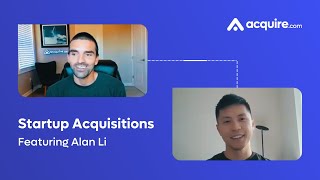
Alan Li built Moxa, an app for guided acupressure, and sold it. He discusses finding product-market fit in the US, marketing challenges, and what he learned going through acquisition.
All right, I'm here with Alan, the founder of Moxa, who recently got acquired. Alan, how are you doing today? Good, good.
Thanks for having me, Andrew.
Yeah, my pleasure. So for those that may not know you, do you want to give a brief background introduction of yourself?
Sure. So, yeah, I started my career mostly in finance. I was investment banking analyst and worked in private equity for about four years and then, and then went to business school. But I think I quickly realized during my time in banking PE that I wanted to do something different. And in my mind that was something a little bit more entrepreneurial. So that was a big reason for going to business school, to sort of meet new people, see if I could work on interesting startups and ideas. And the one interesting thing I think I did in between my time in banking PE was I actually started a podcast, this was back in 2016, and it was called the Vampire Squid. And it was basically detailing my time in banking. Sort of like a share all very transparent look into what is a day in the life of an investment banker. And that actually became a little bit of a hit. And I think most wannabe investment bankers in college were sort of listening to the podcast at some point, but that was my sort of my first foray into doing something a little different instead of like the traditional path that I was on. And I found a lot of enjoyment and fulfillment through it. So, you know, went to business school, worked on a couple startups with some friends, you know, learned a lot, realized I should actually go to an earlier stage company and get some more experience. So yeah, spent some time at some earlier stage startups, then founded Moxa about a year and a half plus ago and recently sold it. So apologies for that.
I love how you started a podcast about investment banking. I might have to check that out.
Yeah, there's some, some interesting stories that happen when you're pulling, you know, 20 hour days for weeks at a time, so.
Oh, gosh, I can only imagine. Well, hey, let's talk about Moxa. I'd love to know, do you want to just give an overview of the problem it solved, what it do, just a little bit about the product to start and then we go from there.
Yeah. So yeah, the initial idea for Moxa came about sort of in the beginning of the pandemic. You know, when I was at business, I was getting acupuncture from an acupuncturist in Charlestown. And you know, I would see her on sort of a biweekly basis. But when the pandemic hit, there was obviously Sort of close of business social distancing. And what ended up happening was instead of being able to get my sort of scheduled acupuncture appointments, we started doing zoom sessions like this where she would teach us how to do athlete pressure on ourselves. And the basis for.
I've never gotten acupuncture, but like.
Yeah, so like refo re of acupuncture is, you know, there's acupoints on the body where if you stimulate those points, they can help relieve common ailments like, you know, stress, headaches, coughs, et cetera. And when you go see an acupuncturist, they put needles in those points to help stimulate them. So if anyone's ever sort of like massaged their temples, there's acupoints there whenever they're stressed or they have a headache. And the thought behind acupressure is it's very similar but without the needles. So it's a little bit more safe. So, you know, we weren't putting in needles in ourselves, but there would be certain points on your body where you could massage those points for, you know, between 15, 30 seconds at a time and you could feel better from whatever specific ailment you were looking for relief from.
Nice. I love these startups. So you, you previously were doing acupuncture Covid hits and then I assume you were kind of a light bulb moment. Hey, why don't we try to bring this online?
Yeah. And it was interesting because it was sort of towards the tail end of my last semester and I was looking for what to do next. So had been in this mode of thinking of startup ideas, working on different projects, and this was something a little bit more personal to me. My sister is, or she has a PhD in traditional Chinese medicine. So, you know, I've sort of grown up in a family of more natural wellness. And I would say drugs or, you know, over the counter drugs or pharmaceutical drugs are sort of a last resort for us. And we tend to use things like natural therapies like acupressure or also even just food and diet to improve outcomes versus, you know, pop in a, pop in a pillar. And you know, I'm always, I think it's always shocking when I tell people this, but I can, I can count on one hand the amount of times I've taken Tylenol or Advil and people were just like, whoa. Because I have friends that, you know, take it almost on a weekly basis or whenever they drink or whenever they have any sort of sort of ailment. So that Sort of philosophy had been something that I'd grown up with, and I realized it wasn't really prevalent, at least in the U.S. so this was something to sort of push that mission a bit, hopefully get people a bit healthier through more natural alternatives.
That is awesome because, yeah, there's so many ailments and just I'm not a doctor or anything like that, but if there's a, you know, natural, safer way of achieving the same results as opposed to taking medication, that's. That's awesome.
Yeah.
Kudos to you for building a company that, you know, actually really, really probably helped a lot of people, I assume. So my, my next question is, tell me about the moment when you found product market fit. Like, obviously you weren't the only person with this need or want. You created this. Talk about, like when you got your first users or did you have a moment you felt like you found product market fit and you're like, whoa, like I'm on to something.
Yeah. I think one of the moments were when we talked to this, this ex lawyer that lived in SoCal and he was sort of a fitness fanatic, would be biking all the time on weekends, would do marathons, and was also sort of of the mindset, natural wellness, sort of inversion to drugs. And he was one of the first users where we saw consistent usage over time and someone who was retained on a more consistent basis. So, as you know, with most consumer apps or consumer mobile apps, retention is by far the most important thing to, you know, sort of not fill a leaky bucket. And one of the precursors of at least financial retention is usage retention. So if someone's consistently using your app, they're more likely to stick around and continue using the product afterwards. And he was sort of detailing to us how his acupressure sessions were almost like transcendent. He had done meditation and also did acupressure on top of the meditation that he was already incorporating into his daily life. So it was really neat to hear sort of the way he describes the energy flow throughout his body, sort of how much better he felt throughout the day. Those are really nice stories. And, you know, we were looking for more individuals similar to this individual, you know, based on sort of his past, his upbringing, his interest. And those were one of the first moments. We're like, wow, we actually built something from scratch that someone actually really loves and uses on a consistent basis, which was a pretty cool experience.
Nice. I love how vividly you remember. I always say you never forget your first customer because I don't Know if that was your first, but not our first.
I mean we had like a lot friends and stuff, like try it and do that. But this was one of the ones that, you know, we talked to multiple times and we're like, whoa, this is feels like there's something here.
So nice. Tell me about how did you get your first customers? What sort of like marketing strategies were using? How did you get this thing off the ground?
Yeah, the first ones mostly were through organic social. So I had never use TikTok. My partners had never used it either until we started Moxa. But we had heard that, you know, TikTok was a great way to showcase and also educate people on interesting topics. I had thought that it was just dance videos for teenagers, but clearly there was such a larger market there that I wasn't aware of. And I think the stat that sort of convinced me over was like 50% of people using TikTok were over the ages of 23 or 25 or something like that. So then because our product required a bit of education, we thought that it would be a good platform, at least in short form video to teach people how acupressure works and some of the benefits of it. And you know, I think we were able to capture a little bit of the wave up from COVID and people downloading social media more and downloading TikTok more. But we had a few videos go viral which helped get some demand and downloads for our app.
So you, you solved the problem that, you know, you personally experience, you got customers. It sounded like you had a good go to market engine. What made you decide to sell the business?
Yeah, so for Moxa and what we were doing around Acupressure, I think there were a few lessons that we learned throughout building the company and I think one of them is that educating consumers and sort of handholding them through the process and teaching them is not only very time consuming but also very expensive. So we had gone through an accelerator and had a little bit of pre seed funding. But what we realized was it was really tough to have a positive LTV to cac on pure paid advertising. And while we had, I think pretty a pretty great organic growth engine, it was sort of tough to, you know, solely rely on the organic portion. Especially since we had taken on some funding, we had to make other channels work and it was kind of tough for us to make sort of the pay CAC work. And I think what we also realized was at least in the US people are used to their habits and they are a little bit more resistant to change than we had initially thought. So even though in my mind, you know, everyone should be doing natural therapies or should be changing their lifestyle or behavior before they're taking pills, that's often not the case because pills are really effective, that they work really fast and you feel it almost instantly, whereas the side effects may come a little bit later. Whereas natural therapies have potentially less side effects, but might take a little bit longer for them to immediately feel. So throughout that journey was a bit tough and we realized that the US market was harder for us to educate and we realized the Asian market was actually a little bit more primed and better suited for product like ours. That's sort of how we met our buyer through the guard platform. They were a Singaporean based buyer and saw the potential for moxa in Asia because people were generally sort of primed for this. And given we're in the U.S. we thought it might have been a little bit tough for us to also do stuff in Asia. And you know, to be honest, we also experienced a bit of burnout. We had been going sort of part time on it for about three years, but full time on it for about a year and a half. And it was, it was, we thought, you know, time to pass on the reins to someone who could take it to the next level in a region that we thought could be better suited for a product like ours.
That makes a ton of sense. There's one of my favorite sayings in businesses. One of the hardest things to do is to change consumer habits.
It's so hard.
It takes a lot of education and a lot of time to have that shift over towards a new paradigm of whatever sort of technology or service you're offering. But more on the acquisition now I'm wondering, okay, so you found sounds like the app is perform really well in one region. You found a buyer in that region as well. How did you prepare for the acquisition? How did you get ready to talk to potential buyers?
Yeah, so I think a few things. So I had worked in finance before and had gone through a lot of deals and structures and know what a data room needs look like. What are the typical asks of potential buyers? Granting them access to things. So a lot of it was making sure that we had sort of our books in order to also making sure that we had simple analyses that were customary for a mobile app or consumer mobile app like ours handy and ready so we weren't scrambling for, you know, when they would ask for these types of things. That was mostly it prepping like A few teaser docs, general docs, financials, you know, sort of charts and a deeper look into retention, cohort retention. All those things were sort of generally prepped before we went on the platform since we knew a lot of buyers would, would ask for these types of materials.
That is correct, yes. That's something we stress a lot at acquirers. Be prepared before you go live on the marketplace because buyers do need this information to make a decision on if you're going to acquire your business or not. And it just shows the level of professionalism and that preparation can really be the difference between a successful acquisition and no acquisition. So good job on that. I guess my next question would be, what was your like, impression of acquire? Like you, you listed on acquire, how many NDAs did you get? Like, tell me about just kind of the overall, you know, experience before you.
Found the initial buyer. Yeah, so I don't remember exactly how many NDAs we got, but at least a few dozen, I'd say probably in the 30 ish, 30 to 40 ish range. And, you know, had conversations with about maybe 20% of them afterwards who were interested and then, you know, deeper conversations with the buyer that we ultimately went with. And then we also had another buyer who was interested that we met outside of the platform, someone that we had been talking to beforehand who was sort of a larger player who had raised a fund solely looking to purchase health and wellness type products like ours. So, you know, ultimately it came down to sort of buyer that we went with and also this, this other buyer that was off platform. We decided to go with the buyer on acquired because they were able to make an all cash offer. The other buyer wanted to do sort of a mix of stock and earn outs, which just made it a little bit more messy. And we were looking for something a little bit more clean, which is what we found with Byron Acquire. The diligence process was about a month and then also we also went to exclusivity with them for deeper diligence where we didn't talk to any other buyers. So I think from when we joined the platform, we got few NDAs and conversations over a couple of weeks, did a bit more diligence with our current buyer, went to exclusivity with them. So I think all in all is around three months or so before we were able to sort of finish and close up the acquisition and then about another month of transition for moving all the software and pieces over to the new buyer.
Nice. So it sounds like a pretty smooth transaction. You got all cash, you Found a buyer that was able to take what you built and grow it into a different part of the world. Yeah, see you live on.
Yeah, we were, we were pretty happy with it. And I think, you know, there's, there's a lot of sort of, I think consumer mobile products out there. Yeah. We weren't even sure what the process is going to be like, but it was fairly seamless, you know, from beginning to end.
Nice. What would you say your favorite part about acquisition. Acquisition process was? Aside from the money hitting your bank account?
Aside from, aside from closing it, what's the favorite part? I mean, I actually enjoyed sort of the diligence process, which might seem a little masochistic to other people, but it just goes to show how much work we had done over the last few years and sort of the knowledge and the know how and sort of explaining and sharing that to a buyer gave us a little bit of time to reflect on like, wow, we did a lot of things over, you know, the last couple of years where when you're in startup mode, as you know, a lot of time it's just what fires are burning right now, how can I put them out, what's next? And there's not that much time to reflect. So that whole diligence process actually provided a bit of reflection time for me and for the team into seeing what we had built and sort of accomplished, which was interestingly a little bit therapeutic.
That's awesome. So you have to go back and review just everything that you built and all the docs station and.
Yep.
Marketing materials.
Yep. It's like why did you make this decision? Why did you do this? Like what happened during this time period? What was going on here? And we're like, wow. It's like didn't, didn't, didn't do that as much while we were actually heads down building.
That's awesome. Yeah, it's, it's always fun to look back and just see everything that you built, especially when you're selling the business. That's even the funny part. I like how you frame due diligence where you know, most people, it's very tedious and you know, it's not the funnest part of the acquisition, but I like how you frame it as, you know, you have to go back down memory lane in a way.
Exactly.
I guess, you know, if you had just a few tips for people, other founders that might be looking to sell their startup on acquire, what, what maybe tips would you give them? If you have maybe one or two.
Or three, I think if you're looking to sell your business, one of the business or one. One of the most important things I think, is to create sort of an air of competition that your product is sort of sought after and there's multiple people interested. Because I think once that happens, it encourages potential buyers to be a little more serious, to be a little bit more fast in their response, to be a little bit more thorough when they know potentially there's someone else who's also interested in your product. And I mean that I think inherently is as much as building a good product that people want to buy, but also playing the game a little bit and sort of making sure potential buyers are aware that you're not here to just sort of mess around. You're serious about selling the business, there's other parties interested, and if you're interested, you're in. If you're not, you're out. Because you don't want to waste their time and you don't want them to waste your time. So I think that's probably pretty important to increase the speed of timeline of acquisition and actually get things done. And then I guess the second thing is also really know that you want to sell, because I think there were some points when we were like, man, should we keep pushing on this or going down this angle as we're nearing and nearing closer to the end of the deal, like, wow, we spent a decent amount of time working on this. Sure, we're selling it to someone else, but it's almost like having your baby go a bit, and you just want to be sure that you're ready for that and that you've sort of exhausted the things that you wanted to do for the business. And I think we mostly had done that, and I think it was the right decision for us. But even still, we still had some of those thoughts like, hey, maybe we should give it another. Another year to keep pushing and seeing what it looks like. But the decision to sell, I think, should not come lightly. And you know, I think there is sometimes potential sellers remorse here. So just make sure you really want to sell and if you do, you know, make sure you run a type, tight shift type process.
Yeah, that's great advice on, on both parts. Definitely the part in terms of drawing the timeline and keeping buyers engaged and not letting them just drag out, you know, meetings for months and months and months. You want to run a process, we. We call it a stage eight process or deal schedule, which. So that's awesome you did that. And then I agree. And also if you're not committed to selling, buyers will step back. They'll see that as a huge red flag. Because the last thing, you know, just like when you're selling a business, the last thing you want to do is waste time on a buyer that's going to take too long, isn't going to, actually. But it's also the same on the other side of the fence with the buyer who doesn't want to issue an ly and go through due diligence. Then at the last minute, you know, you end up deciding not to sell. And that, and that does happen. But, yeah, you go to sell. You know, I, I really like that advice of, you know, make sure that, you know, you're confident in your decision and the reasoning behind it as well. Because it's one of the first questions I always have is why are you selling?
Exactly.
Well, Alan, congrats on, on the acquisition. I just have, you know, a couple more questions.
Sure.
That you built an awesome company. You. You scratched your own itch, found product market fit, sold it to someone in a seamless manner. It sounded like everything went fantastic. And now I'm just wondering, what are you up to now with what's next for you?
Yeah. So, I mean, sort of, interestingly enough, I, along with my partner, we're sort of looking at businesses to buy now.
I hear this so much, you have no idea. People sell businesses on a buyer and then they turn into a buyer.
Wait, do. Do a lot of people do this on your platform? Yes. Interesting. Yeah. I don't know. It's like, I know that I want to continue being an operator. I sort of know how tough it is going from zero to one. So right now we're just looking to see if there's interesting businesses out there that we would like to buy. And I think sort of the way we're approaching it is. Yeah, is. Is. I don't know, is our unique style, but I think it originated from my partner, and we had been working on a few startup ideas and going through the process, but he had been telling me about how his parents just sold their restaurant recently as retirees and, you know, didn't. He didn't obviously want to take it over and they wanted to retire. And they didn't necessarily really care for maximizing necessarily the purchase price, but they wanted to see the business live on and grow. And I think that happens a lot, especially as the older generation is retiring. And these happen a lot with, with restaurants and car washes or car dealerships or these types of things. But we're seeing you are there other also software products that fit into this camp? And, you know, there definitely are a lot of software products that have been around for, you know, X number of years who are profitable, who are, you know, owners that are looking to retire and want to see their legacy live on. And, you know, over the last month or so, we've been looking at some of these businesses and sort of evaluating, you know, what makes sense for us personally. You know, do we, are we interested in what this business has to offer? Can we add value? And, and, you know, if we find a good deal, I think we're going to jump on it, but that's sort of where we are right now. Who knows, things might change, but we, we think there are a lot of really interesting small businesses out there who we'd love to see continue living on.
I love it. You're speaking my language. Yeah, I, I hope you go down that path because if you built a business from nothing and you have that operator experience, that's scrappy, you know, how do we get the first customers? You know, how do we know we have product market fit? And it's so much easier to identify those things. Things you built a business, in my opinion. So, yeah, I'm rooting for you, Alan, and I hope maybe I'll bring you back on this podcast after you acquired.
A few things, hopefully. Yeah, we'd love to, Love to be back on anytime.
Well, Alan, people want to hear more about your story or just reach out to. Where can they find you?
Yeah, I mean, I think Twitter is probably the easiest for LinkedIn. My name is Alan Lee. A L A N L I on Twitter. I'm Allen Lee Berkeley. A L A N L I B E R K E L E Y.
I'll add that to the show notes. But, Alan, thanks so much for coming on the podcast and congrats again on the acquisition.
Thanks, Andrew. Thanks for having me. Thanks for creating an awesome platform and doing this.
Yeah, my pleasure. All right, cheers, man.
See you.
More from Andrew



The Buyers Who Made the Move: What They Bought, How They Did It, and What Happened Next






