Built a Profitable Startup and Got Acquired at Just 18
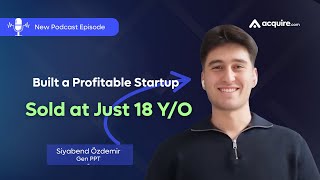
Sia Ozdemir, 18, built Gen PowerPoint and sold it through Acquire.com. She talks through the startup, the acquisition process, and what she learned along the way.
Foreign.
I'm here with Sia Ozdemir, founder of Gen PPT, Gen PowerPoint. See how you doing today.
Doing amazing. Thank you for having me, Andrew.
Yeah, so you recently got acquired and blew up on Twitter. You had a posting, over a million people. Great to have you on. But before we start, for those that may not know you, do you want to give a brief introduction of yourself?
Absolutely. I'm Sia, based in Switzerland, originally from Kurdistan. And yeah, I mean, what can I say? I'm 18 years old, still go to school and on the side I just built startups.
That is awesome. How'd you get into entrepreneurship? How'd you start building products? Where did it all start?
Well, I mean, I would probably say it goes back to the childhood. Around 11 years old was when I actually started getting into coding. But before that I was already doing stuff. So I would be selling rubbers, like the small rubber pieces to erase stuff on your piece of paper. I would buy them in one place and sell them to my classmates for a higher price and stuff like that. So it all really started in the childhood, but later evolved into more of a tech stuff and tech niche.
Nice. Tell me about Gen PowerPoint. How'd you get the idea for that? I gotta assume at 18 you're not making too many presentations. Or maybe you are, but it's a killer product. I went through it. How'd you get the idea?
Well, I mean, we do make some presentations in school, definitely. But yeah, as you said, not that many, maybe once a month. But I actually had somebody who was very close to me at the time who was very focused in SEO. One day he sent me like this huge CSV file of just the top pages of a blog page. It was a super popular affiliate blog page that made their money with basically affiliate links in their blog posts. And he sent me an analysis of all their top pages and I took a look at it and I think it was like 11pm at the time, basically on a school night. And I went through it and I saw it there and honestly, that was kind of the point. I decided to build it.
That is awesome. I love how you're doing this at such a young age too. I started entrepreneurship pretty young too, and it's awesome. And I'm sure as the years goes on, you're going to build bigger mega stuff. But again, what you build is crazy good. How did you get the first customers? How did you market it? Tell me about that.
Well, before that I heard about this Twitter niche, kind of that's called building Public where there's a lot of these so called indie hackers, people who build softwares entirely by themselves with no team and they bootstrap everything. I heard about that. So I got into that and there was this kind of like style of building products that was just like people shared absolutely everything. It didn't matter if it was revenue numbers, how they get their clients, they were sharing everything. And I decided to kind of give that a try. And that was also where my first customers came through. It was mostly students who I knew personally, but also mostly people seeing me on X, formerly Twitter, who saw my post and decided to support me.
Nice. What were some interesting use cases you saw from Gen PowerPoint? Were you seeing like Fortune 500 interesting meeting presentations? Were you surprised that other companies that used it or different students at different schools or different locations anything cool about just the users of gen PowerPoint?
Well, the cool thing about it was that the use cases were like, there were so many use cases about it. I saw everything from normal students using it all the way to a guy that I knew who was using it to generate presentations around his product. And then he was uploading those presentations to another presentation sharing site and basically getting traffic from that by having, I think it was kind of a programmatic SEO workflow that he had going on there.
That's slick. So you have product market fit. The business is growing super, super fast. Why did you decide to sell it?
I would say it's for a lot of reasons. There was one reason that I haven't publicly talked about yet, so this is the first time I'm actually talking about it. But my health was a huge reason in why I sold it. I had lots of problems with health during the time that I built it because I focused way too much on building it rather than caring about other stuff like my own social life. For example, I was building 14 hours, 16 hours every single day. And that kind of got me back to a point where I was once actually in the hospital as well because I shipped so much. But yeah, apart from that, it was honestly just the decision of like, hey, I want to do the next thing, I want to do something new. And potentially also something that's way bigger than what I was currently at the moment doing.
I think that's smart that you, you recognize that, you know, entrepreneurship is really hard. And you know, for a lot of people I've seen situations where the business is doing well, but for one reason or another, the founder just can't continue. And then the business trails off, revenue declines and you're not able to monetize or take advantage of that acquisition opportunity. So I'm glad you, you recognize that and gave yourself a break and were able to, to successfully sell this business. Um, but let's move forward. You, you list on acquire.com, you finish setting everything up. What did the first week look like? How many buyers reached out? Were you surprised? What were your, your expectations? Let's start there.
I mean, the entire process was actually super easy. Getting it listed was like the easiest part ever. I got it listed in a few, like, I filled out all the details in an hour or two, then started actually, like filling in all the details as well and preparing some documents that I could show the buyers. And a lot of people actually reached out. So I was getting consistent new people who were interested in buying. And I really loved how I was able to look at verified funds and approve or reject them. Have this entire process basically automated with the NDAs and everything. So I definitely had a lot of people reaching out and I also talked to a lot of those people.
Nice. What were some common questions that buyers had? Were they interested in the product mode, so the revenue, or both? How did those initial, initial calls go?
Well, a lot of people, I mean, obviously a lot of people were very interested in revenue numbers, especially like what it's going to look like in the future for any potential dips. They obviously asked about why did it dip here or why was it high here? So those were kind of the questions that were asked, but also they asked about the customer base. So who's your target audience? And kind of like, who are you making the most money with? So I, I guess the two main categories were, is this a sustainable business? And the other question is more about, like, is there a potential to increase revenue in here?
That makes a lot of sense. So the buyer that you ended up moving forward with, was there anything that stood about what they offered or the maybe the relationship you had built with them? What made you pick the buyer to move forward with and sell the business to?
Well, the guy I ended up selling to is actually an indie hacker himself who's very active on X as well. I've seen some of his posts, talked to him a couple of times, and what I would kind of got me to decide to go with him rather than someone else was just the speed that he worked with. With him, I was able to quickly get everything done. And he was also like, very good to work with in terms of selling the entire thing.
Nice. I think that's important. Just your Confidence in the buyer in terms of being able to close and being able to move quickly and just, you know, getting along with them. So it sounds like you're both on the same page. You're both indie hackers. I see great acquisitions when just the buyer and the seller are aligned. Don't worry about due diligence, though. So you get a letter of intent, you sign that. Now you move into due diligence. What did that look like? How long did it take? Any surprises or headaches? I know it's not the funnest thing to do, but how did, how did that process go?
I mean, doing my due diligence on the buyer was fairly easy, to be honest. He obviously had a public Twitter page. So for me, it was absolutely easy. I was just able to hop on Twitter and scroll down his timeline and see basically everything that he's doing that he's done in the past. And that made it super easy.
And then what about the transferring of assets? When you moved over the billing account and the buyer was reviewing the financials and the product, how did that process go and how long did that take?
That was also super smooth. I like the entire transfer of assets and everything, I think took less than three, three days or two days, something like that. It was super, super quick. We moved from acquired to their partner. It's escrow.com, i think. And it made it so easy. I mean, we were obviously. We also had this support agent that was emailing us super quick responses and everything. So it was so easy to get everything done. Friendly people as well. And everything was automated. I really like this. So you had the LOI that both were able to sign and then it tells you everything step by step. So like, don't transfer assets yet. Wait for him to make the escrow payment and then you see all the status. The status and you see all the updates about it. I really love that. And it was super quick.
That's awesome. I love to hear that. If you were giving advice to another founder looking to sell their business, what were the three main learnings? Given that you've been through an acquisition, what three pieces of advice would you give another founder looking to get acquired?
Well, the first and I think the best piece of advice that I would give is to prepare as many documents as possible to make everything clear, and to structure their own business in a way where they can transfer all the assets as easily as possible and as quickly as possible. This not only makes it easier for them to sell and get to the selling point quicker, but it also Makes it so much easier for the buyer as well. The second thing I would probably say is to. I mean, that kind of goes hand in hand with what I just said of organizing your business. But the second thing I would probably say is optimize your taxes. Obviously, if you. I mean, I'm not sure about other countries, but here in Switzerland, if you just sell your business and you just pocket that money through a sole proprietorship or something like that, you're paying heavy taxes on that. So I would probably recommend any founder who's thinking about selling to make sure they look into all the tax stuff beforehand, because once the money flows, tax is already set. And the last piece of advice is probably to use a service like acquire. I couldn't imagine it doing myself, especially with all the legal stuff involved. So, yeah, just my honest advice.
Love it. Those are great pieces of advice. Definitely, you know, preparing everything in advance. I think that's. That's huge because the more serious you can look in front of buyers, the more you're going to maximize acquisition, for sure. And then, yeah, taxes are a big part of selling a business. You can pay, you know, potentially millions in taxes. So looking that up in advance is also, you know, really great advice. And then Acquire as well. I'm a little biased there, though. What did you do to celebrate the acquisition? Did you do anything fun when you closed? Did you buy anything? Did you. You don't have to go into too much detail here, but did you do anything fun?
Well, I haven't tweeted about this yet, but I think I'm going to say this on the podcast. So the very first thing, and I already announced this, the very first thing I did was I called up my bank and I told them, hey, I want to buy a bunch of gold. This was more of just like an investment for me. But honestly, to me, it's still kind of a fun thing being able to buy this amount of gold and just like going in there, because I didn't, like, I did call them, but after that I went into the shop and I told them, hey, I want to buy this amount of gold. And they just looked at me in shock. And the lady there was like, do you work in it or something? I was like, yeah, kind of. So, yeah, that was super fun. And the people that are, like, seeing their reaction to it was also, like, super funny to see because most of them did not know where the money came from, so they thought I was laundering money or something like that.
Oh, man, that's hilarious. Did you get, like, actual Gold bricks. Like physical gold or just gold?
Exactly. No gold bars. Actual gold bars. Saved away, stored away in a Swiss vault.
So yeah, that is awesome. Good for you, dude. Yeah, I mean, invest the money, you know, don't do anything dumb. You know, maybe buy yourself something nice. But the majority of it, at least 90% of it, definitely reinvest it.
Absolutely.
My next question is, what are you doing next? Are you going to keep building? Are you taking a break? What does the next chapter look like? You for you, Sia?
Well, actually goes hand in hand with the previous question. The next thing I'm doing, I mean two things if we categorize it into health and business. First thing, obviously health. I also bought a new gym membership at a high end gym in my area.
Well done.
That was also pretty nice. They also have a basketball court and everything. So it's super awesome being able to go trainer. But also what I did for me personally is I bought myself a Range Rover. I haven't posted about this yet, but it's actually being prepared for me in the. At the car dealership right now, they're cleaning everything up, doing some checks on it so they can give me all the papers freshly made. And then I'm doing my driver's license because I don't have my driver's license yet. Exactly. And after that. Now I'm working on two things at the moment. The first thing is I'm already building my next SaaS, which is going to be something I'm working on with another person. It's going to be kind of a side project, to be honest. It's going to be called generate-ads.com and it's just as the name already suggests, it's just going to be an AI that helps people generate ads. So I'm staying within the AI niche just like I did with my last product. And I'm probably going to try to incorporate some marketing as well that I did with my last product and that's going to be more of a side project. But what I'm mainly doing right now is honestly exploring my options. I got an internship offer at Comp AI where I'm going to be traveling to the UK and New York for a. For an entire month and going to be working with them to help them grow their business and also to code some new stuff, new features, which is going to be awesome. And the rest of it, honestly, I'm still trying to explore. I've gotten offers from Lovable to come work for them and their growth team. I've gotten Offers from a bunch of other startups who basically offered me some equity as well, alongside with some payment, like a normal employee. And honestly, I think I might go for that option as well. But the last option that I still have is I had one or two VCs reach out to me asking me what my next project is going to be so they can fund it as well. And yeah, today I can just say, I mean, it wouldn't have been possible without the acquisition and without Acquire and the nice tweets that I made with like the entire Acquire logo and everything in it. That was actually the main reason all those people reached out to me.
Right on, Ta. You got such a bright career ahead of you. I'm stoked for you, dude. If I had any advice, I would say, you know, all whatever you made from acquisition, invest as much as you can, because when you're like 30 or 40, that could be worth a ton. Keep building, maybe build another company, swing bigger and then take your time. You know, every time I had sold a company, I would move into something really quick. Like with my biggest acquisition, I was actually in due diligence and I was building another company during that time. Going back, I wish I took a break, really thought out my next move. So enjoy the time, you know, celebrate the win. And yeah, man, keep building. I'm excited to see what you do next.
Absolutely. Thank you so much. Can I actually ask you, how did Acquire start out?
Yeah, I mean, there's like a few versions of Acquire that I could say was like the beginning, but so I just sold my second startup. It was a company called Altcoin. It was a decentralized cryptocurrency exchange. This was like seven years ago, and I didn't know what to do next. And so I was looking at potentially buying SaaS businesses. I was consulting for different startups. I actually became a chief revenue officer at this startup. Their name was Spit. I helped build their, you know, sales process, marketing strategy. I was there for about a year because I didn't know what I wanted to do, if I wanted to start another company. So I was just like you. I was kind of dabbling everything. I had good offers. Should I start another company? Should I buy small SaaS businesses? So I started Microacquire completely on the side while I was CRO at this company. Ran it for free for like a year, completely in the background. I had like tons of users. No one knew I was running it. And eventually I said, hey, I need to, you know, quit and go all in on this. Company. And originally what I'm getting at is the original idea was a deal flow platform for myself, so I could potentially acquire small SaaS companies. And then if you couldn't find. If I didn't buy it, you could still find a buyer. Then I fell in love with just the idea of helping entrepreneurs. So I went a different direction with the business. I think the lesson there is, you know, keep your options open and don't go into something like this is exactly how it has to be because you might find a better path.
Absolutely. I love that story. So you basically solve your own problem as well?
Yeah, absolutely. And definitely find a customer that you love too. I love working with entrepreneurs. I love seeing success stories like yours. For you, maybe it's working with marketers or, you know, sales teams, whatever it may be, figure out what customer you love to serve and build a product around that.
That sounds amazing. That's awesome advice.
Right on to you. So thanks so much for coming on the podcast. If people want to follow more of your journey online, where can they find you?
Absolutely. They can find me on X. My name over there is Sia Built and otherwise. I'm also available on LinkedIn as well, where it's just Sia Bent Dash Ozdemir.
I'll put that in the show notes. All right, see you. Thanks so much for coming on the podcast and congrats again on the acquisition.
Thank you for having me.
More from Andrew



The Buyers Who Made the Move: What They Bought, How They Did It, and What Happened Next






