Finding Product Market Fit with $1 a Day in Ads - Joan Manuel (JM) Sanchez, Co-founder of Studia
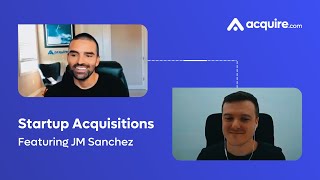
This is a YouTube video titled "Finding Product Market Fit with $1 a Day in Ads - Joan Manuel (JM) Sanchez, Co-founder of Studia" published in August 2023. It features a conversational interview between Andrew Gazdecki and Joan Manuel Sanchez, the founder of Studia, discussing Joan's entrepreneurial background, the journey of building and scaling Studia, their acquisition experience via acquire.com, and insights on startup sales and automation. The discussion also touches on Joan's current projects, including helping his family business grow through social media. The content is an in-depth podcast-style conversation focused on entrepreneurship, startup growth, and acquisition.
Foreign.
I'm here with jm, the founder of Studio, which was recently acquired. Jm, how you doing today?
I'm doing very well. How are you doing?
Doing good. Thanks so much for joining the podcast. But before we dive into the business and the acquisition story, you want to just tell listeners, I mean, I know just your background and a little bit about yourself.
Absolutely. So my name is Joan, I'm originally from Barcelona and Spain. My background starts Profess 1 starts around 12 years ago, directly doing my first internship during college in a startup. And I guess that's when the whole journey started of me being connected with entrepreneurship, being connected with startups, technology especially after that I moved during five years to, well, international mobility. So I was helping students to go and do internships abroad, do volunteering abroad. So this international aspect which we'll be speaking later about the company I created that it's very connected. And after that I was working during four years and a half in LinkedIn, moved to Ireland. So I was working in sales in LinkedIn which was a very powerful experience in terms of working in tech, knowing how to scale a business, knowing how to operate the business. So that was, you know, a bit of the my background, that perspective before starting my entrepreneurship journey, which started a couple of years ago with another startup which is not the one that we have sold recently, which is called Educately, still running it. I'm still the chief revenue officer of the company. We raised over $2 million and that when I was still scaling it, a team of 50 going very well. And meanwhile I launched together with one of my old friends from back from school and from university in which we studied together in the US in San Francisco and usf. We started this small project which was acquired and we'll speak about that. But yeah, that's a bit about me.
Nice, that's a great background. Now I'm wondering, what would you say your biggest strength and big weaknesses as an entrepreneur?
I'm a sales guy. I've been 12 years doing sales. So my definitely my strength is in sales and also in creating and developing stuff. I consider myself a creator and I'm always creating new stuff. I think it kind of reflected a lot in this journey of the startup that got acquired and I mean constant look for creating new stuff, developing new stuff, new ideas. So definitely that's my strength and putting and you know, the structure and organization for scaling my weaknesses maybe sometimes is that I'm all over the place, you know, I'm doing too many things at a time, which at the moment is it's okay because I'm living in Dubai. I've been here for the last couple of years and I'm not surrounded by my friends, I'm not surrounded by my family. So kind of my 24 hours are focusing work. I work from home so it's like very focusing and doing business, creating business, running my business. So, you know, it's like right now it's a good moment for that.
Nice. I can relate to that. Except the part about being in Dubai. I've never, never been there.
I need to visit, but it's a fun experience.
I'm going to throw a hard question at you. What, what's the biggest obstacle you've had to overcome? What's like the biggest mistake you made? An entrepreneurial journey.
That's a tough one. I made many mistakes, many mistakes. And you know, like this last three, two, three years and this journey, especially with my other startups which, you know, we raised a prestige round and a siege round with people business model more than four or five times and we had to take, you know, strong decisions for, for that pivoting and most of the. I'm the Chief Revenue Officer, right. So I'm in charge of, you know, developing the business model to scale the. All from the like, marketing, sales, absolutely everything. And I made a lot of mistakes on how to do it. Like now in the last year we've reached a quite scalable business. But making those decisions and having to lay off other people also because of my mistakes were something that is kind of I don't want to repeat anymore in my life, which was also due to the fact of raising capital. Right. Like raising over $2 million have a lot of implications also. And maybe in the future if I create more startups, which I will, I would rather go to the bootstrapping and doing it myself rather than raising money and having that, you know, strong metrics to be met constantly and that big backpack, backpacking your shoulder, that's it'. You need to, you know, drive this journey. So yeah, a lot of difficult decisions, but that business modeling, until we found what's the concrete one and the correct one that worked for us, was a big struggle, to be honest. Yeah.
Nice. I can definitely resonate with the Bootstrap or Spencer because I've done both. They, yeah, both come with pros and cons, but when you bootstrap, you keep all of your options out. You can grow at whatever pace you want. You can sell the business whenever you want.
Absolutely.
Even better, when you sell the business, you keep all the Proceeds.
Absolutely.
So now I want to hear about Studio. So what made you decide to build that product? What problem was it solving? Do you want to just give an overview of that business?
Let me show you the story because I think it's a nice story. And together with my partner, right, we are true 5050 in this business, literally. So first of all about the business. What we created is basically an agency. It's nothing extremely disruptive. It's an agency for helping students, mainly from Africa, to pursue their higher education in the US Completely financed. So we were basically tackling and helping students that are brilliant and very talented but didn't have the monetary resources to actually go and study abroad. So what we did is partner with a lot of universities in the US and Canada and partnering with a couple of financial institutions that were going to help through student loans for these students from Africa and some countries in Asia to pursue their master's degree, specifically in, in stem. And basically changing the life of these students, right? Like we're sending students from, from Kenya, from Nigeria, from Pakistan for example, to the US to a master's in cybersecurity to a master's in data science. And like the jump in their lifestyle that they were getting after that is massive from a salary maybe that they were getting in Kenya, Nigeria of $300 per month to the salaries that you can get being a graduate in data science in the U.S. so the stories are brilliant in that aspect and it's very rewarding what we bu. But at the end it's a very time consuming business and that's the journey that we face, right? Like from the beginning being super time consuming. And then little by little, what we did with my partner is kind of try to automatize the process as much as possible in order to scale it as much as possible. So my partner comes more from a financial background, I come more from an education sales background. So basically he was working in an insurance company for the last five, six years. And I always knew that he was, you know, not liking his job anymore. He wanted a chains. He was wearing basically a suit and a tie every day, like being there from 8am in the morning until 8pm he wanted to quit that and do something else. But he was telling me that for a while and one day I go to him is like, look, I have this idea, why don't we create this? It's our own, we do what we want to do with it. We want to scale it, we scale it. We want to do it. A side hustle with a side Hustle, like, okay, my idea back then is, you know, let's do the side hustle. You continue your job, I continue my job and that's it. And we invest a couple of hours in the afternoon. That was a Friday. On Monday he calls me, he's like, jm, I quit my job. Like, what the fuck are you quit your job? It's just an idea now, man. There's nothing. He was like, you know, I cannot quit my job, man. I'm the founder of another company. Like, you know, worry. I'm all in in this. You know, he was done with his previous job and that put a lot of responsibility in my shoulders also for business to happen now, which was perfect and fantastic because he went all in. He was at the beginning doing 20, 30 calls with students. It blew up very fast. So yeah, that's a bit of.
So I got a question I'm dying to ask you. When did you realize you hit product market pit? Like, when did you get that moment where you're like, I'm onto something here?
I'm going to tell you because it was, we almost died of success in that initial couple or three weeks. It was, it was insane. So we, we kind of wanted to run and create this very lean, basically bought a domain in GoDaddy for $10. We got Gmail account for $5.
Yeah, gotta get, gotta get the domain, man.
Yeah, super lean. And then I just invested $1 a day in Facebook ads for two markets. So one for Kenya, one for Nigeria. That's all I invested. And with that investment, like our calendars, because we created everything through HubSpot with, with the website, with automation, the booking, the calendar directly for us. And we woke up one morning and the whole next week was completely full of meetings booked by students with maybe like my partner was having 20 meetings per day, one after the other. He's like, Jim, we need to do something with this. I'm gonna die. I cannot do 20 meetings per day, plus the follow ups, plus helping them, plus everything. So then we got ads, we sit down again saying, okay, this is not sustainable. And we started building that automation in which we were qualifying the students throughout the journey and not us qualifying them directly with a call. And then only very qualified students spoke to Kristen, to my partner for running the other post. So it was pretty fast product market fit. To be honest.
I love how you validated the business though. You know, you ran a Facebook campaign and it sounds like you got a lot of leads, but some of them are unqualified. And so you build A process. You're only talking to qualified leads.
Yeah, yeah, yeah. You know, I was lucky enough because I know this industry pretty well so I was not starting from scratch. I knew who I had to stick with for the partners, for this, for that. So I was not, you know, coming from, from zero. This agency business for international students has been there forever. It's not, I mean it's been there for the last 20 years but we brought that ASP of the financing, that aspect of a bit more techie, a bit more automation, a bit more self serve for the students which is something that the industry is not having still. It's not nothing disruptive, don't get me wrong. But you know, that automation part really helped us for just being the two of us actually one and a half because I was counting half in that process. And we could have just continued, you know, scaling it up. We're just hiring five, 10 people in specific markets. Could very fast like you know, become a million dollar revenue business.
I really like how you, you had the Facebook campaign but you realized it wasn't financially sustainable, then you quickly shut it down. A lot of entrepreneurs don't do that. You know, they see the leads coming in and you know, you can waste a lot of time and I've done this before personally where you know, you, you're getting a lot of leads and you think that's good but what you're actually doing is number one you're paying for the leads and then two, you're reaching out to leads that aren't qualified. So it's time so that also. So that's awesome. You were able to quickly to go to market to really make it work.
And that was very fast. It was something like we posted for three, four days and then we reactivated because I just, we sat down, we got into a meeting of hours and hours of it. Like we need to do something like automations. Like what were the main reasons students are not qualified? Because they don't have a free GPA to qualify for that. They don't have enough English language to pursue their masters, they don't have at least $2,000 to pay their flight tickets and like basic visa and stuff. So like it was pretty simple to automatically qualify for those specific blocks and just get the students that met all those criteria for doing the process. Right. Because if you're gonna do a discovery call with a student and then there's no English or there's no GPA now for this kind of stuff, just losing your time. So it's a kind of optimizing our time a bit more. That's the thing.
Yeah. Automation is crucial especially when you're take the business and find a buyer and successfully get acquired.
So and it's pretty interesting. And that aspect of the story of the buyer, we will speak later about that because they are, they are an AI company. So I'm very curious and we're seeing how they're plugging in AI into this model. I'm fascinated about what they, they can do about it.
That's awesome. So you get to watch that. That grows.
Yeah, yeah. Actually my partner is hired by them for three months in for transition and stuff and I'll be there as an advisor for the next six months or or so. So we're still involved.
That's awesome. You kind of get a front row seat at like AI being implemented into.
Something, you know and it's something we, we spoke about with my co founder but we have no idea how to even start with it. So you know, having someone that knows could be fantastic to be honest.
That's a really interesting just. I'm getting a thought right now just you know, acquisition opportunities where great products like you're a strong product market fit happy paying customers. But is there an opportunity to automate certain processes or make these efficient with AI?
Abso.
I don't know the answer to that yet because it's so new.
But yeah, it's what you say more traditional companies. Right. It doesn't need to be nothing like more traditional companies that require a lot of human interaction like this one. It can be definitely automatized and we're seeing that. So it's nice. I'm curious.
Let's move on to the good part. I want to talk about the acquisition story the most. Obviously I'm biased but how did you find acquire.com and what made you. You decide to sell the business?
You know what it was? It was an Instagram app. That's how I found out about acquire.com never heard about acquire.com before. Never even knew there was a platform which you could list your startup and people will buy, you know as I mean I studied entrepreneurship and innovation in my, in my bachelor's degree. But you know, you always come and even like having two years of experience creating and raising funds and everything. I always ask to myself how do you sell a business? How do you exit the business? And is it like you need to go to your main biggest competitor and get acquired only from. From that one? So it was very uncertain for me. So kind of you were the Ones that were educating me in that process. And that was. That was mind blowing. Right? So I entered the website, super easy to sign up, create. So, like, immediately called my partner. Hey, there's. There's this thing. I know we didn't even consider about selling, but why don't we list ourselves in the platform and, you know, see what happens. So we create our profile. That was 10 minutes with the basic stuff. And we left it there. We left it there for a month. We were getting NDAs people interested, some questions here or there, but it was actually one month until we got the letter of intent, which was a big surprise. It's surprised and like a shot of adrenaline. Incredible. This is real, Christian. This is real. We're in the phone, like, how do we do this? What's going to happen? No idea. It was a journey.
I was in your same shoes. You know, I had a previous startup and I tell this often, but big part of the reason I started acquire.com was because when I sold my first business, I had all these friends that called me. Like, what is due diligence? Like, what is people? Like, how did you find the buyer? What is private equity? What I just thought to myself, I was like, man, there's all these books on everything but how to sell your company. Marketing, sales, fundraising. Yeah, a bunch of them right here. There's like three or three books out there on, on exits, maybe more. But it's.
And it's something that, in my perspective, every entrepreneur want to live in their life. Right? Like, it's. It's kind of the. The goal for. In a bigger scale or a larger scale. Hopefully a larger scale, of course. But for me was living that experience of even. Like, it was not a money thing for me. It was more of shit. This is like I built something which someone is buying it and it's going to scale it. And it was that silly feeling as an entreprene know more than the money and more than any other stuff.
It's an accomplishment, man. Yeah. So I want to dive into that more. So how did you prepare for the acquisition? It sounds like you just. You just listed it. You didn't have any supporting documents or anything like any sort of prep go into that acquisition?
No, until. Until the letter of intent. Once the letter of intent was, you know, it got serious. Basically got serious. I built the data room, which I had experienced before from my fundraising experience of the C drown and Greas. There was like, maybe if I go with the data room, like when an Excel, like very specific instead of Metrics is what we do. This is the causes, the projections. It gives more confidence to the buyer. And it did. So that was my main kind of sales deck, pitch deck for. For selling well.
Well done, Jan. I can't even tell you like, how many founders I see listing on a car.com and not having just some supporting documents. And that can be just an overview of the business. It can be frequently asked questions, just any sort of additional information you can give buy. Because buyers are looking at so many different businesses. So building out a whole data room, even from a high level, how does marketing work? How does support work? How does product work? It doesn't have to be anything proprietary. It's like, this is how we acquire customers. This is how there's so many support tickets. We get common questions. This is how we handle them. So great job on that. So now I'm kind of wondering, okay, so you went live on acquire.com, how many NDAs did you get? If I can ask where you got the LOI.
I believe hundreds. I believe in, I don't know, like 80 to 100. Me a lot.
Really? Damn.
Yes, yes, there was, there was a lot of interest just with the NDAs to get a bit more information. 5, 6 questions which never got after I answered, never got the second reply. One informal conversation from a Canadian guy who connected me through LinkedIn directly. And then this one. That was the first real conversation I had. I think I was quite lucky in that aspect that the first version I, I seriously spoke with. You know, like, we ended up the acquisition, like going through amazing entrepreneur, amazing background, very young, very ambitious. Like, we connected very, very well since the beginning. But it's everything about the relationship at the end. It's a sales process and you need to connect with that person at a personal level, even for building that trust.
Yeah, you're really hitting on some good points. Like when you, when you do go and sell your business, you're selling your business. Like you have to sell your business. You have to point out the good part. Also the parts too, because some buyers will look at that as growth opportunities. It sounds like not having an AI component was a growth opportunity. But tell me a little bit more about the buyer. How did you land on him or her being the right person to move forward with?
So, I mean, shout out to him. He's amazing. His name is David. He is from the US living off his life there. And you know, like at the beginning, like when he sent the letter of intent is like he's this CEO of an AI company. Why would an AI company be interested in us? Right. So in my mind was like, no idea how this fits. Because what they do is it's AI for education, for writing college essays, all this kind of stuff. So after we had that conversation with him and stuff, it made a lot of sense for them, both for implementing the AI in our process, but for utilizing all of their user base in another revenue pool. Right. They are making revenue off the students throughout their college experience, but once they're done with their bachelor's, they lose that subscription money from the students. So after that, monetizing one more those students by helping them to find the studies approach was perfect because their user base are not based in the U.S. they're based in Asia, in the Philippines, in Singapore and Malaysia. So helping those students to go and study in the US after they graduate from their bachelor door. So it was, it was, it was fantastic how, how that happened. And he appointed the CEO to run that vertical of the business. Amazing guy, Canadian, doing fantastic. So that was a bit of the beginning. We had a lot of conversations during that process. The acquisition process lasted 40 days. It was longer the acquisition process than actually the listing process itself.
Yeah, that's, that's the part that, you know, isn't the funnest. But you know, you get that loi. But I always tell it's not done.
It's not just starting.
No, you still have to keep, sell. You still have to keep. You know, the faster you respond to a buyer, the more confidence you give them, the more, you know, you know, one piece of advice I always get founders is make the data room and point out all the good stuff in your business. Because then due diligence, if a buyer finds something that they just like that you've just shared a bunch of other items that might kind of cancel that out. So tell me about the due diligence process, how you transferred assets, escrow, how did, how did that whole acquisition process.
I mean that during those 40 days, one month, 40 days, we face a lot of ups and downs. The middle of it, I thought this was not going through. Then next week, yes. Then another week. No. You know, I guess like now seeing it in retrospective, it was kind of the normal process. But once you are, you're inside, you're freaking out about everything that's going on. At one point we thought that we have shared too many things in the data room and that they could just build it by themselves and that's it. Which was of course not like this. And they're fantastic in that perspective. So the escrow and the transfer of assets and everything was pretty straightforward because at the end everything is done digitally, everything is through HubSpot, everything is automated through there. So the part was pretty easy. Then the new CEO came into place and he's running the stuff at this moment and macro as an advisor. What I did also as part of the agreement was to contact all our providers, because at the end, we are not B2C, but we're B2B. We get the money from the universities and we get the money from the financial partners. So the average deal size, more or less is around 4 to $5,000 per student that we actually place abroad. That's paid by the universities and by the financial partners. So we had to sign new agreements with the new, you know, the new. The new company. So I facilitated that process also throughout the first couple of weeks of acquisition. And then my partner is actually working there as part of the agreement we signed that he was going to stay in Studia for three months, just running things, teaching the new CEO how to do everything basically not to. Not to fall on the rocks that we fall, which were a lot. So I think that knowledge is one of the most important stuff, why they acquired us.
Yeah, a tip there too, and just kind of some perspective. As a buyer, really what you're always trying to do is de risk the acquisition. And a big part of it is, is, you know, after you close, you know, there's always kind of something that comes up. You got a customer on a weird coupon plan, you got some bug or that you don't know how to fix. So just having, yeah, like you and your other founder just available for simple questions like that can make all the difference in terms of. Because again, when you go to sell a startup and get acquired, you want to make the buyer feel as comfortable as possible, have them understand the business as much as possible. But then also there's a huge element of trust in terms of, you know, there's a quote, you can't do a good deal with that person. And so just having that small period of time for handover, really deep risk acquisition for the buyer, so they don't get it and then break something. They don't have anyone to go to. So we see that almost in all of our acquisitions as some sort of, you know, transition period with the original founder.
And it's. And it's something that we even propose it because we, we didn't want it to hand over something.
It's a selling point, you know, like.
Yeah, absolutely, absolutely, absolutely. And it was also for us, like we, we invested six months of our life building this baby and we didn't want it to see die because of some mistakes that were done that maybe we could have the answers very easily. Right? So it's like, why don't we just help you transition you best way possible and make it happen. It's also for us, let's say.
That's awesome. I'm glad it all worked out. Well, I gotta ask this. So you know, from start to finish on acquire.com, what was your favorite part? Was maybe a light bulb moment or maybe like a holy shit moment or.
The holy shit was the letter of intent. That was the big holy shit. I remember I was in Abu Dhabi in a conference back then and my partner is in Barcelona. So we actually created a whole startup in remote. So I immediately called him like shit. Like, you know, like, remember acquire.com, like. Yeah, like we listed like one month ago, we got an offer. What do you mean? We got an offer. So that was a big holy shit moment. And everything got real all of a sudden before it was, let's see, you know, like we were not even getting acquired. That's going to be impossible. Let's, we're planning, okay, when are we going to hire a first employee? When are we going to do this, that, that. Then from that moment, everything changed. So that was the whoa moment for us.
Once formal offers start coming in, that's when you know you're, you're taking the step towards actually getting acquired. So.
And then in this process, I learned more than if I would have done an mba that's, you know, such valuable lessons and some just valuable things that I learned throughout the journey, of course from starting the company, but this, from listing the company, speaking to people that are, you know, interested in this and going through the whole process. Like I didn't knew what an escrow was. I had no idea how to figure out all this stuff. And building a proper data room, speaking to buyers, that was a, it was literally starting an MBA in, in one month. It was fantastic.
Did you ever reach out to our support team or M and A advisory team?
I did not and I regret it now, to be honest.
Yeah. So for people listening, if you're, you know, selling on acquire.com, you can reach out to our team and we'll review your listing. We do loi reviews. We do a number of different things to just help you along that journey. Because as an entrepreneur, it's everyone's first time there's. A few that have sold by. I think the record on acquire.com is like 10 startups sold, all in the small.
Wow. I saw one podcast of three from a previous guy that was pretty incredible also.
Yeah, sometimes I get on these podcasts and we're gonna talk about one startup, and then before we start recording, they're like, oh, I've sold, like, these four other ones. And I'm like, okay, here we go.
And maybe you'll need to invite me in a year from now and we will do another one because I'm planning so well.
When you do, we'll help you out as a team. So you get multiple, multiple offers.
Yeah, because I filled out that part after, like, once the acquisition was done, then I started to even, like browsing for. Looking for startups and stuff. I just out of curiosity, like, there's so much things I could have done, and I was just like, in my path, thinking that I had to figure out all the steps. But acquire.com it's fantastic. Not only from the listing and like the marketplace connecting you with buyers, which is an amazing amount of buyers that, you know, like over 80ndas I got in a time period of 30 days. But all the knowledge that's there, I think it's. It's unbelievable. It's literally, you're building a business pool for acquisitions. It's incredible.
I appreciate that. Yeah, I wish. I wish I had it. It was a little harder for me, but what was I going to say? Yeah, when you're ready for that, the next business, let us know and we'll definitely help you.
Yeah. You know, after this, after this. I've been reached out by a lot of my old friends and, like, old colleagues that are having ideas, pitching me ideas and wanting to start things with me. And. And I'm all over the place, and I'm loving it. I'm already starting different businesses in different industries, from music to, again, in education and other parts. So definitely we're gonna see each other again. At one point, I think.
Yeah, I think the best thing you did too, was finding a buyer that you really get along with. I always recommend that on the first buyer call. Just get to know the person. Just get on the same page. Just see if you two can work together. Because you said due diligence was 40 days. You can't do due diligence successful with someone that you just don't get along with. Yeah, I've never seen it work. Goodwill is, like, such an important factor with acquisition, so I'm glad it Works out.
It was one of the pillars. It was. That trust pillar was for both of us, extremely important. And he. He said it at the end, like, we had another call, like, man, I just trust you since the beginning. And like, it was. It was fantastic that we were able to build this. Now. I believe it was from. Also from my transparency and ingenuity and, you know, telling him, what are we doing well? What are we not doing well? And just presenting the business overall in, like, in a very humble and transparent way. I think we connected very well along at the beginning.
Yeah, There was a quick story, and then I want to know what you're. You're doing now, now that you sold this business. But I was helping another founder with an acquisition. He had two really strong offers. He actually had multiple offers, but we narrowed it down to two with him. One was priced about 20% higher or so I think it was at. Let's call it like 2.5 million for the first offer and then 2.2 for the other offer. And I strongly encouraged the buyer, or excuse me, the founder, to go with the lower offer, because I can just see the relationship between the two parties. And it just felt like a perfect fit. The buyer had experience in that industry. They had great questions. They had. Had proposed due diligence schedule it just because when you get an loi, they're not all created equally. So I. I guess what I'm trying to say is, you know, when you get an loi, you know, factor in, you know, the probability of close as well, because you might go after that big extra 20% or maybe it was like a 10 difference in this case, but it might not close. You know, you might go 40 days, and then the person capital, you're not getting along, something happens, happens. So I always recommend also a pre LOI call where you just kind of get on the same page and say, hey, I'm excited to, you know, sign this with you, but before I do, kind of, what's the plan? What are your expectations of me? How can I make this an amazing process? I just want to make sure that closes, because I'm talking to the buyer. But it all worked out for you.
So it went for that one. Fantastic.
What do you. What are you doing? Building. What are you building next?
So I'm still. I mean, I'm still in my big startup, right? We're. We, in this beginning of this year, we raised almost $1.5 million. So I'm. I'm the chief revenue officer here. But at this moment, you know, I'VE kind of scaled it at the point that I'm very comfortable with. I have a strong management team running operations, so I'm not running that much operations myself. So I'm kind of adding a lot of free time to do other stuff. And I'm enjoying that part because I love to create things. So I'm starting several things. One of the things that we have been doing in this last six months, more or less, is scaling up my family business, which is very cool and rewarding, actually. My dad is a writer and he's never had a big success selling his books just in the traditional way, just with editorials and this kind of stuff. So my sister is a strong marketeer. She's a head of marketing. She's fantastic. And I have that operations structure and scalable aspect. So we came down to him and we built him like, stop selling with agency stocks. I sorry with editorials, stop going to traditional libraries. We set up a TikTok account for him, an Instagram account for him. That was my sister with her creative like thinking. I created all the Shopify, I created his basically E fulfillment in which we printed the books, we send it to the warehouse and it's everything automatized. Right now my business dad has 2 million followers in TikTok, 1 million followers in Instagram, and is completely organic. Blowing up the. I mean, insane.
That's beautiful, man. That really is.
No, it's a story. That's. It's fantastic. Like my, my dad has money now after a lot of years of his Life. He's over 60 and he's a TikTok influencer, selling hundreds of books per day. It's. It's amazing. So that's something pretty cool.
That is so awesome that you, you know, your father, you know, needed help business w lives and writer, you know, because you. There's so many different skill sets that you need to successful business in marketing, sales, like social media strategy. A story to tell. I love how you just, you know, you're helping your father out to make him successful because all the success you've had building startups, it's awesome, man.
Yeah, we connected like my sister and I connected very fast because we with my sister is also very entrepreneurial. It's like we to need the product like our dad is the product. Let's product him, let's market him. We like he has all the books, he has all the stuff, he has the story. He's a great communicator. But he has never done that. He knew what TikTok was right. So it was fantastic. Now he is very successful, very happy and it's, it pays off. It really pays off at that family personal level. But then of course I'm doing other stuff. Still nothing complete like just in the ideation stage. And one once Christian, my co founder of Studia, finished his three month tenure with the new buyer, we definitely gonna do more things because for him it was his first entrepreneurial experience. He came from a very traditional insurance background and seeing him, you know, like thrive in this aspect and the freedom that this brings also for him, right, like he got more money with this acquisition than his annual salary last year. Year, like now like half of the year. He can chill a bit. He can, you know, be with his family, with his friends, with his wife. So it's, it's an experience.
You got to write a book about his book, you know, because, you know, a lot of, you know, entrepreneurs, when they're successful, you know, they'll help their parents out financially. But what you did is you helped him build a business and you know, helped him create his own revenue stream. And along the way, I'm sure you, you both grew closer and it was.
Making way more money than me. Now way more money than.
This is inspiring to me. Like, this is awesome, man.
Yeah, I'll send you the his TikTok account later. It's fantastic.
That's awesome. Well, JM, thanks so much for coming on the podcast. Your story is amazing and thank you. Congrats on the acquisition and just everything you're doing, I'm ready for you, man. So if people want to get a hold of you and just learn more about your story or the current company that you're focused on, where can they find you?
So, you know, I used to work at LinkedIn myself during five years. So the best place to check in, definitely LinkedIn. I answered faster. Yeah, I answered faster in LinkedIn than on a WhatsApp message or anything else. So, you know, you can find me there. It's a very long, traditional Spanish name. My name is Joan Manuel Sanchez. So I mean if you look for studio or educate the or my name, you'll definitely find me and we can have a chat. I'm always available for sticking with anyone.
I'll put it in the show notes. Well, jm, you're, you're a legend. Appreciate you coming on and enjoy evening.
Thank you, Andrew, and congratulations also for you because you made it very easy for us to be successful, so. And that's something to be proud of.
Appreciate that. Don't, don't thank me.
Thank my team.
They built everything.
Absolutely, man.
All the way.
All right. All right. Thank you, Andrew. Cheers.
More from Andrew



The Buyers Who Made the Move: What They Bought, How They Did It, and What Happened Next






