From #BuildinPublic to Selling His SaaS for $300,000 - Noah Bragg, Founder of Potion.so
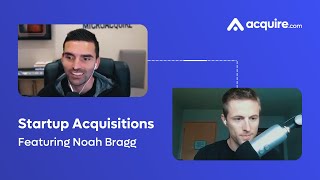
This is a YouTube video titled "From #BuildinPublic to Selling His SaaS for $300,000 - Noah Bragg, Founder of Potion.so" published in July 2023. It features an interview-style conversation between Noah Bragg, the founder of Potion.so, and an interviewer (Speaker B). They discuss Noah's entrepreneurial journey, the development and sale of his SaaS business Potion, the acquisition process, and his future plans. The content focuses on startup building, marketing strategies, and the experience of selling a micro SaaS business.
Foreign.
I'm here with Noah Bragg, the former founder of Potion. The reason I say former is he recently got acquired for about 300,000. Is that correct?
No, that's right.
Yeah. Well, huge congrats on that. And before we dive into everything, do you want to give people listening, just a brief background of yourself for those that may not know you?
Yeah, sure. Um, you know, I've just. I like building things and I've. I've gotten into creating stuff online. Like, I don't know, six, seven years ago. I did go to school for like a computer science degree. Worked at a couple tech companies. But I always had kind of that entrepreneurial itch. Like I always was working on something on the side as I was working at these different tech companies, did a couple side businesses, but it was really maybe like 5 years ago where I tried to do a startup with a buddy from college. And on that we were trying to like go big kind of thing, like build this, like, big startup. Um, and through that experience, you know, it didn't go very well. But through that I then kind of found like, oh, there's like another way to do this. Like, there's like bootstrappers and indie hackers and all this stuff and that. I was like, that sounds pretty cool. So that's when I kind of started kind of going into more that mode of like, can I build like just like a small online business that at least works for myself? Maybe I can build up to a small team or something, but it's not like I'm trying to go be a unicorn or something. And yeah, that's like, worked a lot, a lot better for me. I've sold now two businesses on Acquire, which has been cool and Potion is. Is the last one. And I started that two years ago.
What was the other one? I. I didn't even know this support man.
It was, you know, it was a little one I sold to Damon Chen, who's pretty active on Twitter as well. So that, that was a fun, A fun little micro SaaS that I sold to him.
Nice. He's. Yeah, he seems to be on a buying spree.
I noticed that.
Yeah, I remember when he first launched his company Testimonial, he had a tweet way back in the day and he said something because he was quitting in public. I don't know if you ever.
Yeah, I was, Yeah, I remember that.
And then he was like, I need a thousand more in monthly recurring revenue. And then I signed up like four accounts. I was like, all right, you gotta Quit your job now. So it's good to see, good to see how everything comes full circle. But so, so let's talk about Potion. What, what problem did it solve? Why? What made you want to build it? How'd you get it off the ground?
Yeah, so I was, I really thesis back when I started it that like, the best kind of business to build for like an indie hacker is to build on top of another platform. And I had seen some different people that had done this with like Intercom and Shopify and you know, WordPress, like there's those different platforms. And so I was kind of looking for a platform to build on top of. And the other thing that I kind of noticed, you know, back then is that a lot of the kind of businesses that were early to those platforms were the. Were ones that like, did well because, you know, they're kind of early to the space, early to that platform. And you know, I was a Notion user for a year at that time and I was starting to see like some people start to build on top of Notion. There was this thing called Fruition, which was kind of this way you could like really hackily, like put basically point your own custom domain to a public Notion page so you can kind of have like your website on Notion, but it's all hosted on Notion. It was like you had to like hack this code together through cloudflare to do it. But when I looked at that, I saw there were hundreds of people that have. That had done that and it was like this free little thing. And so that's kind of where the idea sparked of like, you know, people are trying to do this, it shows there's demand. Could I make something that just makes it really easy to build like a website on top of of Notion, the platform Notion? Um, and so that's kind of how Potion was, was born with that idea and kind of started building it right away. But yeah, so basically how it works is, you know, you, you have all of your content in Notion, so you do like creating all your pages, writing your blog posts or whatever it is that you want in your website portfolio. Websites, wiki websites, things like that. And then Potion kind of p. That data from Notion creates pages automatically for all of your pages in Notion and hosts it for you and creates a website that's better optimized for like SEO and, and things like that. So that's, that's basically what Potion is in a nutshell and kind of how the, the beginning of it started.
Nice. I. That is so beautiful. Like the part I Love that you just said was you just saw all these people, like, doing something really manual, and you're like, I'll make that much easier for everybody who's. The. The problem was already validated before you even built the product. That's great. So how'd you get your first customers?
Yeah, so I have another thing actually, with support man, that. That earlier kind of micro SaaS I. I did, you know, worked on that for only, like, six months, but I'd started to, like, share stuff on Twitter about it. And so kind of another kind of just thing I was thinking about when what I wanted to start next was like, what's something I could do where I could just like, be very public about it and it would be like. It'd be like a beneficial thing. Like, I just found that I enjoyed, like, sharing stuff in public on Twitter. And so that was another reason I really liked the Potion idea, because I felt like it just fit that really well, where a lot of my, like, target customers for Potion were other entrepreneurs, other creators. And those are typically the kind of people that enjoy following along someone building in public and doing that kind of thing. And so that was kind of my strategy from the beginning of, like, I want to just like, build this in public, share everything, be transparent about it. And kind of from day one, I did that on. On Twitter, just kind of shared what I was doing. And I actually made like, a tweet that was like, something like, I'm going to build up SaaS in public starting tomorrow, or something like that. And that tweet, like, kind of went semi viral, and I got like a thousand followers on day one from that tweet. And that was kind of the start of like, the building in public stuff. And I didn't have any followers at that point either. That was kind of like the beginning of that. But, yeah, so that's. That's kind of how I started out. And the great thing about building in public with that is, you know, I got a lot of feedback as I went and kind of was learning as I went. But that's also kind of where I got my first customers. I'd say around, like, my first 75 customers just came from Twitter and kind of seeing what I was doing with Potion there. So that's kind of how it started.
Nice. I always say building, if you don't know how to market, just build in public. Just your story. It's fun. Sure. Some of my, like, copy you. I've been seeing people complain about that, like, don't share too much But I, I always kind of think like, you know, don't be afraid of being copied, be afraid of being out executed. Um, so that, that's like the perfect fit. I mean, you had a idea that was already validated before you built it, and then you were very thoughtful in terms of your go to market. Like you, you kind of like to be. Yeah, it sounds like you really, you know, a lot of founders, you know, build stuff people don't want, never find customers. But it sounds like you very thoughtful in your approach to building this, this startup, which is, which is great and I think is a testament to why it was, was so successful. So, so good job there, man. So I guess, you know, the, you know, the big question is why? What made you want to sell it? What was like the moment? What was kind of like the. Was there a day or was it like a week long thought process?
Yeah, I mean, I'd say it was probably multiple weeks. Like there was times earlier on I was like, maybe I should sell. Or you know, you, you hit like road bumps in a business and you're like, oh, what do I do? And then you kind of think, maybe I should sell, maybe I should do this. There was like a period like a year into the business where I kind of hit some plateau and I wasn't really sure why. I mean, I guess it was probably mostly there's some churn issues at that point. So like for six months there, I wasn't really growing. The business wasn't really growing at all and it was kind of plateaued and I just kind of didn't know what to do. I was like trying different things, wasn't really seeming to work. And so like at that point I was thinking, may, maybe I should sell. I ended up actually I, I almost did sell at that point. I had a buyer that was interested and it fell through thankfully because it, it would have been way less than what I ended up selling for. But after that I was like, all right, well I'm not gonna, I can't just leave this project like this. Like, I need to keep it going. So I, it. That kind of motivated me again to like spend like two months which like really trying to push it, push the, the product. And I made like a version two and I got like some new affiliates on board and did a couple different things, the business on a new trajectory and, and that kind of got me out of that plateau where I was starting to grow like 6% a month again. So that was really good. Yeah, I'd say, you know, kind of the cool thing with like building solo and indie hacking is you can kind of do what you want. Like that's, that kind of is the fun part of it is like, you know, there's times where I enjoyed running the business. It was a great business to run. There's other times where I wasn't as motivated and maybe I'd like go tinker with something else because I wasn't as excited about it for whatever reason. Um, but yeah, so I think I kind of got to a point where I, you know, I was wanting to maybe do a new challenge, start something different. Um, you know, I also, I think the thing with Potion is it is built on top of notion, so there's like potential platform risks. But the other thing with that is just like I kind of felt like there is a ceiling at some points. Like how, how, how big can I grow this thing? Because it has to kind of fit within this platform. And so then, you know, I was thinking through, like, okay, well maybe I could, I could split it up or go on to other platforms as well, kind of build it that way, grew it that way and that would be a lot of work. Or maybe I could sell it. So like just all these different options, basically I was thinking through and so I kind of came to like I was ready to do a new challenge. And it seemed like after kind of getting through that plateau, growing it for like nine months, it was like maybe at a good spot to where I could sell it at a price I'd be pretty happy at and basically just see what happens, you know, just throw it on, acquire and if, if someone liked it at the price I was happy with, then that'd be good. If not, I would, you know, still be running it today and be happy with that outcome too. So yeah, I was kind of just seeing what happens and I was happy with how, how the, the sale kind of was going, playing out. So that's kind of why I guess I sold it at the end of the day.
Nice. I, I, I hear that quite a bit in terms of, you know, reason for sale, where, you know, the zero to one phases, in my opinion, the funnest part, also the hardest part. So it's kind of, I guess they almost like cancel themselves out. It's the hardest part, but it's when you find like product market fit, you get like your first customers and then after that it's, yeah, like, how do we grow faster? How do we, it sounds like you expanded into new marketing channels. Like you're, you're really Starting to operate like you have support ticket to get an answer right. You know, it becomes like a piece of, like a workflow or tool that people are using on a daily basis. So you got to maintain it. So that. So that. That makes a lot of sense to me. And I. I love your awareness in terms of just, you know, kind of designing your work life in a way that you enjoy. Like, you know, you. It sounds like you sold the business because, correct me if I'm wrong, you feel like you took it as far as you can go, you know, you wanted to, I assume, you know, take some liquidity off the table, maybe go work on something new.
Yeah, yeah, for sure. And that's. That's definitely the. The plan, what I'd like to do.
Yeah. All right, well, I got. I got some questions on that, but I'll say for the end, but so let's go through. I just. I'm so curious about the actual acquisition process. So you list on acquire, what. What happens within, like, the first two weeks. How was your experience? Yeah, good and bad. Like what. How did that go first?
Yeah, it went well. I first listed it at 400k and I knew that was maybe a little bit higher. Just kind of looking at different numbers. And I had a friend that kind of knew kind of, you know, what's normal for acquisitions and SaaS. And SaaS, like, my size and stuff like that. So that was really helpful to talk to him. Yeah. The first two weeks, I don't know, probably had 10 different people kind of come through that were kind of interested and kind of chatting with a couple people. But I kind of did get the vibe that, like, maybe it was a little high. So after 2 weeks, I lowered it to 350k, had more people come through. I think I had like 25 ish people sign the NDA to kind of see more data, see more info. And out of that, talked to around six people on, like, a call. And then out of that, three people, like, actually gave offers, two of them being more serious that I could kind of negotiate in between those two. But, yeah, I mean, it. It went pretty smoothly. Like, I think it from the time I listed to closing, I think was around two months. So it was decently, I guess I don't really know what's normal, but that seems fine to me.
Yeah, no, that's good. I mean, typically we have averages, but it. It's really hard to give an average just because, you know, the quality of the company plays such a important role to those averages. But, yeah, 30 days, typically, I'd say to get to LOI and then another 30, 60 days for due diligence. But it depends on the company size we've seen. The fastest was like 48 hours, which is a little fast and loose.
Like, it's hard.
That's transferring everything over and sending, you know, payment. That. That's. That's not bad, man. I want to know more about that, and I love. So one thing that you said that I think all, you know, people really need to understand when they, you know, go to sell their businesses. You've got. You have to talk to people like, you have to schedule phone calls with buyers because they want to get to know you. They have additional questions. They, you know, they want to, you know, get your take on why you're selling. They want to see if you're just a good fit to. To work with. Because I've seen a ton of deals fall through just because there's not a, you know, a good relationship between buyer and the seller or the sellers really, you know, doesn't have. I noticed you had your P L, you know, uploaded. You were prepared to meet buyers, so that. That was a really good job. And then also, you know, getting buyers to get. Put forward multiple offers because there's a saying, if you have one buyer, you have no buyers. And so that allowed you to, I assume, you know, pick the buyer that you felt was the best person.
Right.
Nice. So good job on that. So, yeah, that's. Yeah, you're just knocking out of the park, man. It's like you before you built the product, validated it before you launched a product, you kind of had, you know, sort of a small framework of, you know, this is how I'm gonna take it to market. When you listed on acquire, you were, you know, responsible buyers, like, all those things. Like, you know, I don't talk to too many founders that, you know, get all that correct from.
Well, I'm sure. I mean, there was. I'm sure I made mistakes throughout. It's not like it was. Was per. Perfect, but, yeah, at least some of those things went decently well. Yeah, like I said, there. There's definitely just throughout the business, different, harder trial parts of the business that didn't go exactly how you know you'd want. So, yeah, it wasn't all perfect, but, yeah, definitely happy with how things turned out.
Yeah, I mean, I think. I think every startup has, you know, these moments where you feel like everything's gonna end and then, yeah, the next day. I. I always joke startup founders are they have two motions. One is, how is this business going to. And how am I going to spend my millions? Like, that's Monday, that's Tuesday. Okay. So moving forward, so you found the buyer, you got to terms price, you sign Loi, you start moving into due diligence. How did that go? How did you handle that to really, to really ensure that Loi closed?
Yeah. So I'd say one thing that was really helpful is I really did appreciate my buyer, like just how transparent and open he was. He was just very easy to work with. Another thing that was nice is like he, you know, he sold a SaaS business before, so he's kind of been on the other side. And so he's definitely more like very founder friendly. And he's also a software developer. So that like, that was one of the things I was kind of worried about is like, like transitioning and stuff would just be, I feel like challenging if it was someone that just didn't really know anything about, you know, how to code and stuff himself. Where with him, like, I could just kind of transition it over. He could kind of get up to speed pretty quickly and it wouldn't be like this big, hard, hard process. Let's see, the other parts of the transition is, you know, I, and this is probably where we came into a little. It didn't end up being any issues, but like, I probably could have done a better job of just like my booking, my books and stuff like that, you know, because they want financial statements and things of, you know, revenue stuff and things like that, which I pretty much handle that all myself. I never had like a bookkeeper throughout the business or I did have like a tax advisor, but I did, you know, I didn't have things probably as professional as you could or maybe some people would hope or expect for. So there was a little bit back and forth through that, just like making sure I was getting the right data to him and things like that. But that's kind of what the due diligence kind of looked like is getting the financial data over, going through some of the code, the source code, and explaining how things work a little bit just so that he was kind of on the same page of knowing what this could look like for him. Yeah, other than that, like, it was, it was pretty straightforward. And you know, I'd say from loi to signing, yeah, it was, you know, three weeks or so and then we actually did the full transition of transitioning all of the, you know, basically pretty much. It's funny, like SaaS businesses now, it's like, it's like what is the assets, like, code, and then like all these subscriptions to other SaaS businesses that you're just like, giving them all the accounts. And then Stripe, of course, and, and Stripe was actually a little bit harder to transition over than I thought it would be. But it took us, we, we had five days to do all that transition, so we, we did that. Um, and that was, took a little bit longer than I thought, but, or a little more work within those five days than I thought. But we, we got it done within that time. But that's kind of what that looked like.
Nice. I mean, that sounds, I, I've heard, you know, you know, much bumpier than that. So that, that sounded smooth in terms of like, yeah, transferring. Like, did you transfer the Stripe account or did you have other products in one Stripe account?
Um, so I always, so I, you know, we went back even with like, Stripe support a lot with. This is like my corporation entity was like, connected to my str, I think, because I use, what is it, Atlas or whatever their, their product is called for that. And apparently there's not a way that they can separate that from the whole, like, Stripe account. And so basically what we had to do was he had to create the buyer, had to create a new Stripe account. And then we had to, Stripe does have a, you know, an easy interface to basically move products over or no, to move customers over. But then we had to, like, write the code in the script to move all the subscriptions and the payments and that over and then those again on the new Stripe account. So that was kind of like the hard kind of tricky part, just to make sure we did all right and didn't, like, mess something up. But yeah, that's kind of what that ended up looking like, just because, like, my entity was kind of connected to the Stripe account and there wasn't really a way to get around that, apparently.
Nice. Yeah, I mean, the, the most ideal scenario is if you can just hand the Stripe account over. Yeah. But I've heard, you know, the one thing I, I, if anyone has this going on, fix it before you list your startup. But like a Stripe account with like, 10 products and you're selling one, and you gotta pull like, that out that I've seen that get. It's, it's definitely doable. It's just probably a bigger lift than what you went through.
So that is.
What was, what was like, your favorite part of just going through acquiring the acquisition process?
Um, I mean, I, I, I, I mean, I guess the, the favorite part was just that it was pretty easy, like pretty seamless, like, you know, connecting with buyers that were actually interested and serious and, you know, making that easier because I didn't, I didn't really want to waste time on it, you know, like, if I wasn't going to actually sell it, I just want to keep kind of going forward with the business and doing what I was doing. So it wasn't something I really wanted to spend a lot of time on. So I was glad that it went pretty smoothly. So, I mean, I think that would be kind of the favorite thing. I think the other thing is, you know, even just from doing like the due diligence and stuff, it was, it was really helpful to me to kind understand and see, like, oh, this is like what, you know, buyers are looking for. This is what they appreciate, you know, you doing, to kind of be ready to kind of, kind of almost to show your business to them. And like, you know, even like what I was mentioning with some of the booking and things like that, like, it just showed me some things that I could do better next time in my business to just make sure that I'm really like, at a good spot if I do get to the point where I want to sell that business or whatever. I think I just learned a lot through that to just like, what's this whole process look like from start to end of building and selling a business? Um, so, you know, hopefully that'll be beneficial to me in the future if I can, if I can do it again. We'll see.
Yeah, no, I, I, I bet you can, man. And yeah, preparation is key because, you know, it's that first impressions that buyers get and the more materials that you can present and we, we have those if anyone needs it, like due diligence checklist or something called a SIM for if your business is like in the millions in revenue. It's acronym for confidential information memorandum. But it's basically like a book of, like, how every part of your business works from, you know, your accounting system, you know, your, your customer system of record, all the way down to, you know, employees on the bigger side. But all that prep, it allows the buyer to, you know, use your product, view the materials, and then when they talk to you, they're much more informed. And your job as a seller is to, you know, help the buyer under wr wrap their head around the business as quickly as possible. And it sounded like you did a good job doing that by, you know, with some prep and speaking with buyers and, you know, educating them on the business. And that's what creates interest towards an equity. Like you have to sell your business so well.
I think something that I noticed seemed to help, that people appreciated was like, I, I, you know, even with running the business potion, like at the later ends of it, I was kind of just trying to automate more things and just like basically make it so it takes less of my time, even with customer support and things like that. And just being able to get like the amount of time that basically I have to spend on the business down to like two hours a week or something like that. Like I could just like people seem to appreciate that, that like, you know, it just doesn't take a ton of time to kind of keep this business going. And I've heard, you know, other people talk about like, you know, that's maybe the benefit of like hiring employees or things like that for your business where it starts to get, it's not like all just connected to the founder where like you have to have that person there to make this business run where you can kind of separate things and automate, then it's just easier for that to then transfer over to somebody else. And so I think some of like those steps helped definitely to make it just a. Easier process, hopefully.
Oh, absolutely. That also increases your valuation too because if a buyer, you know, maybe if you had not done those things, a buyer would need to figure out how, you know, that you're not going to stay on the handle support tickets for, you know, a long period of time. So if they had to figure out how to do that on their own, that may have, you know, lowered. So yes, automating and really just getting your business to a point where you're not, it's called like Key man risk, where if you leave the business, it just doesn't work and that sort of stuff. So you kind of want to make yourself, you know, as, as useless as possible to, to a degree that makes sense. But. Okay, so you got, so it sounds like, you know, you passed your due diligence, things went, went smooth, you got, you know, money in the bank. What, what are you doing now? No.
Yeah, so I've been kind of just thinking about like, yeah, what I want to do. I mean, even in the last 4ish months, you know, kind of again, kind of why I ended up like thinking even about selling is I was already starting to like prototype different ideas, test out different things. Like I was kind of already in that space in my head of wanting to do something else. I think with this business Like, I want to do something a little bit more ambitious. You know, I still, again, I'm not trying to build, like, a unicorn or a huge startup or anything like that, but I'd like to kind of bootstrap a business to just be a little bit bigger, maybe get it to where I could have a couple people, like, have a small team. I think that could be fun and just, it'd be a different experience and different growth and learning. And so, yeah, that's, that's kind of the plan. And yeah, so I'm still figuring out. I'm still, like, doing a lot of exploring, just, like, doing a lot of research, trying to, like, figure out different ideas that I think could work. And so, yeah, I, I haven't really landed specifically on something completely yet, but, yeah, I'm just kind of exploring. And, you know, some people ask, like, well, are you gonna, like, take a break? Or something like that. And kind of the funny thing is I feel like I'm actually, like, really, like, just ready to get started right now because I feel like the last multiple months of potion were just kind of, they were already kind of like I felt like I was already taking a break then, like, it was kind of easy, so I just kind of felt like I was, I've been, like, getting ready to, like, want to do something again and kind of get something started. And so, yeah, we'll, we'll see, I guess, what happens. But I'm excited to start on something new and, and see what I can build again.
Right on. Yeah, I love it. That's one of my favorite parts about acquirers. When I talk to founders like you. And I mean, what you built was extremely successful, and you sold it for, you know, a fantastic amount. I think you had, like, a 4x multiple.
Yeah, something like that.
That, yeah, that's great. So you did exceptionally well. And then now you want to go and build something new, possibly bigger, and all that experience that you gained is just going to help you so much more. So I'm rooting for you now. I, I, I think I hope to have you back on this podcast maybe when you sell, maybe with another, another zero on, on your next acquisition, because, yeah, if you do it once, you can do it again.
Thanks, I appreciate that. And yeah, I really appreciate everything you guys have built with acquire defin process easier. So, yeah, it's been good. And I'm, you know, I'm even wearing my, my micro choir shirt here.
So there you go. The, the OG I got, I still got micro choir back here. Well, No, I, I appreciate you. And if you want to learn, you know, more about your story or just where to find you, where should they go?
Yeah, I mean, definitely on Twitter. My handle is Noah W. Bragg. And, you know, I'm still just like sharing what I'm doing and stuff. In some ways it's, it's gonna hopefully, hopefully, hopefully be more helpful and valuable to people too, since I'm starting something early again. Like, I feel like there's more interesting things to share that are helpful to people kind of getting started and stuff. So, yeah, I try to. I'm still like kind of sharing in public and stuff there, so you can definitely find me there.
Sounds good. I'll put that all in the show notes. Well, no ran for you, man. And grab together on the acquisition.
Thanks.
All right. Cheers, bud.
More from Andrew



The Buyers Who Made the Move: What They Bought, How They Did It, and What Happened Next






