How Gabby Rosen Flipped a Newsletter for 18x in Under a Year
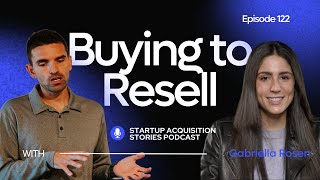
This is a YouTube video titled "How Gabby Rosen Flipped a Newsletter for 18x in Under a Year" containing an interview conducted in English with Gabby Rosen, co-owner of Nomad Cloud. The discussion covers Gabby's experience acquiring, growing, and selling a digital nomad-focused newsletter through the Acquire platform, including strategies for email outreach, valuation, and advice for prospective buyers. The content is a single-speaker interview with a host and does not include Andrew Gazdecki as a participant.
Foreign.
I'm here with Gabby Rosen, founder of Nomad Cloud. Gabby, how you doing today?
Good, how are you doing?
Doing good. Well, actually, I shouldn't say founder. You were just telling me before we started recording that you actually acquired Nomad Cloud on Acquire and then had a recently acquired on Acquire. That's kind of a mouthful.
Exactly. Yeah.
So I'm not the owner.
I mean, I'm not the founder, I'm the owner. One of the owners.
That's amazing. Well, let's. Before we dive into that, do you want to give people that may not know you just a brief introduction of yourself?
Yeah, sure. So I run partnerships right now for eoc, so email outreach company and I also co own Nomad Cloud with the two founders of eoc.
Amazing. Well, tell me, give me a brief rundown. What is Nomad Cloud? How'd you come across it? When did you acquire it? We'll start there.
Yeah. So I came across nomadcloud on Acquire. Essentially I had been traveling remotely for a few years. I've been traveling abroad for a few years. I'd been working remotely because I started my career at Spotify, started my own company and my two mentors who I work with now and own NomadCloud with, they were traveling. So with one of the founders of the current company I work at, he's like, let's just, you know, look at Acquire and see if there's any good companies we can buy together. And I stumbled on the Nomad cloud and I was like, oh, this looks kind of cool because we're all digital nomads. So we looked at it and he's like, yeah, you know what, jump on a call with the guy. So I jumped on a call with his name is Olu, and asked him some questions and pass it over to the two co owners to look at it as well. And we're like, it's very rare the first company you look at, you decide to buy.
Yeah.
But yeah, it was a good deal. We got it for like half the listing price and ended up acquiring it. So it was essentially and is a newsletter for digital nomads, just giving them more information about where to travel to and tips and tricks.
That is amazing. What was your ROI on that? You don't have to say the exact sale price, but from when you acquired it to what you sold it for. And how long did that take you?
Yeah, so we sold it for I guess 18x what we bought it for in 11 months.
So that is incredible. Good for huge. Congrats on that.
And we made money along the way.
So even better tell, what did you do? So you acquired it? How did you grow it? I have so many questions now. So it's a newsletter. I have to imagine the original owner, did they have like a, a specific style of writing or content? Did you just kind of pick that off where they left off? Did you have a writer that came with the acquisition? How did you, like, keep the wheels going and how'd you grow it?
Yeah, so I think it's important, like, every single person has an unfair advantage because of what they do for acquiring a certain company. So for us running an email outreach company, it's like, we know how to work list, we know how to email people, and we're good at systemizing things and we have employees who are already trained in ways where if you can feed ChatGPT a prompt and you know what to tell it, then you can pretty much, pretty easily replicate content to send out to people. So it's not going to take a ton of your time. So we just saw that when we were doing, like, when we were talking to Olu, the original founder, we found out he had a list of a million names that were scraped of people who had searched Digital Nomad and Instagram. And it's a valuable list if you have the infrastructure to email people. If you don't have the infrastructure, then it's kind of a wasted asset because it's so expensive to email.
But.
But we're like, oh, we already have the infrastructure. We can email people and ask if they want to join our newsletter. So once we saw that piece of the puzzle, we were like, okay, like, why not? Why not give it a try and see what we can do with this? We're pretty confident we can grow it. So, yeah, that's why we acquired it. And then that's how essentially we grew it. And then we eventually got to a point where we're making good money on it every single month.
Got it. So this was like a giant, like, cold email campaign that you're running, if I understand it correctly.
Yeah, exactly. Asking people to opt into the newsletter. And yeah, it's just because we know how to do that.
Would you, like, rotate domains? Is that like the infrastructure piece, like.
Yeah, exactly.
Don't go into spam boxes. Yeah, okay. And then what kind of content was it? Sorry, I'm like, coming in with. I'm so curious.
It. The content for Nomad Cloud is really places to travel to. More information on those places and any tricks or tips on traveling to those places. And just, you know, like, even if you're abroad abroad, what are five things you can do to make money abroad? So useful things for digital nomads.
Would you write the content or was it like a weekly newsletter or a monthly newsletter?
So it's weekly. One of the co owners, he would write the content in the beginning, and then we just trained one of our employees to replicate that process through gbt and then we would proofread it.
Gotcha, man. I'm blown away. I thought before we started recording, like, you made the newsletter, you, we're writing it, but now I want to acquire a newsletter and grow it and sell like you did. Oh, my God.
Like an hour a week on it towards, like the last few months, and you're still making a couple thousand dollars a month on it. So it's pretty good roi.
Wow. Are you thinking about doing this for another newsletter? Like, where. Where are you headed with this?
Yeah, we have thought about acquiring more newsletters and growing them and then selling them. We also do it for our clients now because we know how to grow newsletters. So within our email outreach have many clients who decide not only to do outbound through standard email, but then also add on a newsletter. So, yeah, we're thankful doing more.
Yeah, I hope so. Geez. Tell me about the acquisition process. So you look to acquire this newsletter. What was transferred over? How hard was that? I have to imagine it's pretty straightforward. Any tips on that or things that were interesting?
Yeah, I think it was pretty easy. I mean, I feel like I'm saying everything's like, easy and it sounds too good to be true. But I think the reason why is, of course, like, you know, I've started a company before Nomad Cloud. There's a lot more that's gone into, like, failure and a lot of struggle in order to build a company. And then once you have those skill sets, if you can just apply to the right thing, you can have an unfair advantage. And then same with the co owners. I mean, you know, they have a decade of experience with running businesses, but yeah, as far as it comes to actually acquiring it, it was a really simple process because you make it really easy. So it's like, oh, I'm interested in acquiring this newsletter. I can chat with the buyer, it's easy to have phone calls, it's trustworthy because it's on your platform. You're not like, am I going to get screwed over? Which I think is just a good feeling. And then just looking into, like, what, what are newsletter subscribers really worth what is. Because I didn't know any of this before acquiring it. What should engagement look like? Knowing the right questions to ask about it. Because you always have to think in a way of, like, why would this person want to sell it? What do they know that I don't know? And then when you're selling it too, like, if a buyer is really eager about, like, what information is lacking, why would someone want to get rid of this asset? So I think just really digging into that part. And once you dig into that and you make your decision, then acquire makes things so easy to actually execute on. Like, when we sold the newsletter, it took about three days to sell the newsletter and get double what we were asking for.
Wow. Who'd you work with on the acquired team? Was it Robbie?
Yeah, Robbie.
Nice. How did he help you?
He was really helpful. So when I submitted the. Because I had put together the initial listing and then we had a call and just ran through it. So he showed me any of the gaps, like places that I could add more information to make it more attractive to buyers.
And.
And then we actually increase the price of it before officially submitting it. So that was really helpful because if you have a really good listing, if you can package it up well, it's a lot easier for people to actually buy it. And for us, like, anybody, momentum is everything. So if you, like, if people just put something on, it's like a, you know, a C, because you guys read it, then obviously it's not going to get as much traction as if you work with somebody on your team to really make it a listing.
Definitely. How many buyers reached out?
I don't know the exact number. I made a list that I could pull up, but yeah, definitely at least a handful who were interested in jumping on a call. And then within three days, we had two offers that were both above asking. So one that was one and a half times, and then the other that was double the asking price.
How are you valuing the newsletter when you take it to market? Because you got. You sold for double your initial asking price. That is incredible. Are you factoring in, like, subscriber growth, subscriber value based on each individual or marketing advertisement potential? Like, how do you value the newsletter?
Well, we were doing it based off of revenue because a lot of newsletters will sell based off of subscriber numbers. So, like, a lot of people will sell their subscribers from anywhere from like 2 to $4 per subscriber if they have strong engagement where we just sold it. Like, we would sell regular business, which Is based off of, like, how quickly can this person make their money back?
Right.
And we purposely underpriced it because we knew that it would be better to get a lot of traction on the offer and then be able to increase the price rather than go the other way around, which I think most people do, which is like, I'm going to price at the absolute highest and then I can go down from there. But that doesn't create a lot of momentum because people look at the listing and be like, oh, this is overpriced 100%.
That is probably the best thing that you could have done when going to market. Because you're right. When you price it as a low opportunity or a low price opportunity, it attracts a lot more buyers. And that leads to usually more offers than we get more offers. You can usually negotiate them upward. And it sounds like that's what you did. Did you get one offer and you said, hey, I'd like this to be at this price or something like that Once initial interest was in.
Yeah, well, the first guy I spoke to on the phone, he just said, like, what price would. What's the price? I could give you that. Or what price would you set it at that I could take this off your hands today, essentially. So I just. Yeah, but I'm like, you know, we're not dumb. We did this intentionally. Like, I know that when you're speaking to me, all the behind the scenes are going to be much better than the initial thing that you saw. So you're going to get more excited. And I think that's a big thing. Is like, on the listing, the numbers we put on in terms of engagement or revenue, they were all slightly lower than what the truth was. Because someone looks at it, they're like, this is a really good deal. And then you speak to them. And then when most people speak to a seller, they find out the behind the scenes. And it's way worse than what they had put on the listing, where we took the opposite approach of like, okay, you're going to ask me questions, you're going to ask, see the back end? And when you dig in, you're going to be like, wait, this is so much better than I originally thought. And then you're going to want it more. And that's what I found too, is like, with the buyers, they were just. I mean, they were texting me all weekend. The one guy who offered double, he originally said he couldn't even afford the initial asking price, but he brought in investors and everything. It's like I think that's the key, is you want someone to want it and then take them behind the scenes and then they want it even more versus what people typically have happened.
Wow, there's so much just great psychology and sales tips with everything that you did. I love it. I think the results obviously speak for themselves too. Double asking price 18 times your initial investment. That is. That is incredible. Tell me this. If you could go back and just give yourself three pieces of advice, or maybe there's another entrepreneur listening to this and saying, oh, man, I want to acquire business or newsletter. SAS business, whatever it may be, try to 18 exit and sell it. Like, what would you give as three piece of advice?
Well, I would say definitely first is like, start with a business. That one you're interested in. Like, oh, this makes sense. There's relevance here. I'm a digital nomad too. Like, I would be interested in learning the newsletter business. It's an interesting business to me. Then are you okay with also losing that initial investment just based on learning skill sets? Like, I think that for me, it's like, how many courses are people selling on the Internet that are like, give me $10,000 and I'll teach you how to build this skill set. But what if you just took that 10 grand and bought a business instead? A business you're interested in learning about and you built that skill set in real time? Like, that's so much more valuable because even if that business doesn't work out, at least I've acquired all this knowledge that I can use for the next business. So I'd say one, definitely pick something that you're interested in learning about. You're like, this is a good and it makes sense to me. Two would be like, be okay with losing that money. As if you were just paying a business coach to learn those skills. Like, think of it as business coaching. And then the third one is, I would also think about your unfair advantage based on your historical experience. So is there something related to this business where you have an unfair advantage that allows you to grow it in a way that most people couldn't? Like, for us, we were like, the list. That list is gold. We know how to use email to grow, and a lot of people don't have that infrastructure. And therefore we can acquire subscribers at a dime versus most people acquire subscribers at 2 to $4 per subscriber. So, yeah, I would say those three things.
Such great advice. I love the last piece of finding your unfair advantage. That's huge. And that could be what do you have experience in. What resources do you have? You know, what tools are you able to utilize? I love the cold outreach campaign to grow the subscriber list. Amazing. I guess the only question I have now is, what are you doing next? Like starting another business, buying another business, growing your existing business.
Yeah, our main business takes a lot of time, which is email outreach company. It's growing, which we're very grateful for. So I think just putting a lot of attention into that. And then, yeah, I'll probably start a new newsletter soon. And I'm always looking at acquire to see, like, we sell the membership to buy businesses. So just anytime something interesting pops into my inbox, I usually reach out and. And find out a little bit more about what's going on. So, yeah, next opportunity that pops in, we'll see.
Awesome. Well, Gabby, if people want to learn just more about you and your story, where can they find you online?
Um, they could look me up on LinkedIn and send me a message. My LinkedIn is Gabriella Rosen.
I'll put that in the show notes. All right, Gabby, congrats again on that acquisition and excited to see what you do next.
Thank you.
More from Andrew



The Buyers Who Made the Move: What They Bought, How They Did It, and What Happened Next






