How to Build SaaS for an Industry No One Knows About (Except Your Customers)
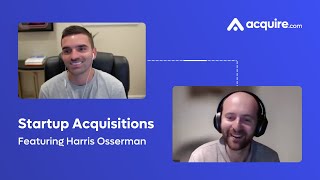
This is a YouTube video titled "How to Build SaaS for an Industry No One Knows About (Except Your Customers)" containing an English podcast-style interview recorded in October 2024. The conversation features Andrew Gazdecki interviewing Harris Osterman, founder of Talk Hiring, discussing Harris's entrepreneurial journey, the development and product-market fit of Talk Hiring, the process and challenges of selling the business, and his future plans. The discussion covers topics such as startup building, customer acquisition, acquisition process insights, and advice for business owners.
Foreign.
I'm with Harris, the founder of Talk Hiring. Harris, how you doing today?
I am good. How are you, Andrew?
Yeah, thanks so much for coming on the podcast. I'm excited to learn more about Talk Hiring and your story. But for those that may not know you, do you want to give a brief introduction of yourself?
Sure. So very brief intro. I kind of like the story of how I got into entrepreneurship is I in high school was really obsessed with Apple and Steve Jobs and I thought that meant I wanted to, you know, learn how to build iPhones and study electrical engineering. So that's why I studied in college. But then I found this. We called it a live in incubator called Incube. And to live there, you had to be building a business. There was 18 kids, like, super entrepreneurially motivated. And that's where I figured out that it wasn't really electrical engineering that was my passion, but it was entrepreneurship. Built a few businesses. The most successful one was a taxi sharing taxi booking app, kind of like uber pool called Koala Cat. Best part of it was the slogan. Before you call a cab koala cat, but now no one, no one calls a cab. And then, yeah, I worked as an engineer at a few different startups after school. One called Game Changer, now owned by Dick Sporting Goods, and another one called X AI in a personal assistant. And then, yeah, ended up starting Talk Hiring about six years ago.
Nice. Tell me about Talk Hiring. What made you get the idea?
Well, the, the honest truth is like the, the. We called it Talk Hiring because we were not trying to build what we ended up building, although the name also fit for what we ended up building. We were trying to build a voice based job application so a way for people to talk about themselves instead of writing about themselves to apply for jobs. Still think that's a great product. But I would walk around these job fairs trying to sell it to employers. And like we sold it to 10 employers, but it was really tough and it didn't feel like this was the right kind of product. But at these job fairs there are always job training programs and other like government programs trying to upscale and train people. And they were always way more interested in this mock interviewing tool or the product as a mock interviewing tool. So then one December break, I just reconfigured it into a mock interviewing tool to see would this resonate more. And it just felt a lot more natural and aligned. And I really liked working in the niche of career readiness and workforce development. So, yeah, that's kind of how it happened.
I Like that. How did you get the first customers for Talk Hiring?
First customers, it's, you know, guerrilla warfare. You're just, like, out there. Did some mock interview days as a volunteer, went to job fairs, pulled emails, asked people if they could introduce me to people. Um, I also had. Before I started Talk Hiring, I was volunteering for a little over a year at a nonprofit in Brooklyn and the Bronx called the Hope Program. So they were really helpful at, you know, helping me figure out how to build this product and what they needed and introducing me to other orgs so that. That kind of stuff, but nothing like, you know, nothing pretty in the early days.
Nice. I like what you just said, how you were building with an organization to, I assume, learn the. The problem firsthand and you're building the solution with an organization. Did that help you find product market fit? Would you recommend that to others?
For sure. But we also, like, they were one of our probably 10 or 15 design partners. So we started off giving away for free as, like, a free beta, and as a condition of using this thing for free, you had to meet with me every week. So I got a lot of feedback that's how to make this thing good. But it was. It was tough in the early days to figure out what do these organizations care about in terms of, like, the success of the product? Because everyone, you know, some people wanted to see more students landing jobs, and others wanted to see just, like, pure usage. And others wanted to see, like, do students actually like this thing? And. Yeah. Took a while to, like, hunt for the right success criteria.
That's really smart. I like how you phrase that. Was there a moment when you really felt you found product market fit or maybe you can think back and I don't know, you were.
Yeah.
Or with the customer and you're like, man, I'm really. I'm really onto something here.
Yeah, there were. When you're. When you're in the early stages, like, you can definitely make. You can do things and, like, feel like you're making progress, but it never really feels like you're making progress until. Until you just see, like, a blast of usage or a big customer signing up or something like that. And I felt the initial signs of product market fit when. So we. We built this product for adult job training programs. People trying to go from, like, cashier positions and into, like, medical assistant positions or whatever the job transition is. But I posted it in. I posted the link to the tool in some Facebook groups, and then out of the blue, we started getting a bunch of high schools using it and like high school teachers rolling it out in their schools. So that full of the product, especially when like a large district just called me up and wanted to purchase it, even though it was honestly not that good of a product yet, was a real feeling that we had some signs of product market fit. Not full yet, but the initial signs.
Nice.
What would.
I should have asked this at the beginning of the podcast, but how would you describe what Talk Notes does or excuse me, Talk hiring.
Yeah, so Talk Hiring. So as a company we have two products. We have an automated mock interview tool like a job interview prep tool that we sell to schools and governments and job training programs, which are often nonprofits focused on accessibility, tech accessibility as well as industries don't require college degrees. Just making the product super simple and easy to use. And then we also have another product vertical around like job searching and earning incentives. But yeah, we really focused on the niche of career readiness organizations because they were very underserved as a market and a good business to build off of.
Nice. So things are going well. You have customers, product market fit. What made you want to sell the business?
I mean, I forget exactly the year, but a few years ago I considered selling the business because I was considering raising money for the job searching tool and thought like I can't be running two product lines at the same time. So I priced it way too high, did not get enough interest. But then this time around I decided to legitimately sell the business for a bunch of reasons like personally I just had a child, so that is just like a big personal change and tough to deal with the stress and the long hours. And I just felt like as I was, I mean he's six months old as of this weekend, but like in the early days of having a child, it sucks that you're thinking about as you're holding in like all the crap that you have to code up or like all the emails that you have to write and it just like doesn't, it doesn't feel right. And I had been running it for a while. I was about six years in the job search product that I'd been working on had basically the business fundamentals of the product change. And so I was just ready for a new start. I'd also just moved to Atlanta, so a lot of reasons, but the, the mock interviewing tool especially was like a healthy, multi year profitable business that I knew I could get a good return on and find the right partner for.
Nice. I love that reason. I'm a dad too, so I can relate. Yes, he's turning five in about a month. A little, little older than yours.
Yeah, but it's, it's tough when you're. I don't know, I remember we were, I think a week and a half after he was born. Like we had a huge outage and so it's just, I don't know, it. It sucked. Like trying to keep both babies alive at the same time.
Yeah. You know, kids, kids are hard. It's a, it's a full time job is how I like to think of it. Tell me about your experience with acquisitions. Had you ever sold a company before? Was this your first time going through a formal process?
Yeah, this was my first time doing it. I actually really enjoyed the process, like a lot more than I thought I would. It's. I mean, I definitely enjoyed it because of acquire.com if I was just like going out cold, emailing people or something like that, it would not have been a fun process. But the fact that potential buyers were just like coming to my door every day. I was having a bunch of meetings. Yeah. Just meeting a lot of people. It's flattering when a lot of people want to buy the thing that you worked on for so long, trying to understand people's motives and why they want to buy this thing and like, what kind of wacky deal terms they might try to come up with to screw you over negotiating with them. But acquire.com is great. It's just. Yeah, it's. It's a time. I think if it had, you know, fallen through, then I might not have.
Liked the process, but I can understand that.
But even before, like, the deal was actually closed, it was an enjoyable process.
That's awesome to hear. Who'd you work with on the team?
Emily.
Emily. How did she help you through the acquisition process?
She helped me a lot of ways. So she helped me. We met in the beginning, like probably every week. Figuring out how to write up the public facing blurb to not give too much away, but make it intriguing enough, figuring out how to price it. There's also a point when you're in an acquisition process where you have a bunch of people interested but no one's going to jump until someone else jumps and gives you an offer or there's some deadline. So she helped me figure out how to get over that hunt and how to set a deadline and how to push everyone to the deadline. And for the, for the diligence process, which is probably the scariest part for the person selling the business, figuring out what documents we need, like how to structure the diligence process to not have this thing fall through and then transitioning everything over is a surprisingly big lift to, like, move all the SaaS apps over and onboard the tech team and tell all the customers and meet with all the customers. And yeah, it's a lot, but she's really helpful.
That's awesome. That's why we're there, you know, during that process. Because the first time going through an acquisition, it can be a little stressful. And if you get one thing wrong, sometimes that can derail the whole acquisition.
Right.
Was there. Was there any parts that you found really stressful or was it enjoyable the whole way for you?
No, it was definitely not enjoyable the whole way. So we. It was definitely stressful in it. It stuck because you have this. This thing, this company that's completely illiquid. And unlike certain assets that, you know, someone's probably going to buy for a business, like, there's a much smaller group of people who would potentially buy it. And so we got. We're able to get a bunch of offers. We had seven different offers that we were considering, but it was tough to vet all of them. And, like, some of them were public companies, some of them were private startups, some of them were, like, individuals, some of them were search funds. And so figuring out, like, who's most likely to close, how can I get screwed over in this deal? Like, if some had really ridiculous earnout processes or illiquid stock purchasing that, like, who knows what's going to happen to that or working capital requirements can really screw you over, you know, cut your deal. So, yeah, there are a lot of ways. But then at the very end, so I ended up selling to. I decided to sell to an individual, like a search fund, essentially, instead of a. A company or, you know, an existing small or large company, just because I felt like the risk of it getting taken in a different direction was lower. The risk of, like, the board deciding one day that they don't want to buy this thing is lower. But it almost fell apart because he had raised some capital and then the terms on the capital changed because he had, like, gotten the loan a few months earlier. And then they want. And so it was stressful. It could have definitely fallen through. Loans are not fun, but I knew that going in, it's just yet another risk going into it.
That's. Yeah, I can imagine. Did Emily help you in any way select the winning buyer? Did she help decipher what these deal terms were or what could go wrong with other buyers?
For sure, she was really Helpful as well as I had a few other mentors who had sold businesses help me with that. But what, what she was, you know, obviously the least risky deal on paper is all cash up front. Yeah. But it's hard to get, you know, fully all cash up front. There's no risk to that kind of deal offer because often someone needs to like, raise some money to do that. So, yeah, she was really helpful at number one, helping me negotiate up a lot of the offers by just telling them, these are the kinds of deals I'm accepting or I'm considering. If you can increase your, your fee in the first three months, then like, maybe I'll consider it or whatever. And then on the process of, on the diligence process, like I've never done that before. So she told me exactly what docs I need to have ready. And so I was fully ready for diligence probably two weeks before I signed the loi. But I think the scariest part of the whole process is like, once you sign the loi, now the buyer has all the power and like, if they back out now, you have to go back to the other buyers, who knows? So I talked to her about having some like, breakup clause and li but I don't know, it ended up feeling not right. Then it wouldn't be significant enough. So yeah, it's a test game.
It's true. Picking the right winning buyer is so important, especially you have seven offers like you did. That's a lot. So well done on that because if you pick the wrong one, you're right, it can fall through. Then you go back to the other buyers, but then you're in a position of weakness at that point. Not like super bad, but it's definitely not as strong as you originally are when you have seven buyers, you haven't picked offer. So good job picking the the right buyer based on what you felt was the best option for you.
Right. Yeah. Thank you. It's also, it's always tempting to look at the offers and, you know, if all goes well, there were offers that would have earned me a lot more money, but I'm not going to be running the business anymore, so I don't really want to do that. Yeah.
Awesome. Well, I'm glad it all worked out. Here's a question for you. If you could go back in time and give yourself three pieces of advice when you're selling the business. So you go back to the starting line based on everything you went through and everything you learned. What's the top three biggest learnings?
Well, the number one learning that I had, which I think a lot of business owners forget, it's very simple to remember, but is so hard to pull off is if you run a business and it has at least three consecutive prior years of profit and like let's say six figures of profit, not like a very small amount, that's what buyers want. So like there are a lot of companies that have had a lot of profit, but they're pretty new or they've been around for a while and they don't have that much profit. But if you want to like build a startup, a company to sell.
Seems.
Like three is sort of like the magical number where people are confident that this is a business that isn't going to go right away anytime soon.
That's great advice. Based on the thousand plus acquisitions I've seen, I would completely agree. When you have three years, you have some durability in the business. It's not like a SaaS AI company which are great buys and we see a lot of those acquisitions but they're so new. There's a constant question of is this going to be around in a year. And so you'll typically see a valuation ding with businesses like that or products like that. The same business, same product. If you keep it for three years and run it and you run it profitably and smart. Yes, you will see a lot of buyers that are looking to buy a business like that at good valuations as well.
Yeah, so that was learning. Like I'm glad I didn't sell the business a few years ago because we wouldn't have had that and yeah, it just would have been tougher to sell another one around. Like revenue concentration risk. Buyers are always, not always, but generally wary about if you have like a certain percentage of your customers or certain percent of your revenue comes from a small percentage of customers. It's tough to avoid that though as a company. Like there's probably some. Even if it's not like revenue concentration risk, maybe you have some like distribution concentration risk. But if you're building a business, it's good to think about if you're building business and want to sell it or just run it because you are taking a risk. Like thinking about how to reduce that risk is surprisingly important when you're selling it. Like pretty much every potential buyer was.
Very.
Wanted to understand like what percentage of our revenue came from what percentage of customers.
No, that's great advice. Again, what you want to do is you want to de risk the acquisition. If you have one really big customer that customer leaves, the buyer is going to be left holding the bag where the revenue declines a lot. So most buyers are not going to want to, you know, pay top valuation for a business like that. And true or not, that being a risk for them to worry about. So the more you can diversify. I like how you said distribution because that's also true. If you get all of your traffic or all of your customers from say an app store or a third party platform, that can be seen as risky. So the more you can de risk acquisition, the more buyers are going to be interested, the more we can sell the business for like you did.
Right. The final learning that I would say is so on the like legal structure front. One thing that is frustrating when you're so a few people who want to buy the business wanted to use SBA loans to buy the business because the interest rates are good and it's built for buying businesses. And so the problem for our business was that we had multiple product lines under the same corporate entity and therefore we were filing taxes every year as like a combination of all of our product lines. And then like the SBA always wants to see the tax filings and that's all they care about. And so we couldn't get or buyers couldn't get SBA loans and they had to go after different kinds of business financing, which definitely made it tougher to sell. And when I started the other product lines, like I wasn't considering selling. But in hindsight it would have been a lot easier to sell if they were separate entities.
Oh, 100%. So many buyers are looking for financing. It's very common when you're selling specifically profitable online businesses. And if you're able to secure SBA financing, you just, you broaden your buyer pool. But in your case it didn't matter. So you still found a buyer.
Luckily.
But I have seen some cases where all buyers can only purchase the business through third party financing.
Makes sense. Yeah, it's just, I don't know, I. When we were trying to shore up the, the loan terms, I would imagine if you get pre approved for an SBA loan, it's less risky that the terms would fall apart than you know, another business loan vendor.
And yeah, it's hard to get, it's hard to get those loans.
They're right.
Yeah. Because banks are very stringent with what they'll finance specifically for SaaS businesses. So it can be viewed as like a third party. Due diligence has be done, has been done on the business. So it gives buyers more confidence Makes sense.
But yeah, I mean it's, it's definitely nerve wracking as you're going through the process of selling a business. Just every day you're like, I hope nothing horrible happens to my business today. It'll just like train wreck this whole thing. So just keeping the business operating while you're also dealing with this is, is always tough. But we ended up pulling it off.
So yeah, you did it.
You did it. Congrats again.
Tell me this, did you, you know, the acquisition closes, you know, you have, you know, good amount of money wired to you. Did you celebrate in any way? Did you go out there? Did you go on vacation?
Well, I haven't yet really. I'm not going to like, you know, celebrate massively. I'm still doing the off boarding. So like every day I meet with the acquirer and go over whatever new DACA tasks there are. But that will be ending for the most part this month. But yeah, the day after the acquisition, I didn't do anything. And then that night, like I went to a concert in the park in Atlanta. The next day I play tennis in the morning with a bunch of like stay at home moms for the most part who didn't have to go anywhere. But yeah, it's some. My wife is a doctor, so it's tough to find like time for us to travel, but we'll do the three day weekend at some point.
That's awesome.
Yeah.
What do you. That's all I got. Anything else you want to add? I'm just curious about what you're, what you're working on next.
Well, yeah, what I'm working on next. So I've lived in New York City for the last 10 years. Just moved to Atlanta in July. So I'm not really working on anything explicitly, but just trying to get a sense of the Atlanta tech startup scene, meeting a lot of people. There's an organization called Next Play trying to help founders figure out what they want to do next. I'm going to start the Next Play chapter in Atlanta and yeah, I'm interviewing it. Like a few companies in Atlanta, but mostly just networking around. Probably not trying to start another business imminently, but in the future I'm sure I will. It's just once you've gone through the whole cycle, you don't want to just like jump right in immediately after. Take a break.
I recommend it. Yeah, exactly.
Taking a break. I'm doing some consulting. Legal stuff has always been interesting to me. Like I would love anyone who runs a business and sells a business would always want lawyers to be easier to work with, cheaper, all that sort of stuff. So I'm noodling on some things there but I'm probably not going to start anything right on.
Well Harris thanks so much for coming on the podcast sharing your story. I enjoyed it. If people want to you know connect with you online where can they find you?
Yeah I Harris Osterman if you Google you'll find my LinkedIn, my Twitter. I also have been writing up some of the learnings from building talk iron on my blog so if they want to learn about that kind of stuff. But yeah feel free to reach out. My email is Also on my LinkedIn it's my first name not my last name my Gmail. So yeah if you're intrigued or working on something cool reach to out reach out.
Awesome. I'll put all that in the show notes. Harris, thanks so much again.
Cool. Sounds good Andrew. See you.
More from Andrew



The Buyers Who Made the Move: What They Bought, How They Did It, and What Happened Next






