Inaugural Buyer Education Webinar - Acquire.com
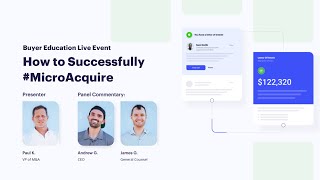
Andrew Gazdecki and Paul Kelly from Microacquire walk through how to buy a startup or small business. They cover what buyers need to prepare, how to talk to sellers, structuring deals, due diligence, funding, and keeping things friendly through the transaction.
My name is Andrew, founder and CEO of Microacquire. Built Microacquire as a way to, you know, streamline and really just make startup acquisitions easier for everyone. So our goal is really to democratize acquisitions and I think this webinar is a good piece of that where educating you on some of the nuances when looking to acquire a business. So really excited for this and thanks everyone for joining, especially those up late at night watching this. I definitely appreciate it more than you know.
All right, and hi everyone, Paul Kelly. I'm the VP of M and A here at Microacquire and you know, prior Microacquire, my background, you know, 20 plus years in main street and lower middle market M and A, I had my own, I'm here in San Francisco where I've been for over 30 years and you know, Microacquire is, I don't even know how I landed here but I did and it's, and it's really an amazing thing for really changing the way these transactions happen and it's something that was so needed and I'm happy to be a part of it. So, so today what we want to cover is the basics. Please know that anytime through the process we're here so you guys can reach out and we'll do our best to answer any questions you guys may have. So this is really broad in nature but hopefully we'll cover most of what is required for transaction. So first acquiring a business. The next topic is, well let's go through, you see it here, we'll go through page by page. But this is basically the agenda. We will have two breaks for questions. You can just send them through the chat. So let's get it going. So step one, right you've decided you want to buy a business. So I, I, I'm a big believer in always really trying to focus on why, what is your motivation? I think that that is critical in your success and really taking the time to understand that, assess why it's important. Is it your first company? Is it an add on acquisition? Are you trying to buy yourself a job? Are you looking for something to scale? All these things are critical in helping determine which is the best opportunity for you and also ensuring your, you know, the highest probability of success. And you know, it's when I was back in the Main street days, you know, owner operated deals, I would have, you know, a buyer would be interested in a business that was like an hour and a half from their house and I would like require that they drive rush hour traffic to the Office of the target Business. Because guess what, I've seen it a million times where buyers get into a business and they realize, holy, I'm spending four hours a day on the road and it's killing them. So all these things are important. You know, we do have, when you are assessing and determining value and assembling your team, we do have tools here at Microacquire, our teams developed a Microsoft MRR tool evaluation tool that gives you a pretty good sense of where value should be for any specific business. You know, having your team aligned before you really start the process or at least having some conversations to know who those people may be is important because you don't want to be scrambling for an attorney or a CPA or somebody last minute when you're in the middle of a deal. Good news is we have pros here on our directory. We have a M and a advisor directory on Microacquire. You can go and do a search, put in a search query for what you're looking for and those individuals will populate. You can reach out to them right through the platform and they really cover everything from, you know, deal folks, we have Main street, couple Main street brokers, we have M and A professionals, we have attorneys, escrows, really, really the whole, the whole gamut there. And these are all people that we, you know, we were very thoughtful about bringing on board and they're all very passionate about helping startups just, just as we are. So we have a common motivation there, ready to go on next page. So needs assessment, really making a plan before you start searching is going to again help you identify which is the best opportunity for you here. You know, identify the important issues that, that you're looking for and that will help in your search. There's search filters on the platform, strategic acquirers, you know, this is, you know, typically they're looking for, for, you know, obviously size, culture, growth opportunities, and for the owner operator, that's more of the person that really just wants to get into it and buy themselves a job and make sure it's something you like and something that you enjoy doing and you'll be set up for success. One thing that holds true here and in the outside world is, you know, good businesses are in high demand. We see some of the opportunities on a platform here that are, you know, the two top categories are E commerce and SaaS. We'll see a SaaS business that's well priced in a good category, good products and services. And we'll see literally hundreds of unique buyer inquiries. So good businesses are in high demand, no doubt. So you know, as a buyer, really setting yourself apart is really helps you in that positioning, that pole positioning if you will. You know, we'll see opening chats or messages from buyers that aren't very impressive. We'll touch on that later. But you really want to set yourself up in the best way and when you do identify that opportunity, separating yourself in being prepared for what's ahead and being prepared to sign a confidentiality agreement or a non disclosure agreement, probably 90% of the businesses that you'll look at will want that. A question that will come up early on is, you know, funding how are you going to pay for this thing? So have a good answer and you know, make sure you are ready if there's any issues. Being open and transparent about it is critical. I think that communication is key and that kind of touches on that next line. There surprises kill deals if there's, if you're not being transparent, things are going to come out in the wash. Same with sellers. If they're thinking that something is going to go under the radar through a diligence process, it won't. And that really erodes any kind of goodwill and buyer motivation forward. So just being open and transparent is critical. My former firm was called Synesis Advisors and Synesis, the root word is old Greek and it's basically about clarity and communication. So I'm big on that.
Paul, you care if I add just a small piece on the side? Yeah. So like when you're first reaching out to sellers, you know, first impressions are so important. Like if you're in microquire and you're typing in interested or something really short, that does not give the seller any sort of information about yourself or really any sort of confidence in why they should engage with you. And so I highly recommend just introducing yourself like, hey, I'm Andrew, I have experience in SaaS. I really like the business. Interested in learning more? I have a few questions. Just a little bit about yourself, showing that you're interested in the business rather than just interested or something like that. Because again that will help you stand out and just shows that you are truly interested in the business and you're not just moving through, you know, that is the, the key signal to sellers that just really says that you know you're looking at a lot of deals and this is just one that you're, you're just randomly maybe firing off a request to get for more information. So just keep in mind like acquisitions, it's a big, the relationships that you build with the seller can really be a huge part of the success of your acquisition. So you know that first impression is so important. Just letting sellers know that, you know, you're excited about their business, but tell them about yourself and why you would be a good fit to potentially acquire their business. And then if you have any questions, include those as well. So that's, that's just a small tip that I've seen across the marketplace. And the buyers that do just spend an extra 60 seconds preparing, you know, questions that have substance do much better than buyers that view this as very transactional, like give me your numbers right away. You know, get to know sellers, let them get to know you and build that relationship. Because if you do end up acquiring this business, whichever one you're looking at, you're probably going to want to. And I'm sure Paul will cover this later, but you might need them down the road. So just being on good terms and really building that relationship is absolutely key. So I thought I'd just add that in here.
Yeah, that is critical. Thanks for that. And to kind of further illustrate, that example Andrew gave about, you know, saying who you are in that, in that first message to the seller, you know, we see what the seller, you know, we understand how a seller is looking at this. And if the seller wakes up in the morning and goes, looks at all of their messages and you're one of eight and yours is interested and the others are more descriptive, you know, we've seen some of those even go unresponded to. So first impression is major, big as well as the goodwill in these transactions. And that is something that was uber critical in Main Street. It was in lower middle market and it is, it holds over to here well as well. You know, it doesn't need to be a love fest, but there needs to be some, some, some goodwill building. And so think about that. You know, when you have that first buyer seller meeting and it's not all about the numbers, you want to get to know each other a bit. There will be a transition period and you know, sometimes it's longer than shorter. And also if there's, you know, if it's, if it's somebody that you're, you've gotten along well with and everything's been good. And then six months after you have some nuanced question, be able to pick up front or reach out and email or whatever and that person will be happy.
And, and one last thing I'll, I'll add from just my personal experience, selling a few businesses of my own is Every time I've sold to a buyer, whether it was a private equity firm or strategic buyer, I did a lot of due diligence on those buyers. So you can expect the same. So if your profile microfar doesn't have a picture, you have a broken LinkedIn profile link, you don't have a description of yourself, I would disregard you immediately. That's just my personal take. So take pride in your account and how you present yourself, the sellers, because again, that first impression can really help you stand out with sellers and just start things off on, you know, the right foot.
Absolutely. Those last two bullet points here are also critical. You know, adage in the industry, time kills deals to keep it moving and you know, paralysis through analysis is not a winning strategy. That's something we had on the wall at Synesis. It's, you know, we, we would see buyers just get just too deep into too much deep thinking about something that was rather simple. So just think about that. Don't, don't bog yourself down in the weeds when, when analyzing. Are we, did we skip one? Roger? I'm sorry.
No. So this is where we are. Yeah. So let's do a five minute Q& A real quick. So I have a few questions on here. I'm not sure if they're directly with the section that we just talked about, but Andrew asks what's the best stage to buy a startup after it becomes a unicorn or at what stage?
I'll answer that one. Andrew, it really depends on your goals and also your available capital. If you're a billionaire, I mean, sure you can acquire a unicorn, but unfortunately we don't have any of those on a microcourt at this time. But again, that goes back to planning. Are you looking to buy a job? Are you looking to buy someone's side project that could turn into a larger startup? We've had some really amazing stories where, you know, you have builders and you have scalers where, you know, a lot of builders list projects because they have taken them as far as they can go. And maybe you're a scaler where, you know, you see a smaller opportunity. As an example, Maybe it's a SaaS application doing, you know, 100,000 in annual revenue. A smaller business, but the growth opportunities are there. And if you're a great marketer or a great salesperson, that's a good fit for you. So the stage at which you acquire a company really comes down to, you know, your personal goals, you know, your budget for a business. But if I had to kind of give like an answer to that from personal note, I mean what you really want to look for is product market fit. You want to look for a business. And this ranges from, you know, small all the way up to the multimillion dollar acquisitions that we do. But look for. You know, I look at three things. One is code. So how clean is the code? Who wrote it, who's going to maintain it post acquisition churn? Is the business growing? Is it stalling? And then three, customers. Like I really due diligence on customers. You can just type in the business name on Google reviews, hear what other customers are saying about business and that'll give you a lot of insight into the health of the company.
All right, so jumping around here, I think we'll probably do two more questions. This is, this one's from Wilson Funding. Will there be more connections with debt or equity investors? The current lending options aren't sufficient. When can we expect this?
That's a good question. So we've partnered with pretty much every debt and lender partner that you could think of. I think the main pitfall is a lot of buyers think that you can get a loan to acquire a business without any down payment. That's just simply not the case. So if you don't have capital to acquire a company, there are no loan products that will allow you to acquire business with 0% down. You either have to have collateral from an existing business using companies like Pipe, where you can advance your future revenue to acquire a company, or you can look at small business loans as well, which are backed by the United States government. So those are the two main routes. But there's never going to be a product that just says, hey, here's a $500,000 loan. Good luck. Because there's so many risk factors in that, unfortunately. So if you need a loan to finance your business, I would look at the current options. If the current options aren't, you know, fitting, I'd recommend going on a resources page. We have an article on small business loans. And then if none of those pan out, I'd really focus on a business that kind of fits within your budget. So not the answer you probably want to hear, but loans for acquisitions are extremely risky. And so the requirements, there's sometimes a mismatch where buyers want them to be lower. But to really make those loans work without having a high risk of default, there's just some things you have to go through. So definitely check out the partners we have and speak with them. Speak with them, get to know them. So yeah, I hope that answers your question.
And I could add a little bit more color to the sba. That's the federally backed program that banks will use their products. So that's a 7A loan. It's typically a 10 year amortization. And what you would want, what you would expect is put, you know, 20% injection. So you'd want, if it's a million dollars, you need 200k. And then you'd also need working capital. So this goes back to your first, you know, the first part with your needs assessment and really understanding what you would, what you, what you would be able to take down. So first part is how much available cash you have. And you can start from there and work backwards.
Okay, guys, I know we have a lot more questions here, but we'll take them offline because we need to. We were up to five minutes and so we'll move on with the presentation.
So let the fun begin. You're starting to search. So you know, when you're mapping out your search criteria, you know, what business type, what size. This obviously goes back again to available cash and what type, what size business you would be able to successfully acquire. Gross sales, net profit that ties into your debt ratio that the banks will look at if you're borrowing money. But also, you know, net profit is important, particularly if you're buying yourself a job. You know, do the math. How much do you need to live and you know, having some available cash to help operate and scale the business. Also location is important. Obviously with a lot of our businesses, location isn't so important, but, you know, that's something certainly to think about. Messaging, we talked about, you know, really, really setting yourself apart early. I would always recommend, you know, buyers and, you know, really on top of it, just put a buyer package together, you know who you are, it's like a resume, your financial package, you know, everything, just put it all together and you definitely set yourself aside apart from the rest of the parties. You know, always interact with professionalism, you know, it's important and that's part of the goodwill as well. Valuation guidance, you know, if you have that outside or you can find it here, that's important. We talked about being prepared to move quickly once you do start. You know, if you, if you're starting your search and you just get extremely lucky and like day one, you find the business, are you ready, are you ready to move forward, you know, and write an offer and start, you know, all of that process? You have, the bandwidth, you know, are you currently working? Do you have the time required to get through diligence and get through a transaction, you are taking on a loan. That's a whole process in itself. If you ever bought a house, you know, and it's more arduous for a business purchase. Everyone has a plan.
I like that, that last point. Paul, can you go back? Roger. So if you pass on a business, give feedback to, you know, founders, you know, help them understand, like, why you aren't interested, because that can go a long way with just, you know, future goodwill on, on the marketplace and it.
Gives you karma points from Tanya. Be good to the marketplace.
Because that can go a long way with just, you know, future goodwill on, on the marketplace and it gives you karma points.
I'm telling you, be, be good to the marketplace. The marketplace will be good to you.
Yeah, right. Your reputation is everything as a buyer. So, you know, if you just again, message, I'm interested, and then you just.
Ghost the buyers, the marketplace will be good to you.
Yeah, your reputation is everything as a buyer. So, you know, if you just again message I'm interested, and then you just ghost the buyer for no reason, like it doesn't. It takes two seconds to say, hey, thanks for sharing this. I took a look. It's not a good fit. I wish you all the best. Cheers. Done. You close out the conversation like professional and you move on with your search.
And even further than that, if you get into, you know, further review of.
A business for no reason, like, it doesn't. It takes two seconds to say, hey, thanks for sharing this. I took a look. It's not a good fit. I wish you all the best. Cheers. Done.
And, you know, you've looked at their field book perhaps, and you've identified something that just turned you off of it. You know, let them know. It's, I mean, you don't have to be rude about it, but it's, it's going to be helping them for the next conversation they have. And again, you get karma points and that'll help you down the road. I just keep thinking of the Michael Mike Tyson quote, everyone has a plan until they get so fielding inquiry. So on the seller side, when they're screening, you know, they're, they're, you know, we've touched on a lot of this already, but, you know, they're going to be looking at your first message. They're going to want to know if you're, if you're qualified, you know, both financially as well as with your experience. You know, Andrew talked about the background information. Make sure you're, you know, have a resume handy and updated and your LinkedIn as well or whatever other social you're using. You know it's very typical to you know, non disclosure or confidentiality agreement is typical. So if you're not familiar with those, we have articles about those as well in our resources. A personal financial statement if you're an individual buyer, put one together. Even better if you have you close.
Out the conversation like professional and you move on with your search.
And even further than that if you get into further review of a business and you've looked at their field book perhaps and you've identified something that just turned you off of it, you know, let them know it's, I mean you don't have to be rude about it but it's going to be helping them for the next conversation they have. And again you get karma points. Any kind of funding source, you know, having a letter from that institution or those parties repping to the fact that you have X amount of capital to invest good for your buyer packing.
Yeah and I, and I, I love this Paul. So I just speaking from it and.
That'Ll help you down the road. I just keep thinking of the Michael Mike Tyson quote everyone has a plan until they get so fielding inquiry. So on the seller side when they're screening you know they're, they're, you know we've touched on a lot of this already but you know they're going to be looking at your first message. They're going to want to know if you're, if you're qualified, you know both financially as well as with your experience. You know Andrew talked about the background information. Make sure you're, you know, have a resume handy and updated and your LinkedIn as well or whatever other social you're using. You know it's very typical to you know, non disclosure or confidentiality agreement is typical. So if you're not familiar with those, we have articles about those as well in our resources. A personal financial statement, if you're an individual buyer, put one together. Even better if you have any kind of funding source having a letter from that institution or those parties repping to the fact that you have X amount of capital to invest would be good for your buyer package.
Yeah and I, and I, I love this Paul. So I just speaking from an entrepreneur like again if I'm speaking with buyers and you're not able to answer simple questions such as you know, what is your background and experience? How are you going to fund this acquisition? Are you willing to get on a phone call like I would disregard that. So again just presenting Yourself, you know, in a professional manner to sellers can make all the difference because this could turn out to be a multi year partnership, you know, depending on the deal structure. So again, be prepared as you reach out to sellers and have a plan in place. It's critically important because as much as you're due diligencing sellers, they're equally due diligencing you. So they want to know do you have the capital available to acquire this company? If not, there's literally no point in having a conversation. Two, you know, I highly recommend just getting on a call with the seller. I'm sure we'll talk about this a little bit further. But get to know the seller and yeah like at the bottom, you know, understand their intentions, what is their ideal outcome. Sometimes, you know, a lot of sellers will, you know, go with a buyer at a lower price if they feel the buyer's experience, it's not going to be, you know, confusing process the whole way through. So come prepared and come, you know, with as much information as possible because again, sellers are due diligencing you as a buyer. So if you ever send a request that's really short, you don't hear back. That's probably why. So definitely recommend. All this stuff that Paul is laying out is absolutely critical. So again, preparation is key.
And we can go to the next stage and you know, just to close out that thought, think about the seller's position, they're going to start this process with someone. If the impression is lackluster, lazy on the onset. I mean it's not really setting a good precedence for an arduous process moving forward, getting to a transaction. So it's very important. So getting into the deal terms and making an offer, you know, putting together an loi. And I'm going to have Andrew, I don't know if we're going to talk about any of that just yet, but we have some resources to help build an loi. If you're going at it on your own, really an loi, it's you know, a letter of intent. It is basically outlining the terms or what you're presenting is the terms for your transaction. So it's going to be, you know, what the consideration, the purchase price, your diligence requirements and timelines, any kind of deposits, you'll see exclusivity periods. So basically what that is is a no shop provision. It's really comes from, you know, middle market and up. When a private equity goes and sends a big team into due diligence on a bed business, they don't Want another company to come in and swoop that the opportunity out from under them after they've spent a lot of time and resources. So you know, for these, you know, we're seeing them, you know, anywhere from a couple weeks to 30 days for the lockout period. And what that means is the seller can't talk to any other buyers. So it's, you know, if you're entering into an loi, you know, the hope is that you are quite motivated to move forward and you're not because otherwise you're locking up a seller from, from moving forward with anyone else.
Let me, and I'll add just one more thing. Is it, is that okay? Paul?
Yeah. Please, anytime.
One thing too is before you issue a letter of intent, make sure you're on the same page with the seller. I do not recommend just randomly sending letter of intents to sellers, just hoping they would accept again, get to know the seller, build a relationship, build a plan together, you know, outline kind of what you're thinking verbally over the phone or even just high level email or just through you know, the micro required chat and then send a letter of, a letter of intent which is really a non legally binding document that just outlines you know, the high level terms that would be then included in the asset purchase agreement which is the larger, more important legal document. So you know, make sure you're aligned with the buyer. So they're not just receiving random Lois, they've never spoken to you, they don't know if you're a fit. So that's just a small tip. There is again when you're acquiring, when you're acquiring a business, you know, try to put your, your best foot forward every time and really make this like a win win for both you and the seller. And sometimes just you know, having a quick conversation with the seller around what their ideal outcome looks like and go all the way.
Yeah, I would, yeah, I echo that. I mean I would. I don't think sending a, an offer to purchase a business without speaking to the sellers first is a good play.
And, and we see it too, you know, and it, and it does not work. And the situations we see it is like Paul mentioned, you know, great SaaS business valued at a very realistic price range. Some buyers think that, you know, they need to issue the LOI first to like lock the business in. But a better approach is always to get you know, an understanding of really, you know, putting a plan together with the seller so they feel comfortable moving forward with you. I have never seen an LOI accepted Without some sort of, you know, high level agreements made before the letter of intent sent. So think of those things before, you know, you just send out a letter of intent. And we do see that, but it's not an approach that's effective. So you know, focus on, you know, really again creating a win win, you know, acquisition process for the seller so they know what they're getting into, they're familiar with you, your plans, with the business, are you going to take care of it? All that stuff can just really set you apart quite a bit.
And just to clarify something about the LOI, the LOIs are non binding except for the exclusivity and any kind of non, you know, non computer, non solicitation that may be included. So deal negotiation, when you're thinking about structuring a transaction, there's a lot of things that go into that and it's also, it's very strategic, you know, you know, cash upfront versus you know, some kind of a deferred payment structure, whether that be seller note or some kind of contingent payments. You know, you want to think about tax liabilities. You know, there are tax, tax issues that you need to consider. You should get guidance on from professionals. And you know, there may be, you know, going back to the goodwill if you have a good line of communication with the seller there. I've seen it happen where something will come up and there is some tax scenario where the seller, I mean it actually the deal is structured better for the buyer because it helps out the seller with some tax issues that they may be facing. You know, is the, you know, ongoing employment from, you know, anyone from the founder to anyone else in the business. Any kind of covenants or restrictions, reps and warranties are pretty standard in agreements. And you know, really thinking through the structure is critical on many parts.
And so a lot of these terms, you know, can seem, you know, complex. Restrictive covenants, representation warranties. But these are all things that you should learn as a buyer. You know, you're acquiring a business. So definitely again the more educated you are on an acquisition, again shows confidence to sellers that because the greatest fear, maybe not the greatest fear, but one of the biggest fears of founders is they sign an LOI with a buyer, they get to the ninth inning and they're like this person has no idea what they're doing and now this deal is going to fall apart. So again, understanding all of these components and how they can affect your ability to acquire the startup that you're looking for is huge. So again, so that I'd add That.
So you find a business, have, you know, you put together an offer, the offer is accepted and now you start the diligence process. And diligence is first of all, it's a two way street. That means it's, it's a time for both buyer and seller to seller to due diligence on each other. You know, for, for the buyer it's really to verify that everything that has been presented to you thus far is accurate and true. And then also, you know, diving into the financials and doing, making sure that again what's been represented is true. So you have an opportunity to, to literally ask for anything you want. So you'll supply a list of questions, the seller will then respond to those questions and typically have like a data room set up and you'll have, you know, so typically how it's written is you'll have a period of time to present the diligence request, seller will have a period of time to apply that to you and you'll have a period of time to complete diligence. It's, it's a, it is an intrusive period often for the seller and keep, you know, be conscious of that and empathetic that they're still operating a business and you want that business to continue to operate well all the way through close so, so sensitive to that. And there's various categories I would definitely suggest is there's topics in our resources around diligence specifically and I would go there and get smart on that because that's an important piece here and that is your opportunity to make sure that what you're, what you're buying doesn't have any unknown hairs on it. And there may be hairs on it that you find in diligence that the seller didn't even know. So keep that in mind and if you're not comfortable finding, find somebody that can help you out with.
Yeah, another thing I'd add. Paul, let me know if you agree with this. But being, you know, as you're talking with sellers, letting them know your due diligence process, even at a high level can be really helpful. Just so sellers, if they do sign an LOI with you, they know what the next steps are so you know, you don't have a surprise pop up. And it also again shows that you're a professional buyer, you're a serious buyer and you were educated on the acquisition process. And again that really makes sellers feel comfortable that you know this acquisition is going to go smoothly. So that's something I recommend is just like here's, you know, kind of the, the next steps that we're thinking of just ahead of time just so there's no surprises.
Roger, flip the page.
All right, so I have a few questions here. I think they're gonna be jumping around, but there's one that's, there's one talking about IP actually. So like can you guys please tell us a little bit about how we can put value on an IP patent?
I'll let you talk to that.
But I mean it depends. I mean I'm not a fan of patents. I, I vehemently, I guess it really depends. I mean if you have a patent on, you know, something very, very valuable like a use case that is being used by a lot of other companies, the first thing I would do is I would go to a formal patent valuation expert and get evaluation on that patent because like how broad is it? Is it enforceable in course in court? So that is a very, it depends. But you'll get the best answers by reaching out to a specialist that can help value a patent. That's how I would do it.
And, and Hunter, who is one of our advisors, just dropped into chat. Something that I've been saying for years, actually the same with non disclosures as well, is that the patent is only as valuable as the amount of money you have to defend it. And you know, you can Google Google breaching patents all, you know, in Microsoft, you know they do it all the time and you know, you just have to bow to them. If you can't, you can't fight them.
Yeah. Do you care if I give one of my favorite my, my famous analogies, Paul on patents?
Love it.
All right. I'm known at microglire with the worst analogy, so bear with me. But a wise individual once told me a patent for a company is kind of like a big sword in your business. And what I mean by that is to Hunter's point, patents are as good as money. You have to defend it. So if you have a patent, and this would probably apply more to sellers but another way to think about it, but an average buyer can look at that. But again if you don't have the capital to defend it, it's useless. But if Google looks at that giant patent sword, they're like, oh man, that is valuable. So the value of a patent will change depending on who the owner is and if they're able to enforce it.
And how I, how I view them in businesses because I have come across it over the years. Is, is that it? I can't add an interesting value to the patent. There's no multiple or dollar amount that could be added to it. However, it helps maximize value to your existing operation. Well, like reach the upper end of the multiple cap for your business. That. That's the way I would.
All right, guys, there's. There's a few more questions, but for a time check, we have about 14 minutes left. And so do we want to answer some more questions or just go through kind of the rest of the presentation?
I'm going to answer just one more. So Klique is answering. How do you review code? Other services connect you to someone review code. So we have a ton of resources on Microquare. So I just put an article, how to do technical due diligence in the chat, but literally on our resources page, if you type in any question ranging from due diligence evaluations to really anything, if there's anything missing, please let us know. But we have a. Basically a full library, so definitely check that out. So any questions that we don't answer today, you know, definitely check out our resources section and dive through that because we have a ton of content ranging from due diligence, valuations, negotiations, common deal structures, even podcasts with, you know, some of our larger buyers, sellers that have successfully sold, buyers that have successfully acquired startups. So I thought I'd just point that out. There is a lot of the questions I'm seeing. We have articles that you can look up on our resources page on Microfire. So I hope that's helpful.
All right.
We're always, like I said earlier is, you know, we're always here. If there's any questions that you can't find an answer to, we'll try our best to answer it for you or at least point you in the right direction. So transaction management. So you're in a deal, you're in diligence, you know, make a plan and stick to it. I know that if you want to go to the next page. Oh, it goes right to there. Let's stick on the transaction for a second. So when I was years ago managing a firm here in San Francisco, I was, I recognized that it was. It surprised me that, you know, you have buyer, seller, you know, you have a listing, you go to market, you're interviewing buyers, you have buyer seller meetings. You find the right one. There's this, all of this goodwill and momentum and this rah, rah. You get into a transaction and then the parties would go into their respective corners through, you know, month, two months, until you close escrow, and they don't talk to each other, which I just thought was wrong. So I started having a, literally have a transaction planner and meet once a week with the buyers and sellers. And it could be five minutes talking about the giants or whatever, but it's just keeping that continuity because what you don't want is to go into your corners and only talk when there's a problem and there's a hurdle that needs to be ironed out. If you maintain that goodwill going through a transaction, once you do hit those bumps in the road, it's going to be a lot easier to flatten them if there's the continuous momentum with goodwill. So that's my plan and I'm sticking to it. So escrow and close. Escrow, use escrow. You know, it's super critical to ensure that your funds are protected as well as, you know, making sure that all of your documents are aligned correctly. One thing to know, and there's articles as well on the resources page around the allocation of purchase price. You know, when you purchase a business, there's, there's various buckets that that purchase price can be allocated into. Each of those buckets have different tax consequences for both buyer and seller. At the end of the year when you're filing and the allocation has to match. I mean, I've been in transactions where the allocation of the purchase price, and I kid you not, was a harder negotiation than the initial purchase price or the original offer. So we can spend a whole webinar on allocation, and we may someday, but that's an important piece. There is resources on the platform that you can find buyer and seller disclosures as well. Very important to execute those. Here you are. So buyer and seller. So when you're entering into an agreement or you're packaging up, there's a list of questions that are just standard, right? Do you have the available capital? Do you have any, is there any outstanding legal issues? You know, for the buyer, it's just as important as it is for the seller to be fully disclosed. And if you don't disclose, you're doing yourself a disservice. And, you know, it's important to bring up so everything will come out in the wash. So I would make sure that on the buyer side that you, that you are disclosing and being fully transparent. And it's a much better path than trying to hide some fact that you think might inhibit your opportunity. And if you don't know, you know, we have resources and professionals on the platform that can, can help you out there.
And, and just one thing to add. So the best way to think about disclosures is basically really, you know, stating anything that could be a future liability. Like when I was selling business apps, you know, we went through a list of, you know, every NDA I had signed, you know, every sort of, like, pertinent document that could be considered material. So basically the point of getting seller and buyer disclosures is just like in real estate, like, you know exactly what you're buying and you're getting that, you know, on a legally binding document that, you know, the seller said these things to be true or these things have happened. You know, I could be ranging from, you know, in four years ago, we were hacked for, you know, a small amount or, you know, we had, we have a third co founder who owns 5%. These are things that you want to know before you acquire the business. And so, you know, this is where really, you know, using an attorney to draft these documents and have these disclosures from the sellers is extremely important. Just so you don't have any surprises where you buy the company and then a third co founder pops up with a third, which is very rare. But again, to protect yourself, definitely make sure you speak with an attorney.
Yes. And, yeah, super important. And from the seller side, you know, it's. It's also, is there any market conditions you're aware of that are changing? It's, it's super important. So make sure you read through those carefully. Mental preparation. This. This is important. You know, I, I could say that in all the years I've done deals, I've never. And Hunter, Hunter, if you chat that you got through with no hiccups, I'm going to challenge you. But I've gone through literally hundreds of transactions and there's never been one without some hiccup along the way. So prepare for it. Know it's coming. And if you know it's coming, then it makes it a lot easier to get through. And, you know, part of that mental prep is understanding that sometimes they don't finish, that you don't get to the finish line. And, and as long as everyone's working in good faith, I mean, that's okay. It sucks, but it's a time drag and it's discouraging, but things happen and that's the reality. So understand that that's the case and keep moving. So it is an emotional roller coaster. We always joked back in the Main street days that you, you know, as a advisor to a owner operator, think about the person that's, you know, owned it for and operated it for 30 years and they're retiring and they, their family and all, you know, they care so much and they're entrenched in the community. It's a big deal. It's a big deal. So it's a, you know, we would switch hats from consultant to psychiatrist to marriage counselors, you know, all the time. So it is a emotional roller coaster in some cases.
All right, guys, I think we have five minutes left. So I think let's leave it for question answer. I think we're at the end of this slides. Just a few different ones that we wanted to go over, but I think we've already covered most of these details already. So let's go into just Q and A.
Awesome.
So let's see. I'll stop sharing. Few questions that I have here are, does my quiet do any due diligence on listings?
Well, there, I mean, Andrew, you could speak to that better. But you know, there is a. Definitely an onboarding process.
Yeah. So every listing that comes through microquire, we, we vet. I wouldn't say due diligence. So we don't go into depth of, you know, verifying financials through, you know, seeing their P and L. We leave all due diligence on the responsibility of the buyer because we are not involved in the transaction. But we do verify the identity of the buyer. We verify ownership of the business. We have a number of stringent questions. So we do our best in terms of making sure that these buyers, or excuse me, these sellers are serious. They own the business, their financials are accurate. But one, one small tip in terms of when you're talking to sellers is, you know, we have the ability to connect stripe and profitwell and barometrics. These are all, you know, SaaS analytics tools. And so if you want to actually get a healthy snapshot of their financials and they haven't delivered a PNL or something like that, just ask them to connect those metrics and then you get a full real time view into the, the health of the business. So. And you could also do that with Google Analytics. We have integration there. So. So short answer. Yes, we definitely vet every buyer. Excuse me, every. We. We do vet buyers as well. So. But in terms of sellers specifically, yeah, we have a pretty stringent listing process. But ultimately due diligence is on the responsibility of the buyer.
And you know, I could say that even when I had my own firm or when I was managing the firm, we would never, I mean, everything was stamped, not verified by, you know, we would recast financials and package stuff up, but we wouldn't do perform diligence in that. So it is really the onus is on you to do that and we will help guide you through that and help you kind of show you what standard and what to look for. But yeah, we don't do the deal.
And I have one from Stefan. I think how many acquisitions happen with buyers from outside the U.S. is that a limiting factor to sellers?
That's a good question. On the top of my head, I, I could pull the data. I am going to put this in the chat. Just like due diligence articles to check out. We give you a ton of tips on due diligence. Like questions to ask things are how sellers should prepare a red flags to look for when doing due diligence. So check that out. In terms of what was the question? How many deals do we do internationally?
Yeah. Is it a disservice to being outside the U.S. and buying a company from the U.S.
Well, it makes things more complex. Typically if you're doing an asset purchase, it can be fairly straightforward, but depending on the complexity of the deal, you know, I'd really recommend reaching out to an attorney because if you have a company in the UK, but you're based in the United States, they're going to have to dissolve that entity and then you're going to need to move the assets into a US Corporation and so that, you know, can get into, you know, some, some complex corporate structures easily handled by professional attorneys. But my best recommendation there is if you're buying a startup internationally, you do put yourself at risk where if the seller does not, you know, with move forward with what they said they were going to do, you're going to have to hire an attorney within their jurisdiction, which could be another country. So just be kind of careful on that front. Um, but best advice, when in doubt, you know, really get professionals. Like a big part of acquisitions. Like the biggest firms that we work with have attorneys, they have accountants, they have due diligence experts. So building, you know, kind of a bench of people that can help you with your acquisition can really alleviate a lot of the questions that you can have. And this kind of falls into the bucket of what I say, you know, penny smart, pound foolish. So, you know, these are things where if it's like a, you're buying a job and you know you're going to be spending like a million dollars on a business, you know, it's probably a good idea to maybe spend, you know, 50k to, you know, really prepare people to evaluate that business and that price tag might be a little bit too high. You can definitely get it done for cheaper. But you know, really, you know, build a team of experts that can help you along the way so you don't feel like, you know, you're missing something. You have people that are helping you. And again, at Microclub, we're also here to help too. So if you do have, you know, specific questions like that, we're definitely here to help.
Beyond the legalities, I think that really with international you have to think about the financial ramifications, taxing and stuff like that. So as, as guys said, just definitely find the pro to help you out with that because it is.
So we're over time. I have one more question. If everyone stay but Lois, can you expand on what terms are binding?
The binding terms typically in LOI are going to be the no shop and any kind of non compete or confidentiality. The rest is. So those are, I'm sorry, binding or non binding.
Are binding.
Yeah, typically it's those two are binding unless there's any other nuanced clauses built in. But typically it's the no shop.
And just to give some clarity in terms of like why is a no shop non binding is because if I put an offer on, let's say like 500,000, do a $2 million business, I'm going to be putting resources into due diligence in the company. And if I'm putting resources in, I want to know the seller is, we're on the same page and if everything looks good, I'm going to acquire this company. So I strongly recommend for both parties because it shows seriousness on the seller side that you are on the same page. And for you as a buyer, you have the assurance of knowing that if you invest all this time, you know, they're not going to just keep shopping the deal, wasting your time. So it's, it's kind of a little, it depends on the seller. But in my experience it shows their level of seriousness in selling to you and just how aligned you are on terms moving forward.
And that's also, you know, part of that is really, you know, we talked about transaction management, putting in a transaction schedule, putting together a transaction schedule, all of the things that need to be accomplished and it's like a Gantt chart and use that schedule for your weekly 5 minute, 10 minute call with the seller. And hey, it makes people publicly accountable for what they're supposed to be doing because the seller has a bucket of stuff they're supposed to be doing. The buyer has a Bunch of stuff. And if you're able to talk about that weekly, it just keeps everyone on point and moves you through the transaction in a smooth.
All right, I'm going to put in one last question from Ed. If you have capital but still want 70 to 80% seller financing, should you just be upfront with it from the beginning or how soon should you introduce that? I don't want to scare people away, but I also want to. Don't want to leave them on.
That's a good question. I mean, 80% seller financing is a big ask. I mean, because essentially if I was a seller, I would need to trust you to a degree because essentially you're paying 20% up front, then you're going to be paying me payments for 80% of the value of my business. I would say, yes, definitely say that up front. Because if you get further down with the seller and you say that, it could be a complete deal breaker and you just wasted not just your time, but also the seller's time. And I'll also just kind of be upfront and say I would recommend most sellers do not accept that term just because again, they're taking on so much risk from you to pay back those payments. I would, I would not accept a deal of that structure, if I'm just being frank.
And don't see yourself a disservice by keeping so rigged into that, that type of a structure gate either. I mean, you may find that you get into a business and you like it enough or more than you had initially anticipated and your thinking is going to be different around the structure. But definitely early on in those conversations, I would ask if the seller was open to various deal structures. I don't know if I'd put exact parameters, but they might not even be open to seller carry. That could help you in your negotiations if they're, if they're looking to. You know, I've talked to a ton of sellers that are looking dirty working on the next thing, and they're wanting to use that capital from that sale to invest in the next opportunity. So that could help you structuring a transaction as well.
All right, everyone, I think we're quite over, so I know there's a lot of questions in the Q and A. We will address them in the blog post that we're going to put out.
Along with the replay.
So I think with that, if there's any last comments from either Andrew Paul, I think this is coming to a close for this, this webinar today.
Happy, happy, happy hunting, guys. And gals, I hope you find what you're looking for and we're here to help when you do.
Yeah, I just say thanks to everybody for all your support because we definitely appreciate it more than you know and we're here to help. You know, we're going to continue more of these buyer education webinars, so we'll definitely get the recording out to those that, you know, maybe want to rewatch this. And if you have any questions, we're going to help. You know, our goal is to help startups get acquired and anything that we can do to help you, within reason, you know, feel free to shoot us an email@supporticquired.com and we'll be happy to help you. And then check out the resource section too. We have so many resources that a lot of you I think could benefit from again, due diligence, valuations, common deal structures, interviews with successful buyers and sellers. So there's a lot to learn from on our resource section, so definitely check that out. All right, everybody, and thanks again for everyone for attending. This has been awesome. I really appreciate it.
All right, awesome, guys.
Take care.
See ya. Happy Wednesday.
More from Andrew



The Buyers Who Made the Move: What They Bought, How They Did It, and What Happened Next






