Interview w/ Jesse Pujji Co-founder at Ampush
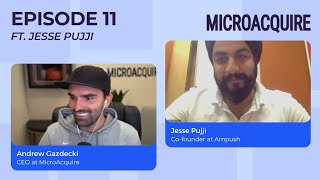
Jesse Pujji, co-founder of Ampush, talks about founder market fit, building teams, and staying mentally healthy as an entrepreneur. He shares how to know when you're the right person for your business and practical strategies for managing stress and keeping teams motivated.
Foreign. I'm with Jesse Push. Thanks so much for joining me on this podcast. I'm excited to speak with you and I've already learned so much about you just through Twitter and our previous conversations. So thanks for making the time.
Absolutely. I'm pumped to be here.
So before we started recording, we were trying to figure out, like, a topic, and then we kind of both decided, let's just hit record and see where this goes. You say so much inspiring stuff on Twitter, and it's so actionable, and I'm sure in other places too, but that's where I read most of it. Like, how do you think about building businesses? Do you want to start there? And, like. Cause we've chatted before, you've told me some, like, really just crazy stories about just making the impossible happen. And I know that's a broad question, but, like, when it comes to business, like, do you have any, like, key pillars that you, like, you hold true to, and maybe we can just see where that heads?
Yeah, sure. You know, I've got a bunch and I have some, and they might not be here in five years. And I've had, you know, there's new ones I probably will learn that I'll bring up so that probably the first one is like, man, the only thing, you know, the only constant is change. The only way to stay in front of that is to constantly be learning, talking to people, figuring out what's next. And, you know, just because it didn't work before doesn't mean it won't work again. And just because it worked last time doesn't mean it's gonna work this time. And so the number one thing I'm big on is, like, constant learning, rate of change, paying attention to that, as always. And I think that's probably the biggest, you know, high level principle. You know, we started, I was telling you, when we've caught up in the past, you know, I've always kind of been obsessed with bootstrapping and kind of starting and generating a profit. And the reason was there's something that never quite sat well with me about. You know, I take money and I'm burning it. And I have, like, an end date. Like, I have this thing called a Runway that I will eventually drive off of. And one thing I've often said to people at any stage of their company is, like, just get to $1 a month in profit. Because if you're in $1 a month in profit, your Runway becomes infinite. You can just do it forever.
And so you can die. Yeah, you can't die.
And if you have enough time, you know, you can probably figure most things out. And I think that's like another principle which is just like, what, you know, if I have the time and I can apply myself to something, how do I go figure it out? So I like, you know, one of the things I've been talking about recently a lot is have a big vision, have a good vision and exciting vision. I think that's super important. But then find the cheapest, fastest, easiest wedge to get going to take some action in something. And if you do it, that will lead you to the next thing, which will lead you to the next thing, which will lead you to the next thing. And I think oftentimes, you know, the vision's there, but people spend a lot of time planning, and early on, I don't think that's that valuable. But, you know, I think you find businesses that you can get to profitability quickly. I love the concept. One of my favorite concepts is units to break even. So, like, if I talk to an entrepreneur, they're talking about fundraising, all these things. I go, how many of these things do you need to sell before you can cover your overhead? It's like, my favorite question. And if it, like, people will know their Runway, they'll know their burn off the top of their head. They'll know their cash balance off the top of their head. And I go, this is another thing you gotta know off the top of your head is if I could sell. If I'm selling expensive software, if I sell 10 contracts, I'd be break even. If I'm selling D2C, like, I need to sell 500 of these products a month, and I'll be at my. I can break. Yeah. I can pay for my order. I can get to that $1 in profit. And so that's another one that comes to mind right now.
I'm hearing a them theme, though, and maybe I could be off. So correct me if I'm wrong, but how long have you been building companies for? I know the answer, but I want. I want 11 years.
11, 12 years.
No, you go further back than that.
That's true. That's true. You're right. No, no, you're right. Let's see. I was born and raised in St. Louis. My dad was an immigrant, came over from India, kind of the classic story. Got into college in University of Missouri. And he was always a business entrepreneur. He had a travel agency and real estate business. And I was like, selling popcorn tins door to door when I was, like, 10 or 11. I had the snow shoveling business would just go to my neighbors and do that. The first, like, real, real business I started was we grew up in St. Louis and there were, you know, enough Indian families here. It's probably 500 to a thousand. And we really, like, you need to go to New York and Toronto to get the music because they were all in CDs. And we wanted to be DJs. So we drawn PMD DJs. That was the name of it. It was Pooji, Mucker and Dave. There's four of us. As my brother and I were the P&MD and we cornered the, like, Bunger Music Market in St. Louis. So if you had a wedding or graduation, it was awesome. We, you know, we probably pulled down 30 to 40,000 bucks a year doing weddings and graduations, the Indian music. So that was, I don't know. We started out when I was 14, probably.
So here's where I'm going with this. So you've been building businesses for, let's say, 20 years. Is that accurate?
Sure.
And, like, you are so positive and you're so, like, enthusiastic about everything. You know, you have tactics and you have obviously, you know, a clear understanding on how to build businesses, and you've been very successful. But, man, like, you're just such a positive, like, you know, I feel like the excitement when I was asking you that first question. Sure. How do you think about that? Like, how do you stay motivated? I'm a big proponent and the reason maybe I'm kind of, you know, pushing my slick down, like you're in your head. But I always feel like the most successful entrepreneurs are the ones that just love it. Like, it's not work. And I don't feel like you're working. I feel like you're having fun all the time. How do you do it?
Yeah, I mean, that brings up a really, you know, kind of a different interesting story. You know, I. In 2017, we were probably six, seven years into ambush. My daughter was just born as my second kid, and a month, you know, I spent. Took a month away from the business, more or less, and came back to my.
I want to backtrack on maybe just some ways other entrepreneurs can apply, like that sort of positive thinking. But, like, how is working with a CEO coach been for you? For me, I'll give you some context. I work with an individual named Tim Porthouse, and when we started working together, our first call, he's like, do you do one on ones with your teams? I'm like, what's that. Cause I was like 24 and he helped me understand, like, how to manage people, how to properly run a business, like, and not have it just be like an animal house. And today he helps me more with like, how to like, kind of like what you just alluded to, which is creating a business really around your life and not the other way around. So you're not just doing stuff that you hate all day and then the next, you know, you built this like business and life that you don't like. I mean, what's. Maybe some of the biggest things you've gotten away from? You know, having a mentor or a coach.
Yeah, I mean, I think similarly, it's. It's been pretty life changing for me. So I would put it up there as one of the top five most important things I've done in the last five years, along with becoming like a dad and some of those other, you know, things of business. But I think even just recognizing those motivators was really powerful.
What do you think your biggest one is today?
It's probably play genius. Like, it's like if I'm doing the things I know I'm good at, that also add value. But fear is very much there. It's not like, I definitely have moments where I'm like, what am I doing? Is this the right way? But that value in noticing it, like noticing that inner dialogue, which is where we spend a lot of time and what's. What am I saying to myself? What stories am I making up? You know, how am I approaching it? Like, I think that. And some of it's like, there's so many fun, like an interesting hacks that he's created that are valuable. Like, I'll give a couple examples. Like, one is we do this now, you know, and like, like everyone's stopping for 20 or 30 seconds before a meeting and like taking a few deep breaths to just like get to the meeting. Like, we're all here. Everyone's. You're not thinking about what you're. You were just talking. Like, most likely there's people in seven different directions. And the best thing I've ever done for meetings is the first minute. Let's just sit for a minute and like get here. And it's like, it's very bas basic. There's like you four by four, breathing and even and forget it. I don't know if I assume it helps all the people I'm working with, but for me, I'm like, okay, I've got a million things in my mind now. I'm just thinking about this one topic and it lets me go deeper, be more dynamic, like problem solve more effectively. That's a really good one. Another one that he gave us, which, like, I love, is this concept of clear agreements. And you've probably heard this too, Andrew, a lot. And, you know, early on in my career as a CEO, I got feedback. You know, our head of people pulled me aside and said, you know, you gotta be real careful about what you say, Jesse, because sometimes you're in a meeting and you're thinking a mile a minute and people are confused. They don't know whether they should do what you're telling them. Are you asking them? You know, they're just confused. They don't know.
Yeah.
Her advice was, you got to be more careful about what you said. And I kind of took it. And then I started feeling like, wait a second, like, I want to talk, I want to problem solve, I want to brainstorm. It doesn't feel fair that I have to hold back. And Dave, my coach's name is Dave Cashin. One of the many things he taught me was, hey, there's this thing called a clear agreement, which is like, you know, you request, I make a request, or someone promises me something and we make, you know, like a deal, which is who does what by when. Sounds very simple, but it gives a level of clarity such that now what you'll see inside, you know, inside of the companies I'm involved in is people will stop in the middle. I can brainstorm freely. And unless I say I have a request for you, will you research this topic and get back to me with a one pager by Friday? And they can say, yes, no, or they can counter. They can say, well, I can't do it by Friday, but how about Monday? Okay, that's fine. Get it done by Monday. But it forced at the end of every meeting, we end them that way. Because now it's like, frees me up to brainstorm and be totally open without anyone else to worry. Unless I've asked for a request or oftentimes I'll say, jesse, is that a request? Like, if they're not clear whether I'm actually asking them to do something and then they're, you know, the thing for me as a leader is don't expect something from someone unless you've made a clear request. It's not fair to hold someone to something where you mentioned in a meeting and said, well, did you look that up? It's like, well, you didn't. And on the flip of it, don't worry about what Jesse says. Unless he says, please do this.
That kind of reminds me of like green light, red light, where if it's like green light, brainstorm away. And, you know, whatever you say, you know, we may or may not do it, but it's brainstorm time, have fun. And then red lights, like, okay, you know, we're stopping, we're getting more tactical, you know, kind of like setting the tone of like, yeah, like this is really where we're going rather than just like spitballing ideas for hours. I do that with my team from time to time. One thing that we do that's similar to you is we do like my management styles, we run off just commitments. So every week, every morning on Monday, my team will basically write down what they need to accomplish during the week. Usually like five main tasks and we talk about them together. And the power of this is they're not making these commitments to me, they're making them to the team. They're telling the team, I'm going to get these five things done and there's probably 20 other things. But they're just writing the top because you're not going to write like, I'm going to write 20 tweets and I'm going to, I'm going to, I'm going to eat lunch. And you know, it's just like, what is your top? Like five priorities? And then what can you commit to the team of getting done this week and then review that on Friday and then we do like a monthly review and that sort of stuff. But I love that that kind of helps you not be like bad cop, a CEO, like, hey, like, you got to get all this stuff done. You have a team that, you know, collectively wants to contribute and they vocalize that and hold themselves accountable.
You know, we. One thing I just thought of when you said that, that we spent a lot of time on, you know, we've hired a lot of folks right out of college and hired a ton of folks out of consulting or investment banking. And you know, the ambush brand, it's great as a brand, as a tech enabled, you know, we think of ourselves as software plus services or tech enabled agency. But the brand is even stronger because all these folks have gone on to be growth leads at big D2C brands. And people go, what do you do? What are some of the things you do? And one of the things that you mentioned, the five things or three things when people transition into this, one of the first things I have to tell them, especially if they're coming out of college or from like a, you know, consulting or banking is your to do list is going to grow faster than your ability to mark stuff off of it. And you'll see it in the first month or two of someone. I'm sure you've seen it some, they're stressed, they're, oh my God, I'm used to not, I'm used to checking everything off. I go, that's not going to happen anymore.
Yeah.
And they go, well, what do I do? You go, you got to prioritize. You got to pick the three or five. You're only going to get that many things done. And you know, and you got to do those, find the important stuff and get them done. And I think that's just a really important point that even people who are first time entrepreneurs, oftentimes I see that struggle of founders I've invested in where they're trying to get everything done and it's like, nope, you're not going to get everything done.
Yeah. One thing I always tell my team is everything you say yes to, you're saying no to something else. So someone comes up with a great idea. My first question is, what are we saying no to? Because we can't do everything. Another thing is, you know, as your team is way big, I think we're at like 15 now or something like that. But one thing I always try to help my team with is helping them with prioritization because, yeah, like so much stuff. If I had like a genie where like I can make wishes, I always have this weird wish where I could take my product and like advance it three years, you know, like all the features, all the stuff that we're talking about, it just, it's just done today because the list is literally endless. And so, you know, I think a lot of founders struggle with this where they don't understand that, you know, your team wants feedback. They want to know where they stand with you. They want to know what should they prioritize. Sometimes, you know, when you let them guess, like they may second guess themselves and so on. So that's really good feedback and just advice in general. What would you you for entrepreneurs out there that are just starting out, what are some of the main mistakes that you see and that, you know, try to help them? Like, boy, I know that's a super broad question, a super left turn, but let's go there.
Yeah, I think there's a bunch, I think number one, which is sort of a good segue from what you were just talking about around helping people prioritize and you know, I didn't realize it was a skill I had until I've seen other people do it. I've done it a second or third time in terms of starting a business. And you know, sometimes people call it like hustle or whatever, but what the specific thing of what I think it is is like figuring out what's important in any given moment and tre gouging and being able to then like drive everything towards that one thing. Whether that's. Yeah, totally right, like whether that's selling a product, like I need to get my first sale or I need to get that one product person. And then the most common thing I'll see and first time entrepreneur who again they have like a really pretty checklist and they think they're gonna get it all done. And you're going, no, the one thing, what is the next thing that is gonna let you unlock? You know, I think it was like a video game. You're gonna beat this level and it'll unlock the next level. And oftentimes they're talking about, well, we think we're, we're launching, we're talking about SKU number three and product number five. And you hold on. Have you sold this one product to anybody yet? No, I have not.
Oh man. We're, we're like so on the same page. I do this thing with my team all the time where I consistently remind them like we only need to get a couple things, we need to be great at a couple things, not okay at a bunch of things. And that I think is. Sorry to interrupt you.
I think the other one I see, which I'd love to, you know, talk about is the, and I did this for a long time is like, it's kind of like right or wrong thinking. I'll call it like thinking there's a right answer and there's a right way of doing what's the right org chart? What is the right sales strategy? What is the right product development? Like I used to think I spent a lot of time the first several years, what's right? What's right? Oh, best practices. And then I realized, oh my gosh, everything has trade offs. Every problem that kind of has to be solved in its own way directly. And by the way, like, you know, for micro acquire, there's probably six ways you can grow and there's probably not a right or wrong one. Right. There's ones that you may be more suited to do and there's ones that maybe if I was in your shoes, I'd be more like, and so we really breaking that down and going, well, in my case I would solve it this way because I have these skills and somebody else has these skills and here's a, you know, vector. And so I think really getting rid of right. I see a lot of right or wrong thinking for first time entrepreneurs because they're afraid they're doing it wrong. And it's the kind of thing where I just remind them all the time there is no right answer here. There's no. Another thing someone told me about org charts once is like related because people always want the perfect org chart and you know, they have that classic quote that's like, democracy is the worst form of government other than all the other forms of government, right? And I, as I tell any org chart you pick will start at the worst other than all the other ones you may have picked, right? And it's going to change and it's, you know, there's no great, there's no blue ribbon, A plus or boring chart.
I like that a lot because entrepreneurs, like, you know, we're all different, we all have different skill sets and it's so important to like play to your strengths. Like what are you good at? And when you like kind of can locate that and then really focus and double down on that, that's your competitive advantage. Like you're really good at that. Like, maybe you're not good at like the best example I could probably think of is maybe you're not good at, you know, enterprise sales or something like that. So maybe don't build a business that has an enterprise sales strategy as your main go to market. Maybe it's marketing, maybe it's paid at, you know, what brand, what may be. So that's great advice.
Yeah, you've heard me. You probably see me on Twitter. I've always said like, what's your unfair advantage? The funny thing, by the way, is the first time I wrote that, there's a lot of people being like, oh rich uncle. And I was like, no, no, no, I didn't mean it like that. I meant what is something you know or you have a skill in or you have some capability or some knowledge, some category, right? Like if you and I both started a turbine e commerce business, dude, I'd crush you. I don't care how much you tried to help. Like nothing you could do. I would win in that, right? I know the customers, I know how the product works. I know the issue. Like, so I really encourage people like, I'll get people who walk in the door, want to Start a business and they've just gone onto left field sometimes, and you go, why are you starting that business? And I go, I don't know, does it seem like. And then they'll be like, I'll ask them one. And they go, well, I know this really, really well. And I go, dude, if you just, I mean, if you really love that product, go start it, great. But if you just want to start a business, like there's this thing right here that you're telling me you know how to do, like, do that.
Yeah, I told you this. Or maybe, maybe not. The last time we spoke, when I was starting Microquire, the very first thing I did before the idea, before the concept was I wrote down all the things I didn't want to do and it with the customer. So what I mean by that is I wanted to serve a specific customer that I knew understood. Where do they hang out? What do they like, what's the vernacular they use? And that was startups and entrepreneurs. And so I went down. The list was like, discovery, damn it. Product hunt, Investing, Damn it. Angellist. You know, exits could be interesting, acquisitions. So that's how I kind of got there. What's your thoughts on like, entrepreneurs building businesses? Like, I guess, put another way, how important do you feel like founder market fit is like, obviously you just brought up, you know, the piece with you could probably build like a multimillion dollar turbine business. But yeah, I think I know nothing about that market.
I think it's important. You know, like this year we started, you know, in Gateway X, which is kind of my venture studio. We launched two businesses in February and one was a DTC brand and it's called Pouforia. And Pooforia is the happy feeling you get after you take a shit. That's get.
I love it.
And you know, I was so curious.
I wanted. You don't need to answer this. But I'm now I'm thinking, what is that happy feeling?
I can tell you, dude, there's a nerve in your. In your rear end that actually gets triggered when you have a really high quality number two. And I heard that term. I'm like, how is no one being funny about this? It turns out it's a pretty big and growing market. And I was like, I know customer acquisition. Facebook ads like this will crush on social. And we hustled, we got it to market. Obviously this iOS14 thing has happened, but we're running it at sort of a profitable number, but it's small and it hasn't quite scaled the way I expected it to, mostly. Cause Facebook hasn't actually worked all that well. But the brand also had no point of view. I had no customer in mind. I hadn't done any of the customer development work. I sort of just said, let's just throw it out there and see what, like, true. Let's just hustle and figure it out.
It sounded like a good idea.
I mean, learned. I learned. How do you. How do you set up the store? How do you get the supply chain? Like, there's a lot of questions I answered for myself around as we're going to think in the long term about launching a lot of businesses. But there was things that were missing from it that were very clear and what ended up happening. It's super interesting for those who want to get technical in the Facebook because we had no clear point of view in marketing. We were just throwing kind of like, you know, pretty clicky baity type ads out there to see what would happen. And we ended up getting kind of this group of customers. We started talking to our customers after we had a few people sign up and they were the poor people who had really, really bad digestive issues. And they were thinking this would be a solution. The real this wasn't meant for that. It was meant for people who like, it's okay and they just want it to be better. But because we hadn't done the marketing. So the Facebook pixel, like so AR conversion rate was really crappy because these customers come to the website and they're experts in this. I mean, they would teach us about it and they go, well, your ingredients are all whatever. They're not that interesting. And so like, our conversion rate was terrible or is terrible. It's like one and a half percent and it needs to be more like three to work. And customers would churn after a few months because they'd be like, this isn't the right stuff for me. We found out we were totally misattracting. So that's one business. I'll put that in your mind. We started a second business same month called Growth Assistant. And Growth Assistant is like a business process outsourcing for D2C brands, for growth marketers. Basically, we find you grow and train growth marketing people in the Philippines who can support your team. They can't take over, but they can handle all the reporting or they can reach out to a bunch of influencers and affiliates. And this is something. I effectively built a captive version of this at Ambush, right? And this business is six times the size of Pooforia.
I love that so you basically it's.
On track to do like 200 grand a month in MRR next month. It's a very high retaining business. It's an employee effectively. And I was like trying to decompose the lesson from them. And it's just the reason I brought this up is like, you're in one. I didn't do, I didn't do customer development either. But someone was like, dude, but Jesse, you know that customer, you know their problems. You had solved this problem in a prior life. Like I really like, without even doing what we, you know, intentionally. They're like, you don't know digestive issues. Like, you're not, you're not that customer. You don't know their problem. Like, sure, you can buy Facebook ads, but so it was a really good lesson in founder market fit, right? Which is like, man, it's when you look at it from that lens and a zoom out of you, it's so obvious that one is doing so much better than the other. Right? Like I advantages in growth assistant, which I didn't have for Pooforia and so.
I'm room for Pooforia. For what it's worth, man, I want to see that on the stock exchange one day. I'll buy some shares, man. Imagine just like nasdaq.
It's probably my kids love it. I'll tell you that. Dude, they think it's the funniest. They could not. They were like, my dad sells poop medicine. Like, are you kidding me?
Family first, man. I respect that. I got another question that might be helpful for people listening to this. Not all entrepreneurs are, you know, killing it. You know, entrepreneurship is hard. People get stuck in, you know, ruts or burnout. Let's say I was like, you know, Jesse, I'm. I'm burnt out. You know, my business, it's, you know, not doing as well as I thought it would be. Doing what. What kind of advice would you kind of give me? And the reason I asked is just cause of your positive attitude. What kind of tips would you give me to kind of get out of like a rut or maybe if you were in a rut, like how would you handle that?
Yeah, I mean, you know, the first thing I would do when someone comes in that is just I'd start to get real curious about what is the V voice inside their head telling them and why. You know, like what's happening is like one of the frameworks I'll use is like, what's the facts and what's the story you're making up about it, right? Like, your worst quarter ever could be the best thing because it helps you crack some new part of your business. Or it could be the worst thing because it's proof that you're not a great entre. You know, it's. Your whole venture was just luck and meaning. The story is. It's all in the story of what they're saying to themselves. And so often I was just like, you know, what's going on in your life? Like, are those things going on? And usually, like, you know, if you ask that question or you ask why enough times, you, like, there's something someone is telling themselves where, you know, their expectations aren't meeting or they're afraid they're going to fail, or they have these. And I have myself, too. They have these high expectations themselves, and they're not meeting them. And their story is they're not going to end up meeting them. And a lot of it is like, a great sports team or whatever, right? It's like the classic super bowl hangover. It's like, man, can you help them take the pressure that they're creating for themselves off?
Yeah, right?
Like, you know what? What? Somehow over time, you go, well, you know, when I had a $0 million business, I didn't matter. I do what the fuck I wanted to. Right? Oh, my God, I have a $10 million business. Next step I take, I can't. It has to go. I can't screw it up. I. You know, people will say things like, my growth rate has to stay the same every day.
Yeah, that's.
The world is weird. Weird things happen all the time. Like, you know, like. So it's trying to help them take the pressure off themselves, you know, is probably the number one thing, because. And I've done same for myself. When I'm feeling low, a lot of it is, like, accepting myself. There's, you know, one of the classic ones that coaches do, too is like, how could the opposite of your story be true? Right? I had the story for a long time around selling Ambush, where I was like, man, when we had a big offer in 2015, but I didn't think it was big enough. And I was like, we didn't end up selling it. We ended up sort of, you know, and for a long time, I carried with me, man, I should have sold the company. And when I coached, I was like, well, what is all the evidence to show the opposite of that could be true?
I have a couple stories of that, too. For a while I was like, because prior to selling Business apps. We had offers, and then we ended up selling it three years later. But during those three years, trust me, so many times it's like, what if? So I'm a big proponent of, like, not, like, only worry about things you can control. And then one other weird thing I do. I think I've told you this too, but I keep a journal, and I'm pretty, like, strict about it. I read in it once a month. And I actually, when I was growing business apps, just given my age, I knew it was weird. Like, my friends were getting, like, SDR jobs, and they were, like, super happy about it. And I'm like, well, I'm hiring, like 10 of them, and I don't know how to manage any of them. And this is weird and stuff like that. So I just kept a journal that I would write how the business is doing things I'm excited about things I'm concerned about where I think the business is going to be in 30 days. And then things I'm grateful, grateful for. And then I ended up writing, like, a book, a little sort of like, this is what happened for fun. But my point is, what I started to notice was every time I'd go back and look at my prior entry, the stuff I was worried about, I was like, oh, that. What I.
That.
No, that's. We already. We took care of that, like, the next day. And so I try to put that into perspective. A lot of just like, you know, when you feel like this is the worst day ever? Like, entrepreneurship is such a. Like a amazing day. Worst day, great day, worst day. You know, and then once you just accept that, obviously there's more serious situations you can have, like, your business is about to run out of money, or you've been at this for two years and you're not generating any. That's. That's probably a different conversation, but that's always conversation.
Just. I mean, let's say you just described that as the most serious. Like, I will. I'll talk to founders sometime. And I go, great. So when your business runs out of money, are you going to die? Is your heart going to stop beating? No. Like, do you have, like, do you think you get a job? Yeah, probably.
I love that perspective. But one thing I always tell people, too, is no matter what their problem is, how big or small, I'm like, okay, take a second and imagine you were born 100 years ago. Like, it's hard right now, but, okay, so right now you'd be going through the Spanish flu. You die. Oh, then the great Depression hits, you're broke and you might die. Oh, and then World War I comes around. Oh, you're probably going. And you're going to die. And now you're really, really, really upset about your business not growing 20% month over month. Yeah, like that sort of perspective.
There's a couple of things that come up for me on this category that have been somewhat personal as well as broad. I think one thing my coach is emphasiz know related to this is I also. I used to kind of bury these feelings. So, like, what you're saying is like, oh, like every day has got to be fine and bury it. Like, if it's negative, I'm just gonna. And I realized that was leading me to like, withdrawn in certain ways or not solve a problem that probably would benefit from my solving or not be as honest with myself or others. And it kind of led to this, like, form of debt. It's like emotional debt, essentially. And these guys focus on a lot is, dude, feel your feelings. Like, if you're mad, like, you don't need to do it with anyone in the room, but like, pound the table and like, let that. Emotions, they say, are pretty interesting. Or the true emotion is only not 90 seconds long. So no emotion, according to science, lasts longer than 90 seconds. If you're feeling it again, it's. They call it the emotive cognitive loop. So you think it and then you feel it again. But the reality is if you get in the habit of just going, ah, like, or ah, I'm scared, like, I'm frustrated. Things actually release the tension. It's kind of. Why in tennis, if you watch tennis, like, the whole, like, it's kind of weird now, but the panting thing where they're like, ugh. Oh. Like they're actually letting go of healing. So that's one interesting thing which I recommend people, because it's oftentimes people hear me and you talking, they go, I gotta get tougher and I gotta, you know. No, you're still gonn feel that feeling. You're still gonna have that scared thought.
I mean, I still have days where I'm like, whoa, like, how am I gonna make this work? Even as like, you know, or like.
Did I pick the right business or did I. Like, we all. We're all human and we go through that. And so I think, yeah, so I.
Want to get across like, I'm not like a Teflon thing. I definitely have days where I'm like, like, actually, I had a tweet the other day where I Just wrote like, burnout's real. Take care of yourself. And I shared that with my team and I took the Friday off. I just said, hey, if you're ever feeling burnt out. And I was feeling burnt out. Cause I've been. I've been working a lot lately. But I recognized it and took it off. So I don't want to get across as like my journal is like my Teflon suit.
The other thing that came up for me when you said that around the journal and I started journaling probably two years, three years ago. And just the kind of the five minute gratitude journal. I like yours. I want you to send it to me. But the, you know, when the science behind it is really interesting.
Right.
Essentially we as human beings, number one, if you like study Buddhism and stuff, we were not designed to be happy. We were designed to survive. That is the programming in our body is survive. Right. And one of the most important things you're going to survive is to be able to find and like identify threat so that you can like not get eaten by a bear or whatever or. And obviously humans have evolved well beyond that. But our, our core functioning is the same. Which is what's threatening me. What's threatening me? What's. That's how we're programmed. Right. So you walk into a room and you naturally will scan for threats or. And in your business, as an entrepreneur or any business person, you're going, what's threatening what's. And we take that the same way. Almost like a bear. Like we, we literally feel the same way internally that a. And what it does is left unchecked, it creates a very negative vantage point of the world, which is I only focus on problems. I only focus. Which. It's all. It's like scientific. What the gratitude journal does or you know, things like that is they're just a counterbalance to going. The reality is it's all kind of in the middle. And like if you just on a regular basis say what you're grateful for, notice things that you're grateful for, it'll open you up that the world is like, it's probably even, you know, in the grand scheme of things.
Yeah.
That negative slant is something that we build up over time that's just very innate to being human.
You want to hear another weird thing I do in the vein of gratitude?
Yeah.
I've actually never told anyone this, but I'll tell you what I did this morning. So every morning before I check email or anything, I'll close my eyes and then I'll Try to relive, like a moment in life where I was really happy. Usually with like, friends or family. When you first start, it's really easy. Like, you'll start with like, when I got married, when I first met my wife, when I had my children. But then if you do it every day, like, you got to start digging. Um, so today I'm sitting there. I also do some other weird stuff in the morning. I listen. I try to listen to stand up comedy in the morning because, like. Because I would do it on like my drive to work. Like, people. People do my playlist. And it's just like, what do you do? And I'm like, because it helps you. Or at least, I don't know, I like it.
Yeah, it's hard to get.
But my point is, so this morning I'm closing my eyes and I think of this moment where me and my friends threw a water balloon at a car and the guy came up the hill, and we're the kids up in the hill, and he's like, was it you? And we're like, no, I mean, like a bucket of balloon. Like it was us. And he was like, okay. And then he just kept looking for someone else and we were just like. And then we all ran. But my point being is I went back to that moment. Cause I'm like, I love those people. Like, you know, Shane and my friend Biff. His name is literally Biff. I've been with this individual on a hundred occasions where people are like, is your name really Biff? But my point being is, you know, when you do that, you kind of really go back to the moment and then you're like, that was awesome. And then just. I don't know, it puts me. I read in a book somewhere, I can't remember which one, but that's something I do every single morning. Just those little pieces of like, gratitude.
Positivity, it's powerful in the moment. Like you said, you can only do the same. You know, like they say when you do the gratitude journal, grateful for my kids is like, you can only do that one a few times. But you can say, I'm grateful for, like my daughter laughing at my jokes, or I'm grateful for the specific time I wrestled with her and she was giggling. Like, to your point, it's the richer that you can envision those experiences, the more powerful they become.
Yeah, exactly. So we're coming up on time here, Jesse. And again, huge just fan of everything you're doing.
And we do some better questions. Were there any good ones? There were.
They're mostly about pulling up really quick. Here's a good one. How do you organically grow on social media when you're just starting out?
Yeah, it's a great question. I mean, you know, I started doing this Twitter stuff seriously in April. I have, like a thousand or two thousand followers. But, you know, I think the putting out, high quality, unique. A lot of it goes back to the unfair advantage, I would say. It's like, what do you know that nobody else knows what I did? I was like, what do I know that nobody else knows? And I started looking at people like, you know, Sahil Bloom and others who would like. I'd see the format in which they wrote, and I was like, all right, I'm gonna write some stuff I know in that format, and I'm gonna see what happens. And again, I started fast, started cheap, still gonna try it. And it started to kind of gain momentum. So I would tell people, like, learn what great looks like. Think about something unique you can bring to the table, and then start, like, try it. Test, learn, iterate. Don't give up early on.
That's kind of the same for me. Are my strategies, like, composite? I've read, like, Twitter growth books, like, only post, like, once a day because you want that to get MA. And I'm like, okay, I'm posting 20 times a day. Like, that's just how my mind works. I'm like, okay, if everyone's doing this, I'm doing that. I don't know if it works, though. Another good question. How he learned to tie such a flat turbine.
Let's. What's a good indication for both founders and investors that it's an optimal time to raise money?
I like that one. Let's go with that.
You know, it's funny, like, I. Early on in my career, I worked at Goldman Sachs and came from this investment world.
Like, we were banker, evil banker.
I know. It was.
I was on the phone.
I was there when Lehman filed, which was insane. Like, an insane time to have a Bloomberg.
I want to hear that some other time.
Coming from that world and knowing how, like, I always looked at preferred capital in my cap table as debt, because in a downside scenario, that's the first money out. Right? That's the way it worked.
It technically is. Yeah.
You know, a lot of people say, you'll see on Twitter, sometimes people post this, like, what? The waterfall is way more important than the valuation. Like, there's all these things that occur. And a lot of entrepreneurs I run into, they talk about the Valuation or the upside. And you go, what happens in the downside scenario? And you know, I think the right time to raise money, like when people talk about this one thing I always say to certainly early entrepreneurs, I go, it's your choice. There's no right answer. But one path is very much a path that gets you. You know, you're going to learn from a bunch of VCs. We're fine people, whatever. They know how to build businesses and grow them, but their goal is you're not aligned, their interests are misaligned. You may want to just run your business for 10 years and they want to invest money to get a return and that doesn't make anybody a bad or whatever. That's just they have very different desires than you may have.
It's, it's their model and serve business. Yep.
And if you want to own 6% or 7% of your and have, you know, be effectively a high paid employee because you can, you'll own a lot and you'll have a good salary, you know, you're managing your board and all that stuff. But you have a high chance of success and you just want the biggest company you can build and then try to get aligned to their way of thinking and go, go for it. If on the flip side, you want flexibility and you want to run a business for as long as you want and you don't want in a downside scenario, you're still going to do all right because you know there's not, you don't have to clear any capital. So a lot of it. Yeah, exactly. A lot of it starts with what do you want Question and then I think like when investors or a founder wants to raise, even if it's later say it's still, I mean, I don't know, unique. It's like from a position of strength and what sort of, you know, the devil's in the rights and the details around what you can and can't do. You know, you just raised some money. Like it's like second or third time entrepreneurs probably have a little bit more knowledge and experience for how to manage the stakeholders and how to set it up so that they have control. I think a lot of time, first time founders get steamrolled in those processes, you know, it doesn't mean you have to, but that's what oftentimes happens.
Yeah, my answer to that question and I get asked, you know, why didn't you just keep bootstrapping microaguire? You know, as a third time founder for me it really came down to just my personal ambition and market opportunity. There's no data to back this but if you want to make you know, 10, $20 million, bootstrapping is the way to go. Go that way. Like your chances are so much higher if you can build a business fully owned to a million revenue, you can become a millionaire. That is very feasible and I think that is a more realistic path for most entrepreneurs. VC route fix you you've just locked yourself into one outcome. Either a huge exit actually three three or I for huge exit, ipo, aqua hire or just failure so you lose control over you know I can't pull profit out of but you know I felt my personal ambition and the market opportunity supported it. So that's how I would answer that.
One but goes back to like it's just about what you want. Again there's no right like this. Either this right or wrong thinking there's no right answer to this. What should I do? No, I should capitalize it this way because the market is this and there's no right or wrong answer here.
Yeah, I would agree with that. I mean there's so many great businesses that have been built without investors and then so many great businesses built with investors. I tweet out and you do too. So it's refreshing to hear like you know there is no right or wrong path. I completely agree with that. Venture capital really is just a tool. It just, it's a tool to help accelerate throughout your business comes with the cost and then bootstrapping also it's just pros and cons.
There's a self awareness component that I think is important which is like the more experience you're a third time entrepreneur, you want certain things. You know how to manage stakeholders, you've been through a sale process. Your ability to even understand what to negotiate in the deal docs what not to is a hundred times more astute than a first time entrepreneur. And the first time entrepreneur oftentimes doesn't realize they don't know what they don't know. That's another thing I always tell people is go a little slower in the beginning because you don't know what you don't know and you'll learn it as you go. Right. And it's not like you're much more like you're experiencing with someone who's negotiated 50 of these. This is your first one. Even if it's the best human on the planet, you know you're going to end up you're in a mismatch from.
A that's the same with acquisitions, too. So ship your selling to really anybody, Any corp dev guy or. I tell this to founders all the time is like, just understand when you talk to, you know, acquire, it's the biggest day of your life. For you, it's Tuesday. For them, like, like, literally, like, it's just another day. So. But, hey, I want to be respectful of your time. We're getting up to the hour. What's next for you? Any, like, new things coming out like, that I can kind of maybe scoop before anybody else? Like, I feel like you're always just building new companies. Like, you. Every time we talk, I want to hear the Lehman story. Like, what was that? Like, sometime we'll save that for another time. Like, where's Jesse headed?
Yeah, the Gateway X. You know, I spent a lot of time, you know, proverbially tossing and turning towards the end of last year of, like, should I start a fund? Should I build a single business venture studio? And I kept falling into these, like, oh, there's a challenge doing this. There's a challenge there. This is hard. And then I realized, like, kind of the same thing I've been saying all podcasts, which is, what do I want? And what I wanted didn't exist in the world. And I'll tell you what it is, which is I kind of want both a venture studio and a holding company. And what I mean by that is, like, I want to launch businesses and bootstrap them and then continue to own them and let them generate cash flow, which we then use to launch and grow more businesses. So that's one nuance that's pretty unique. The other one is that I want it as one culture. So, like, if you were. You work at Gateway Acts, you don't work for pooforia or growth. Like, you know, it is a very singular culture across different businesses. And that's what I'm trying to build. And I don't, by the way, I don't know if it's gonna work. Like, there's lots of reasons it won't work. Like, the classic. Like, there's a lot of distraction, risk, and, you know, one thing gets too big for everything else. So who knows, right? And then the reason I want to build it, my why, again, is, like, I like to coach and teach people entrepreneurship. Like, I want it to become the McKinsey of entrepreneurship, where you can come in here, learn how to bootstrap and build a business, and it becomes known for that as the place to go. If you want to learn, learn that thing. And I hope I Get to run it for 50, you know, whatever, until I die. And it's like, you know, sometimes I've described as like, rocket Internet meets Berkshire Hathaway, like, something crazy like that.
But that's what I'm trying to like that. Hey, I'm gonna. I'm gonna. I'm gonna hold you to that, man. I might. I might troll you, like, when's it coming out? When's it coming out?
Yeah. Yeah. And the thing I'm most excited about now is we haven't. It's stealthy, but it will be released by the end of the year, early next year, as a. An app, like a really cool software app for e commerce sellers and potentially more than that that we think will be a big game changer. So that' I'm probably most excited about this moment.
Right on. Well, Jesse, you're. You're an inspiration to literally millions of entrepreneurs, so thanks for making the time. And every time I talk with you, I learn just so much. So thanks for even just teaching me. If people want to hear more about you or get a hold of you, what's the best way to find you?
Twitter's probably best just at JSpuji P u j j I or our website's gateway.xyz.
Cool. I'll put that in the notes, and then I'll put a placeholder for your vendor studio. When it launches, we can add it to. To the podcast notes.
It's launched. You Gateway XYZ launched. We're running it.
Oh, okay. Well, it'll be in there. Well, Jesse, pleasure catching up as always, man. And keep kicking ass, dude. Appreciate you.
All right, talk to you, man.
Pull them up really quick. Here's a good one. How do you organically grow on social media when you're just starting out?
Yeah, it's a great question. I mean, you know, I started doing this Twitter stuff seriously in April, like a thousand or two thousand followers. But, you know, I think the putting out, high quality, unique, a lot of it goes back to the unfair advantage I would say is like, what do you know that nobody else knows what I did? I was like, what do I know that nobody else knows? And I started looking at people like, you know, Sahil Bloom and others who would like. I'd see the format in which they wrote, and I was like, all right, I'm gonna write some stuff I know in that format, and I'm gonna see what happens. And again, I started fast, started cheap. Just I'm gonna try it. And it started to kind of gain Momentum. So I would tell people, like, learn what great looks like. Think about something unique you can bring to the table. And then start, like, try it. Test, learn, iteration, iterate. Don't give up early on.
That's kind of the same for me. Or my strategy is like the exact opposite. I've read, like, Twitter growth books, like, only post like once a day because you want that to get mad. And I'm like, okay, I'm posting 20 times a day. Like, that's just how my mind works. I'm like, okay, if everyone's doing this, I'm doing that. I don't know if it works, though. Another good question, how he learned to tie such a flat turbine.
Let's. What's a good indication for both founders and investors that it's not optimal time to raise money?
I like that one. Let's go with that.
You know, it's funny, like, I. Early on in my career, I worked at Goldman Sachs and came from this investment world.
Like, we were banker, able banker.
I know it was. I was. I was there when Lehman filed, which was insane. Like an insane time to have a Bloomberg.
I want to hear that some other time.
Coming from that world and knowing how, like, I always looked at preferred capital in my cap table as debt. Because in a downside scenario, that's the first money out. Right? That's the way it works.
It technically is. Yeah.
You know, a lot of people say, you'll see on Twitter, sometimes you'll post like, the waterfall is way more important than the valuation. Like, there's all these things that occur. And a lot of entrepreneurs I run into, they talk about the valuation or the upside and go, what happens in the downside scenario? And, you know, I think the right time to raise money, like, when people talk about this, one thing I always say to certainly early entrepreneurs, I go, it's your choice. There's no right answer. But one path is very much a path that gets you. You know, you're going to learn from a bunch of VCs who are fine people, whatever. They know how to build businesses and grow them, but their goal is you're not aligned, their interests are misaligned. You may want to just run your business for 10 years and they want to invest money to get a. And that doesn't make anybody a bad or whatever. It's just. That's just they have very different desires than you may have.
It's. It's their model and service. Yep.
And if you want to own 6% or 7% of your business and have you know, be effectively a high paid employee because you can, you'll own a lot and you'll have a good salary. You know, you're managing your board and all that stuff. But you have a high chance of success and you just want the biggest company you can build and then try to get aligned to their way of thinking and go, go for it. If on the flip side you want flexibility and you want to run a business for as long as you want and you don't want in a downside scenario, you're still going to do all right because you, there's not, you don't have to clear any capital. So a lot of it. Yeah, exactly. A lot of it starts with what do you want question and then I think like when investors or a founder wants to raise, even if it's later on, let's say it's still, I mean, I don't know, unique. It's like from a position of strength and what sort of, you know, the devil's in the rights and the details around what you can and can't do. You know, you just raised some money. Like it's like second or third time entrepreneurs probably have a little bit more knowledge and experience for how to manage the stakeholders and how to set it up so that they have control. I think a lot of time first time founders get steamrolled in those processes. You know, it doesn't mean you have to, but that's what oftentimes happens.
Yeah, my answer to that question and I get asked, you know, why didn't you just keep bootstrapping microaguire? You know, as a third time founder for me it really came down to just my personal ambition and market opportunity. There's no data to back this but if you want to make, you know, 10, $20 million, bootstrapping is the way to go. Go that way like your chances are so much higher. If you can build a business fully owned to a million revenue, you can become a millionaire. That is very feasible and that is a more realistic path for most entrepreneurs. VC route fix you you've just locked yourself into one outcome. Either a huge exit, actually three, three or four huge exit, ipo, aqua hire or just failure. So you lose control over, you know, I can't pull profit out of but you know, I felt my personal ambition and the market opportunity supported it. So that's how I would answer that one.
But it goes back to like it's, it's just about what you want on again there's no right either this right or wrong thinking there's no right answer to this. What should I do?
More from Andrew



The Buyers Who Made the Move: What They Bought, How They Did It, and What Happened Next






