Interview w/ Justin Kan Co-founder at Twitch
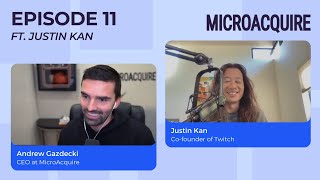
Justin Kan, Twitch co-founder, talks with Andrew Gazdecki about building startups, choosing between product and distribution, and what actually makes founders happy. He shares why he stepped back from Twitch and what he's learned about the difference between chasing growth and building something that matters.
Foreign.
With me, I have Justin Khan, who I don't think needs any introduction. And candidly, I'm a huge fan of the content Justin's been putting out. So I'm really excited for this one. So, Justin, thanks so much for making the time. I appreciate it.
Yeah, Andrew, thanks for having me. I'm excited.
Let's jam. Yeah, let's jam. Dig into the first topic. So you put out this tweet, distribution versus product, and it kind of went viral. And I've been following you and I've heard kind of how you view that now. Do you want to just give like a two quick minute kind of view on like, what's more important, like distribution? Product? Both. Neither.
Well, I think.
I think I know it's on either.
You know, early when I was an entrepreneur, I was like, you know, working on my product Justin TV days and then Twitch, and we thought it was all about, like, creating the best product. And. And then I went through a phase where I was like, well, actually I saw these companies that didn't have the best product that were like, working really well because they had amazing distribution. And I was like, you know, I actually think distribution is more important than product. And then I now I've come back and I was like, no, I was wrong. Having the best product is the most important thing. If you don't have a product that people really like, love and care about, then your company sucks and it's like going to be roll, rolling a boulder uphill. So I've come full circle and recanted my previous belief that distribution was more.
Important than product, I would say. Would you agree with, like. I mean, they're both. They're kind of interchangeable. And one thing about product is if you build a product good enough, it can almost work as, like, your distribution, like, strategy in a way. So they're kind of like interconnected in, like, a weird way.
Yeah, they're interconnected.
Right.
If you build a product that's really good enough and it solves a need, and good enough isn't just like you think it's good enough, but it actually solves a need that like somebody. That's a burning need for someone, then like, the people who are trying to figure out how to solve that problem for themselves will, like, find your product. They'll like, go through incredible lengths to buy it, you know, or use it. And so, you know, I think that's something that people forget, obviously, like, if you want to grow faster distribution, you know, figuring out means of distribution can be very, very Important. But I think having that product that solves that burning need is really kind of the most important thing. Now, that's not to be said, like, there's plenty of businesses that sell a shitty product and, like, have pretty good distribution and then they, like, survive. They exist. But, like, if you want to be a really great business that, like, is easy to run for you, then I think having a great product is, like, the best way to go.
Yeah, I see a lot of great businesses. Definitely not at the scale that you built with like, twitch, but like one to $2 million business distribution, mostly on, like, SEO, on, like, the lower end. I see that quite a bit. And that's where I kind of lean sometimes towards like. Yeah, like, you know, your customer acquisition cost is low, you're focused on distribution, and you're typically selling like a monetized product. But I think. Would you agree with this? Like, if you want to build an iconic company that changes the market, product is by far the most important piece.
I mean, 100%, like, you can't think of a single company that's like a big company that sells a piece of shit product.
Salesforce.
Iconic, right?
No, I think that Salesforce, I think.
That, like, when Salesforce was created, like, Salesforce now is probably not as good, but when Salesforce started, their product was the only one that was online. You know, they like, invented that category.
Yeah.
Drafting off. And then, then there's the app store component. Right. Which I think is like, cool. Great product innovation. Now you can say the implementation could be better, which is probably true of, like, almost any product. But, you know, those two things I think really carried Salesforce in a. In a huge way that were substantial innovations at the time.
Yeah, I mean, they're the first to say, like, hey, you don't have to install this, like, on prem. You, like, put this in the cloud. Log into like a web interface. So shout out to Mark Benioff if this gets to him for creating SaaS. And then, I mean, arguably, like you just said, and this kind of ties to the distribution versus product is they have like a very, you know, active ecosystem with their app store, and that's a product and that has massive distribution. They've literally companies building companies on top of their companies, which creates, like this huge moat. So I agree with you. Anything else you wanted to add on that? Cause I want to talk. I want to shift over towards the second topic I was telling you about.
Sure, let's go.
So I've been following your journey, and before we started recording, I just Wanted to thank you for the video you put out about Atrium and some of the key mistakes that you made. And when I first raised a seed round for my business, I followed your advice. I shared it with my whole team. Sorry. I swear, a lot.
It's.
It's about having. I did. And I said, hey, guys and gals, we need to get narrow on the customer and we need to establish our culture. And so we did an off site, and that has been instrumental. And I think it brings clarity into every decision you make within the business. So I just want to thank you for that. But as I continue to follow your journey, maybe I'm wrong, maybe I'm right, but I feel like you're just so happy now. Every video you put out, like, you're laughing. And I think that's really. You know, a lot of founders have a goal of hitting this big number, you know, getting a bunch of zeros. But I don't know, man. Like, I kind of feel like you're winning the game. Like, you're living the life that you want to live. I'm sure you wake up doing whatever you want. I want to talk about this later, but you're building a media company. How do you think about that? Like, how has your life changed since, you know, you've left Atrium? You killed it on Twitch. Any advice to founders? You know, when you think about happiness, like, how important is it? Because I've always had a view that the founders that go the distance are the ones that truly love what they're doing, and you seem to have figured that out, and I'm happy for you. And I'm just wondering if you have any tips for other founders on how they can get there.
Yeah, I think. I think that's true. I think the people who go the distance, I think anyone could create a $1 billion company. But if you want to create, like all my friends who created 10 billion hundred billion dollar companies, they figure out how to love what they do. Like, they do the thing that they really love. And it's true of anyone who gets to the top of any game, you know, like, people I know are the most famous musicians or athletes, you know, whatever. They love what they do. You know, you can get to the, like, top 10%, just grinding and, like, trying to, like, you know, do what it takes. But I think if you really want to be in the top 1% or 0.1%, you have to really love it. You know, for myself, I am. I'm pretty happy now, actually. I'm the happiest I've ever been in my life. And the funny thing is that from the outside, you know, I don't. It probably doesn't look that different. Like before I was very unhappy and I was like, starting startups and investing and now I'm like quite happy and I'm mostly spending my days starting startups and investing. And so people, a lot of people on the outside are probably like, oh, well, he's just. That guy's just doing the same shit that he was doing, you know, before. But I think the difference is I spent some time thinking, what would I like to, you know, after Atrium, I was like. Well, with. The story with Atrium is like, basically I started Twitch and then I started this company, Atrium, and like, it was, you know, raised a lot of money, $75 million. And I was like, just really want to have a really big company and I thought it was a really good idea to create a multi billion dollar unicorn company, whatever. And it didn't work. So we returned the capital after a couple years. It didn't really work and then we shut down. So then I took some time and I was like, what do I actually like to do? Because at Atrium, I was kind of working on this thing that I didn't really like very much. And I didn't like doing the things that was needed to make this thing happen. Right. Like, I didn't really want to work on a product, you know, which was important because like we discussed having a great product is kind of the most important thing. And it's really hard to outsource product when you're the founder of the company, right? And so I thought about, like, what would I do if I didn't get paid for it and I made no money from it and nobody looked at it or watched it or even knew about it and thought about the things that I liked doing that gave me energy and started figuring out how to do only those things or as much as possible. So it turns out the things I like doing are like, you know, I love to learn about new businesses and I love to mentor people and I love to talk about new ideas. And so investing was really like that for me. And like, even while I was working on Atrium, I like always advised other people's companies and, you know, help them out from my own experience. And that was like something I was doing at the time. Like, I mostly wound stopped investing because I was like, I should focus on this thing. But I kept advising these companies. And so it was like, you know, I was kind of like, I was Doing it for free already. And then there's this period of time where I, you know, there's another set of things I love to, like, tell stories and, like, you know, kind of be creative. And so for me, that was like, creating content and, you know, making these YouTube videos and podcasts or whatever. It's like something I would love to do. And I started doing them with, like, no expectation of, like, oh, I'm going to get a certain number of views or have some number of subscribers or whatever. It's just like putting these out videos. It was enjoyable to me, and I thought, you know, maybe they'd be useful, maybe not.
Whatever, they're useful. So, like, thank you for just, I mean, like, just the candidness in terms of, like, I think, you know, in the startup community, you don't really hear, like, candid, like, openness on, like, how a startup failed. And I think that video you put out help more founders than you realize. Like, so, like, I hope we see more of that, of just because, you know, as, you know, as an investor, most startups don't work out, but you don't really hear, like, the lessons that could be taught to so many other entrepreneurs. And I took yours. You can ask my whole team. They're like, yeah, I told them I was talking with you today. They're like, oh, no way. That guy helped us narrow down our customer culture. A lot of founders, you know, they build these, you know, lives where they kind of create a job that they hate and, you know, and that sucks. And it's so easily avoidable if they just kind of like, also write down, like, what do you want out of this startup? So that's another thing. Anything else? Any tips you'd give on founders?
Like, you know, I think that, you know, job that you hate, ideas, like, very common. I mean, people don't think about it, but, like, I have so many friends who are CEOs of companies. They hate their jobs, right? They founded the company, they could do anything. They could make the company anything they wanted to, but they feel very trapped. I think that's because a lot of people end up in what's called their zone of competence. They end up doing the things that they're really good at, but take energy away from them. And they're like, they feel like they have to do it because that's their obligation. They promise their investors, their employees are counting on them, whatever, and so they end up doing all these things that they're like, are needed for the business, but they don't love to do. And consequently they burn out and they feel. But they can't take a break and they feel trapped. And so I think, I mean, to me, the remedy for that is to like, focus on your zone of genius. You know, what are the things that you would do that give you energy that you're good at, you know, and just stay in your zone of genius and partner with other people to do all the things that are not in your zone of competence. And one, one strategy is to. Is what's called a calendar audit. So, you know, print out your calendar and everything that took away energy, circle in red, everything that gave you energy, circle in green. And you know, this is like retroactive, right? So for the last couple weeks and then everything that's red, figure out how to change it so that it's not red anymore or make someone else do it. Repeat that a couple of times and you'll be Gucci.
I love that. Yeah, Gucci. My team actually calls me Gucci Gas. I don't know why. We did this like investor update where we had like team and my creative director slipped in. My name is Gucci Gaz and I send it out to all my investors. And then one of my lead investors was like, thanks, Gucci Gas. I'm like, wait, what?
Like Gucci Gas?
No, that's not my name. I don't want.
That's a great nickname. The key to a nickname is that like your creative director has it. Right? Right. Like the key to giving someone a nickname is to just repeat it over and over and over until the person that the subject accepts this slightly humiliating, possibly degrading name as their name. You know, like it's a battle of wills. Like, are you the recipient, going to accept it? Like, continue rejecting it past, like my effort, my willpower as the imbuer of the nickname to like continue saying it.
Do you have a nickname?
Because I'm like Teflon. Nicknames don't stick to me. That shit just slides up.
Oh, there you go.
People can't stick. People can't stick nicknames to me because I have that ultimate willpower for defense.
So the funny story about a Gucci Gas thing was I do this thing every month where, you know, we do high level overview of like business performance, how it did. And I record it live, just first try, I ain't got time. And usually I like to do things kind of naturally off the cuff. If I have to do it three times, like, I'll just stop. Cause I'm like, okay, it's gonna. We're going to get to like, take 10. I suck. But I get to the team slide and it says Gucci Gas. And even on the. If you watch recording, I'm like, gucci Gas.
My creator kind of like it. I kind of like it.
No, my nickname is Gaz. All my friends just naturally, by default call me Gas. Only my wife and my mom call me Andrew. And it's gotten to the point where I've had people that like, I don't know and they're just like, Gaz. I assume it's because they don't know how to pronounce my last name, which is Gazdecky. So they just go, gaz. Gucci.
Gaz.
No, don't make that stick, dude, please mean it's.
It's gonna be part of this podcast forever. Like, I feel like that's, you know, you're on. Well on your way to. Like, that's a great.
Well, let's see. Okay, so that's, I mean, amazing tips on the calendar. I did that recently myself because, you know, when a startup starts taking off, you get a lot of emails like, I wanna talk about this. I wanna pick your brain on this. Will you join this podcast? Will you X, Y, Z. And I kind of fell into a little bit of a trap where. Not a trap, but again, I feel like with. It's like a video game to me. So I'm like, anyone that's interested? I'm like, thank you so much. I appreciate you for sure. That's getting the call in the chat and I noticed those were just kind of burning me out. So actually, two nights ago, I probably canceled maybe like 12 meetings next week. Um. Cause it was like you said, it literally was. I worked with a CEO coach too, and I talked to him. I was like, dude, I'm like on meetings all day and like, I want to spend time with my team. I want to like spend time on the product. I, you know, I'm taking away from that. And he said, you got to go on a meeting diet. So I'm on a meeting diet, but moving over towards what you're doing today. So you've been blowing up on YouTube like you built.
I subscribe about that. I have 150,000 subscribers. But that's, you know, there's. That's not very much on YouTube. My audience is very niche.
It's aspirational.
Startup founders and startup founders.
I'm going to say it's going to get to a million in six months.
Like, the content, I know the stats and it's definitely not on a trajectory to get there, but I hope you're right. Yeah. Calling it out right now.
Oh, oh, I got another nickname and this is a true story. My friends call me Gas Luck. Like through college, like through moments at work, there's just been situations where like stuff happens and like gas Luck. So maybe that predicts as good as Gucci.
I think Gucci is much better.
I'm trying to get, I'm trying to get you away from the Gucci Gas.
Can't divert it. It's like, you know, once I. One thing that makes me a good founder is that when I fixate on something just never gets out of my mind. I'm very hyper focused once I fixate on something, something. So, you know, in this case it, unfortunately for you, it happens to be this nickname.
Okay. So if I ever reach out to you, I'll be like, hey, Justin, it's Gucci Gaz. How you been?
Yeah, remember, I'll be like, oh, yeah, let's, you know, let's, let's talk. If you're like, hey, it's Andrew Gazlacky. Sorry, guys. Decky.
Oh, it's been, it's been, it's been butchered my whole life. Don't go back.
Who, who are, who are you?
It's Gucci Gaz. And you're like, oh, yeah, okay. But so I loved your, your thoughts and opinions on this, but I think, you know, with how many startups are being created today and you know, really with just when I think about marketing, I really think about it in terms of earning your customers attention. And the best way to do that is through media and content and starting to kind of think like a media company. Do you think that's a good strategy for startups or not a good strategy? Rip it apart. Gucci Gas go home.
Well, you mean like to create their own media? I think it's really important for startups, but I think they should only do it if it's like true to them. You know, I think, you know, in the extreme case, if you look at like Elon Musk, who basically is like, you know, direct channel to the his customer and investor base through Twitter, like that's been huge in terms of getting Tesla both basically being Tesla's marketing and like getting people to like buy into their dream and also buy the product, but then also to like invest in the stock and like to keep his stock price high, which is give him resources. And so, you know, I think that's like extreme case, but like, he obviously probably would do it if there was no benefit. Because he just likes having this direct channel to like people out there in the world. Right. So like it's natural to him. And I think people should, you know, if you love creating content and it's your audience's, CEOs and founders and you know, bootstrappers and you know, you love that you can make the content that's obviously really great for your business. But if you didn't love to create the content, then you'd just be creating a job that you hate. Right?
Yeah. Now we're going back.
Now make sure it's in your zone of genius, you know, or in the zone of genius of someone in your company. So I mean, I think it's more important than ever, like, you know, to have a direct channel to your customers and all your stakeholders. Right. Customers, investors, potential employees, existing employees, et cetera, as a founder, but only do it if that's in your zone to do genius.
Yeah, I would agree with that. Elon Musk is, he's something else. Yeah, he's like a one person marketing machine through Twitter. He can literally move the price of bitcoin with like one tweet. And that is fascinating to me. So what excites you most in startups today? So you see a lot of different startups. I was watching a video that you made talking about pitch decks that you receive. You receive a bunch of, you know, on a daily basis. What gets you excited right now? Like what areas of tech data? I don't know, like, is there a certain sector that like you're really, really excited about or bullish on crypto?
You know, like, I feel like there's a lot of opportunity in creating these like new apps, centralized apps that are going to change the economics of how the existing Internet infrastructure works. You know, I think that you've kind of created this dynamic where all these people are like that I knew, you know, 15, 10 years ago, like started the right place at the right time and like now created this marketplace or whatever where they're basically able to rent, seek an entire market for like, I don't know, forever because they're, you know, they were kind of built this thing at the right place at the right time. And like the people who make the market, users both on the, you know, buyer and seller side of whatever marketplace it is, don't really accrue any of the long term benefit or. And they don't also, don't they kind of like live at the mercy of these like app, you know, these Big companies, and I'm not really sure that's how we want the world to work. You know, ultimately that wasn't really the promise of the Internet in the kind of Web 1.0 version. And so what I'm really excited about with Web 3 is this idea that, you know, you could create a new economic dynamic for applications and incentivize and reward the people who make the application work.
Yeah, I would. I would completely agree. And I think one thing that we were always focused on at Altcoin, we went pretty deep. Like, we had Fabian Vogelsteller on our advisory board. He made the ERC20 protocol. So he's a dude that spawned all the ICOs. And a lot of good ones, a lot of bad ones connected with Vitalik a few times. So I was deep in there. And one challenge that we always faced was just user experience. We're just, you know, you need to get MetaMask, you need to install XYZ. Like, there's so much like, this is how I kind of think of crypto now. And where I see the most opportunity is just building the infrastructure. You know, like, who's going to be like, this might be a dumb statement, but who's going to be like, the AWS for, you know, crypto projects? Or who's going to be like, the stripe, like the infrastructure so people can quickly build solutions where you basically kind of get to a point where you're using a blockchain application, but you have no idea it's powered by blockchain. Does that make sense?
Yeah, for sure. And I think that's starting to happen. But, you know, kind of right in the middle of that phase of development. And then once that happens, we'll unleash this, you know, huge Cambrian explosion of, you know, actual applications that people use. I mean, there's applications like Audius, for example, it's a project I'm an advisor to that these guys created a decentralized SoundCloud. And if you go to Audius Co, which is like their kind of reference client, you know, you can see it. Like, you don't have to know that it's a decentralized application, right? Like, you can go and, like, play music. It's kind of like a normal app that's like. That's really interesting.
That's the pinnacle is when you don't know it's powered by blockchain, but you're getting all the benefits of blockchain. That's awesome. What does your life look like now on, like a monthly basis? Like, okay.
It changes every day. Every day is different. You know, working on incubating some companies. I have this fund, Goat Capital, so we invest out of this fund, like in seed stage and a few Series A's, and then we incubate companies as well. So working on some different types of companies and, you know, make content on YouTube and make my podcast the Quest. And then we, you know, spend time with my family. It's like, hey, we travel a lot. Just try to mix it up, you know, keep the brain from going too static.
So where's the coolest place you've been in the past year? I'm gonna give you a long time horizon because travel's been hard.
Oh, I went to a lot of great places. I was in Sardinia and in the Amalfi coast, which is really nice. And then south of France and Croatia. Kind of spent a couple months in or, like, a month in Europe, which is great.
I love. I love Croatia. My. That brings back to all coin. The team is based in Bosnia, so when I took a trip out to Bosnia, I had to stop in Croatia, Dubronik, and Split. Most of the time in Split. Beautiful town.
Yeah, for sure.
What else I got for you? I don't know, man. I think this is just such a refreshing conversation, and I'm just so happy for you, and just, like, I want to let you know, just, like, the amount of entrepreneurs that you're influencing, like, maybe, you know, you don't understand it, but, like, I get your videos from friends. I share your videos with my friends. I share your videos with my team. So just. Dude, thank you for just, like, helping entrepreneurs and just, you know, normalizing, like, mistakes and, like, helping others and just showing, like, you know, there's a way to, like, you know, be happy when, you know, you kind of figure out what you really want to do.
Thank you. I appreciate you. Smash that, like, button and subscribe. You know what to do.
But, Justin, this has been a ton of fun. Usually this with. Oh, I do want to ask you two more questions.
Okay, let's go.
Who is. These are easy ones, these softballs. Who's your favorite entrepreneur? Who's someone like, you look up to? And you're like, that's.
Yeah, My favorite entrepreneur is Elon Musk. I don't want to be him because I feel like I don't think I could, first of all. So, like, let's not make any mistake. But I wouldn't want to, because, I mean, I just feel like he puts 110% of everything and not just like, the fake hundred to 10%, but, like, maybe just the real hundred percent.
Like, literally, he has some, like, video quotes where he's on, like, an interview, and they're like, do you think it's a good idea to start a company? He's like, no. They're like, why? He's like, it's not healthy. Like, what do you mean? He's like, my brain hurts, like, bad.
Exactly, Exactly. I don't want to be him, but I admire him.
Oh, I got a funny story I'll share with you. So if you Google buzzfeed, couch, Elon Musk. For some reason, there's an interview with Elon Musk. This was, like, three years ago. I'm hoping this might make you up, but someone made a GoFundMe page to buy Elon Musk a better couch. Because he's like, this is where I sleep sometimes in the office. And everyone's like, we can't have the guy, you know, trying to get us to mar Sleeping on that. Like, let's donate. So I donated money to help him buy a better couch, and BuzzFeed, you know, called me for a comment on the article. And I was getting off a plane in Mexico. So I'm in customs, and I'm on the cell phone, like, talking to this reporter saying stuff like, he's a billionaire. Like, yeah, he needs, like, a better. He's trying to put people on Mars. Like, of course he needs a better couch. And people are looking at me like, what is this kid talking about right now? I'm like, he's building rockets. Like, we need to get to a better. It was, like, a joke thing, but he did get a better couch.
Amazing. Well, you've done your part in getting humanity to Mars.
I'm a huge Elon Musk fan. His story from, like, the intervention he had where they're like, car company, rocket company. Like, are you serious? And he's like, yep. And he just kept on going. You ever hear that story with, like, the PayPal mafia? They all kind of sat him down and was like, you're gonna go bankrupt. And he kept going.
Oh, well. Yeah. He's like, he's a true believer. I love that. Really puts his money where his mouth is. Okay, what was your other question?
Favorite book?
Oh, it's a book called Shogun by James Clavell. It's a historical fiction based on roughly true events about this English sailor who gets marooned in Japan in feudal Japan in 1600, and he kind of gets wrapped up in this political intrigue. Between, like, Feudal Lords of Japan, Some incredible book. And there's a lot of life lessons in there if you look closely enough.
Nice. I'll check it out. Well, Justin, I don't think you need any sort of, like, where to find you, but YouTube channel, Twitter. I'll put all that in the link. Again, thanks for all that you do, man. I mean, you're inspiring entrepreneurs on a daily basis, and I personally appreciate it. Thanks for making the time, man. I really appreciate it.
Of course. Gucci. Gaz. I'll see you later.
No. All right, that's gonna stick. All right, See you, bud.
Later.
More from Andrew



The Buyers Who Made the Move: What They Bought, How They Did It, and What Happened Next






