Marketing Hacks Agency Sold For Six Figures with Ken Savage, Founder of Product Launch Pro
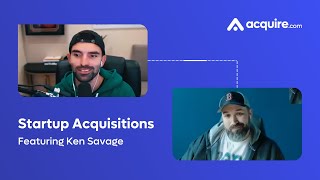
This is a YouTube video titled "Marketing Hacks Agency Sold For Six Figures with Ken Savage, Founder of Product Launch Pro" recorded in January 2024. It features a conversational interview between Andrew Gazdecki and Ken Savage, discussing Ken's journey from building websites and sales experience to founding and growing Product Launch Pro, a marketing agency that was successfully sold for six figures. They cover topics including sales strategies, client acquisition, the acquisition process, and Ken's new SaaS venture, Launch Club, aimed at community-driven growth marketing.
Foreign.
I'm here with Ken, the founder of Product Launch Pro, which recently got acquired for six figures. Ken, how you doing today?
Very good, Andrew. Thanks for having me.
Yeah, so for those that mean I know you do want to give just a brief background of yourself.
Yeah, started long time ago, 80s, just hacking on computers and, and you know, interested in what things are and how they work. Way back then 1990 came along and the Internet and all that stuff. So I basically just started building websites. Ugly, horrible websites. I bought my own domain, Kensavage.com a long time ago. It's been like 30 years now that since I've had it, so. Which is kind of cool.
You've been in the game so you could have got some good domains, man. You could have got like cars.
I could tell you some stories like.
We don't need to go into it, but did you ever use like GeoCities.
To build websites about that time? GeoCities, Yahoo, Excite, AltaVista, they all had the, you know, they were search engines but they all, they all had these build your own site kind of things. And that's how I learned and I, I bought a HTML for Dummies book and literally went page by page and just typed out all the code and learned how to code HTML site back then.
Did you?
Shortly after that I started getting jobs.
That's how I started, man. On, on dreaming where I used to, or excuse me, geocities. I'd make websites for the bands that my school. Did you ever use Dreamweaver? I don't know, that's like an old weaver.
Yes. Before that it was home site. I think it was called a layer home site. It's a text editor basically and you could save your own snippets. Dreamweaver was more drag and drop and then it was Microsoft front page. Yeah, I started doing that and I literally started knocking on doors at businesses in these industrial parks and commercial parks. Hey, you don't have a website, I can make you one. And I would get invited in probably like three quarters of the time to come on in, let's talk, let's, you know, tell us about this Internet thing. And it worked. I mean it was like door to door sales, literally. But I would just go up and down these elevators and, and knock on these people's door and say, you don't have a website, I can build you one. And they were like, yeah, I heard about the Internet, sure, come on in. That's how I started. I probably did a hundred websites within a year. And then after that I didn't have to knock on door to door anymore. So that's how I get started.
Well, you learn, you learn sales, you learn, you know, technical abilities and, and, and here you are now.
You know what you learn face to face, how to talk to someone. You know, before the first couple I had my looking around and, and you know, you, you talk to someone, you listen to what they say, you respond to them and then you say hey, by the way, there's this thing called the Internet. You don't have a website, I can build you one. Did you, is that something interesting to you cut your mouth, listen to what they say and then respond from there. So yeah, sales and you know, just having a personality is very important.
Yeah, I, I would go as far as saying sales is like 90% of an entrepreneur's job because you're always sell your recruiting. We, we get. That's a whole subtopic. But sounds like me and you kind of, you know, started in the same way building website sales a little bit before me. But that's, that's awesome. But let's, let's talk about Product Launch Pro. What, what made you decide or first of all what does it do? And, and then let's move into, you know, I decided to build it.
Yeah, funny story. I was working as like a marketing director, VP of marketing for a bunch of startups in the Boston area because I had that background in building sites. And then once I got to the point where I started building my own sites, how do I get people to them SEO and basically just stuffing keywords in the background of sites, you know, early, early on. And then pay per click or paid marketing, social media, email advertising, all that kind of stuff. So I got jobs doing that, but I said, you know, to do the, you know, paid ads and webinars and all that stuff for B2B SaaS, companies that I had a job doing. There's got to be something else out there that I can, you know, explode the needle and, and make a ton of site much traffic come into the site that I'm working for. So I just went and found communities and you know, in the cyber security industry, it's all hackers or online security people you can get put something in front of them that's interesting at least you get them to your site, then make it cool, make it interesting. Don't have a webinar, don't do a white paper. That stuff is just played out even way back then. Never mind now. I just wanted something creative at the time. So Watch a hack in progress was the kind of video stuff that I would do. And if you want, you know, and then I cut it off after about 30 seconds. And then if you want to see the rest, you know, give us your email address kind of thing, and we'll show you the rest of it. Salespeople would follow up with a solution. So as creative as possible. That's how I got started about five years ago. Now I already own the Domain Product Launch Pro. And I said, I got to do something with this. I built a basic site how I can help other companies launch their product, even if it's already out there, relaunch it kind of thing. And I started getting a lot of inquiries, friends of friends, referrals kind of thing. And it just got to the point where it was like, you know, I got leave my job. My job is literally holding me back from making better money or a lot easier money helping these companies, trying to do both at the same time. But commuting on a train and taking a phone call from a customer at the same time is kind of tough. So I just took the leap about five years ago now and, you know, went out on my own as an agency, and it's been great ever since. A third of the time I put into it, and maybe three 3x 3 1/2x the amount of money I'm making as a, you know, a solopreneur. So that's.
That's awesome, man. How'd you get your first customers? It's always good.
Yeah, the first five, I think, like, the first seven or eight was friends. Reached out on LinkedIn and just said, hey, Thomas. Hey, Kyle. Hey, Dimitri. I, you know, started this thing and remember how I'd helped our company that I was working with for them at the time? Remember I did that thing, I'm doing that thing for other companies now. And they were like, oh, cool. You know, what are your ideas? Give me a call, or let's have a conference call, or let's. Let's do a zoom call and come up with some ideas. I did. I completely underbid way back then because I didn't know the worth of this to companies. But I said, like, $1,000, I'll launch your product, you know, for the next 30 days, get you a ton of traffic. It works, you know, almost every time for those initial dozen or so people that I reached out to, and they said, all right, how do we do this the next month and the month after that kind of thing? And I said, well, give me, you know, Fifteen hundred dollars a month and I'll do this consistently. We started to have those monthly or every two week conversations and I would just come up with ideas, lead magnets, live video, AMAs, product hunt launches, Reddit posts, you know, answer Quora questions, all kinds of stuff. And it worked very well for them. On top of the SEO, the pay per click and everything else they're already doing, it was a growth hack essentially. So I got 12 clients total out of that about the first six months, and I think all but a couple of them lasted about nine months. So worked out for me.
Nice. So it sounds like basically you just build up a platform that just really helps other startups just get off the ground. Is that correct?
Yeah, it's, you know, the person in that basement who comes up with a piece of software, an app or something. I can help enterprise companies, same thing. These are growth hacks that I help them with so I can launch them in places that they probably didn't know of or didn't think of. And, you know, the whole secret with the whole thing is I built a team of hundreds of gig economy workers that can help me promote their stuff. And that team of hundreds is now thousands. And I utilize that team, you know, more tweets, more likes, more shares, more upvotes, that kind of thing. It's become very scientific. I guess rather than a hope marketing, it's more calculated marketing on what I can do to boost their stuff on these platforms.
Nice. I think that's so needed because I, I come across so many startups with, you know, little revenue, struggling to find customers. So I, I can see why you were able to get this, you know, acquired. And that's now what I want to, I want to learn more about is with the business doing so good, I'm looking at your numbers, but I won't share them. What, what made you want to sell the business? It seemed like it was doing great. You obviously sold it for a great amount. What was the thought process behind looking.
To get AC last winter, January 2023, I think it was. I got to the point where I was like, I want to take a break. I don't want to be lazy, but I want to take a couple of weeks off and go travel. My, my son's 21. You know, we want to go fishing down the Keys in Florida and we want to see the Southwest, we want to see this Grand Canyon thing. I can't do that. I mean, I could have brought my laptop with me, but I wanted to be focused. And you Know, maybe this is one of the last, you know, father son kind of things. And we did that. And then it ended up three weeks of just hopping around and doing things. And I said, you know, when I got back, I started having calls again and it was a, you know, a couple hours a day, every day kind of thing. And I just said, you know what, I don't want to do client work anymore. I'd rather build a SaaS or build an app and then just do what I do best is just get traffic, you know, lead generation, get traffic in the funnel kind of thing and start over. So I sold it in January.
That's, that's beautiful. I love how you, you sold the business to, you know, get your freedom back essentially. Plus, plus you got paid. How did it feel when the, the final w. Your bank account?
Yeah, it was all at once. So, you know, you get a, you go back and forth for a couple of months, maybe two months, total due diligence. And, and you know, really, they wanted to really know the day to day kind of stuff. And I said, listen, I'm here, I'll be here for months. I think it'll take you a couple of weeks, but I'll be here for months to help you. And I was, if there's any questions, I'll hold your hand through a lot of these calls. The first maybe 10 calls, I was on the zoom with them at the same time. So they would talk to the clients, sell the, the process and you know, the actual product and off of those services. And I was hand in hand with him. But it got to the point where it was like, you know, I need to sell. I got the notification, you know, it's, it's in your bank account essentially to the online banking thing. Looked up and there's 200 something thousand dollars there. And I was like, what'd you do?
Do you celebrate or anything like that?
Nothing crazy? Yeah, nothing crazy. But I did take a week off or so and just got my jeep and went out into the mountains and just snowboarded a coup, hiked a couple days and just like, like decompressed kind of thing. And I could really feel the weight off my shoulder when people say, like, it literally feels like a weight on your shoulder. I felt that and it was gone. And then when I came home, you know, I was just drawing on the, on the whiteboard and what's going to be next? And I came up with a couple of ideas, this being one of them, and love it.
You know, I, I, I remember that feeling too. With my first business, when the deal finally closed, I was, I was kind of scared for the first day because I was like, holy, what happened? But then you kind of get this, like, you're like, oh, this is awesome. Like, you. It's like you finish the race in a sense, you know, you can stop running so hard. So that's awesome. Tell me about, you know. Okay, so you go, you go live on acquire.com. what was like the first two weeks like, were you just bombarded with buyers? How did that initial process go?
Yeah, Tire Kickers is, is what I really call them. People that want to talk and, you know, sign an NDA and, and talk and, and company hear about how this has made you money, and then it's just, you know, getting into their head and, and they're thinking, how is this going to work for me? Or how. How am I going to do it? So a lot of tire kickers, a lot of people are just. Are interested, especially when it first hits and then after a couple of weeks, they slow down the volume. But the quality of those people, the ones, the, the marketing agencies, the lead gen experts, they started coming out of the woodwork and having those conversations. I then realized after that week, first week or so, there's a lot of common questions that are coming up, frequently asked questions that are coming up. I should put that in the product description or I should at least do, you know, give them some files or something else that would answer these questions more efficiently rather than having the same conversations over and over. It was probably about 30 people that I talked to, and it narrowed down to three total. And of those three, one was just like, you know, what does it take for me to, you know, buy this? And I said, pay. The number, you know, the number I've got on there is what I want. Everyone else wanted to, you know, get their handheld and, you know, stick by me for six months and I'll give you a 25 up front and 10 every month and product, you know, revenue share and all kinds of stuff. I wasn't interested in that. I might as well just keep the business if I'm gonna stick around for six or nine more months. This guy said 50 up front and 10 every month after that with very little work on my hand, my part. So I said, okay, let's do it. It was done. It was closed. One, probably a week and a half.
That, yeah, number one. I love how you, you stuck to your guns. In terms of negotiation, the person who wins a negotiation is the person who cares the least so if you have a certain price point, hold firm on that price. And then in terms of tire kickers given we have so many buyers on acquired.com we have over 350,000 at this point. Some tips to weed them out is just asking them like simple questions, just basically what interests you about this business or what is your acquisition experience? And before you even give them access to your private data room, if they can't answer like two basic questions and you're skeptical about them, then just reject them. And then that helps you narrow in on the more serious buyers, which it sounds like, like you definitely did. Well. I'm glad the acquisition went well. It sounds like you just handled it like a pro. You, you know, focus on the series buyers. You maximize acquisition by really holding firm in the negotiations. If you businesses, what would be like the top three pieces of advice if.
You had me Give as much data, even if you think it's not worth their time or yours. Give as much data into the company as possible would be one. Another one I absolutely will do for the next company that I sell. A day to day, day in the life kind of thing every day when I get out this, these are the things that I do every day. They need to know that. So are they buying a job or are they buying a business? That's one of the biggest things. The people that were really serious, that's what they wanted to, to, to figure out. So what's your day to day look like? Like those two things are the most important. And then draw our line of sand. You know, how much do I want to sell this for? Millions, of course. But what is it really worth and what am I willing to, you know, what's the minimum? I'm willing to let it go. And if those people want to, you know, toe that line or come on underneath that line. Thanks for. No thanks. Like, you know, this is my number and if you can meet that, we've got a deal. Otherwise I got to move on to the next person. So thanks and you know, click or whatever. I stuck to that. Sure. And it paid off. Where I could have gotten into a messy deal and profit sharing and been around for six or nine more months, I didn't, I knew I didn't want that so I stuck firm with not accepting those kind of deals.
So Nice. That's, that's great advice specifically around having as much information as possible for buyers because your job is to close that information gap. Because when buyers first look at your business, especially without speaking to you, and they need to speak to you, you to actually want to acquire the business. So the more information you provide up front, it just makes that initial phone call so much better. And I really liked your second piece of advice, which is the more you can remove yourself from the day to day operations of the business, whether that's by hiring someone for support or there's a number of things you do as a founder, but the more you can reduce your role, that really increases your valuation because the first thing a buyer thinks is, you know, I'm gonna have to buy this business, then figure out how to replace you. Ken, like everything that you're doing and then, or at a bare minimum, I love your feedback of just write out what you do. So the new owner has an idea of like what I need to replace. But the more you can chip away at reducing your dependency within the business before going the market, the higher. So it sounds like you did a. You did a great job and I'm, I'm glad it all worked out. I guess my last question really is what, what are you building next? I think I got an IDE based on your background, but tell me about it.
Yeah, Launch Club. It's basically a product launch pro on steroids. So it's a, it's a SaaS. It's a way for people to come into a community and buy the exposure or get the exposure from an already existing team of people of hundreds of people. So if you're looking for blog posts or if you want to work with someone who's already an influence on YouTube kind of thing, you can come in and say, you know, can anyone make me a video? Or I've got a video out there, I'm looking for likes or shares or collaborate with somebody. So it's growth marketing in a community where we execute on things. We don't just chit chat and, and want to preneur everything. We boost clients or members on day one. So you come in and you get that kind of boost for your company. Whatever you're looking for, votes, likes, shares, comments, whatever it is. I built the SaaS and now it's a membership. It's a lot of things I learned from Product Launch Pro where, where I was the guy doing things, now the community is. And like you said, I removed myself from it. So when this gets to a point where I'm done growing it myself, I'll put it on acquire and it will be a community that somebody buys into and not buys what Ken knows, you know, like replace my brain with theirs kind of thing.
I love it. I. I love those stories where you, you, you build a business, you sell a business, you learn a lot, and then you build an even better business. So I'm rooting for you, Ken. Happy holidays. And I hope to, you know, see you back on this podcast with even bigger acquisition with your new business. And I'll be sure to put 20, 24.
Let's go.
Yeah, I'll be sure to put the link to Kenzoo business for anyone that's interested in the show notes. And, Ken, congrats on everything, and huge congrats on the acquisition. I'm read for you, man.
Thanks, buddy. Appreciate it.
All right, man. Take care.
More from Andrew



The Buyers Who Made the Move: What They Bought, How They Did It, and What Happened Next






