SaaS Acquisition Stories Podcast w/ Chris Achard, Founder of AcornChat
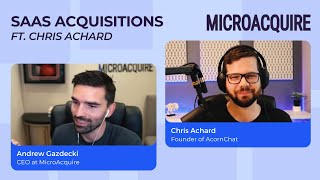
This is a YouTube video titled "SaaS Acquisition Stories Podcast w/ Chris Achard, Founder of AcornChat" containing an English podcast episode recorded in September 2022. The episode features a conversation between Shaan Puri and Chris Achard, discussing Chris's experience with micro acquiring his SaaS startup Meeting Place, the acquisition process, due diligence, asset transfer, and his new project AcornChat. The discussion also includes book and podcast recommendations for founders and insights into startup building and selling.
Foreign.
Today I am with Chris, who recently got micro acquired for five figures. Chris, how you doing today?
Doing pretty well. How are you?
I am doing fantastic. Well, hey, congrats on the. The acquisition to start. And for people that may not know you that are listening, do you want to just give a brief introduction of yourself?
Sure, yeah. So I've been a web developer for like 14 years, something like that. Um, I've been an independent consultant for a long part of that. And yeah, recently or so, just before COVID I started a startup called meeting place or SaaS. And yeah, that's the one that got sold earlier this year. So about two years later.
Nice. Right on, man. Uh, what did, what did Meeting Place do?
Um, so it was a meet. A meetup alternative. Um, and it was because I was running a meetup here in Indianapolis and This was when Meetup was owned by WeWork and they were going to do something very strange. They were going to try to charge free users $2 to RSVP to free events. Uh, they were calling it a pricing test. Uh, it was clearly a way to try to get more money out of users. And I was like, that's lame. So I started an alternative. Um, yeah, and launched it in about a couple weeks, under a month anyway. And yeah, got a bunch of users.
And I love that you saw another product that was successful and then you saw them doing something that might have made it less successful and then you put your own spin on.
That's.
That's genius. Right on, man. How long did it take you to build?
Did you say?
Six months?
Uh, six. Like six weeks? Yeah.
Six weeks.
Yeah. The initial version was out in under a month. Um, because I wanted to use it for my meetup. Right. So it was out really fast. Uh, and then, so that was end of 2019. And then I worked on it at the beginning of 2020 and then Covid hit and all meetups sort of stopped. And so that really took the wind out of my sales. But yeah, it was fully operational in probably a couple of. A couple of months really. But the first version, under a month. Yeah.
I love how you wrote it out though. And you waited until, you know, the world started to heal in a sense. I remember right when Covid hit, we had a lot of really large event app and they would connect their revenue metrics and it would, for those listening on my hand, showing like a little like line and is a big drop as if like the CEO was indicted for fraud. If it was a public company, it was rough for a lot of Event based companies. So glad to hear you weathered the storm. Tell me about your experience on microacquire. So first I'd love to know, how did you hear about it and what made you decide to list meeting place?
Yeah, so I've been in the sort of micro SaaS space for a while. Like I've had other small projects and I heard about, and I knew about some of the, like the larger like firms that do, you know, brokerage firms and things like that. But this project was always sort of a side project. Like I, throughout most of the time I was consulting, I actually wasn't doing this full time and so it didn't really make sense to sell on one of the big like through one of the big firms. So I think I heard about you through microconf. But like her people there. And yeah, I also, I do a podcast with someone else who does like SaaS kind of stuff and he was like, you should just try to list it because at the time I kind of run out of steam on it. Um, it's really, I was trying to do it as a solo dev, but it's the type of business that I think makes more sense to like build a team for or raise money for. Cuz it was a freemium app and so there was like there were a lot of free groups and to really get the word out, I would've had to spend a lot more time doing things that I just didn't have time to do. Um, anyway, so he said you should just try to listen on micro acquire. Uh, and so I did, um, I tell the story. Like your onboarding is really great because I was just like filling out, you know, my profile and I was like, we'll see where this goes. And then I was like, do you want to list it? And I said sure. And then I started getting inbound requests the next day. So plus one for your, your onboarding. Yeah.
Nice. Yeah, that's fantastic to hear and shout out to Micro Comp as well. I'm a big fan of that, that conference, but never, never been. I guess my second question would be in terms of, you know, you know, buyers start reaching out, how did you find the right buyer? How did you know he or she was a good match? And how did you kind of weed out maybe some of the ones that may have been tire kickers or you knew might be wasting your time?
Yeah, so I tried to. Anyone who responded, I tried to engage like they were fully invested. But yeah, I did find a lot of them, like they would reach out Once I'd give them some information and I just wouldn't hear back, which is okay, I guess. Right? You know, if you're. If you're reaching out to a bunch of people. But I did get two. So I got maybe 15 requests in like under a week. And then I got two really serious people. Talk to them on. On Zoom. And they. So I got offers from both of them. And one of them was more like, he was a developer like me. He wanted to pay all cash. He was, like, excited about the product. Um, and then the other one was a little. It seemed like he was building a portfolio of things. He wanted some more, like, ongoing support for me. I mean, like I mentioned. So I just started a master's program as well. So I had a master's program at consulting. And so I kind of just wanted to be done with it. Right. So he wanted to pay out over time, and it was actually more money but over a longer period of time. So those were kind of my two options. And. Yeah. So I chose that. All cash up front.
Nice. I like that. I always recommend cash up front because if you do. And seller financing can work out really well in a lot of scenarios. But if you have an all cash offer, it just reduces so much risk on your end because you're not chasing the other person down for either monthly payments or whatever you agree to. I recently was in a situation where I had. I actually, I haven't announced this yet, but we. We bought Shopify SaaS for like 60k, like a year ago. And we had two offers. One was all cash and one had seller financing. The all cash offer was a little lower. And I, without a doubt, I was like, let's go with that. It's cleaner, you know, you can walk. Walk away faster. Obviously, I'm still in touch with the buyer, but good move there. And then I guess my next question would be, was, how did you handle due diligence? Can you walk me through just, like, the steps or maybe some. Some learnings from going through that process?
Yeah, in a lot of ways it was a good, like, first sale. It was my first time selling something and the buyer's first time buying something. And so we kind of like, didn't really know what we were doing. So I think micro is great. Here you have like a list of things that you should ask for in due diligence, I think. So he asked for several things, like screenshots of different things. Screenshots of like, stripe and a quick code walkthrough, I think, just to make sure. It wasn't like all spaghetti and then, you know, financials and stuff like that, but it went pretty quickly because like, it wasn't, it wasn't like I was selling a business with a bunch of employees. And so like there were, you know, small fixed set of things he wanted to see. Um, and. And yeah, that's. So that's how due diligence went for us. It was, it was pretty painless, really.
Nice. And then in terms of. Did you use escrow?
Uh, no, we didn't. We sort of did our own escrow kind of on accident because so he was in Canada and I'm in the U. S. And there was like a fixed or there was like a cap on the amount he could send per day, like wire per day to the US without doing something fancy or incurring more fees or whatever. And so he would send me it some one day. And I did, I did like one account transfer and he sent some more and I did another account transfer. So it's kind of like we did our own escrow and we kind of were just acting in good faith. Like part of it, it's, you know, it's not like a million dollar sale or anything like that. And so we didn't feel like we needed like a real escrow, I guess, which, you know, probably goes right a lot of the time. And when I don't recommend it because if it goes wrong, then it really goes wrong, but it went right for us. So.
Yeah, that's awesome. In a way, you were kind of staggering. I mean, you know, rather than just, you know, the buyer wiring funds and then, you know, then you're kind of stuck. So I always recommend an astro service, but it sounds like it worked out well for you, so nice job on that. I guess my next question would be, so you, you transferred or no. Excuse me, can you walk me through how did you transfer the assets? How. How long did it take? Any sort of tips for that? Did you just have like a list of all the assets that you were going to move over one at a time?
Yep. Yeah. So as part of the due diligence, he wanted basically a list of every account or every technology, every account, you know, like where everything was running so that if he chose to buy it, we basically had an exact list of what we had to transfer. So. So yeah, that list was already made. And then we basically set up a series of meetings over a few days where he and I just sat down and transferred everything. Most of it was okay. Some of the harder things were like two Factor off was tied to my personal cell phone. So we had to like do the dance where like I turned two Factor off or I switch it to his phone and like, you know, he read the code to me and stuff. So there's sort of a dance around some of the accounts. And then the other thing that was tricky was aws. I have like a lot of projects in AWS and you can't just transfer a bucket to someone else. So we had to like download all of the assets and re upload them. And it's only like one, but it has the potential to take down the app while you do that. So if I was gonna do that again, I would set up a separate. For any app I wanted to sell, I would set up a separate AWS account, an entire account, and that would've gone much, much cleaner, but everything else was just transferring account.
Nice. So with, you know, other people looking to sell, you know, a SaaS startup and after going through an acquisition yourself, what's. What's maybe like a few tips you. You'd give some people.
Yeah, the biggest thing that I would say is one, don't be scared of it. Like, I was, you know, I had hadn't done it before and I managed to get out just fine. But the other is like, always be super upfront about things. Especially with like, things that might be bad about the app. You might think it's like a turnoff, but it's actually like, like the, the new buyer, they know that some things aren't going to be right and that's why you're selling it. And so always be upfront about like, why you're selling it. And also like, um, so for example, in my app I had a lot of free groups. It was a freemium model, and I hadn't actually turned on the code that forced. That would force them to upgrade. So I was like, you write this code and you get, you know, like, I don't know, 10 groups or whatever. We're abusing the free plan, basically. Um, so if you kind of outline the things that you know are wrong with the app, then they can like, figure out some quick wins as soon as they buy it. And so I think, I think that helped in that case. Uh, yeah. And, and my app was small, so the process wasn't that long, but it might be very long. So also also be prepared for that. Um, it, like, I've heard of, you know, stories where it takes months and months, so it can go both ways, I guess.
Oh yeah, the, the larger the deal, the more complex due diligence gets. And also transferring assets because you just have more of them. But I love what you just said in terms of pointing out growth opportunities because usually people buying assets at this size are looking to grow the asset. So I always say, you know, bring your startup projects, whatever you want to call it, and share everything you haven't done or what could be done. And it sounds like you have like a, like, hey, you just raise prices if you click this button. But I haven't pressed it yet. And buyers love that because again, what you're doing is you're. And just being honest about, like, I've never raised prices, I've never tried this. I've never invested in, I don't know, SEO, like social marketing. Like, there's all these things I haven't done and that gives a, a buyer kind of an idea of, you know, the potential. Because if you've tried everything and you know, that could also be, you know, good in a sense where, you know, if you've tried everything, you might have a little bit of data on kind of what's working, what's not working. But yeah, just having like those growth opportunities on how you would continue growing the startup with a buyer I think is a huge selling point because you, you kind of just give them a roadmap. So that's, that's awesome. What are you building now? I have a feeling you're a serial builder.
Yeah, yeah, I always have stuff going on. Like I mentioned, I'm doing my master's program. I'm also, I'm sort of transitioning from web development into AI. So I've been doing a lot of AI the last couple of years, so I'm doing a lot of, a lot of that, like data science, contests and stuff like that. But I do have another SaaS that's going. So it's a, it's a Slack app. It's like, it's like the intercom chat widget, but just that. So it's like super simple. Um, I chose it for a few reasons. Uh, one, I know there's lots of competition out there with like I wanted to do something that's already been done before several times to sort of get that experience. Um, and since I'm doing all this stuff with my masters and everything, I wanted something in an app store, so that hopefully that provides some of the marketing because like, I knew I wasn't going to be able to do, you know, full time, like marketing pushes on it. So, yeah, that just got approved actually. Recently in the Slack App Store and I got my first paying customer. So one paying customer on my new thing.
Nice. So I always say if you can get one, you get 10, you get a hundred, you get a thousand. If you don't have a bunch of churn, that is. What is the name of the app?
It's called acorn chat. So acornchat.com and.
Right on. I'll put that in the show. Notes. I'm just curious like, you know, in terms of like building startups, are there any books you'd recommend? Like first time founders or. Love that cup, man. I see that.
Oh yeah, yeah. So I actually didn't. This is for people listening. This is the I got micro acquired cup. I didn't even plan that. This has been on my desk since I got it. So.
Yeah, right on. Going back to my question, I'm just curious. You know, it sounds like you're a phenomenal engineer and just, you know, a builder and so what sort of like if you had to, if you had to go on an island. I'm going to just throw out a crazy question. If you were on an island and you could only bring like three books and maybe like two podcasts, what would you bring?
Let's see, Podcasts. So the indie hackers podcast I think is great.
Oh, you get, you get a laptop too, so you can build.
All right. Indie hackers podcast I think is great. That's one of the ones I've been listening to for a long time. I have a bunch of books behind me. Let me look real quick because I'm sure that I. Oh, for some inspiration stuff, maybe like the War of Art, if people haven't heard that. That's not SaaS specific, but it's about like how when you want to do something and then you hit resistance, like how do you overcome that? It's a short little book, so it's a great read. Um, so. So maybe that. Let's see. I have a couple of books by Arvid Call over there. He's a good. As a solo developer, he developed something with two people. But he has great insights about what to do and what to build. Yeah, those are. Those are some of them.
Nice.
There is one. Oh, April Dunford is great too. I have her book back here about marketing positioning. Um, that would be.
That's.
That's what I need to focus on now. Yeah.
So Arvid's bug00 to sold. And then, uh, April Dunford, obviously. Awesome.
Yep, that's the one.
Yep, yep. I've read you want a few book recommendations?
Definitely. Sure.
Because I also have books. I literally have those same headphones and we have the same mic.
Oh, really?
Same Sony headphones, and that's great. Yeah, Yeah, I like your setup for those listening. Chris has a baller set up with a nice mic and like a blue.
He's.
He's making me look bad. One book that I've been really enjoying is called Play Bigger as well. Kind of like category creation and basically brand marketing and then tuned in. It's a book just about how to, like, get real insights from customers. I'm an avid reader, so kind of nerd out on those.
Let's.
That's kind of all I got, I guess. You know, final question. You know, if you could meet one entrepreneur in the whole world, who would it be?
One entrepreneur. So. So this. They're not. Not great for the. The micro SaaS stuff, but I think Paul Graham has, like, a ton of unique insights about. About everything. Um, so I really love his essays.
Oh, his quotes are just, like, just. He has so many good one liners. Like, I think my personal favorite is. I think his. I think his most favorite is do the things that don't scale.
Right.
Um, so good answer there. Um, well, that's all I got. Well, thanks so much for joining me on this podcast and sharing your story. I'm. I'm super happy for you and I'm glad the acquisition worked out. If people want to get a hold of you, just learn more about what you're working on next. Where should they go?
Probably Twitter. I'm Chris Ashard at Twitter, and Yeah, I have DMs open. Happy to talk.
Yeah, I'll put that in the show notes. So, Chris, pleasure chatting again. Love the mic headphones, book recommendations, and congrats again on the acquisition.
Thanks so much.
All right, cheers, man.
Bye.
More from Andrew



The Buyers Who Made the Move: What They Bought, How They Did It, and What Happened Next






