SaaS Acquisition Stories Podcast w/ Harry Henien, Serial Entrepreneur
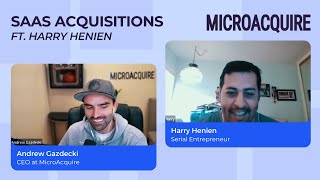
This is a YouTube video titled "SaaS Acquisition Stories Podcast w/ Harry Henien, Serial Entrepreneur" containing an English podcast interview recorded in October 2022. The conversation features Andrew Gazdecki hosting Harry Henien, who shares his experiences with micro-acquiring startups, due diligence processes, and strategies for integrating acquired tech assets into his businesses. They discuss acquisition tips, challenges, and entrepreneurial advice in the SaaS and tech acquisition space.
Foreign.
I am here with Harry Henyon who recently Micro acquired a startup off of Microfire. How you doing, Harry?
Good, good. Thank you. Thank you for building this.
My pleasure. Thanks for joining the podcast. And so for those that may not know you, do you want to maybe give a little bit of background on yourself?
Yeah, sure. So I'm born and raised in the UK of Egyptian and Armenian heritage. I moved to LA about six years ago and I've been working in finance for the past 14 years in, you know, different departments such as like private wealth and funds and trading. And I would say during the middle of COVID I work in a family office for one family and we bought a technology company. And through this partnership I envisioned that we need to acquire technology companies that are either operating or could be operated and help it complement our existing, like, portfolio of business. And two years forward I came across your platform, which is, to be honest, very helpful because, you know, at times there's things that I have time to build. I have my own developers offshore, and if I see something that's interesting, such as, you know, you know, little technology websites or platforms on your website that could be interesting, I could buy it and then plug it in to our business. So that's awesome. That's kind of a small backstory.
I like it. Congrats.
Thank you. Thank you.
So in terms of what, what did you acquire if I. If you're comfortable sharing?
Yeah, yeah, yeah. There was a website, it's a job portal called on onboarded app. And actually what's really funny is the seller previously listed a different platform. Before that I wanted to buy and I kept messaging him and I was like, I, you know, I want this platform. And he, he wasn't answering for a while. And then I realized he was in Belgium, so the time difference was a little bit off. And he was doing an internship at Microsoft. So anyways, that sold and he said, you know, I apologize, like someone literally like bought it after a few hours.
Oh, wow.
So I told him, I said, listen, like, if you build anything in the future, because I like the tech stack that he was using. And by the way, I'm not a, I'm not a technical guy. I just started really learning in the past few years about, you know, different languages. So I was really like interested in the way he was designing and putting together products. And he said, yeah, sure. He says, I'm not sure because I'm at Microsoft, so I don't have time. And funny enough, like a few months later he posted something new and I Actually wanted something like this for one of our businesses. It's a, it's a good way to tap into a market for our business, if that makes sense. That's kind of the, that's kind of like the concept we're doing.
Yeah, we see that, we see that pretty frequently where we'll see, you know, larger buyers buying small, smaller startups as, you know, bolt ons, where they can either add the technology or the people or the, you know, whatever it may be as a benefit to, you know, the larger entity. So that's awesome. Congrats.
Thank you. So it was, it was a nice process. He was very helpful and I mean, I didn't realize it would be this seamless, you know. So, yeah, it was, I would definitely do it again.
So that's, that's good to hear. So I guess, you know, in terms of, you know, can you walk me through just how, how did you go through due diligence in terms of, you know, maybe reviewing the application, transferring the applications, any sort of how you did it, and maybe tips for other potential buyers?
Yeah. So to be honest, I would make a list on your platform of all the relevant platforms that I had an interest in and then I would speak with our partner of the, at the, the software company and I would just run him through like, hey, like I saw this. Do you have any, do our developers have experience within this segment? If you would say no, but I do, then it's something that I want. I think it could be something, you know, something that we could use in the future to try to develop more of. So I would do like, kind of like a filter. I would write and ask for more information. I would create some rapport with the seller and I would kind of like try to see, you know, is this something that we could use now or do I have to put it on the shelf later? So it's kind of like figuring out internally within our business, like, is this something that we could use? Then I just create rapport. And you know, we talk about what's the tech stack? Like, is there any like, customers? Because sometimes like they'll say, you know, I have between this number of customers and this, but how many are paying? So we kind of like go through that together during our chat. And then I would say like the next step was, you know, figuring out like the price, like, is it like negotiable? Is there anything proprietary? You know, is there any API? So I have to, like, I have to really understand what am I buying. Right. And how would I do the transfer and how long will the transfer take? And given like, I'm not a technical guy, to be honest. Like with this one it was a, it was rather unique because the guy was, you know, hand holding me during the whole like process. We went on Zoom and it took about four hours and, and, and yeah, so like I have to, we figure out like all these functions and then once everything was agreed, you know, we would open the escrow and then I would make the payments. Um, and you know, I think it's important to really understand as I said, like what are you, you know, what are you getting? And then are they going to help with the transition? Unless you have a migration team, I think that could be a really cool service or a feature like in the future for the non technical guys to be like, you know, not afraid of like what's going to happen next, you know, and, and yeah, so once, once that all goes through, we, you know, we just set up, we set up a time and we just went through the transition and he was nice enough to say, you know, like, here's my phone number and email. You can contact me anytime if you have any issues in the future. So it was like a nice, you know, nice gesture and nice, like, you know, nice transition. A nice transition to that. Um, the only thing like for me with this one was the way he set it up was actually very complex. And I asked my developer, I said, you know, why is, why are we using like Vercel here? You know, aws Heroku, you know, like there's bits and pieces everywhere. And at first like, to be honest, I was, you know, I was like scared. I was like, oh my God, like there's, it's just scattered everywhere. And he said like, usually it's to save on money, so like all, you know, to save on like subscriptions and try to use something that's maybe like free or to mitigate any future hacks of the database. So he says like he's a smart guy for kind of like spreading it like around and at the end like I migrated it to like my own like standalone like server and whatnot. But regardless, like it's, it was a, overall it was a good experience to like do something like that like over the Internet, you know. So that's in a nutshell, like kind of like my, my process, if that's makes sense.
Yeah, no, that was great. I guess now I'm thinking, you know, I assume you're looking at, you know, multiple businesses at any given time. What are maybe some yellow flags that you've seen from sellers or maybe just advice you would give to sellers looking to potentially get acquired.
So like red flags of a seller.
Yeah, just maybe top three tips you give to a seller looking to, you know, seller business just so they have seller. Yeah, yeah. The transaction you went through sounded very smooth. You built great rapport with the founder. Uh, you understood, you know, you had a due diligence checklist. Um, but just if you had any advice for, you know, new founders selling a business for their first time. What's maybe like the top three pieces of advice you give?
Ah, you know, I think I would say like, first try to, depending on like who they're talking to, don't maybe assume that everyone is technical. Maybe just try to tone it down to, you know, this is what it is. This is like the potential, these are all the ongoing costs that you could incur. But you know, potentially if you had, you know, I don't know, xyz, you know, this could be what you're facing, like moving forward. I think also definitely create like a conversation because I have noticed with some sellers, they're very, you know, this is what it is and then they don't really want to engage into explaining maybe like why this was used or whatnot. It's more of I just want to exit, you know, So I think definitely, like create a conversation with, you know, who you're speaking with. It's hard to obviously qualify whether the buyer is serious or not, but I think that could be something good. And then I would say, like, try to ensure to the buyer that you will be there. That during like the transitions, I think that one is kind of not really highlighted most, I think.
Yeah, yeah, that's some really good advice. And correct me if I'm wrong, but I'd probably distill it down to just the more a seller can de risk the acquisition for the buyer.
Exactly.
Everything from, you know, building personal rapport, just being a good, honest person. Number two, pointing out things that could be growth. In a sense, you're almost kind of, you know, selling the applications, both the good and bad parts, which is, you know, that trust and transparency aspect and then the transition as well. Having a transition plan laid out in advance is a huge advantage comparative to other founders that may not have that. Because if you're interested in that application, you're wondering what's. What do we do next sometimes? And instead of figuring it out on the go, if you have a plan as a founder ready, you know, available for buyers to review, I think you Build that confidence and you get a lot more interest from buyers. At least that's what I've seen across the board.
Absolutely. And I have acquired like, you know, other platforms before, like a very old Spanish like microfinance loan like blog that's been around for many years. But to be honest, like the, it wasn't from your platform, it was from Flippa. And the transition was terrible, you know, and so, yeah, so maybe it was the experience of like micro acquire. It was good. So it kind of like, you know, embedded into me that moving forward, like now I know what to ask, I know how to communicate, and if I receive the same communication, then I know that I'm in the right kind of like, path.
So definitely that's some great advice, I guess. You know, I'd love to know, I mean, what's next for you? Acquired multiple companies? What are you, what are you currently working? Like, what's, what's next for you?
So, you know, like, I have kind of like this, this process. If, if there's time, I'll build, I'll get my guide or get my developers to build something, invest in the time, all that stuff and then deploy it within the business, use it, and then if it's good, try to commercialize it. I think that's kind of like my thought process. So if, let's say as an example you have a, you know, wealth management business, like, it's not enough to just run Google Ads and Facebook ads and you know, all that stuff. I think like, really the, the future is to, you know, have your own maybe like tech company or ventures company and go to Microacquire and, and just like, you know, have some time to like, see, okay, there's an influencer marketing platform. What if I bought it and I, you know, consolidated it into its own separate business. But then it's a way for you to tap into the customers of those influencers. So I think that's like, that's the way that I'm kind of like viewing this as an opportunity versus just going out into the, you know, the private markets and buying your traditional type of business that takes a long time, is expensive and is potentially not scalable. So tech is definitely a very easy, potentially inexpensive way to acquire different types of platforms and integrate into your own. So like now like what we're working on is a, an RSI standalone platform which is like, so you can have a conference with anyone in the world and you know, do remote simultaneous interpretation of voice. And that's kind of like a very big Barrier in like cross border wealth management, you know, speaking to different people in different countries. So that is like in the works. And then a standalone live video into your platform. So again, people come to your website, let's say wealth managers, a lot of them don't want to call, they don't want to give their information. But you know, there's always that element of let me chat for info or let me see someone video wise. So I'm kind of like, that's kind of the direction that we're going in at the moment. But I look at micro acquire kind of as a sell side tech, you know, platform where if I see something that is already built, maybe it doesn't make any money, which is fine. You know, like I'm trying to treat micro acquire acquisitions as more on the freemium side. So I'm not trying to monetize it. I just want people who are accustomed to wanting to post a job, you know, someone to use it for whatever media related services and then tap into that sector with our business. And you know, so that's, that's really like what I'm using microacquire for and what I intend to keep using it for.
So, so to clarify, it sounds like you're acquiring assets to support your main businesses, but more as like lead generation.
Services, is that correct? Exactly.
And that's a great strategy because companies like HubSpot has like the free website grader, but they capture your email address.
Absolutely.
Potentially sell your other products on the.
Line, um, without it being like invasive or spammy and whatnot. It's just like you're giving, I love it.
I said you're giving free value, you know, and yeah, bring, bringing them into your ecosystem early, building trust and then over time those customers could potentially convert into paying customers or users into paying customers.
Absolutely. I mean there's no, as I said, like you could do it with blogs, I'm doing it with blogs. And I'm always just thinking like, you know, how can I integrate this? Like, what's the value now? What type of emails are there? Like the micro finance blog came with 300,000 emails of, you know, all kinds of information which gives us kind of like, you know, an opportunity to understand, okay, maybe 10% could be potentially for like wealth management business. Like you can't acquire that in, you know, in, in today's like age, but you can through other platforms. So it's, it's kind of like figuring out what makes sense and what not. So to be honest, like I haven't seen a Lot of people from our industry kind of like take that view or that leap, but I think if they are properly educated and there is like a form of a hand holding or a form of, you know, like, you know, it can work it, but you need to be able to figure out, does this work for you also? You know, so, so I think yeah. So that's like more and more like the, the idea and, and the vision.
I like it. I like how you're, you have a main business and then again you're acquiring assets that provide value to convert into paying customers for the main business. That's awesome.
And you can, you can do it with any industry as well. I mean, it's just, and I just noticed that you have now 2258 startups, which is way more than when I first acquired the onboarded app. So obviously, you know, more and more creators are coming into the picture to see like, you know, who can really use the, the asset or not.
Yeah. Believe it or not, at this point we're seeing typically on average, usually two or three acquisitions per day.
Wow.
So it's, it's definitely an exciting market.
Nice.
So I'm, I'm happy the, the acquisition worked out for you and I hope maybe I'll. I'll see again on another podcast with another acquisition. But yeah, I do have just two, two final questions before I let you go. What's one book you would maybe recommend to, you know, an entrepreneur that's, you know, looking to, I guess just your favorite book in general related to, you know, building businesses?
To be honest, I, it's bad. I don't read that much. But what I will say, there's two things I love Twitter. Like, I treat Twitter in the mornings as my, my newspaper and obviously you're one of the main accounts that I follow. And it's, it is a really good, you know, your tweets are quite empowering, I would say. Like, I, I like to read what other people are experiencing through their, you know, Twitter posts. And I would say the second is, you know, just do it like practical experience. There's YouTube. There's so many videos you can learn, learn how to create your own Chrome extension, which I did one time, like learn nodes, you know, some JavaScript, PHP. Like, I really like, truly believe that if you just go to YouTube and search for anything, you can, you can learn and then practice yourself. And it took me like a few years to like learn how to build a WordPress site and you know, through trial and error, error. And now I could do you know, HTML and I know how to connect the database. And so like, I don't really read like the self help books to kind of like motivate me or, you know, and whatnot. So I'm very visual. Like I need to see, I need it to be presented and then I do it myself. So that's my, my only like two pieces of advice to any entrepreneur that.
I, I love the learning aspect in terms of just how accessible information is today. You can really, you're correct in saying.
And GitHub even.
Yeah, you know, Reddit, YouTube, GitHub, Twitter. Obviously I'm on there a lot. So I guess my, my final question you, you, you kind of answered, but I'm just gonna say it again. Sure. If you just had to give like one piece of advice to, you know, an entrepreneur starting out, what would it be?
Can I say two?
You can say three, as many as you want.
I would say the first one is just do it. And the second is don't be afraid. Because that's something that I see among a lot of people afraid of. It won't work, rejection or whatever. I think you just have to, you know, if you just take those two in mind, you can go far, you know, but if you don't, like, you're always just held back and life is moving on and new technologies are being built. So I would say, yeah, I would say those two as my piece of advice.
I couldn't be in more agreement. I think the number one thing that holds a lot of entrepreneurs back act is just fear of failure. But I always say, you know, it's much better to say, oh, well, I tried than just what if, you know.
And keep trying until something works because something will hit.
And you also learn your failures too.
And you also learn. Absolutely, absolutely.
That's, that's sage, sage advice, Harry.
Thank you.
All right, Harry. Well, it's, it's been a pleasure having you on this podcast.
Thank you for having me.
Of course people want to learn more about you or just what you're, you know, building. Where can they find you? I could put your Twitter account in the show notes or.
Yeah, sure, if you, if you would. I, I don't, to be honest. Like, I don't post. I, I'm not, I, I really go to, like, just reads. But I think I comment on yours the most because I, I really do, you know, appreciate all your post. It's, as I said, it's very empowering. But I mean, my Twitter, it's available and feel free to ask any questions, if any. If anyone has a question.
Sounds good. Well, thank so much. I'm definitely rooting for you. And congrats on all your success.
Thank you. Thank you. Have a good day, man. You, too.
Cheers.
More from Andrew



The Buyers Who Made the Move: What They Bought, How They Did It, and What Happened Next






