SaaS Acquisition Stories w/ Brian Casel - Founder of ZipMessage
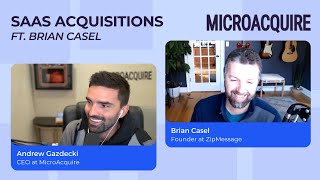
This is a YouTube video titled "SaaS Acquisition Stories w/ Brian Casel - Founder of ZipMessage" containing an English podcast-style interview recorded in March 2022. The conversation features Brian Casel discussing his experience selling multiple SaaS businesses on Microacquire, sharing insights on the selling process, vetting buyers, and focusing on his current company ZipMessage. The host is Harry Stebbings, and the discussion covers entrepreneurial strategies, business sales, and asynchronous communication tools. Andrew Gazdecki is mentioned but does not participate as a speaker.
Foreign.
I'm here with Brian Castle. I've been super excited for this podcast because I think Brian holds the record for most companies sold on Microglire. So, Brian, thanks for joining me on the podcast.
Andrew, I'm excited to talk to you. I've been a fan of what you've been doing and obviously a fan of Microacquire, especially these last few months. So, yeah, good to connect.
I appreciate that. Well, to kick things off, I'm sure everyone's wondering, tell me about the products that you sold and how long of a timeline was it all at once? Was it over a period of like a year or.
Yeah, so I guess sort of like the headline is that I. I did sell or let go of 5. You can call them businesses. Some of them are just really tiny projects, but some of them were actual businesses of mine. I let go of 5 of those over the last 6 months. And so right now I'm focusing on a business that I started about a year and a half ago called Zip Message. And I sort of just like once I started, once I sold the biggest one of my businesses, which was called Audience Ops, and then I sold a few more, that sort of was like the momentum to push me into just focus on this one SaaS business, zip message now, and that's the focus going forward. But Audience Ops was sort of the, for me, the bigger one, because that was a business I was working on for about seven years. And I sold that in September of 2020, 21. And I did list that on Microacquire. Had a. Had a good experience there and had a really good offer there. But I was also like, simultaneously on that one, I was talking to a few other people that I knew, and I ended up selling it to someone not through Microacquire, but that was. But, you know, Microacquire definitely played a big role, part of how that deal came together. And then the other one that I sold was a SaaS product called Process Kit. Put that up on Microacquire, had one offer, ended up falling through, and then another one came around a couple months later. So that was a really surprisingly fast and easy process throughout through Microacquire. Two more like tiny ones. These were both like SaaS ideas that, excuse me, that I started at one point or another and I built it, launched it, had a couple of customers, but I didn't really follow through. I was sort of distracted with some of these other things in my portfolio. So these two little ones, one was called Sunrise KPI. It was like a little analytics tool. The other one was called Thready, which is like a Twitter threading app. I had not touched those for over a year or two on each one. And so I was just like, let me just throw these up on Microfire. Just see what happens. And I was able to find two tiny exits on those. And then the last one, the most recent one, was a course and community and, like, content site called Productize. I've been. My previous business was a productized service business. So I built a course and a whole community around productized services. But since I'm more into SaaS now and I'm not as interested in doing the whole course content thing anymore, I ended up selling that one to a friend of mine who was a longtime member of that community, Sam Shepler. So, so, so with. With that, with that exit, which happened about a month ago, that's it. Like, that's. That's all Heb left. Like, now it's just Zip Message and some podcast.
I was about to ask, I was like, do you have any more? Like, geez. But I love how, you know, I see, I meet with a lot of founders that just have so many side projects and it's like, just focus on one maybe, you know, or I mean, a good strategy is, you know, you have all these side projects and then one really starts emerging as, you know, the one that probably has, you know, deserves the majority of your focus. So that's awesome. You were able to sell all those.
Yeah, I mean, I think in my experience, like, where I am now, I've come to a point where, like, I really. It feels good to focus on one thing because Zip Message has more, more like, faster traction than other things that I've started, especially in the SaaS space. So. So that feels good. And I just really like to focus now. But like, yeah, like, I had this whole portfolio of other businesses, but it wasn't like I started them all at the same time. I mean, but that productized course business I started back in 2014, the audience ops business I started in 2015, process kit I started in 2017, I think. And so a lot of these things were like, I worked on them for like a year or two pretty hard, and then I let them sort of run on Autopilot or like, in the case of Audience Ops, I had built up a team on that and it was basically running without me. And the goal there was to have a cash flow business to grow and then free up my time to start working on SaaS products. But then it took a while of experimenting with several SaaS ideas and also for me to spend that time learning to upgrading my skills from front end to be able to build design products. Full stack took me a few attempts to sort of get to now, which is like landing on on Zip Message, a product that seems to be clicking better than the previous one. So it gave me more confidence to finally say, like, okay, let me sell off everything else and really just focus.
Yeah. I mean, sometimes you gotta get it wrong to get it right. What is. You said Zipliner, right? What does Zipliner do?
Zip Message.
Zip Message. Sorry. So you're rattling off so many companies. I know merging them in my head.
Yeah. Zip Message is. It's a video messaging tool for asynchronous conversations with anyone. So you can just send your zip Message link to anyone. And now you're in a asynchronous back and forth with that person. So the person could be a customer, a client, a remote teammate. Even some of these deals that I was going back and forth during due diligence, we did that over Zip Message asynchronously. So it's pretty similar to using Loom, except that the difference is Loom is one way you would record a message and send it to someone and then it's basically done with Zip Message, you can send a message, the other person can reply back, and they don't need to download or install or sign up for anything. They can just record right into their browser. And the other sort of difference is you get your own zip message link. So you can get zipmessage.com microacquire and then that could be the place where people. That's like your inbound intake form for. For video messages from other people. So I like to think of it like, so if you're doing like a lot of calendar bookings, a lot of meetings, you could start to replace those with Async videos. But also like how you would pass around your calendar booking link, you could pass around your zip Message link to have like asynchronous messaging going.
I like that. Well, if I see it come through Microquire, I'm going to reject it just so you can stay focused. It sounds like a good one. Yeah. So for people listening, a lot of founders usually, in almost all cases, it's the first business they're selling. What's maybe like the top three tips you would give a new founder looking to sell their business on Microquire?
Yeah, I mean, the first one that I ever sold was back in 2015 and I worked With a broker on that to sell the business. Overall that was a pretty good experience, but it wasn't cheap. So that was one of the big exciting points for me. When Microacquire came about, it was sort of a way to access buyers and get deals happening without, especially at this level, if you're in the hundreds of thousands of dollars, that's a really significant broker fee that you would normally pay to a broker. It might make more sense when you're in the upper millions, but at this stage that was really exciting. But anyway, going back to my first experience selling, it was one of the things that I learned early on with that was my first time selling. I thought that I had to make the business look perfect and pristine for the buyer, otherwise buyers wouldn't be interested in it. And that's actually pretty wrong. I think the way to think about it is just show your business warts and all. It's okay if there are gaps, it's okay if things are not under optimized because that's the opportunity that a buyer is looking for. They're looking, if you're a buyer, you're looking to buy a business that you can come in and improve and grow. If you're going to buy a business that's just running perfectly, it's going to be very difficult for that buyer to come in and grow it. So don't feel like yes, you need to clean up your books and have processes that, that make it ready to hand off to a buyer. But you know, I learned to like not stress over all the things that are like missing or the gaps in the business. You know, that helped a lot.
Yeah, sometimes actually I've heard from a number of buyers is they'll actually look for businesses like and I don't recommend this but like poor website design. If they're experienced marketer, they can improve free trial to paid conversions or something like that. And that's a huge selling point. Or maybe you don't have to point it out, but as a buyer you see that and you're like, if I can just tweak that like 10% then this business will increase. So I totally agree with you on that. In terms of like negotiating with buyers. Like again, you're kind of a veteran here. So what are like some qualification questions that you usually ask buyers when they are interested in buying a business from you?
Well, I mean, you know, this is an area where I think a broker does add value. You know, in the cases where I sold on my own, you do have to do your Own, well, vetting, but also you're just kind of sifting through some noise of buyers who are just not as serious or they're kicking the tires or they say they're serious, but they're really not. So if you're working with a broker, they tend to kind of shield you from that and they do a lot of that vetting for you, but it comes at a cost. So there's a trade off there. One of the first questions that I tend to ask a potential buyer, if they're a stranger to me, I don't know them, would be to just ask, have you acquired businesses before? Not to say I would rule out selling to someone who has never acquired something before, but if they have never acquired something before, that is an indication that they are not as experienced and serious in this process as others who have acquired something before. And if they haven't, then maybe the next question would be like, how many other businesses have you been talking to about acquiring and how long have you been looking? The other thing that I've noticed about again going through several deals now in my career and several recently is that like there's a pretty wide spectrum in terms of how these deals happen. Like, like one of them took three months to, from, from offer to close, another one took five days from offer to close. You know, like literally like and, and so like some people are just like kind of crazy and stressful when it comes to due diligence. And others are they just value speed and no bs, just let's do this. And again, that's not to say you should be careless or you shouldn't overlook things. Obviously in a deal that's any significant dollar amount you do want to do your due diligence. But different, different people are, some people want to play more games than others when it comes to contract negotiations and others just want to be more straightforward about it. And yeah, it's just kind of all over the map. And so the more experienced the person is, it's a little bit tricky because it's sort of a two way street. On the one hand, somebody who's more experienced, who's done more, more acquisitions in the past, they know the mechanics, they know the process. There's, you know, they're going to ask for certain things and then they're going to do due diligence. Then we get into contract negotiations and like a wire transfer or whatever it may be like they, they're not new to this, so that makes it easier. But then on the flip side, they might be more savvy they might be a little bit more aggressive in the tactics that they use. So like, you know, sometimes they'll use time to sort of grind you down, you know, like drag it on intentionally. Because as the seller, you know, I know for me, most sellers want to, want to get it done faster if possible. Like, I'm working on a new business, I don't want to be bogged down with selling this one. So sometimes they'll use that sort of thing against you. They'll use like the, they'll pull at your emotions. Like, you know, once you start down the process, you're mentally already selling the business, but it's not actually done yet. So there's a lot of little, little games that can be played throughout the process. And I've just, I don't know what I'm doing most of the time. But it's mostly just kind of trusting the gut and getting, getting good advice from, from friends and advisors who've been through this sort of thing before. That helps a lot too.
Nice. And I really like that. And really what you're doing is you're making the buyer work to really get through your filter with just these simple questions like, have you acquired a business? And if they don't respond or they do respond, you ask them another question and then they respond or they don't respond. Other good questions could be like, how would you, if we get to the finish line, how would you finance this? Like, just getting those questions kind of up front can be, you know, save both parties a lot of time.
Yeah, for sure. I mean, I also did want to ask a lot about, like, tell me about your current business. Tell, tell me about your background. What, what does your current team look like? And things like that. Just to get a good, good feel for it.
Yeah. And then I guess another question I would have is, so you're getting ready to list on Microacquire, was there any materials that you prepared in advance or anything you'd recommend sellers think about in advance?
Yeah, I did a bunch. I had sold a business before, like years before, so I've been through a due diligence process before. So I knew the kind of work that goes into just preparing for that. So I did, on the larger deals that I did a lot of the due diligence work, like getting my books in order, just getting the things that I know that they're probably going to ask for. Doing a lot of that prep work even before I listed helped a lot. So that by the time it got into a deal, there was very minimal, you know, time and prep work that I had to do. So that, that was one I did create like a very simple, I guess you can call it like a prospectus. It's like a PDF with some, or it's like a slide deck, I don't know, five or six pages or something like that with kind of like the big like selling points, if you will, but like the high, like not the level that you would see in due diligence, but just like the high level numbers of like revenue and like net profit and traffic and some of the key elements of the business and why it works and things like that. You know, something to show potential buyers what I think of that document. It's like something to show them, give them enough information that makes it interesting, but also makes them want to actually book a call with me and ask me more questions about the business and get to a point where they're comfortable enough to submit an offer. You can't expect just the listing page or just the asking price or just the, the name or something to be enough for a buyer to submit an offer. They're going to need to, first of all, they're probably looking at many other businesses, second of all, but you don't want to give all the information up front. You want to pull them in if they're interested in where this is going. Let's have a conversation and then let's get to an offer if there's one here.
Nice. I really like that. I guess another question I would have is, is there any, any part of your sales that you would do differently? Like now that you, you've kind of, you can roll back the tape and maybe like, oh, I wish I did that differently. Or any sort of like, you know.
You asked a little bit earlier about like vetting the buyers. I think there were a few, like not the people who ended up buying like buying the businesses. But I did have some offers and some, and some inquiries and calls and like follow ups with people who turned out to be probably less serious than they let on. And I probably could have done more to vet them. You know, not exactly sure what else I would have done other than asking those questions. But looking back, there was one who actually did make an offer. And we started down the road of due diligence and then they ended up backing out for some random reason midway through. And like two other people, they would keep coming back to me every three days saying, I'm about to send you an offer, just about to send you an offer. And, and then Nothing. But in the meantime, somebody else came along with a real offer. So that worked out. So yeah, when you're going it alone and you're in a marketplace like Microacquire and I did supplement with other contacts that I have in the industry. So I was sort of mixing conversations from different places without again, like without a broker, you're sort of on your own and. But that's by design, right? Like that's like I chose to go without a broker intentionally because basically because Micro Acquire exists that, that made this path a lot more viable. But it is more work and sometimes a little bit more like, you know, just, just dealing with a lot of noise before you get to. But, but you know, that's not to say that they're. There are definitely very real and serious and high quality buyers on the network. I met a lot of them. So they're there. It's just. There's a mix.
That's awesome. I know we're getting to the 30 minute mark, so I have three more questions for you that are questions I just like to ask every person I interview. Well, just favorite book that you may have read in the last year.
I'm always terrible with these rapid fires. The one that I'm reading recently is pretty good. The Cold Start problem. What's his name? Andrew Chen.
Andrew Chen. The Cold Start.
Yep. Yeah, like halfway through that. It's really applicable to what I'm building now with with zip message because it's like how to build on a network and use the freemium model and all that. So it's been pretty good.
Nice. Who's one entrepreneur that you really look up to?
This guy, Andrew Gazdecki. Pretty impressive, dude.
You need a better list, man.
Let's see. You know, I mean, I'm like close friends with a bunch of founders who I talked to. I just hung out with a bunch of them last week. We went snowboarding and talking business. We do that every year. So I just get a lot of value and inspiration from a whole group of close friends and advisors. And it's kind of like a mastermind group. But we, but we've been meeting up and going on these snowboard trips every year for like the last eight or nine years. And that's just been super helpful. So like, in general, I always recommend trying to find like a core group of like mastermind buddies to hang out with.
Nice. Well, that's pretty much all I got for you. I really appreciate you taking the time on this podcast and congrats on selling all the businesses when you sent me that email, I was like, are you serious? Like, what? I gotta hear this story. But, Brian, congrats on all your success, man. I'm rooting for you and your new company. If people want to get ahold of you, what's the best way to contact you?
Yeah, well, you can definitely get to me and check out the tool@zipmessage.com I'm basically running the support desk over there right now.
I feel like we should integrate that into Microquire. I feel like that would be like a perfect. Like, we can chat afterwards. But it seems like a use case in terms of, like, here's the answer to your questions. And definitely.
I mean, I literally did use it in a lot of the conversations. And it's. It is perfect for that because it's. It's easy to go back and forth with somebody who is like a link away. Like, they're not within a private Slack workspace or something like that. Like, it's. It's easy to share with anyone. So, yeah, I would love to talk about that. So, yeah, I mean, you could even Send me a zip message@zipmessage.com, brian. That's my link. And then I'm on Twitter as Jam.
Well, Brian, thanks again for making the time. And you hold the record. So for most companies sold on Microglire, if that ever gets broken, I'll be sure to let you know.
Good stuff. Thanks for having me.
Cheers, man.
More from Andrew



The Buyers Who Made the Move: What They Bought, How They Did It, and What Happened Next






