SaaS Acquisition Stories w/ Connor Skelly, Founder of Fission Agency
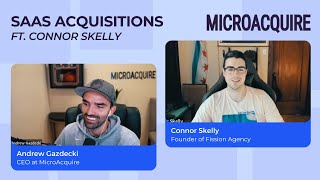
This is a YouTube video titled "SaaS Acquisition Stories w/ Connor Skelly, Founder of Fission Agency" containing an interview conducted on October 25, 2022. The content features a conversation between an interviewer and Connor Skelly, discussing Connor's experience acquiring a micro SaaS business through MicroAcquire, his marketing agency focused on HubSpot businesses, and insights on acquisitions and marketing strategies. The discussion covers due diligence, deal structuring, and advice for buyers and sellers in the micro SaaS space.
Foreign.
I'm here with Connor Skelly, the founder of Fission Agency. Connor, how you doing today?
Hey Andrew. Good, good. Great to meet you.
Well, thanks for taking time to speak with me today. I'm definitely excited to hear about the company that you recently Micro acquired. But before we get into that, do you maybe want to give a short introduction of yourself for those listening?
Sure, yeah. So I'm Connor. I've been working in B2B marketing for some seven, eight years or so. I recently started up a new agency called Fission which is a marketing and sales ops agency for HubSpot businesses.
Nice. So you micro acquired a business, what was it and what does it do? Let's start there.
Yeah. So towards the end of last year I really wanted to, I learned about microacquire, loved the marketing. I was following on social and I wanted to find a micro SaaS tool to really, really to kind of treat us like kind of a side project I guess. And so I came across UTM Link Manager and which is a short link shortlink builder and UTM Link Builder and really well built product. But I really just wanted to find a company that had terrible marketing or really no marketing at all and take my marketing expertise and help grow it.
Nice, I love that. In terms of. Okay, so there's a lot of startups on microacquired as I'm sure you're aware. What, what about this specific business stood out to you?
Yeah, so I had like eight or nine different, different criteria that I was looking for. So one was obviously like the marketing industry in general, a tool geared towards marketers. I wanted to work with like a single person business. I didn't want to like, I wanted things to be really simple and easy. So I found just one founder team, a few other things like you know, lower revenue, micro SaaS like lower revenue and let's see what else. I think that's probably about it. I mean the, one of the huge things that I found just like as I was digging into it was there was like this 9,000 word or so like email course that was the main lead gen tool for the, for the platform. So that was great to just have like this huge content asset on hand because my focus was the marketing plan was re engaging the existing and past customers to try to get them to convert again as well as just using the product more as well as like just SEO content, like low and slow kind of growth to build up that inbound foundation. So having that course and like updating it and posting it publicly as well really Just like helped ignite the initial plans that I had.
Nice, that's awesome. And are you using this product to support your main business?
Yeah, so I was using it for. I, I write a newsletter as well for startup marketers called Catch all and so I would use that. I had like one, one area where I was using all links for that. So I would post on LinkedIn or Twitter or something like that. I was able to see like very specifically what was driving new subscribers. I used it for. When I had my older consulting site, I used it for that as well to track just specific conversion on the site, things like that. And then I used it for, I used it for one or two clients as well. That's really been like the sweet spot from a customer standpoint is like finding small agencies like performance agencies or paid ad agencies because they, they like live and breathe in UTM data and really specific marketing analytics. So yeah, that's awesome.
So in essence you basically bought a product to support your existing business. Maybe add. Added a new service, Is that correct?
Yeah, it was, it was like a nice to have kind of thing. Like I wasn't the main goal of. It wasn't for me to get really deep on my own content analytics, but as I was just like writing more and trying to build up more of a social audience, it was definitely a nice thing to have so I can know exactly what was gaining traction like down to the specific post level. And things publish automatically to Google Analytics once it starts getting traffic. So it was really easy to just build a dashboard, see what was, you know, check in once a week, twice a week to see what was, what was going nice.
Yeah, I'm looking at the product looks great. So nice. Nice pickup there.
Thanks.
I should say acquisition in terms of, you know, your, so you, you come across this business, you decide it's when you want to pursue what. Can you walk me through just like kind of the initial process with the seller that made you feel comfortable making this acquisition?
Yeah, so the, you know, one of the fields on the listing is like the reason for selling and the, the guy had said, you know his, his full time job was picking up and, and he wanted to just get rid of this. He, he had built a few products like this before in the past and so once I got in touch with him, um, you know, it was, it was nice to know that he had like he's built other micro SaaS tools before and had a couple other things in the pipeline. Um, but you know, just his, his full time job which is very Similar to what he did as a side project was just picking up. And so I've definitely felt that before, like I've. Shiny object syndrome. Picking up projects left and right. And then you have to, like, you know, buckle down on what actually matters. So, like, it was nice to, you know, connect on that. And big like product, product marketing guy too. So we had a lot of, like, you know, conversations, just talking shop.
Nice. So it sounds like you guys built some good rapport and that built kind of trust to move forward. That, that's, that's great to hear. I always recommend, you know, it's. It's really hard to do. There's a, there's a good quote. It's. It's hard to do a good deal with a bad person. So just, you know, the fact that you were able to connect with them on a personal level, I think probably built a lot of trust. But in terms of due diligence, how did, how did that go? You know, can you walk me through just kind of like the steps that you went, just making sure that everything was, you know, up to what you expected it to be. Did you come across any hiccups? What was kind of like the transfer due diligence process?
Yeah. So I took it in a few different stages. So I asked before I submitted the letter of intent, I asked like, all the questions that I felt comfortable asking. Right. So everything's around marketing, product growth, any other like, growth tactic or growth ideas or other things in the pipeline that he wanted to do but never did, all that kind of stuff. And once I was happy with looking at the business metrics and the website analytics and all that kind of stuff. Submitted letter intent. And then we moved forward into more of the technical due diligence side, which is where I worked with a friend of mine who has a small developer agency. And then he ran through the product and then delivered a pretty thorough due diligence checklist of everything. And he pretty much was just like, yeah, this is, this is good to go. You know, just if you want to scale, you know, you'll need to do X, Y and Z once you can, you know, you'll probably hit these walls once you scale. And even the seller was really open about that stuff too and was. Was really transparent just around like, here is, here's why things are structured this way. I never hit this point, but if you hit xyz, then you're going to want to pay for more or use another tool or hire someone or whatever.
It was nice. And how did you, how did you structure the deal. If I can.
It was still 100% asset ownership, you know, asset transfer. It was under his llc. Just moved it to mine.
Simple. Nice.
Yeah, it couldn't have. It honestly couldn't have been more simple.
Yeah, I really like how you. Because there are a lot of non technical buyers on microguire. One of my always. The recommendation I always make if they're looking to do technical due diligence is to have a agency or you know, some individual that is technical that can help with that side. So that's awesome. You had a friend or agency available to do the technical due diligence just in case there's bugs or something like that.
Totally. Yeah. And like that. All of that stuff is like way over my head. Right. And, and one, one of the other things too that reminds me is I, you know, another bit of criteria of like looking into, of when I was looking to buy, buy something was like less than, you know, I forget what it was like 30k or something like that or, or, or, or whatever and because like that was, I was comfortable with that or something. And then like that was pretty much the criteria of like, do I get a lawyer or not? Right. On something like this. Um, and talk to someone who's basically like, talk to a lawyer who was basically like, you don't need a lawyer. Um, like if I was comfortable taking that risk on for it, like it was the deal again couldn't have been simpler. Um, so he was like, if. As long as you're comfortable with it and you know you are, you're likely good to go.
Nice. How fast from like initial reach out to the seller to actual close. How long did it take you?
It was probably about two months, I think because we started the initial conversation like right around like December or like being December. So like the holidays and stuff kind of threw things off and we officially closed. Yeah, it was like early February of this year.
Nice. Congrats.
Thank you.
I guess, you know, my, my next question would be, you know, I love how. And I'm assuming this is your first acquisition, is that correct? Um, based off of that, you know, what are, what are some, maybe the biggest pieces of learnings that you, you know, got from just going through, you know, your first acquisition that you would maybe tell a buyer that has never acquired a company before?
Yeah, I mean like, absolutely. Just, you know, this. Is this probably what everyone says, but like, absolutely, like do your due diligence on it because there were several other options that I talked through, you know, on Microquire. Like great looking products, definitely had some, some good things about them. But then like you ask one or two other questions and that can, that's just like oh no, that, that doesn't align with my, my personal like buyer goals. So definitely like ask everyone the same like full set of questions even if the tools are a little bit different. Because that way like you're just establishing that baseline. You're able to compare offers or compare companies, you know, more of a fair way.
Nice. And one thing I really liked that you did is asking questions upfront before sending an loi. I see all the time where people rush to send an loi.
Yeah.
Kind of lock up the startup and then you know, you have an exclusivity clause and then they ask the questions and they maybe they find something they don't like and it just kind of wastes everybody's time. So that was a good, good move on your part.
Yeah, and that's been my experience too. Just um, like talking with other people that are familiar with micro acquire or like have, have you know, wanted to look at a deal or something. Like they like that. It's really like, it's very easy and stuff to ask those questions up front. And generally sellers seem to be really communicative too.
Nice. So, so flipping the table a little bit. You know, a lot of founders are looking to sell their business if you had to give them any advice. Given that you've gone through the process, it's sounds like the experience went really smooth. What are maybe you know, two, three tips you give sellers just you know, to ensure that they can increase the odds of them getting acquired?
Yeah. The first thing that sticks out is like the more information you share, the better. You know, obviously there's information that every company will have that you can't, can't put front and center. But anything just around like product analytics or marketing analytics or anything like that like is in my experience seems to be like just a good starting point for this. And the more upfront you are with sharing that information, you know, less you're going to waste everyone's time. And definitely like just be transparent around like the stuff that you wanted to do but never got around to. Right. Because you never know. You don't always know like what the experience of the buyer is on the other side. Like they could have all of these ideas for a product in their head and you could say like one thing like, oh, we tried this but it didn't work. And that could send that, that could, you know, really accelerate the deal because the buyer is like, oh, that's my expertise. Like I want to focus on that or something like that or so just, just understanding like in a more granular way, like what was their, what was their growth experience, what was the seller's growth experience and, and how the buyer could, could be involved in that moving forward.
Nice. I love that and I, I completely agree. Just you know, bringing forth just growth opportunities because that's what they're doing is you know, obviously I, I assume you acquired this to potentially grow it and the seller is the best source of information of what have they tried, did work, what did work. And then just being able to double down on what works and then obviously maybe reignite what didn't work is, is a great strategy. So I love that. And then I guess in terms of, you know, your, your current agency. Tell me a little bit more about that. What is your current agency focus on?
Yeah, so we do marketing and sales ops for HubSpot businesses or like managed CRM services is another keyword it falls under. So I've, my last full time role was building out marketing team from the ground up at a startup and it was all like facilitated through HubSpot. So I got really, you know, after being there for a few years and scaling the revenue, I just got really interested in like marketing and sales systems and, and like what levers you really need to pull, like depending on the business goals and things like that. So I had been using the HubSpot product for a long time, big fan of the company and after I left the full time role I wanted to take some time off but organic kind of consulting opportunities just happened to come up and they were all really around like HubSpot implementations or like the operations side of, of HubSpot. So like reporting automations, that kind of stuff. So I got more interested in it and then like as of last July is when I really started an inch down and formally like launch that agency.
Nice. Congrats. We, we pretty much run microcore entirely off HubSpot. Everything. Yeah, it's a great product. So we'll, we'll give it two sort of shout outs.
Yeah.
I guess for final questions given I'm, I'm a huge marketer myself. Maybe not as good as you, but I'd love to know if you were gonna recommend like two books on marketing, what would they be?
Two books.
It could be podcasts too. There's any like where do you, where do you stay fresh in marketing? I'm interested in hearing that one of.
The, I don't know if this is strictly marketing, but one of the shorter books I've gotten into is Alex Hermosi's $100 million offers. Just, it's. It's a very. It's a great book because it's just a very simple way of just, like, structuring an offer. And I think especially like more modern B2B marketers that have been in the game for a while, like, tend to overcomplicate things and try to get fancy. So I really like. I really like that book because it's just. It's super simple. I'm a big fan of story brand as well. So, like any of the story brand books, just the way that they think about marketing and telling, like, the hero narrative for our brand, uh, it's. It's really simple. Um, and it's like. It is a. Especially if, like, you're new to marketing, it's a fun way to learn about marketing because.
Yeah, it's so tangible. I love. I love both those books. Yeah. Nice one. One book I'd recommend, if you haven't checked it out, is Play Bigger. Um, it's around branding and storytelling and kind of category creation. It has some interesting stories around. I believe HubSpot might be mentioned in there in terms of category creation. Gainsight and some other companies, so might be a good review, but that's kind of all I got, man. Appreciate you coming on here and sharing your story. And congrats again on the acquisition.
Yeah, this is fun. Thanks for reaching out. And I'll continue to lurk Micro Acquire.
I appreciate that. So if people want to get ahold of you, where's the plus, best place to contact you?
Yeah, follow me on. On Twitter.
I'll put it in the show notes so you don't say your Twitter handle.
I'm on Twitter too much, so Twitter's probably the best place to do it.
Sounds good. All right, Connor, appreciate you coming on here and looking forward to hearing about your next acquisition.
All right, thanks, man. Enjoy the rest of your week.
You too. Cheers.
More from Andrew



The Buyers Who Made the Move: What They Bought, How They Did It, and What Happened Next






