SaaS Acquisition Stories w/ Lloyed Lobo - Founder of Boast.ai and Traction
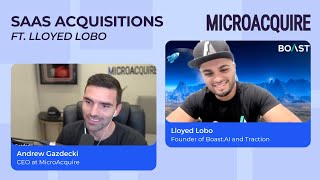
Lloyed Lobo, founder of Boast.ai and Traction, talks with Andrew Gazdecki about bootstrapping, sales, and building startup communities. They cover practical strategies for scaling SaaS businesses and engaging founders to grow your audience.
Foreign.
I'm here with Lloyd Lobo, co co founder at Boast, AI and Traction. Lloyd, thanks so much for joining me today.
Love it man. Thank you for having me. Excited to chat with you. A big follower of your journey as well.
Yeah, I remember being on your podcast and I had a blast. I'm excited to learn about your journey. I guess my, my first question really is just for those that may not know you, what is your background? What is Boast? What is Traction? Just any sort of context around that would be great.
Yeah, definitely. So I'll start with the journey of how I got into all of it. Maybe at some point, but Boast automates tax credits and funding for businesses from the government. Non diluted capital. So globally there's hundreds of billions of dollars given by governments to fund businesses and innovation. But it's a cumbersome manual process, it's prone to frustrating audits and receiving the money takes a long time. So we set out to automate that process by integrating with the company's tech and financial stack to figure out what government programs they qualify for and get them that money faster. More money faster for less time and risk. And you know, my co founder and I had known each other since you're 19 or so. We went to university together, we're partners in every project and we studied engineering. After engineering, he got into Johnson and Johnson's engineering leadership program, then did a startup that failed and felt he needed to study accounting. And his unique combo of accounting and engineering took him into the world of R and D tax consulting. And after I finished engineering I work in product and growth at a couple of startups. And so he called me and he said, hey man, I think we should solve this problem. It's worth solving. And what was happening was I was at another startup and the hustle porn culture is very alive in the startup community. And I used to work 10, 11 and one day I started going home at 6 and I get an email from my boss from the CEO of the company, says hey man, I used to love it when the office till late, 8, 9 o', clock, whatever. I'm seeing that you're going home at 6 this week. What's going on? Your wife is. My wife was in residency and she's an ER physician. Your wife's a resident working 100 plus hours. What's causing you to go home? My parents were visiting in town, I hadn't seen them in a while, so that's what I was going home at 6. And so when Alex called me and he's like, I think we should do a startup in the space. I'm like, I don't give a what we do.
I was about to say, I was like, damn. I mean, we don't have the name names, but that's pretty poor leadership.
I mean, it's a lot of stress, right? And then once you're in those shoes, you realize that, you know, external stresses causes founder stress and then like shit flows down the leg. But what Alex called me, I said, I don't care what we do, as long as we can build a company that we want to work for, I'm in. And so that started the journey. We did a couple startups together. We did Automatically, which was a chatbot built on top of Zendesk, which failed some great learnings there. We of course did boast, bootstrapped it to near eight figures before raising money. And then we built Traction together. Traction's a community for founders. It's got about 110,000 subscribers. You were on the show. We do two webinars a week, two podcasts a week. We do meetups in different cities and an annual conference. And yeah, each session gets like tens of thousands of views. I think your session has over 10,000 views on YouTube. So that was the journey. But we built that community as a side hustle because when we started Boast, we were selling R and D tax credits to founders, CEOs of technology companies and we didn't really have a brand. We started this company out of my co founder's spare bedroom in his small apartment and we're competing with the KPMGs, the PWCs, the Giants. And so we're like, man, nobody's gonna take notice. Nobody's gonna listen to two hacks from their spare bedroom. So we said, hey, one great way is to build community. We've been failed founders ourselves. What do founders want and want to learn beyond R and D tax furthest? They wanna learn how to grow and build and scale their businesses. Learn sort of off the record stuff on how to get keep and et cetera. So we started hosting these pizza nights and on different topics. Invite a great speaker and you know, starts with your ideal customer profile and who are the people they follow and respect. So we started inviting key influencers behind the scenes, off the records, pizza nights and those pizza nights. Yeah.
Do you care if I. Because I think this is something I'd really love to. So you have a, you have a hundred thousand members at traction, right?
Yeah. 100,000 subscribers. A little more than that. Maybe 110 some odd.
Yeah, that's a lot. So community is, you know, a big topic for startup. These startups these days, I've heard everything from a newsletter is a community. You know, having an audience on Twitter as a community. How do you think about audience building? Like what, what are maybe, like what is your playbook? What is maybe common mistakes? That's like five questions all at once. So I'll let you kind of pick the one.
So I'll tell you one thing, right, like, audience is different than a community. Instant influencers, they're all audiences. People have newsletters, they're audiences. That's great. The community is where members or people, the audience interacts with one another without the sort of key influencer involved. Right. So like, I think audience to audience interaction is very important for community and that strengthens the community and that keeps them coming. But if you have a great audience, I think the next step is how do you drive that audience to audience interaction? So for us with Bose, actually we really didn't intend to build community. What ended up happening was we were having challenges trying to get people to listen to us, to buy our service, and we were scraping emails and making calls and it was just really hard. And so we're like, you know what, we have challenges. We've been failed founders. Let's start pizza nights. What is. Who's our icp? Our target market is, is a founder or CEO of a technology company. And this is like years ago, man, five, six years ago, when like community wasn't even cool. And we started hosting these pizza nights on specific topics related to challenges. The first one, 10 people showed up. And then every time we hosted, more and more people showed up. And then one day, the co working space, like, guys, you have 200 people in this co working space. This is not a meetup anymore. This is a conference. Get out of here and like, find a conference venue. And then that transitioned into hosting conferences and meetups and retreats. And now today it's like two webinars a week, two podcasts a week. Meetups. I think success is doing one thing consistently well. Over time, we kept doing these events. I have this theory that I learned from my friend, founder of Any Road, Jonathan Yaffe, that right now we're sight and sound, right? Anytime we incorporate more than two senses into an equation, you start to build even stronger connections. Like when you're doing meetups, you're drinking together, you're smelling each other's sweat, you're shaking hands, and you start building more and more genuine connections. And I strongly feel that us hosting more and more in person events and meetups, augmented with all the online stuff really help grow that community from like 10 people coming every week with hosted to now thousands of people. Right.
That's awesome. I have more questions for you on this that I think could be helpful for other because I think a lot of SaaS companies today are looking to build a community or I mean we saw HubSpot acquire the hustle, we saw Stripe acquire indie hackers, we saw Zapier acquire or zapier, however you pronounce it, acquire maker pad. So community, you know, combined with, you know, a startup can be extremely powerful, but there's so many different. I'd love for you to walk me through, you know, what you think a true community is and maybe some of the mistakes that you see. Because I see all the time people say I launch a slack room, everyone pile in. Or I'm in like four communities on Twitter and they're all ghost towns. You know what? I guess put another way, would you bet on a digital community first? Or let's say like I'm just starting a community, would you go digital first? Would you go in person first? Like, how would you like kick off a community view? Or we're just starting from scratch and you just had to. Would you start with a pizza nights like one change thing?
Yeah. So let's walk through it. I feel like building a community is no different than building a company. And all the stuff you talk about, right, like on your LinkedIn is identifying your ideal customer profile, solving one thing, doing it really well, nailing it, then scaling it, but walking through it. I'll tell you my first experience with community. Why I'm so passionate about is I was a refugee of the Gulf War in Kuwait. When that Gulf war happened, everyone in the country, all the leadership just peaced out. And so the community came together to rescue the people, to get the people out of the country. And for me, a community is like one person raises their hand, they have a problem. Few other people have the same problem. They come together to discuss it and then they keep doing it on a cadence and it sort of grows. And then my second big experience with Community was the first startup I joined in. Product was a very small startup and I was tasked with like figuring out how to grow this thing. And this is like 2006 when digital marketing wasn't a thing and it was all old school. And everything I learned about digital marketing was from HubSpot's inbound marketing community. They started doing all this digital content and courses and I got better and better at it and then I started to implement that and our company at the time was ranking number one for all those keywords from the strategies I learned from HubSpot. Then I started going to HubSpot's events, like their meetups and everything. And then the next thing you know, HubSpot comes and says, well, you know what, you could use all these other tools like Google Analytics and et cetera to manage this inbound marketing. But now we have an inbound marketing software. And so they didn't really have a product in those early days when we were building that community and so did Gainsight. Very similar. Right? So the way I look at it is there's three kinds of communities, really. Two, if you're looking at a SaaS company, there's a community of practice which is bringing together people who share the common goal of learning about a specific field. And then there's a community of product where it's a space for users to ask questions about your product, share insights and stay connected with the community, with the company. Now, if you don't have product market fit or not, very many users, you're just early on, you can't start a community of product. People think you're going to sell to them. Right. I mean, it's obvious. Why would I go to a community of product when I don't know if I want that product and barely have any users? So you start with the community of practice. And if you look at it, that's what Gainsight did. Right? When they started, there were 600 people with the title customer success. And customer success is nothing novel. All it is is proactive customer support. And they've identified that problem and they started creating a lot of education and awareness around, hey, if you want to keep your customers and retain them, you need to be proactive in your customer support endeavors. And now today it's like a massive profession. So you start when you're just starting out and you don't have many users. Start with a community of practice in many ways. Then it starts bringing people together like you've done in many ways as well. Right. People are talking about acquisitions or micro acquirers and so on. Right. It's not just a community of product like you are building in public before you even had a product. No.
Yeah. Without knowing it though, I didn't know building in public was like a thing. And I would just do things that I thought I. The way I always try to think about marketing, not community. I have More questions for you about community, because I'd love for you to walk me through. Like, if Microquire was going to launch a community, how would you do it? Because I got the master on here, so I'm going to take advantage of that time. But yeah, I mean, I'm always trying to think of ways to market in ways that don't feel like marketing, if that makes sense. Like borderline entertaining. And I think that's. And you just brought up Gainsight and they had a competitor called Tatango and I think, you know, their huge investment in brand events, community. Really, like they wrote the. The damn book on customer success. You know, that's like, have you heard of Tatango?
I have, but, like, not compared to Gainsight. Right. Of course. Like, Gainsight is the preferred brand in this space.
Yeah. When I was CEO at Business Apps, we were looking at both products, Tango and Gainsight, and they were. They were small at the time. So I remember seeing, you know, kind of the playbooks emerge and I think another similar one. I don't know if you agree with this, but Gong and Chorus, you know, same product, but Gong has this just. Just galvanizing, maybe that's not the word, but, you know, such a strong brand and they bring so much data to salespeople, which creates kind of what you're saying, you know, a community of practice. I believe, I believe they're throwing some pretty big events now, but.
And they were always doing meetups and everything else. They were very engaged with their community. And that's what I say. Right. Yesterday's innovation always becomes today's option and tomorrow's commodity. You look at the gps, right? Perfect example. You couldn't get it then. It was an option in the car. Now everyone has Apple CarPlay. If you build a community, you won't become a commodity because it creates that flywheel of connection between the brand and the people in the community and the people in the community with the people in the community. So you get feedback, sales, case studies, and just all sort of bound by human to human interaction. Right. If you look at Harley Davidson, they almost went bankrupt in the 80s and they rebuilt the company around the ethos of community. And I call that a community of play because people from their company went out and started Harley writing clubs and it was around the joys of writing. And you didn't have to have a Harley Davidson to join the writing club. But if you keep going, then eventually you have this sort of token, which is the Harley bike, and that creates further brand affinity.
I love that I got another, um, little fun fact for you. You want to know how much money Ferrari or how. What percentage of revenue Ferrari makes from merchandise? Not their cars?
No idea.
A lot. Probably just take a guess. Like, what percentage of Ferrari's total revenue from, like, hats, keychains, shirts, that sort of stuff?
I don't know. 20%?
70.
Wow. So, you know, people have built this community of Ferrari fans. And that's the thing. Your community doesn't have to be people who buy your product. They're people who are in love with your product or the emotion it drives. And even though they can own the most expensive piece of it, they own some token of it. And that could be merchandise, right?
Yeah.
That's great.
I was super surprised when I heard that. So do you care if I do this to you?
Yeah, go ahead.
You know, Microquire. So we have a Facebook group. We have 150,000 registered buyers. We're pretty active on. On social media. I've done one meetup personally. It was at my house after Saster. It's kind of a long story how that happened.
I saw that. Yeah. And I almost came to that, but I had another event going on.
Yeah. Backstory for the listeners. So Sasser, it was having their annual event, and it was, like, five minutes from my house. And on Twitter, I just said, hey, anybody want to come over? I'll buy some pizza. We ended up getting, like, a taco truck, and, like, 150 people showed up in my backyard, which, you know, is kind of, like, scary. Like, hey, don't, like, break my house. But it all worked out. But so, Microcore, what? Like, how would you build the community? Or what tips would you give me? Or what would you share? Because I'm sure there's other listeners kind of in the same position. Like, okay, I got, you know, an audience. I have, you know, passionate customers. How should I be thinking about this from, like, step one and step two?
Definitely. So the step one, like, I talked about. Right. Practice or product community? I still think despite you have a great product and the product community, there's a need for that. How do we use Microacquire? How do we find better companies success stories? On how I found a company to acquire and scale it. You need all of that. You'll have that. But I still think the long game to become, like, a $40 billion company, like a HubSpot, is building that community of practice. So I think it starts with identifying who your ideal buyer is. Where do they eat, breathe, drink, sleep? And what does success look like? For them. And then start with one thing. I know you have a Facebook group and you have a fantastic following and great content on, on, on LinkedIn, but I would start with that. Would you say that meetup was successful?
It was. There was no success defined behind it besides just you want to come hang out. I would say it was successful in the sense that people had a good time. I didn't do it like hey, this is like the micro acquired meetup. It was just if you're a founder and you're in town and you want to come by and meet up, let's do it. So I would say no in the sense that we didn't really put much thought into it besides just do you want to come have talk?
But people came now would you say though? Because I guess it's a three sided marketplace in a way, right? Is it three sided? Is it two sides? You got acquirers, you got, you got sellers and then you got all these things you need like service providers for the transaction, right?
Yeah. So we have buyers, we have sellers within microacquire. You can even hire an attorney, an investment banker, business broker to help you with your deals. So there's kind of a marketplace inside a marketplace. So think of it as three ICPs and with basically each ICP is an onion with many layers. So buyers ranging from multi billion dollar private equity funds all the way down to just like first time buyers. That's probably the biggest group, lot of numbers, 150,000 people, not all of them have millions of dollars. And then on the sell side, same thing, small startups ranging all the way down to multimillion dollar startups and then advisors as well, ranging from legal to just general M and a advisory. So yeah, that's my answer.
Yeah. So if you look at the scape of that for boast, it was many similar in many ways, right. It's in the center. The most important ICP was for the founder because we helped them get this government money. But who do they fund, meaning what tools they pay for, who do they follow, like folks like yourself and CEO of Twilio and whatnot and who they frequent, what magazines, blog they read. And so when we started doing our events, we started inviting all the influencers in the space and then we'd invite like TechCrunch and Venture Beat and so on to, to run those interviews and be there. So when they show up, they're like, this is my tribe. And then the next time they do it, they show up again and they show up again. So I think the question starts with, you got like three, four ICPs here. Who do you think is the key ICP to start with? Because that start if you try to build like a community for five, six different to people, it's going to be very hard. Right. Like what is the one community? What is the one sort of the biggest one. And then everyone sort of falls under that.
Yeah, I would say founders for sure. Like one thing that we did with Microcore was we saw everyone favoring buyers in the market. And the one thing that we did differently, I guess very differently was we favored the seller with every product decision, every piece of content. You know, we don't have content like how to get like a really good deal out of a founder, how to negotiate the price down on the founder, our articles that we write and the content that we produce and kind of the message we want to, you know, convey is, you know, we put the founder in the best position. So when they meet Mr. Private Equity, you know, they're prepared and you know, understanding that, you know, it's a life changing event for a founder. But it's Tuesday for you know, someone who's experienced private. So I would, I would lean towards a founder led community around and that's.
That'S a bootstrap founder because not necessarily a venture back.
Yeah, we typically, we do help some venture backed businesses sell but as you know, once you raise venture, you know you're looking for typically a strategic multiple and most of the buyers might require financial and so yeah, it'd be probably mainly bootstrap boundaries. That's kind of the ideal ICP that we focus on.
Yeah, so I mean the thing is building a bootstrap company is very different than building a venture backed company. Right. Like the rules don't apply and it's even 10x harder. And so building a community, starting with you got all this great content anyway and ultimately talking to them and trying to understand which you've done the research. I would say like you already have a community, you've done the research, you're producing the content. Now it's this next step of you have this great audience, you're connected with the audience. How do you bring the audience to communicate and connect with one another? Because then they go through this cycle, they get this, you follow the journey of a bootstrap founder. How do they engage with you on a daily basis, weekly basis, monthly basis, quarterly basis. And when I look at it, I'm like, you know, there's, if you follow Near's hooked model, which I really love Is like there's either an internal or external trigger which gets them to take an action. And that could be like you're hosting two podcasts a week or a webinar, or you're doing an in person meetup. They register, they meet somebody important or learn something important, they get a variable reward and then they get invested. Meaning they subscribe to your future events or they decide to buy something or list their startup, or even better, they invite three more friends and then they keep going through that cycle. Right? And most, most companies and communities are doing these external triggers, which is emails, emails, emails. When I guess it hits nirvana is when me as your community member, I have an internal trigger. Geez, it's 11am on a Tuesday. I gotta hop on this, this webinar, right? You start like it becomes a habit. So I got to pick up my phone, I got to hop on LinkedIn. Why there's all these external triggers. But when you start becoming this preferred brand and preferred community, you start building this innate connection with your member, they start getting internal triggers. Meaning I got to go and check it out. I got to go and check it out. So I think, I think you guys are doing a lot of the stuff already. It's like, and how do you, do you have a community only newsletter or. Because I get your newsletter, but it's, it's not a community only newsletter. It's more like listings and stuff like that.
Yeah, we, we do. So we also have sister publication bootstrappers.com yeah. And so we have a newsletter for that that we send out on Saturday and then Monday through Friday we send out a daily newsletter which is the top listings from the day before, basically.
Yeah. So I would say your community is, you know, the community that you want to build, if it's community of practice, is probably bootstrapper.com that's, that's what I would venture without knowing too much more about your business. And there's like this sort of your, your community flywheel that drives the micro acquire funnel. And that way people don't feel like they're going to be sold listings every single day of the week, but they're in this community flywheel. If they come, they engage with some content, they go to a meetup, they get some value, they invite friends and they keep going through that cycle. And maybe it's either a Facebook group or Slack group or Circle. I mean, the tools are irrelevant. The process is more important where they're engaging online, they hop on online events, masterminds, podcasts, like this. Once A month or once every other month you do a retreat layers into a conference. What would be really cool is a lot of these bootstrap founders don't have resources or connections. Maybe launching masterminds is really helpful, whatever it is, if it's like doing it on a cadence is so important. I never thought like these webinars that we do 2x a week would contribute so much to adding like 60,000 subscribers in two years, but it did because we're doing 2x a week and every time there's hundreds and hundreds more people coming and then it drives like almost 2 million views now on the YouTube channel, all from doing it consistently. And what I find is that that person to person connection is important, I think for bootstrappers. Like I'm a bootstrap founder. I never had a mastermind. I built this all myself. If I, if, if it would be really cool if I was a part of a mastermind group that sold similar ACVs and it doesn't matter if they were ahead of me or behind me, but just that they sold similar ACVs like, so they were like B2B SAS sold $20,000 ACV deals in similar or one up, one down stages where we could have regular chats every two weeks and then that builds that community. So I think there's some cool ideas to explore. But you know, talk to the community.
Yeah, I like that and that's helpful. Maybe, maybe I'll be rolling out a community soon.
You already have a community, man. I think what you need to roll out is more deliberate ways for people in your community to connect with each other beyond just engaging with you as an audience member.
Yeah, I really like the way that you phrased it the first time, where it's a community of practice rather than product. I think that's a key quote you should trademark right away. So you got the startup boast. How did you get your first customer? Like, I probably already know the answer. You leveraged, I'm assuming your community. But can you walk me through, like, what was that journey like from like zero to like the first like million?
We just cold emailed and cold called a ton of people and I love it. There's no, you know, you see, I was an EI when I started the company. My co founder was jobless and we had to kill what we eat. And you know, this is a known unknown secret to bootstrapping. If you want to bootstrap a company and you have no, no, no money whatsoever, right, to build a product, go and get 10 customers to pay you for a service that you deliver behind the scenes wizard of Oz manually. Customers want an outcome anyway. They don't want a piece of software. Get them that outcome. Then use the money to automate the things you did manually and push out the product. Right. Like if I wanted to build a, a marketplace, I would facilitate 10 transactions manually like a broker consultant. And that's what we did at Bose. We did like the first several clients manually and then we started saying, hey, what are the manual touch points? What am I doing right now? Oh, I'm collecting a lot of data manually. Well, can I do integrations to pull that data in? Then what's next? I'm doing workflow. Can I build that? You have data and you have workflow and you have a lot of that going on. Well, how do I automate it at scale? Well, then you can apply machine learning. So that was a good way to bootstrap is manually sell. I think I'm an engineer, but I feel the most important skill for a founder to have is learning to sell. Because you're selling first, you're selling to your family that this thing is worth it. You're selling to co founders, you're selling to customers, you're selling employees to join you for almost no money. You really need to get good at selling. I and it's hard to learn selling. Also in many ways you can't just read books to do it right? I mean I read spin, selling, made the stick, pitch anything. But really the best way to do it is make 10 calls a day, send 100 emails a day, evangelize everyone, beg the best reps you know in your network to shadow them and join their calls. But there's no substitute for doing that. I would, you know. So back in the day when we started, there was no zoom in for, I didn't know of zoom info. It was very expensive even if it existed. So what I would do is go to, I think that was Crunchbase back then, or Angellist, one of the two. I'd look at all the companies and export them on a sheet. I'd post them on Mechanical Turk, which is a place where people can do low value tasks for pennies on the dollar and post that with a script. And in the morning they'd build the list and then I would email those people and then call them and they'd show up. And then eventually I realized the hit ratio is really small. We're still getting somewhere. So then we started doing these sort of pizza nights and so then the cold emails Changed from buy my shit to hey, this shit is really valuable to you. We're hosting an event about it with XYZ speaker who's an influencer in the space and they'd come to that event and then, then I'd get the brand rub right like oh, this big name speaker like Twilio CEO has come to their event or whoever. Like, you know, you got to keep leveling up because Jeff Lawson is not going to come to your 10 person event. But like somebody who's strong enough brand will come. Then you leverage their brand to get the next one and the next one and the next one. And so then we started getting really good at doing regular small meetups with like 2010, 20, 30 people. They would invite more people and our brand would proliferate and it would make it easier to sell beyond just a cold email. That's what we started with. A very local strategy and then we expanded that strategy to different cities like you know, Vancouver and Toronto. And.
I love that my. You want to hear kind of like how I. So prior to Microquarter, I bootstrapped a company called Business Apps. Same exact thing, man. Like the software was so shitty, like it literally only I knew how to use it. It had like no front end website. And what I did was I just cold called all the local businesses in my area and I'd manually build the apps, I'd do everything and it was a basic, it was literally like it would never work today but I would reinvest that revenue from customers to go get more customers. But the key was sales. It was selling the product, not really focusing on, you know, I think a big mistake that founders make is they think like everything needs to be perfect and like everything needs to be automated. Like have your drip campaigns like you know, on day one. Like, you know, I really, it's like no, like just focus on getting your first customers in the door and then we eventually move to a different model because when you're bootstrapping, you know, you got to be really in tune with. We always focus on our customer payback period. So how long like cash in are we profitable? And we got that to under 30 days through we, we rolled out this white label program from basically feedback from one of our, our biggest customers. At the time. I think we were at like 2k in like annual monthly recurring revenue or something like that. This is like 10 years ago. But key there was just talking to customers, listening to what they need. And then what we did is we shifted from a model where we were selling One app at a time to basically partnering with other people with pre existing relationships with customers, which could maybe be considered like a community. So like we were basically kind of coming to someone like you at Traction saying, hey, we got a product that I think your whole community would love. And when I say in my context it was a web design company, like, hey, you built websites for these 50 restaurants. We have a product I think they would all love. So just.
And then you do a rev share there.
Yeah, like we would just basically say, hey, we'll build the apps for $30 a month and then they would go and resell them for a hundred a month with like a setup fee of like $2,000. Like some, some partners made good money. We were like rethinking our strategy at times. Like, Jesus. Like. But my point being is, you know, talking to customers, like not being afraid to get on the phone because it's so necessary in the early days, especially when you're bootstrapping because you don't have the luxury of big marketing spend, you know, big, you know, making everything pretty on day one. Like you have to be like super scrappy. That doesn't mean cheap. It just means like you gotta really want to make it work and get it off the ground. It sounds like you, you did that really well.
You know, pain is the precondition for growth. And you know, I'll keep saying this. Success is one or two things done consistently well over time. That consistency is important. The first time I picked up the phone to make a cold call, I'll remember because I was never a salesperson, I was an engineer. My, I felt like, you know, I, I could just visualize all the bad things that happened in the call and my heart would beat, beat, beat. And then when the person answered the phone after trying multiple times, I just hung up because I don't have the balls to carry the conversation.
Dude, imagine. So my cold calls were to restaurants. So this is in 2010 when the iPhone just came out. And so we, we knew this strategy wasn't going to scale. So that's why we moved towards more of a partnership white label reseller model. We'd call restaurants and be like, hey, what's like your mobile app strategy? There's obviously a better sort of script than that. But they'd be like apps like you asking about our appetizers. And we're like, no, like mobile apps. And they're like, what? So I think we were a little, a little early there, but I mean, just talking and just hearing from customers like And I did the same thing with MicroCard. I've done it across all my companies where, you know, the first thing is basically cold email. Get them on the phone, learn from them, figure out what the playbook is. And then from there it's kind of just, you know, we could probably have another podcast on this, but just build out a sales team, build out processes, you know, take what you know that is working and have someone else, you know, enable someone else to do it. And then you kind of get to a point where you have, you know, a predictable and repeatable business model. And that's when you scale.
A lot of people just want to, A lot of people just want to do stuff not themselves, but hire like, oh, I want to go and hire the first rep. And I tell people the knowledge you gain from selling yourself because you don't have product market fit. So how do you know if somebody's going to come to be able to sell it? Like selling, say like startups are building phases, right? Phase one is validation, let's call it that. You get 10 customers to pay you to try it out because the message resonates. The next phase is every time they have that problem, they keep coming back. So you have high retention. And before you have that high retention, product market fit, you got to switch your messaging maybe 100 different times. It's hard to find a seasoned sales rep who's going to be able to do that founder sale. I've not found that person. Right. And so you got to learn to sell and pivot and sort of pivot on the fly. Makeup, shit on the fly. There's a lot of learnings there. It's indispensable and probably the best skill you have. And once you learn that, actually. So when I was reaching out many times I would say, hey, I'm an entrepreneur working on such and such industry. I saw you're an expert in the space. I'm not looking to sell you anything. I was hoping to get your advice. You have 15 minutes to spare that hop on the call, more on that message. And then I dive into like the whole spin selling model, like understand the situation a day in their life, what problems they're facing, what are the implications and if they had a magic one, how they would solve it. And then I asked them, like, would you be willing to hop on a pilot for this and then keep them updated. I still run the rest of the process with follow ups and everything as a sales call and that helped me craft the messaging for eventual sales. Right. But you, you Test a lot of things. When you don't have product market fit or like, you don't have repeatability in selling yourself as a founder, I, I think it's very hard to expect somebody to come and figure it out for you. They probably take longer to do it.
I would say it's completely impossible. I mean, it, it can be done. But I think I talked to a lot of founders that are like, hey, we're looking to kick off sales. I'm looking to hire VP of sales. I'm just like, have you tried selling yourself? Because, you know, you, like, you need number one, it'll make finding the correct VP sale higher, easier because you'll know kind of like, what is your ltv, what is the sales cycle length? You know, it just makes it so much more easier than just hire a person. I hope you figure this out because you're right. As a founder on the fly, you can be like half off or you can be like, will put you in a pilot. Like, you're able to just kind of be flexible. And you could argue that you can hire someone to do that. But I'm in complete agreement that, you know, I think if you went through and asked and, you know, from my experience of doing this, of just successful founders like yourself, they all figured out the sales process on their own and they did not outsource it. They did not hire for it. They, they grew into it. You know, if you figure it out, you nail it and then you scale it. But if you do that too early, you know, you basically can go, you know, two quarters and then, you know, the salesperson quits, doesn't work, and then you burnt all that cash. It could have been used for something else. So I'm in full agreement with you there, I guess. You know, I know we're, we're kind of coming up to time here. You know, this has been like, so much good advice on just community building and just, you know, first thing to do when you're, you know, getting a company off the ground. What are some other, like, you know, key principles that, like, you operate under when you're building companies?
Definitely. So the first few frameworks I learned the hard way, and also following great people like yourself and Jason Lemkin, Mark Robert. And so the one thing is, I'm. I hate reading. It's not that I hate reading, but I was never really good at it. And so I'm like, I'm not, I'm not against learning. So two ways for me to learn was learn by doing, take on Tasks and keep doing it. And so as a founder, I have this disgusting habit of being an IC a lot of the times I've done everything from SEO to email blast to everything myself, and then interviewing lots of smart people like yourself twice a week. But the frameworks, one, I think the key frameworks when building a company that are indispensable is one, it's really important to have great alignment. Great companies have great alignment, right? Like your purpose, what is that forever? Your vision. Why do you exist? What will the world look like because of us? How do we do it? Your mission and then how do you behave your key values? And I think this is really, really important because it comes back to bite you right when you're poor and you can't afford it. You compromise on values. But as soon as you start making money, if founders or execs are not aligned on the same values, like maybe one person is not transparent, but the other person believes in supreme transparency. It never works out. It causes undue friction later on in life with whomever. So that is one having a great framework for your purpose, vision, mission, values and aligning people on that. The other thing is startups are built in phases. First you validate, maybe get 5, 10 people to try you out and that is all pushing your elbows out and cutting with elbows. Anything like cold email, going to a hundred events in a geotarded location, whatever it is, get 10 people to pay you. If it's a B2B SaaS to try it out and then you move to product market fit, then you figure out a reputable channel, scalable channel, then you scale. And I find a lot of times where I failed is not focused. You're trying to validate to get 10 customers, but then you're also trying to perfect your website and you're saying, oh, you know what, maybe I should have HubSpot. And all of this. You're trying to do like too many things, boil the ocean. Like, don't do that. If you need to validate, just focus on validating. If you need to get to product market fit, just optimize for high retention and those kinds of things. People, I feel like they do too many things. And especially when you're bootstrapping, too many things will kill you. You know Hiten Shah at all? Have you heard of him? Yeah, yeah. So he was an advisor of a previous company, Speakeasy, and he comes to the office one day and he's like, show me a marketing plan. And this is a company's audit product market fit. We're like just getting launched. And I show him this massive marketing plan with like 19, 20 channels. And he sinks in his chair and like goes red in his face. And he's like, burn your fucking slides down in front of the whole team. And I'm like, why? He's like, this is the marketing shit list. This is how you're going to fail. What's the one channel that's working? I'm like, cold email. But not quite really. Right, because it's not giving us enough. He's like, just jam more data. You're sending 50 emails, sell 500 a day. Just don't do 100 things. You're going to fail. And I realized that the hard way. So build in phases, time box things. And then another framework is leveraging data to nail everything from your ICP to the marketing activity you invest in. I often like this product framework called Rice. Right? How many people it's going to reach, what is the impact it's going to have? What's your confidence and what is the ease? So if I were testing a market, for example, let's say market one is customer service leaders in enterprise tech versus customer service leaders in enterprise cpg. Then I would look at what is the market size, what is the propensity to pay and ease of access. Then I'd go and mine thousand contacts in each and I'd cold call cold email, run cheap ads to all of them to see where it's hitting more and where I can close more and then double down there. Those are really three key frameworks I've learned.
Yeah, I subscribe to all that. So a plus one for me. I'm a big believer in you want to have. If I could summarize your first one, the way I would interpret it is you want to have a team of stars and not just a team of all stars, if that makes sense. And what I mean is you want a team like a basketball team. They're passing the ball, they're getting along together, they're all aligned, they're on the same page, where we're clear on direction. And it's not like, you know, five LeBron James and they all want the ball. And like, you know what I mean? Like those types of cultures. Like one of my, my least favorite sayings is like, just, you know, hire the smartest people and hope there's, there's. I can't remember the exact quote, but like, you know, rather than hiring just the smartest people you can find, you want to find people that like, enjoy working Together, like, are aligned around what you're trying. Like, get excited about, like, your company's mission. I think that's super important. And then your. Your. Your. Your last point, I think, really resonated. Just today, I tweeted something out. Like, maybe it was last night. It was like, please just keep doing the boring marketing stuff that's working before you expand in other channels. They just. Yeah, yeah, just keep doing what's working, like, okay, for a long time and then expand. Like, I think a lot of founders, like, get in this trap where Facebook ads start working really well. Okay, check mark now. Time. But it's like, no, no, no, no. Like, optimize that. Like, squeeze every. You know, and then expand it in the channel and then expand into another channel. And I think the same could be said about, you know, building features like, which we. We could probably do another podcast on. You know, really market the features you have before and sell the features you have before you go building more that people potentially don't want. But I think also just the clarity of focus in terms of understanding what stage you're at. And. And, yeah, sometimes you get. Actually, more often than not to get a startup off the ground, you got to. It's brute force. You know, it's like, it's not sexy. It's not like a lot of people want to be a startup founder. But, like, the part I think a lot of people don't understand is it's a lot of fucking hard work.
Like, it's a lot of hard work, unpaid bills. And, you know, when it comes to this focus, I tell people a lot when the world is going, buffet, you should be Michelin star, right? Like, just do a few things really well. And a lot of times also, you get into this trap, right? You say, like, let's look at it from a validation. Product market fit, product channel fit, and then scale at scale. They realize, shit, it worked really well for us in this one market or this one ICP or whatever it is. Now let's scale it to 10 other markets or one other market. They immediately go and put all the same amount of resources that they have in scale in one market, in another market, versus going through that same model again. Let's go and validate the ICP in that market, see if the same message resonates and you need to tweak. We started small to get to scale, but then when you launch the next act or the next channel, they go big immediately versus going starting small. Right, I see that happening a lot.
Yeah, I completely agree. And Sometimes I can flop too. You know, like when you have like a very, very, you know, let's say maybe there's so many examples of this. I'm trying to think of a good one off the top of my head. But like the tam of your market can grow over time. So there's always like that, you know, want to go up market, sell to higher value customers. For some businesses, that is the clear playbook and is a natural progression. Typically, you know, big enterprise company just usually kind of pulls you up naturally. But at business apps in our, you know, values, like you were saying, we said we serve small businesses so we never built like enterprise functionality. And that I think was, you know, key to our success because it really kept us focused on who are we selling to. And we didn't get, you know, shiny object syndrome. I'm like, this one customer will give us a hundred K if we do this. But I mean again, thinking of like the rice model, like we would say, well it's just for that one customer. And we have all these other customers that want this. So we're going to stay super focused on this market here. Anyways, this, this has been a awesome, awesome chat. Lloyd.
One point I want to add, like eventually you bootstrap, you make a lot of money. You realize, geez, I make money, I'm successful. Now I gotta, I gotta start scaling my life, right? I gotta, I would say, you know, one of some of my hardest learnings were not making enough time for family. And I think self care is not selfish. It's, it's great stewardship towards yourself personally and towards the business. But then you realize, like, I gotta create time for myself and I got to abstract myself from being an ic and like companies go through validation, product market fit, product channel fit and scale founders also make that journey from, you know, when you're starting out, you're an individual contributor, then you gotta be a manager, then you gotta earn the right for that next title and the next title. And I see a lot of founders, what they do is they want to immediately abstract from being an IC to a C suite and then they go and hire these C suites. And especially when you hire at a small company, you hire a big company C suite. I think the Swiss army knife or the jack of all can stretch longer than you think, right? Because when you hire big companies C suite, they want to hire people who hire more people and it becomes really tough.
I literally was telling someone like, please don't hire someone in the early days that needs a team to get stuff Done. You want builders at the beginning, people that, you know, that's another thing when hiring too is like in the early days, those people are going to be ideally all individual contributors. And, you know, and then your role as a founder, you know, you eventually move towards being a CEO and, you know, kind of your goal as a CEO, in my opinion at least, is to, you know, eventually get to a point where you fire yourself from every role and you're basically putting leaders in place that are better than you. But that's when you're well into, let's call it like 10 million post 10 million in annual revenue and above minimum. Kind of a weird role where it's kind of a good thing when you get fired from certain roles. But I also do think I get business apps. I was always on the sales floor. I was always taking customer support, always having a close pulse on the customer, but not inundating yourself, like maybe piggybacking off your last comment, where, you know, it's also important for founders to know your job changes and you do need to hire people to free yourself up so you can think about what's, what's coming next, rather than just, you know, dealing with kind of what's happening day to day, if that makes sense.
Yeah, definitely. And I think, I think, like, you can stretch doers. More doers, less talkers. I have this saying. If you keep hiring and promoting people based on tenure versus trajectory, you will become the very thing you set out to disrupt. And that means, like, people with high trajectory question a lot. They tend to use their hands a lot. And I think you can stretch that in many cases. Post 10 million even, you know, and you got to find those people and equip them versus finding people with many, many years of experience. Sometimes passion and trajectory is more important than just having years of experience in the resume.
I completely agree. My motto is always higher for motivation, attitude and skill set, in that order. Because I can't teach the other two. Obviously, you know, for certain roles, skill sets is, you know, required. But I'm always looking for, are you motivated to work at the company? Will you have a good attitude? I know it's maybe probably, you know, a contrarian view, but I always tell my team, like, hey, I got to work here too. So, you know, I want to work with people that are motivated, fun to be around good attitudes because I think, you know, when things get hard, which they will inevitably at a startup, when you have a team of just like optimists rather than pessimists, it just makes Everything so much easier in my experience. But again, maybe, maybe a topic for another day, but. Lloyd, thanks so much for joining me on this podcast, dude. This has been a wealth of knowledge. Where could people find you if they want to learn more?
Just look me up on LinkedIn. Lloyd. My name is not hard to find. It's Lloyd with an E. Lobo. I'm taking a bit of a LinkedIn and social hiatus. I wanted to run an experiment and see if I go completely off social. I mean, I'm still there. I don't post anything. I've done that for the last three months. How does my personal life improve? Of course my physical health improved. I spent more time with my kids and they were complaining. I got three kids. Two of them were one's a newborn and two. One is eight and four and they were complaining and not spending enough time with them. So I took the time to travel and spend more time with them and the family and social hiatus was. Was good in a way because it created some other personal life habits for me. So I'll be back probably mid July.
Yeah, you're a legend, dude. Congrats on all your success. I'll put links, everything in the show notes, but thanks for the chat, man. I really enjoyed this.
Yeah, definitely. And I dropped the link to our Spotify and the Traction website as well. All the YouTube talks and everything are there. Awesome. Thank you so much, Andrew. Love and peace, my friend. Wishing you great success. Love what you're doing. Big fan.
Yeah, I'll probably be. I'm coming to one of your pizza nights, so maybe order two.
Yeah, we'll do. We'll. We'll do one together. Maybe in Austin.
Yeah, one pizza. Me and you, man.
Good chatting, good chatting. Bye.
More from Andrew



The Buyers Who Made the Move: What They Bought, How They Did It, and What Happened Next






