SaaS Acquisitions w/ Nathan Berry CEO at ConvertKit
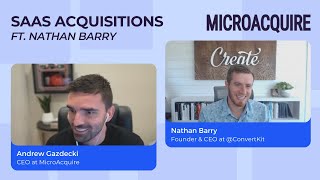
Nathan Berry, CEO of ConvertKit, talks about bootstrapping his email marketing platform to significant revenue without venture capital, building a remote team, and lessons for founders navigating growth and sales.
Foreign.
I am here with Nathan Berry, CEO of ConvertKit. Nathan, thanks for joining me on this podcast.
Yeah, thanks for having me on.
So, special podcast here. We don't really have a topic, we kind of just said, hey, let's you know, record and see what happens. I personally want to know how you got to your first million, like your first 5 million, how you came up with your company name. But to start, do you want to maybe give an overview of like what ConvertKit is and where you are now?
Yeah, sounds good. So ConvertKit is a creative marketing platform started in 2013 in the email space. So basically I was in order with mailchimp and decided to build. Build my own mailchimp where we're at now. Let's see. So we've been at it for eight and a half years. We've got just about 29 million. ARR. I'm like waiting for that tip over in the next like few days.
Are you, do you, do you. So you've never raised any outside capital?
Yep, no outside capital.
Not even a dollar?
Not even a dollar. I put in some of my own money. I used 50 grand of my own money from like, that I had from the like ebook and course and you know, audience building world.
But dude, that is, that is fucking incredible, dude. Like you're like, you're, you're the king. You gotta be in like the top 10 of like bootstrap companies potentially.
There's probably a bunch, right? Like writing under the.
Yeah, but as far as like mailchimp.
Yeah, yeah, that's an interesting. We could get into that maybe later that there's a whole interesting thing with them exiting this last week.
But how'd you get like, how'd you get started? Like what was like the. So you're at 20 million now, but there's a day where you had zero, you had no customers. I'm guessing you had no idea how you were gonna pull us off. And now you're at 29 million. How'd you get, how'd you get to the first million? How'd that go?
Yeah, so I, my background's in UX design and like interface, iPhone apps and all that. And I was building an audience. Like I got to the first 800 subscribers, you know, a thousand subscribers for an audience around, teaching people how to design iPhone applications. And that was the start of all of it for me. And in there I like started to get obsessed with the world of like giving away a free PDF, like content upgrades or some of these, these things to grow an email list and tagging your list, all those best practices.
And.
And when I, like, kept trying to hack around mailchimp. And then that was when I was like, okay, I'm gonna create my own. And that was January 2013. I have always been, like a work in public blog, publicly kind of person. And so I said, I don't know.
I have definitely noticed. Yeah, I enjoy it. All of it.
Yeah. So I said, why don't I build a whole company in public? And so what I did is I launched what I called the web app challenge. And I made up all the stuff on the spot, right. And said, I'm going to build a Web application to 5,000amonth in revenue in six months, and I'm going to customer fund it. So I'm going to do it with only $5,000 of my own money. And, oh, I'm going to, like, blog the whole. Like, you'll get weekly updates on how things are going. And I did that. It went, like, moderately well on one hand. It went really well. Like, I ended the six months at 2,200amonth in revenue, which. Right. About 2,000, which I was really happy with. I didn't hit my goal, but it was like, I basically learned that SaaS is really slow and that the original goal.
How. How big was the team at that time? When you, like, first. Was it. Was it just you?
It was me and then two contractors.
Nice. So you're a solo founder too?
Yeah, I am.
Oh, yeah, me too. I've never had co founders.
I think there's times that co founders would be awesome. And then I also think about the dilution of, like, chopping your equity in half on day one or, like, the people who have four co founders. I'm like, what are you doing? And then you're gonna go, right. You know, it's just personal preference.
Oh, oh, me too. And you move faster as this is totally, like, personal preference. Co founders, definitely, I think, are great, especially if you can get like a Yang and a Yang, like somebody who can sell somebody to build. But yeah, man, that's like. You know, people I hear often say, like, you're gonna get diluted if you raise bc, and it's like, no, you're gonna get diluted if you have three co founders. Like, that's. That's how you get into the single digit. Like, but no one talks about that.
Yeah, there's this idea maybe that you're short changing other people. I don't know. Like, I've had a lot of people tell me, like, you should have a co founder and I'm like, okay, but then the company has to be twice as successful for me to make the same amount of like the same amount of money or the same, I guess, company valuation outcome.
Yeah, I've always enjoyed it because I'm like a ready, aim, fire entrepreneur. And so like at business apps I didn't grow it to 29 like you, I grew to 10 and then I sold it. But I hired on basically all my friends once we kind of found product market fit, gave them generous stock options, all that stuff. But not like co founder options. You've de risked the business so they're taking on way less risk by joining. So that's kind of always been my. And I did the same with Microfire as well. So I think we're on the same page there, man.
Yeah, I think that especially if you come in with a little bit of money, like I didn't have a lot but like to fast forward the story a little bit, I really struggled to do it with no, like only the $5,000 that I first put in. And the idea was to customer fund it so that I wouldn't like go off on this road where I went away and built for a year and then talked to customers and found out that I built the wrong thing. But I had a hard time getting that going. So I ended up putting in another $50,000, um, that I had from you know, books and courses and like the other things I was doing online and that ended up being enough money to hire someone and who like, was kind of like that late stage co founder, his name was David, but I was able to pay him like a decent salary and equity and so that like he was working towards 10% of the company at that point. He ended up leaving after a couple years and we bought him back out and, and stuff like that. But even in that, that position where you like work on the company for a year or two years before you bring on other people, it puts it in like a, from like a 5050 equity position into you know, a 9010 or a 955 or something like that if you're able to cover their salary. Because most people aren't excited about joining a company, but they're like, great, so I'll just make no money for a year or two. And that's cool, right? You know, like everyone's like, hey, can you at least pay me? Yeah, you got $7,000 a month, $10,000 a month.
You got to pay up with equity for that sort of commitment. Like, hey, I mean, we could even talk about this further. But I have strong feelings against co founders because, number one, 60% of starters fail because of co founder conflicts. That's a higher rate than you're more likely to get divorced than. Or, excuse me, you're more likely to have a divorce with your co founder than your spouse. So I think a lot of founders kind of go into this, like, yeah, everyone says, like, you know, if I want to raise money, I need to have, like a co founder, stuff like that. But the reality is you're also not only diluting yourself, but you're bringing in a ton of risk into the business. And arguably, from my view is you just kind of move slow or, like, you just, you know, you're just kind of tinkering, and then you got someone, like, you got to run everything past and get there. I've just heard some horror stories about co founders, like, in brutal breakups and stuff like that, but some people might be listening and be like, co founders all day. But I should preface that with, I have a wife that's like, basically my co founder that, like, gives that sort of support and listens well.
So one, I like that we're diving into podcast topics that aren't just like, puppies are good type topics where we, like, everyone automatically agrees, like, of course puppies are good. You know, like, in this case, it's great that people can disagree with us on, you know, not a dislike of co founders, but just saying, hey, that. That's not necessary. Um, that's.
That's. That's better wording. I would. I. I think dislike is. Is too strong of a word. Um, but it just. I guess I'm more of like a lone wolf in the beginning, and then I kind of figure it out, and then I bring in people that I need.
Yeah, and you have to have a broad range of. Of skills to do it. Like, if you are coming into a startup and you're only the sales guy or you only have this one skill, then I think you're gonna have more trouble without a co founder. In my case, like, I'm not great at any one thing, but I know how to write and sell and design and code and like, a bunch of things. So that means that I can hire a developer and know, okay, this is pretty good work. You know, it's a lot better than what I could do. And I can be the. Like, in the early days, I was the design counterpart to their. Their development skills. Whereas if you know nothing and you're trying to get into it. You need a co founder.
That I would agree with that. And I think that's kind of like the paradox of being a CEO is you're good at everything, but you're not great at anything. At least for me. I'm like, I could sell, I could market, I could manage product teams, but I'm not great at any of it. Well.
So we're talking dilution for a second. One thing, you've been talking about bootstrapping a lot more. You launched Bootstrappers as a publication and you talk a lot on Twitter right now about owning. I can't remember the Tweet today, but 7% of a billion dollar company versus 70 of 100 million, or maybe you had those in an order of magnitude lower. How are you advising people right now on like the raising funding compared to how big of a exit you're trying for or any of that? And then how does the co founder.
Don'T, don't raise capital. Don't like, just don't like. I think, I mean, for me, I raised capital for Microquire because I had a pretty substantial. I didn't build like the biggest company, but like, I'm set, I'm comfortable saying that. And I felt the market opportunity supported it and I wanted to work with all my friends again. So it allowed me to quickly hire back my old VP of engineering, my VP of product. So we kind of got like the band back together. Now we're just having a blast. But I truly believe venture capital makes sense for like 1% of entrepreneurs. And it's all you read about in the media and it's celebrated. And then I talked to so many founders that they end up in these jobs that they created for themselves that they don't want. Like, they'd be, they'd be perfectly fine with like a $10 million exit. But you just signed up for like, basically, you know, you had a few VCs tell you like, hey, we'll put your money into this. Now you got to go climb the biggest mountain with flawless execution on the first try. And I'm like, I don't know, man. I think you should just like I've, I've had a couple tweets where it's like, hey, just start small. Like, you know, service based industry bootstrap, you know, an asset that you can sell. SaaS, company, E commerce, whatever, sell that and then swing for the fences. So I'm kind of on that, that third step that's kind of like, I have it written down on my Whiteboard as like kind of my goals. You're already like building a monstrous business like you, you kind of like skip step one and went straight to step three mixed with step two. So kudos for you on that. But yeah, I just think, you know, I think, you know, raising venture capital has its place, but I just think for the majority of entrepreneurs, you know, I guess to put another way, I think a lot of entrepreneurs don't understand how to optimize for the outcome that they want. And they get stuck in these situations where if you raise $10 million, you got to sell that company for definitely more than 10 million. If you understand liquidation preferences, if you sell a company for 10 million and you've raised 10 million, that money's going straight to. You're walking away with a job.
Yeah. Many times if you raise or if you sell it for 20 million, you're still not walking away with anything.
Yeah. And so. And then you got to get approvals like that. I just think there's, you know, a good narrative around, you know, building businesses around what you want your outcome to be. That's all I'm trying to do is just, you know, bring light to like, hey, there's people doing it. You can do it too. You know, not, not all startup, like not every founder. You don't have to build a billion dollar company to be successful as a founder. You can do this too. Here's some stories of like, other people really doing it. And like with business apps like, oh my God, man, we had like offers to raise money. Like we did the full sandhill row, like pitch and I was like, young and I kind of had like a, a bird in the hand. I was like, I don't. And every discussion was like, well, if, if you took this to enterprise, I could be huge. And I'm like, well, I kind of like, you know, the S and B segments working really well. We're profitable. Like, I don't know what I'd spend the money. I'm like, I don't. Like I'm young and it worked out really well. And I think, I think that's just to put it more plainly, I just think it's a much more realistic path.
One thing that I think about in that world a lot is the like, there's that line between like venture funded and bootstrapped. It's really easy to cross the line from the bootstrapped side to the venture funded side. And it's very, very difficult to go back. Like I can. There's only a handful of companies that have probably ever done it like Wistia did it recently, recently named three years ago where they borrowed a bunch of money and bought out all their investors and said like, hey, we're going back to an old school way to do it. Didn't like, I think Michael Dell bought out or maybe took Dell private again or like there's like a handful of stories over the years.
Yeah.
But if you keep waiting to raise funding, like let's say you're not like, I think a lot of people think I'm like a dogmatic, you must bootstrap kind of person. And I'm like more in the middle of depends on the team, the business, everything else. But the longer you wait to raise capital, the better your dilution gets, the more opportunities you have. We're not going to raise capital for Converkit, but if we wanted to now you can give up 10% of the company for 20, 30, $40 million worth of VC funding. Whereas, you know, if we'd done a seed, series A, series B, series C to get to this point, then I would have given up 40% of the business already.
Yeah, no, I, I, I think, you know, the, the, the way I view venture capital is it's a, it's a tool. And I think that decision should be driven by your personal ambition and then your market opportunity. If you're in like a billion dollar market and you can afford to kind of swing like that's what you want to do, I think it makes a lot of sense. But yeah, the longer you, you know, are able to bootstrap, you typically will have less pressure, you'll learn a ton. And when you finally like the worst time to raise money is you want to raise money when you built a rocket ship.
Yeah.
And you just, you, you just need gasoline to put it in. And I think a lot of founders with how easy it is to raise money, they put so much and then it's what's celebrated. It's kind of like what everyone's doing right now. So you're raising money when you haven't built the rocket and that's a scary time because like you're going to use that money and it might not work out and then you, you know, it's just not going to be a fun. But if, but if you waited like two years like you're saying, and you really moved a little bit slower, you built that rock like you got a rocket now. So you could, you could shut, you could accelerate your growth a ton if you raise money. So I, with you I'm not anti VC in any way. I'm more just, you know, trying to educate people on alternative paths. Like, like, here. Here's what I did. Worked out really well, right? Maybe it'll work out for you, but I got tons of friends that run like my friend. I'm an advisor for a company called Sendoso. They traced 100 million from soft Bank. I've known the kid from college. Like, yeah, you know, I don't care. I'm not like, bro, like, how'd you. How could you do that? I'm like, congrats. Like, you know, that's your thing, man. Go big. I'm like, I root for all entrepreneurs to succeed. But, you know, I just. I noticed just in the media, it was just, like, glamorized. And I just thought, you know, this isn't realistic for 99 of entrepreneurs. So, you know, let's. Let's. Let's, you know, call TechCrunch out for a minute and then, you know, let's start sharing stories about, like, you know, people doing cool stuff, you know, taking a different path.
Yeah, for sure. Well, I appreciate it because I think the same thing that sharing, you know, sharing my own story and all that so that people can take what they want from it makes a big difference.
Well, what advice would you give to, like, people like, what are. I have one piece of advice that really helped me when I was bootstrapping business apps. It was a metric that we tracked religiously. Do you have any sort of, like, advice you give to founders? Look up their company, like, the key to make it successful or make it easier? Anything like that? That's a super.
That's a super.
What's the secret, Nathan?
Well, as I think on that, what was the metric that you tracked?
Customer payback period. Okay, so what I mean by that.
Is more in a business.
Yeah, yeah. So we built a model where our customer payback period was less than a month, so we could immediately reinvest that back into the business.
Okay, I have to ask more. Was that. So was like, paid acquisition pretty key to that model or what was driving a lot of the growth?
Initially inbound and then once. So business apps was a right place, right time. Business. Blue Ocean Market. The iPhone just came out. We literally almost developed a BlackBerry app. We were like, that early. And so the model was we worked with web design agencies where they'd white label our product. This is in, like, 2011. And so we wouldn't even pick up the phone unless, like, you were willing to sign up. It was Bonkers. So like at one point we were running at like a 93% profitability margin, like something outrageously high. Like we just, we just hit like right time. Everyone wanted to figure out how to get, you know, their clients on the app Store. And so yeah, actually we did expand to like, I remember we had like a, we had a, we had literally had a hundred thousand pay per click campaign going for about a year because we were in this place of like we didn't know it worked or what didn't work. Everything, you know, when everything's just going right and you don't have anyone like in the business like telling you what's working, what's not.
Yep.
Because we were also young and then we finally hired a VP of marketing to put some attribution in place and he's like, hey, you know that your a hundred thousand Google Ads campaign, it's showing like a 10% return. And so we call that the, it's, it's, it's notorious as the, the era of where we blew up a Ferrari every single month.
Yeah. Oh man.
Which would have been cooler actually. Actually I love Ferrari so I would have cried. I cried. I would have cried either way.
Yeah.
Oh man.
Yeah, that, that's a great metric. I think the thing that this is super corny in the starter space but like a lot of my story is a lived out do things that don't scale. You know, from Paul Graham, the Collison brothers, all of that of the time that like we did this initial push for convertkit and in six months got to roughly 2,000amonth in revenue and then kind of stayed there because it turns out you need a product that's better and it takes time to build a good product, especially if you're, you know, people and capital constrained. And so we sat there at that like 2000amonth mark, you know, adding some customers, churning out some more customers and bouncing around for quite a while as I was trying to make like inbound marketing work. And I was really struggling with that on, you know, content marketing and everything. And then when we took off was about 18 months, actually more than that, almost two years in when I said like okay, enough of that. I'm going to actually one, focus on the product full time because I was trying to do a bunch of things to pay the bills and grow ConvertKit. Two, decided to put in money. So that's when I put in $50,000, basically our savings and said, hey, we're gonna go all in on this. Hired someone who I mentioned earlier David, who ended up leading engineering for the next two years. And then the last thing was I started doing sales. Like before I was like, sales, none of the scales, you know, I need something that will take us to a hundred thousand a month or beyond. Like, I can't get on a call to sell a $29 account or a $49 account. Like, that doesn't make any sense. And once I got rid of that idea and realized that every account that I sold made the next one like just a tiny bit easier, that ended up getting us a lot of traction. And so we went from, well, I guess another component is when those account, when people wouldn't want to like do the sales thing and, or we'd get through, you know, a sales pitch and they'd be like, oh, I love this but you know, I'm not going to sign up. Like, and they would have to give a reason. And I would say. Or they would end up saying, like, it's too much work to switch. And so one time, out of somewhat desperation, I was like, I'll do the switch for you for free. Like, give me FTP access, give me WordPress, you know, Mailchimp access.
I love that, I love that.
Let me do it all for you for free. And they were like, okay, you know, and it was for like a 3000 subscriber account that was like $49 a month and they had way too many automation emails set up. And, and I used to, with my two monitors, I used to turn on a TV show on Netflix and then over on this other monitor, like just work through, you know, swap out their forms. You know, in one case I like upgraded someone's WordPress installation was like doing a bunch of this random stuff and it totally, it did not scale at all in the one sense, but then that was another customer and then they would end up referring to someone else. And so it just went from there and none of it was profitable. But that year we went from 2000amonth to a hundred thousand a month at the end of the year. And it never would have happened without like the methodical direct sales and migrations.
Good for. Good for you, man. I'll tell you my inflection point, which is kind of similar. So our model was we would take, let's say ConvertKit and we white label it and then we sell it into a web agency with a bunch of small business customers. And this is back when AWS was just in its infancy. And so I would go into the server and I'd duplicate like a folder manually. And then I'd change the colors for them, like, change the logo for them. Like, I'd have Photoshop opening up and sometimes I'd have to do like 50, like in a day. Because, because I'd have one day like, all right, I'm. I'm going to my cave. And then I remember the day we automated that. I was like, oh my gosh. Like, I posted on Facebook as if it was like the biggest deal ever. My friends were like, why are you so excited? I was like, I just got out of jail. Like, I don't have to do this.
Section my life back.
Yeah, I mean, but that, but that. I think there's a. I think you'd be surprised at how many startups like have those moments, you know, where you're doing so much stuff manually and then you eventually build. I assume you have automated processes around that now. Blah, blah.
Yep. But the, you know, one thing as we scaled so we went from, you know, 2,000amonth to a hundred thousand a month with sales being a primary thing. And then like affiliates kicked in about halfway through that. And affiliates came from the same direct sales approach of like getting on calls with people saying, hey, like, why don't you write a blog post about ConvertKit, you know, why don't we do a webinar?
How much of your revenue comes from affiliates? I can ask now?
It's, it's less. At one point it was like 35% and now it's less than 20%.
That's awesome. Channels 1. One mistake I think we made at Business Apps was since we white labeled the software, the end customer is owned by the reseller. So an affiliate model probably would have been better. But the story behind that, some guy in Switzerland said, hey, can you label this? And this was when we were at like 20,000 annual recurring revenue. I was like, yeah, if you give us 10k, we can do it. And he did it. And that kind of changed the trajectory of business apps.
Yeah, it's interesting. We've also on our affiliate program, we did a 30% recurring commission for life, which was super high, but it was what Aweber was doing at the time. And they were the most popular player in like the blogger space. And so we basically just had to copy, copy them. That's how it felt. And now I think I would structure it differently. I think I would do a smaller thing or do a payout for two years or something like that. Because when you start to look at the customer acquisition costs on the affiliate channel compared to others, it Gets pretty expensive.
What are. Tell me about your culture at ConvertKit. I hear great things all the time.
Like, everyone to say that. It's all.
You know, it works, man.
Yeah.
So, like, I want to. I want to hear, like, your favorite part about running the company right now, what you enjoy the most. Like, I want to. I want to know about you, man. Like, you're fucking badass.
So I probably. The team and the culture is the most fun thing. Um, we've got a team. I think we're 68 people today. We've always been, you know, remote distributed team. Couple of things on culture. I think that culture comes down to relationships and trust and. And everyone talks about, like, oh, it has a great culture. And then they, like, follow it up by saying, like, there's free lunch. There's. And they list a bunch of things that are, like, random perks. They're not culture. And so.
Oh, man, we're on the same page, dude.
It's just. It's so telling when you. When you're like, whatever you say after that. And I'm like, that's not. That's not it at all. So the. I think that if you are seen by your coworkers, seen in, like, a personal sense, not like, oh, yeah, they're, you know, there he goes. But, like, you know, you're known and seen, your voice is heard. You can trust your co workers to come to you directly when there's any kind of a problem. Like, they won't talk about you behind their back. Behind your back. They'll come and be like, hey, man, when you said this in the meeting, like that, like, they'll do that very directly. Yeah, I'm trying to think what other things. Let me just give you, like, four or five things that we do that I think help shape the culture, and then I'll give you some insight into, like, the type of culture that it is. So the first thing that we do is we have our Team Stories podcast. So it's an internal podcast just for the team. And basically what happens is everyone gets interviewed, like, the story of their life, and then a bunch of random questions at the end.
That's so rad. I love that.
So the idea is that if we're getting on a get to know you call, you know, like, say you joined ConvertKit a few months ago, and it's like, oh, let's catch up. I can go listen to your podcast episode. We can Skip the first 30, 45 minutes of what that call would have been of, like, okay, so tell me how did you first hear about ConvertKit? Where did you grow up? Any of those?
Dude, I'm stealing that.
So good. Um, yeah, I'm obsessed with finding leverage in everything. And so I was like, okay, if you come to a company and have the same conversations 50 times, like, let's just record it once. Let everyone listen to it on their runs, and then you dive in. So, like, I have someone. She's on our. She leads all our content marketing and editorial and all that. I worked with her for five years, and when we launched this podcast a year ago, she was one of the first episodes. And, like, I learned so much stuff about her in that episode because, you know, she filled in all these gaps of things that I knew, and I never sat down and been like, hey, tell me your life story. Um, yeah, so that's amazing. Highly recommended. The second thing is we do something called unsolicited feedback, and we normally do this in person at our team retreats. Um, but we've. We've skipped the last. Like, we normally do team retreats twice a year, and we've done eight of them over the years. Um, and just with COVID we've missed. You know, we've gone virtual for a handful. Um, but what we do is we sit down in a group in your team. So let's say there's eight people on your engineering squad, or, you know, five people on your customer support management team or whatever, right? And we put one person in the hot seat, and we talk about that person as if they're not there. And so everything's third. Third person. You know, when Andrew does this, it's really frustrating. When Andrew does that, it's phenomenal. I wish he would do more of it. And so for 10 minutes, people are just talking about you, and you just sit there and take notes, and you're not allowed to say anything. And we give a couple of prompts, and there are things like, okay, what's something that Andrew does really well that you want him to know? Like, that you brag about him to other people. If you were working with him for the next 10 years, you know that you two are going to work together. What are things that, like, are not annoying? They're not feedback that you'd give him because it's not worth it. But, like, if you're going to work with him for 10 years, you should probably tell him this now, and he could actually fix it. Like, hey, when you show up to meetings unprepared, like, it has this impact. So you start to get more Criticism. And then another prompt is, let me see if I can get it right. Let's say that this person using, you know, Andrew, using you as an example, are up for a promotion in six months. They don't know it's coming. You know it's coming. What's the feedback that you could give them now that would give them the best possible chance of success of getting that promotion? So what happens with prompts like that is this person sits there and they get the best constructive feedback that they've probably ever gotten and they get the best compliments. The things that people are saying, like what they're incredible about their job. And then after 10 minutes they have taken their notes and they get five minutes to kind of respond to the group and address things of like, wow, I didn't know that. Thank you so much. You know, anyway, it just, I, I.
I, I'm, I'm, I'm stealing that too, dude. Like, yeah, we, we did that once at Business Apps. It was, it was similar, but it was only for the exact team. We went around like the table and we gave like really candid feedback about what you're really good at and you know, if we had any critical feedback. Um, and then it ended with this was like five years ago. Um, but it was just like such candid feedback from the team and just like appreciation, but also, you know, like what the person thought your strengths were and then were, you know, you could probably, you know, you know, constructive feedback. And it, and it, and it felt like it brought the team together. It was like, wow, thanks for the honesty. Um, so that's, that's badass, dude.
Yeah, a bunch of those things like, make a really big difference. And so just imagine that the culture on a team, if you did that every three months, every six months. Um, I guess we do it every six for years. And you really stress, okay, don't save feedback for this time. This is just a practice session. This is just so that we work the muscle and really like the key thing that we're practicing is when something comes up, you just go to someone directly and talk to them about it. And if you can build that culture, like, it's amazing. Two other quick things that we do that are slack related and easier. We have a bot that posts every Monday morning and says, what'd you get into this weekend? Like share a photo and everybody, like, you see this feed of photos and you get little insights into people's lives. Oh, he loves hiking, she loves woodworking. I didn't realize that they had, have Kids the same age that I do, you know, those little things and it sparks lots of great little conversations. And then the last one is we have a little bot called a suppot. And it every week grabs three people at random and pairs them up and puts one of them in charge and says, you're going to have a 20 to 30 minute, like, get to know you sup conversation. And you end up, you know, in a company our size, it basically breaks silos where it's pulling people from engineering and marketing and product.
And dude, this is fire, man. You can write like a book on like remote team building, like a Twitter thread or something. Yeah, because it's not easy when you're in an office. You know, you get that small chat, just like, hey, we're in the coffee room. And you also get that like energy of just like, you know, I'm around you all the time. Like I trust you. Like the, the more social interact. This is just how like long friendships are made. It's just you think about your best friends. Like you're usually, you were just around them a bunch. Like all my friends from college and high school, you know, the people I work with, we just spent a lot of time together. And over that time you build, you know, strong relationships just out of. It just naturally happens. Sometimes it can go in the other way and you're like, I don't like this person at all. And like, you know, you want to hear some things that I did. So I was, I was big on fun was our culture. Like, that's kind of what we, we really emphasized on. So we did some like goofy stuff. We had these like awards called like the Banana Awards. It was like this little like trophy banana, plastic banana. And at the end of every quarter, the head of each department, from customer success to product engineering sales. And then I would have like a CEO one. We'd award that person, tell my in front of the whole company. And if you got two, if you got one banana, I'd buy you lunch for a week. Like, I'd go and I'd get it. And then if you got two, you got $500. Then if you got three, you could get a plane flight to anywhere in the world. Which was kind of funny. The first person to get three booked like a first class flight to Japan. It was like $4,000. So we had to put some like guardrail. Like, hey, like, no, you're flying economy. Like, we're not, we're not funded here. Like, okay. We also do, we would do end of quarter like, since we were in an offices, it wasn't like an off site, but we'd shut down the office. We'd say, no one's working today. We're gonna go. Like, when we were in San Francisco, we, you know, we. What were some things that we did? We went like bowling. We went like, you know, we took like this, a trolley bus all around the city. Like, we try to do stuff like that. Just make it like, really fun. Oh, we used to have this thing called the. The Wheel of death, which was kind of funny if, if you don't have this problem. But if you ever have an office that has trash cans inside and you have to take out the trash and like 50 people in the office, someone's got to take out that trash every day. So at the end of every day, we'd have everyone's name on this big wheel and then we. And then everyone would bet. So, like, you could say, andrew's gonna get picked. And if. And everyone's putting in a dollar. And if I got picked, you would win everyone's money. And then I would have to take out the trash. And I always got big. So.
Did they wait, like, did the wheel spin in such a way that it ended on you more than was statistically likely?
I'm sure someone got in there and.
Like, I mean, that's what I would do if I worked. There is. I would try to regain somebody.
Yeah, yeah, those, those. Those are the three that come to mind. We, we used to do workshops. We had a lot of movement across departments. So if you wanted to learn about sales and your. And customer success, we'd have like every. This is how you sell. Same product engineering. We had people that started in customer success. We were big on promoting internally. So figuring out, because we'd ask, like, what do you want to get out of this? You're starting here. So just, just a couple things coming to mind. But what.
What would you do on like, the development side of like, people development to. To enable that? Because a lot of companies have that as a value and then they either don't put in the training or they're promoting people too quickly into roles that, you know, they're not equipped for and they end up failing out of in some way. Like, what were the things that you did that actually turned that from a, like a stated value into something that was actually effective for the business?
Well, we would figure out what role they wanted to actually move into. A good example is so the VP product at Microacquired today started at Business Apps and customer success. He's one of my best friends. He was like, in my wedding and I basically started slowly passing product things on him and then kind of told him my process, which wasn't good, and then he kind of just took off with it. That's probably not the best example of how we, like, helped. He was just a beast and he just was meant to be a extraordinary product leader. But we just had really good onboarding. So we invested a lot in onboarding training, basically from start to finish. So we only again, because we were bootstrapped, we couldn't hire experienced, like, salespeople or. Everyone we hired was, you just got out of college, this is your first job in tech.
Yeah.
And so we had like, really, really, really good training programs. So everyone that entered the business, regardless of the role that they took, we always made an emphasis to make them better on their way out. And I've been trying to look for people to hire other roles that I previously have worked in. Now they're all in like. Like, I have five sales reps that are like VP of sales now. Yeah, it's badass. I'm like, I was like, I had a call, a friend, he's like, remember when you were paying me like 50k ot? I'm making like 350 now. I'm like, like, do you want to drive my require? I'll pay 50k. I was doing a reference call for him, but it was nothing like, too formal. It was more just like me understanding what they, you know, we're looking for. And then we, we kind of, you know, get together as, you know, a team or an exec team, and Lubin, the leader of the department, and then kind of train them as if they were starting from like day one. And sometimes it worked out, sometimes it didn't. Some people move back, all sorts of stuff. Some people had hybrid roles where they were in customer success, but they got to write, like on our blog or like, they like to write. So I don't have any magic tricks there, but it was basically like, hey, like, yeah, you're interested in this. Let's see if we can make this work. So it's kind of like a case by case basis. I wish I had like a outline playbook like you did.
No, but I like the examples. And I just think that companies need to realize that it's something to take beyond just a. Like, it's not good enough to just state it as an intention. You actually have to follow through. And it's not like some magic playbook. It's just probably like career development conversations with people checking in. Hey, how's that going? Teeing up opportunities. Like when you know someone has that product mind, then like sending them a product related problem that matches their skill level.
Yeah, like, like one thing I'll add is when I hired, I always looked for, I, I would always look for these three. Three things in these order. Motivation, attitude and skill set. I didn't care about skill set at all. I was like, I can train you on whatever you need to be trained on. There's obviously some roles where that doesn't apply, but if they were motivated, like.
For 10 years, you should probably tell him this now and he could actually fix it. Like, hey, when you show up to meetings unprepared, like, it has this impact. So you start to get more criticism. And then another prompt is, let me see if I can get it right. Let's say that this person using, you know, Andrew, using you as an example, are up for a promotion in six months. They don't know it's coming. You know it's coming. What's the feedback that you could give them now that would give them the best possible chance of success of getting that promotion? So what happens with prompts like that is this person sits there and they get the, both the, the best constructive feedback that they've probably ever gotten and they get the best compliments. The things that people are saying, like what they're incredible about their job. And then after 10 minutes they have like taken their notes and then they get five minutes to kind of respond to the group and address things of like, wow, I didn't know that. Thank you so much. You know, anyway, it just.
I'm stealing that too, dude. Like, yeah, we did that once at Business Apps. It was similar, but it was only for the exec team. We went around like the table and we gave like really candid feedback about what you're really good at. And you know, if we had any critical feedback and then it ended with this was like five years ago. But it was just like such candid feedback from the team and just like appreciation, but also, you know, like what the person thought your strengths were and then were, you know, you could probably, you know, you know, constructive feedback. And it felt like it brought the team together. It was like, wow, thanks for the honesty. So that's, that's badass, dude.
Yeah, a bunch of those things like make a really big difference. And so just imagine that the culture on a team, if you did that every three months, every six months, I guess we do it every six for years. And you really stress, okay, don't save feedback for this time. This is just a practice session. This is just so that we work the muscle. And really like the key thing that we're practicing is when something comes up, you just go to someone directly and talk to them about it. And if you can build that culture, like, it's amazing. Two other quick things that we do that are slack related and easier. We have a bot that posts every Monday morning and says, what did you get into this weekend? Like share a photo and everybody like, you see this feed of photos, you get little insights into people's lives. Oh, he loves hiking, she loves woodworking. I didn't realize that they had have kids the same age that I do. You know, those little things and it sparks lots of great little conversations. And then the last one is we have a little bot called a supp. And it every week grabs three people at random and pairs them up and puts one of them in charge and says, you're going to have a 20 to 30 minute like get to know you sup conversation. And you end up, you know, in a company our size, it basically breaks silos where it's pulling people from engineering and marketing and product.
And dude, this is, this is fire, man. You write like a book on like remote team building, like a Twitter thread or something. Yeah, because it's not easy when you're in an office. You know, you get that small chat, just like, hey, we're in the coffee room. And then you also get that like energy of just like, you know, I'm around you all the time, like I trust you. Like the, the more social interact. This is just how like long friendships are made. It's just we think about your best friends. Like you're usually, you were just around them a bunch. Like all my friends from college and high school, you know, the people I work with, we just spent a lot of time together. And over that time you build, you know, strong relationships just out of it just naturally happens. Sometimes it can go in the other way and you're like, I don't like this person at all. And I mean, you know, you want to hear some things that I did? I was so, I was, I was big on fun was our culture. Like that's kind of what we, we really emphasized on. So we did some like goofy stuff. We had these like awards called like the banana Awards. It was like this little like trophy banana, plastic banana. And at the end of every quarter, the head of each department from customer success to product engineering, sales. And then I would have like a CEO one. We'd award that person, tell them why in front of the whole company. And if you got two, if you got one banana, I'd buy you lunch for a week. Like, I go and I get it. And then if you got two, you got 500. And then if you got three, you could get a plane flight to anywhere in the world, which was kind of funny. The first person to get three booked, like a first class flight to Japan. It was like $4,000. So we had to put some like, guardrail. Like, hey, like, no, you're flying economy. Like, we're not. We're not funded here. Like, okay. We also do. We would do end of quarter. Like, since we were in an office, it wasn't like an off site, but we'd shut down the office. We'd say, no one's working today. We're gonna go. Like, when we were in San Francisco, we, you know, we. What were some things that we did? We went like bowling. We went like, you know, we took like this. A trolley bus all around the city. Like, we try to do stuff like that. Just make it, like, really fun. Oh, we used to have this thing called the. The wheel of death, which was kind of funny if. If you don't have this problem. But if you ever have an office that has trash cans inside and you have to take out the trash and like 50 people in the office, someone's got to take out that trash every day. So at the end of every day, we'd have everyone's name on this big wheel and then we. And then everyone would bet. So, like, you could say, andrew's gonna get picked and if. And everyone's putting in a dollar. And if I got picked, you would win everyone's money. And then I would have to take out the trash. And I always got big. So that.
Did they. Wait, like, did the wheel spin in such a way that it ended on you more than it was statistically likely?
I'm sure someone got in there. And like, I was like, I mean.
That'S what I would do if I worked. There is. I would try to regulate.
Yeah, yeah. Those. Those are the three that come to mind. Yeah, those are great. We used to do workshops. We had a lot of movement across departments. So if you wanted to learn about sales and your customer success, we'd have like a VP of Sal be like, this is how you sell. Same product engineering. We had people that started in customer success. We were big on promoting internally, so figuring out because we'd ask, like, what do you want to get out of this? You're starting here. So just. Just a couple things coming to mind. But what.
What would you do on, like, the development side of, like, people development to. To enable that? Like, because a lot of companies have that as a value, and then they either don't put in the training or they're promoting people too quickly into roles that, you know, they're not equipped for and they end up failing out of in some way. Like, what were the things that you did that actually turned that from a, like a stated value into something that was actually effective for the business?
Well, we would figure out what role they wanted to actually move into. A good example is. So the VP product at Microacquired today started at Business Apps and Customer Success. He's one of my best friends. He was like, in my wedding, and I basically started slowly passing product things on him and then kind of told him my process, which wasn't good, and then he kind of just took off with it. That's probably not the best example of how we, like, helped. He was just a beast, and he just was meant to be a extraordinary product leader. But we just had really good onboarding. So we invested a lot in onboarding training, basically from start to finish. So we only, again, because we were bootstrapped, we couldn't hire experienced, like, salespeople or everyone we hired was, you just got out of college, this is your first job in tag. And so we had, like, really, really, really good training programs. So everyone that entered the business, regardless of the role that they took, we always made an emphasis to make them better on their way out. And I've been trying to look for people to hire other roles that I previously have worked in. Now they're all in, like. Like, I have five sales reps that are like, VP of sales now. Yeah, it's badass. I'm like. I was like. I had a call, a friend, he's like, remember when you were paying me like, 50k ot? I'm making like 350 now. I'm like, do you want a job my require? I'll pay 50k. I was doing a reference call for him, but it was nothing like, too formal. It was more just like me understanding what they, you know, we're looking for. And then we kind of, you know, get together as, you know, a team or an exec team, and Lubin, the leader of the department, and then kind of train them as if they were starting from, like, day one. And sometimes it worked. Out sometimes it didn't. Some people move back, all sorts of stuff. Some people had hybrid roles where they were in customer success, but they got to write, like on our blog or like they like to write. So I don't have any magic tricks there, but it was basically like, hey, like, yeah, you're interested in this, let's see if we can make this work. So it's kind of like a case by case basis. I wish I had like a outline playbook like you did.
No, but I like the examples and I just think that companies need to realize that it's something to take beyond just a. Like it's not good enough to just state it as an intention. You actually have to follow through. And it's not like some magic playbook. It's just probably like career development conversations with people checking in, hey, how's that going? Teeing up opportunities. Like when you know someone has that product mind, then like sending them a product related problem that matches their skill level.
Yeah, like, like one thing I'll add is when I hired, I always looked for, I, I would always look for these three. Three things in these order. Motivation, attitude, and skillset. I didn't care about skill set at all. I was like, I can train you on whatever you need to be trained on. There's obviously some roles where that doesn't apply. Um, but if, if they were motivated, like, you know, willing to learn and like willing to like really give a good shot at making this transition work, that, that was the key. Like, are you, are you really motivated to move over into this new department and this new role? Because if the motivation's not there, you can have all the talent in the world, but if the motivation is not there, it's just not going to work. Yeah, so that's what I, and then I had some like trick questions to like figure out like how motivated they were.
Like, what's one of those?
My favorite one was so usually when they wanted to transition over, like, here's one for marketing, I would line up 10 parts of market, let's call it like seven parts of marketing, like paid marketing, content, SEO, brand creative. And I'd be like, okay, here's a, here's a piece of paper. I want you to give $20 to spend, I want you to spend that across these five, you know, skill sets and tell me what you're, what you're good at. And then they would kind of write down like, I'm really, I think I'm good at SEO, I'm a good writer. And then I'd say, okay, we're going to do this again, 20 bucks, but tell me what you like to do. Like, don't tell me what you're good at. Like, what do you like to do? And then the numbers were always kind of flip flopped. And then it's like, okay, this is where we're gonna work on. And this is where I think you should. Do you see the difference? Like, it's not about what you're good at. Like, I'm a firm believer that if you love what you're doing, you're gonna be great at it. Like, so I'd always look for things like that. Like, what do you love to do? And so my three interview questions, like, I'd be the guy at the end of interviews, and I just. I literally just try to answer, like, do I think you'd enjoy working here when I enjoy working with you? And do I think you can get the job done? Like, it was very simple, but that, that. I always thought that was a fun one because then you could figure out, like, okay, what do you like? Because you catch them off guard, too. They were like, I just said I was good at all this stuff, but now it's like, you got to tell me what you like, like to do now. And that's what I would try to like. And then that's also a way of how I direct people in terms of, like, you know, you just said, like, you love this, you love writing. Like, why don't we, like, why are we talking about this? Like, what. What's your thoughts on this? So that's. That's one thing that comes to mind.
Yeah. Yep. That's good. I'm gonna try more things like that. I have some interviewing coming up, so I think I'm gonna. I'm gonna even use that with candidates in a few different ways.
My favorite question was always, what do you like to do for fun? And then another thing I would ask is, tell me about, like, your last job. And then I'd kind of mix it up. I'd say, tell me two things you liked and then two things you didn't like. And then I'd say, let's start with two things you didn't like or two things you did like. I'll let you pick. And if they started with the stuff that they didn't like, that was usually a high indication of kind of glass, like, you know, half empty in terms of attitude.
You.
I always look for people that wanted to talk positively first instead of. Because your mind, like, naturally goes negative. And that was a big signal to me of it wasn't necessarily like a, oh, I fell into the trap. But dude, so we're, you know, I know we're getting a time here. So that being said, like, where do you, where do you want to take Convertkit, man? Like, you're killing it. It sounds like you got a great team. You got any secrets you can release? Like anything coming out? Like.
I don't know, there's anything, you know, major secrets that, that we can share or that kind of thing. As far as where I'm going with convert, it's. This is gonna sound really trite. I am realizing as I say it, but I genuinely mean it.
Say it.
Yeah, of like continuing to optimize for the journey rather than, rather than the destination.
I think that a lot of people.
Are like looking to an exit or some moment where it's like, okay, once I achieve this, then everything will be fine. So they're willing to put up with a whole bunch of crap to get to that point. And the way that I've treated Convertkit all the way along is the journey is the only thing and there's not a specific destination in mind other than continue to grow. Like, I do have a goal of getting to 100 million ARR. And the reason I have that goal is to like push myself and to say, okay, what type of plan will be big enough to get there and to not get complacent in, you know, 10, 20, 30 million ARR. But yeah, it's to keep building the company and team in a way that I find it interesting to keep sharing that blueprint on podcasts and stuff like this of like, so people can say like, oh, I didn't know you could do it that way. I thought you had to follow this normal playbook and they can like pluck little parts from our story, an example and then just keep going. So it's kind of. I'm in the weird, like not never sell, but like at least another 10 years, right?
Oh man. I mean I've always loved your just reading your story and just like, you know that it inspires other people because it shows that it's possible, you know, and it's a total different narrative than I think what kind of startup culture has been, you know, glamorized as like raise money. Like built this, you know, multi billion dollar freak show which we're on. Zoom. Like they're. I love, I love so many venture backed companies, so especially when they subsidize.
Stuff for the rest of us. Like, absolutely.
Yeah. So not, not anti vc, but you know, you, you, you. You're sharing this alternative path with so many entrepreneurs that's so much more realistic. Maybe getting to 30 million might be pretty hard. I didn't, I didn't even get there. I don't think I could have. So. So you're, you're obviously doing a lot of things right. But dude, thanks for just being, you know, an inspiration to other entrepreneurs, like even me. I look up to you, man. I love ConvertKit.
Yeah, well, thanks. Thanks for chatting about all this and, and I appreciate all things you're doing to one, make exit opportunities better for a whole range of people and not having it, not making it be the swing for the fences requirement and then just talking about, you know, bootstrapping and alternative sources. It's pretty fun.
Yeah. Well, dude, I really enjoyed this conversation and thanks for having Diamond.
Sweet. Anytime.
All right. Cheers, bud.
More from Andrew



The Buyers Who Made the Move: What They Bought, How They Did It, and What Happened Next






