Selling an AI SaaS for $150,000 with Salvatore Aiello, Co-founder of DimeADozen
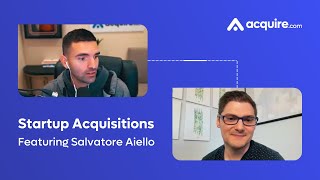
Salvatore Aiello sold his AI SaaS startup DimeADozen for $150,000. He and Andrew Gazdecki discuss how he built the product, found customers, and navigated the emotional weight of selling. The conversation covers product-market fit, acquisition strategy, and what he learned along the way.
Foreign.
I'm here with Sal, the founder of Diamond Dozen, who recently got acquired for six figures. Sal, how you doing today?
Good, man. How are you doing?
Good. So for those that may not know you, do you want to give a brief introduction of yourself?
Yeah. So you know, my name is Sal. I've been an engineer really my entire life, since I was, I don't know, eight years old. Right. Breaking computers and building angel fire websites in 1998. 9. And then, you know, I moved into game making when I was about 15 and from there I parlayed that into an engineering career. So I never went to the college for it. It's about 2006, after leaving high school I got. Which I guess you would now call like an internship with some small.net dev shop. I went in there as a hotshot, had been writing code for three years at that point. I went in in 2006 and said, we're writing all this ASP. NET code and PHP and that's the way to go. And that's what we need to do. And the guy said, well, you're an idiot, but you seem to have some chops. And he paid me and that was it. So, you know, I kind of took that and kept going with it and turned that into a successful career. I've been kind of all over America as a consultant for primarily JavaScript and more recently Typescript. I worked at, you know, big companies and small, primarily startups. And then I kind of moved into the kind of C level early stage startup role as a CTO and early stage founder for these different startups. I've done that a handful of times and Dime a Dozen is really the first time that I did it not by myself because I've did it with a co founder, Monica Powers, that we hooked up through actually YC co founder Match and just noodled on ideas and one of them happened to be Dime a Dozen.
Nice. What made you want to start a company? Sounds like you had a great career. You're. I probably know the answer, but I want to hear you're right.
That same answer over and over again. Right. You get bored or, you know, you, you constantly want to scratch that itch. I never really had the whole, you know, I don't want to work for somebody or I want to live my own life and whatever. I never really had that because I've always been a software engineer and that's all I've ever wanted to do. I never, you know, yeah, obviously I've had bad jobs and that kind of Thing, But I've never lived under the thumb of somebody where, you know, I can't wait to burn this place to the ground or whatever. I. So long as the place lets me type, and most places, I'm happy. So, you know, going back to Dime a Dozen or, you know, wanting to be an entrepreneur and doing this thing over and over again, you know, you get to a point as an engineer where you kind of have to make a decision on what you want to do and how to best utilize your talents to make yourself the most money possible, as opposed to, you know, a career of making other people more money. It wasn't really about that, but I guess that's a nice, clean answer. It was more just we wanted to work on something fun, and it blew up, and we ended up making a bunch of money on it.
That's kind of the definition of entrepreneurship for some people, I guess. So, Yeah, I like that. Okay, let's. Let's take a step back. I know a dime a dozen does. You know what dime a dozen does? Do you want to just give a brief explanation of what Dime a Dozen does for everybody?
Yeah. Diamond Dozen is a entrepreneurial copilot that will allow you to tell it about your business and it'll print out a. Basically a worksheet, you know, 40 or so pages detailing everything you need to know about your business. Some things you already know, some things you may not know, some things you disagree with, something maybe you do agree with. That's the idea. We really like a Kickstarter for these small businesses, primarily entrepreneurs and entrepreneurs who are just trying to get their feet wet with a new idea. Let's see what AI or let's see what the magic says about this idea. And we tried to generate, you know, as much detail about your idea as we possibly could to get you to the next step, whatever that next step is for you. So we did this for ourselves. We were doing it for a previous project that her and I worked on together called Quick Game, which I'm still very passionate about and will eventually get back to someday. And at the time, all this generative AI stuff was coming out, and we're always trying to figure out crazy things to do it before, kind of long before ChatGPT came out, when we just had access to the API and doing really crazy things like, write me a short story about Teletubbies going to jail for homicide, like, once upon a time, blah, blah, blah, and we were, like, losing it. Like, society is now different. And. And what can we do with this? And in there we were using it to noodle on ideas for Quick Game, right? We were like, tell me a go to market strategy where to some ad, whatever, right? Just building these fairly complicated prompts at that point. And you know, as the story goes, and I've told it multiple times as we gone went through the acquisition, we kind of stopped for one second and looked at each other like this may be something, I think we can do this for people I think we can really give value to because we kept like, once we were doing it for Quick Game, then we ran other silly business ideas that we had and like, oh man, this may be a real open ended tool that could work for a wide variety of businesses. So then we, we took three days, four days, wrapped up all the, the prompts we put together and all and launch the site.
I love that story because you were actually using Chad GPT to kind of build what you built, which was validating ideas. I ran Acquire through it and got some good reports. And then I'm also looking at the Airbnb report in terms of business viability monetization strategy even I'm like nodding like.
You know, especially, you know, it's very different when you really do care about the idea and obviously you're in a different stage with Acquire. But when you really do care about the idea and you're really like trying to scratch a niche or trying to figure out where to go with it, it gives you such detailed feedback and such detailed insight because of the way we crafted the prompts to, to build it out in such a way that you're like, okay, you know, this makes sense. And you know, if nothing else, it gets you motivated. And for that price point, I think right now we're at, they're at $39, right? For this 40, 50 page report, it's like, okay, let's, let's roll the dice. And you know, I'll tell you, our refunds were near non existent, truly non existent. Because whatever you get out of it, even if you get one nugget out of it, when you love your baby. Okay, all right, this seems, okay, this seems interesting. And then you read it and then you hopefully execute on it. I mean we've generated, I don't know, I think they're up to 80,000, 80,000 business reports for these people. You know, a good percent of those paid, meaning they got the full 40 page report and not just the initial report. Those are real people that really were helped. And it warms my heart. You know, I don't want to Say that I love this business and it was the end all be. Obviously I sold it, but the feedback that I was getting from people all day long, that this is, you know, just changed my life or, you know, I can't believe what came out of this. It's such a. Sorry, it's such a magical thing and really heartwarming for me that I was able to help these people.
I would agree. I would. You know, I, I'm a, I'm a firm believer that, you know, one of the biggest blockers for a lot of entrepreneurs is just confidence and, and being motivated and just taking that first step. And most entrepreneurs, you just have to be comfortable with going out to market with a very loose plan and having an understanding that it's, it's going to change. But when I'm reading essentially these business breakdowns or reports as you call them, I mean, I would have a lot of confidence in terms of how am I going to make money. Like, what are user pain points, the revenue opportunity, potential risk. Why now? I think that's probably my favorite aspect, but I think just having that confidence, it's almost like a startup mentor, AI advisor. Is that.
Yeah, no there. And you're right. You know, so much of, you know, the startup game is mental. Like, you know, maybe, I wouldn't even say 90%, maybe 100% of the startup game is mental, certainly for the founder. Right. And giving them that, that boost or that, you know, like, you know, eventually we started getting into different report ideas. Like, here's how to pivot your idea. Once you pivot it, you know, maybe this idea doesn't have legs, but maybe this other one that's in that same vein does, or competitors or you know, whatever else. Other reports we generate just that, that mental motivation and for the minuscule price point, you know, as opposed to playing McKinsey, $10,000 for an idea that you only kind of like or you know, full on hate that that kick in the pants is so, so valuable to these people. And we heard that the entire time.
I, I couldn't agree more. I think it's a great product. I'm having fun kind of playing with it right now. But I guess my, my next question would be how did you get your first customer? How did you find the first users? How did you get that initial start going? Did you use a prompt that told you how to do it and then some of it.
Yeah, it was such a tough going initially. So the idea, the name Diamond Dozen came from, and this is, you know, Monica talks about it all the time because she is a product person. I'm the engineer and she's the product person. Right. And I really do feel like that that balance of product and engineering is the perfect co founder pair. If you were to add a third person, I would say a business or sales guy if you're in that, you know, a B2B style market or whatever. But that, that product pair with engineering where I would hand her every day, I would hand her what I called feature soup and she would turn feature soup into a product. Right. I can't create products, she creates products. She can't write code. Obviously I write the code. So the idea was we will allow you to buy each piece individually. So the why now would cost 50 cents and the go to market would cost a dollar and you would buffet style buy each piece and then you get a know a, a shopping cart at the end and then you would buy it. They were a dime a dozen. And it kind of morphed into, you know, ideas are dime a dozen. But, but that was the idea. So we launched with that. I think I made probably 85 cents in that first day, you know, after blasting it out to all of my friends, which you know, is, is not a very deep bench, but it was everyone I knew and then it just kind of trickled from there. We filled that feature entirely. We made it so that it was more section based where each section had a price point. And then we killed that and made it just one flat price. And at that point I feel it was, it was like March 6th. So it was right on the cusp of every one of these newsletters and influencers really trying to get hot with Chat GPT. Chat GPT had come out one or two months prior maybe. So we were right on the cusp of it, of everyone trying to capitalize on these new ideas and new businesses. And we just hit newsletters and I think we got in the first one. Maybe we got into like Ben's Bites early back when Ben's Bites was early. And then we started to see a trickle and we started to see traffic and we were getting $39 a day and okay, our first hundred dollar day, right. You know, at our price point, I think at the time we were probably $24 per report selling five reports to five real people. Like we waited every day with bated breath for refunds and it never came like, are these real people? Are these a whole spam bot? Are these from, you know, some nefarious country? What is happening right now? And it just Kind of kept going and it was slow and it trickled and it would go down to 000 and back up a little bit. And yeah, so we, we really capitalized early on newsletters because we were a B2B and because we were almost in like a FOMO industry where your competitor is running a dime a dozen report. Are you? You know, we had the idea early on to send it to every YC company to like scrape all of YC and just send it to all of them. Right. You know, run your idea through dime a dozen for a discount or whatever. Doing it. But that would have been a good idea. But in the, in the beginning we really did hustle and we really did iterate so, so many times. I mean if you go to archive.org for dime a dozen, we changed that homepage 15 times in the first week, all day, every day.
I mean that's how you build a startup. It's just an iterative process of making changes and just incremental improvements. Very rarely do you get it right on the first try.
So yeah, it's fun. You know, we were, I like to like document along the way, certainly little tidbits and one of the earliest ones that I wrote down was you're, you're never building the right thing. And whatever you're building, you're, you're not building the right thing yet. You know, because your user hasn't told you one way or the other. As an engineer, as an engineering founder, it's the toughest thing to get out of your own way. And that's the balance that we strike with her and I, it's impossible. Right? Because I can code forever. My time is useless. Right? My time is worthless. You know, I bill people millions of dollars for my time, but personally I could just work on this stupid site forever and it's impossible. It's really, really difficult to self regulate and get out of your own way as an engineer. And you know, I see that with technical co founders all the time. Like you can't run the show, you know, obviously put your magic in and sprinkle it and whatever. But you can't set the deadline. Either your CEO or your, your product person or your marketing person or whomever or the user sets the deadline, but it can't be you because you'll just go forever. Certainly talented ones. It's a real struggle.
Yeah. I always say, you know, with, with startups, perfect doesn't exist, so just don't try. And it was kind of a thought process like you have a 0 to 100 bars. I always feel like when you get to 90%, it's gonna, that's where you should just stop and ship it. Because 90 to 100 takes just as much time, typically within a team, from what I've experienced.
Yeah, I like to say that in the 8020 rule, whatever side of the 8020 rule, in terms of timeline, you think you're on, you're on the other side. So when you're building your product and you think you're 80% done, you're only 20% done. Whatever side of 80 20, you're on, you're on the other side almost always.
That's great.
Yeah. And I tried to, we tried to. We've done that before, many, many times. So I tried to mitigate that with quick with Dime a Dozen. We launched it in four days. I hated that website. And lord know she did too. As a designer and product designer. It was a disaster. And it was. We had no user authentication at 50 different fonts, 30 different margins. Our landing page looked terrible. Obviously we had a bad pricing model. We had no stripe integration other than going directly into the stripe platform. And we had that for three months. And in those three months we generated 20, 30, $40,000, something like that, with a broken piss poor website. Because we had an idea because we, and you know, we fought with it the entire time. Like, I can't believe we have product market fit on this idea that, you know, we, we didn't put a lot into. We, we thought it was a good idea and I guess it worked. But we, God damn, we have product market fit. Like, it's so unbelievable when it happens because it happens so quickly and you know, you're not in control of it. You're in control of everything else other than product market fit. The only person that can determine that is, is the market.
Yeah, I love how much you did, you know, manually or didn't have at launch. Like, I'll tell you a fun, fun story about Acquire Microacquire at the time, but when you would sign up as a premium buyer or something like that, what I would have to do is I would have to manually activate you within like her admin dashboard. And sometimes I would literally be out with my, you know, wife and son or something like that, and I'd be like, hey, we got to pull over. And this is like, yeah, like click a button and like send an email. It was super, super jank and duct taped together. But that's just, you know, you, you need to move that quickly. Like it doesn't need to be perfect at launch. But I guess my next question is, you know, I'm hearing a lot about, you know, product market fit now. Things were moving so quickly. Was there like a mom really felt product market fit and you like, kind of took a step back and you're like, I'm really, I'm really onto something here.
Yeah. So we, we had, we never really had traction. You know, we had a real slow, steady growth. We were just kind of doing it. And to be honest, we. Oh, God. We tried to pivot. Tried to pivot four or five different times into four or five different verticals. One of them really comes into what. What happened with GPTs that they just announced, right where we were allowing them to build. We were allowing influencers to build expertise at scale. So you know about gardening. Build your own dime a dozen for gardening. You know about marketing. Build your own dime a dozen for marketing. And we work with the influencer to build out the prompts with them. Right. And build out the tooling with them and launch a white label version of Dime a Dozen. We tried that and it kind of didn't work. And it kind of didn't. We went down a lot of avenues and talked to a lot of people and wasted a lot of time. And then we kind of pivoted into a separate idea called Launchmates, which I also sold with the dime a dozen to the buyer, which is kind of a more broader idea of taking early stage co founder, earlier stage founder and walking them through the journey and giving them tools like copy building and you know, chatting with. With an AI to, to learn about things or building out tasks and milestones powered by AI. And it was a really sophisticated tool. I took a month and built out this entire tool that is it will eventually launch someday because he does own it. And it has an incredible amount of features and it's a really cool product. And. And by the time we were getting to launch it, we launched it and it did okay. It was another. It was a subscription model. It did okay. And in that same week, a influencer out of nowhere who had a lot of followers posted a video that went way beyond his user base. He ended up getting 1.2 million views. And we made like call it $15,000 in. In three days. So here I have this baby. That's incredible. When on the other side we were kind of letting this product market fit, like linger. So her and I stepped back and like, okay, this is working. We have to stop looking at gift horse in the mouth. We have to Take this thing and run with it. And we pivoted back to Diamond Dozen. We made a bunch of product updates, and we hit that virality point, I don't know, five or six more times with five or six different silly people. None of them paid. And, and we just kept doing it like, okay, I guess we have something. We have to know. Stop hating on this thing. And, and let's, let's really love it.
Nice. I, I love that because word of mouth is obviously the most powerful way to grow a business. And if you're seeing it organically happen, you definitely have product market fit like that. That. And they're surprising too, because they can just pop out of nowhere. We've had it at our company happen a few times, but it's. It's awesome.
It's so hard to believe when it happens. And you know, I don't know if you're a generally pessimistic person. It's like, there's no way this is real. Tomorrow I'm sure it will be $0 again. Tomorrow I'm sure everyone will us. And it never happened. And it's still not happening. It really, when it resonates, man, it resonates and it's a very surreal experience.
I love how just organic. The, the growth story is of Daz and like you, you just built a great product and then people started organically sharing it. That, that's the true definition of you. You really have product market fit or you struck a chord within a market. So, so well done there. Now I want to move on to the acquisition side of things. So you, you successfully, you know, had diamond as an acquired. What. What made you make the decision to sell the business in the first place?
So both her and I have other obligations. I know that's the cheap answer, but we really do have other obligations and other passions in life. And you know, you know, we looked at each other every day like, okay, you know, is. Is the thing we want to do. Build a B2B SAS to whatever, whatever. And you know, we did a lot of soul searching and mind you, it was still making a bunch of money at that point. And like, not really. And we've let other things fester in the six or seven months that we worked on this. And we really do want to get back to what products we want to build and want to launch, as opposed to just this foray into, you know, silly AI that we accidentally took and we were like, okay, let's. Let's put it out there. Let's figure out a price Point. Let's see if that makes us happy. And if it does, then let's see what happens. Really, we were just rolling the dice, you know, just like every other decision we made with the silly project. Let's just see what happens. Let's put it out there and let's see if we get any bites. You know, people seem to like it, so let's see if buyers like it, too.
So what, what did happen? So you, you list on acquired.com. tell me about, like, the first couple weeks. Did it exceed your expectations? Was it slow? What, what happened?
You know, it. There's so many ups and downs. And I, I will say, and I know you're not asking for this reason, but Ebony worked with me from the acquired team and she had, like, you know, because I'm an idiot, what do I know? I'm an engineer and, you know, an okay one. Right. What do I know about selling a company or doing any of these things or due diligence or whatever? And she really did handhold me with all of your documentation to take me through doing it. Right. So as scary as it was, I always knew I had someone that had my back. I know this seems very pitchy, but, God, I really do love you guys.
And I really, I appreciate that. Can I just give a shout out to Ebony because she's going to watch this, But a lot of people don't know that. We actually, you know, you're not. Yeah, you're not alone. When you list on acquired.com we got a team of M and A advisors that, that help you through the process. So Ebony, Ebony, when Ebony watches this, Ebony, you're awesome.
I hope she appreciates it. So all that being said, so we, we figured out a price point that we were happy with. It was about three times revenue at that time, which is silly or which is rough because we were only six months old. But, you know, we decided what we decided. Put it up at 3x revenue, put it out there, and immediately we started getting drips on it. We got a couple NDAs, and we had a really early one where the guy, you know, he was really interested and he was kind of, he was, you know, we exchanged phone numbers and I'm talking like, this is really going to happen. It's really going to happen. And then it fizzled. Okay, this isn't really going to happen. I don't think this is going to happen. And the next day you got a couple more NDAs and a couple more NDAs, and it comes in and, you know, we had I want to say we had probably, I don't know what the numbers are, probably 50 or 60 NDAs all told, certainly 20 or 30. After we got featured, we had about 10 people that were really interested that we were actively talking to. We had probably five other wise, some of them not great, some of them interesting. And then obviously the one we landed on and then yeah, and I guess we'll get to that part. But the whole journey was really, it's heart wrenching, right? You know, because you don't know what's going to happen and your life is in these other people's hands and you do your best to make your baby look as pretty as possible, but it's tough. I will say some of the things we screwed up for any future entrepreneurs watching this that are about to sell. And Ebony begged me to do it the entire time and I ignored her. Build your data room early. Building out the data room and really getting those ducks in a row. Because these people that submit the NDAs that want to see your company, they want to see your company. And I wasn't giving them much, man, I was giving them, you know, hey, here's our company, go to the website and you know, we've made the. I think I gave them maybe a one pager, maybe some financials. I'm sure I gave them financials. That's what it was. The, just the, the six month trending financials and like that. But building out that data room, once I did that, things really picked up and the conversations I got ghosted a lot less. And you know, I told Ebony that and she typical, I told you.
So do you want to know why? Like we coach founders on this all the time, but when you go to sell your business, you need to understand, put yourself in the buyer's shoes. You know, the more information that you can give them to, you know, understand your business from, you know, 360 degree angle, they're more excited they're going to be to speak with you because they have done their homework. But then also they know that you're serious about selling their business because buyers are looking at a lot of different businesses. And if you're missing like when we give this advice, like we're not giving it to just, you know, waste your time. We're giving it because it's sometimes required by buyers in order for them to really be interested. So I'm glad it worked out.
And you're right, you know, it's a fair statement that maybe I wasn't serious in the beginning and maybe that did, that was clear to these buyers. Like, what do you mean? Okay, you have a thing, your stripe is connected. You're not lying to me about your revenue. But there's so much more to this. And tell me how it worked and tell me what's wrong and whatever, right? That I really wasn't giving buyers until probably halfway through the process. Wasn't really until we got listed that I buckled down. It's like, okay, let's spend two days, let's build out this pain in the ass data room. Let's get all my financials in order because in the beginning I'm tracking everything in the Excel spreadsheet. My CPA wanted to murder me 10 times. You know, I'm asking her in the middle of the night to generate me a six month trending financials for a company that didn't exist three months ago. So it really wasn't until then that things started to really pick up steam and we really started to work with people that were really submitting wise and even then, man, you know, it's heart wrenching, you know, because you're the amount we sold for, right? I think it's public at this point. Six figures, 150,000. It's a lot of money. It's an insignificant amount of money. These, these people really did want to love the business and I did my best to make it work and it really did work out a few times, obviously with the one that ended up buying it. But it's heart wrenching to be judged by, you know, people that maybe you consider below you or whatever for your baby. Right? It's your baby and you've loved it and what do you know? And it's a hard position to take to sell a company. It was probably the most stress I've ever been. My anxiety was very high all day, right. Checking my phone like a, you know, 14 year old boy waiting for my girlfriend to text me when she gets back from the party. It's rough and it's not that fun, but God, the life lesson from it is invaluable and you know, I hope to take it with, with everything I do in the future.
Yeah, I mean selling a business, it's, it's not easy emotionally. You know, we always, we always kind of, you know, say at, at Acquire, we play, you know, M and A advisor, financial advisor and sometimes therapists, sometimes just helping founders through the process of, you know, I'm getting too much interest or I don't know, like, should I accept this loi? We'll review The Lois. Yeah, because we understand, like in those moments, like you need a friend to call, like, it can be very, very.
Really was right. And I don't have many advisors that I can call to, to take that kind of advice. And again, it's that same thing. I always knew that I had Acquire in my camp, and that was really nice. And you know, the buyers ask me a lot of times, you know, how do you feel about Acquire? Like, I love it and I can't wait to give them my 3% or whatever the stupid kick was because you guys earn it. And you know, there's a lot of other providers out there that I don't think are in their keep. And I was very excited that, you know, to be honest, I didn't know any of this going in. What do I know about acquire.com other than watching you people shit post on Twitter. And I loved it. And I always knew that Acquire was kind of in my back pocket, certainly as a, as an engineering entrepreneur, that if I ever did build something that really did blow up, I could probably sell it on Acquire, you know, at least there's an option for me. And it ended up being true, which was surprising because normally that kind of thing isn't.
That's awesome to hear. Well, I'm glad. I'm glad it worked out. I had a few questions in terms of like how you prepared for your acquisition. We covered that.
Yeah.
What happened when you in live, it sounds like you were just flooded with NDAs and then offers.
Yeah, we did get a fair amount of interest and you know, just taking as many calls, getting a calendar lease set up, taking as many calls as you can. You know, I hear this advice a lot and you know, I'm really talking to the future entrepreneurs, the future me's out there who are trying to do this thing again. Getting your ducks in a row and making every buyer feel like they're the buyer and taking every call, every chance you get is another bite at the apple. And taking every call very seriously. Not. Not, you know, because, you know, there's a handful of them that I thought going to be very flippant calls or, you know, I don't want to sell to this guy or, you know, this guy doesn't know anything that ended up being real meaningful calls and real meaningful partnerships with people that I met along the way. I have a guy that we didn't sell to but really wanted it, that is now a YC co founder or was a YC founder. That's in my camp now. You know, we exchange emails once a month. So taking every call very seriously, I think is an important thing, certainly because this person's about to give you whatever amount of money you ask for. Taking every call seriously, I think is a. Is a real important thing, which is hard. Right. We got 50 NDAs. It's 50 pieces of emotional baggage and that you have to attach to yourself.
No, I. You're, you're. You're definitely saying a lot of the stuff that we talk about internally, because a big misconception that I think a lot of business owners, entrepreneurs, startup founders, whatever you want to, you know, label people as is, you have to sell your business, and that means you have to get on the phone, you have to talk with people, you have to understand why are they interested. You have to point out the good parts about your business, the things you did wrong that maybe they could fix. Like, you have to really sell the business and also be easy to work with and not be so kind of closed guard with information. Because for a buyer to really take the time, again, putting on, like, the buyer hat, like you're putting yourself in their shoes, they have to like, you're right. 150,000 is, is a, Is a large sum of money.
Yeah.
You know, for some people, maybe not. But for the majority of people, it is. But they need to know that, you know, you're going to be an easy person to work with, that you're a trustworthy person. This is a great quote I always say on this podcast, which is, you can't do a good deal with a bad person and just help, just make their life easier. In terms of understanding the business, be prompt, because most buyers have additional questions outside of what you just had in your data room. So every little thing that you do in terms of how quickly do you respond, how are you on phone calls, how well are you getting along with the buyer? These are all little indications to the buyer of what due diligence is going to be like and what transition is going to be like, and if this deal is really worth pursuing. Because if every call and every data request, and when I say data request, it's just I have these five questions that are really detailed, and it might take you some time to go back to your CPA or something like that, but every moment and opportunity you have with a buyer to show that you're serious about the deal, that you're going to be responsive, that you're going to make sure that this is a great acquisition opportunity, not just for you, but for also the buyer that's how you actually increase your valuation and increase the exit multiple that, that you achieve, because you're getting as many buyers to the table as possible, which you get multiple offers and then you're able to leverage those to negotiate valuation up and terms up. So it sounds like you did a great job with all everything.
I did not. But it did work out. That Ebony told me along the way was, you know, so we would get NDAs from people and, you know, a lot of them would just kind of linger and whatever. And I got on the phone with her, she's like, I see you have a lot of NDAs. Like, yeah. She goes, are you harassing these people on LinkedIn? I said, no. She goes, why not? Sell. These people want to buy your company. Like, follow up with them. Are you sending them follow up messages? Like, no, Should I be sending them follow ups? Like, what, are you crazy? You have to. If you're not selling, if you're not a salesperson, which is an engineer, I am not you. You have to step into that sociopath salesperson mindset. You know, it takes six follow ups for a person to buy your product. And you know, if they, if they didn't want to buy it, they would have blocked you by now. If they didn't block you yet, keep selling to them. They wanted to buy it, they were interested. Make them more interested. That's your job. Make, you know, sell them everything that you can because they kind of want it. It's like, okay, all right, let's buckle down. Let's, let's, let's be salespeople and let's harass people and let's, you know, do all the things, you know, that annoying people do that make money. And that was a big push, right? Because I didn't see it that way. Oh, you don't want my company? Fine. You don't want my company, right? Like, no, Sal, you're a salesperson. Sell your company to these people. Make them love you.
And that actually is true. And it actually takes nine, nine follow ups for someone, for someone to finally get back to you in sales. But, you know, one thing we always try to educate founders on at Acquire is we, when you do the follow ups, you know, it's always an opportunity to deliver more information. So common questions from buyers, or you record maybe a video walkthrough of how the product works, or you give an update in terms of financials or whatever it may be like, you always want to follow up with some sort of additional context, again with the goal of just helping A buyer wrap their head around their business. So this, then we see this all the time where buyer signs NDA and then you send just you know, three follow ups with relevant information. Relevant information. And you can always add a P.S. like hey, if you're not interested, just say no and then I'll leave you alone. But I like to always view the buyer as the buyer until they are not. So until they say hey, I'm not interested, then just keep giving them information so they have a better understanding of the business. And then you never know, at one point they might be like oh, I get it. Like I want to, I want to have a chat. So I'm glad you followed that advice because it's, it seems like it worked out.
I did follow it about halfway through and you know, she was right. But, but she's right and you know, I wasn't serious about selling it until I got serious about selling it. And you know, as you're trying to decide to list your company or not really soul search and really decide but if you decide, go all in and really put in the work for it. She asked me to record so many videos that I just never did until you know, halfway through and somehow it worked out. But, but yeah, if you're going to do it, go in hard and, and you know, don't look back.
That's, that's great advice. And then also take our advice and.
Also yeah, take Bernie McGuire's advice.
Yeah, I, I love just the story of this from start from to finish in terms of, you know, the way you built the product, you know, built a very bare bones. You get product market fit. It sounds like it was a viral sort of user grab which is the best. That's every, you know, founder's dream. And then when you went to sell the business, you had multiple people interested, successfully acquired. So Sal, congrats on did everything wrong. To me it sounds like you did everything right and, and it worked out. So for final questions, I always, I always gotta ask but what do you, what are you working on now?
Yeah, you know, so I think so right now I'm still CTO and co founder of a another company with some other partners. It's a, it's a bigger company where we do bigger things in the healthcare space. I'm living that life and trying to give them as much time and attention as I can to kind of get them to where they need to go. But after that I'll probably go back to my previous startup that I founded called Quick Game which is a education Platform for kids, figure 10 to 16 to teach them software engineering skills through building games. It's like scratch on crack. It's scratch but 3D and multiplayer for free and web based and blah blah, blah. So that's the idea to go back to that and you know, probably try to find product market fit once again, maybe try to raise money. Certainly coming off the heels of what we've done with I'm a Dozen, I'm excited to kind of get into that headspace again and really, you know, get back to it. It's addicting, right? It's addicting to, to launch companies. Certainly when you have the capability to and you have the team to. It's addicting to, to, you know, Monica and always, and I always say we want to fail 12 times in a year and anytime, anytime there's a year where we fail less than 12 times, it's kind of a waste because if you're not failing 12 times, you're not trying 12 times. And you know, if you're not trying 12 times, then what are you doing? Just kind of wasting time. And you know, we did that with Dime a dozen two or three times before we hit it. And then we, we rode out dime a dozen for as long as we could. It's important certainly, I think, to throw as many things at the wall as you can and see where it takes you.
I, I would completely. I actually wrote a blog post about building companies and my goal in college was to build 12 startups because it takes an angel investor 12 investments to pay off for the 11 that don't work. So it's like applying an angel investors approach to building startups. But I only got to start up two and that one started working.
So unfortunately I did the same thing. I, we, we made this pact and then dime a dozen, you know, printed $20,000 like, ah, I guess we got to do this one.
Yeah, I mean it just, just get started. That's always, always my favorite advice. Just get started.
And again, as an engineering founder, it's very hard, it's very hard to stop. It's very hard to, you know, not npm, install all the latest technology and maybe switch to this and switch to that and whatever. It's really hard. And you know, I fight that struggle every single day. It's very attractive to continue coding forever, but it doesn't pay the bills and it doesn't find product market fit. And it's a tough thing. It's the, you know, because I give a lot of startup like long before Dime a Dozen. Because I've been, you know, a CTO now for eight years or so and I give a lot of startup advice and whenever I come across a founder who's a technical founder, I just run them through the ringer. Like, you have to stop whatever you're working on right now, you should probably stop and you should probably just launch. Well, no, I got to get authentication working. It's like I didn't have authentication. Well, you know, I got to make the web page look better. It's like I didn't make the web page look better. It doesn't matter. Whatever you're working on now doesn't matter unless you've launched. Once you launch, you're on your own and you know, separate conversation.
But what would you, what advice would you give, just out of curiosity, to a non technical matter? I'm not technical at all.
That's great.
I don't know how to code. I don't even know where our servers are.
That's weird.
No, I know they are. I know our servers.
So you know, they're in the cloud. They're in the cloud. Somebody told me they're in the cloud. Yeah, it's about, it's really the same exact advice in that. Just run. And you know, obviously it's hard to figure out how to build a product. Right. There's a lot of no code tools now. And I give people a lot of, you know, give it a try. Try bubble, try these things. You know, obviously webflow to put a, put a, you know, a stripe link on there. You can do all those things with your hands. Eventually you're gonna have to figure out paying somebody and you know, maybe you'll get a friend or maybe you'll hire offshore or whatever it is. Finding product market fit. And you know, I work with a lot of people that they have the same problem. They can't stop iterating on the things that don't matter because that's what they can control. And you know, certainly in the beginning of entrepreneurship and founding a company, you're out of control for almost everything. And that's a tough place. Like, you know, if I could just tweak this ux, design this FIGMA model a little bit better, I, I'm sure I could raise 50 grand. Like, yeah, maybe, but probably not. No, like it's not 2018 anymore and whatever. Whatever, Right. So it's tough, it's tough to stop to get out. You know, see the forest through the trees and all these other things. Just, just launch as soon as you can with whatever you can and, and see what happens with it. Put up a landing page. Put up a landing page where you track clicks on the buy button and then just four or four, that's all you want to know. Run, run $100 in ads or $20 a day on ads to a landing page where the buy button 404 is and track how many people click on it. Because if you don't get any clicks, the rest of your problems don't matter.
And that's, that's really, that's actually advice I've given is just if you have an idea. Because I think one of the most common fatal flaws when people try to build a startup is they build a product nobody wants.
Yeah.
You can validate that so easily with just the exact method that you outlined, which is literally just throw up a landing page and just have kind of the copy. You could tweak the copy and send a little bit of paid, you know, marketing to it and see if you get any sort of activity, if there's any interest.
Because if you can't solve that problem, you know, we run into so many top of funnel problems as you certainly was quick game. We're dealing with the same thing now. And if you can't solve that top of funnel problem, nothing else matters. Truly. Nothing else. You know, I want to fix this, I want to fix that. Nothing else matters. Nobody's going to encounter that bug, I assure you. And when they do, then it's a separate problem and you're in a separate stage of life.
Those are, I call those, you know, first world problems where basically, you know, you got, you got, people are complaining about a bug, like that's much better than having the bug and no noticing. But they're actually using the product to a point where they're stress testing it where, you know, something is not working.
But that's so many bugs. So, so many bugs.
I think, I think every startup does even, even public ones today. It's just, it's just how it goes.
Yeah, I do that with my engineering team for the other company every so often. I'll get, you know, when Netflix sends out the push notification to everybody that says test, test, test. Right. Like we're not alone. You don't have to be so afraid. Even the big guys screw up so bad and so publicly. It's okay that we have this bug for another day?
Yeah, yeah, we re. We had a bug I think like two weeks ago or something like that where we like sent out a bunch of like emails on accident we have this new feature where buyers are now instantly alerted when a startup like yours comes on and matches your criteria. And then on that day, we accidentally sent out like a hundred thousand emails on accident. And then it was a total like, you know, I had like 20 people on Twitter being like, why are you like sending me all these emails? And it was a week before the launch and then we launched it and everybody forgot about it. So I think maybe the silver lining of bugs too is like, it's never as big of a deal as it seems in the moment. Just fix it, move on, and then it's all good.
Yeah, it's such a hard pill to swallow again, as a, as a technical entrepreneur, it is so, so, so, so hard to not deploy Kubernetes across 50 instances. And on and on and on. It's so, so hard. But if you can, if you can fix that, if you can fight through that, that's half the battle. As a technical entrepreneur.
Well said. So well, hey, if I've really enjoyed this conversation, this has been a ton of fun and congrats again on what you built and the successful acquisition. And if you want to hear more about your story or just connect with you. Where can they find you online?
Twitter, dested. LinkedIn. I think it's also dested. I'm pretty much tested everywhere. You can go to Dested.com and find all my stuff. That's D E S T E D. Yeah, I mean, you know, I'm incredibly approachable, certainly to technical founders. I'm incredibly approachable. I give advice all day long. You know, sometimes people want it, sometimes they don't. For non technical founders, you can ask me questions. I don't really live in that world. But yeah, feel free to reach out to me. I should post a lot on Twitter about typescript and things like that.
But yeah, I mean, why do people not like typescript? I'm not technical, so I don't know.
Don't get me started on these things.
Okay.
I've been a type of fanboy since the day came out, but people have opinions. Don't, don't listen to. Let's not get into any of this. Let's not get into any of this.
Anytime I see someone like making a joke about like tech Stack or something, it's just so beyond. I'm just like, does it work? Yes or no? Like, anyways, so maybe we'll bring you back on here. We'll, we'll talk about all the, all the, the, the scripts or, you know, text tags that people have. Have gripes with Sal. You're. You're awesome. Congrats on. On everything. And I'm. I'm rooting for you and your next startup.
Cool. All right. Thank you so much, man. Truly, thank you.
All right, take it easy, Sal.
More from Andrew



The Buyers Who Made the Move: What They Bought, How They Did It, and What Happened Next






