Six-Figure SaaS Exit in Under Two Years - Daniel Ch, Founder of Simple.Ink
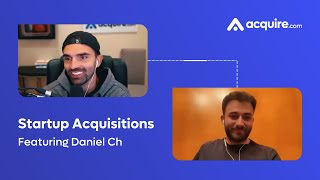
Daniel Ch built Simple.Ink, a Notion website builder, and sold it for six figures in under two years. He discusses product validation, customer acquisition, hitting profitability, and the acquisition process on acquire.com.
All right, I'm here with Daniel, the founder of Simple Inc. Who recently got acquired for six figures. Daniel, how you doing today?
Very well myself. How are you, Andrew?
Doing good. So for those that may not be familiar with you, do you want to give just a brief introduction of yourself?
Yeah, sure. My name is Daniel and along with my brother David, we are just trying our best every day on the Internet. But that's not what we're here to talk about today. I started Simple Inc. Back in. We launched in January 2022 and SimpleWink is a notion website builder. So if anybody hasn't heard about Notion, it's a. Well, people call it a to do app, but it's not that much of a to do app anymore. It's a productivity tool, let's call it. That is what's relevant for this intro is the Notion is very aesthetic. It's very hard to make it look ugly. And in terms of people want to build websites out of that. So this. We build Simple, I think. But yeah, besides that, I run online business with my brother. I'm 25, he's 19. We've been doing this for a couple of years. And yeah, that's. That's pretty much it.
Nice. I love how you're getting started at an early age. Building and, and getting acquired. That's the way to do it. What made you, what motivated you to start symboling?
We were users of Notion and we saw that. It's exactly what I said. We saw that it's pretty hard to mess up the esthetic of Notion. I mean, you would really have to try really hard. And then we noticed the product as well. So we noticed that we are to build a website out of that. We had the need ourselves. And initially it started with just adding a custom domain to it because especially back then, you couldn't really. What people would do is they would have a workaround. They would buy a domain and set the reader so they would buy andrew gazdeki.com and they would redirect you to the Notion page. And, you know, that gave us a. It was one of the few pings, you know, like pings on a radar that people might be paying for something like this, or at least that they have a need. And of course, if you paid for a domain, that means you've already put, you know, they paid for something. So yeah, this along with our willingness to place a bet on the Notion industry, not really, not just on the community, because at this point, I guess it's an industry. And yeah, the, the the, the natural itch or urge to start something and to build something for yourself, but also for people. That's, that's really what, what led to building. Simple, I think.
Really nice. Yeah, I was just looking at the website and congrats on getting product of the day. So it looks like. Is it safe to assume when you launched this was it maybe more of a surprise in terms of the amount of people interested in using this product?
I'll be honest, it was. We knew there was going to be, in all honesty, we knew there were going to be customers because we weren't really the first ones to be doing it, although we were early as well. But I was still surprised because this is the first time I was tasting what it feels like to be building on top of a tailwind. So I, I don't think we would have gotten the growth we've had or the, yeah, the, the number of users and you know, the support and the access to all these people if it wasn't for notion. So this is the first time I was building in a. As I said, we're a tailwind and it doesn't have to be, I think, related to a product. Some people have been doing that, you know, on top of WordPress. I mean, I guess WordPress is a product, but some people are doing it now in AI or have been doing it in crypto. Crypto isn't a product per se, but those are tailwind as well, or at least have been. And so yeah, it was surprising. It was a, a first time experience, so to speak.
I think it's great. I mean, you addressed a, you know, problem that you kind of saw yourself in terms of a notion has like tens of millions of users. So you know, you have tens of millions of, you know, built in users there and there's a use case that's not being addressed in the notion product itself. So it makes complete sense to me. How did you get your first customers? How did you get the first paying handful of customers of yours?
I realize now I'll just get back to the question a second. Speaking of tailwinds, I think you, with business apps as well, we were on the tailwind of mobile apps. Isn't it because you were really early when mobile apps were coming out?
Oh yeah. So one of the things I always say in terms of, you know, the best businesses to start, I have a saying, make a bet that's obvious to you, that's not obvious to others, that will become obvious over time. So I've done that with kind of all Including a dumb crypto business I started. But yeah, with business apps, I knew mobile apps were going to be like a thing. And this is right when the iPhone came out. So people were still trying to figure it out. And information moved slower then. Like AI feels like, whoa, okay, now everyone's already educated. There's companies coming out just aside from chat, GBT, but also, you know, acquire.com too, which was, you know, the bet that more people would be building, let's call it sub. 10 million businesses self funded and would need a place to sell because the barriers to entry of building a startup have been lowered. So that was kind of a little background tidbit of, you know, originally microacquired. That was a thought process behind the bet I was making in terms of. And then on the other side is entrepreneurship through acquisition, where they would buy something like Simple Link, try to take it farther, maybe roll it up in a portfolio of apps. But yeah, there's actually a really good TED Talk on.
We were selling a pre order, so I think we had a pre order for something like $6 a month. And when we launched it was $12 a month. So we had like you would pay for a year upfront and get 50% off. And that's how we got our first users. But yeah, and to give a bit more context, because I, I hear this as well. I got it for Twitter. Then I was like, okay. Then I'm like, I need to go through their history, go back to 2017, see what they, what they were tweeting. But for us, I just made a simple preview of the app. It wasn't even actually the app. It was a bit of a kind of like the iPhone demos back in the day. It was a bit like a, a movie of the no code app I made to look like Simple Inc. But it turned. I knew that when we were launching was going to be exactly like the video made. So yeah, we posted that. I was saying what would be like if you would take a notion page, paste the URL and then in five to 30 seconds, the website is live and then boom, that website opens up in a new window and that's, that's still how Simple Inc. Works to this day. So yeah, those were the first customers, thanks to that video.
Nice. So I love that. So you essentially validated the business before you even had the fully built product out and you had paying customers before the product was even live. So.
Right, yeah, yeah, I know some people choose to do that and then decide whether they're going to build or not. The product was already in development by that moment. But I think this is just down to every person's risk profile, appetite and I guess how strong the itch is because for me the itch was strong because I needed myself. So even if nobody else would use it, I would still be fine. But yeah, that's exactly what happened.
I think it's a great strategy, especially if you're just not sure in terms of like, if you're really going to go all in on startup, building a startup, you're going to take on some risk and so you, you want to de risk it as much as possible. And too many, you know, entrepreneurs build products that no one wants at all. Like they don't really have a clear need in the market to really make it worth your time. And one simple way of testing that is you can just set up a landing page and then write down kind of the problem you solve with a simple lead capture form. And if you have a little bit of ad money to spend, you just drive money towards that page and see how it converts and then just talk to those customers. And if you can pre sell those customers, then you, you actually have something. And then 90% of the time too, you'll probably get feedback from the customers on how to make it even better before you ever start building the product. So that approach works, it can definitely save you a lot of money if you, you know, just go, you skip all that and go straight towards, you know, building the product, in my opinion.
Yeah, but I've seen people do exactly what you said and even, even actually putting it out loud saying if I don't get X amount in sales or you know, X number of, of pre orders, I'm not building this. Or you know, maybe they're putting the other way. I'm building this, get a hundred pre orders. I've seen somebody do that with a book actually, and I think it's genius because it points to exactly what you said, which is you're saving yourself the time, the effort, the energy or you know, you get the tailwind I guess. But I'm using a different metaphor here. You get the wind in your, in your sails to just do it to get that motivation.
But yeah, yeah, I mean it's a great way to jumpstart, you know, project. And you could do that, you know, with multiple different things too. The way, the reason I like that approach is it allows you to ensure that the time that you're going to be spending building what, whatever product or solving whatever problem that you're solving you have validated that there's a market need, and so you can quickly kind of just test it. And if everyone's like, no, I won't pay for that at all, but it's really cool because cool doesn't sell. You want to have something that's like, thank you for solving this problem. That was a huge headache. You want to sell pain pills, not vitamins is what I always also say. But going back to Simple Inc. So you got number one on product hunt, which is awesome to see. You got, you know, customers before even release the product, which is awesome. Also awesome to see. Was there like a day or like a moment where you were like, oh, I found, like, product market fit. Like, there's something, you know, that feeling where you get excited when you get. Sometimes it's the first customer, sometimes, you know, it's after you're a little bit more cautiously optimistic. But was there like a day that you remember where you're like, this thing has some legs. I think I can. I can make something decent here.
You know what they say that. I'm not going to go into that Buddhist quote. Actually, I had a moment like that when we were reaching a certain milestone, which wasn't. I don't know if it was ramen profitability or not, but it was. It was an income that was nice. You know, we knew that no matter what, even if all other sources of income are going down, my brother and I, the co founders, are fine based on that income. It also has to do with the fact that Simple Inc. At the end of the day, is website hosting so much. Like you would find out on the Internet about any website hosting company, people probably stick for longer. You know, people delete their website when they go out of business or when they switch, but sometimes it's hard to switch because you need to move everything and all that. So we had that moment, yeah, when we reached an amount which was a nice salary or a nice source of income for two people or even for one person, obviously. But I think that came because after a couple of months after launching, I was feeling a bit down because I thought the income would be higher. The number of users was there because we had a freemium plan and simple into this day has a freemium plan. But I was like, I thought more people would convert out of this number. So maybe it was action and reaction or maybe it was just a milestone. But yeah, that was product market fit. I knew we kind of had it, or at least there was a potential for product market fit when we had the Pre order up because, you know, we would launch and the website would be buggy or you know, they will crash and be like, ah, okay, the video makes people want this. Assuming it works well, it doesn't work well. But you know, there's the potential there because once you fix abc, people would be, you know, getting what they, what they paid for and what they saw in the video. But yeah, we did have a moment like that and as I said, maybe it just came as a reaction to the downward slope I had or maybe it just happens. But yeah, it's a nice moment for sure. It's a nice moment. You feel like your hypothesis was right and that gets trumped by a hundred different moments where your hypothesis isn't right and you realize, oh snap, I'm not the genius I thought I was, but hey, I'm learning, so at least I'm moving forward.
But yeah, nice. Yeah, it's, it's nice when you get.
The profit, but your hypothesis isn't right and you realize, oh, stop, I'm not the genius I thought I was. But hey, I'm learning, so at least I'm moving forward.
But yeah, nice. Yeah, it's, it's nice when you get to profitability because you at least know that you can live off what you built. That is a stability because you at least know that you can live off what you built. That is a special moment because you know, the longer you can just stay alive, you know the bit, the more you know things you can special moment because you know, the longer you can just stay alive, you know the bit, the more you know things you can improve upon, the more you can focus on, on the business you have a real business once you can start living off of it. In my opinion, that's exactly, exactly what you said.
The fact that you can stay alive. I mean, I wasn't able to express this, but when you said it now, it just clicked. I knew at that moment it felt like we couldn't die anytime soon unless, you know, Black Swan if it happens. But we knew we could stay alive.
Upon the more you can focus on, on the business you have a real business once you can start living off of it.
In my opinion, that's exactly, exactly what you said. The fact that you can stay alive. I mean, I wasn't able to express this, but when you said it now, it just clicked. I knew at that moment it felt like we, we were long term. And that's kind of 99 of what you need in most cases.
Oh yeah, that's usually that's that's also maybe a great point to bring up. I actually was talking to a friend the other day, and he was kind of talking about, you know, how do I get past, like, 10 million or something like that. And then I kind of just slowed him down. I was like, just get. Focus on, like, your first million or whatever it takes for.
You couldn't die anytime soon unless, you know, Black Swan if it happens. But we knew we could stay alive for you die.
Like, just get there and then think about, okay, how do I get to a million, then get to a million, then get to, you know, it. It's like, you know, that. That p. I think people overestimate in terms of how hard, like, on average, it takes a SaaS company 2.5 years. 2 years and 8 months to get to a million in recurring revenue, and only 4% have started for long term.
And that's kind of 99% of what you need in most cases.
Oh, yeah, get there. So I think someone will leap. Leapfrog in their head in terms of, you know, where this will go. That's usually. That's. That's also maybe a great point to bring up. I actually was talking to a friend the other day, and he was kind of talking about, you know, how do I get past, like, 10 million or something like that, when. If you just think, like, hey, if I just get to Ramen profitability, you know, I can't. I'm not. Like you said, like, you know, there's a Black Swan event or something like that. Aside from that, now you have a huge competitive advantage, which is time. Time to just focus on the business, improve it, you know. And then I kind of just slowed him down. I was like, just get. Focus on, like, your first million or whatever it takes for even, you know, that. Yeah, that chart of, you know, improve 1% every single week. And it. That's true. It's super. It's such a cheesy quote. But, yeah, just, you know, being consistent and compounding, but being able to get to a place where you can afford to do that, you know, I think is. Yeah, that's. That's kind of a. I remember I got to that moment, you know, in all my businesses, and, you know, I. You. You. Not to die. Like, just get there and then think about, okay, how do I get to a million then get to. For anyone who gets there, like, I recommend enjoying it because right after that, a bunch of other, you know, bad shit happens. Typically.
Yeah. Yeah. I feel like we have to celebrate. I don't know, with a tattoo or at least like a party, you don't feel like doing it in the moment. But I feel like as you, because I obviously way more seasoned that I am and I've had it twice or maybe three times.
But I know that after you get to, you know, it's like, you know, that, that I think people overestimate in terms of how hard like on average, it takes a SaaS company 2.5 years, 2 years and 8 months to get to a million in recurring revenue. And only 4% of startups keep on seeing it.
And you get that wisdom. You're like, well, we need to enjoy it now because it happens. So yeah, next time, next time it happens, I'll be, I'll be drinking to that because I don't have any, any tattoos.
Nice. Yeah, I don't have any tattoos either. But when we have something that goes right at, you know, acquire.com I do tell the team, like, hey, everybody, like, celebrate this. We had a great month or great week or a great product get there. So I think so many people leap, leapfrog in their head in terms of, you know, where this will go. Release, celebrate this because next week something bad's gonna happen. It's just how it goes. I think when you've been. I've been building startups since, you know, I was in my, since I was 20, so I've been through so many ups and downs and just have learned. And then when I look back, I always just think, you know, when it was really good, I wish I just took a step back and just gave myself a pat on the back. Whenever you just think like, hey, if I just get to ramen profitability, you know, I can't. I'm not like you said, like, you know, there's a black swan event or something like that. Aside from that, now you have a huge competitive advantage, which is time. Time to just focus on the business, improve it, you know. So when you go through kind of like, I don't know, customers churn or cancel or someone leaves you bad review, whatever it may be, that is inevitable. So you just kind of realize, hey, let's enjoy this part. Because also I know this part's coming too. And then the harder parts come, you know, you're more even keeled, you know, you're not like, you know, fluctuating with emotions all the time.
Same thing I was saying that the, the thing I mentioned, I had the down thing, the download even, you know.
Yeah, that chart of, you know, improve 1% every single week. In a moment.
And then I had the up moment when we reached that moment, so. Exactly. I guess we're having the same point. Yeah. That it's all evened out at a certain level in a certain way.
Yeah. The importance is to really. That's true. It's super. It's such a cheesy quote, but, yeah, just, you know, being consistent and compounding, but being able to get to a place where you can afford to do that, you know, I think is. Yeah, that's. That's even keeled, though. Like, you don't want to get, you know, too optimistic or too down. I remember I got to that moment, you know, in all my businesses, and, you know, I. You. You know, you want to just be like, one fun fact is I write in a. Just a simple journal every month, and I remember. Yeah. Yeah. Do you want to tell you again?
You know, you told me you've been doing this for years. Like, I think since the early days of business app, if I remember correctly.
Yeah. So that's how I wrote the whole book on business that was gonna say.
And you want to give that to your. To your son one day, if I remember correctly.
Well, the book's already written, so, you.
Know, I know the book, but the. The journal. I know. And the book has been written for him.
So the. The journal's online. I use something called Penzu and it reminds. So I'll just get, like, an email, and there I actually got one, like, today, and it's like, here what you. Here's what you wrote three, four years ago for anyone who gets there. Like, I recommend enjoying it because right after that, a bunch of other, you know, bad happened specifically.
Yeah. Yeah. I feel like we have to celebrate. I don't know, with a tattoo or at least like a party, you don't feel like doing it in the moment. But I feel like as you, because I obviously way more seasoned than I am, and I've had it twice or maybe three times. But I know that after you kill.
Or something like that, so it's a fun way to, like, keep these memories. But one thing I always do is I just write things that are going great in business, things that are not so not going great. A few things I'm grateful for, and then a prediction where I'll be in 30 days from now. Then I just update every month. And then one thing I've noticed is every problem I ever write, I check it again. I'm like, oh, that pro. Yeah, no, I forgot about that. That's fixed. I got this other problem. So, again, it's a kind of a good way to have perspective of, you know, you'll get through whatever problem, but in the moment, it can feel so much more intense.
Yeah. And you get back to how you felt, you know, through this app and. Yeah, that's nice. So, yeah, as you said, put. Put it down into perspective. Yeah, I'll be doing that too. I should be doing that too. I don't know if I will, but I keep on seeing it and you get that wisdom. You're like, well, we need to enjoy it now because it happens. So, yeah, next time. Next time it happens, I'll be. I'll be drinking to that because I don't have any. Any tattoos.
Nice. Yeah, I don't have any tattoos either. But when we have something that goes right at, you know, acquired.com I do. Should be tough about a man. Mental startups are a mentality game. My opinion. All right, let's tell the team. I'm like, hey, everybody, like, celebrate this. We had a great month or a great week or a great product. Let's get to the acquisition part. What made you want to sell? Symboling things are going good. You got custom. What led to that decision?
Yeah, we. We made the listing. So I was on this podcast before because I acquired the company at one point. Obviously, I knew about acquire.com ever since. By the way, I still. I still rock my micro acquire cap.
I do too, man.
Okay. Yeah, that's nice. So also the T shirt I just listed, Simple Inc. To see. I think most people. Most people that sell their combo, or at least a. A significant percent of people that sell their company do that. You're listed to see release.
Celebrate this. Because next week something bad's gonna happen. It's just how it goes. I think when you've been. I've been building startups since, you know, I was in my. Since I was 20. So I've been through so many ups and downs and just have learned. And then when I look back, see what the.
What the feeling is like. Sorry. How the market feels it. And then you get an offer and you think about it, then you wisen up and. Because I guess. And I've noticed that as well, because we have been going through a process and we almost signed the deal and then we.
I always just think, you know, when it was really good, I wish I just took a step back and just gave myself a pat on the back.
And go through with that deal due to a number of reasons. And then we're like, okay, Fine. So what I was going to say is, and I think you've pointed this out before, the best way to sell your company is to not have to sell your company. So if you keep on going without selling it, you're perfectly fine. So we've been experiencing that. Yeah, I was listing it. We got a couple of offers and. Yeah, exactly what I said earlier. You just, we just give, you think about it. I suppose it comes down to the person and to the risk profile, I think.
So when you go through kind of like, I don't know, customers churn or cancel or someone leaves you bad review, whatever it may be, that is inevitable. So you just kind of realize, hey, let's enjoy this part, because also, I know this part's coming too. Then the harder parts come, you know, you're more even keeled. You know, you're not like, you know, fluctuating with emotions all the time.
This would be a bit more analytical, calculated, if that's a word. I'm sure the new acquirer will be getting back to roi. And before we sold, I told my brother, I said, look, I want to make a mental note now, which is what I would do in the journaling app as soon as I started. I want to make a mental note now that I know I'll be seeing the MRI in a couple of years. I'll be saying I might be thinking or certain parts of you might be thinking, look at all that growth we haven't harvested. But it feels like the rifle because you're trading in risk. So exactly to your point earlier, we're in the business of managing risk. I kind of cashed in my chip and it just felt like a nice, nice foundation step and same thing I was saying that the thing I mentioned, I had the down thing, the download and yeah, that's how it went.
Really nice. Yeah, I mean, I think, I mean, that's exactly why I sold was just cash in the chips. Because as an entrepreneur, you have your whole, like, net worth and that may not be very much into one, you know, business.
And then I had the up moment when we reached that moment, so. Exactly. I guess we're having the same point. Yeah. That it's all evened out at a certain level in a certain way.
Yeah. The importance is to really be even keeled, though. Like you don't want to get, you know, too optimistic or too down. So, you know, if you get an offer that's just too good to turn down, you should take it. And then any offer that you get, you should also view it as the only offer you'll ever get. Because it may be. But like, I really like your point in terms of, you know, you can list on acquire.com and a lot of the buyers that you meet, you can keep growing your business and then command to hire multiple by building those relationships in advance. Because again, what you're doing is you're de risk. We're in the business of de risking. I like that saying.
Yeah.
And you de risk the acquisition opportunity with the buyers by just letting them get to know you. Watch the progress of the. Especially if it's growing. Because if it's growing, you can, you know, you want to just be like, one fun fact is I write in a just to send them, you know, short monthly updates. Here's how they're going. You're not budging on your price, but then what you're doing is you start growing into, you know, that price. So I've seen that, that strategy simple journal every month. And I remember. Yeah. Yeah. Do you want to tell you again?
You know, you told me you've been doing this for years. Like, I think since the early days of business app, if I remember correct.
Work out well, but moving, moving back to your acquisition. Tell me about, like, and, you know, part of commie. Like, you knew what you were doing in terms of, you know, preparation and all that fun stuff. Yeah. So that's how I wrote the whole book on business that was gonna say and you. But what was it like being on the sell side? So, like, first two weeks you go live. What happened? Like, were you surprised? Were you not? Tell me about it.
It's weird because you get showered with, showered with this attention from, you know, people who are kind of give, you know, obviously have an interest in you. So I, I, I feel like I want to give that to your, to your son one day, if I remember correctly.
Well, the book's already written to find.
Out how it's like to be a hot girl because you get all this inbound and you're like, whoa, I'm a bit overwhelmed. Not to say that all these people were, you know, throwing money.
So, you know, I know the book.
But the, the journal. I know. And the book has been written for him.
So the journey at us.
But, you know, they had the interest in the company. They had questions. So again, not to say that we got 15 Lois or whatever, but it needed a bit of management and it, I felt like it did help that I, I have been through in their shoes before. So as I said, I acquired the company. Maybe you don't have to acquire one. But you know, browsing for the listings, paying for that acquire.com subscription. Maybe you don't need the highest plan. If you don't, if you don't look at what is it, 250 KR and above for the highest plan. I think you have.
Yeah, we have. It's.
Maybe you need that, maybe you don't need that. But browsing for the listings and seeing because after you get a bit of exposure to them, you can kind of sense, okay, this is a seller that looks a bit. Not desperate, but they look like they're looking to sell fast. This is a seller who might not even be convinced they want to sell their company. Because you, sometimes you can, I guess you can sense that in the listing. And I'm sure you know this better than I do because you see most of the listings, if not all of them. So going through that process, I kind of knew what I wanted to see if I was a buyer. And yeah, you're asking how the process was. As I said, a lot of attention. We were lucky to be featured in a, in a newsletter as well, which I guess helped. And then it's. There's a lot of gut feeling or at least for my personality type.
What I didn't mention journals online. I use something called Penzu and it reminds. So I'll just get like an email and there I actually got one like today and it's like, here what you. Here's what you wrote three, four years ago or something like that. So it's a fun way to like keep these memories. But one thing I always do is I just write things that are going great in business, things that are not so not going great. A few things I'm grateful for and then a prediction where I'll be in 30 days from now. And I just update every month. And then one thing I've noticed is every problem I ever write, I check it again. I'm like, oh, that was a huge thing.
Was the acquirer had a great cultural fit with us. There was, you know, once we click we, there was just total trust. Obviously part of the, the due diligence process is looking to verify that trust. But at, at no point did I feel any hesitation or.
Yeah, no, I forgot about that. That's fixed. I got this other problem. So again, it's a kind of a.
Good, you know, doubt. I know they were doing their homework. I know they were checking to see. Hey is what you said.
Way to have perspective of, you know, you'll get through whatever problem. But in the moment, it can feel so much more intense.
True. Because I will do that in their shoes and actually even ask them, because we. We keep in touch. It's been almost a month, no more than a month since we signed. A bit over a month since we signed. I asked them. Can I ask you? Because, look, I'll be in your shoes. I'll be looking to acquire again. How did you know I was a good person? Because we discussed what I've heard from Andrew Wilkinson, which was something along the lines of, you can't do. Yeah. And you get back to how you felt, you know, through this app and. Yeah, that's nice. So, yeah, as you said, put. Put it down into perspective. Yeah, I'll be doing that too. I should be doing that too. I don't know if I will. But a good deal with a bad person, no matter how good the deal is, if you're dealing with a bad person, you can't. You just can't do it. So I was asking them, how did you know I was a good person? And they said that it was reflected in the business, the amount of content we've made and the. The amount of care that we've put into the. The company and, you know, the processes.
And it should be tough about a man. Mental startups are a mentality game. My opinion.
All right, listen, everything that. That was a huge thing and on my side as well, something they've done is they have a trust pilot.
Let's get to the acquisition part. What made you want to sell symbol link? Things are going good, Paige.
You know, you hear trust, you're like, okay, whatever. This website, this e commerce website has a trustpile page. No, they had one with five pieces of feedback. Six now, because mine is there too as well. And there was all founders and that. I, I told them, I think four times or five times, I bombarded them with this. At one point, you know, we. We spent 10 minutes on a call talking about it. I was telling them how important that is.
Good. You got customers. What led to that decision?
Yeah, we. We made the listing. So I was on this podcast before, because I acquired the company at one point. Obviously I knew the trustpilot. It just gave me the confidence. You know, you don't get 100% confidence, but you're like, okay, this is. This is great. This is from people who have been exactly in my shoes. Yeah. So that was part of the process as well. And then it's just the back and forth about acquire.com ever since by the way I still, I still rock my micro acquire cap. Talking about the business, which any founder is happy to do because it's, you know, it's like your baby and you're.
Like, hey, I do, man.
Okay. Yeah, that's nice. So also the T shirt, I look at this great thing I was doing and this is what happened. So that, that's how it was for us.
Nice. I love that quote too. That's a Warren Buffett quote. He can't do a good deal with a bad person.
Yeah.
But yeah, Andrew Wilkinson. So he could, he could. We'll, we'll do. Have you seen that meme of like Michael Scott in the office? It's like a Wayne Gretzky quote. Michael Scott.
Yeah, yeah, yeah.
I think we need to do that.
We need to do that. Yeah, I've heard it from him. So it just, I have his voice implanted in my head. Just listed Simple Inc. To see. I, I think most people saying that's, that's what I tributed to him. But yeah, it's the Internet.
So it's true though. I mean, for a lot of the acquisitions that we see. Good. We actually, you know, tell most people.
That sell their company or at least a significant percent of people that sell their company do that you listed to see what the, what the feeling is like. Sorry. How the market feels it. And then you get an offer.
When we coach founders and also buyers as they go to market, like we. It's very seldom you think about it.
And you wisen up and. Because I guess, and I've noticed that as well, because we happen that we.
See a deal without some sort of goodwill being involved. What I mean by that is just some, you know, sort of connection between the owner of the business and the buyer of the business because you have due diligence, you have transferring of the assets, you have post transition stuff. I'm sure there's like questions after close and so it's not like selling a car where it's like, here's the key.
I've been going through a process and we almost signed the deal and then we didn't go through with that deal due to a number of reasons. And then we're like, okay, fine. So what I was going to say is just go and goodbye.
You know, there's, you know, there's passing the baton and you know, maybe there's some questions about a customer on a weird discount plan that they don't know either. But you know, and so having you available for just little questions and I.
Think You've pointed this out before. The, the, the best way to sell.
Your company, things like that can go a huge way again de risking the acquisition which makes it. That's also how you can command higher multiples as well. It's just being really easy to work with. But then also in terms of you as you know, the seller of the business you want to sell to someone you could see yourself getting along with.
For you know, to not have to sell your company. So if, if you keep on going without selling it, you're perfectly fine.
So we've been at least a few months because you will be working with them.
Yeah, that's a great point you're making there. And I didn't know that, that I was lucky to find somebody like that. I would even go as far as saying that I would at any moment choose somebody with you know, a lower multiple but, or you know, maybe a lower valuation but somebody that I know is a good person as opposed to the other way around because maybe it even goes through with a bad person. But you know, even after the experiencing that. Yeah, I was listing it. We got a couple of offers and yeah, exactly what I said earlier. You just, we just give you think about it. I suppose it comes down to the person and to the risk profile. I think position takes place. It could, after the signing date, signing takes place. It could go bad to be a bit more analytical, calculated if that's a word. I'm sure in a couple of ways but as you said, if there's a goodwill there, and I didn't know that myself but what you said is exactly spot on, there needs to be a need of at least a tiny bit of goodwill in there. Otherwise it's you know, not, not happening.
But yeah, I, I want to hear.
The new acquirer will be getting back their roi. And before we sold I told my.
Brother, I said 100. We also advise that you know, when we have startups that we're specifically working with under our guided advisory program, we'll like in a. Here's a real example. So there was one company that I was personally helping sell and it was a multi million dollar transaction. So it was going to be be potentially life changing for the founder and he had multiple.
Look, I want to make a mental note now which is what I would do in the journaling app as soon as I started. I want to make a mental note now that I know I'll be seeing the MRI in a couple of years. I'll be saying ah, I might wise.
We got them up to four and we narrowed it down to two. And the, the two might be thinking.
Or certain parts of you might be thinking look at all that growth we haven't harvested.
But it feels weren't necessarily the highest.
What we were.
What I was trying to help the, the, the owner of the business understand is you want to focus on the highest likelihood of close because some people.
Just shoot out like the rifle because you're trading in risk. So exactly to your point earlier, we're in the business of managing risk.
A letter of intense and then you know, you're just not getting along with the person or just little things like can we see a deal sketch or due diligence schedule in terms of the item. So we're all line before we sign this loi and go into formal due diligence. And we ended up going with you know, wonderful. The business was owned by husband and wife and we sold to another husband and wife couple. And you could just tell that these were.
I kind of cashed in my chip and it just felt like a nice, nice foundation step and yeah, that's, that's how it went.
Really nice. Yeah. I mean I think good people that they got along and this is going to be a longer due diligence process. So it's meant. And then also just the legacy of the business. The owner wanted someone who would, you know, take care of it and understood the specific domain that they were in which was. I mean that's exactly why I sold was just cash in the chips because as an entrepreneur you have your whole call it, you know, lead generation and yeah. So again you want to go with someone where like net worth and that may not be very much into one, you know, business and you know, you may have someone at a higher price but if they're unresponsive and they're not not getting back to you and they're not necessarily being very transparent on what's going to happen post loi I would recommend going with someone even at a discount because you know that the probability of that acquisition closing is higher instead of kind of signing and going into like a mystery. So you know, if you get an offer that's just too good to turn down, you should take it. And then any offer that you get, you should also view it as the only offer you'll ever get because it may be tunnel with this person or once you sign there because the worst thing that can happen is not necessarily the worst. But you sign loi you get a month in the person's like I don't want to do this anymore. And then you're back to square one with your acquisition process. So good job on, on picking again a bottom. But like I really like your point in terms of, you know, you can list on acquire.com and a lot of are with just goodwill, even if it's not at the highest price.
I got it. I'll be honest.
The buyers that you meet, you can keep growing your business and then command a higher multiple by building those.
It just happened. So I just happened to learn that that by being exposed to it. But yeah, what you said is exactly spot on for anyone, not anyone being in this position and anyone looking to be as wise as they can in that situation.
Yeah, and I'll take it a bit further too. Like when I sold business apps, we had different offers and I took one relationships in advance because again what you're doing is you're de risk. We're in the business of de risking. I like that saying.
Yeah.
And you de risk the acquisition opportunity with the buyers by just letting them get from a private equity firm that just had stellar like a reputation. Reputation references from founders, owners of businesses. Because like I would call them and I'd say what was it like working with them? Did they actually close? Did they reprice that? Because know you watch the progress of the especially if it's growing. Because if it's growing, you condition like anything because you know, it's very typical for private equity to take you to the very end that them, you know, short monthly updates, here's how they're going. You're not budgeting on your price and then oh, we found something and then lower the price and like.
Sorry to interrupt. Like in that book Build to Sell. Isn't it? Because I, I think we talked about, was I talking to you about that book Build to Sell?
Yeah, yeah, I've read that.
Yeah. And I remember at one point the lesson from the mentors that you need to put down a number, put it in a drawer and forget about it. And if this.
But then what you're doing is you start growing into, you know, that price. So I've seen that that strategy happens.
At the last second. Private equity just changes the valuation and you get salty. You look at that number and if it matches, you're like, well, this is what I signed up for. I think the book was, let's just say price was at 4 million, but at the last second, private equity changes to 3.5, but the number work out well.
But moving, moving back to your acquisition. Tell me about like and you know, part of Commie like, you know, knew what you were doing in terms of, you know, preparation and all that fun stuff.
In the guys on the guy's piece of paper was 3 million. So if it was above 3 million, it was actually, you know, better.
But what was it like being on the sell side? So like first two weeks you go live what happened?
Like, but losing half a million in the last stages is, can be daunting so here. But I think that's, that's what happened in the book.
Yeah. And there's, there's, there's tight, there's times when, you know, I have seen price adjustments by different buyers for a very valid reason. You go a little bit deeper into the financials and then you see that profitability isn't exactly the number that they were valuing the business off of or revenue is declining for some reason or they just lost, you know, a large customer. There's so many different scenarios where it's valid. But then there's also, you know, situations where firms kind of have a common practice where you, you surprised? Were you not Tell me about it.
It's weird because you get showered with, showered with this attention from, you know, people who are kind of give, you know, obviously have an interest in you. So I, I, I feel like I got some.
We. Anyone who does that on acquire.com we, we unfortunately ban buyers that do that. So really, it depends if it's on a. What we would deem as, you know, egregious, where there's no if it's repriced based on information you had at day one. And, and we feel that that was.
Your strategy to find out how it's like to be a hot girl because you get all this inbound and you're.
Like, whoa, then yes. And we've only had like two situations like that, so it's rare. But it's, in my opinion, it's, it, it's a great way to ruin your reputation as a firm firm. Another great quote from Warren Buffett is, you know, it takes years to build a brand and days to destroy a brand. And you know, I think firms that act with that behavior were just, I'm.
A bit overwhelmed not to say that all these people, we were, you know, throwing money at us, but, you know, they had the interest in the company, they had questions. So again, not to say that we got 15 Lois or whatever, but it needed a bit of management and it.
I felt like this gets around that, you know, they, you know, kind of again, use information from Day one to reprice at, you know, a week from close. So, you know, maybe for buyers listening out there, don't do that because, you know, word does get around and people won't want to work with you.
Yeah. Not to disrespect big old Warren's quote, but I think in the world of Twitter, it actually takes. Even it did help that I, I have been through in their shoes before. So as I said, I acquired the company. Maybe you don't have hours to destroy a reputation. I guess back in the day was newspapers and that maybe it took days, but I feel like now it could take even hours or something like this to, you know, just come out in about eight hours. It already has happened the full cycle of Twitter. It's viral and. Yeah, that's just.
Oh, yeah, oh, yeah, that's. It'll make you think differently about how you do business. If you think, you know, have to.
Acquire one, but, you know, browsing for the listings, paying for that acquire.com subscription.
Even just customers that you work with, you know, treat everyone right because, you know, know there's another saying that one happy customer tells like three people, but an unhappy customer tells 20 people. So you want to be thinking about that as well as you're building your business. But getting, getting. I'm really enjoying this, this conversation, Daniel. We're going back, going back and forth just to kind of round things out.
Maybe you don't need the highest plan. If you don't. If you don't look at, what is it, 250kr and above for the highest plan. I think you have.
Yeah, we have it.
Maybe you need that. Maybe you don't need that. But browsing for the listings and seeing, because after you get a bit of exposure to them, you can.
So you've been on the buy side, you've been on the sell side, you've been successful with both. If you just had, you know, three pieces of advice to give founders looking to sell their business, what would it be?
Don't listen to any advice. That's number one. Because. But, I mean, listen, but don't follow blindly, I guess, because if you intersect at all, you just end up nowhere. So I guess if you just read all the piece of advice and you, you kind of says, okay, this is a seller that looks a bit. Not desperate, but they look like they're looking to sell fat. Try to do the, you know, put them all head to head, you're just gonna end up nowhere. So after a certain point, it's. It's your Gut feeling or your decision. But the good thing is that that's yours and you can train it. And I mean, it's even better to train it. So that would be number one. Number two, most probably what I just. This is a seller who might not even be convinced they want to sell their company because you, sometimes you can. I just said the fact that if you don't have to sell, that's the best position, not necessarily the best. I guess you can sense that in the listing. And I'm sure you know this better than I do because you see most of the listings, if not all of them. So going through that process, I kind of knew what I wanted to see if I was a buyer at the moment, but maybe the best position to be in when selling. So as I said, we had a deal, it fell through and we were like, well, great. Well, it's fine. I mean, it is a bit disappointing because we spend the time. But as I said, we were just looking to test out the waters and, and the fact that we had the offers in the conversations, you know, I'll be honest, it was a bit of a, not an ego boost, but a bit of a confidence boost in as you said, entrepreneurship is a, is a game of. And yeah, you're asking how the process was. As I said, a lot of attention. We were lucky. The mental game. So, you know, we were, we were sitting a bit more upright thinking, you know, what if we got some offers once, we probably could get it again. Could get again at, at, at a later point or right now. And then the final offer, the offer that we went through came and everything was fine. To be featured in a, in a newsletter as well, which I, I guess helped. And then it, it's. There's a lot of gut feeling or at least for my personality type. What I didn't mention, which was a huge thing, was the acquirer had a great cultural fit with us. There was you. But yeah, I have to actually mention that it was two different rounds when we did this acquisition talks. But anyways, I'm digressing here. And let's see, number three. I guess it's cheesy basic advice. But if pieces of advice are basic is because at a certain point they are true. Just be the seller you want to deal with. It's hard to imagine that. But I'll backtrack to what I was saying earlier. I think just browsing the listings for a bit, maybe a bit more would go a long way as you can easily. I'm mean, if somebody is in Selling their business. They're a business person or at least, you know, they've been doing this. You can put yourself in the shoes of the buyer by looking at other listings and you can see. And you can also understand the seller. And if somebody is very, you know, no, once we click we. There was just total trust. Obviously part of the due diligence process is looking to verify that trust. But at, at no point did I feel any hesitation or any, you know, doubt. I know they were doing their homework. I know they were checking to see, hey, is what you see said. Sometimes some things don't look right on an acquisition and sometimes they just are very upfront and honest and you know, you know by even talking to them that they're, they're, they're fine with telling you about the details. There's no, you know, there's nothing secret, no NSA level of, of protectiveness. And you get a feeling of people maybe true, because I would do that in their shoes and actually even ask them because we keep in touch. You don't have to talk to them because you, you might not actually be buying saying but. Or you could, or you could be talking to fellow founders. But yeah, what I was starting with as piece of advice number three based on my experience is, yeah, be the seller you want to be dealing with. And especially since, as you said, you, you are starting a relationship with, with the buyer. It's been almost a month, no more than a month since we signed. A bit over a month since we signed. I asked them, can I ask you? Because look, I'll be in your shoes. I'll be looking to acquire again. How did you know I was a good person? Because we discussed what I've heard from Andrew Wilkinson, which was something along the lines of you can't do. And who knows, maybe five, even 15 years down the line, something else happens because of you going the extra mile and being the seller you want to be dealing with. So yeah, those would be my, my three for the moment. Hoping that on the next acquire.com podcast when I'll be exiting my second company, I'll be having three different ones, but that's for the next season. A good deal with a bad person person. No matter how good the deal is, if you're dealing with a bad person, you, you can't, you just can't.
Yeah, I, I love your last point in terms of when I, whenever someone emails me and says, like, how do I get into acquisitions? Or I'd love to learn more about acquisitions, I'm looking to sell My company in like a year or something like that. I always kind of just say, go buy something for 5k and go through like treat it like it's a multi million dollar deal. Like go through the letter of intent, go through the asset purchase screen.
Do it. So I was asking them how did you know I was a good person? And they said that it was reflected in the business. The amount of content we've made and the, the amount of care that we've put into the company and you know, the processes and everything. That, that was a huge thing. And on my side as well, something they've done is they have a trust.
Pilot, go through escrow, go through the transfer. Just so you have a general. Because founders aren't taught how to sell businesses. There's I think three books on the topic. So just going through that motion of, you know, know, okay, so this business had a data room, but really that made this process a lot easier at this point, you know, you get that, you know, kind of goes down to another page.
You know, you hear trustpilot, you're like, okay, whatever. This website, this e commerce website has a trust.
They're sort of cheesy, but common quote of experience is the best teacher. And so when you can go through.
No, they had one with five pieces of feedback, six now because mine is there too as well. And there was all founders that I told them, I think four times or five times times I bombarded them with this. At one point, you know, we spent 10 minutes on a call talking about this. I was telling them how important that is, the, the trustpilot page because it, it just gave me the, the confidence. You know, you don't get 100 confidence, but you're like, okay, this is, this is great. This is from people who have been exactly in my shoes. Yeah. So that was part of the process as well. And then it's just the back and forth and talking about the business, which any founder is happy to do because it's, you know, it's like, like your baby.
And you're like, hey, an acquisition. Even on the buy side, just buying just a small product but treating it seriously, that will give you so much experience. And for you, when you go to sell your business, in my opinion.
Yeah, yeah, absolutely.
Right on. Well, Daniel, thanks for, for coming on on the podcast. Before I let you go, I gotta ask, what do you, what are you building next?
When is this going to be live? How many days from or weeks from now?
Probably like two, three weeks.
Okay, I'll be starting guides AI so for anyone listening, just go there. What it will be will be really simple. Just the best and simplest way to learn about anything AI related. Obviously with time, it depends on whether you're listening to this on day one or a couple of years after, after the episode's been released. But I think Guides AI is going to be my next moonshot, so to speak. And also an agency for SaaS companies, an agency with services for SAS companies. But is it okay for I direct people to my Twitter account X?
Yeah, no, we'll put that all in the show. Notes and stuff like that.
Cool.
But if people want to learn more about those two projects, where should they find.
Look at this great thing I was doing. And this is what happened. So that, that, that's how it was for us.
Nice. I Love that. Twitter. LinkedIn.
What's your prefer Twitter? Twitter for sure. X.comchp oh, X. X.
It's X.
Now I get. I need to correct myself every time.
So, yeah, it's going to take a while to undo that rebrand, man, mentally.
Yeah.
Well, Daniel, thanks so much for coming on. Congrats on all the success, man. And yes, let's. Let's get you back on your quote too. That's a Warren Buffett quote. You can't do a good deal with a bad person.
Yeah.
But yeah, Andrew will consent when you get that third startup acquired.
I'll be looking forward. Andrew was great. Highly appreciate, you know, the energy and how you made this chat really flow. You can see it's not our first time. But yeah, thanks for.
So he could. He could. We'll do. Have you seen that meme of like, like Michael Scott in the office? It's like a Wayne Gret quote. Michael Scott.
Yeah, yeah, yeah.
I think we need to do that.
Thanks for having me. It's been, it's been an honor. Yeah.
Looking forward to our fifth podcast, whatever it is coming up.
Yeah, yeah, yeah.
All right. Cheers, my friend.
Cheers. Bye. To do that. I've heard it from him. So it just. I have his voice implanted in my head.
Thing.
That's. That's what I tributed to him. But yeah, it's the Internet.
So it's true though. I mean, for a lot of the acquisitions that we see.
Good.
We actually, you know, tell when we coach founders and also buyers as they go to market. Like, we. It's very seldom that we see a deal without some sort of goodwill being involved. What I mean by that is just some, you know, sort of connection between the owner of the business and the buyer of the business because you have due diligence, you have transferring of the assets, you have post transition stuff. I'm sure there's like questions after close and so it's not like selling a car where it's like here's the keys.
Just go and goodbye.
You know, there's, you know there's passing the baton and you know, maybe there's some questions about a customer on a weird discount plan that they don't know either. But you know, and so you having you available for just little questions like that can go a huge way again de risking the acquisition which makes it and that's also how you can command higher multiples as well. It's just being really easy to work with. But then also in terms of you as you know, the seller of the business you want to sell to someone you could see yourself getting along with for you know, at least a few months because you will be working with them.
Yeah, that's a great point you're making there. And I didn't know that I was lucky to find somebody like that that I would even go as far as saying that I would at any moment choose somebody with you know, a lower multiple but or you know, maybe a lower valuation but somebody that I know is a good person as opposed to the other way around because maybe it even goes through with a bad person. But you know, even after the acquisition takes place it could, after the signing date, signing takes place, it could go bad in a couple of ways. But as you said, if there's a goodwill there there and I didn't know that myself but what you said is exactly spot on. There needs to be a need of at least a tiny bit of goodwill in there. Otherwise it's you know, not, not happening.
But oh yeah, I I 100 we also advise that you know, when we have startups that we're specifically working with under our guided advisory program we'll like in a. Here's a real example. So there was one company that I was personally helping sell and it was a multi million dollar transaction. So it was going to be be potentially life changing for the founder. And he had multiple Lois. We got him up to four and we narrowed it down to two. And the, the two weren't necessarily the highest. What we were what I was trying to help the, the owner of the business understand is you want to focus on the highest likelihood of close because some people just shoot out letter of intents and then you know, you're just not getting along with the person or just little things like can we see a deal sketch or due diligence schedule in terms of the item. So we're all line before we sign this loi and formal due diligence. And we ended up going with, you know, a wonderful. The business was owned by husband and wife and we sold to another husband and wife couple. And you could just tell that these were good people, that they got along and this was going to be a longer due diligence process. So it meant. And then also just the legacy of the business. The owner wanted someone who would, you know, take care of it and understood the specific domain that they were in, which was, let's just call it, you know, lead generation. And yeah, so again, you want to go with someone where, you know, you may have someone at a higher price, but if they're unresponsive and they're not getting back to you and they're not necessarily being very transparent on what's going to happen post loi, I would recommend going with someone even at a discount because you know that the probability of that acquisition closing is higher. Instead of kind of signing and going into like a mystery tunnel with this person person where once you sign there, because the worst thing that can happen, it's not necessarily the worst, but you sign loi, you get a month in the person's like, I don't want to do this anymore. And then you're back to square one with your acquisition process. So good job on picking again, a buyer with just goodwill, even if it's not at the highest price.
I got it. I'll be honest. It just happened. So I just happened to learn that by being exposed to it. But yeah, what you said is exactly spot on for anyone not, not anyone being in this position and anyone looking to be as wise as they can in that situation.
Yeah, and I'll take it a bit further too. Like, when I sold business apps, we had different offers and I took one from a private equity firm that just had stellar like, I reputation. Reputation references from founders, owners of businesses. Because I would call them and I'd say, what was it like working with them? Them? Did they actually close? Did they reprice the acquisition? Like anything. Because, you know, it's very typical for private equity to take you to the very end and then, oh, we found something and then lower the price and.
Like, sorry to interrupt. Like in that book Build to Sell, isn't it? Because I, I think we talked about.
More from Andrew



The Buyers Who Made the Move: What They Bought, How They Did It, and What Happened Next






