Sold: Podcast database SaaS for six figures with Simon Thompson, Founder of Podseeker
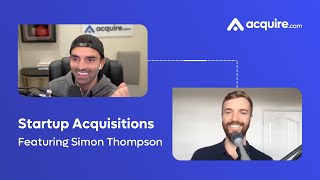
This is a YouTube video titled "Sold: Podcast database SaaS for six figures with Simon Thompson, Founder of Podseeker" containing an English conversational interview recorded in November 2023. The discussion features Andrew Gazdecki interviewing Simon Thompson about the founding, growth, and eventual acquisition of Podseeker, a SaaS product that helps scale podcast outreach for PR professionals. They cover topics such as product-market fit, customer acquisition, the acquisition process via acquire.com, and advice for startup founders looking to sell their businesses.
All right, I'm here with Simon, the founder of Pod Seeker, who recently got acquired for six figures. Simon, how you doing today?
Really good, Andrew. Great to be with you.
Yeah, thanks for coming on. So, for those that may not know you, do you want to give a brief introduction of yourself?
Yeah, sure. So I grew up in Melbourne, Australia. I'd say I got my start in my career at a place called Mi9, which was a joint venture between Microsoft and a broadcast network in Australia, Australia, called Channel nine. Working mainly in sort of customer success. That was a great job, and I was under a good thing there, and I really liked it there. But I kind of got the. The entrepreneurial bug, so left, you know, a steady job with a good path to move overseas and go start a business. Not. Not this business, not Pod Seeker. But while I was running that business, one of the main ways that I would generate leads for that business was to reach out to podcasts that had a relevant audience. I wanted to reach and. And, you know, pitch myself as a guest and. And that worked out to be really well. But I did notice at the time it was a really clunky, like, discovery process to find, you know, who are the good podcasts, like, who actually has, you know, a decent audience size that would, you know, yield good results. So that's when I kind of got the. The first idea for Podseeker. But it wasn't till, you know, a few years later that I came to realize after working with this company called Meltwater, that PR people have a really good toolkit for traditional media journalist outreach. So if you need to reach out to CNN or the New York Times and need to know, you know, who writes about tech or health at those publications, they have a really good toolkit for that. But, you know, given podcasts, like a new media format, there wasn't a really good toolkit for. For that same kind of process. And so that's where the idea for Podseeker was born. And that's when I put together our first product, which we can get into, which was pretty janky, and it's just kind of, you know, grown from there.
Yeah, you answered. You answered probably, like five of my questions. I was gonna ask. Thank you for that. Let's. Let's dive into Pod Seeker and congrats on, you know, making the job in entrepreneurship just, you know, from a high level. What is you. You briefly touched on it, but to my understanding, you know, in pr, you have press release sites, you have big databases of different reporters, lots of manual outreach and stuff. What It. And you had some parallels to that. But for podcasts, what did Pod Seeker, what problem did it essentially solve?
So, like I said, yeah, if you're a PR person, like, you have really good toolkits for those traditional media formats, and they're using them every day, which is something, you know, I came to learn. And then I had just always been, you know, into podcasts, like, as a listener. But like I said, I also kind of, you know, reached out and pitched to some of those podcasts as well. So, you know, when I married those two data points together, like one, you know, I found it a difficult process. And then to, you know, noticing that PR people were solving the problem in this other domain, yet didn't have a way to solve it in the podcast domain, that's when I realized, you know, there could be something there. So the problem itself is just allows you to scale podcast outreach. So if you want to reach out to podcast to pitch yourself as a guest or for an advertising opportunity or for a partnership opportunity, and you want to know that you're reaching out to the right podcast, and you want to know how to get in contact with them, like, you know, what's the best email to. To email them on? Podseeker lets you do that, you know, far more quickly than you could if you were just doing that manually.
Interesting. What I love about that, I love how you took an existing business model for a more traditional market, press, pr, newspapers, blogs, whatever, and then applied it towards a newer medium, being podcasts, which I think really de risks kind of the idea or the concept of the business, because you can look over on the right hand side and say, hey, there's this other big market, but there's this new medium is emerging. There should be a similar version for that. I love that.
Yeah, 100%. And I think the thing that kind of made me go, okay, all right, like, make the decision to. To actually build something was I was kind of looking for some validation that, you know, there was, in fact, that crossover into the podcast space and there was a gap there. And I was. I was looking through G2 crowd at some of the reviews for some of these traditional media databases, and I came across one in particular that, you know, this is a great database. It's a great product to get a lot out of it. But I'm paraphrasing here, but it was something along the lines of, like, I'd give my left arm and my right leg and, like, you know, I'd shave my eyebrow or something like that if it would Just include podcasts in the database. I was like, hey, that's, that's probably a signal. So, yeah, I worked with a developer and like I said, built a very, very janky V1. But you know, despite it being so janky and so terrible to look at, like, people still wanted to use it. And so that, that was, you know, further validation that there was something there that I could, you know, actually build on.
That's awesome. Reading customer reviews is such an underrated way to like, figure out customer pain points, validate businesses. Like, it's a really simple way to do it. You basically go to a review site, go to a category, look at what everybody's complaining about, and then you can find a lot of opportunities or you'll have some ideas that might pop up in your head. Yeah, so nice job there. Now my next question is, how'd you get your first customer? How did you, how did you get that. That first. First customer to pay you?
Yeah, so, I mean, the first thing I tried to do was track down that person who said they'd, you know, give down their, give their, their right arm.
I don't know if you'd want that as a payment, but.
Yeah, but no, the, the first thing I did was like, just, just cold emailed a few PR agencies and said, you know, hey, are you using a media database? And you know, do you also want to use that database to, to reach out to podcasts? You know, I've noticed that that's not possible. Would you like to use this database? And that like, you know, people often will say, you know, cold email outreach is kind of like pointless unless your, your average contract value is like, you know, under over $5,000 and things like that. But I found like, for, Even for this 50amonth product, like, the conversion rate on people responding to that email was so high that that ended up being like a really solid channel. So that's definitely how I got the first customers and that's how I ended up getting a lot more customers. Was just kind of, you know, one to one, emailing PR agencies and being like, hey, do you want this? And it just resonated so strongly that it didn't feel like I was, you know, churning out this numbers game to, to do it because it was like everyone just resonated so well with it.
Yeah, that's, that's definitely when you know, you have product market fit, when you're able to take a really simple go to market strategy or channel or whatever you want to call it. Cold email is kind of at the bottom, you know, your response rates are going to be the lowest, it's the busiest, it's the noisiest. But if you're able to have a pitch so compelling that people actually respond to it and then pay, that's interesting. So that's when, you know, I. I would say, yeah, I think you have product market fit. I guess my next question would be, was there, like, a specific moment that you had where you felt like, okay, I really have product, like, I really have something. Like, this is like that kind of like that rush feel where you're like, because you build the product, you do the research, you get maybe one or two customers. But was there, like, a specific moment where you thought, you know, this thing could really go much farther than, you know, just a few customers?
Yeah, I think there were kind of like a bunch of those along the way. Like, if I go back and look at the revenue graph, like, it wasn't like this. I mean, it trended up over time, but it was. It wasn't like a smooth line. It was more like across, across, across, and then big step up. Across, across, across, big step up. And for reasons I can't really explain, so I don't really know, like, why that is, but certainly, like, every time one of those jumps happened and then it, you know, maintained itself, those were all, you know, very, very great validation moments. But I suppose, you know, like, you know, hitting the first thousand. Mrr, that. That was really nice. And then it's like, okay, well, I'm definitely onto something here. I think it was around about a thousand bucks. Mr. I created this very janky V1, which was essentially like an API wrapper around another service which didn't have a nice ui. And I just kind of put a nice UI on top of it. And that was when I was like, okay, onto something here. Let's actually, you know, build our own backend and our own database for this and, And. And start to scale it up.
Very nice. So things are. Things are going good, you have interesting business. It's solving a clear market need. When did you make the decision to sell it? Can you walk me through maybe your thought process on that? Why did you go and look for an acquisition?
Yeah, so, funnily enough, it was probably about a year ago, and this is where I can get into some of the not necessarily downsides. But there was a point in time where I realized it might have been a difficult product to grow in the form that it was in. Things needed to change about the product in order to go into different markets. That's what my thoughts were at the time. And so it was kind of like a bit of a fork in the road. Like, okay, I need to double down on this. And the other thing I should add, like, this is pretty much a side project. You know, the whole time I'm working on it. So I'm not, you know, like 12 hours a day on it kind of thing. It's like, you know, the few hours that I can kind of get to put into it. And yeah, it just sort of came to me that it was, you know, it was going to require essentially a full time effort in order to make it like a really big business or so. So I thought. And then one day this guy reached out to me. His, his name is Ben. He's, he's a great guy. And we just kind of got talking about, you know, him taking over the business with me being, you know, somewhat involved as like a minority shareholder. So he was going to buy out most of the business and I was going to, you know, essentially kind of consult with him. And that ultimately the deal didn't go through for, for a number of reasons which we can get into. But it did sort of get me in the mindset of, okay, I think this is the decision that I want to make is to, is to, to sell the business for a number of reasons, but, and then, you know, to, to actually get to the, the acquisition that just went through. You know, I tip my hat to you. I just essentially put it up on acquire.com. okay, okay, I'll start with that.
Let's slow down on the details here. I got, I got some questions. But that's typically, you know, we see that a lot where a startup will have someone reach out. And that's when we'll see a lot of startups work with us or at least on our marketplace to find more buyers. Because there's a saying, if you have one buyer, you have no buyers, so you have no leverage. And so if that one falls through, you know, you have no other buyer to, you know, create leverage with, raise, evaluation, whatever it may be. But what made you decide to listen? Acquire.com. how'd you find it?
Yeah, so I have, yeah, I've always been involved in like the, the microconf community, like Rob Walling's community, if you're familiar with that. Yeah, Rob, Yeah. So, yeah, and people, people talk about it all the time there. That's, that's where most of these kind of, you know, like micro entrepreneurs, like indie hackers, you know, indie SaaS builders, whatever you want to call them, they tend to just say, you know, if you're selling your business, acquire.com is, is the one to go to. So that's like the, the first and only place that, that I went to and that's where I heard about it. And yeah, I've had, like I said, I tip my hat to you. Like, how is that?
I mean, that's a, that's a fabulous compliment. I appreciate that. How's, how's micro comp as a conference? I've always wanted to go, so I've.
Never actually been to the conference. I'm, I'm just in the slack community, which is really great and I can highly recommend. I definitely want to go to the conference, but I'm in Australia, they're always in the U.S. so it's, it's just a, it's a bit of a heavier lift for me to get there, but I'd love to go one day.
That makes sense. Yeah. You're like, I don't know, three, 4,000 miles away. Yeah.
Yeah, that's like 15 hours.
I'm not good at math, but. But for anyone who is thinking about growing micro SaaS business, Rob Walling has some really, really good content on YouTube. Highly recommend checking that out. So Shameless plug shout out to Rob. But moving towards back to the acquisition story. So you list on acquire.com, you go live with your listing. What happens in the first week. Tell me about how many buyers reached out. What was your expectations? How are you feeling? Like, how'd it go?
Yeah, yeah. So I mean, it definitely exceeded my expectations. Like I'd have to go back and look at the numbers. But like, I, I feel like within the first week or two, there were like, at least, I don't know, like 10 people who reached out with, you know, who were genuinely interested. And like, you know, on your platform it tells you like, they've got the funds and like, we verified that they've got the funds. So, you know, they're all like, you know, the, the not like K tire kickers there. I will say at first, like, when I listed the business, I wasn't like desperate to sell it. Like, I didn't, you know, like need to, to get out anytime soon. So I did list it at a much higher price than what it was worth, quote unquote, just because I was like, well, you know, let's see if there's any bites at that level and I can always come down. So that, that was largely like the response that, that I got, which I, you know, completely expected was, hey, really like your business, I'm definitely interested, but. But not at that price point. Would you consider coming down? And for the longest time I was just like, no, I'm, I'm not really interested in coming down. And so, so it actually sat there for probably like six months, like, you know, just with, with people, you know, putting in lower offers than, than what I wanted, but like real offers until I, you know, like, came to reality and said, oh yeah, okay, like the market has determined that the price is actually, you know, at this sort of reasonable rate and not this kind of like highball figure that, that I had in mind.
Yeah. You want to know a quick little like, tip on how to actually get like the highest multiple? Typically, from what I've heard, I would love to. Yeah, it's counterintuitive, but it's priced low. You price lower. Okay.
You want to buy more bias, as I said.
Exactly. So the name of the game, you're selling the business. So the more buyers you can bring to the table, the more conversations you have, the more interested buyers you get to solicit an offer to your letter of intent. That gives you the opportunity to negotiate upwards on valuation terms. All that fun stuff. So small tip there is definitely, you know, when you, when you list if you price too high on your. On acquire.com, we also have this interesting feature. I'm not sure if you knew about it, but if you reduce Your price by 10% or more, all buyers will be notified as well. So if you're priced high, you can always come down later. But that's why we recommend pricing within normal market valuations because then you at least get just a conversation with a buyer. You at least get to meet with them and have, you know, kind of sell, you know, the growth opportunity or the great parts about your business and have that dialogue with the buyer that may eventually acquire you. But moving on to how you find your found your buyer, I'd love to, to know about that. How did, how did you figure out through all the buyers that sent offers that signed NDAs, how did you land on the individual that eventually acquired the business?
Yeah, so, so for starters, like, we just got along. So we had a call. Like, he was a really good guy and I think importantly, he, he just like, he really knew what he was doing and he kind of like laid out like he had acquired a business before and he just really like laid out steps and he just, he, he made me feel like if we were to go through with this that it would be as painless as it. As it could possibly be. And like, I've heard enough, you know, I've heard enough acquisition stories that have been wildly stressful and overly complicated to wanted to go through that. Like, we were talking before offline, like, I've got, you know, I've got two young boys and like, I didn't want to essentially give myself, you know, another job in just going through the acquisition. And so that was definitely a big part of it. And also, like, you know, while he didn't, you know, go for my like, highball price at the start, like, you know, it was, it was a price that I was happy with and that he was happy with. You know, he sees a lot of really great potential in the business and it just feels like it's going to a really good home. So, yeah, those are the reasons that.
That, that is so, so, so important in terms of. There's another great quote. You can't do a good deal with a bad person. So you and the buyer, you. You have to, you just have to get along. I've seen so many deals acquisition just fall through because someone's not responsive or someone is, you know, like, you're just not on the same page in terms of what you're trying to accomplish. And then specifically you don't have a clear plan. So one maybe tip for others listening is before you sign an loi, one thing I always recommend is having like a pre loi signing call where you. It sounds like you did this really well. So, Simon, you had like a plan in place. What are we going to do when we go into due diligence? Just knowing that up front can tell you so much about the buyer. Like, do they. Because you don't want to sign an loi, then this person is kind of figuring it out and that's. And then that letter of intent falls through. Then you got to go back to the buyers and say, like, this buyer and you gotta have a story.
Exactly. Yeah. And we, yeah, we, we did like a, a version of that. And the other thing was, which. And this was like a big one, was like I said, there was like, I had sort of gone through like maybe a bit of an acquisition process about a year earlier. And one of the things I'd come to notice is like, especially when you're transferring a stripe one country to another, if you're transferring it within country, it's relatively straightforward. But from one country to another is wildly complicated. And you need to make like a lot of code changes and it's, it's a really, it's a really heavy lift and quite annoying. And he had done that previously in his, in his previous business and so like he called that out specifically which was like one of my like major concerns. I was like that's going to be an absolute, I don't know if I can swear on the show, but like an actual like shit show. And it turned out to be still somewhat painful but like as painless as it could possibly be. So that was really good.
Yeah, I think, I think the biggest lesson like or the takeaway is you know, the person you sell to. You know, a lot of founders just focus just on valuation and like just on terms but you forget that you know those aren't real unless you actually close acquisition. And so to close acquisition you want to go with someone who's you know, experience again on the same page as you. You get along. There's some sort of plan post loi they're able to point out maybe things that are going to be an issue that's always a huge like okay, great. Like you have this understood because if you went with you know, a buyer where less technical, they wouldn't understand how to deal with that situation, the deal would fall through potentially.
Yeah tight line.
So hats off to you for due diligent. Due diligencing the buyer because it's, it truly is a two way street. Yeah, I guess, I guess another question is how did you prepare for the acquisition? Did you create like any docs or materials or.
Yeah, not as many as, as would have been ideal. I mean we, we had all the docs that, that we kind of needed to do. Luckily the, the product itself is relatively straightforward. So like you know, the buyer getting to know the product was, was fairly straightforward. It's like, it's like advanced search for podcasts. So that side of it was fine. And then the code like I, I'm, I can write a little bit of code but I'm, I'm no man's a software engineer so I wasn't totally across that side of things as well. But, but the buyer was and so I just you know, essentially gave him access to, to GitHub and, and he just kind of combed through that and, and had a look through it all so that all went well. But in terms of like processes and things like that, there just wasn't a lot of that because essentially pretty much just me for, for the duration of the business as a fairly like passive business. Like I said, I had a job like Most of the time I was, I was doing this business and actually this is something I didn't touch on earlier as one of the main reasons that I decided to sell the business was it was really passive for me. And I just kept hearing from like, you know, people I was talking to, like, passive income does not exist. And like, if it does exist, like, you better bet that it's, it's temporary because, you know, one of these like, external services that you rely on, like some API, they're going to shut down or like something's going to happen over here and like it's going to require you to, to really dive in and put a lot more effort into it than you're currently putting into it. And so that was kind of always in the, in the back of my mind was, okay, you know, something's gonna shut off here. And so I just need to be kind of mindful of that.
Yeah, yeah, that, that's super common. You know, a lot of, a lot of successful acquisitions are just timing, you know, where you sell it at the right time for the right reasons. Because you never know what's gonna happen in the future. Like AI just came out or OpenAI just came out with something where it can, like read PDFs. When I sold my previous business, it was a drag and drop mobile app builder. Within a month, Amazon released a free version of what I had built. So it just, you know, you know, I always joke, like with software companies, you're not going to hand them down to your children just because it's going to be disrupted like 20 times by then. So if you're not able to continuing, like continue with product development, keeping up with customers, you know, you're, you know, over time competition is just going to creep in and eventually surpass you, in my opinion. So kudos to you on, you know, realizing, you know, if you don't have the time and effort, it, it's probably a good time to sell it rather than just letting it slowly die off.
Yeah, totally. And yeah, like I said, you know, I just, I really got the sense from the buyer that it was going to a good home. Like, he, he had big plans for it, he had the skill set, you know, that, that was required to take it to the next level. And so, you know, I'm, I'm super excited to see what he's going to do with it. Yeah, I'm watching closely for sure.
I mean, it sounds like, it sounds like a real, real problem and also a growing market. So it's a great acquisition.
Yeah.
In terms of, we touched on due diligence, asset transfers, I guess maybe for, you know, final questions. You know, you've been through an acquisition. Congrats again on the close. You found a great buyer, you built a great product. If you had just like three pieces of advice for other startup founders that might be looking to sell their businesses. What, what are the top three learnings that you would tell them?
Yeah, so, so one of them is, is that thing that we were talking about is like, I'm really happy with how this acquisition went through. And while, whilst I haven't been through a nightmare acquisition, like, I know they definitely exist and like, I'm really glad that I didn't have to go through that. And so I'd say, you know, that that's potentially like if you, you know, you had two buyers and everything else is equal apart from, you know, one's offering you less money, but you know, it's going to be a smoother acquisition and one's offering it might be, you know, a bit more hellish, then, you know, I would go with the, the former in, in that situation.
I love that advice. I love that advice. I tell that to found. Sorry to interrupt, but I, I tell that to founders all the time. You know, it's not always the highest price. You know, you want to go with someone where you have the highest probability of close. Like that's kind of where I, I, especially if you have, you know, a reputable buyer, whether it's a private equity firm and they're, they come in a little bit lower than maybe an individual you're not too sure about. Go for the person that has a higher chance of close. Higher probability. Close, more expertise because it'll save you a ton of headaches. Because having an LOI not go through is, is fairly painful and common.
Yeah, yeah.
And avoidable too.
Yeah, yeah. The, the, the other one is I, I don't know if this is necessarily advice that I would give to others, but I know like, for, for my next business, whenever that may be. Like, one thing about Podseeker is it was a great business and it always brought on new customers, but it was a really high churn business. Like the problem, it solves a real problem, but it's not necessarily a recurring problem for a lot of people. So like, if you want to run a podcast outreach campaign, you kind of do the campaign and then you don't really need the tool anymore. And so we solved that problem a little bit by offering it to agencies because they would have multiple clients who had multiple campaigns, but you still have this kind of like seasonality component of that. And so there was a lot of churn. Like, you know, it was, yeah. Higher than average churn to the degree that I know what the benchmarks are in that space. So for my next business, I think I would go. And I guess the flip side of that coin is, like, it was a really easy product to onboard, so it was really easy to acquire a customer and get a customer using it, but they would churn out very easily as well. And that's like, you know, there's definitely a case to be made that that's a really good balance of how you want those, those metrics to look. I think personally for my business, I'd probably just prefer to, you know, it'd be a little harder to acquire the customer, a little harder to onboard the customer. But, but know that, you know, they're, they're rock solid and really kind of, you know, ingrained in the product in a way that they won't churn as, as much as they did with Podseeker. That, that would be the other one that comes to mind.
That's too. Yeah. Yeah, I'm holding me to it, Simon. Yeah. Cool.
I. I think I would. Yeah, like I said, this was a side project and I, I don't know if I would do another side project again. I think, like, the next time that I start a business and like, I have run businesses full time before, there's obviously trade offs to that. Like, you don't have, like a solid, secure income. I know some people would, you know, argue that a job's not that secure either, but it's probably a little bit more secure than entrepreneurship. But if I were going to go down the entrepreneurship path, I'd make sure that all my ducks were in a row so that I could go full time on it and have a nice Runway and just really put everything I had into it. Yeah, that would be my next one for me personally, and that's definitely not applicable to everyone, but that's what I would do.
You would be surprised at how many entrepreneurs, as soon as they sell a business, I talk to so many. It's like, what are you doing next? It's like, oh, I already got this, like, new business I'm working on and I'm going bigger this time because you have more confidence, you have more experience, and typically you have a little bit of seed capital. So it can be a launch pad into, you know, something bigger and better.
Like, I, I've started a new day Job. I'm really happy in the day job. I'm really liking the role, really like the people. So that's definitely like where my focus is at the moment. There's this other thing that has just come up, like through a conversation with, you know, someone else, and we're kind of, you know, talking about ideas and, and seeing what could happen on that front. But I'll, I'll keep a bit hush on that for the, for the time being.
I love it. You seem, you seem excited about it. That's always the funnest part is, I mean, there's so many fun parts about to startup, but like the ideation stage and you're like, kind of like, what should we call it, like, you know, customer research.
Yeah, totally.
And then you had the first customer. Oh, man, I love the whole journey.
I'll end with this. But yeah, you know, like, I, I, I have two boys under two, you know, I kind of want to, you know, make sure like, I'm, I'm really putting as much focus as I possibly can there. And you know, entrepreneurship as, as you well know, it can take a lot out of you. And so, you know, when I do make that leap, it might be in a few years from now, you know, I'll, I'll, I'll kind of have my ducks in a row, I suppose so. So I can do that. So I'm looking forward to that day. But yeah, it won't, won't be anytime in the, the near future, I don't think.
Right on. Well, Simon, I'm rooting for you either way. And huge congrats again on the acquisition. That's a huge feat. And if people want to learn more about your story, where can they find you online?
I do have a website that I don't put much on, but it's SimonThompson.
CO. We'll put that in the show notes. Who, who has the dot com. Who has SimonThompson.com?
Yeah, I don't know, it's some like, triathlete. There's also a, I don't know, like the CEO of Rio Tinto or some multination conglomerate. Like his name, Simon Thompson as well. So he got that one.
Well, you'll get, you'll get there one day and you'll buy that Simon Thompson dot com.
I think so.
All right, Tom, well, thanks so much for sharing your story and coming on the podcast and again, I'm rooting for you, man.
Yeah, awesome. Thanks a lot for having me. Andrew, great to meet you. And, and like, I say kudos to what you built with acquire.com it was, you know, great product and great experience to go through. So thank you.
I appreciate that. All right. Cheers, man.
Cheers.
More from Andrew



The Buyers Who Made the Move: What They Bought, How They Did It, and What Happened Next






