Startup Acquisition Stories Podcast With Guilhermo Oenning, Founder of Fider
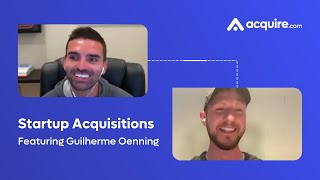
This is a YouTube video titled "Startup Acquisition Stories Podcast With Guilhermo Oenning, Founder of Fider" containing an English podcast interview recorded in August 2024. The host, Guilhermo Oenning, interviews Guy, the founder of Fighter Ghee, about his journey building and eventually selling his SaaS business Fighter. The discussion covers the product's origin, monetization, user acquisition, the decision to sell, the acquisition process, and Guy's current projects. The content is a single-speaker interview format without Andrew Gazdecki as a participant.
I am here with Guy, the founder of Fighter Ghee. How you doing today?
Hey, I'm good. Thanks for having me.
Yeah, thanks for joining the podcast. For those that may not know you, do you want to give a brief introduction of yourself?
Yeah, sure. So I'm Guy. I'm originally from Brazil, but then I moved to Ireland like about eight years ago. My background is in software engineering. I've been doing this for many, many years. I love building things, I love doing what I do and I probably do this for the rest of my life. And I used to work like in a corporate or 9 to 5, whatever you want to call it, until last year like in February when I decided to quit my job and take the leap of faith and just build my own products and grow them.
Nice. Well, today we're going to be focusing on Fighter. You recently sold that business sonicbar.com so I'm super excited to hear that journey. But before we start about, or excuse me, before we start talking about the acquisition, what made you start Fighter?
So it's probably going to be different story from, from most funders because when I started this, this product was about eight years ago, seven or eight years ago. And I was looking to switch jobs and I wanted to look for a job in a different tech stack that I wasn't familiar with. So I thought that the best way to do that was actually to upskill on that technology and build something. And because I wanted to kind of grow my CV and I also wanted to kind of have a nice GitHub, I decided to make it open source product. And so I knew that the technology stack I wanted to use, I knew that it had to be open source. And then I basically decided to look one of the products my company was using at that time that I didn't like which was I don't know if any user voice, pretty kind of popular, not popular this day, but it was back then they were targeting like large enterprises. So I decided to just basically build an open source alternative to it and my goal was just to learn a different technology. That was it. So I built that for, for a few months and not a lot of people were using it and so I decided to, okay, maybe they're not using because it's self hosting, you have to install it in your servers. So it's can be a quite a challenging task for some. But then I decided to kind of make it like a SaaS and then you could just sign up on a website, use it for free. I wasn't charging anything, it cost me like $5 per month to run it. I just want to get users and get the feedback from that. So that's why I made it free. So I basically started just to learn something and yeah, it's been quite a journey.
I like it. Tell me about user voice. I'm familiar with user voice but maybe someone's listening that isn't what does user voice do and what did fighter do?
Yeah, so basically finder user wise they usually target like SaaS company or other software companies. So if you have a product and you want to get feedback from your customers, you like feature requests, they usually come from like email or chat and then talking directly to you. If you have communication with them through email then so so many different channels where you can get feedback or like feature requests, bug reports and these platforms you can just send a link to your customer and say hey, if you have any suggestion you can go on this site and suggest something there and you can also see the suggestion from other users of your, of the product and then you can just openvote it like oh, I like this other suggestion for this other customer they have. I like this. I also want to, I want, I also want this feature so you can upload that and it goes to the top. It's kind of like a Reddit for product where you can share with your customer and all the feedback goes into one place.
Nice. How'd you get your first customers or your first users?
So I think the first few came from Reddit. I was building this, I shared it on a few Reddit communities and because it was an open source product, I wasn't really monetizing it because it was kind of easy to get a little bit of traction. In the beginning people saw it as an open source product and they just commented, voted and people start sharing ideas on GitHub. And that was kind of when I decided to make it like the SaaS that I mentioned so people can easily sign up instead of having to install it on a servers and so on. But like the first few users, like three because at this stage I wasn't charging anyone, was basically Reddit.
I like it. It's similar to Reddit and you found the customers on Reddit, full circle moment.
Very nice. It's just a different target, target audience. But yeah, very nice.
And tell me, so you build the product, things are going good, you have customers, what made you want to sell the business.
So actually there's a little bit story before I decided to sell because there was a part where I started monetizing it and maybe I can talk a little bit about that.
Yeah, I want to hear it. So it was, it was free at first and then you introduced.
Okay, yeah, it was free for like two and a half years maybe. And at that, like I said I was looking to switch jobs. And between, I think after one and a half years I actually did switch jobs. So I kind of reduced the time I was spending on this product was like a five project at that time. But eventually I found that the indie hacker community and I was reading their stories on how they were building products, maybe a weekend or a week and they're going live with it, putting a stripe checkout and people were paying for that and was like in my head at that time I didn't know people would trust a random dude in the Internet where they would put their credit card on their website. And so that's when I started seeing these stories on needy hackers and I was like, well, if they can do it, maybe I can try to do the same. And that's when I basically decided to just move to a completely paid option where you, if you're a free user, you're going to have. I think I gave that every three months. You have three months to either sign up to the paid plan or you can download your data and self host it or you can just stop using it. So I think I got to like around 1000 Mir from from that going from free to paid, which is not a lot. But at the same time for someone who's not getting anything on this site product to getting a thousand dollar from wasp, my mortgage basically or something that was just running on the background and I kept it running for. So that was two years after I monetized and then it was running for maybe another three years just on autopilot. I wasn't doing anything, just there I was focused on on the other things and my company on the, the job that I had. So that was like more maybe three years, kind of semi autopilot. I was just doing maybe a few hours per month. And then in 2022 I started starting on new products. And that one was a lot different because this was. I wanted to start this product to actually build the business to make it sustainable. And so it was not just developing like Fido was just developing, not marketing for the new product. I decided to just do the right thing. Like I was reading all these stories and following suggestion people had. And that's when in 23rd, 2023, 2033, I basically quit my job just to build this New product.
So with, with Fighter though you did you tell everybody they had to pay or stop using the product?
Yeah.
Were people upset at that change?
I don't think anyone was upset because up until that point they were all using for free. I had some people who were also an open source product and I was like, yeah, I can keep hosting you for free. So I think like there was like three or four users that I kept on the free plan, but everyone else just said that yeah, if you, you can use it for free, but you have to, to self host it. Free plan.
And then you were just spending four to five hours per month. Is that what you said?
Yeah.
That's great. Did you have, did you have like customer support requests or questions that you had to answer or what would you spend that those four or five hours a month on?
Very little is usually some emails that people would send but like even feature requests and these other things would go to the. Because I use Fighter or Fighter like for. To collect all the feedback. But sometimes there would be like a bug report or something like that. That's the type of thing that I would, I would still do. On this autopilot phase, I was just not adding features. To me it was like I'm finding it's feature complete from my point of view. So it's just fixing bugs.
That's great. So it just sat there. It was just a, like a vending machine on the Internet. People just walked. Nice.
That's what it's about. It's just free money coming in every month. Like you know, so that's why I kept it running for like three years at that stage.
That's a great product. Those businesses are not easy to build. I think a lot of people try, but eventually you run into a snag with sales or support or bugs or something. I love the simplicity of the business. Okay, so tell me. So we, we're going to fast I think to. So just in the past year where you go to, to sell the business, what made you land on that decision? Was it to focus entirely everything on the new business you're starting? Was it starting to take up more of your time? Why'd you, why'd you end up selling the business?
Yeah, it was. Was a tough decision because after like five or seven years at that stage working on this was kind of like a baby and was the first time I got a product that was making money that wasn't really selling my time. So that was kind of special to me. But at the same time when I decided to Sell the business. I had four products running and I think that's one of the main mistakes. I learned a lot, but running four products a lot, even though this was on autopilot, one of the other ones was also on kind of autopilot. Ish. But two of them are spending more time and kind of focus on growing them. And that's when I was talking to my wife and said, hey, I don't. Even though I'm not spending much time on it, it's still kind of taking space in my mind, you know what I mean? Like, I was thinking about it and, and that's when I like, look, I can keep running on autopilot. I don't know how long it's gonna stay like this. My. Everyone might churn eventually. And that's when, okay, maybe I'm going to sell two of these, the ones that I wasn't spending much time on, and just go focus 100% on the other two and just grow them. So that's, that's basically it. But it was tough. Like, like I said for me I could keep running on autopilot. And that was my plan when going to acquire was like, if I can't find a buyer, so be it. I just going to keep running.
Nice. I like that. So I mean that's, that could be big. It's taking up like space in your head. You're thinking about it all the time. Even if you're not working on it, it's a distraction.
So, yeah.
Okay, so you list on acquire, what was your expectations and were you surprised when a lot of buyers started reaching out? How did maybe like the first week go?
It was crazy because like I created my profile, did the PLL submit all the documents and like the first few hours when after it went live, I already start seeing in the. What they called after they, they find the, the NDAs. Yeah, every NDA I got an email that was like a bunch of NDAs and it moved really quickly. And I think I, I have notes here that it took like two weeks to go from publishing on acquired to sale. Agreed. So that was a lot faster than, than I thought it would be. So yeah, it was really positive. The first impression.
That's awesome. How did you land on the buyer that you ended up moving forward with? Because it sounded like you had a lot of buyers. How did you decide to move forward with the buyer you ended up selling the business to?
I, I had, I had a lot of people interested, but really that I went on a call and interacting quite a bit. I think it was like four of them. Four or five, but eventually the buyer who eventually sold. I think there was good connection between us when we joined the call. They are very experienced founders, they're true founders and they already built a business and sold a SaaS. So they know how to do these things. Already feel very comfortable talking to them and I just saw like a bright future for FIDR under their leadership because the last thing I want to see is this project product dying. So yeah, good connection on the call. We did two or three rounds. A lot of thoughtful questions about the business and they did a lot of free research which was really nice because one of the things I mentioned on this product was the SEO, the potential of SEO on this product. Because every time a customer creates a site or a link, there is a link on the footer back to my page to Friday IO. So you always get a backlink for every new client. And the open source side of the product is every time someone hosts it for free, even though I can pay for that, they are giving me back a backlink.
Nice.
That was quite nice.
Nice. Okay, so you know, you find your buyer, things are looking pretty good. How did due diligence go? What was that process like for you?
Yeah, I didn't know what to expect but again because they've been through this, they knew what they're doing. So right asking the right questions, starting sharing some of the access some of the tools. So they see what I post on our choir was exactly what they see on the actual like the like the stripe account that we had. So it went pretty smooth. Like took a little bit like two weeks. We went to from publish an acquired to say okay in two weeks and then two weeks of the jellies. But like I felt really comfortable at the end of the process that everything was, was okay and it did went okay.
Yeah nice if you had to do this over and give yourself maybe like two, three pieces of advice or maybe someone else is looking to sell their business and they ask you what are the top two or three things you tell them.
The first thing is I think it's really hot market now. For sale. For sale. Selling micro or even bigger size. But in this case it was a micro size. A lot of people interested in buying. So not. Not a device, just a comment. And I think advice is on the the profile. Really a lot of people, I don't think a lot of people ask repetitive questions because all of those questions already answered on the templates and all the documents that you can upload. So I took screenshots of most of the tools like the pr, the, the revenue MRR churn. Everything that they could find on our stripe just posted on the account on acquire and I think that made the process a lot smoother because whenever someone reached out, they already had access to all that information and they were just asking the important questions.
Nice. And then so you successfully sold the business, everything is going great and now you're wired a bunch of money and you know you've successfully sold the business. Did you celebrate the acquisition in any interesting way? Did you do anything fun? Did you buy something cool?
Not really. Maybe I shouldn't but yeah, I was just really focused on the other products. I actually think that if I persist a little bit more, maybe I could have even sold it for a bit higher. But it was so focused on growing and my mind was on the other projects already. So whatever money I make here, I just going to reinvest on the other things and just keep growing.
Nice. What are you working on now?
I have, like I said, I built four so I sold two. So I have two left. So one is very niche. It's called aftercube.com it's development tool. It's a desktop app for Kubernetes developers. That's the one I built about two years ago I started and this is the one that I quit my job for. And one more recent one which is called SEO gets.com it's an SEO analytics for SEO agencies and consultants. It's kind of like a supercharged version of Google Search Console for people who like Google Search Console. So we get all the data that you can have on that platform. It just build a much nicer UI with a lot more functionality and remove all the limitations that you have on Google Search Console. And for this one I actually found a great co founder. So he's doing all the marketing, sales, go to market and just doing the development side which is the part that I like to do.
That's awesome. Yeah, you need someone on the go to market and someone to build the product. I'm. I'm rooting for you. I'll put, I'll put both of those in the the show notes if everyone wants to check those out. But if people want to hear more about your story or follow you online, where could they find you?
Yeah, I used to be more active on Twitter. I've been taking some time off but I'm still posting there eventually. Sometimes time it's goanning x.com g o e N I n G Nice I'll.
Put those in the show notes. And thanks so much for coming on the podcast. I enjoyed hearing your story and congrats again on the acquisition. And hopefully I'll have you back on for another acquisition story.
Yeah, hopefully wait a few more months or years and then we'll see again. But yeah, thanks for having me on the show. It was great to be here.
Of course. All right, take it easy. Cheers.
Bye.
More from Andrew



The Buyers Who Made the Move: What They Bought, How They Did It, and What Happened Next






