The Best Moment to Sell a SaaS Startup – Mark Spera, Co-founder of GrowthBar
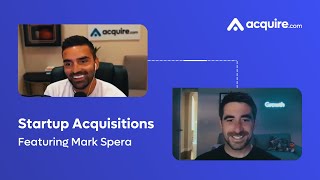
This is a YouTube video titled "The Best Moment to Sell a SaaS Startup – Mark Spera, Co-founder of GrowthBar" containing an English conversational interview recorded in August 2023. The discussion features Andrew Gazdecki interviewing Mark Spera, co-founder of GrowthBar and Growth Marketing Pro, about entrepreneurship, building and selling GrowthBar, product market fit, acquisition process, and advice for SaaS founders. The conversation covers detailed insights into startup growth, challenges, and M&A experiences.
Foreign. I'm here with Mark, the founder of Growth Marketing Pro. Mark, how you doing today? Good.
Andrew, nice to see you. Nice to be on. Thanks for having me.
Yeah. So for those that may not know you, do you want to give a brief introduction of yourself?
Yeah. So I've been in digital marketing for 12ish years now. Um, I was working at startups in San Francisco. Company called Realty Shares, company called Plush Care, one called Minted. Along the way, my business partner Hayley and I started a blog at Growth Marketing Pro. Com and wrote exclusively about digital marketing stuff. You know what we were learning at startups? We were able to grow that blog via organic traffic and along the way, started getting asked for help on how we could grow other companies. Organic traffic, Basically, through. Through the course of helping other companies, we hatched the idea for Growth Bar. Growth bar is an AI writing tool for SEOs. So it was really like we were the people solving our own need. Fast forward to today. We've now sold Growth Bar. Hayley and I are focused now completely on Growth Marketing Pro Agency.
Hey, I got a question. Yeah, Blank twice. If the acquisition was seven figures, I. I can't blink. Thank you. All right, we'll leave it there. Well, I got questions. So again, congrats on the acquisition of. Of Growth Bar. You know, we were all rooting for you as a team, so it's always exciting to see when those go through.
Thank you.
But what got you into entrepreneurship? It sounds like you, you know, you. You were working on some tech companies and you made that leap. That's really scary for a lot of people. What made you make. Take that leap?
Yeah, you know, I think Hailey and I had a. We had a interesting introduction to, like, entrepreneurship, and in that, we started it as a side business. I see you tweet about this too, and it's like. And actually a lot of. There's like a whole Twitter culture of, like, the solopreneur, like, side Hustler. And I actually, like, think it's a great way to build a business is just as a side hustle, because then you can be one foot in the door, one foot out, and still make, you know, a paycheck and get to build something you really love on the side. So, I mean, we built Growth Marketing Pro. I think she quit her day job three years in. I probably quit, like, four years in, something like that. But, yeah, we really stepped into it as a side hustle with our blog.
Nice. So every entrepreneur has mistakes, struggles, obstacles they've gone through. Would you say Your biggest, you know, obstacle. Either building Growth Bar or Growth Marketing Pro or just anything else. What's like your biggest mistake?
Oh, good one, good one. I mean, there's a million, I think, I mean, I want to, I want to say with Growth Bar, it was going too wide. You know, I think a lot of VCs and stuff will tell you, like, go narrow and deep on one product and one, you know, use case. And I think with Growth Bar, I think it's good advice sometimes, but sometimes you need to go broad enough in order for the tool to be useful. And for Growth Bar, that meant adding SEO features as well. Like, you know, it's an AI writing tool, but also needs to help you plan, write and rank and follow your rankings for the content that you're creating in the name of SEO. So like, we, I, you know, I don't know if it was like a real struggle, but it was like always trying to find that balance between broad and narrow. And I think we went too broad in the beginning. I think we spent a lot of time and resources creating keyword research stuff from scratch that, you know, perhaps we didn't need to spend that time doing. And we could have refined the, the core product, which was the AI writing for SEO product.
No, it, I've actually made the exact same mistake. At my first startup, it's called Business Apps. As a do yourself drag and drop mobile app builder, we made mobile apps for everybody, you know, restaurants, hotels, barbershops. But if we went narrow on like one vertical, I think we could have grown further. But I actually would maybe now. Now I'm thinking, I think all entrepreneurs, you know, reflect on stuff like that. Like, I wish I could went narrow because it worked out for me and it obviously worked out for you. So.
But the going broad also helps you find that, like, what is that wedge sort of thing A little bit, you know, and especially when you're bootstrapped too. Like in my mind, like SEO and affiliate marketing are the two things that I love. And like, the more features you have and the more, you know, the wider the target audience, the more opportunity there is to, you know, rank for those keywords and bring customers in the door who wouldn't have otherwise heard of you. So like, narrow and deep is great for customer retention and like giving somebody something they can't live without. But for customer acquisition, I actually like the broad talking out of both sides of my mouth.
No, I, I actually, I can relate to that because we were bootstrapped as well. So, you know, I think the long Term strategy. If we just said, hey, we're gonna go all dominate this one sector, maybe it was. It probably would have been restaurants. Like, I look at companies like, ciao now, and everyone has, like, a mobile app for restaurants. But that growth would have been, you know, slower, a bit longer. But when you're bootstrapped, you're just kind of like, we'll service any customer, whoever's.
Whoever got money.
Yeah, well, hey, let's. Let's transition over to growth. For. Where'd you get the idea from it. What made you start that company?
It was like serving a need that we had so serving the need for. So for our marketing agency. We are creating content for a number of companies, and in every single case, the company is super different. So there are, you know, there's keyword research involved. There's, like, understanding what the business even does. Then there's the. Okay, okay, what are their, you know, guidelines for writing? Like, do they. Do they talk about us in the. In. Talk about themselves in the we voice? The I voice? What? And basically, it's like a process that's super artisanal. And we were trying to make it a little less artisanal and leave a little bit less to, you know, guessing how are we going to get something to rank? So we basically started with what was like, an editor interface that didn't have anything to do with AI. It was an editor interface that gave you, you know, essentially like, the growth bar, the, like, toolbar that told you, okay, how optimized is your blog post for SEO. And then, of course, when, you know, we heard about OpenAI, we got on the waitlist for their beta. And, you know, the obvious next progression of that was, okay, like, let's have the tool help you actually write an SEO optimized blog post as well as optimize the blog post. So it, like, really grew organically. And like I said, you know, it was. It was a side hustle. It was a side hustle of a side hustle. And then, like, you know, the more we use it at our agency, the more we were like, okay, this is a great tool. We can package it up and sell it.
Nice. When did you. Okay, so that's awesome. I love that you scratch your own itch. So, so, so to say, when do you know you had product market fit? Did you have a moment where you, like, felt it? Customers were just coming in. Was it a slow ram? Was it a day moment? We were out on a walk one day.
It's funny, my. So, like, Haley and I are Pretty good at acquiring, like growth Marketing Pro had an audience already. You know, like, it's however many organics it had back then. 50,000 organic visitors a month to the site for all sorts of, you know, various marketing strategies and whatnot, and an email list of, you know, 15, 20,000 people. So when we launched, it was actually like, that was the moment I was like, oh, wow, we've got a tool here. Because we were affiliates for a bunch of other software tools, like webinar software, landing page software, like the Instapage and unbalances of the world. And all along, Hayley and I were kind of like, we need our own SaaS so that we're not just taking 20% commission. We need something that we can get a hundred percent of the commissions on. And so that was the impetus originally behind creating a SaaS in the first place. So anyway, once we launched, we sort of were. Right then and there, we were like, oh, cool, we got to, I don't know, 5000rrr in like a month or two, something like that. So we pretty immediately knew we had something. And right then and there I was like, oh my gosh, we've got the thing. Now we just need to sell it more and more of it to our audience. But then churn starts kicking in. And like any SaaS entrepreneur knows that churn is like the total death of the whole thing. And it's like, we got to 5,000 bucks mrr. But then I was like, oh, well, people are churning after two months. So, like, we have to keep this wheel moving and moving and moving. And you know, our email list and our organic traffic is only so big. We can only fill the top of the funnel so much. So I had the moment where I thought we had it, and then churn kicked in and I was like, oh, crap, we don't have this at all.
Brought you back to reality.
Brought me back to reality reality real quick. And then I think once I, when I realized that we had something that was actually going to grow to, you know, be in the hundreds of thousands of ARR and beyond, I think was probably when we had our first, like, thousand dollar day. I do remember seeing that in stripe and being like, oh, wow, that's pretty cool.
And then that's your mom right there.
Then I think that might have been it.
What was. And feel free to give a range, but what was annual current revenue when you sold the business?
Yeah, $318,000. You asked for a range. I actually, I know what the. The number was. 318.
I know you would know it, but I didn't know you're comfortable sharing the exact, Everybody knows their exact revenue. Let's move on to the, the acquisition process. This, but I, I really want to hear about what you know. So you, you built this great product. You found product market fit, it's growing, it's got, you know, six figures in your recurring revenue. What made you decide to sell the business?
A couple things. One, we needed time back, so our marketing agency, we actually, we had a fun process, Haley and I. So Haley, my business partner, we met at a, at a startup and we started Growth Marketing Pro. We then once we sort of fell into Growth Bar and started, you know, really investing in Growth Bar. She and I were looking at each other and we're like, all right, we've got this agency, we've got this SaaS product and there's only two of us. And the agency definitely takes full time folks. And Growth Bar was beginning to take, you know, a full time person. So we basically just split up the business and I took Growth Bar, Haley took our agency, we hired a couple of people at the agency and we, we kind of said to each other, like, let's each just give this a go for like 12 months. Each of us run our own businesses. Of course we like, you know, there was plenty of, of chatting and like figuring out how to, how to, you know, how to grow each one of our businesses. But we like sat back and, and said, okay, let's see in 12 months, who's, who's.
After 12 months, little competition going.
It was perfect. I mean like it truly like, because it also gets you out. You know, we've been working together. Haley and I have been co founders for six years now or something like that. It's like we both, we really get along. We're really great business partners. But like your business partial partner also annoys you no matter what. So it was also just a way for us to just like, you know, separate for a little bit there and work on our own things and have our own lanes sort of so that we're not constantly just like, you know, crossing, crossing wires. So we did that for 12 months. Both businesses were growing. We said, all right, let's do it for another 12. And around then we started getting, so after, I don't know, 24 months here, and we started getting some, some inbound acquisition offers and conversations and so we started taking those and they were, you know, some of them were pretty interesting. We got one that was a seven figure offer, but it came with a Pretty significant earn out. So we ultimately passed on that. But I mean, the process of going through that made us really think, like, is it time sell this thing? And like, the, the fact was that the agency still is the biggest business and it's the one. It's the biggest, and it's growing the fastest, and it needs the most manpower. So we looked at the two businesses, and it's like, I could spend another year building Growth Bar, but is that really going to add as much value as me spending a year working with Hayley on the agency? And the answer is no. So, like, the second we just, you know, ran those numbers, we were like, oh, yeah, well, we should probably sell Growth Bar and focus completely on the agency. So, I mean, that's really the big reason. I mean, the other reason is that we. We did buy actually another software tool. We're not doing much with it yet. It's called Hopscotch. It's a product onboarding solution. So unfortunately, we didn't buy it on Acquire. We bought it offline. We found Cam, the founder on Twitter.
I forgive you.
We love that product and, like, quite honestly, we'll probably invest some resources into building it in the future. But it's like, I couldn't even think about that. That product. We, we. I couldn't even, like, begin to think about it if we were still running Growth Bar. So it just felt like the time was right.
That's smart. I. I think, you know, especially with the way everything is going with A.I. you know, it feels like you kind of saw it at a good peak where the growth opportunities is. I don't know. I. I truly don't.
I. Yeah. Have no idea. We either sold at the peak or we sold way too early.
Yeah, it could be.
It could be either one of those.
Yeah, yeah, yeah. We'll have to. We'll have to see how that plays out. Okay, so I want to get to the. The fun. Start the, the fun part. So you, you list on acquire.com, what kind of preparation did you do before you actually, like, went on the marketplace and started speaking with buyers?
Yeah, getting the books in order. I think it's the first thing, like, we had I I KE pretty solid, you know, P L and notes and whatnot. I just wanted to make sure I had to go back. You know, I was putting like, our digitalocean bill was like 800amonth. I just kept putting 800 every month because I wasn't going to go in and check what our actual bill was. It was like 882 then it was like 753. So anyway, I had to go back and like really get those numbers like hammered out and you know, check all of our receipts on everything. Had to then, you know, think about like, what is the right range here? So that involved actually looking at like customer churn, water flow, those waterfalls and whatnot, then putting like pen to paper on, okay, like, here's our revenue, here's our monthly growth, here's our churn. What do we even think a reasonable number is? And of course, as you well know, like, the numbers for, for small startups can be kind of all over the place, which is what we began to realize then we worked with Paul on your team. He had a bunch of other stuff that he needed us to do, like, you know, get approved for seller financing.
You know, there's the good old simple.
Yeah, yeah, the off boarding packet and whatnot. Oh my gosh. There was a lot. There was, there was definitely a lot.
But that, that prep, I mean it, what it does is, you know, when you're selling a business, you know, goal number one obviously is to have a good business. But maybe goal number two is, you know, you want to help buyers understand your business as much as possible as quickly as possible. So you create that market and that fomo. So you, So I know a lot about this acquisition, so I don't want to give too much away. But on the FOMO thing, really quick.
Andrew, you have the best FOMO technique of all.
Well, hey, let's, this, Let me, let me ask you that in a different. All right, you go live on acquirer.com you're fully prepared. You have an M and a advisor, Paul in your corner. If you have questions, what happened first? Like week or two, we, I forget.
The exact number of people. But like we. Before you guys even emailed the deal out, maybe I'm getting my timelines mixed up. I think you guys didn't even email anyone on the platform yet. And I feel like we had people asking to be in the data room, you know, like approve. Yeah, you know, you have to approve people when they, they come in or whatever. And then you guys sent the email, I think to the first 50,000 potential buyers or something like that. And we had like 50 people sign A, sign a NDA to, to get into the data room. So it was like, it was a swell of people in the first 48 hours. Like I was pretty genuinely shocked. We then had a couple of conversations, like in the chat portal, in the Acquire platform. People seemed pretty interested, got on some Calls and truly got two offers basically before 72 hours were up, something like that. Got another offline offer from a firm who was sitting on the sidelines and had. Had approached us, I don't know, six months before. And I told them, hey guys, we're gonna list on Acquire. And you know, the date is whatever June 7th or whatever our list date was. And then sure enough, June 6th, they email us and they're like, hey, do you have like an updated P L And like all this other stuff? And then sure enough, June 7th, they gave us an offer. So like, I don't know, the Acquire platform brought everything together really fast. And like, it did create that FOMO that just like, you know, made the thing go well.
I mean, a big part of it is you gotta. It starts with having a good business and, and you had a really good business with, with growth bar. So we thank you. We can't take all the credit there. I do, I do gotta ask, what was the time it took from you going live to getting to a letter of intent with the buyer?
I don't. You might know the answer. I don't.
Like, I believe it was, I think it was like four days.
Four days? Yeah. Is that right?
Yeah, I think we went live on Tuesday. Do you care if I give a little bit of context of what.
Yeah, no, no, no. Go for it.
Yeah. So for, for those listening, we have a program that we have for some of the higher value SaaS companies called guided Acquire. Essentially what we do is we help broken the deal, but we do everything but the buyer calls. And so we did this with Mark. So we took Mark live on Tuesday and that's where the initial, you know, you're fully prepared M and A advisor background. And Mark, correct me if I'm wrong on any of this and I believe that the big email went out either Wednesday or Thursday. And that's what we call internally basically a targeted newsletter where we go through our database of 200,000 buyers and we kind of pick buyers that are looking for SaaS businesses doing, you know, in your range of revenue. So it gets really, really specific to. It basically activates the whole buyer network. And then I believe you sign the LOI on Friday with the buyer.
I think that sounds right. I'm a I, Big Friday person. Haley would tell you just like, let's get this done before, before the weekend. Let's get it like, you know, the weekend kills deals. I'm like, so, yeah, I think that's right. I think it was Friday.
So how did you end up and you picked a fantastic buyer. You don't have to name them if you're not comfortable with. But what made you choose that buyer? Because you had multiple offers, correct?
Yeah, I think few things. One, they had a history on the acquire platform. Like I know that they've done deals the one other buyer who came in right around the same had done, I think only one deal. So like it was all things equal, the known quantity just feels like the right buyer to go with. Two, you know, we had an offer six months before that was bigger than the offer that we ended up going with on the acquire platform. But it just had all these bells and whistles that made it really fun for the acquirer and not so fun for us. Like, you know, three year earnout, you know, performance milestones and this, that and the other thing. And like it would have been a good name and the money probably would have eventually been better. But it's like, yeah, we would have been working for them for a while or I would have been working with them for a while. So like it was a clean transaction, cash, no stock, no earn out, none of that stuff. And with, with a known buyer who has a history of doing a good job. And then, you know, once we started interacting with them too, they were super relatable. They like, I know they got not it. You know, they had all worked at tech companies and like I kind of saw myself in them a little bit. So it was like really easy. Then I was like, oh, these guys kind of get what they're doing. They, they know the right questions to ask and it just like felt comfortable and they moved quick. It was like literally. Yeah, like you said before Friday or by Friday we had an loi. I was like, okay, they're serious, let's do it.
Yeah, those are, those are all good indicators because the quicker they get to an LOI or the quicker they get to, you know, responding to questions they ask or sending you additional questions they may have. That's kind of what due diligence is going to be like. If it's really slow getting the loi, if it's really slow getting questions responses, due diligence is going to be just like that. And I like how you went with a more experienced buyer because your chances of closing are higher when you do that. Because the last thing you want to do is sign an LOI and you have all these other buyers interested and then it follows through and then you have to go back to the other buyers and kind of explain what happened. Even if it's just something like we didn't get along or they didn't have the funding or something like that.
So it's crazy to me, by the way, like, this was the first company that I've sold for any substantial amount of money. I sold a blog back when, but it was for five figures. Didn't have this level of scrutiny and diligence.
It's.
It's crazy to me that an LOI is, is completely binding. So, like, you can sign an LOI and a day later that, that that entity can say, oh, actually we, like, don't have enough money. Or actually, like, this wasn't the deal we thought it was. And then you've had to tell every other buyer to go away. And then all of a sudden you're gonna have to go back to the well in a position of like, not a powerful position, you're gonna say, oh, oops, our like, deal fell through. Like, are you guys still interested? Sort of thing. It's just crazy to me that that's how, like, the world works. But, like, you know, yeah, guys fall. It's just crazy that that happens.
You know, the importance of, you know, being on the same page with the buyer when you sign an loi. And one thing I always loi signing call where you just kind of openly say, like, hey, I'm Mark. You know, I have these other offers on table. Can you just walk through your plan with the business? How are you going to finance it? Just to get that last bit of confidence and let them know that, like, I really do have other buyers. And please don't just, you know, sign this, lock it up, and you're barely going to be able to make this work.
Right, Right.
So that's a little tip there.
That is a good tip.
So I guess, you know, final questions. You know, if you had to, you know, give advice to someone looking to sell their. Their business, what's like the top three pieces of advice you give them?
I say one, it's like, bill, this is the worst advice. If I were a founder, I'd like, turn this video off right now. But like, build a good company. Like, it's really, like, it's that simple. Like, you try and, you know, show growth, show customer acquisition. You know, make your, your lifetime value better. It's like at the end of the day, like, you kind of need it all. Like, everything is going to come. When a buyer looks at a business and in diligence and like, it's like every, every, like, flaw your business has is like a tick down, you're like, so it's just like you have this number in your mind and then like, oh, your churn is a little too high. So like let's actually just like take 20 off that. And then you're like, your customer growth was a little lower in the last three months. Let's take 20% off that. So it's like you really just like your whole business has to be complete. Complete and, and like, you know, there's, there's kind of nothing you can hide, so to speak. I think the second thing is like I still so believe in organic growth and, and not just SEO. I mean definitely SEO, but like what you're doing with Acquire and you're like, you know, brand on, on social, on Twitter and probably LinkedIn and the other places, I don't go as much. But like organic growth still, particularly for, you know, bootstrap startups. Like you've got to find a way to reduce your customer acquisition costs because every venture backed company who you're competing against has enough money to outspend you on, on all the paid channels and they're doing all the stuff that like, you know, you should probably be doing. So like your wedge from a, from a go to market standpoint has to be something free and cheap. Referral coefficient, affiliate marketing, SEO, social media, like it's just gotta be low cost. The third thing we were talking about before, which is like lifetime value, finding that wedge. Like you've got to have a high LTV customer. I think it's like the most important thing in all of business and something that like isn't talked about enough because we always hear growth, growth, growth, customer growth. But like customer growth can't cover up a product that, that has tons of churn. Like you've got to figure out a way to get your best customers using your product more, paying you more, asking for new features, et cetera, et cetera. Like if you're hearing from your best customers, that's probably a good thing, honestly.
Yeah, you know, that's you, you gave no acquisition advice, but I agree with you. Yeah, if you list on Acquire, that's.
That'S the last thing. Honestly, like I wrote a blog post about this and like you guys have opened up the like world of M and A for small businesses. I think it's like an awesome thing for entrepreneurship and for entrepreneurs and like truly listen, acquire even if nothing more to move your other conversations along.
I mean, I actually agree with that too, but I appreciate the compliment, but yeah, no, really, you know, the better the business Easier to sell. There's a saying, you know, the best businesses you don't want to sell, you know, so the better your business. That just makes everything easier for entrepreneurs.
And like truly list on acquire even if nothing more to move your other conversations along.
I mean, I actually agree with that too, but I appreciate the compliment but yeah, no, really, you know, the better the business. Easier to sell. There's a saying, you know, the best businesses you don't want to sell. Um, you know, so the better your business, it just makes everything easier. So congrats a little bit Marketing Pros on what you guys are doing over there.
Yeah, we are a marketing agency focused primarily on search marketing. It's where Haley and I have had the most success throughout our career. It's what built growth bar. So that means search marketing, SEO and SEM. So search engine optimization, getting Google to love you organically and then search engine marketing, Google Ads, ads, Bing ads or Microsoft ads, whatever they call themselves. And we dabble in some other PPC channels as well. But I think you know what our clients love about us? We work with clients who are, you know, everywhere from bootstrapped up to the actually even a public company. But they're Primarily software businesses, SaaS companies. And I think they really like working with us because we inject a growth strategy as well. You know, Haley and I are the point of contact for almost every business we work with. And you know, you're not just getting passed off to some young person executing your SEO or SEM strategy like it's coming from a place of experience and you know, we're going to help you figure out the best way to optimize your budget and you know, obviously get customers in the door in big numbers. So yeah, Growth Marketing Pro is a full service SEO SEM agency.
Nice. If people want to hear. Excuse me. Hear more about just your personal story and journey and just maybe reach out for a chat. We're going to put find find you online.
Yeah. Growthmarketingpro.com you can check our about us page out or yeah, email me anytime.
Mark@Growthmarketingpro.Com well, I'll put that on the show notes. But Mark, congrats again on the the acquisition. I think you may have said record with the size of the acquisition and then also the time in which it closed. So that's incredible. So bravo.
Love hearing it. Love hearing it. You're going to have to replace your tile from Web3 to AI so that people can find AI startups. I saw somebody hounding you about that on Twitter.
I know. We, we're literally working on that right now. Like, I'm sick of seeing all these AI startups because they're under SaaS. And we're going to make a new category, and then you get that new category. We'll, we'll see how long it lasts.
Yeah. Yeah, exactly. Hopefully it doesn't go. Go by the wayside.
Yeah, I agreed. Well, Mark, congrats again. Hopefully, maybe you'll be back on here in, in, you know, a couple years or in the near future. You never know. But congrats on the acquisition. And I'm, I'm rooting for every everything you got going on.
Thanks, Andrew. And I'm rooting for you guys in a choir.
I appreciate that. Cheers, Mark.
All right.
More from Andrew



The Buyers Who Made the Move: What They Bought, How They Did It, and What Happened Next






