The Unexpected Acquisition That Solved a Bottleneck Faster Than Building
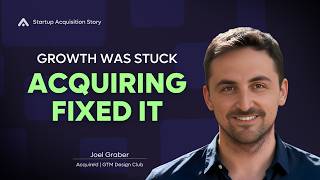
Joel Graber, CEO of Modern Outbound, acquired GTM Design Club to solve a design bottleneck faster than building internally. He created a specific buy box targeting agencies with $300K-$500K EBITDA, closed the deal in weeks using SBA financing, then immediately launched cross-sell campaigns to existing clients. His advice: define goals first, move fast, and respect the acquired company's systems.
Chapters
All right, I'm here with Joel Graber, the CEO and founder of Modern Outbound, who recently acquired a business. Joel, how you doing today?
I'm doing great. Yourself?
Doing good. Thanks so much for coming on the podcast. I'm excited to hear your story. But before we dive into that, do you want to just give a brief introduction of yourself for people that may not know you?
Sure. So I'll keep this short and painless. Joel Graber, founder and CEO of Modern Outbound. That business started in 2020. Prior to that, I was a corporate guy, worked in financial services, companies like BlackRock and JPMorgan Asset Management. Kind of felt like a cog in the wheel there. So had the itch to do entrepreneurship and go down the path, started Modern Outbound. And thankfully the first venture, which was Modern Outbound, was successful. Did that for— and doing that for several years and recently did this acquisition that we can talk more about.
Nice. Let's dive into that. Let's talk about GTM Design Club.
What does it do?
What problem does it solve?
GTM Design is a subscription design agency for B2B companies that are dealing with design bottlenecks. Most of the companies that I've worked with on the outbound side, growth marketing, they often have a design problem, whether it's an in-house creative team that almost feels like an agency because you're like submitting a ticket to your in-house, uh, design team, or they've got an agency that's unreliable, multiple designers that all have different styles and quality is kind of choppy, or they have flaky freelancers that are just unreliable. Maybe they're cheap, but you never know what you're going to get. You're kind of playing the design lotto. In running Modern Outbound, we have so many clients. We do a lot of growth marketing now beyond just outbound, and everybody has some form of a content/design machine problem. It was never something that I had the know-how on how to solve. We didn't have the capacity to do it. Sometimes we'd refer them out to other design agencies and I'd cross my fingers and hope they had a good experience. But I think going into 2026, just the next 5, 10 years with AI, which we could discuss and how that's causing chaos in the agency world, like branding, thought leadership, showing up to your audience with something that's like clear and credible is just more important than ever. I think design is kind of the backbone of that. So the other thing I would just say is you've got a lot of marketing agencies that do it all. You've got, you know, they kind of like have 10, 15, 20 different subservices and not to knock, there's some great agencies obviously, but many of them kind of do them mediocrely. If you don't specialize in one thing, it's like really hard to be good at like 10 things. So my vision is to continue running Modern Outbound as like a specialist agency and continue to acquire specialist agencies like GTM Design. Met with a lot of design shops and GTM Design is just an excellent example of what I would want to deliver to a client.
Nice. I agree with a lot of things you just said there, like with design becoming more important than ever and the age of AI, like if I see something that's been coded or made with an AI platform, at least today you can completely tell they all look the same. They have the same kind of look and feel, and it's kind of a turnoff for me. And then in terms of acquisitions, I think what you're doing is super, super smart, building out the business through acquisition rather than building out each part of the business. What made you decide that this was a path for you rather than building out, say, your own design service? Why was acquisition the way to go?
Yeah, I'm extremely risk averse. Like, just as that's always been my identity. I always wanted to do every move should be profitable and should have limited downside. But I kind of saw the light in the last several months that I think a lot of people need to dispel what M&A is and who it's for. I think most people feel like, well, that's reserved for like big, you know, cash-rich agencies that are giants that are publicly traded. You need $10 million in the bank to even consider an acquisition. And working, learning about the process even through Acquire and through M&A advisors that I work with, guys like Peter Lang who are in the agency acquisition space, shout out to him, he kind of dispels that. You don't need to be this giant to actually grow through acquisition. You kind of think of it as corporate business development. Organic growth is linear. You're pitching one client at a time, which is what I've always done and will continue doing. For love of the game, I suppose. But you can actually have the geometric growth that you want where you adopt systems, clients, staff in one go. So it's kind of like a— I would say it's a cheat code, but it's not really a cheat code because there's an incredible amount of work and effort and stress that goes into it. Certainly not a shortcut, but it definitely gets you where you want to go faster. Being risk-averse, it was never on my mind, but I'd say back in, I don't know, September, October, realizing that setting up a brand new service is hard. It's hard to get your staff to learn a new skill. It's certainly hard to hire the right people, to build the right systems, to get technology that talks to each other well. It took me years to get Modern Outbound to where it is today and have our staff and tech and clients all really happy and moving full steam. Just takes a lot of time. It's not impossible, but why not go look for a super talented agency to to bolt on or tuck in.
I completely agree. Walk me through your acquisition process. What were you looking for from the start? Did you decide in October, I'm going to acquire an agency? I don't know the specific shape and size of it, but I'm going to start looking around. How did you get started and what does your process look like?
Yeah, it's funny. Initially, back in— this is not long ago, but let's say August, September, I was like, you know what? What if I went in a totally different direction and bought some, I don't know, service-based business or a blue-collar business that I know nothing about? There's plenty of people on the internet that will brainwash you into doing that. Uh, I think there's more value in like staying in your lane. If you have an expertise, it's much easier to grow from there. So, uh, just a lot of self-learning, a lot of research. I have a decent buy— decently, uh, crystallized buy box on like what I wanted, what I wanted to buy. So, um, I knew I wanted it to be a marketing agency that specialized in something that had some form of a subscription recurring base. Of clients that's been around for at least a couple years that has a really talented team, good processes. I didn't need it to be this giant agency that's doing $4 or $5 million, uh, in EBITDA. Like, I actually was looking for something a little bit smaller, um, something that's at least $300K plus EBITDA. That was important to me. But like, there was a, um, a cap on that. Uh, I didn't want to do too much leverage on the first deal. But yeah, a specialist agency with a recurring base and I wasn't really looking for design honestly. I look at, it's funny, I had a lot of different categories like paid media, maybe another outbound shop, maybe a content studio. And I downloaded Acquire, bought the annual package, started talking to founders literally within 24 hours. That was pretty exciting. I had some LinkedIn campaigns running and a couple other brokers that were sending me deals, but I had 2 or 3 really good conversations within 2 or 3 days on Acquire and didn't know I was looking for design, but that one popped up, GTM Design. I see it, I look at the specs, I talk to the founder. Sometimes you have to follow your intuition. You talk to an agency or a company and there's something that just feels a little off and you don't quite know why because the numbers make sense. You're like, I don't know if I feel fired up about this for whatever reason. You don't have to overanalyze that feeling, just walk away. And when I talked to GTM Design, the founder was like, I immediately felt the excitement. You feel like the business butterflies and you're like, okay, let's ride with this. And Thomas, the founder, is extremely talented. I put him in creative genius category. It's a founder-centric business, but he's built a great team of designers. Once I got to know that, it was a very easy decision. It was just then about negotiation and getting to the terms.
[Speaker:ANDREW_GAZDECKI] Let's talk about that next step then. Let's talk about the negotiation and the due diligence. I agree with so much of what you just said. Just to go back before this, Like the intuition part, I see that so much with acquisitions that we do want to acquire. I'd say 9 times out of 10, the buyers that win deals are the ones where things just kind of click between them and the seller. There's a good saying, you can't do a good deal with a bad person. So the intuition is completely spot on.
Yeah.
Tell me about the due diligence process. Tell me about, okay, you see this as a good deal, you're interested, you have a good conversation with the founder. What happened after that? How long did the process take? What did it look like?
Yeah, met with him 2 or 3 times, had a bunch of questions. I sent him an LOI draft within maybe like 7 to 10 days. He reviewed it and then we got to work. So I got a— I had no idea what I was doing. This was my first acquisition, so I was just asking dumb questions to the M&A Slack community, like, what do I do here? I got a quality of earnings specialist. To just make sure everything was clean and kosher. I got a lawyer and maybe that's another conversation, but I think if you're doing a deal under a certain size, it doesn't always make sense to bring in an attorney for something like that. It ended up being a very costly venture to do that. It's kind of like a sidetrack, but in any event, it was my first deal. I wanted to do it the right way. So quality of earnings, attorney, due diligence took a few weeks. I secured some financing through the SBA. So yeah, I was really hitting every single box that you could check off when you do an acquisition. And just getting to know the founder more. I had weekly conversations with him about the clients. I would say in tandem, while you're doing the due diligence, was critical that I met with him regularly and just got to know him a little bit better, how he runs his business. He's a very self-aware person who understands he's built something to a certain level and he's more of a design creative persona, not necessarily someone that wants to grow the business. Or run the operations really, but he managed to get lots of referrals and inbound just organically. So that was a really good signal. When you have good referral and inbound systems without any marketing spend, that's always a nice sign because I'm an outbound guy. So day one, I'm going to implement my outbound growth engine, which now we've done in the last couple of weeks, and that's very helpful. That also— Nice. Yeah.
Again, I like a lot of things you just said, like the quality of earnings. It's worth the investment because the downside is the numbers don't add up, you miss something. So I highly recommend that. And then on the attorney piece, I think it can be good. It just depends on what price point we're talking. We have a number of attorneys that we can refer out if ever needed. But I have seen some cases where the bill is just way too high. So it can happen. I think it just depends on your risk appetite.
[Speaker:ROBERT_LEONARD] Yeah. I think you want to have a good asset— I suppose I should caveat that and say this M&A community, Peter Lang's community is so excellent. And he has asset purchase agreement templates that go really deep and have been built over the course of years. So, uh, it's good to know, it's good to understand that legal side too, especially if you're doing an acquisition. Peter always says like, don't like offload everything to quality of earnings, to attorney, to CPA. Like, you should have like a good feel for every part of that process so that you can make this like a programmatic thing. Because this isn't my first acquisition, this won't be my first acquis— my last acquisition. I'll continue to do more, and it's good to be involved in every step of the process.
100%. And then with ChatGPT and AI tools, you know, you could always APA to get like high-level overview terms.
Absolutely.
I don't recommend that as like the end-all be-all, but a great resource if you have questions around certain terms.
Yeah, it is. And that's something that I learned after the fact. But to your point, yeah, there's great lawyers that, you know, won't rip you off for, you know, every email that they send to you. And you look at the bill and it just depends on the size of the deal.
Yeah, 100%. And then the business too. We meet with so many founders where they've built a great product or service. They've built the company to a certain point. And they're just genuinely not interested or able to grow the business farther than that. Those make great acquisitions because someone like you acquiring the business, I assume you're really good at go-to-market, sales, marketing, growing the business beyond where it is today. And the founder was in a situation where they just can't take the business farther for whatever reason it may be. So it's a true win-win where the business lives on, the customers are well taken care of, and the founder gets to, I assume, at some point go build another business, which is back to that zero-to-one phase that they really excel at. So tons of those opportunities I see. Tell me a little bit more about plans to grow the business from here. Is it to add on a new go-to-market engine? What does that look like?
Yeah, so we're putting in a go-to-market engine. I would recommend to anyone who's doing an acquisition, get started on that sooner rather than later, whether you have a contact or an agency or a friend that can help you, or you can do it yourself. It'll help due diligence. Once you do the acquisition, and you're integrating, there's a lot of unknowns that come up. There's a lot of chaos and stress or systems you want to put in place. Like, I can't imagine how stressful this would have been if I knew nothing about growth or outbound. And I'm like, oh shit, like that's another thing that I have to worry about. And I'm just going to like pray that like we get phone calls to do business with us. Like, I don't— it doesn't matter if you have a background in growth or not. Like, you should get started on that like as soon as possible. So that's what we did. Even before the acquisition closed, I started like buying domains building email infrastructure for the company, warming up mailboxes, making sure that we knew whose LinkedIn profiles we're going to do outreach on, putting a content plan on LinkedIn in place. How are we going to run ads so that there's no guesswork? Day 1, I put my outbound team on the case like they were just another client and we got the engine moving pretty fast. So the goal is to continue scaling that engine up through outbound. So cold email, LinkedIn outreach, content, on LinkedIn, organic ads, doing a lot of design work. The portfolio for GTM Design is extremely impressive. So we're building systems to basically just drop portfolios to, you know, CMOs and VPs of marketing, founders, like go-to-market experts that like need design work. And that's already paying off even 3 weeks into this. So that's the biggest, most important thing is I still love organic growth. But, you know, in the next 2, 3, 4 months, I'll be looking to bolt on potentially another subscription design agency maybe, or branding agency. I think if you get a company at the level of branding, it cascades down to services that we offer on the go-to-market side. So like one of the biggest reasons I bought the business is because we have overlapping clients. We target the same kind of persona. So the cross-sell is baked in, it's already there. So it'll happen with organic, our machine, and acquisition.
Incredible. I think that's the biggest opportunity in acquisitions today, 100%, is where you buy just a great product service, and then someone like you steps in with go-to-market experience. And because organic growth is amazing, but you kind of need both. If you can have organic growth and paid growth, I think that's incredible.
Yeah, it's a muscle that I hadn't— I didn't even know was there. But now that you— I'd say, like, I think the most successful people that I've talked to or that I know, they kind of take action really quickly. So I knew that once M&A, like, creeped into my brain, I knew that I was going to have to do something very quickly or it would be gone forever, and I would never make a move. So I'm grateful that the whole process of signing up for Acquire, digging into the platform, and had I not done that, I probably wouldn't have run into GTM Design Club. And it allowed me to move quickly. And for someone like me, that's generally how I make decisions. I'm not an over-analyzer to a fault, but I think this one worked out.
Sink or swim.
Sink or swim, man. Yeah. Make mistakes fast.
Fail fast. Yeah. It's the best teacher. If you were talking to another person that was interested going down a path like you, maybe they had an existing business or maybe they were looking to acquire a business rather than start one from scratch, what's a couple pieces of advice you think you'd give to them?
Yeah. I'd say do a little bit of the inner work to figure out what drives you. Don't just start pushing buttons and making decisions, but figure out what kind of business do you want to have. Do you want to have a lifestyle business that clips off good MRR and like pays the bills and you're happy? Or is there a part of you that like wants more? Uh, do you want something that has like real scale? Forgetting the fact that you're involved in the business or not, like what kind of business do you, do you really want to build? And if it's the latter where you really want to build something that has real scale, that services lots of clients across lots of service lines, then M&A is just a muscle that you've got to work out and exercise. And I would say if that's That's the answer for you. Just start having conversations with founders of those kinds of companies you want to buy. Build a buy box, a search narrative. If I were to do a deal tomorrow, what would the EBITDA look like? What kind of business would it be? What kind of service am I excited about? And then just start having casual discussions with founders, possible sellers, not even for the— not even just to learn. The first couple conversations I had were kind of like— it was like new for me. It was a brand new skill set to have this kind of conversation. Once you do it enough times, you get confident. So figure out what kind of journey you want to be on. I figured I don't need to be a billionaire. That's not really what I'm driven by, but I figure I put a lot of time and effort into Modern Outbound and growing that business and I might as well make it a higher stakes game. So I think everyone's different and it's not for everyone, I would say.
I dig that 100% because M&A, I've seen it. A thousand times where it just is a faster way to achieve your goals, whether that's getting profitability or growing existing business. I think M&A is super, super smart. What do you think some common mistakes that new buyers could make are? Now, can they avoid them?
[Speaker:ANDREW_GAZDECKI] Yeah, I mean, this answer will probably change in, I don't know, a few months. Maybe I'll see mistakes after the fact. I think the biggest mistake, so if you're an agency, here's what I would say. If you want to buy a marketing agency, and that's what we're talking about right now, I think you should know what it is to build one zero to one, even on a certain scale. Like I don't think it's a great idea to go buy a highly volatile asset, which I think marketing agencies could be considered more volatile than like a plumbing business. Building zero to one, like understanding, like respecting the systems, respecting the game on how to grow. I think that is important. I don't think that applies to every business, but I do think on the marketing agency side, which I could speak most to, it's a good idea to like build a service that gets product market fit, gets some clients through the door, and then you're like, okay, I can do this. Like I know how to get my first few clients, then go do the acquisition for a complimentary service or the same service that you initially built. I don't think that applies to every kind of business that you buy, but that's what I would say for a marketing agency.
Nice. Yeah, I dig it.
Yep.
So what's next for you? That's pretty much all I got. What's the next, you know, 12 months gonna look like?
Just keep my stress levels manageable, keep meditating every morning, you know, Integration is hard and there's a lot of changes you want to make. You're getting to know the team. Just keeping an even head about it and managing that is important. It's all kind of like a mental game too. And I'm a very impatient person generally, and I like to get things done as soon as possible. So you got to let the universe do its thing. But yeah, the next step would be to just continue growing this, stabilizing everything. All the pieces are there, and then go do another one.
Right on. Well, thanks so much for coming on the podcast. I know you're going to crush it on this acquisition. Thank you. Hope to see you again on here, maybe in the next year.
Likewise. We love Acquire. Thanks for having me.
Right on. Joel, if people want to follow you online and learn more about your story, where can they find you?
Find me on LinkedIn, Joel Graber. I share content on outbound and now I'm going to be sharing content on design. So DM me, connect with me, check us out, modernoutbound.com. GTMDesign.club is the agency I acquired, or just shoot me an email, joel@modernoutbound.com.
Right on. I'll put all that in the show notes. Joel, thanks again for coming on and congrats again on the acquisition.
Appreciate it, sir.
Thank you.
More from Andrew



The Buyers Who Made the Move: What They Bought, How They Did It, and What Happened Next






