Want to Build an Agency Worth Buying? Spend a Decade Saying Yes.
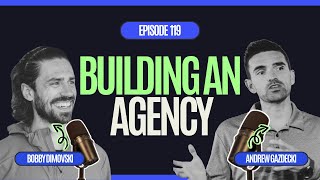
This is a YouTube video titled "Want to Build an Agency Worth Buying? Spend a Decade Saying Yes." It features a detailed English podcast-style conversation recorded in early 2025 between Andrew Gazdecki and Bobby Domovsky, founder of 4MJ Social. The discussion covers Bobby's entrepreneurial journey building a healthcare-focused digital marketing agency, challenges in client acquisition, persistence with a major client, the impact of private equity acquisition, and the process and lessons learned from selling his business through acquire.com. The conversation also touches on Bobby's future plans and advice for business sellers and buyers.
Foreign.
I am here with Bobby, the founder for MJ Social. Bobby, how you doing today?
Doing well. Andrew, how about yourself?
Doing good, Doing good. Thanks so much for, for joining the podcast. I'm super excited to hear your story. But before we get started, do you want to give a brief introduction of yourself for people that may not know you?
Yeah. So my name is Bobby Domovsky. I founded 4MJ Social in 2014. Prior to that, I was a career pharmaceutical medical sales rep. Got really burnt out of that industry and so I started 4MJ social kind of as a side hustle just because of the volatility of medical sales. And I was trying to just make some diaper money, college fund money for my kids. And I'm sure we'll get a little bit deeper into the story, but one thing kind of led to another, so I was almost, I like to say I was more of an accidental entrepreneur than anything, but, you know, figured it out, went full time and. And now we're obviously here having this conversation. So it's been an exciting ride for the past 10 years.
I love that. And form J Social, I know what it does, but can you give me, in your words, an explanation of what does it do? Problem solves, types of customers that you typically will serve?
Yeah. So form three Social is a full scale marketing agency directed towards the healthcare sector. So helping doctors, physical therapists, medical groups and communities with their digital marketing. And that's all things digital. So websites, social media, SEO, reputation management, I mean, you name it. If it's online and we were doing it for a lot of these healthcare providers.
Gotcha. How did you get into that? I have a guess you were in pharmaceutical sales, you met some doctors, businesses. But yeah. How'd you start it?
You know, it was timing more than anything. So like I said, 10 years ago is when I, when I started it as a side hustle.
So that's like, that's like 70 years in business years in my opinion. Congrats.
Well, it really is. Thank you. And. And it's kind of crazy to see how far things have come since then because the way I started the business was like you said, I was in pharmaceutical sales at the time, so just going office to office, talking to doctors. And a lot of the conversations we had that weren't about product or, you know, me trying to pitch them was really, you know, about their practice, what was going on. And they all led to, you know, I need more patients or I need to grow. And there's a lot of that. And so one of the things happening at the time, which tells you how 10 years is really 70 years in business, especially with digital marketing. This is when Facebook business first started developing at that time. So I don't know how I put together the concept of just, you know, helping them with their business profiles because it really wasn't a big thing at that point in time. But that was my offer was, hey, I'll just create this Facebook business page for you. I'll post a couple times a week and you can pay me a couple hundred bucks a month. And it's a little, you know, low side money. And that's really all that it started off as. As time went on, I had one referral that led to the next, led to the next, and I had a few healthy clients. And then from there I had very much a yes mentality for anything that came up. So some doctors would ask, do you do websites? Do you do SEO? And the short answer was always yes. And then I'd go home and Google for a couple hours and learn and research and try and figure it out on the fly. Fall on my face quite a bit, especially in those few first few years. But I learned and kind of sharpened my saw and just kept, kept building from there.
That's such a great business because there's so many different services and products you can sell to that customer that you were serving. So I loved how you started very narrow, which is Facebook, and then expanded over time. When you were first starting out, what was the hardest part with customer acquisition? Was it getting a hold of the doctors? Was it convincing them that digital is a way to grow their business? What was like some challenges you had to initially grow the business?
You know, it was really, it was twofold. So the first side of things like you had mentioned was just getting in front of them, which came a little bit easier for me because I already had access points through my full time job. But particularly in medical versus just small, medium sized business, you know, finding decision makers is much tougher. You know, office managers and front desk staff. People at these medical practices are trained to keep sales reps and people away.
Cold calling. I, I am very familiar with the gatekeeper and they do not want you to get through. No.
And, and it's for good reason, right? I mean these doctors are trying to treat patients, they're trying to take care of people and quite frankly most of them are not entrepreneurs by nature or by trade or education. So a lot of times if someone gets in front of them, it needs to be very clear or else it just Makes their day a mess. So fortunately, I had some access points and like I said, I started to develop some relationships that led to referrals and led to some exposure that way. So that was the benefit. But it was still tricky. I mean, even the sales cycle with a lot of these clients took forever because they didn't understand their own business, which is still very, very confusing. That's a whole another episode of a different podcast, probably talking about insurance and healthcare payments and all that kind of stuff and how they run their business. But to make things clear and simple for them was one thing. To get in front of them was another thing. And really just getting them to understand the value. You know, not only was I doing something that was brand new to industry as a whole for small businesses, but for healthcare, they're typically five to 10 years behind on business tactics versus other businesses. So getting them to see that value, how it would translate to new patients showcasing that, I think Those are the two biggest challenges.
100%.
Do you have a story of a.
Client that maybe is fun to share? They're really hard to close, or convinced that digital marketing would be helpful at all. Then you blew it out of the water with them or just you liked working with it. What's like your favorite customer story?
I mean, I could give you the. I, I do like one story, and it kind of tells the story of the start to finish of my business, like from inception all the way to getting ready to sell the business because it was such a long journey. So there was one medical group that I was chasing. It was my. My white whale for years. And so just trying to get in the door. It took me about two years to get in front of the right people. So it was a lot of reaching out to my contacts, cold calling, heading into their offices, trying to work with office managers. You know, I was really, I. I honestly don't know what came over me, but I was so deadlocked on this particular group, I wanted to do business with them. And so I just, I went nuts trying to get in. So it took me about two years to get the first meeting set, and that was just with one of the doctors. Then the doctor kind of recommended me up to some of the executive level team and then a third meeting with the CEO. So all of that in itself took probably another year. We went back and forth, and even after those initial meetings, probably another year of negotiation discussion, really going through the ringer, figuring out what makes sense for them, building relationships. Everything you would do with a client, I was doing without Them being an actual client just because I wanted to bring them on board. So all in all, from first point of contact to bringing them on as a client took about four years.
Sheesh. That's persistence.
It was, and like I said, it was probably misguided persistence. I mean, I was beating my head over a wall over and over again with that and it worked out, which very happy about. But it. I probably should have given up at some point. But you know what, this was the one that I didn't. So it was great. They came on board. It was my biggest client for about three years. We did a ton of great work with their social campaigns, email, their website. We did a whole overhaul. I mean it was just. We worked very well together. The results were there. There was a lot of learning from both ends. It was just such a productive relationship and we still have a great personal relationship too with several members of the team. It's just, it's wonderful. And so we were working with them for several years and because of that account, I was able to grow significantly through Covid. Through change in digital landscape. I was able to bring on team because I could count on that revenue. Everything was going so well. And then, and then this was December of 2023, I believe. No, 2022. I got a phone call about two days after Christmas from the CEO and because of all the success they had, the success that we had through some of the digital campaigns, the growth that they experienced, they ended up being bought out by private equity. And which was, it was a celebration for them. It was a goal, it worked out well. But the kicker was private equity had their own internal teams. So they reluctantly had to essentially fire us as the digital agency through. Through too much success. We got fired, basically.
Yeah.
And it was a real harsh reality of the landscape of the world, the landscape of healthcare and really what we were doing. So there was a lot of pride, a lot of fun, a lot of positivity, but also this slap in the face of we lost 25% of our revenue in one phone call, basically.
Yeah, I mean, I think that's what happens when you do too good of a job. You can get ironically fired for it.
Yeah, and that was, that was always the joke when I was in pharmaceutical sales was you always wanted to be middle of the pack. You know, if you were a top tier sales rep, quotas go up, expectations go up and you're held to a higher standard. If you are a bottom quarter rep, then you know, you just kind of float on, on buy and you're the first one to go if there's layoffs, if you're stuck in the middle. It was always a positive thing. Yes, on the ground floor, but I didn't think it would be like that when it came to running my own agency. And like I said, the reality of it was private equity is growing, especially in the healthcare sector. Mergers, acquisitions are happening daily at this point, and it's a changing landscape. On top of that, digital marketing changes constantly. And so from that one account, like I said, start to finish. I mean, from courting them to having them as a client, to exiting, they were. It was seven and a half years of the 10 years that I've been in this business. And like I said, we built great relationships, friendships, made some money, lost some money. I mean, there's been all sorts of highs and lows, but it kind of tells the story of, you know, the grind, the success, the struggle, and, you know, at the end of the day, I really enjoy the experience.
That's a great story. I think it's. It kind of encapsulates just entrepreneurship all in all, in one story. Just the persistence, the rewards, and sometimes, you know, the unexpected downsides as well. That's awesome, though. I'm glad that you're able to drive so much success for that, that one client, and this might be a good transition to the next topic. You know, you've. You've since sold the business. What was the start of that? What was the reason that made you want to sell the business?
So there's a few factors. I'll start with the big one. The biggest factor, which, again, another conversation for another podcast, I'm sure, but had some family health issues going on, and so my focus wasn't quite there as it had been previously, so I had other responsibilities to take care of. But part of that was I could not continue to grow the business myself. And so I really had two options. One was bring on more help, more staff, team. You know, I had a very lean operation going, and I liked that because it allowed me to be involved. It allowed, you know, customer stickiness to be high. But once I was pulled away a little bit, it caused a bit of a bottleneck with what we were doing. So was either bring on more team or. Or sell. And those were the two options. And I had to take the emotion out of all of it. And I looked at the numbers, and the reality was if I brought on more team, more staff, then I was either going to just obviously lose money myself out of my paycheck, because it'd be going towards other people. And to make up for that lost dollar amount, I would have to grow pretty significantly because of the way that I had things structured. And it just wasn't worth the. The time, the energy, and I didn't have the capacity to be able to do that at that point in time. So, like I said, taking the emotion out of it, I kind of looked in the mirror and did what I thought was the best decision for me and my family, and that was to sell.
Makes a lot of sense. You know, I work with a ton of people that sell businesses for. For different reasons. I think, you know, the more you can be honest with yourself, typically, the, the better outcome you're going to have. Tell me, how did the process go with acquire.com how did that help you maximize your exit?
So the best thing about Acquire and the way that you guys structured things, because I was pleasantly surprised by this, I wasn't expecting it and I needed it, quite frankly, was, for lack of better terms, the handholding. You know, the support that I got from Kai is who I worked with the most. And he was fantastic through the entire process, helping me work directly with prospective buyers, helping me through the diligence, the paperwork, just listening to some of my ups and downs and being, you know, lending his ear to a lot of the struggle, because this was. It was a lot more difficult to process than I thought that it would be, quite frankly. You know, I ended up getting a couple of offers. They were good offers. They're, you know, what I expected. So it wasn't like I was being lowballed or like I was, you know, going through something I didn't want to. It was all kind of right in the wheelhouse of what I was looking for. And, and I still was beating myself up over right decision, wrong decision, you know, how I was going to do all this. And he was super helpful in just not telling me what to do, not guiding me, but just being a resource and giving me what I needed. And that made the process so much simpler because I could focus on what was important for me. And I knew that Kai and the rest of the team would take care of a lot of the details that I wasn't knowledgeable on or able to, and they would give me, you know, the. Anything that I really needed throughout the process.
That is awesome to hear. Yeah, Kai is great. And I remember your, your acquisition specifically, you had a few bumps in the road that were unexpected. What would you say the most stressful part of the acquisition journey was for you?
So twofold and it really comes down to one, one big thing. But, you know, back and forth, trying to figure out what I wanted financially. At the end of the day, obviously, you're selling a business. Finances are huge with that. And so figuring out exactly how I wanted it structured, what was important to me, you know, that took some time to really iron that out. And Kai helped me out and we figured it out. And when I got the loi for the. From the buyers that ended up purchasing the business, checked every box, right. We got the upfront that I was looking for. Terms were great. Like, we. Everybody was happy. And as you know, and you were alluding to before, the biggest issue that popped up was in the 23rd hour, the financial company that was going to be fronting the. The loan for the buyer backed out of the deal. And so we went from. Everybody's ready to go the next day, you know, we had escrow set up, we were ready to roll, and now there's no financing anymore. And so the buyer was scrambling. I was scrambling. The deal almost fell apart because, you know, it just. It wasn't what we had signed up for on either side. And we were all frustrated with it. You. You were as well. I know Kai was. I mean, there was. Yeah, it was a bit of a mess through no fault of anybody's. And so it was extremely frustrating. And at the end of the day, though, I. I knew that I liked the buyers. I knew that they could do well with the business, and I was still going to be, you know, have some attachment to it. I have some friendships and people that I, as clients, have been working with for so long that I want to do right by them. And so I wanted the right people in. And so between some considerations from all parties, I mean, I, I was willing to make some adjustments. The buyers were willing to make adjustments. Obviously, you and Kai kind of stepped in and helped with restructuring some things. And it wasn't the original deal that I wanted. It looks different, but at the same time, everybody wanted to make it work. And that was super important to me. I think it was super important to everybody. And so we all came out of it happy. And at the end of the day, it ended up being probably the best thing that could have happened, even if the other deal structure would have went through. I think the way that it's been set up now, I feel very, very comfortable with it as well. So. Wow. Yeah, that was. That was a very fun 24 hours that we were trying to navigate after that fell through.
Yeah, I mean, with acquisition, surprises are almost to be expected. But at the end of the day, our job is to make sure everything works out. So. Super happy to hear that you're happy because that's the most important thing.
Yeah. And it's even through the whole transition process. I mean, I think that's the one thing that I'm, I'm happy that I went this route and I stuck with those buyers and didn't start to push in other directions because, you know, we've gone through two months now of transition period. And so I'm, I'm working with these, these people on a, you know, if not daily basis. You know, three, four times a week we're on calls, we're working with clients, we're transitioning everything over and you know, they're, they're partners at this point, at least in the short term. And it's been great to work with people that I can see that they get it, they get what I've built. There's a, a mutual understanding of it all. And I can't imagine having kind of settled and made some, you know, considerations for, for a different deal and trying to find that process and having somebody else that didn't make as much sense into the business. So yeah, it's been great overall.
I love that. I got another question. You talked to a bunch of different buyers and out of these buyers, it sounds like you found one that really stood out to you. If you had any advice for other people looking to buy businesses, what can they do to stand out professionally and build this relationship that you have with the acquiring buyer for your business?
You know, at the end of the day, the thing that I wanted to go into all of my calls with prospective buyers with was just 100% just honesty and transparency. And I obviously people say that, but we're also trying to get a deal done right. Like there's, there's a lot of nuance to all this, but, and there's nuance to my business. You know, I wasn't a huge multi million, eight figure business or anything like that. So there's a lot of little things, even with my bookkeeping that there was some mess in there. I could explain the mess. That's not a problem. And once I walk through it, it makes sense. But to do it honestly and transparently and let them know, hey, this is why this is here, this is why it's there. I found two or three prospective buyers that it made sense to them. And when I read that through the conversations that, okay, they, they understand my business, they understand how I've structured it and they understand where it needs to be optimized, where it's not yet. That's when it started to make sense and it started to click. And it all started with me just being upfront about everything and not trying to mask it to get every last dollar out of a deal. Because at the end of the day I, I knew if I did that it was, even if I got away with that and got the deal that I wanted, it's not what's best for the business and quite frankly my conscience. So I just wanted it to make sense for everybody.
I like that a lot. I mean, surprises, they also can kill deals as well. Especially when you're dishonest or you even just kind of exaggerate certain things. Buyers are eventually going to learn about it and it can just ruin the, the perception of the business because you're then wondering, you know, what else am I going to uncover? So I really like how you handled yourself with each buyer and I think it goes to show because you had a very successful transaction.
Yeah. And actually the timing for everything with me, quite frankly, it would have been easy to kind of fluff it up a little bit because when I first signed up with Acquire and started having meetings, I had a three month period where revenue had a pretty big bump. And the way the business was structured, it looked like it was going to continue to bump like that. But it was all project based work, it was not multi recurring revenue. And so I wanted to make sure I explained that to people so that way they had the right expectation. Because then once that three month period fell off and there was a dip in the revenue, they understood why and they didn't come back, you know, mad at me, frustrated, thinking that I was trying to sell them something that wasn't there. So you know, there's little things like that that I think it's 100% necessary. And you're right, it's easy to make things look a little bit better than they might be, to try and try and squeeze a little bit, but at the end of the day it just isn't worth it.
No, it's not. It always comes back. And there's a good saying I also like which is you can't do a good deal with a bad person. I think just this is a testament to your character being, you know, very straightforward, very direct, very honest with the health of the business and buyers appreciate that too. So again, kudos to you on that. I guess my next question would be now that you've successfully Sold your business. You've been through an acquisition with ups and downs. If you go back in time and give yourself three pieces of advice, what do you think those would be?
Ooh, three pieces of advice. All right, number one, and I kind of knew this before, but I would make sure I reiterate it. And it's just like, I mean it's like sales in any regard, but a deal is not done until it's done right. Like, I mean, like I said, we were all good and ready to go. Escrow was set. I was counting on that wire transfer a little too much. And when it didn't happen that day, it was, it was a blow. And you know, we had gotten 99% of the way there and again by circumstances outside of our control. That's just kind of what happened. And so just reminding myself that hey, it's not done and so it's done. I think that that's super important. Number two, I think something I was a little slow to was figuring out the structure of the deal that I wanted and being honest with myself about it because I wanted it to be attractive to buyers. So I wanted it to be flexible and I was genuinely open minded into the deal. But at the same time I wish I would have put some parameters on it for myself. You know, I. A minimum of X amount up front. Here's my maximum length term on seller financing. You know, I wish I would have been a little clearer with what I actually wanted because I wasn't 100% sure if I probably examined it a little more thoroughly, maybe if I had another conversation or two with Kai about it, he could have helped me figure that out as well. And, but I wanted to be attractive to buyers when really I need them. I needed to make it work for me as well. So I wish I would have had at least more of a ballpark in terms of those minimums in my expectations. And then I think the third piece that, that I would give is really talk to everybody. I mean, I was, I was up for talking to everybody until the conversation started. And then it got a bit exhausting because you're, you know, you're having the same conversation over, over and over. I mean, for me there was a couple week period there where it was, you know, several times a day, three, four days a week. And it, it beats you up a little bit. But it's worth it to keep having those conversations and meeting new people. You just, you don't know who the right ones are going to be. And so just being open and willing to have those conversations and work through it. I think I probably could have had a little bit better of a perspective on that after that initial burnout period. But all in all, it ended up working out for me.
I love that last piece of advice because selling your business is a, it's a sales job. So the more people you can talk to, the more feedback you can get. The more interested buyers you can create, more interested buyers, more potential offers, the better chance you have at really maximizing your exit. So I'm glad you're able to do that. It is exhausting, though. Yeah. Well, Bobby, what's, what's next for you? What are you working on? You taking a break? You starting a new business? What, what's next for you?
I've got a little bit of a break lined up right now. Like I said, we're wrapping up the formal transition. I'm still going to be doing a little consulting with the company, so that's in my back pocket here. But take a little bit of a break for the remainder of the calendar year as I structure some things. I'll be doing some independent medical distribution and sales work starting in the new year and it's more of a short term plan, so I'm planning on doing that for about a year or two as I work on the bigger picture. So I will be eventually starting another business and what and where and when, I can't tell you, but that's part of all this. I want to take my time. You know, my next one is hopefully my retirement plan. So I want to plan it well, structure it well, knowing all that I know now, hopefully build it for another 10 years, hopefully sell it on, acquire again and then sail off to the sunset.
Right on. Well, Bobby, thanks so much for coming on the podcast. You know, I'm rooting for you and I'm excited to see your next business and what you're, what you're going to do next. If people want to learn more about you or your story online, where can they find you?
Really? Probably the best place is on LinkedIn just at bobby Domovsky. Not posting much at this point, but I'll be ramping it up in the new year. So if they want to find me there, that's the best place. Awesome.
I'll put that in the show notes. Well, Bobby, thanks again and congrats again on the acquisition.
Oh, thanks, Andrew. Appreciate the time.
Take it easy.
More from Andrew



The Buyers Who Made the Move: What They Bought, How They Did It, and What Happened Next






