What To Do After Selling Your Business – JK Molina, Co-founder of Tweet Hunter
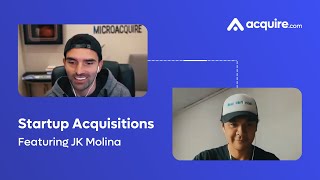
This is a YouTube video titled "What To Do After Selling Your Business – JK Molina, Co-founder of Tweet Hunter" featuring a detailed English conversation recorded in August 2023 between Andrew Gazdecki and JK Molina. The discussion covers their experiences with startup acquisitions, deal structures, post-acquisition reflections, entrepreneurial challenges, sales strategies, and insights into building and selling businesses. The video captures an in-depth interview format with two speakers sharing personal stories and advice related to entrepreneurship and startup growth.
Foreign.
I'm here with jk, the man, the myth, the legend, founder of Tweed Hunter that was recently acquired. Jk, how you doing?
Better than ever. Thank you for having me.
Yeah. For those that may not know you, do you want to give a quick introduction of yourself?
Yeah. What's up, everyone?
I'm jk.
I'm at his friend. We built and sold Tweet Hunter, which is kind of a tweet scheduler, just recently on Twitter, and we sold it to limpire for 1.4 mil, which was like around 1XAR, maybe like six months ago. That was 2021. And, yeah, that's how I connected with Andrew. Funny story. Like, I had a. I had a few questions about acquisition for Andrew, and I told Andrew, hey, let's open a call. And he was kind enough to agree to a call, but it was, like, in a weird spot. I don't know. Like, I had a. You know, I didn't. I didn't know when it was actually ghosted Andrew for the first time, and I felt so bad for it. I was like, fuck, I ghosted Andrew. And then he was kind enough to agree to a second call. So shout out to you as well, man. Thank.
Yeah, of course, man. Well, I like the hat. Like, seeing cash. I always like when you say that on Twitter.
Yeah.
How are things, like, post acquisition, like, how you doing? You sold the business. That thing took you, what, two years to build? Three years to build it.
It took around one, actually. Like, ever since, like, idea to. To selling it, like one or one and a half maybe. But things are kind of the same, actually. I was. I was recording a YouTube video the other day, and one of the angles that we wanted to take is I'm working with my editor, and the guy's, like, really good at this. He said, I want you to, like, tell the actual thing. Like, are you actually, like, happier? Actually, like, better after the acquisition? And personally, it was. It was kind of the same thing. I remember when there were, like, three big moments, Right. The first big moment was when. When it was official to me. That was the one that hit the hardest to me. It was like, that's great. The third moment, I'm going to skip over a second on purpose, but the third moment was when. When the money hit that, like when we. It right on Twitter because we sold it. And then I could announce maybe like six months down the road. That was really cool as well, because I could see all the support from people. Yeah. But the middle part, which was supposedly when it's the Hardest, you know when the money hits the bank account and you get the notification. You know when you get the notification the thing comes down. Right. It's like a six figure payment came down and I'm like, back up. Like I just didn't even pay attention to it because I was with my family. That didn't, that didn't hit us hard. I want to ask you that. Actually that was one of the questions I had for you.
Yeah, we're doing like a reverse podcast here, so everybody's aware. Jk, before we started recording, JK said he had some questions for me. So.
Yeah. How was it for you? So like, would you. I don't know, like to me, it didn't hit us hard. How about you? Was it hard? What was it like? Describe the moment when the money hit for you.
Yeah. So I'll give some context for listeners. I had a startup before acquire.com, guard.com plug in was called a business app, spelled Baz NSS Apps. And it was like a no code mobile app build. Grew to about 10 million in your current revenue and then sold to a private equity firm and then bootstrapped that business like you. So you know, when that wire hits and you and you and you bootstrap the business, it's pretty meaningful. But I remember it, we had a couple false starts. So at that, that's like a term where you have a circle closing day where everything's going to happen that day and it's supposed to happen on a Friday, which would be awesome. Data close, an acquisition wire hits and it didn't go through. And so, and I think the reason, if I recall it was due diligence was like really intense. There's a lot of people involved. My whole management team was, you know, kind of ready to celebrate and just didn't go through because I guess it's like, I think there was a guy in like Europe who needed to submit one last paper to approve the acquisition with the firm and he just wasn't awake or something like that. At least that's what they told me. Anyways, it ended up closing next week on Tuesday. So that period, I remember just being like, is it gonna close? You know?
Right. You didn't enjoy your weekend?
No, not at all. Terrible.
Regarding that. I watched your pocket was my first million. Is there a reason why you're not comfortable saying like, how much did it sell for?
I made a promise to my wife to never share it. And then I also think it's just kind of one of those things where it's like you're either bragging or it's never enough. And it's just to. I like to just say it made me happy, you know, just not specifically stating the number I got you.
Were you happy before the money?
Well, I started the business candidly to become a millionaire. That was my. I grew up kind of poor, and so entrepreneurship for me was like a survival mechanism. It wasn't to be cool or anything like that. But I want to tell you about the actual. The wire date. Oh. So when the money hit, I was actually, like, super nervous. I remember, like, all. When it finally closed, my week also sucked because I was like, oh, my gosh. This is like, what just happened? Like this finally, you know, because I've been working at this business for eight years. So, yeah, when the wire hit, I remember I was like, you know, my other management, like my cfo, my VP of engineering, they were based in San Francisco and we had moved the company down to San Diego. And so, like, they weren't there to celebrate. And so it was kind of. And then the wire hit, like, right before close. The wire cutoff date. So it's kind of like it closed. And then I was just kind of like, holy shit, what I do.
Was it, like, anticlimactic?
Very, very. It wasn't like I didn't celebrate that night. I just kind of was like, damn. Because we went through. We hired Pillsbury, who's a big fancy law firm, to help with all the legal stuff, just because I wanted to make sure, like, you know, we do this correctly. And our reps and warranties were like two pages long, you know, everything. So it just kind of like. And it was a big firm that bought us. I think there's a little bit of kind of like, I hope I did everything right and they're not going to like, say, hey, you did something wrong, which is a totally irrational fear. But that was my experience, man. I wasn't like. It took like two weeks for me to, like, process the win, I guess.
Right. When did you start? Well, it was micro acquirer. Now it's acquired dot com. But did you start it right after that?
No. So I actually, during due diligence. And this is reflecting back on it. So I started business apps when I was 21, and when I started, I was 29. And so it's like so much of my, like, personal identity. I remember also kind of being like, what am I going to do when I sell this thing? Like, I'm no longer important. Like, I love building startups. What am I going to do? So I ended up starting a crypto company called Altcoin. That one wasn't nearly as successful, but I was literally building another company, like during due diligence. And so, yeah, you get that itch, right?
Like, you want to do it.
I was like, I cannot. Like, because my transition period agreed with the firm. I negotiated a bunch of interesting. I guess the deal that we structured was really good. Do you want to hear about those points? I could share that.
Yeah, for sure. I'd like to make one point that I think it's interesting because the kind of right after I sold it, I tried to start a few other things that were like, just complete, just, it didn't work out right. And I was, I was listening to again, my first million podcast. This guy that runs Tiger 21, he says that he helps, he kind of coaches other entrepreneurs that have already sold a big company, and sometimes they sold the big company and they're off that high and they want to start another one, but they assume that it's going to turn out as well. So I wanted to know, like, if this was the one you found it right after to see if it was like home run after home run, but, like, you actually did have, was not a home run. Right. You had to had a few, like, pluses before you built something else that was big. Is that, is that kind of the case here?
Yeah, I, I, I'm familiar with Tiger 21. So I did have two angel investors, both 50k checks, and Christian Friedman, he's in Tiger 21. He told me some cool stuff in that group, I believe, like the network.
Are you in it?
No, I don't, I don't join groups like that. I don't have enough money. I think tiger 21's limit's like 40 million plus or something like that.
I don't know.
It's high. Anyways, what was I gonna say?
Some points about the crypto thing. And then you started another thing.
Well, let's go back to starting a second company after your first company, depending on the size of outcome. Like, I have one friend, I won't, I won't name his name, but after he sold a company for, you know, like 130 million, he went on to start another company where he piled in probably 10 million of his own money, bought a domain for like a million bucks. It was like a social app, and it just completely didn't work out. And I think kind of if you, if, if I could go back in time, you know, when you come off a sizable win that's meaningful to you. I think you do, as an entrepreneur, have like an elevated level of confidence. And so you might venture out into a type of business that maybe isn't your strong suit or it's beyond what your skill sets really are. Or maybe you just got lucky. Like, you know, 100%.
100%.
Yeah, yeah. Like with, with business apps, I do believe there's a large factor of luck because the iPhone just came out. We were one of the first sort of, hey, you can build an app for your business really easily. As you know, we kind of, we were at the point where we would only pick up the phone if like you're ready to buy. Because it was just such a transformational change in tech at the time.
Same like at Twitter. Like Food Hunter started right when the Twitter thing was like the creator economy on Twitter at least was really starting to take off. So like, in hindsight, it was luck. Like 100% luck.
Yeah, well, it's really called.
But you know what I mean. Yeah, luck was a big factor.
Yeah, it's market timing. You know, that's. And they say that's the biggest factor for a startup's, you know, like, how big can it really grow? You do kind of need to start something at the right time. Like there's countless examples of this. Like, there's a ton of like YouTube alternatives that didn't work out until Adobe. Adobe Flash came out, made videos smaller that made YouTube work. Airbnb only worked because after the financial crisis, I mean, not only worked, but people were more open to letting people stay in their houses because they needed extra money.
So for you now, in which you really have your finger on the pulse and what's going on, given that, you know, you see all these startups going around, what is something that it's a trend that you think right now is kind of underrated, but you see it being big.
I think newsletters and like meme accounts, this is just like a personal sort of like I've seen numbers behind some good newsletters, Meme accounts and like it. I'm just like, what am I doing? This is like a two person shop and they're making like, you know, a million plus in profit and kind of.
Like Morning Brew and Hustle.
No, I won't say names, but just kind of like social, like big on Instagram, big on Twitter and they just kind of post memes and create a giant audience and they funnel it into a newsletter. And it. The one, this, this one, I'm. I'm specifically talking about is more like satire, financial news and stuff like that.
Blink twice if it's strong fan.
No, it's not, but. But I'm gonna blink twice anyways. I think those businesses just seem super fun because it's like, you know, I'm sure the person making comedy and you know, I think if you can take any serious topic and make it funny, you can, you know, grow a real audience in that niche. And then finance, you can get sponsors like for credit cards or for loans or for financial advice. That's just such a high, you know, you know, LTV category. What else? I mean SaaS companies. I mean that just to say the obvious. I see.
I think We've made it 17 minutes here.
We haven't mentioned AI and know, right? I mean we've been seeing a huge, huge, huge influx of, of AI companies on acquired to. To the point where we've had to like not list a few just because there's so many like image creators, house, image creators, chat, GBT bots that all kind of do the same thing. It's been interesting just seeing like how quickly these are being made. And there's one I looked at literally yesterday and it was started three months ago and has 1.6 million users, which is insane. So what does it do? I can't recall off the top of my head. I could probably look it up, but we see like 3,000 plus startups a month, so I kind of strike at times.
Very nice. I have another question. When you obviously see a lot of people selling their stuff, do you find that it's common that they try to do another thing and then they fail at the second business? Because like, you and I, we had that false confidence, but we maybe got lucky.
That's a great question. I don't keep track with founders enough to like, you know, like yearly check in or something like that. That's something I probably should do. But generally 80% of the time someone's selling a business, they want to start something new. That's like the main reason for sale and that's the reason it's kind of ironic, right?
Because they made it so they wouldn't have to work, but they want to keep working.
I mean, that was one of the reasons I sold. I was getting, you know, tired of working on the same thing. I wanted to branch out into something new. I wanted to, you enter a different, you know, business model and a story. I'll give you. There's a company called I always love sharing this story because it's kind of like, you know, when you sell your builder, you sell to a scaler, scalar takes it, grows it, builder goes on and builds something new and both win. There's a company called Median that was acquired by Spencer Scott, I'm sure you've seen him on Twitter. But his, he bought it from this individual named Derek Hammond and they have a new company called Workshop now and they're huge. I think they have like 150 plus employees already. And like so when they sold Median, which I believe they sold for three or four hundred thousand bucks, they use that as seed funding to go fund something bigger. So sometimes it works really well. But in my personal case, I started a crypto company, I'm not technical so like enter those technical arena. We were trying to speed up times in the Ethereum blockchain so it was kind of like trying to solve like a math problem. We made a little bit of like progress on that and ended up selling it to a company that had the right regulatory compliances because to launch it there was a lot of like, like, like we need to become like a broker dealer. We need to register with sec. We should have a capital to do that. Um, but so that's kind of like the false sense of confidence. I think like as a non technical founder, me starting a really technical startup makes no sense. So I think sometimes, you know, you that' where I think self reflection comes in. I just saw crypto going up and I was like that's the next paradigm shift. Internet mobile blockchain. I'm going to jump on that next. But in hindsight I wish I took a year off and like traveled the world or something.
I like that you were, you swung big first time, you were swinging big the second time. Like you saw the trends and you're like, yeah, I think this is where the future is going. That's something I really respect from you, man. And kind of something I want to, I wanted to ask you on the SEC right now, which was like you, you're in a very interesting kind of vacuum back and, but space in between people who are not maybe are not on Twitter but they have huge businesses, right? And people who are like kind of in the creator economy because you're big on Twitter and a lot of people respect, respect you in that sense. But when I look at the deals you're doing man, and the people on, on acquire.com and I'm like, man, am I thinking too small? Like these guys are killing it with like $10 million, 50 million dollar exits. But I'm Thinking with the greater economy or like courses or like coaching programs, Am I, am I playing it too? Ever look at creators, our side of Twitter and be like, these guys are playing a small game and they could be playing a bigger game?
No, I think my thought is, and I want to tell you there's, there's two things I want to touch on is number one, I think there's always this sort of grass is always greener sort of perspective with entrepreneurs. I talked to a lot of bootstrap founders that wish they raised venture capital a couple years ago. Still, like, it's like, like you, that's really great. You didn't because you know your business is, is doing great and you can, when you sell it, it's going to be a great outcome, but they wish they went bigger. And then I talked to a lot of venture backed founders that wish they didn't raise and that they were bootstrapped. So it's kind of like as an entrepreneur you're like never perfectly happy. I don't know. But to answer your question directly in terms of like when I see people, you know, quote unquote, let's call it thinking small versus thinking big, I think it's, that's awesome. I mean, I always believe success should be defined by you. And that's a cheesy quote because everyone says it, but it's true. If you want to do a one person entrepreneur thing, that's badass. Like I brought up the newsletter guy like, you know, that's cool. And then yeah, I got respect for people raising like hundreds of millions of dollars and just you're gone. You're climbing Mount Everest, man. Like, good luck. Like the chances of succeeding are very, very low. But if you're going for it, that's badass. So I kind of respect anyone just doing, doing what they're doing because they like doing it.
I respect that. Esther. That's cool. I gotta ask you, man. I feel like people know a lot of a bunch of work, but I want to know.
Let me tell you one more thing. So do you want to hear the founding story of Microquare?
Go.
So I started as a side project. I didn't start it with like a big audacious, like this is going to be huge. I had just kind of gotten out of Altcoin. I'll call that my landing the plane in the Hudson river, if you will. Basically left, left that company and had absolutely nothing to do. And so I became like one of the top 100 Madden players that I had so much Free time. And my wife was like, yeah. I was like number 98 for like.
Oh, there you go. Cool.
Yeah, it's, it's my favorite embarrassingly like dumb achievement and you have to play like eight, nine, ten games a day. I just had, I had no ideas like I didn' they want to get a job. But I was like 31 or I can't remember the age. I'm 34 now. And I started consulting for a few startups and for free, just taking calls, just you know, hey, like here's what I do. And I met this startup called Spiff which was trying to disrupt these tools that calculate your sales team's commissions. So at Business Apps with my sales team, we use a tool called exactly and, and it's a, it's a boring tool. But if you have a sale, a big sales team, you have, you know, accelerators, you have bonuses, you have, you know, complex sales comp plans and it can be a pain in the ass to calculate that at the end of the month. So my CFO is always kind of begging for this tool. So you didn't have to do the math. Anyways, the tool sucked. And it's a multi billion dollar company. And this company, Spiff had this really cool like live dashboard. So when you do like a close one and Salesforce like automatically updates and shows how much commission you're going to make. And I listened one call with the CEO doing a sales call and I just said like, hey, can I just come and help with sales and marketing? I have literally nothing to do. And so I was working on microacquire now acquire.com on the side as a side project. So I think, you know, even me now, like I think it's important, you know, after kind of like my altcoin sort of thing where I was like, this is going to be huge. That's like just go all in right from the start. I think it's important to just, you know, for a lot of entrepreneurs to kind of baby step into a business because you don't really truly know where it's going to go.
And so what does that mean, like tactically baby step into a business?
Well, let's say you have a job. Let's say, you know, your business probably isn't going to be able to support yourself for, you know, maybe a year or two, depending how fast you grow. Some businesses will get to a million revenue in a year. But I think on average it takes a business, you know, three, four years. So during that time period, you know, your, your Best, you know, investor can be your job. And so that's kind of what I did. I just picked up like a short term CRO gig where I basically had something to do and then I let the product develop and then I slowly started marketing it and then I was there for 10 months and then left to focus on microcquare full time. And how did you know it was.
The right move to go full time?
What's that?
How did you know or how do you know when it was the time to go full time?
So I was gonna leave sooner. I jo they had just left their previous year ago and they had this other competitor that was like really neck and neck. And once you get a competitor starting to take the lead, it's really hard to take that lead back. So I saw that in sales we called knife fighting, oddly enough. So a lot of deals we'd hear this other competitor come up. So we had to have sort of a defensive sort of, you know, sales strategy. So the first thing I did was, you know, secret shop to the competitor. They were literally sending like Excel sheets, like talking trash on this other company. So it's kind of like that scene in Eminem at 8 Mile was like, I know everything you're gonna say against me. So I was like, all right, thanks for that. So now we know what you're saying on saying against us on sales calls. Then our win rate went way up. But in terms of what was the question?
I was like, how did you know you wanted to go full time?
Oh yeah, yeah. So I, I stayed until I raised a series A. I just basically fixed the sales process, trained I, I inherited three pretty green sales rep so kind of helped build the init motion, built a brand a little bit, got him into like TechCrunch sales hacker for and then I had like a pre written resignation letter as soon as the money hit for the series A and I had to like send it to the board and everything. And I was just like, hey, I've been working on this other thing and if you're going to do this, one thing to just keep in mind is read your employment contract and make sure you get A. I can't remember the name of the document but it's basically a letter that says like, hey, I worked here. But like you don't own anything that I've been working on. Just for protection. If something becomes big that you work.
On, that's big advice. Everybody listening. That's big. It can bite you in the ass. You know, I hear a lot about stories about founders or I have read a few stories about founders that they're like, because they didn't pay attention to a legal issue in the beginning, it ends up like wrecking them big time. Like the, you know, Ray Kroc from McDonald's, like he didn't do a deal right. With the McDonald's brothers and then ended up being like a huge pain in the ass.
Pied Piper. Pied Piper, man.
I don't know. What is that? What is it?
Have you seen Silicon Valley's show with Russian? Okay, so there's in the beginning, I don't know the lead character's name, but he's working on something. But he did one thing on his computer at work and then the main company is called like Hooly. It's supposed to be like Google, like an evil version of it. And they were like, well, that's ours now because you worked on it at work.
Oh, that's a B.S.
Yeah. But hey, I want to talk about deal structures. Are you comfortable talking about those?
Yeah, about like my deal structure with Tweet Hunter. Yeah, yeah. So I think what was kind of interesting about that deal structure was that I had the audience but didn't have a product, whereas my co founders, Steven Thomas had the product but they didn't have the audience. So that, that question actually pops up often. And I'm really glad I, I asked around to a few friends before I made. I, I came up with like with the structure. So nothing fancy, but the way we structured that, going to get 10% at launch, I was going to get 15% at 25 KMR, I believe and I was going to get 25% at 40K MRR. Because we thought if we got 40K MRR we're going to be able to 4 mil if I own 25% of it, that I was going to be a millionaire in cash. Didn't work that way. But that was kind of the logic behind it. And I feel like that was. We are, we all were kind of comfortable with that deal because it was performance based. Right. So in the beginning they paid behave just for access to your audience. And then you keep ramping up as you unlock mrr. So that was kind of the pros.
If.
Yeah, that was kind of the pros. But there was one con that I thought it kind of. It's important for everybody to know either as the guy with the audience or the guys with the product is that there is. You gotta make sure that the guy with the audience doesn't start another business once they hit that mark because like, like, like, and I said, right, you get that itch, you want to do something else. And I did start any other businesses and I do believe that 300 could have been bigger if I just focused on the thing. Like in hindsight that that was obvious. Right? But you can only connect the points looking backwards, right? So like I, I wish we, we had that clause so I could just focus on my thing. But that was kind of what structured.
Our deal so to raise venture capital, man. So in every term sheet, can't work on other stuff. Most of them, yeah. Can't work on other stuff without approval, can't raise your salary. Some of them have some nasty stuff in there.
What's a, what's a nasty story you have of venture capital? I'd love to hear that.
I think the worst is when you get like a really junior associate that maybe like, I think this is like the stress I hear the most from founders because we work with venture backed businesses that are looking to sell and some are just looking to get out. Like they just want get me out of the business. And it's usually caught and it's fascinating to me because I think as an investor, if you're going to do one thing, number one, you don't, you don't really know how to build startups. You just talk about like what you've seen and stuff that's okay. Here's this movie I've seen. Like try that. It's just like, dude, no. But if you have a junior associate or new partner and you're their first deer deal in their career, like depends on your success, they're gonna push you to just like, basically like, like they're gonna ride you, they're gonna, you know, ask for just like you do like push you too hard, too fast and sometimes you know, you know, you gotta slow down to speed up. And I heard of a lot of situations where you know these investors, they made really bad investments at their VC fund and they're concerned about their performance. I guess, guess put another way, the investor puts their success above your success. And so that just creates this natural tension that's just terrible. And you're basically, you know, working for this person so that those ones sucked here.
Interesting. I am, as a direct response guy, I want to ask this. So you said you were kind of shadow shopping to your competitors and you got the Google sheets they sent where they were talking like shit about other people. Like tactically, how did you do that? I'm very interested in how you use that tactic to sell more.
Yeah, like, how did I actually, like.
Like shadow shopping is kind of simple, right? You book a call, right? But like on the sales call, how did you play the Eminem thing? And you said that you. When two people are like kind of neck to neck and one takes an advantage, it's kind of hard to take it back. Like, maybe I like to like hear a story on that and how you got that back. You know what I mean?
Like, what I did with information to make the sales calls better, we would basically plant like what I call, like traps or grenades in our sales calls. So when we started, like the. My favorite sales question is, what made you take this call today? Cause that just puts you into a spider web of different directions. Like, I'm just looking at solutions. I'm looking at you and a competitor. I'm looking to fix this problem. I came across your website, like there's so many varying degrees of like, interest level. So, you know, and so we were in so many calls with this direct competitor. And so, you know, you don't want to talk about your competition too much in SEO's call. But what one. One of my favorite sort of like ways to kind of mosey around that because your job is in sales is. Is literally super simple. So just help people out. And the way you help people out is you just teach them something they didn't know. That's kind of all you do. And so sometimes we would be in so many different calls where they were looking at purchasing the software from, you know, company A or company B. And so I'd say, oh, so you're talking to company B. Would you like me to spend this whole sales call, you know, just kind of walking through our products can obviously I'd love to learn more about your business and, you know, why you took this call or do you want me to just go straight into, you know, how we're different from company B. And so that's kind of a green light to just basically go in on every single objection that they're hearing from the other company? And then you also want to know who have they talked to first? So if they've talked to company B first, I know what they've said. So I can say thing, you know, I already know the objections. Like, you know, if you talk to them, them, you know, they're probably going to tell you these things. Have they, have they mentioned that? Yeah, you know, so you kind of already have.
You kind of look like the expert. Right? Because it's like, yeah, totally.
I'VE been here and you and you. We would take it a little bit farther where we'd say, you know, when you follow up with them, ask them these three things. I can't remember exactly what they were, but they were questions where I knew if they were asked we would win. You know, the call because or the deal typically because they were questions that really pushed into our strengths or things that we did that they didn't. So we just asked Mike, you know, how long is integration or implementation post signing? It was shorter at our company. So we wanted them to say, well, it's like 90 days with us, 60 days. So we kind of planned those where they go back to the competitor and then say the questions that we want them to say and then be like, oh, company A is better question.
What if they talk with them before?
Well, that makes it easier because you already know kind of the conversation and how it went. And this company was interesting and it's not always like this, but they literally sent me an Excel sheet with row by row, and this is in like the 10 to 20 person size company, you know, kind of, you know, knife fighting is the term. And they literally had an Excel sheet, like saying the CEO like does this and like your implementation specialist is like 25 and doesn't know anything. I'd never seen anything so blatantly. Just like it basically was an Excel sheet with a bunch of insults. It was, it was pretty unprofessional. And also it is the worst way to sell because it, you know, you shouldn't act like that in business. And it's very off putting, especially the, you know, larger size companies. It was fascinating to get, I got it back and I was like, are you guys really sending this out?
Like it's a smart, it's a smart move. If I could put a name to what you're doing, maybe tell me if this is kind of right or wrong, but it's like they were pushing people towards their solution. As in, like, hey, this is why we're better. Bye, bye, bye. But you were pulling people into your solution. As in, this is why this is the only solution that makes sense. If you want, come here. Right? You were pulling, they were pushing. Is that kind of how you see it?
Well, the way that, I mean, I remember, you know, really, you know, in sales you just want to find like the problem that they have, then you want to just talk about that. That's an ideal sales call. But if they're further down the line where the problem has been made aware, they're Aware of solutions. So that's why that question, you know, why'd you take this call today? You know, someone will say, like, you know, we're looking for a commission automation tool. We're looking at you and two other competitors, so we thought we'd take the call. So that call you're going to really be focusing on, like, what did you like about the other competitors? Um, what didn't you like? What is kind of like an ideal solution in your mind? And then you obviously talk about your comp plan. How much time are you spending on that? Um, how much time would you like to spend on that? And then what would you spend that time on if you didn't have to do that? That's kind of like painting the, the world after the solution is implemented. Um, but yeah, I mean, if they talk to the first company first, you. You kind of already know, like, they definitely have said terrible things about us, so. And we know specifically which ones they, you know, brought up, so let's talk about that. And so we would ask like, did, did they tell you, like, our implementation time is this. No, it's not. It's. It's around this time. Did they send you an Excel sheet? Yeah, we, we got that too. Happy to walk you through it. This was, this was like five years ago. Something.
This is great, man. I love this. This is awesome. You don't want to think it's like you gave them, it's like you gave them the grenades. And on that call with the other guys, they were just pulling the P fence, you know, just blowing the call right there.
Well, our, our close rate compared to them. We were losing every single deal to them. And then by the time I left, I think our, our win rate over them, we were like 50. 50. So that was a nice. If you, if, if you're the first company to be spoken with, you tend to have an advantage. But yeah, that was a fun ride. But my point just kind of circling everything out was even I didn't jump right into like, you know, acquire. I kind of put my toe in there, put thought, figured out if there was anything real, and then I jumped in full time. Yeah, maybe like a eight months after launch or something like that. Six months.
So, man, how are you so Zen? How are you so peaceful? A lot of. I see a lot of the guys, they're like very high strung. I'm very high strung. Like, I'm. I bet if we measure cortisol, I'd be like way higher. And I'm younger than you. How do you remain so calm.
Well, in what way do I appear calm?
Every single way, man. Just ask anybody who listens to your podcast.
That's a good question and I appreciate the compliment. See, I guess, you know, maybe like on the outside I appear calm. I'm a pretty laid back person. Like, I just, I'm very, I'm very simple.
But you're, you're also a killer though. Like you, I. You like the top 10, what? Top 100 man player, ultra successful entrepreneur like you. I don't. You have like that. You have the dog in you. Right? But you know, it's like you're calm in the outside. So I'm really interested in how you.
Yeah, that's a good question. I'm definitely competitive. I'll give you some other fun facts. I used to be like, I have like 30 chess trophies from when I was a kid. What else was I really good at as a kid? Skateboarding and surfing, but no trophies there. I don't know anything I like, I, I like concentrate really hard on. And then I, I don't really do anything else. I don't, I don't play pickleball. I don't play like I'll work out, just work out. But other than that, I'm just, I like, I like playing business. So concentrate kind of everything into just like one area. I think that's just how I compete is just, you know, when I, when I really fall in love with something or building something, you know, I kind of put everything I have into it. There's a quote from Kobe Bryant. I always think about where like, you know, if I win or lose, like the one thing I want to be able to say at the end is, I gave him my all. So I do kind of work pretty aggressively, but I don't know in terms of like my personality. Like I used to do the weirdest shit. Like when I was like driving to work, work at like my old company because we had an office, we're remote at acquirer, but I put on like stand up comedy on the drive to work at like 7 o' clock just because I like to laugh. And then I'm just, I'm a firm believer that like, you know, especially just in business and life, anything, you know, the, the calmer you are or the less stressed out you get, the better decisions you make because your, your mind is more clear. And one way that's really helped me with that is just journaling. And so I'll, I'll write my journal. Like it's like an online One, it's nothing fancy, but I'll write things that. Things that are going great, things that are going wrong, where I think I'll be in 30 days and just some stuff I'm grateful for. And what I find is every time I look back on the. What's, you know, going wrong, I write. Cause I write note once a month. The problem that I wrote about, the big problem that you have today. And a month, it's gone because it's like, you fixed it. It was some. Like, it was an employee not working. Now, maybe it was a feature that's not working, customer cancele, whatever. Then in 30 days, you have some other problem. And so it kind of like, mentally builds this sort of like, oh, yeah, that problem. Oh, I've already forgotten about that. I got this problem now. And then you start to realize, like, every problem that feels like a huge problem in the moment, it's really not because, like, you'll fix it. And then. So I always say every problem has a solution. It kind of does. Yeah. I don't really. And then I just don't check anything that. This is a good question. I'm trying. I don't know. I don't think I'm, like, the chillest, like, person.
This can't be the first time somebody has asked you this question.
It kind of is. Is. Yeah. Okay.
I'll take, I'll take. I'll take that. I'll. I'll take the credit for that one.
Yeah. I mean, I, I appreciate it, but the other things I'll add to it is I. I don't. I don't consume noise, if you will. I don't check the stock market. I. I don't really care about politics, Twitter. I. I usually am just kind of like, I try to stay in my lane. Like, I don't.
Like, you don't go and check your engagement.
How many likes you got?
Mean.
I'll like literally every single person that comments on a tweet of mine. That's. And then I'll read those. And that's how I think of content for other tweets. That's kind of my thing. That's why you never see me comment on people, because they'll. I'm like, oh, that's a great question. And then I'll just kind of like.
You turn it into another piece of content.
It's just kind of like, you know, I used to, you know, you know, write in my journal a lot more often. Now I only do it once a month. But Twitter is kind of like, my new journal. So, yeah, when I. When I tweet, I just kind of, like, will write. It's usually from my kitchen while I'm making coffee. I'll just write some startup tweet that I like. That's kind of as far as I go.
I don't.
I don't have, like, a big, like, strategy or plan or anything like that.
So I have to ask you that now. I feel complete. I got. I finally asked you the questions I wanted to ask you. I know we only had 45 minutes scheduled, but is that how it goes normally? 45 minutes?
You want to go another 10 minutes? I was just put on. It was on my calendar, so just. I don't know.
Oh, I think. I think it's a good place to end it. I think we covered a bunch of cool stuff today.
What do you think? I want to ask you two more things. I mean, what do you. Are you down for that?
Yeah, let's go.
So what are you working on, like, these days? So you sold Tweet Hunter. Sounds like. And if I have any advice for you, take your time on, like, whatever you're gonna do next, because that's probably, like, one thing. If I can go back and change anything, is I wish I gave myself, like, at least, like, a month or two, ideally six. What are you doing now?
Yeah, and I appreciate the advice, actually. I. When sets. What was it? Take one step back so you could take two steps forward or slow down to speed up? Is that. Is that what you said?
I felt that, yeah.
When you said that, I was like, yeah, I rushed it. I wish it didn't. But now I'm in this coach program. License, cash. Right. But it's showing. It's like a community.
I call it.
I call it the three Bs. Big, big community, big accounts, making big money. So I want to show, like, people who have a bunch of likes but no cash, like, you know, how to monetize your thing. It's going to be kind of a tiger 21 kind of thing.
More of a.
For Instagram and Twitter. But we're taking our time on that. Again, we're going slow, but it's. It's that community. It's a high tech community. And.
Yeah, but that's promoting it. But that's like, little lift and you get to hang out with cool people and, like, help them and take, like, your learnings. That's good. Hang out in there for a little bit. Just. Yeah. If I had any advice for you, just enjoy the win, you know, that's one thing I. I wish I did because I just rolled right into some crazy crypto company, and it sounds like you're just hanging out with friends and, you know, helping them grow their business.
I mean, it's. It's the business because we do have, like, a sales team and whatnot. It is stressful, maybe, because, you know, I'm just not, you know, I'm learning as I go, but I don't know, man. Like, do you have this rest?
I wish I did, because I just rolled right into some crazy crypto company. And it sounds like you're just hanging out with friends and, you know, helping them grow their business.
It's the business because we do have, like, sales team and whatnot. It is stressful, maybe because, you know, I'm just not, you know, I'm learning as I go, but I don't know, man. Like, do you have this right? Resting makes me anxious a lot. Trying to turn it off. It's like when people are like, yeah, take a day off. That sounds horrible to me. It's like I get shaky. I don't like it.
Yeah, I. I work every day. Like, I'll. Except for, you know, the weekends. So I got a kid, so that's kind of like my fourth sort of, like, function. But if I didn't have, you know, a kid, like, I'd probably be working, like, every single day. Well, what was I gonna say? I had a good tip for you. Um, I'm the same way. When I get stressed out. One of my. The best ways for me to relieve stress is I just work. Like, if there's a problem, instead of, like, stressing out about it, I just don't fix it. Even if, like, I have to work, like, 12 hours a day or something like that.
But it feels better than not fixing it. You know what I mean? Like, going in offense feels so much better than going on defense.
Well, it's actually like, there's some science to it, I guess, or something, because you're constantly thinking about. About it.
You're.
You're procrastinating. You know, you're thinking about this problem, and then when you work on the problem, it goes away and you're not stressed out anymore.
Yeah. Yeah, exactly. That's why I. I'm working out almost every day now because. Not because. Trying to guess. Is this a workout day? Because I used to do, like, one day on, one day off. One day on, one day off. It was kind of like, let's keep thinking about it, and then I'm Like, I was thinking and dreading next day's workout. So I'm like, you know what? Let me just do it every day just so I wouldn't have to think about it. And it's actually easier working out more than let stress now. It's. It's weird, but I. I relate to what you said. As in, like, if you want to de. Stress about work, get the work done.
Yeah. Now it works. Okay, final question. Have you bought anything cool since you sold 300?
The. The biggest one was taking my. Here's a cool story. Probably your listeners are not familiar with this, but I. When my grandma never asks for anything, like, she just never did, ever since I was a kid, right? Like, we were gonna have dinner, and if she needed the salt, she wouldn't ask. Ask you. Hey, Andrew, can you pass me the salt? She'll, like, what? Like, stand up, get the salt, sit back down. But one day when I was like, 11 or 12, we're watching TV and there was a scene in Venice, right? She was kind of sleeping and slipped out. She said, you know what, mijo? Like, when I was a kid, I saw a movie in Venice, and I wanted to go to Venice ever since I was like, 11 or 12 then. And I told her, like, you know what, abuelita? Like, one day I'm gonna be rich and I'm gonna take you to Venice, right? So wire hits all my family. I buy them all a ticket. We go to Italy, we go to Ven. That picture. And that was like, the day that personally, I was like, I made it. So to me, that was like, the coolest thing I did with the money. I bought another. A bunch of dumb. But that was the one cool thing that I'm like, this was a good thing.
That's beautiful. That's. That's awesome, man. I remember when I sold my business, Christian Friedland gave me this golden vice. He's like, don't buy anything for 12 months. Literally nothing. Like, so it like, settles in and stuff like that. He's like, maybe buy like, you know, one toy or something like that, but just let. Just kind of live. Live the way you are, adjust to it. Because, you know, when you. When you sell a business, like, usually when you have a job and you, you know, you have a steady paycheck, your. Your net worth kind of goes up, like in a graph. But as an entrepreneur, it's just this big bu.
Like, right? It's like a. It's like a step.
So you gotta, like, grow into it a little bit mentally. So did you buy anything?
Anything fun?
I did. I bought 3AMG Mercedes and put on, like. Like an aftermarket exhaust. I'm. I'm like a big car guy. My dad was. Was in the car industry, and so he kind of. From an early age, I just remember him working on cars. So I bought like. Well, I bought a. It was a 2012 Mercedes Benz C63. I bought it for 32,000 off this kid who was this high. It was his fucking high school car. And I'm buying it as like, like my, like, dream guard. I'm like, damn, you kids in la. Anyways.
One, I wanna.
But. But was it worth it? I resold it recently for like 40 grand.
Yeah, but that's. That's a number. Was it worth it to you emotionally?
I honestly wish I didn't sell it, but that's, you know, no regrets.
All right, there you go.
I just. I can only. I can only fit two cars in my garage, and so I didn't want to just sit on my driveway, so I was like, yeah. And I didn't want to have, like, car that just sits there.
When you say take your time, do you mean not start any business?
No. So when, like, you have a big windfall of money, you know, there's so many entrepreneurs that I've heard of just doing dumb stuff with the money. Like, they'll go out and, you know, they'll, you know, typically the biggest one is starting, like, another business and they, you know, fund like, a huge product development team. Even, you know, my mentor, you know, Christian Friedland's done this. You know, he's tried to start, like, you know, other SaaS companies, and it's kind of like the entrepreneurship, like, addiction. So that's. That's. That's one thing, and then the other thing is just. Yeah, when you got a bunch of money, like, you can buy dumb stuff. And so if you're not used to that, and I really wasn't, so just letting it kind of like, okay, settle in. This is real. And then I hired a wealth manager to help sound decisions. And I don't even have, like, index funds and stuff like that. But the point is, settle in, enjoy the win, and then don't spend any money for a little bit. So you don't do anything stupid or impulsive or, you know, now because. And then my uncle, he called me when I sold my. He's probably my most successful uncle and a good mentor. And he just. I remember he gave me this advice. He's like, hey, congrats. But Remember, it's easy to make money. It's hard to keep money. And I was like, oh, you're right. And so, just a tip.
I'll say a few things that are kind of. Kind of worth it, and tell me if you agree with this. Good food. Totally worth it. Speed. Totally worth it. Like an assist, like hiring assistants, people to do the menial work you don't want to do. Totally great. Yeah. Food, Food. That's good, Speed. Really good. Just fixing minor inconveniences in your life. Like those. Those are really, really good.
Yeah, I would say my thing is anything that you touch on a daily basis, buy the best version of it. Like, if it's a couch, you're on the couch all day. You shouldn't be, but if you are, like, have a good couch, computer, chair, like, monitors, if you're looking. If you're on the computer all day, you might as well have a good one. Car. If you like driving. You drive every day to have a nice car bed because you lay in it every night. That's. That's it. The rest is junk, you know?
Yeah, I'm not a big car guy, so, like, it wouldn't do anything for me, but I'm big technology, so I bought, like, a really good Mac, you know, really good iPad. Really happy with those. You know what I mean?
Yeah, that's usual. All right, jk. Well, we're. We're hitting the top of the hour, but any.
I think it was fun. What do you think?
Yeah, this is cool. It's like reverse podcast, you know? Maybe we could do it again.
Yeah, why not? It's really cool to talk to you, man. I'm a big fan, and really, I. I just want to say, like, in behalf of all the community, it's awesome to see what you're building. Really big respect for you.
I appreciate that. Well, congrats on the acquisition, man. I remember you came out of that thing, and then it started growing, and I even went in there and was like, this is badass. So I'm still paying customer, so. You built something great, man. I think you've inspired a lot of people, so congrats on everything.
Appreciate it, man.
And, like, saying, cash, you got it right. All right, cheer J again.
More from Andrew



The Buyers Who Made the Move: What They Bought, How They Did It, and What Happened Next






