Why Waiting Made This Startup Actually Worth Selling
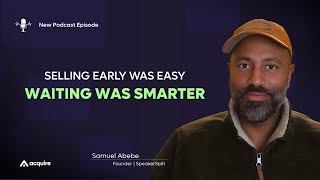
Samuel built Speaker Split, an audio-transcription SaaS, as a side project and grew it to 500k+ minutes processed before selling. He shares how waiting longer before the sale increased its value, why niche SEO and YouTube content drove customers, and why subscription revenue matters more to buyers than a quick exit.
Questions this video answers
Plans ranged from $8 per month up to $100 per month.
Over 500,000 minutes of audio processed across about 30,000 files.
He reported consecutive double-digit month-over-month growth for six months.
Samuel estimated direct affiliate-driven revenue around 20% (he noted the SEO/flywheel effects made exact attribution unclear).
Samuel was a solo founder and said the acquisition closed about a year prior to the interview.
Chapters
Foreign.
I'm here. Sam. Ab. Sam, how you doing today?
Doing good. Thank you for having me on.
Yeah, thanks for coming on the podcast. You recently got acquired and I'm excited to hear the story. But before we dive into that, do you want to just give a brief introduction of yourself?
Yeah. So, yeah, I founded a speaker split. It's been a year now since we recently got acquired, actually a solo founder. And before that I, I've been in, I do web development. So I had an agency where I was doing web development and direct marketing and before that I was doing more or less, I was in a lot of retail. Like I did Amazon, FBA reselling. So I had a, like a reselling business for many years. So just been an interesting journey. Right.
Tell me, tell me about speaker split. What problem did it solve? Love to hear how you got into that.
Yeah, so this was initially a side project that I started about a year ago when I was just getting into the whole no coding movement, which is amazing by the way. And it was really just meant for. It's basically an audio. It's an audio transcription service that does a diarization, which is like labeling speakers and. And then we also did audio separation and it's just basically for post production uses. So. And initially I had created it using some open source kind of projects out there to do like automated content, you know, automated YouTube channels and stuff. And I needed a tool to help speed up the editing process. And one of the things I ran into was the, was the problem of basically having separated audio files for a lot of projects that required that and more. One of them was Notebook lm. So that, that took off many years. Well, a couple years now. And so a lot of the Notebook LM files don't have separate audio files. So I just created that as a side project and decided to kind of take it full on once I learned, you know, how the no coding aspect worked. So turned it from like a utility to actual like SAS, like a full on SaaS. So. So yeah, that's how that started. And. Nice. Yeah, so like, you know, the whole thing with no code, just. So.
Yeah, love it. Give me a use case example. You, you mentioned you split the audio. When would someone use something like that?
Yeah, so people would need it for a lot of podcasters. So when they're dubbing audio, if they're, if they had an audio file where, you know, basically all the speakers were on the same audio channel, the, this, this software tool that, you know, I created splits it out into separate audio tracks. So and that's use and it's synchronized so you can, you can use it for dubbing. A lot of post production basically for podcasters for anyone. And specifically I used it for Notebook LM cause I was doing automated kind of YouTube channels around Notebook LMS and video podcasts with that. So it's just, it's when you're dubbing those audios like especially when you're creating like these avatar, these digital avatars, you gotta have the audio separated for each speaker. So, so that was, that was my use case. But it turns out there's a lot of other use cases.
Yeah, that's awesome. Tell me about the customers. Who is a typical customer for a product like this?
So for, for my use case it was basically faceless kind of YouTube channels that were using NotebookLM and making like video podcasts, like basically those kind of content. But some of the best like power users turned out to be like podcasts. So people that had podcasts and maybe they had some issues with audio that they needed to go in and separate the audio files. So a lot of podcasters were power users and then the transcription side just there was various, it was like universities and law firms that needed, you know, they had maybe depositions and things of that nature. So it was kind of varied. But the power users were the kind of content creators and podcasts. Nice.
And what was the business model? What was the pricing? And was there different tiers or anything like that?
Yeah, so initially I had, it was a tokenized like a credit system. But one of the things like again a learning lesson was basically use subscription as soon as possible and do it. Because really one thing I realized is when you have a customer, they're essentially wanting to do business with you. They've already pre, you know, green lighted you, pre approved you and they, so they want to support you. So a lot of times if you don't, if you don't retain that customer through some kind of rebilling, they're, they're just going to forget about you or they're, they're still wanting to use your support you but they just forgot that they, you know, signed up for the service. So you know, I think that that was really what helped kind of, you know, retain customers and really help grow the business is by going from a one off or on a transactional basis to a subscription basis.
Nice. What was the pricing on average?
So it ranged from, and that was the thing we wanted to entry level. So $8 a month and then all the way up to a hundred dollars A month. And we had customers on both ends and which actually surprised me, to be honest, because that's a lot of credits and I think we hit some milestones here. I can pull those up. But we had, yeah, we crossed 500 something thousand minutes of audio processed and that's over 30,000 files, so.
Oh, wow.
So yeah, it was, it was starting to take off and pretty much we had hit double digit growth for like six months consecutive at the time that I was like, okay, it's. And I, and I really didn't have plans to sell it. It was just. I don't know how to even put it. It was more. So it's, it's. It was. If I was in different situation, I don't think I would. But I think that with how things had went with some of my other businesses in the past and I was like, okay, this is just, just to actually go through with the process really, you know, that was one of the things. So. But I feel like it's a little bit of a, a spiritual thing too where, you know, the, the winners kind of have to pay for the loser. You know, it's the losers. It's like you have. Something has to be sacrificed for the kind of failures of others. You see what I'm saying? There's a, there's a spiritual element to it in a sense of understanding, okay, giving up something that actually is worth it and, and, and to cover up the mistakes of a lot of other ones. You know what I mean? Yeah, yeah. So it's, it's, it was just kind of a whole, that part of it was, is pretty interesting because I always thought like, okay, well what does success look like and what does the whole process like? And you know, this process kind of helped me kind of get to the other side and I'm like, okay, you know, it's kind of made the, the losses kind of worthwhile. So.
Yeah, 100%. There's nothing wrong with cashing your chips. When something's working and growing. That's usually one of the best times to sell. Yeah. Before we get into the acquisition though, I'd love to know, how did you get the first customers for a product like this?
Oh, that happened pretty quickly. I mean I posted some, some videos on YouTube on a, on just the channel on how to do a very specific aspect of like a use case. Excuse me, for, for using speaker split. And I didn't even advertise it, I just mentioned it as a tool that I used. And I didn't necessarily even sell it like hey, go to this channel or you know, go to this website. And I just said this is what I use. And then like when I saw people started using it I was like, okay, then the next couple ones I actually started to promote it more and then, and yeah, so it just took off that way. And then one of the things is I, I just like the, the niche kind of keywords for the use cases around it. I started to rank pretty quickly too. Like, and when it started to get to where the even like chat GPT and stuff was recommending it. So when I had search engine ranking and I was also getting rankings from LLMs for some reason. So.
Nice. That is awesome. What were some of the search terms? Were they super specific?
Very specific. It was like, yeah, it was basically like audio separation, diarization and speaker separation for multi track audio. It was very like technical and some, some of it was just you know, very niche like notebook LM audio separation, you know. So I was, you know I was getting like first like, like the number one ranking for those and so I never really spent anything on marketing.
That is awesome. It sounds like you just. Or ranking with terms that were leading you straight to people that had the exact same problems you.
Yeah, yeah, absolutely. It was, it's just like you said, solving a problem. Editors don't want to spend you know, an hour editing cutting audio clips. Separating audio is like it, like a 15 minute audio separating. To separate that would take like maybe an hour, two hours. So it could do it, it could do it in like seconds. So it just, it's a time saver. And uh, so a lot of the, the, the stuff that I put out there, when other people saw it, they were starting to promote it too. And then so I made them affiliate so that they get compensated. So. Yeah.
So you had an affiliate program too. That's super smart.
Yes, that was later. Yes, that was later. And that was very helpful too. That helped rankings too. So having a good affiliate system, especially where they're not link based because that was kind of what I wanted to avoid. But actual content based affiliates.
Nice.
How did you set that up? So the, the, the dashboard or the, the affiliate program I use is called rewardful and they were. Well I, you know there's a plugin for that but I mean a shout out for them but they, they set it up so it's super easy to manage the affiliates. But the, the, the key thing that I learned with that is you. A lot of affiliates would accept people that are going to use spam or email marketing. They're going to have links and I, I didn't want to do that. I wanted actual content creators, people that would post content and then they would use like a promo code in their content. So that would make it more. It would you. I would have less affiliates, but it was like better quality.
And I think it's super smart. Yeah, super smart. How'd you find the content creators?
So one, they, they reached out. One, one reached out and another one I onboarded. So it was really like 50. 50. Really. So then it was really niche down. Like I, I didn't go for everything. I just kind of went for podcast power users, you know.
Nice. Last question on, on this, this. Because it's so smart to set that up. Do you know what percentage of your revenue was from the affiliates? Was it like 10% or 20%?
Probably? Well, it's hard to say because it was 20% actual. Like numbers, like hard, hard numbers as far as revenue. But, but the SEO effect that it has on ranking it, it. Since it boosts that, it's hard to even quantify it, right? Yeah. Because revenue, hard wise, I could say like probably even less than 25%. Probably like 20%. But since it boosts your traffic overall, I would say that it could, it probably had way more than that. It's hard to say how much of the organic because there was no paid. Everything was organic. So direct affiliate payouts compared to the flywheel effect, that had hard to say. It was probably more than 20%. Got it.
That was awesome. The decision to sell, did. Was it something that you thought about for a couple weeks or was it just something you knew you wanted to do? How did, how did that go?
It's as a lot of different. At different points. It was different because I think like very early on, like maybe within the first two, three months post revenue, I was like, maybe I should just sell it real quick, you know? And I was thinking of cashing it out. And I think somebody in your staff or somebody like emailed me and they were like, just wait. I don't know who it was, but someone just sent me an email. They're like, just wait, man. Just, they're like, wait, just wait 12 months. Or have like at least 12 months. And I was like, okay. I was, I just took their advice. I was like, okay. And then I was like, okay, well let me make it a serious business. So I kind of transitioned from it being like a utility one off kind of thing just to sell quick. And then I like went to a SaaS model and then Was like, okay, let me, you know, waited out and it just grew. It just, it was, it was like double digit growth every single month.
That was awesome. Tell me about the acquisition process. You, you list on acquire.com. what did the first week look like? What were your expectations?
Just unknown. Everything was, it was so new to me. I thought it was, it. I was expecting it to be overwhelming. In actual, in actuality it really wasn't. I mean the, everything like the, the user interface was very, you know, very straightforward. Um, and I think like the quality of, you know, your, the buyers, the buyer pool. Cause I mean I, I had interest right away. I mean within the first week I was getting like interest and everything. And I, I think there's a process where they can, what is it where they, you can automatically accept LOI or something or where you don't have to like manually approve something like that. So when I, when I did that I started to get and more like feedback right away. So. But yeah, I was, you know, within the first week or so, actually within the first two weeks I had multiple. But then there was one buyer that like we clicked immediately. So.
Nice. Tell me more about the buyer you eventually sold to. Did you just click with him? Was there another reason why you decided to sell a business statement?
Yeah, I mean he, he's, he has a lot of experience. He, he's a good operator. He's, he's got multiple SaaS companies that he's acquired and he, you know, prove that out and so, and really it was just like he kind of understood because I, you know, put together a nice like package for the investors to look at and just as far as like you know, instant rapport and then like we were just like getting to the details quickly and it was just, it was an easy conversation back and forth.
Nice. What did you do to prepare for the acquisition? Did you put the other P now or you mentioned some supporting docs. What did that look like?
All. Yeah, put together like almost like a P. Not a pitch deck but actual like similar to a pitch deck for an investor. So it had like all the milestones. It had like different things that we hit different metrics and just really kind of leaned on that and then the testimonials and stuff like some of the affiliates, what they said. So I think it's just letting them see it was like more of a, like the business has definitely passed the seats stage and like the experiment, it was like, like a, more of a mature, like going into a basically growth mode. And so it was that Part was easy for me, you know, because I've done pitch decks before and everything. So that was. That probably took a few days just to put together. And once I, you know, handed that out, it just answered a lot of questions. And then the. Right. The. The seller. I eventually went. Or, excuse me, the. The buyer eventually went to.
We.
We just hit it off on. On more of the technical level, you know, as far as the. Some of the handoff things.
Yeah. And that's important. Out of all the acquisitions I see, you would be surprised at how many are successful because the buyer and seller just get along together when there's, say, five different offers and there's two offers that are much higher.
Yeah.
We always recommend going with the seller or, excuse me, the buyer that you're most comfortable with that you're on good terms with, because it just makes everything so much easier.
Yes. Yeah, totally. I 100% agree. Yep. Yeah.
Did you do any transition plan with the buyer, meaning you sell the business and you agreed to stay on for three months or any period to help with everything?
I. No, we didn't initially. And then actually there it was again. One of the blessings is the company itself was very low maintenance, so there wasn't a lot of service support necessary. And a lot of it was pretty manageable with one person and I could have automated. I mean, I offered, you know, there's things to automate some of the service side of it or service customer support side of it. And I think they. It was easily managed by him and. Or his team, whoever his team was going to be that he was going to hand it off to, so they didn't need my help. In other words. Nice. Yeah. So it was actually, like I said, everything it was for. For both parties, it was pretty straightforward. It was. It went pretty easy. That's awesome.
I'm glad it was so successful and you got through it, you know, without any headaches. What you do to celebrate when you close. Did you. Doing fun? Did you have a dinner?
You know what? It's still. Nothing happened. Nothing changed. We're just glad we're happy. Like my wife and I were just happy about it. And honestly, it doesn't feel any. In terms of running out to go do anything. It's just, like I said, more so learning process and just having to go through that process, the full one, just to experience it really and learn and grow from it and, you know, learn how, you know, what that process looks like, you know.
So nice if a founder came to you and they were looking to sell their business in the next 12 months. What do you think two piece of advice you give them would be in 12 months?
Yeah, I would say for sure wait and grow because you're. The more you can your ARR in your multiples, you're basically what you can sell it for is dependent on your, you know what your revenue is looking like. And so, so I would say you're selling yourself short by not waiting, you know, wait, wait as long as you can because it's going to help your, your, you know, your resale value. I would say also just the fact of if you're built for like SaaS, if you're building like a. Build a recurring model kind of business like that, definitely go into subscriptions as soon as possible. Like get away from. Because it's really helps with the multiple of your company too. And it adds stability and predictability because you're not having to try to. All the effort that you're making to get these customers that want to support you by not keeping them, you're having to redo the work all over every single month. So just. It's better to just the ones that you that are coming in and signing up, keep them even if it's on like a minimal plan like just to start like a baseline because some of them will actually bump up their subscription. But just keep them like on just have some kind of retainer somehow. Keep them.
Yeah, that's great advice. Especially around the part of having just more operating history for buyers because the longer you're in business, the more history you can show buyers and the more, more competent they're going to be where if they buy the business that revenue is going to be there when they buy the business. And like you said, a lot of buyers will pay higher multiples for businesses like that.
Absolutely. Yeah. It's a big part of it. I mean I've seen people. It's like you have to bring something to the table too. I mean if you're, you have to show that you have a profitable business and especially if you can, if you can work on organic growth to show them that hey, you don't, you know, you don't need to spend, you know, money to make money in your business. Your business is. Can stand on its own and it's, it's passive or it's cash flowing. That's where the key is at. Because I think you know, that's just going to be like that. That was this. The reason for success in, in selling it so fast is just, you know, it's Like a pat. It's like acquiring a property that's cash flowing 7, $8,000 a month. You know, it's like people pay, you know, 300, $400,000 for a property that could cash flow probably half that. So it's like, you know, you, you're building value by creating, especially with software, you can create value by showing you have stable like MRI numbers or annual numbers if you have an annual plan that you're promoting. But I think that was, you know, that was the key part right there. Yeah.
Because the buyers want to be able to understand how they're going to see a return on investment from the purchase. I talked to a lot of founders that never really think that through. For ex example, I'm going to sell my business for 20 times revenue and the revenue is super unpredictable. But if you ask that question, how does a buyer see return on investment when they buy it at that price and with that type of revenue, it becomes really unclear. And so when you can make it really clear on how a buyer will see a return on their investment, that's how you get tons of different offers and sell your business for the highest price.
Oh absolutely. And even for yourself, when you're running a business, you want predictability every month. And that's what you know, without that stability, you really don't have a business. Plus you, you're not going to, how do you value, you know, evaluate that to, to a buyer it's like if you don't have predictable income or predictable growth. So having, having that, having that recurring revenue and then having as the churn as low as possible. And Those are the two things for, for a SaaS type business. That's, those are the two, the two punch combo. So I would say like a good like, like consistent earnings and then low churn to show that you can retain customers for a longer period. So definitely go into a business where you can potentially have clients for many months or years. You know, just not like a one off thing.
So yeah, that's great advice.
Samuel, what are you, what are you working on next? What's next for you? You know what, it's several projects. As I've always had multiple things. I still have the agency, so I'm, I'm going to, I'm actually picking up on it on some other projects. You'll, you'll hear from me. I'm, I'm gonna definitely be reaching out soon and I may, I may be back on the market soon with some other projects in. In due time. In due time. Right on yeah.
Like ever help or give you a shout out, let me, let me know.
I'd be happy to. Oh, man. Dude. Yeah. You guys have been a blessing. I tell her. I. I'm telling you, everybody, you know, use. Use the. This is a great time. You know, no, code is amazing. It's. It's revolutionized software industry. You know, it's like, you don't imagine, like, I tell people that I had a conversation with someone the other day. I was like, listen, imagine like how many. Like, if you are an author, right, imagine you have like the brains of Stephen King or some major author. But. But like, for you to make, to. For you to write your book, you had to learn Mandarin, right? It's like, how many people would. Would. Would not be able to write that masterpiece, you know, would. Because you have to learn a language, right, To. To be able to publish that book that you had in your mind. And so it's like, what happens is with, with the rise of, like, coding agents and like, IDEs and stuff is like, they could translate that vision. Like, you can, you know, you can now. You don't have to, like, learn this, this complicated machine language anymore to make software or to make apps. Like, and you don't have to like, hire, you know, or keep like, a software engineer that you have to pay like hundreds of thousands of dollars, tens of thousands. Like, it's, it's just. It's totally liberated that whole thing. So you can. Anyone can, you know, learn the very basics. But it's now opening like, it's like the way publishing with the, with the printing press made everyone able to publish. And now with the AI bubble we're in, there's going to be a more people that can, like, put their ideas out there, you know, 100%.
It's great time to be a founder. Great time to be an entrepreneur.
Yeah.
Well, right on, Samuel. Congrats again on the acquisition. I'm glad it was so successful. You truly achieved what every entrepreneur dreams of. If people want to hear more about your story or follow you online, where can they find you?
Yeah, so I am in. I am. I am the most. I don't have a public account. Everything that I had related to speaker split got transitioned over. So definitely give them a shout out. Check out their Twitter and everything, the blog. But yeah, I'm, I'm, I'm incognito, man. I'm stealth. So. So you. You won't see me until you see me, you know? All right, well, I'm not, I'm not one of those founders that's, that's in the front of the business yet, you know. And so I'm always working behind the scenes but I'll always be in the forefront at some point, you know, so. Right on. That was the way to do it. Yeah. Because no one, like I said, I never showed my face or anything or any of this stuff when I was creating speaker split with most of my businesses. Like I really, I work behind the scenes and I try not to be the face of it because like you know there's, I let the product or the, my, the customers speak for it. You know what I mean? Or, or the, the you know, so.
It'S truly the best marketing and I think it shows with the, the product and the company you built. So congrats again.
Yes, thanks again.
Thanks again for coming on the podcast. Appreciate it.
Yep. Have a good one, brother. You too.
More from Andrew



The Buyers Who Made the Move: What They Bought, How They Did It, and What Happened Next






