Zero to $1m/ARR with Sujan Patel - Managing Director at Ramp Ventures
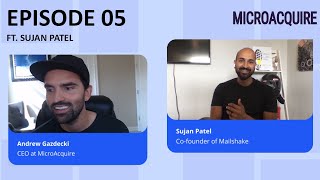
This is a YouTube video titled "Zero to $1m/ARR with Sujan Patel - Managing Director at Ramp Ventures" containing an English interview recorded in September 2020. The content features a conversation between an interviewer and Sujan Patel, CEO and co-founder of Mailshake, discussing his entrepreneurial journey, challenges, and strategies in growing Mailshake from zero to one million annual recurring revenue. The discussion covers topics such as product-market fit, marketing strategies, pivoting, pricing, and lessons learned along the way. The interview provides insights into startup growth and SaaS business development from Sujan Patel's perspective.
Foreign.
With me today, we have Sujan Patel, CEO and co founder of Milshake and actually acquiring a number of other companies. But Sujin, thank you so much for coming on the show. I'm excited to hear your story.
Yeah, thanks for having me. It's, it's definitely going to be a, definitely been an interesting ride the last five years, let's tell you that.
Yeah, we were talking a little bit before we started recording and you know, obviously your success is something I definitely admire. But for these conversations, I really want to focus on the beginning days when you didn't have a portfolio of companies when you were just starting out with Mailshake. And so with that being said, when you were starting at zero, what were some of the things that you struggled with growing to, you know, your first 1 million and you and your recurring revenue?
Yeah, man, I think, man, we're still struggling every day, right. Because I have a lot of companies. I am in those points still now. Right. So it's fresh in my head. But specifically for Mailshake, I think one, we start off as we pivot into what Mailshake does now we started off as a content marketing tool to help marketers and content marketers promote their content. And so we struggled with like initial success. Right. So what I mean by that is like we got our first hundred 150 customers within like 24, 48 hours of launch because we did a lot of pre marketing, pre launch marketing and kind of built up a bunch of hype email list and you know, people who were actively invested into building, joining our journey. So we got to about three to four grand in MRR really in two days. And then we struggled for a long, long time to get scale. And so I think for me lesson learned was like, holy crap, like this is good, but I can execute a lot of things. That was what it proved to me is like my capabilities to execute and start something. They're there, right? But I need to make sure we're building into a business or product market. Fit is really important, but also like the business is, is opportunity is worth it. Right? So like we, I didn't look at the tab, right? I, I just said like, I know a bunch of marketers, let me run this idea by them. I know there's a lot of marketers, I know there's a lot of marketing tools. Had I spent more time investigating the idea behind content marketer IO or now Mailshake, I would have said marketing tech as a whole is a high churn industry. I'm going to Stay the hell away from this space because I want to go find an industry that has lower churn because your growth, you know, your growth kind of can, it takes away from your growth. Like so just because I can drive a lot of customers, the churn is going to take away from my ability to grow. So I think that was the biggest lesson number two is like focus on that product market fit. And although I did a bang up job in my opinion to market the customers, it. It took me from the two days to get to 3,000. Mr. 4,000 to. It took until like maybe early 2000, late 2017 to get to a million ARR. So like that was like two and a half years and that was like a year and a half of that was actually rebuilding the product and rebranding everything. So I wish I had done that day one.
So how did you find this first customer? So it looked like you bumped up to 3K and Mr. Pretty Quickly. Did you have to talk to each of those customers one by one? Did you do anything crazy to get those customers or did you build an audience before? Walk me through how you got those first initial customers.
Yeah, absolutely. So this is where I think most founders just massively screw up, right? They like, they start to build their idea and then they just forget to market it, right? Or they think about marketing after. I actually intentionally built into marketing, so I intentionally focus on building a tool to sell to marketers because I had an audience of marketers, right. And so I know marketers. So I am one. I have a lot of friends who are marketers because I am one. It's my, it's my people, my crew. And and then I also know how to like know what their pain points are, right. And so I kind of like that's how it started. And so 2000 so we've launched this thing in July of 2015. I started marketing it in February 2015. We came up with the idea and I found my business partner in like February 1st, right. We started marketing February 15th. So we put a landing page up, said we're going to make content marketing freaking better. Right? That's what the like it was something better than that. But it was like a big slogan that said we're just going to make content workers lives better or something like that. Opt in form a blog, started blogging weekly, creating content. Content was kind of like, I would say C plus content. Like it wasn't amazing but we didn't have time. Just like, like look what a content marketers have problems with. We just started Creating content, started focusing one on building that email list. The other thing is, but before I did that. So like that's February 15th when we started marketing what's now MailShake, 2014, January and all of 14 through 15. I'll focus on building an audience of marketers. So I built my personal email list, my personal blog, sutrapatel.com I wrote a book with a buddy of mine on growth hacking called 100 days of growth. We ended up promoting that at the end of 2014 and leading into 15. And that whole promotion process helped me built an email list of 40,000 people of marketers roughly or founders or you know, people who would. I could then use that to promote. So I built my personal brand using that. So my goal was like I could build any SaaS company and I would have an audience, right? And that's what I use to then funnel through. Here's the first product I'm building. And then. And essentially I was able to funnel those 3,4040,000 people into an email list about think 3500. And then I gave everybody from February 15th through July, sometimes when we launched, I just emailed everybody every week or two with like a blog post and like where we're at with the product, right? Like here's a sneak peek and everybody of those folks, I use the launch model essentially I gave everybody a steep discount. I think it was like 90% off. So they were all paying like I think 10 bucks a month or something like that when we were at 50, 50amonth. And that what built my initial steam. And then those folks, I also got influencers. So along the way when the product was kind of like ready enough, I think this was like maybe two months before it was actually out the door. I started doing one on one calls. Just starting to hang like pitch or like again because I built my audience, I built a Slack group. I was like, I just added a bunch of marketers I'd like thought were cool. I still run that. I still am in a Slack group. I think it's like three, 400 people now of like marketers I admire or like and you know, want to hang out with. And so I just asked those folks like, hey, like here's what we're working on. Can anyone give me feedback? And I just got that feedback loop right and then. But my goal wasn't the feedback that was nice. My goal was to get influencers talk about our product. And they talked about it before it was live, right? They talked about how awesome it is before they actually they used it, they saw it, they had vested interest because they wanted to see me succeed or whatever, but they actually haven't used the product, right? So again, part of the plan, right? I was intentionally like trying to get influencers. I wanted to be best friends with influencers to promote my stuff. And then after I launched, I did kind of a co promotion, not co promotion, like a lot of guest posting and kind of like reaching out. Like I would guest post on any site that had an email newsletter and a marketing audience because my post would get out there. And in my, in my newsletter I begged everybody, I begged the publisher or whoever was I was writing on is like, hey look, launching company put my life saves you in this stuff. Can you put a little a byline of like check out his tool. Right? And half the people did probably.
I like that. So I. Two questions from that. So you had a pretty good initial pre launch strategy. How important do you think that is for entrepreneurs starting out today? Would you even launch a company today without having an audience strategy in place before? And then second question there. How important do you feel? Have you heard of founder market fit, where basically you're a marketer so you understand this industry and you're passionate about it. Do you think that had anything to do with your success on the road to, you know, your first million.
Second question. No. And I'll tell you why in a second. The first question, 100 important it is the difference between succeeding and launching with traction and like momentum or starting with nothing and building the momentum. I mean it's as simple as that. Like you, it's still possible to build. People do it all the time. But I think that absolutely contributed to the success of the brand. And it's really funny, probably the first like four years, five years, people thought we're so five years. This is like year six for us now. So up until last year people thought we're. And they still do. I think they thought we're way bigger than we were. And it was just all because we like just constantly marketed the crap out of our product. Right. It turns out we got stuck because our product was crap. Right? And the issue wasn't the product was crap, it was that we found a specific hole of like, of what? Why? Like we hit a failure point early on in our product for our customer hit a failure point in our product. But anyways, the second question of like, do you have to be passionate? You have to love the industry? No freaking way, dude. In my career I've done marketing for plastic surgeons and lawyers. I don't give a crap about that. Like, it's still marketing though.
You're still taking your skill set.
I like marketing in boring industries. The most successful stuff I've done is in HR tech. I think this stuff is so boring, but I find it as a marketer to be doing marketing in a new industry or like HR tech, a not so sexy industry. It's really hard. So it makes me a better marketer. Right. So, by the way, when I started Mailshake, I was the head of marketing at a company called When I Work Calm. It's like a HR tech software. So I was literally like just building stuff that I had learned. So I knew I was always. I've been doing marketing forever, since early 2000s, but I didn't know how to run a SaaS company. And so I sold my business and I took a job at this company and I moved to Minnesota. So, like, I was really committed to learning about SaaS. I went from San Francisco to Minnesota and most people make the reverse move. And I was like, I'm going to learn everything about SaaS. That's not the marketing part. And then six months in, I was like, cool, I'm going to just go build stuff as I learn it and do it myself. So anyways, that's kind of like the what was happening at the time, so why. And I, I shoot myself in the foot by like not understanding the TAM and the big business of like the industry I'm going getting myself into. But I didn't care. I was like, I'm just gonna go douche it and execute and just see if I can actually get something off the ground and the next idea I work on will be the right one. So that was kind of like I didn't care about this one. And turns out, you know, we have nine companies or eight companies. This is the biggest company. So, you know, turns out I probably should have cared a little bit more. But yeah, it is what it is.
That's awesome. And then so in terms of mistakes, you know, zero to a million, what would you say? Like, maybe you're one or two. If you can go back in time and tell yourself, like, hey, don't do that. It's not going to work. Or maybe just a time. That was super challenging. Well, it's like the first things that come to mind.
Yeah, yeah. So I'll go linear, like in timeline. So 2015 should have pivoted faster. Right. So sorry. Should have learned the tam. Should have figured out the product market fit. And when I figured out that there is a problem, pivoted and we waited a little too long. We probably waited six months. Number two is I should have focused on failing faster. So 2016, we. It took us a launch, a bunch of launching micro tools to find out what the new like with the pretty much what the current version of Mailshake is, which is the email outreach part. And now we're, you know, more sales engagement with dialer and stuff like that. But anyways, my point is when we figured that out, I should have just doubled down. Instead of. What I ended up doing is my co founder went to town building the current version of Mailshake and it took him too long because one guy trying to build and manage like all these customers that we've got, I should have hired another developer, third developer. I should have just said I'm going all in, right? And because I didn't go all in or I didn't go hard enough, it took me a while to kind of get to launch. So put it to you in perspective. Outreach reply. Mixmax launched in 2014, so they had a little bit of heads up. We launched in 15, but by the time we got our shit together in 2000, late 2016, they had two and a half years to go do like get ahead on the market. And so now all of a sudden we're so behind, right? And, and still we only have one developer. And so yeah, again that was, that was why I said like, you know, fail faster because life is all about time. I have three young children. Money is not my problem. Time is. And it's not that I have a lot of money, it's that I have a lot less time than money. So like I need, you know, I need to buy back hours in my day anyway. So that was, that was kind of lesson number two. And then lesson number three is really, I think when we figured out and we got the product to launch, we kind of learned lessons along the way. And so we actually started with me and my co founder and we added a third co founder along the way who is kind of like the adult in the room at the time. We just needed like a person who was thinking about the business value and so we just did a lot of stupid stuff.
And what was your role? Were they COO or CFO or finance?
So Bob Sent off is the third company co founder that we added kind of when we pivoted over to Mailshake. So Colin is the cto. I'm kind of chief customer officer, like everything. Sales support, customer success, like everything touching A customer kind of product vision. And then my partner Bob is COO slash cfo. Just kind of thinking about the business, the business side and ops and all that stuff that like, makes keeps the wheels on the bus of a company, right?
Yeah.
And so, yeah, I mean, like, if I had just done the modeling out of our business, like of our price pricing strategy, we would realize it wouldn't work. But instead we, We. We kind of took a while to learn that and. And probably annoyed some customers along the way.
Nice.
So we launched. We launched for too cheap? Pretty much, yeah.
I made some very similar mistakes. We actually had to refactor the whole version of business apps after three years of launching that 12 months. And that allows some readers to. To catch up, which was painful and expensive. So I can relate on some level. But I liked how you talked about TAM and just how important that is. And I think a lot of entrepreneurs built these products. You know, they seem awesome, but they're in markets where maybe there's naturally high churn. There's really not a lot of buyers.
How.
How do you think about calculating TAM today? When you look at a new market? If you were to start a whole new SaaS business, how would you look at calculating TAM and what's important to you? How do you research that?
So I don't actually know how to fully do it. I'll admit. I don't have the answer right.
I don't think anyone does.
Yeah, I don't think anyone does, but, like, yeah, so what I do is I try to find how many people. I have two problems I'm trying to figure out, right? How many people are like, gonna buy this software, whatever it is or idea, right? Like, how many customers, how many businesses exist in this space, right? And then number two is like, how much can I. Can I charge? Like, how much can I. How much are people willing to pay? Right? I think number three is like, how big is this problem for that. That customer? And I think it's just like, I would go try to find the quantitative answer for this, but do it through qualitative, like through interviews, through surveys. You know, I love, like, Ethan Shaw does a really good job of this at FYI. He just surveys. He does so many surveys. I would put marketing dollars behind getting people to fill out the survey. I do Facebook ads and stuff like that to do a landing page that's really just a survey and, and just get validation that my product, my problem, my thesis of what I want to build actually matters to this customer, right? And if the answer Any point you get rejected, then go find a different audience and like, you know, change this, right? And what, you know, I think like the industry that Mailshake's in, the sales engagement space is a billion dollar plus space. There's a huge market for it. But I intentionally, as a founder, initially as a founder, I walked into this business thinking I'm just gonna test out my stupid idea so I can learn how to run a SaaS company, right? So you see the difference in like billion dollar industry. Stupid founder trying to just test their ability to like launch something, right Outcome, I don't know. I didn't even know what the outcome was. Build a passive income stream. I don't know. So like my headspace where I should be thinking, took me three years to actually adjust my thinking to be able to make. We're in a billion dollar industry, we should probably hire that next next developer and spend more on marketing. And you know, again, three years before I got my headspace to like that because we launch, we failed to get traction past a few thousand dollars. We pivoted, took too long to pivot and then launch with some pricing that just kind of didn't stack up. Well. We started at $9 a month, so you can't really build the SaaS business at $9 a month and expect to grow a team being bootstrapped and compete in a billion dollar space. So over the next three years, we increased pricing. Now we're at 59 and 99 per user. And yeah, anyways, dude, yeah, totally. Headspace was wrong. So I would say that's a mistake. Number four is like I was just not thinking about it as a big enough space, you know, but yeah, I don't know.
Well, so you've obviously done a lot of things right though. Like, you know, every entrepreneur goes like, usually starts with like humble beginnings. Business grows, market grows. And then you're in this weird role where you got to kind of figure everything out and you make a ton of mistakes along the way, but you also do a ton of things right, obviously getting to where you are today. What are some things.
More from Andrew



The Buyers Who Made the Move: What They Bought, How They Did It, and What Happened Next






